Artwork
Page from Tales of a Parrot (Tuti-nama): text page
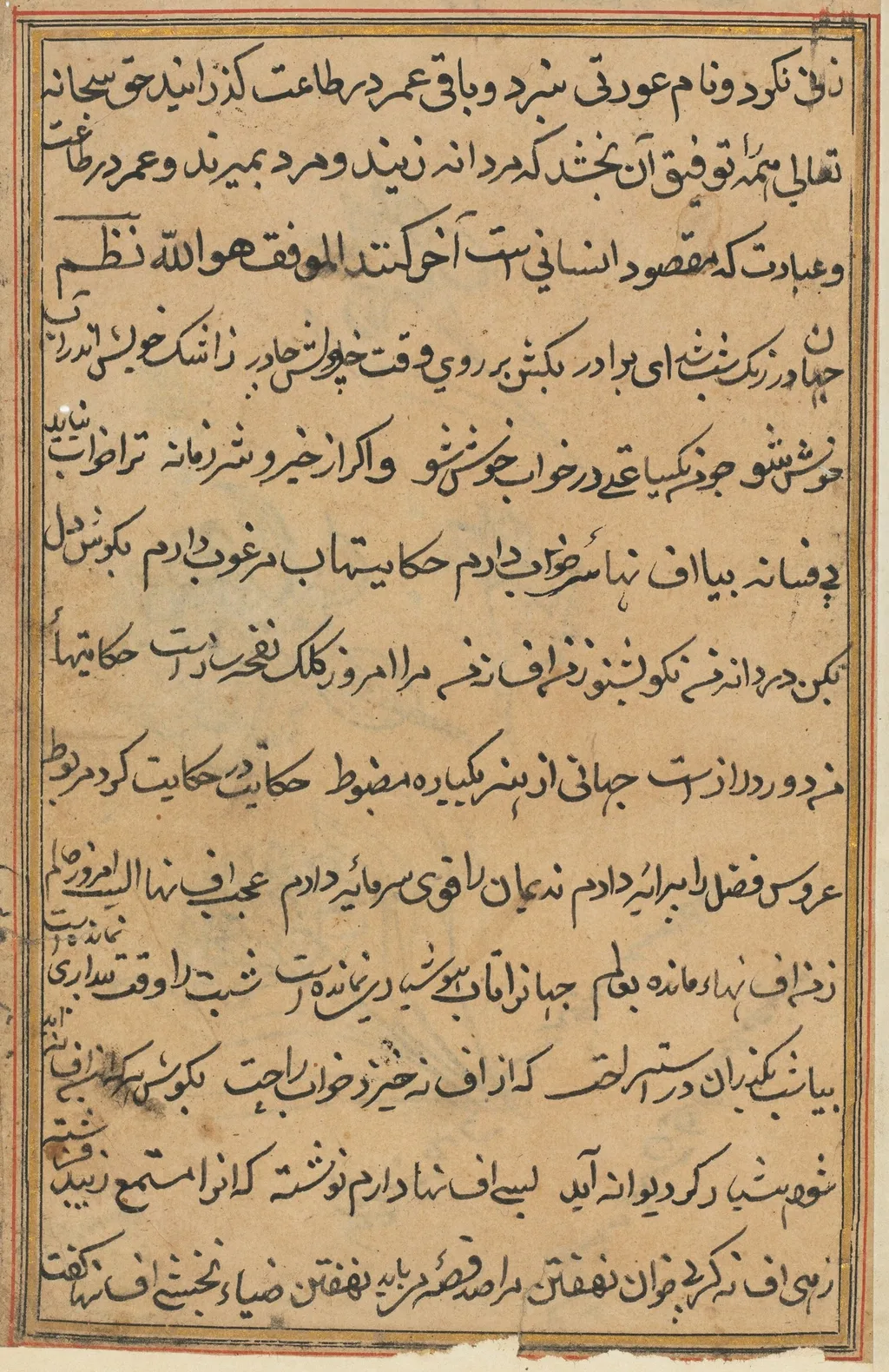
Page from Tales of a Parrot (Tuti-nama): text page is an unspecified painting. It dates from 1560 and is held in the collection of the Cleveland Museum of Art. The object is a single folio from the Persian manuscript known as Tales of a Parrot (Tuti‑nama).
About this work
Overview
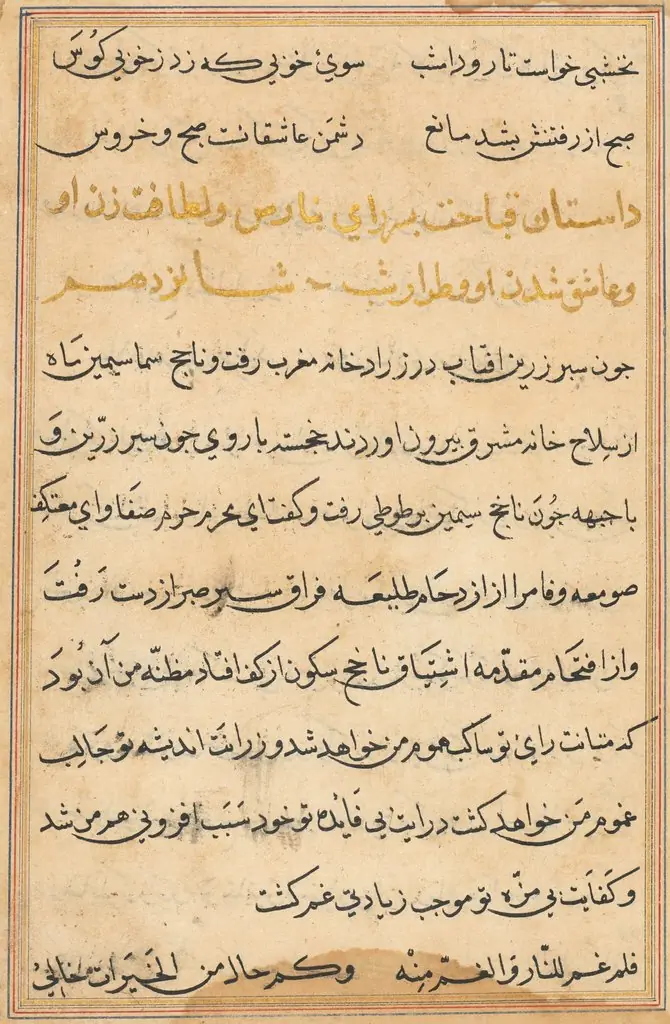
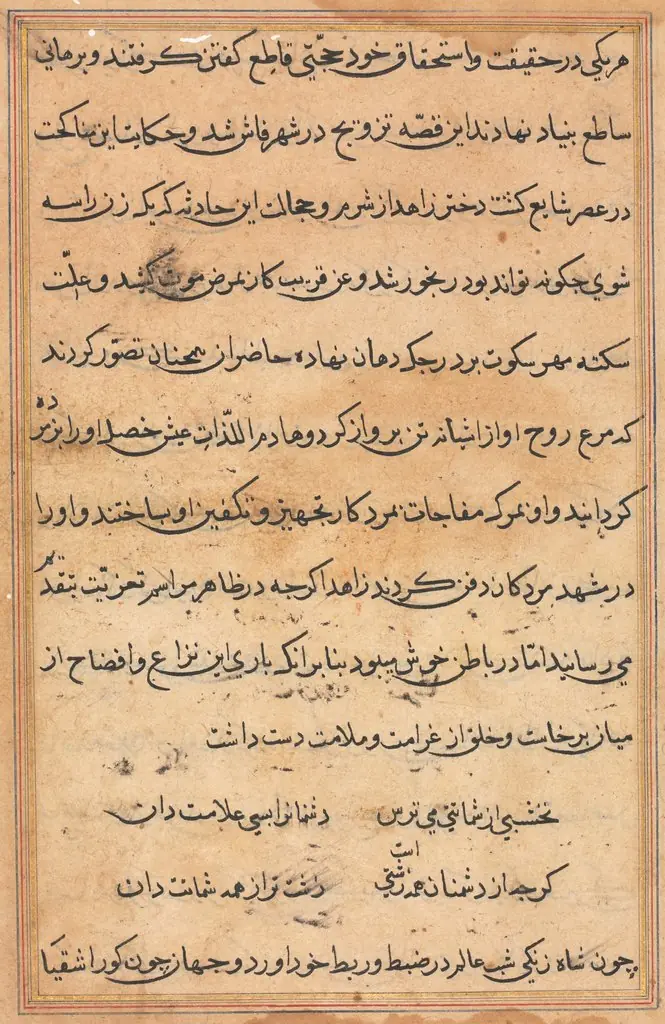
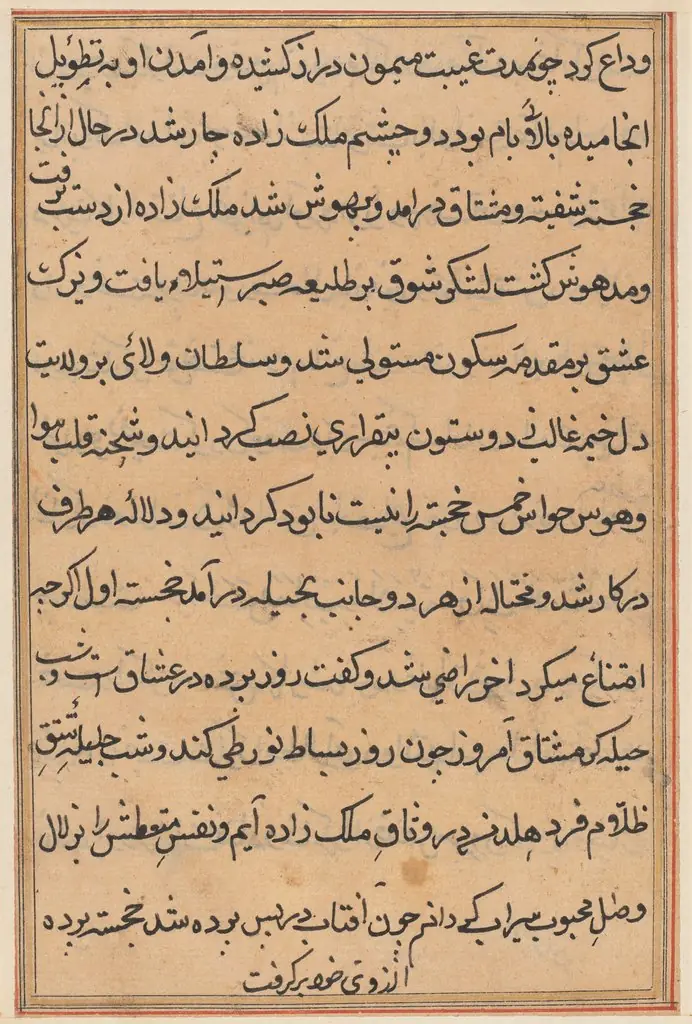
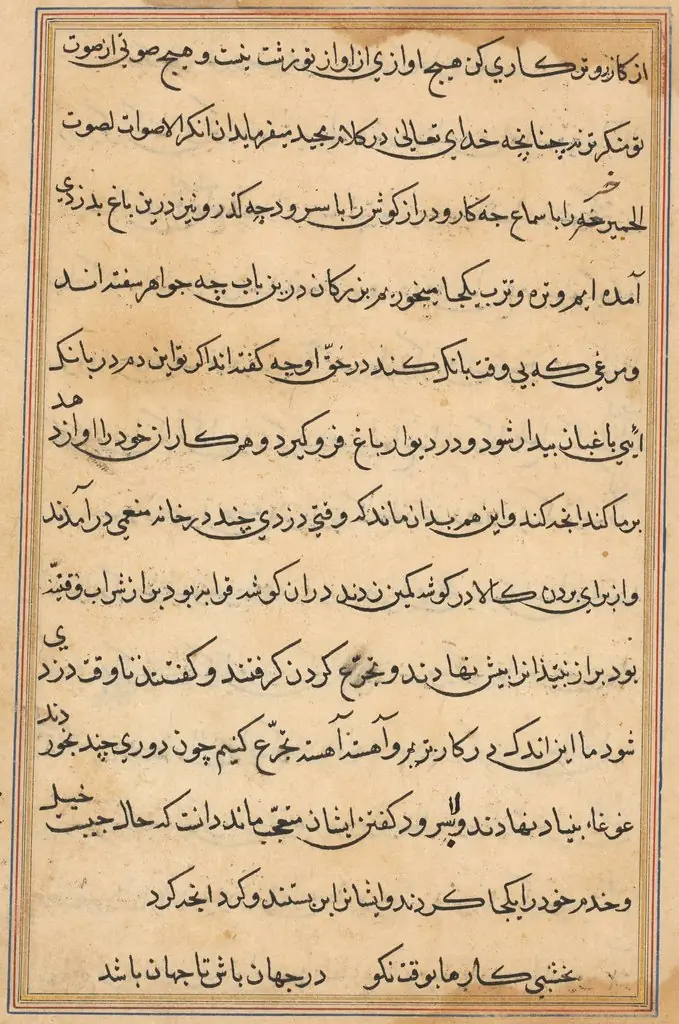
The object is a single folio from the Persian manuscript known as Tales of a Parrot (Tuti‑nama). Rendered entirely in black ink on a light, yellowed sheet, the page is densely covered with flowing Arabic calligraphy and bordered by a narrow red line. No decorative images accompany the text, emphasizing the written narrative.
Subject & Meaning
The manuscript recounts a series of moral and romantic tales traditionally addressed to a royal audience, often a prince. The language and tone suggest the content was intended to instruct or entertain a member of the elite, reflecting the courtly culture in which such stories circulated.
Technique & Style
The calligrapher employed a refined, cursive Arabic script, characterized by tight spacing and intricate ligatures. The precision of the hand, evident in the minute details of each letter, demonstrates a high level of training and the aesthetic values of Persian manuscript production.
History & Provenance
The folio originates from an early modern Persian codex, likely produced in a workshop serving a princely patron. The paper’s aged, slightly yellowed condition and the modest red border are typical of manuscripts from this period. The piece is now part of the Cleveland Museum of Art’s collection, where similar pages are displayed.
Context
Tuti‑nama belongs to a broader tradition of Persian literary manuscripts that combined storytelling with elaborate calligraphy. Such works were often commissioned for educational or entertainment purposes within royal households, reinforcing cultural and ethical norms.
Legacy
Although the page lacks illustrative illumination, its calligraphic quality offers insight into the standards of manuscript production in Persian courts. The folio continues to serve as a reference for scholars studying Persian literature, calligraphy, and the material culture of early modern Iran.
Artist & collection

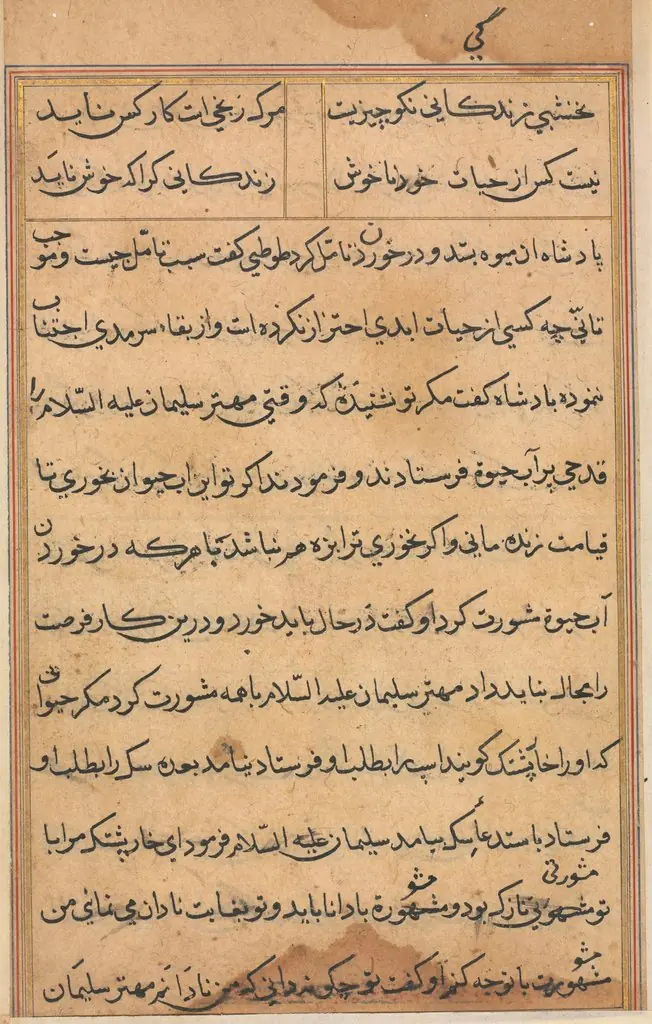 Page from Tales of a Parrot (Tuti-nama): text page
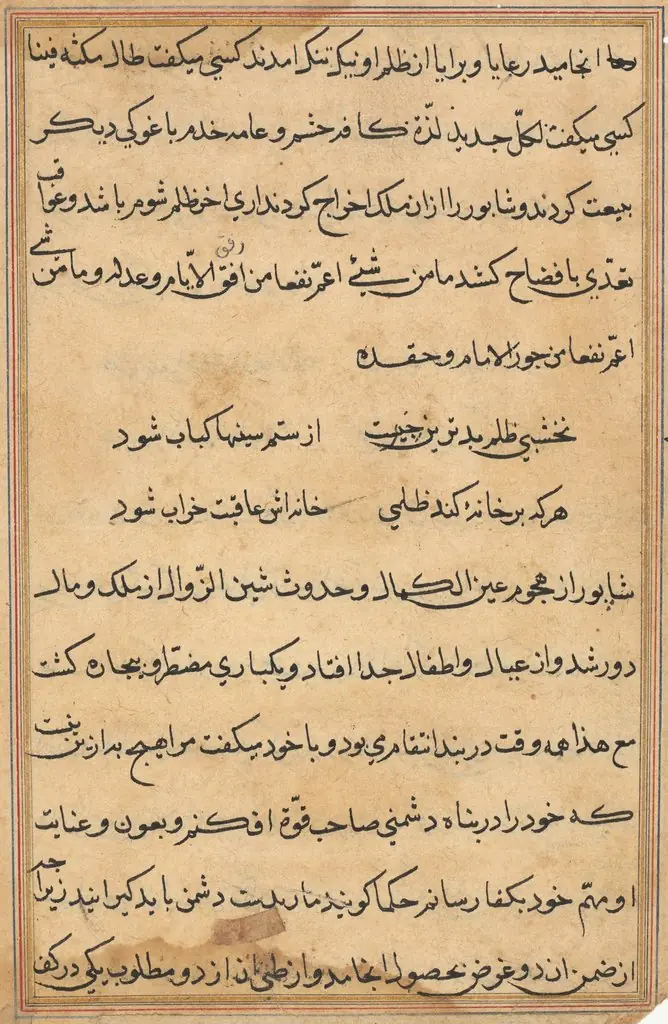 Page from Tales of a Parrot (Tuti-nama): text page
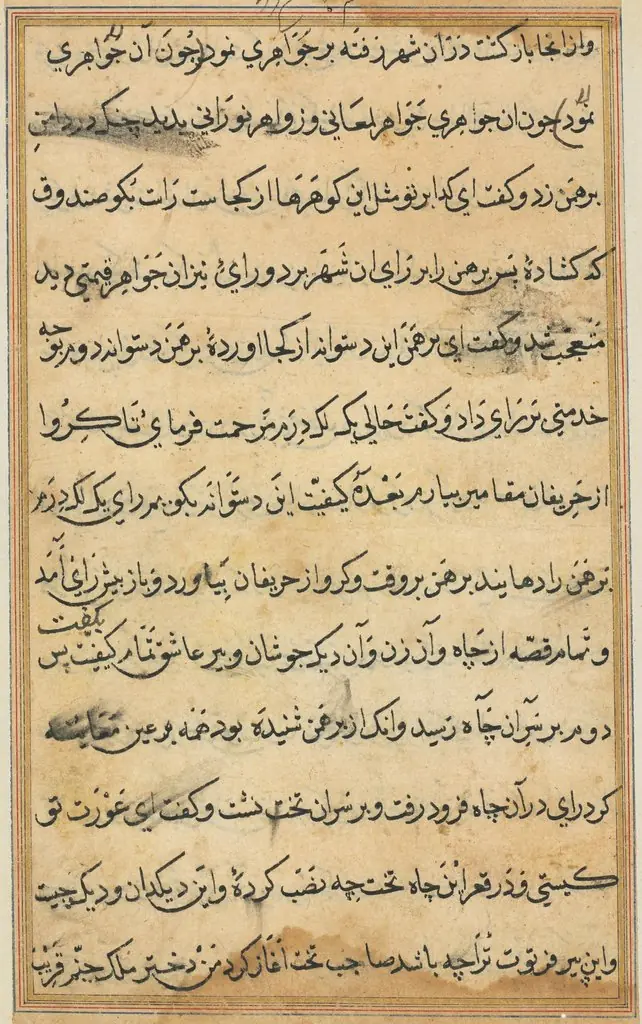 Page from Tales of a Parrot (Tuti-nama): text page
 Page from Tales of a Parrot (Tuti-nama): text page
 Page from Tales of a Parrot (Tuti-nama): text page
 Page from Tales of a Parrot (Tuti-nama): text page
 Page from Tales of a Parrot (Tuti-nama): text page
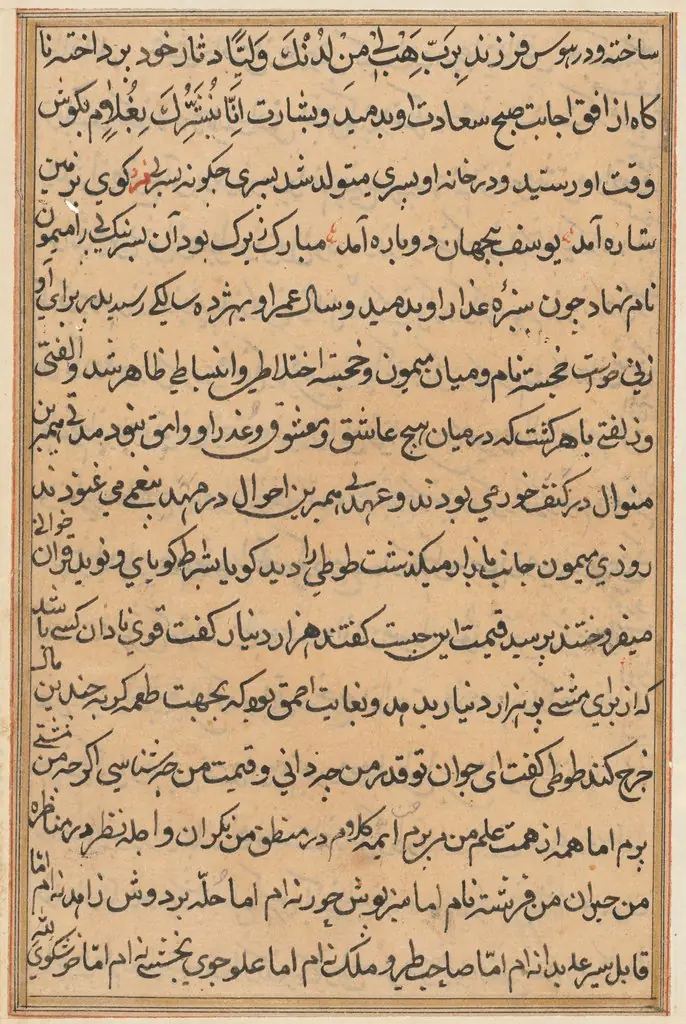 Page from Tales of a Parrot (Tuti-nama): text page
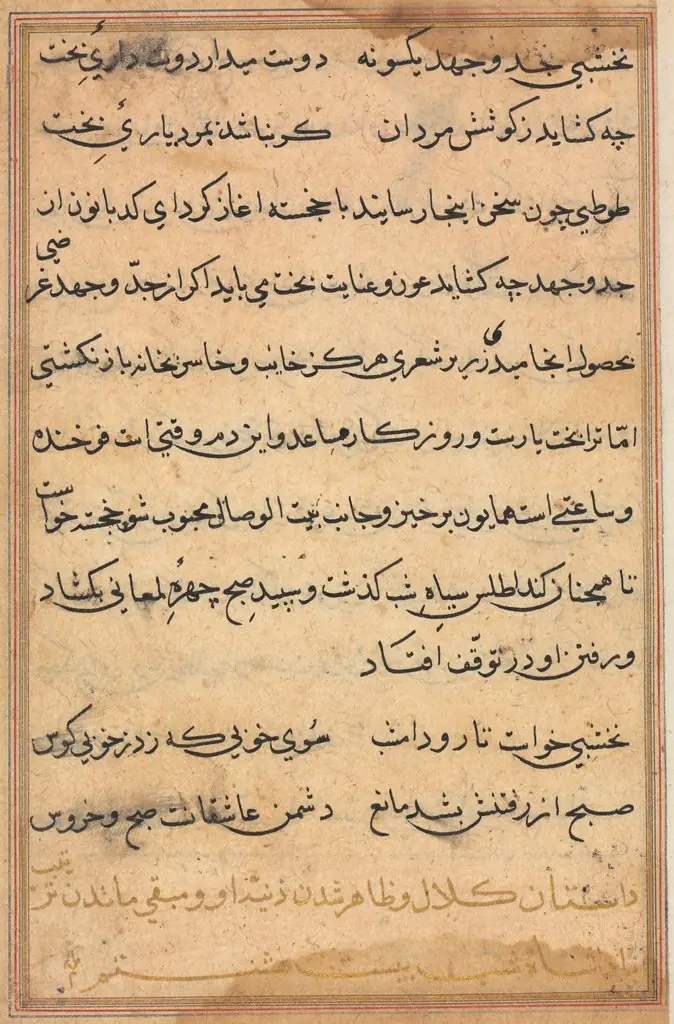 Page from Tales of a Parrot (Tuti-nama): text page
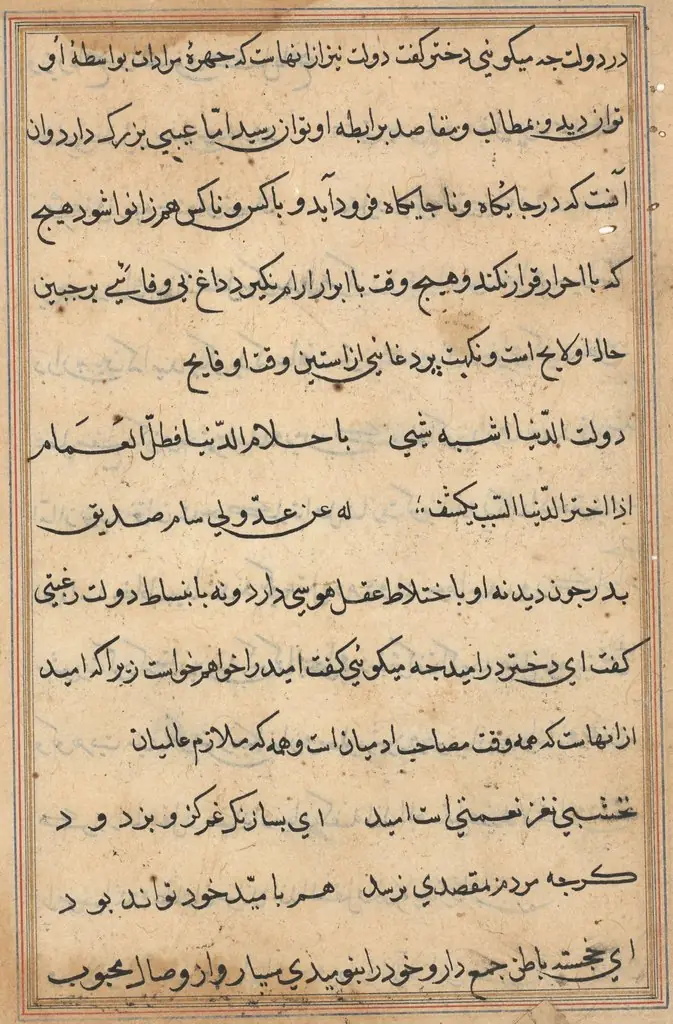 Page from Tales of a Parrot (Tuti-nama): text page