Artwork
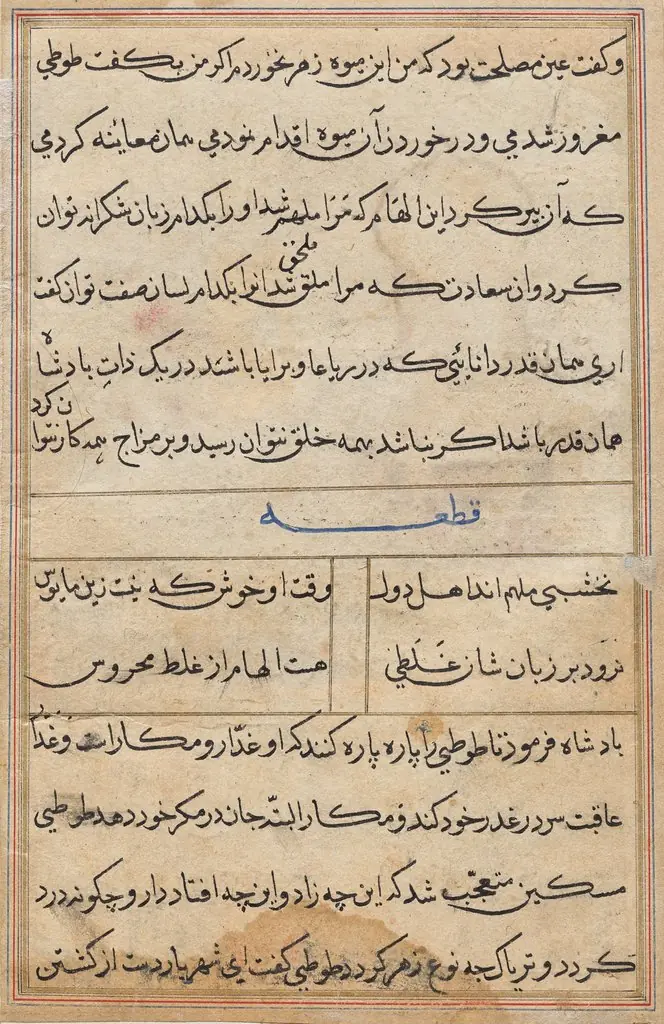
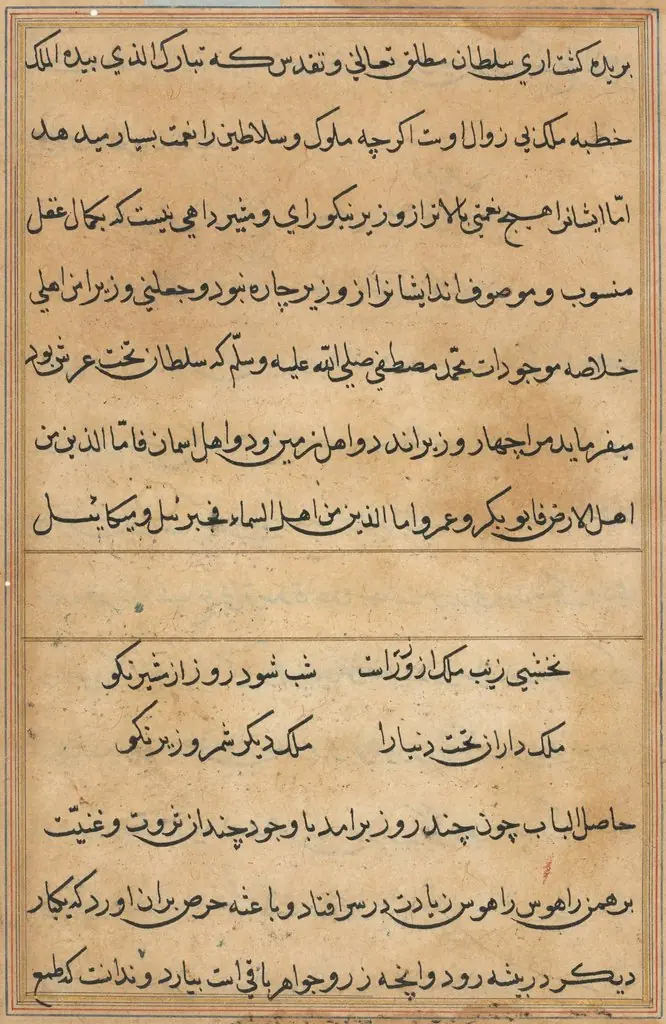
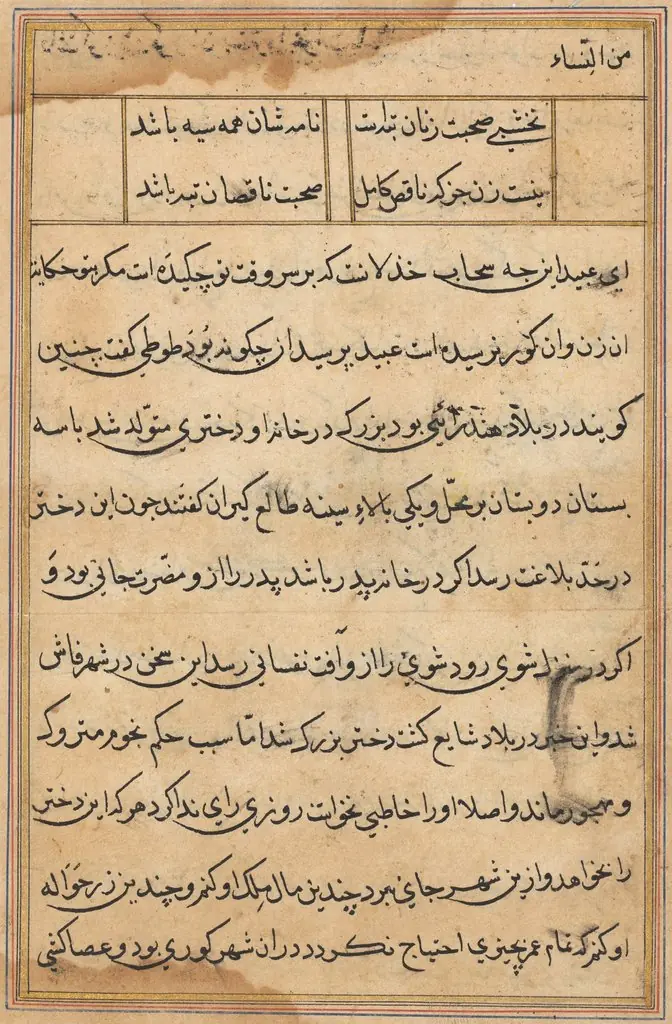
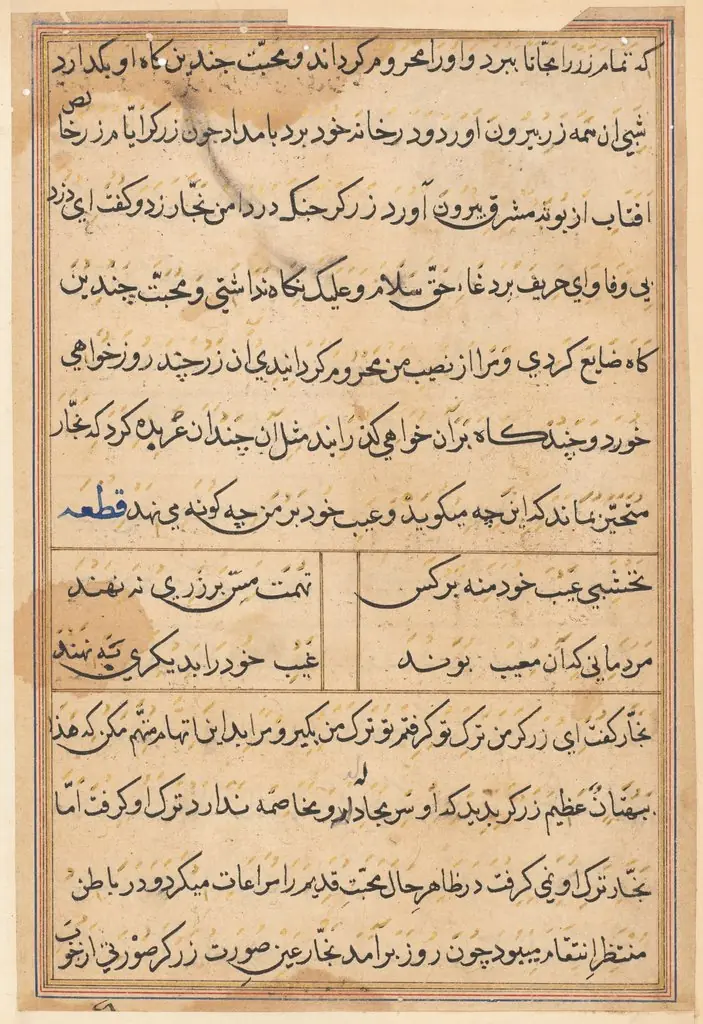
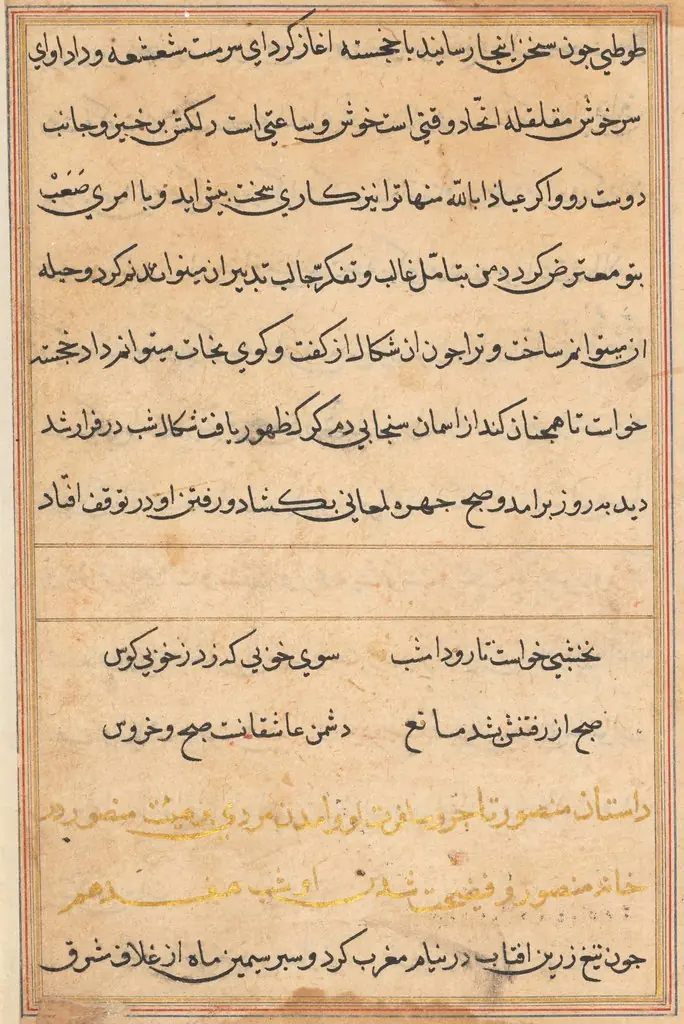
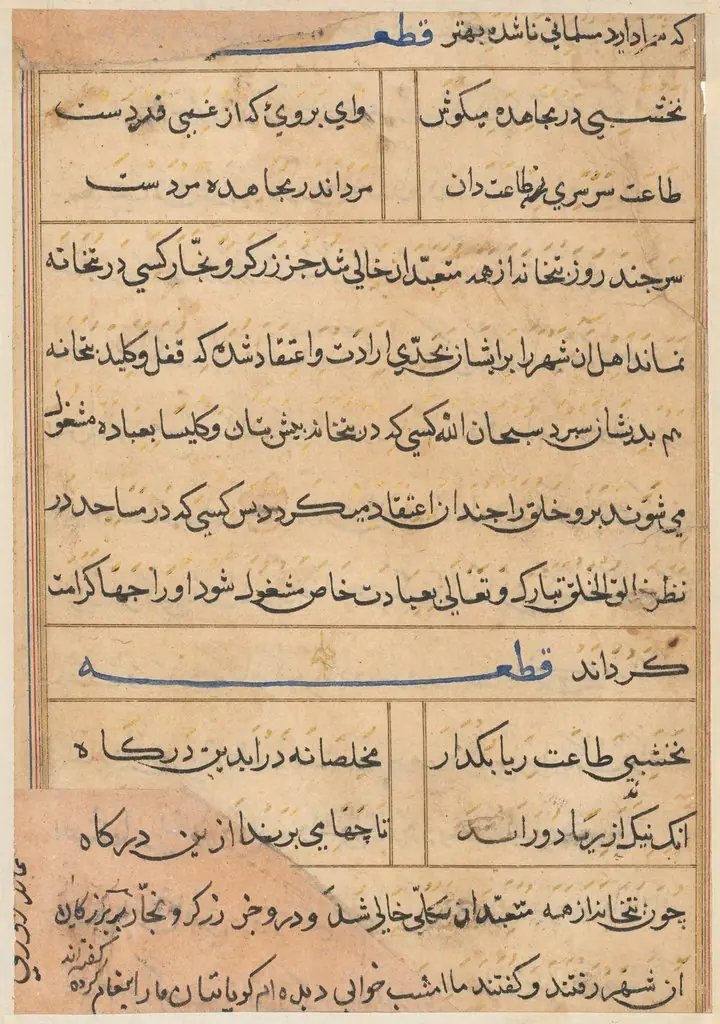
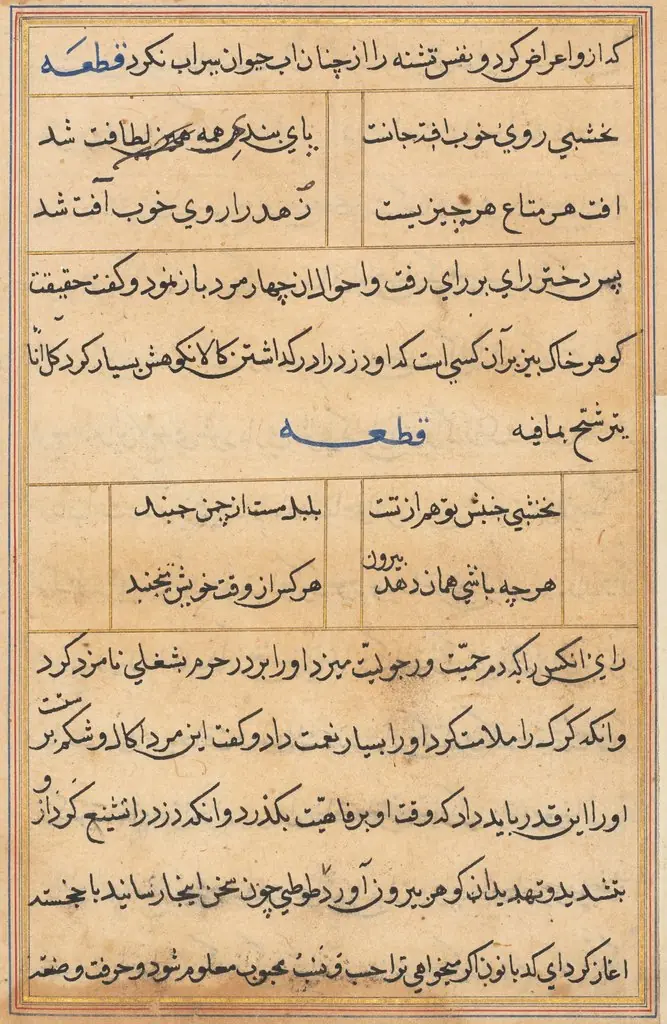
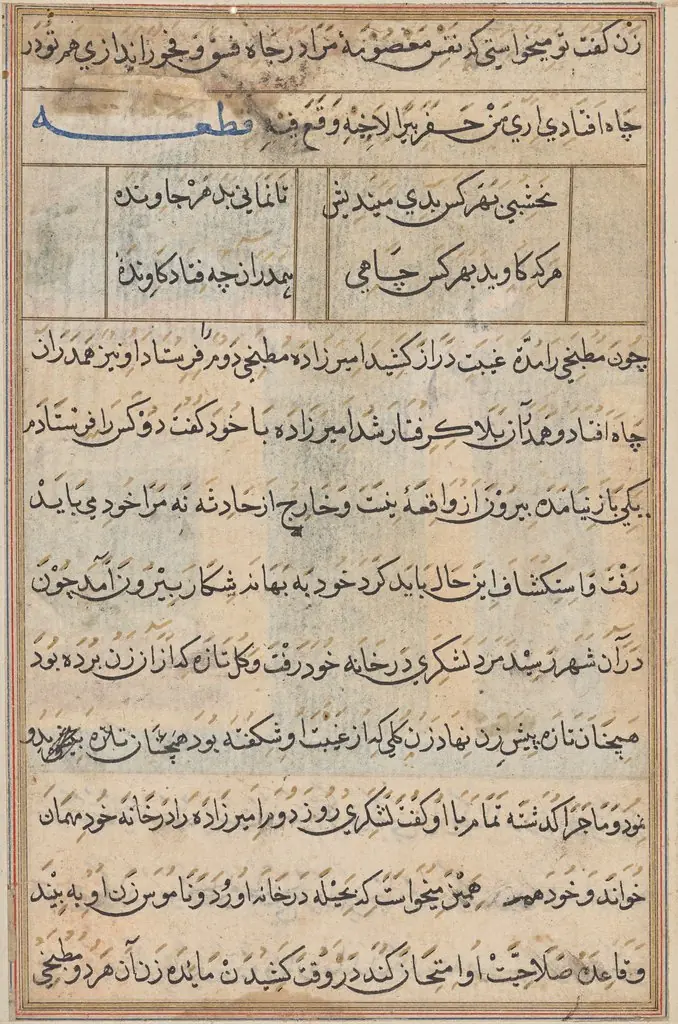
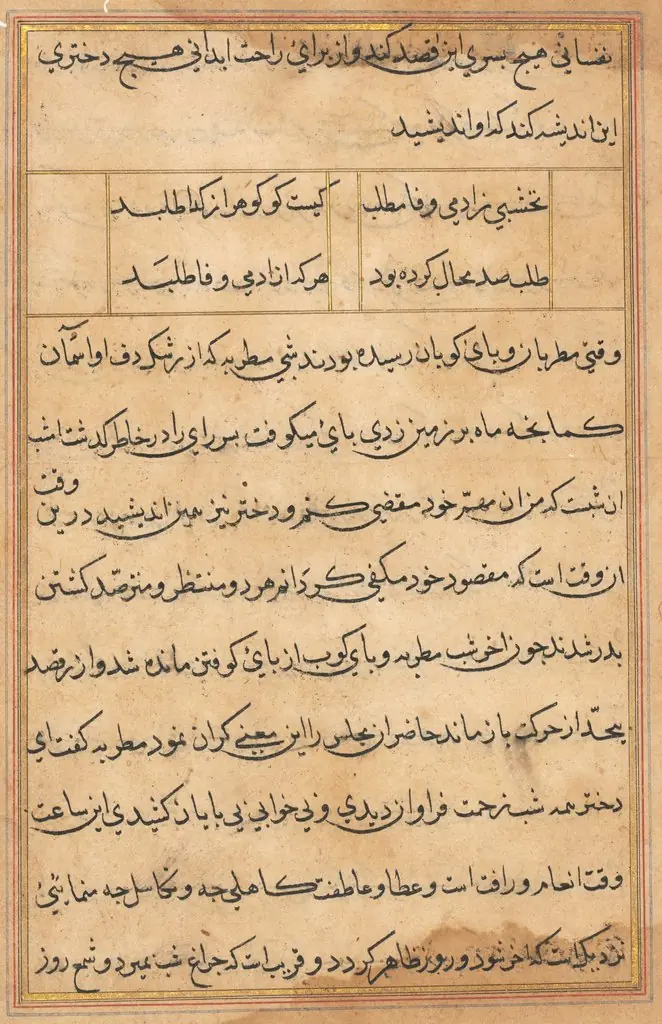
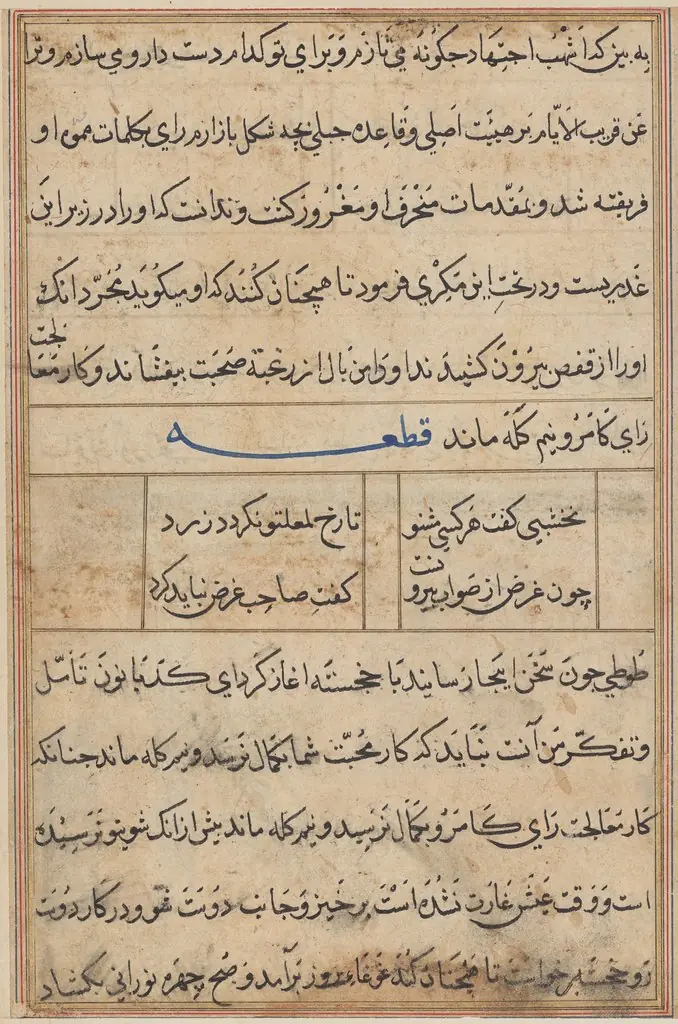
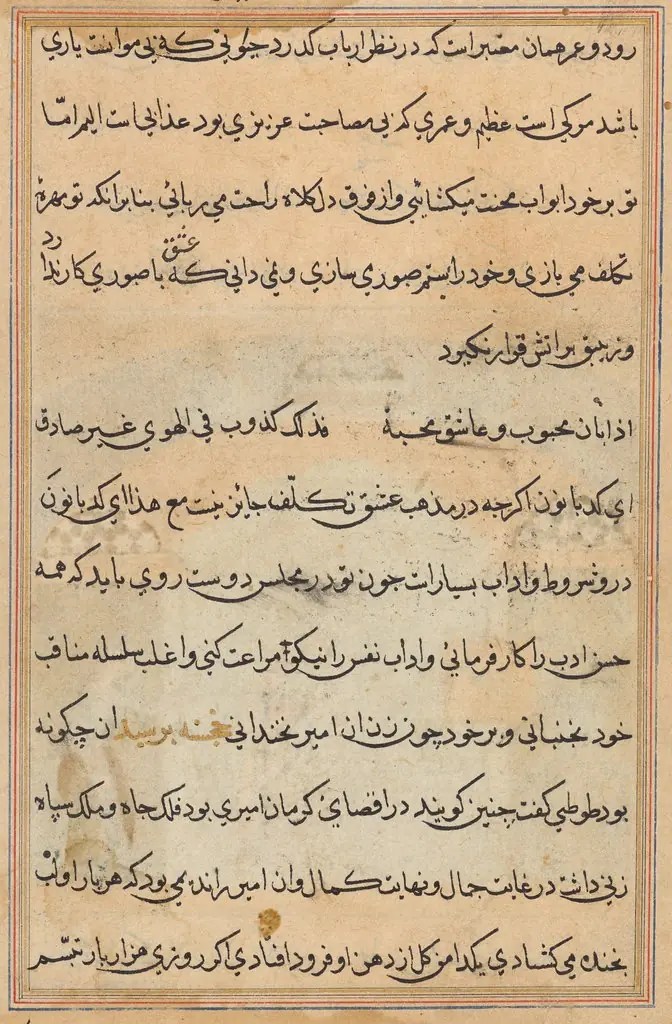
Page from Tales of a Parrot (Tuti-nama): text page
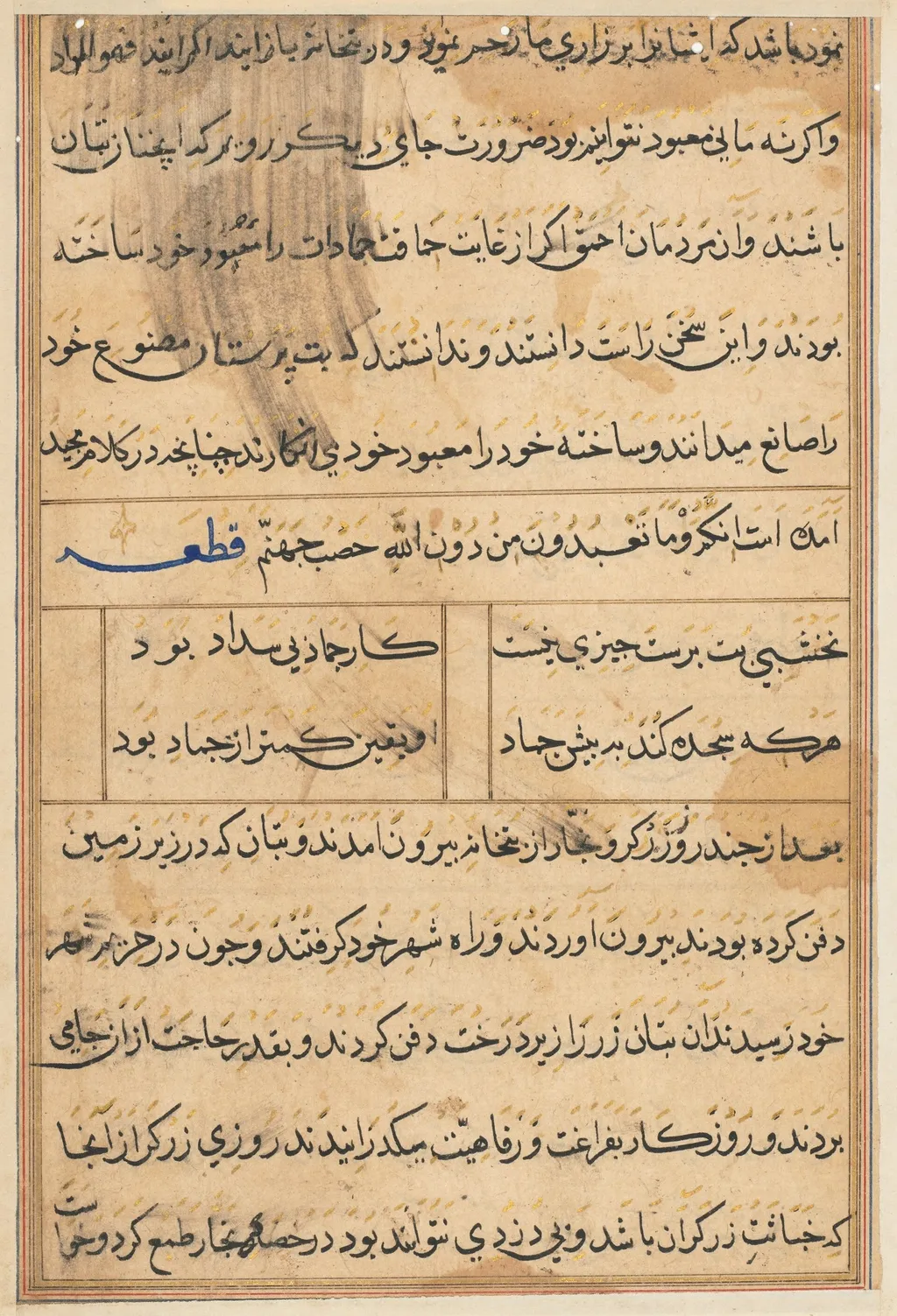
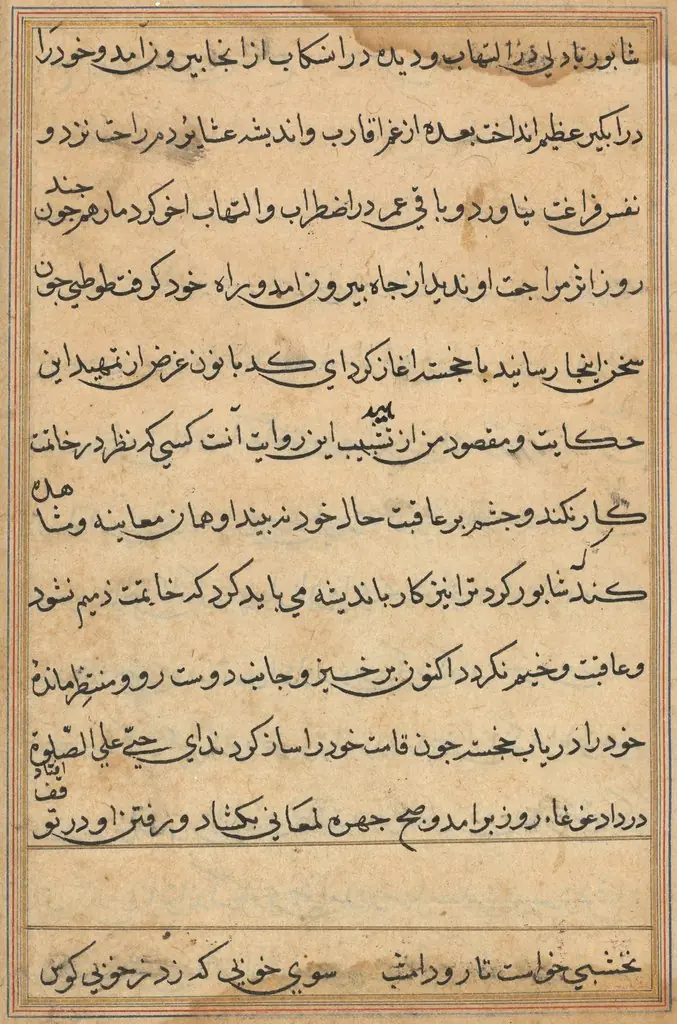
Page from Tales of a Parrot (Tuti-nama): text page is an unspecified painting. It dates from 1560 and is held in the collection of the Cleveland Museum of Art. The work is a single folio from the illustrated manuscript known as *Tuti‑nama* (Tales of a Parrot).
About this work
Overview
The composition is organized by horizontal lines that separate distinct textual sections, giving the page a clear, orderly structure.
The work is a single folio from the illustrated manuscript known as *Tuti‑nama* (Tales of a Parrot). Rendered on parchment with a warm, yellowish ground, the page displays a continuous block of text in black ink, punctuated by occasional red and blue decorative elements. The composition is organized by horizontal lines that separate distinct textual sections, giving the page a clear, orderly structure.
Subject & Meaning
The manuscript contains a collection of moral and didactic stories, traditionally narrated by a parrot to convey ethical lessons. While the specific passage on this page is not transcribed here, the overall purpose of the *Tuti‑nama* is to educate readers through allegorical tales, reflecting the pedagogical traditions of Persian and Arabic literary culture.
Technique & Style
The calligraphy is executed in a flowing, cursive script characteristic of Persian manuscript tradition, with elegant strokes and ornamental flourishes. Small decorative dots and fine lines embellish certain letters, enhancing visual richness. Accents of red and blue appear as marginal motifs or initial letters, providing contrast and highlighting key sections without overwhelming the primary black text.
History & Provenance
The page originates from an older, likely pre‑modern manuscript, though precise dating and origin are not recorded in the supplied information. Its presence in a museum collection suggests it was acquired as part of a larger set of *Tuti‑nama* folios, a text that circulated widely across the Islamic world from the medieval period onward.
Artist & collection

 Page from Tales of a Parrot (Tuti-nama): text page
 Page from Tales of a Parrot (Tuti-nama): text page
 Page from Tales of a Parrot (Tuti-nama): text page
 Page from Tales of a Parrot (Tuti-nama): text page
 Page from Tales of a Parrot (Tuti-nama): text page
 Page from Tales of a Parrot (Tuti-nama): text page
 Page from Tales of a Parrot (Tuti-nama): text page
 Page from Tales of a Parrot (Tuti-nama): text page
 Page from Tales of a Parrot (Tuti-nama): text page