Artwork
Wapenbord van de rederijkerskamer Heilige Geest
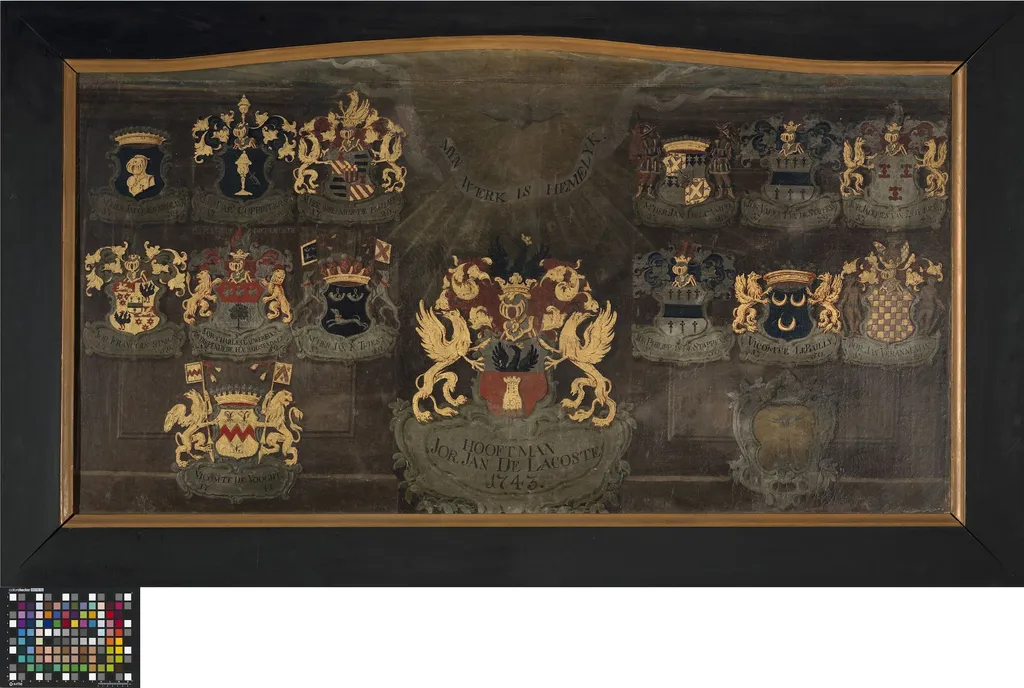
Wapenbord van de rederijkerskamer Heilige Geest is an oil painting by the Rococo painting artist Unknown. It dates from 1743 and is held in the collection of the Groeningemuseum. This oil painting is a large, framed heraldic composition created for a rederijkerskamer, or rhetorical chamber, in the Low Countries.
About this work
Overview
The palette is restrained, dominated by gold, red, and black, with no landscape or figural elements beyond the heraldic symbols themselves.
This oil painting is a large, framed heraldic composition created for a rederijkerskamer, or rhetorical chamber, in the Low Countries. It presents a systematic arrangement of family crests in a grid, emphasizing lineage and civic identity. The palette is restrained, dominated by gold, red, and black, with no landscape or figural elements beyond the heraldic symbols themselves. The work functions as a collective emblem of membership and status within the chamber.
Subject & Meaning
The painting displays a collection of coats of arms belonging to members of the Heilige Geest rhetorical chamber. At its center, a prominent shield flanked by golden griffins signifies the chamber’s patronage or leading family. Surrounding crests, featuring lions, crowns, and other traditional heraldic devices, reflect the social and familial networks bound by the chamber’s cultural activities. The arrangement suggests hierarchy and unity among its members.
Technique & Style
The artist rendered each crest with precise, meticulous brushwork, capturing fine details of metalwork, embroidery, and animal forms typical of heraldic tradition. The muted tones and flat application of color avoid illusionism, prioritizing clarity and symbolic legibility. Gold leaf or metallic paint may have been used to highlight key elements, enhancing their visual weight without breaking the overall formal restraint of the composition.
History & Provenance
Created for the rederijkerskamer Heilige Geest, likely in the late 16th or early 17th century, the painting served as a permanent display in the chamber’s meeting hall. It documented the families who contributed to the group’s literary and civic life. Its survival suggests continued institutional pride; it may have been preserved through the chamber’s dissolution, later entering a public or private collection as a historical artifact.
Context
Rhetorical chambers were civic associations in the Low Countries that promoted poetry, drama, and public debate. Membership was often tied to urban elites, and visual emblems like this painting reinforced communal identity. Heraldry, traditionally reserved for nobility, was adopted by these bourgeois groups to assert social standing. This work reflects the blending of civic pride with aristocratic visual language in early modern Dutch society.
Legacy
The painting stands as a rare surviving example of institutional heraldic art from the rederijkerskamer tradition. It provides insight into how non-noble groups adapted noble symbolism to express collective identity. Today, it is valued not for aesthetic innovation but as a documentary record of social organization, civic culture, and the visual language of belonging in early modern Northern Europe.
Artist & collection

 Domestic Scene
 Giacomo and Cardinal Marco, investing Andrea, Abbot of San Zeno, with his Benefice
 The Nymph of Fontainebleau
 Portrait of a Woman
 Madonna and Child with Saints in the Enclosed Garden
 Venus and Minerva
 Family Group of Four on Sofa
 Wall painting from Room H of the Villa of P. Fannius Synistor at Boscoreale
 Wapenbord van het Brugse vleeshouwersambacht
 Memorietafel van Jan Lopez Gallo
 Pedigree of Filips de Cortewille
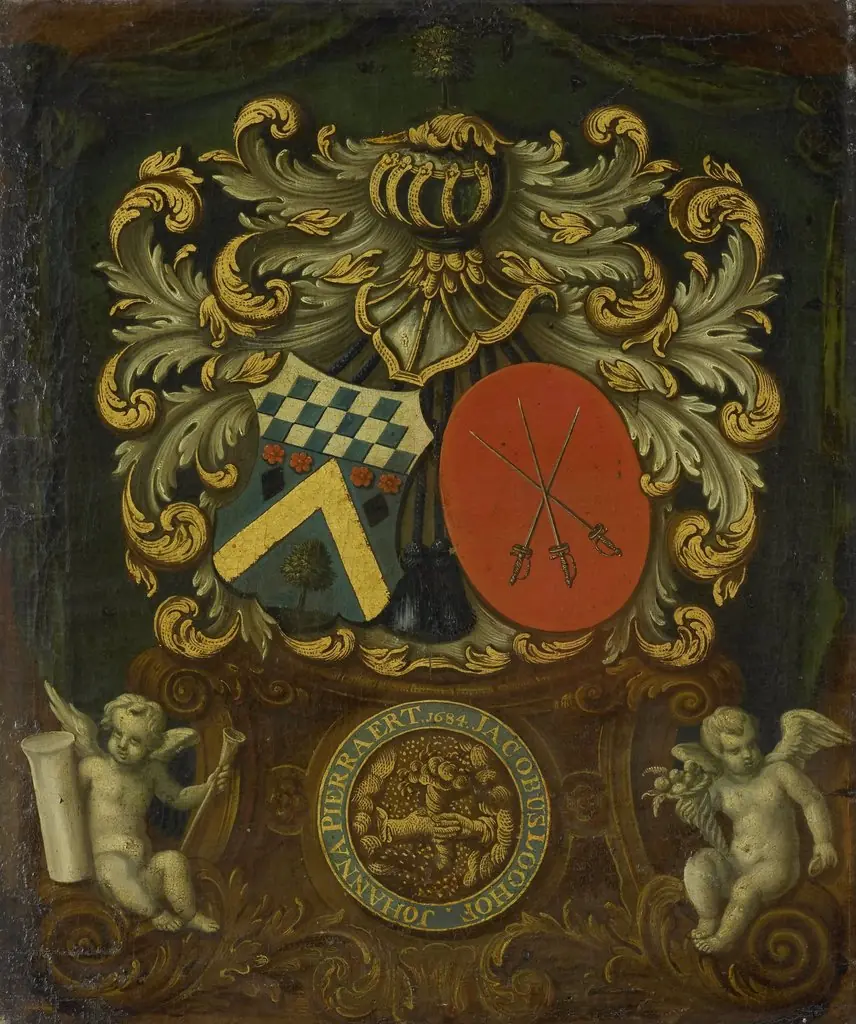 The family shields of Jacobus Loohoff and Johanna Pierraert, 1684
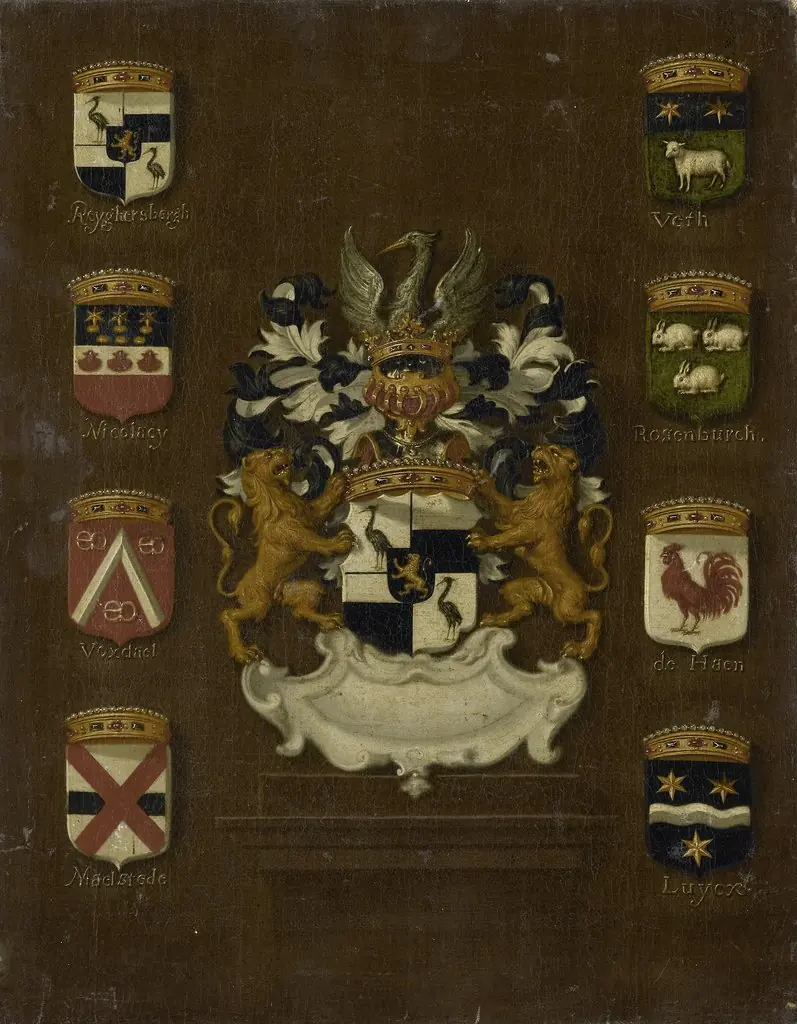 Coat of Arms of Jan van Reyersbergh with its eight quarterings
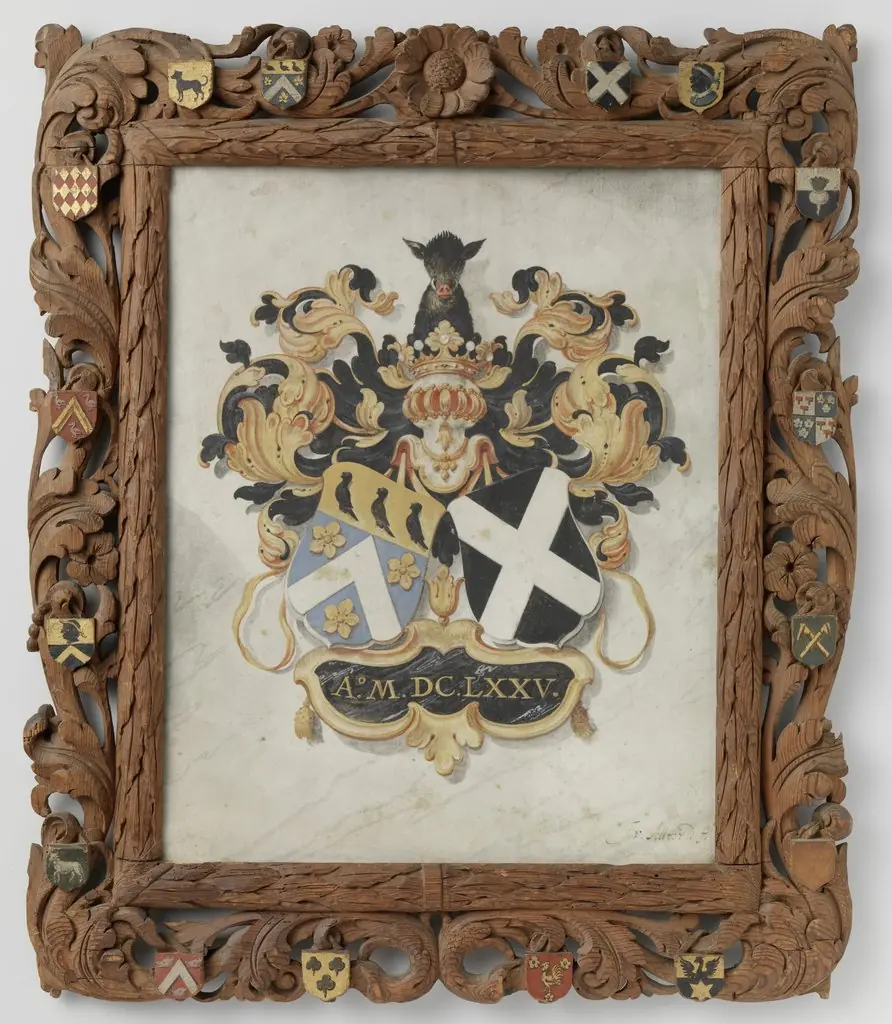 The family shields of Jan Boudaen Courten and Anna Maria Hoeufft
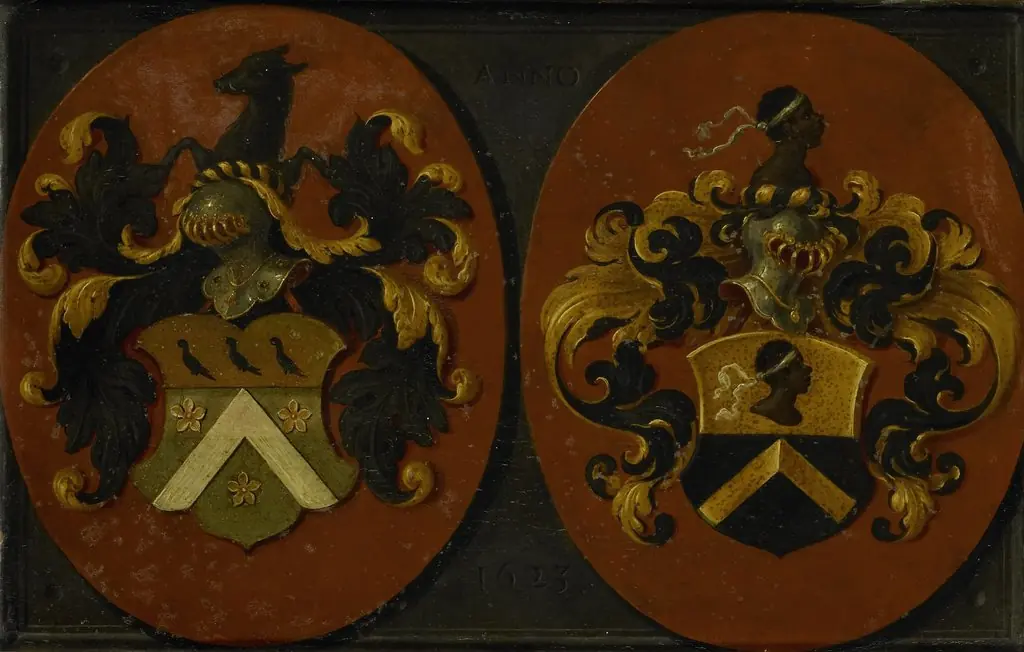 Wapenbord met de wapens van Boudaen en Fourmenois, 1623 (het wapen van Fourmenois omgewend)
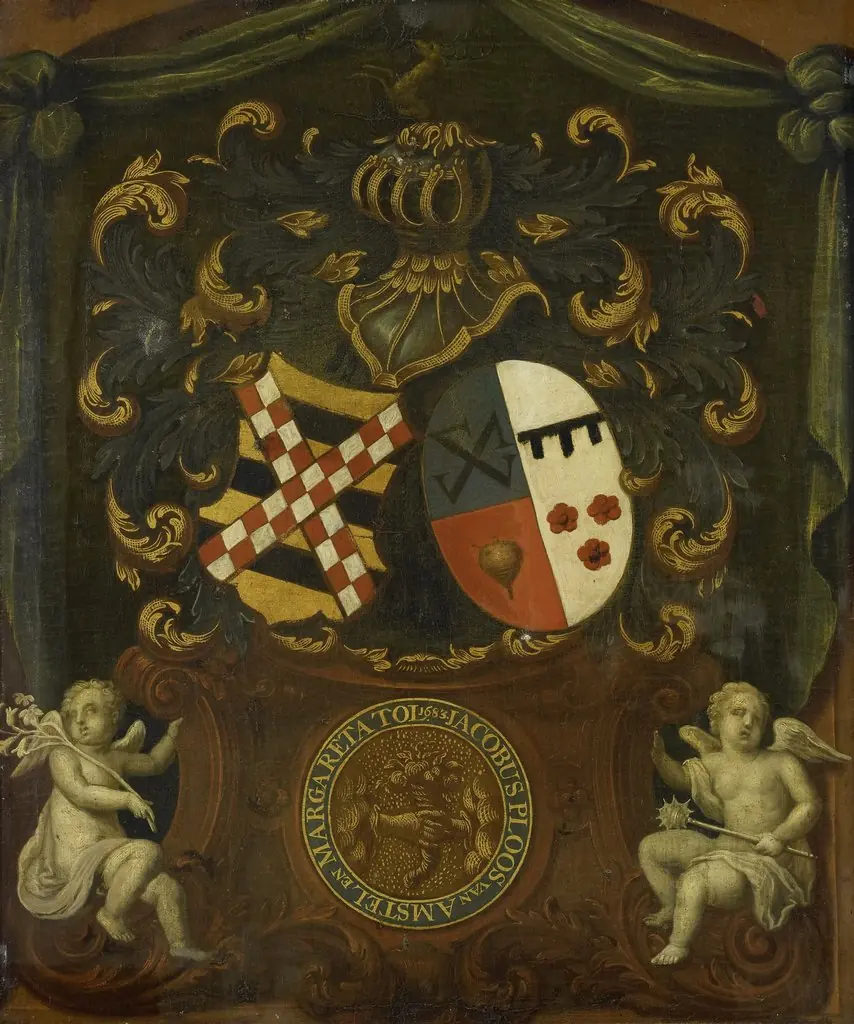 The family shields of Jacob Ploos van Amstel and Margareta Tol