Artwork
Mandala of Vasudhara
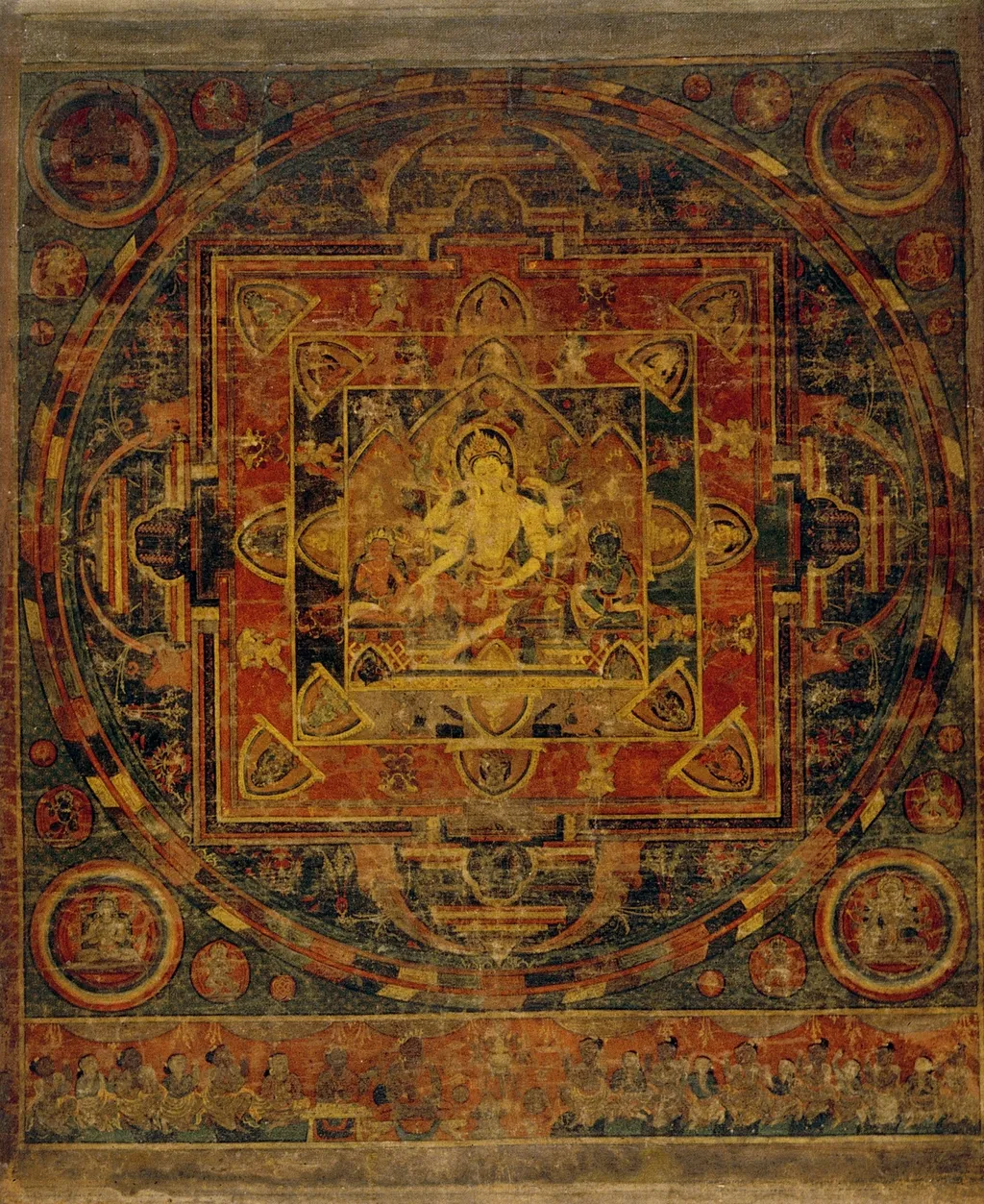
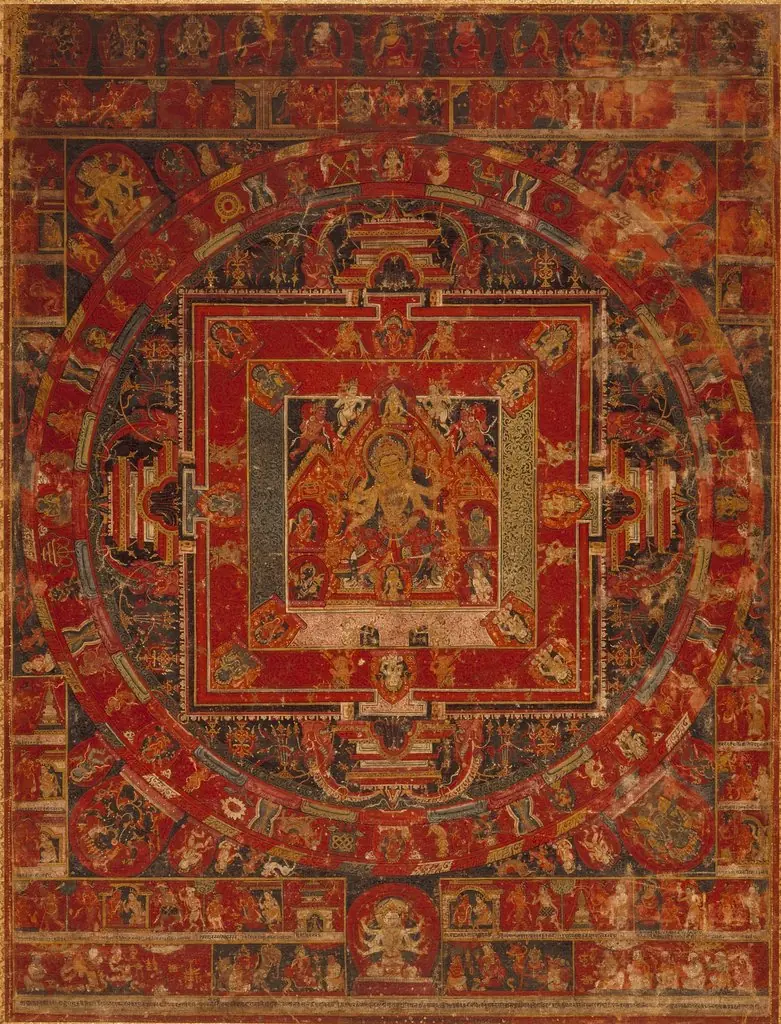
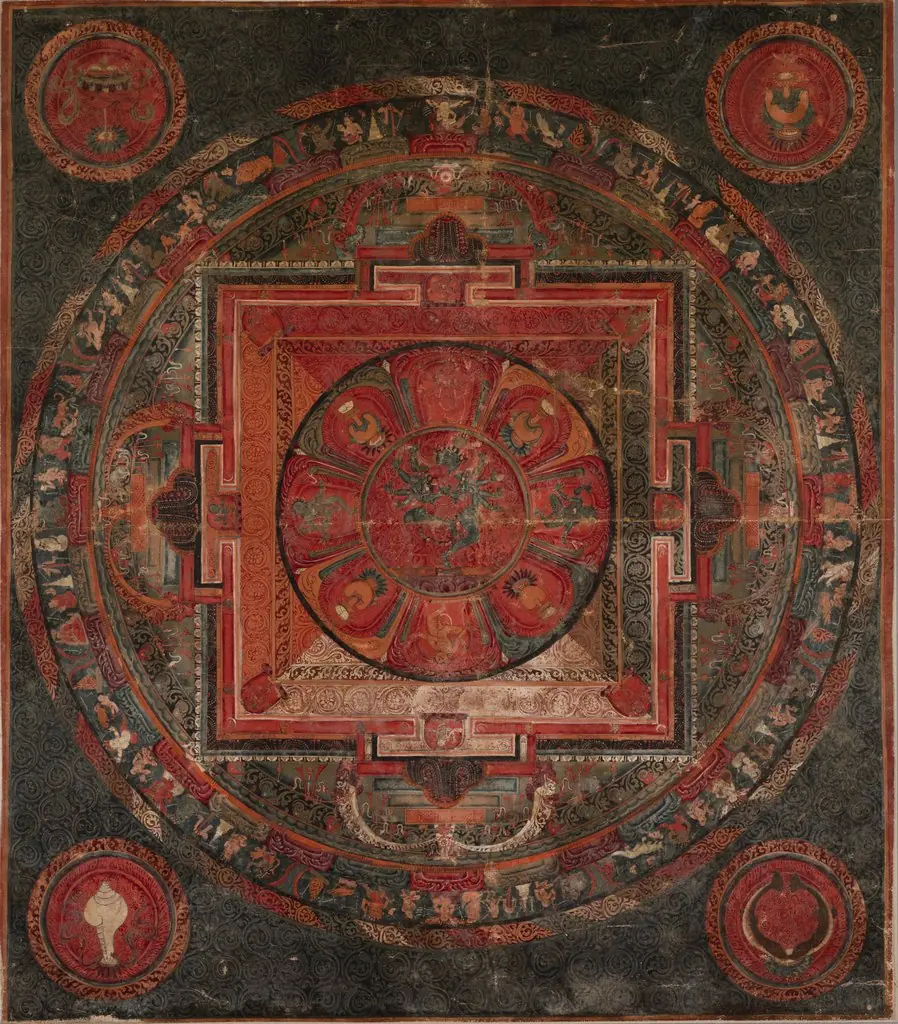
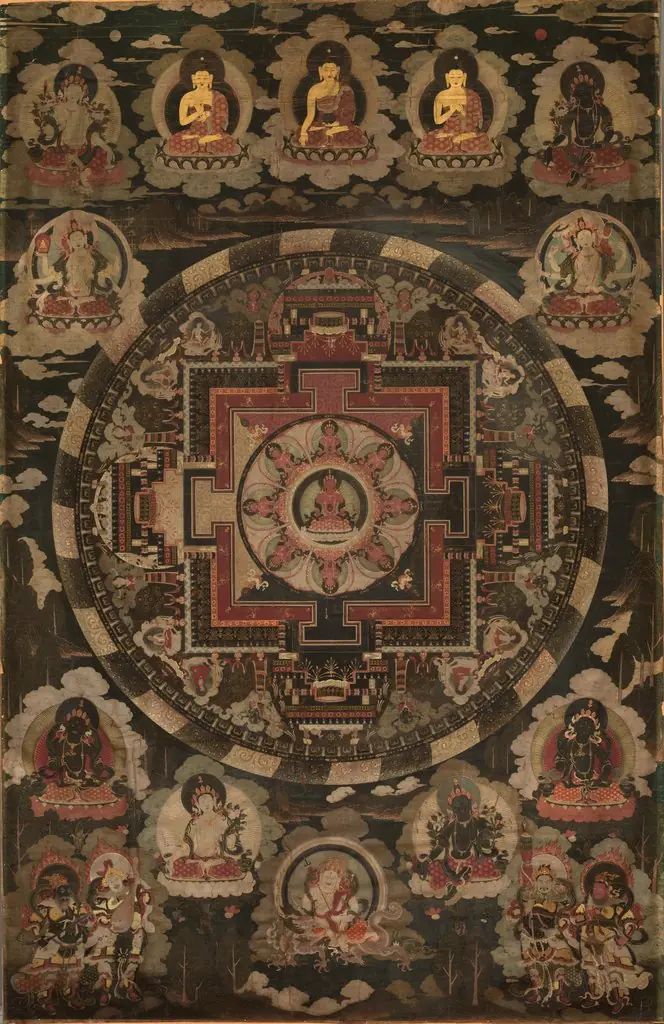
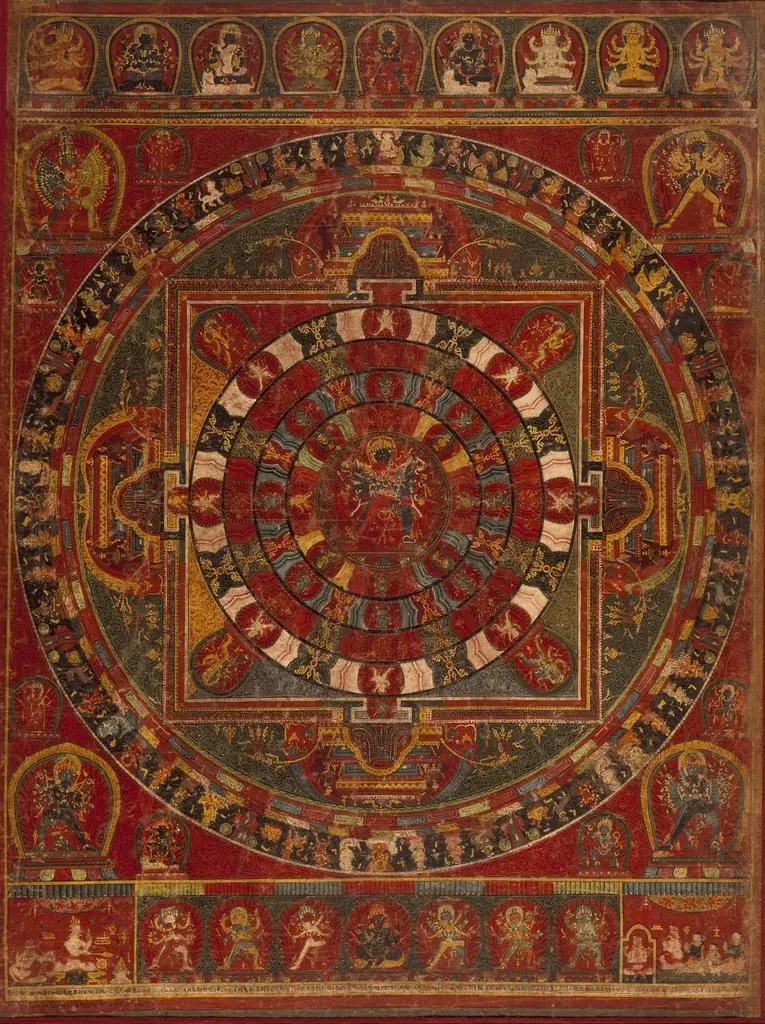
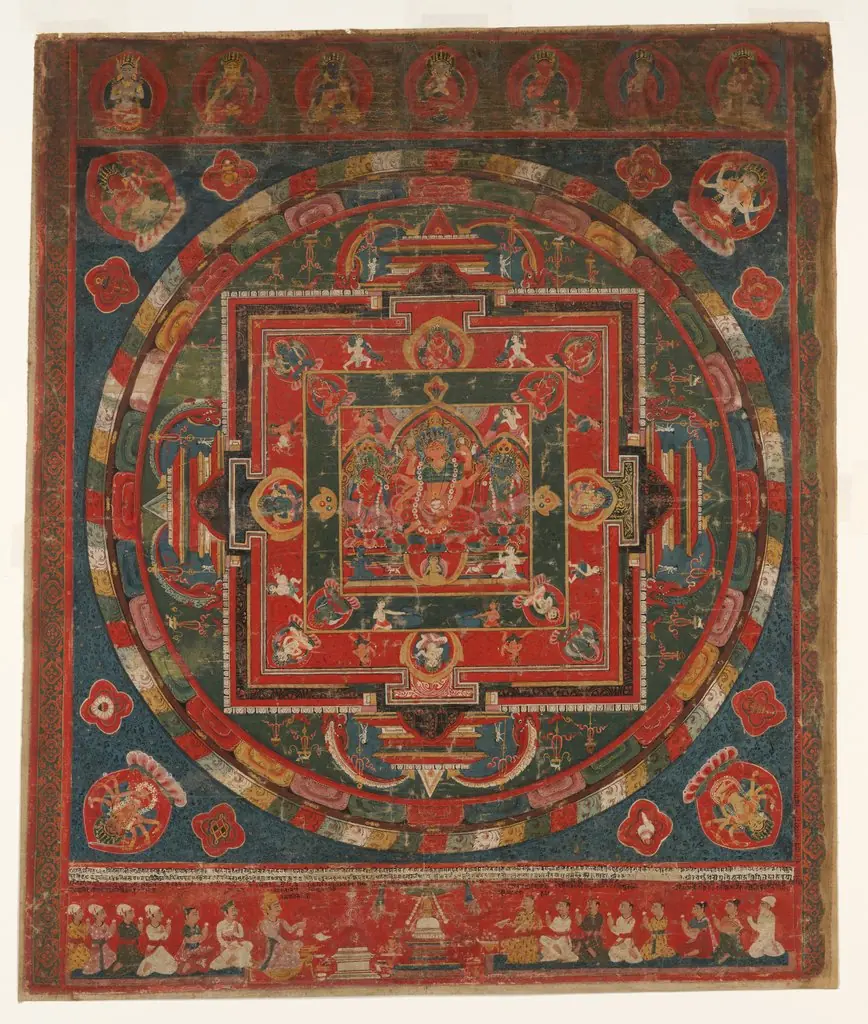
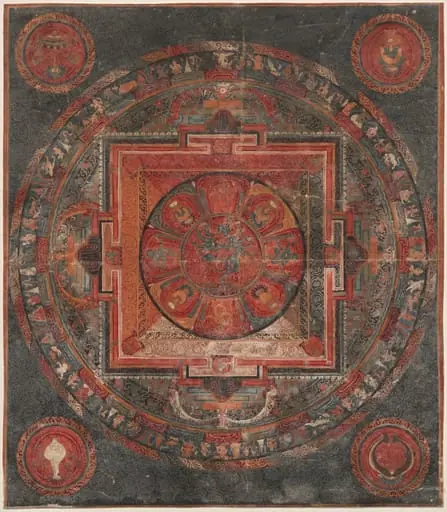
Mandala of Vasudhara is an unspecified painting by Unknown. It dates from 1450 and is held in the collection of the Los Angeles County Museum of Art. This square painting, housed at the Los Angeles County Museum of Art, depicts a mandala centered on the goddess Vasudhara.
About this work
Overview
Rich pigments in red, yellow, and blue define its visual structure, while signs of age—fading, cracking, and wear—reflect its ritual use and historical passage.
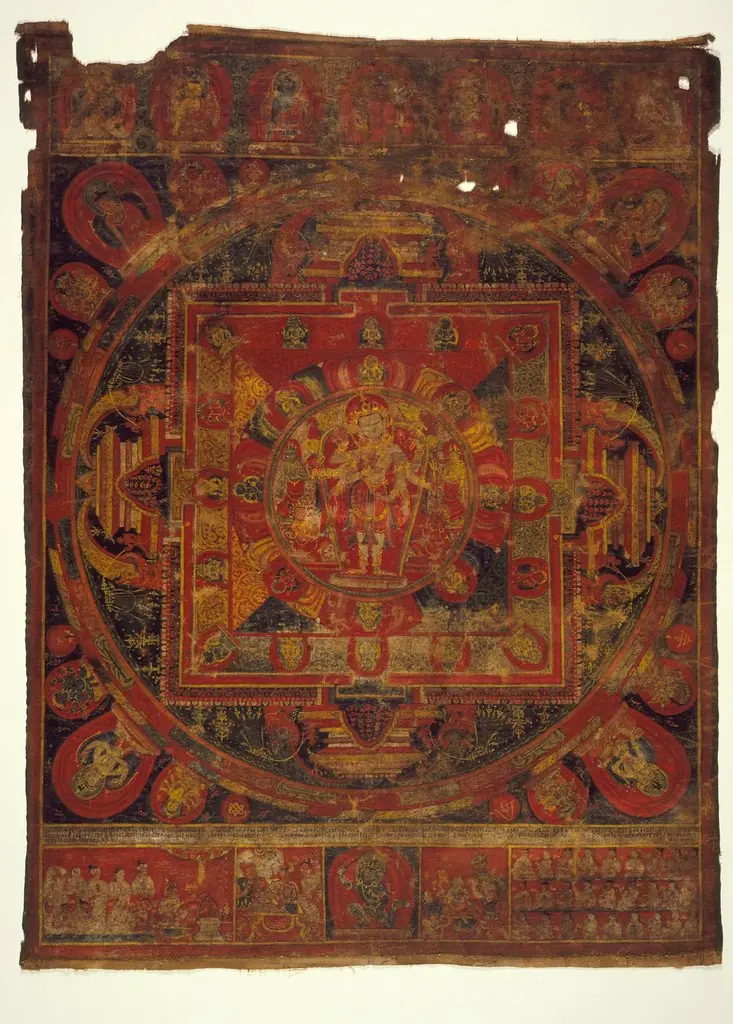
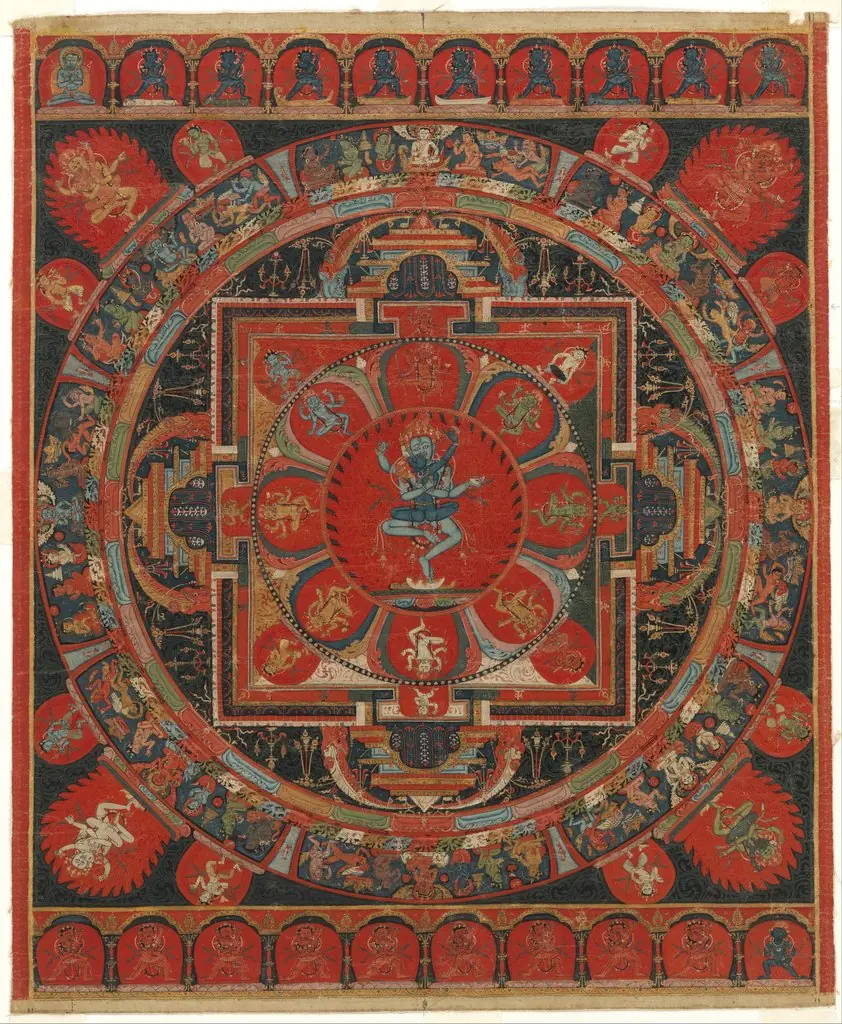
This square painting, housed at the Los Angeles County Museum of Art, depicts a mandala centered on the goddess Vasudhara. The composition features concentric circles filled with intricate geometric and symbolic forms, all radiating from a central figure seated atop a lotus. Rich pigments in red, yellow, and blue define its visual structure, while signs of age—fading, cracking, and wear—reflect its ritual use and historical passage.
Subject & Meaning
Vasudhara, the Buddhist goddess of abundance and prosperity, is portrayed with multiple arms and legs, symbolizing her expansive power to bestow wealth and spiritual fortune. Surrounding figures and motifs represent deities, donors, and sacred elements, forming a cosmological map. The mandala serves as a meditative aid, guiding practitioners toward enlightenment through visualized divine order and harmony.
Technique & Style
Executed in mineral pigments on cloth, the painting employs fine brushwork to render detailed patterns within nested circles and symmetrical layouts. The use of bold, saturated colors contrasts with the worn surface, suggesting repeated ritual handling. The rigid geometry and hierarchical arrangement follow traditional Tibetan Buddhist iconographic conventions, emphasizing balance and sacred geometry.
History & Provenance
Created likely in the 14th or 15th century in Tibet or a neighboring Himalayan region, the painting was used in monastic practice before entering private or institutional collections. Its condition indicates prolonged ceremonial use. It was acquired by LACMA through documented means, becoming part of its South Asian art collection in the 20th century.
Context
Mandalas like this were integral to Vajrayana Buddhist practice, functioning as visual tools for meditation and ritual initiation. They often adorned temple walls or were used in private devotion. This example reflects the fusion of Indian Buddhist iconography with Tibetan artistic traditions, where complex symbolism conveyed doctrinal teachings to both monastic and lay audiences.
Legacy
As a preserved example of Himalayan Buddhist art, the painting contributes to scholarly understanding of ritual visual culture. Its presence in a major Western museum allows broader access to non-Western spiritual aesthetics, fostering dialogue on the role of sacred art beyond its original religious context.
Artist & collection

 Domestic Scene
 Giacomo and Cardinal Marco, investing Andrea, Abbot of San Zeno, with his Benefice
 The Nymph of Fontainebleau
 Portrait of a Woman
 Madonna and Child with Saints in the Enclosed Garden
 Venus and Minerva
 Family Group of Four on Sofa
 Wall painting from Room H of the Villa of P. Fannius Synistor at Boscoreale