Artwork
Mandala
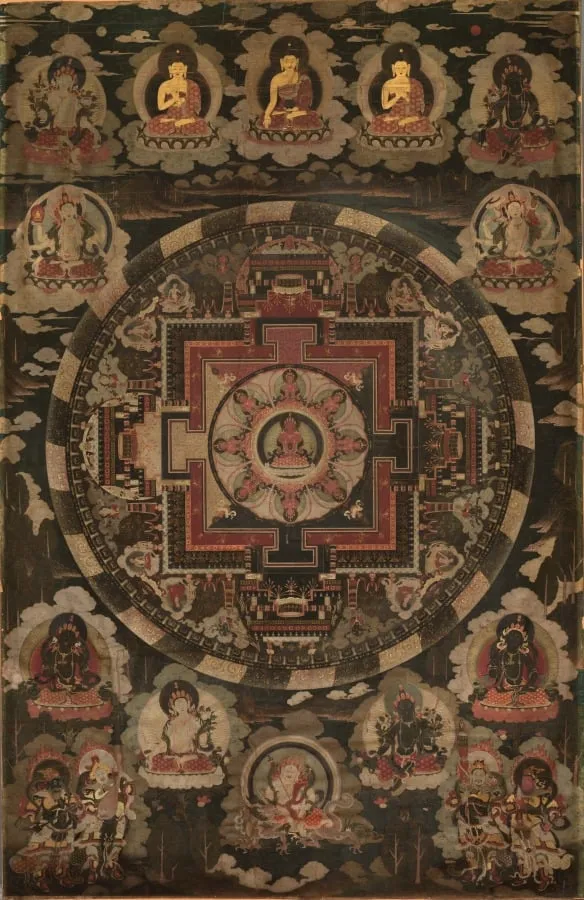
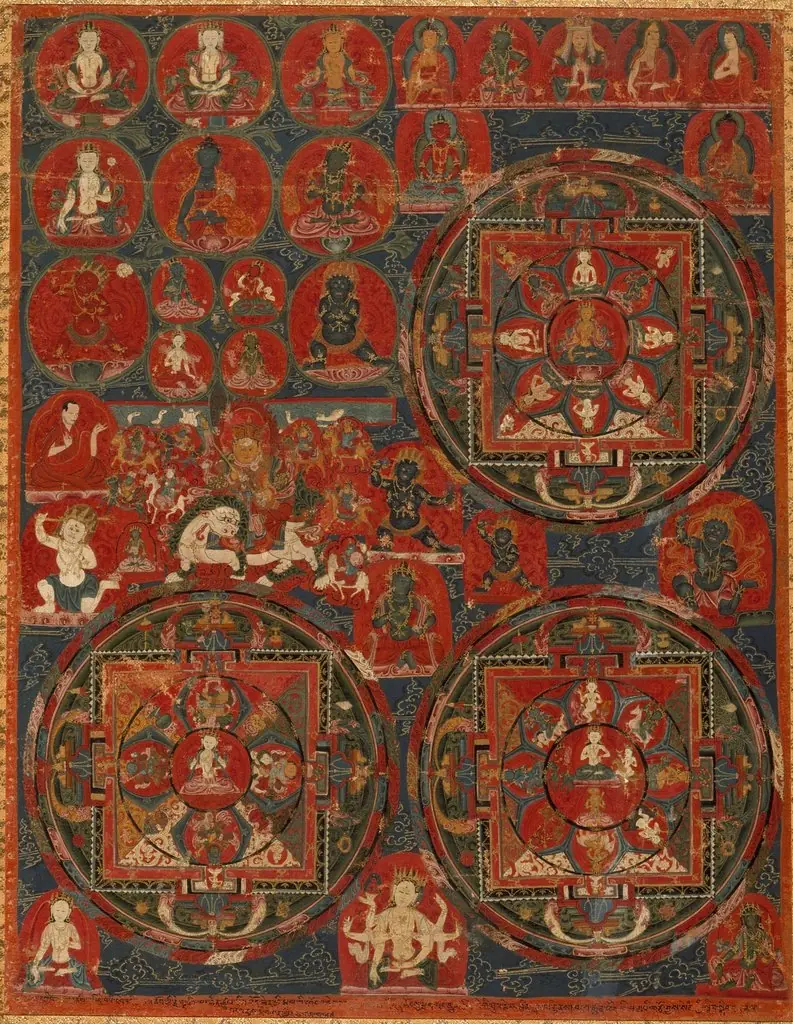
Mandala is an unspecified painting by the Baroque artist Unknown. It dates from 1704 and is held in the collection of the Cleveland Museum of Art. The work presents a large circular composition densely filled with vivid hues and a multitude of figures.
About this work
Overview
The work presents a large circular composition densely filled with vivid hues and a multitude of figures. At its heart lies a red‑and‑white square containing smaller geometric motifs, while surrounding clouds host seated robed figures. Beyond the circle, additional characters stand on clouds or occupy throne‑like seats, all rendered in striking reds, golds, and blues with meticulous detail.
Subject & Meaning
The arrangement suggests a spiritual tableau, drawing on iconography associated with a tradition that emphasizes layered cosmology and ritual presence. The central square may symbolize a sacred focal point, while the surrounding clouds and thrones evoke celestial realms and hierarchical order, inviting contemplation of a structured metaphysical map.
Technique & Style
Executed with a flat, decorative approach, the painting relies on bold color blocks and intricate patterning rather than volumetric modeling. Fine line work delineates each figure and motif, creating a dense tapestry of interlocking forms that resemble a puzzle or mandala diagram, reinforcing the sense of ordered complexity.
Context
The visual language aligns with artistic practices found in Tibetan cultural contexts, where mandalic designs serve both meditative and didactic purposes. Such compositions often function as symbolic representations of the universe, reflecting the region’s intertwining of religious doctrine and visual art.
Artist & collection

 Domestic Scene
 Giacomo and Cardinal Marco, investing Andrea, Abbot of San Zeno, with his Benefice
 The Nymph of Fontainebleau
 Portrait of a Woman
 Madonna and Child with Saints in the Enclosed Garden
 Venus and Minerva
 Family Group of Four on Sofa
 Wall painting from Room H of the Villa of P. Fannius Synistor at Boscoreale
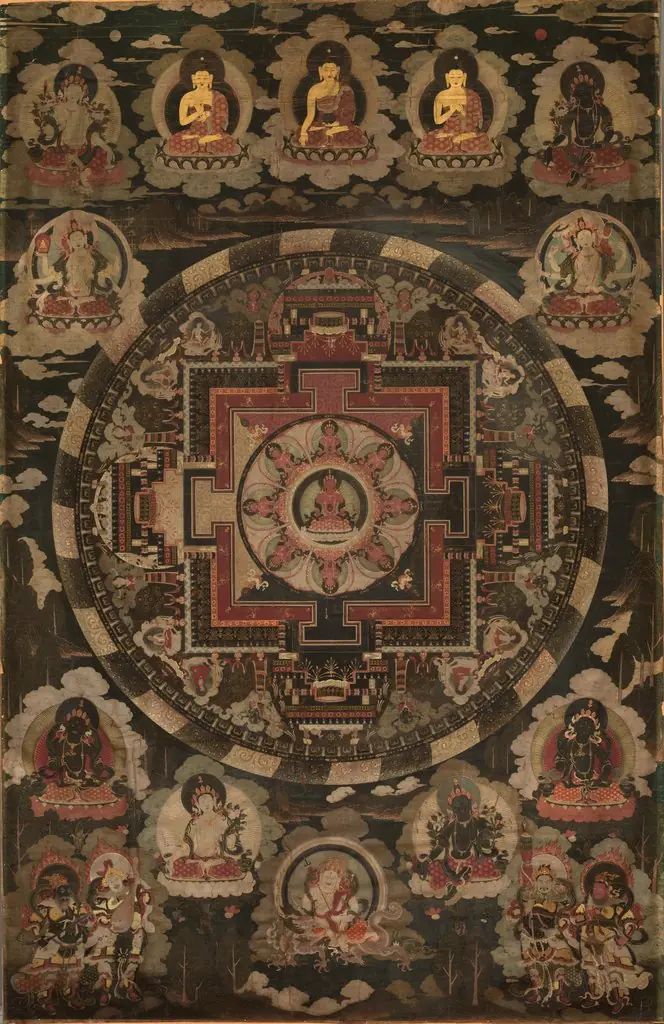 Mandala
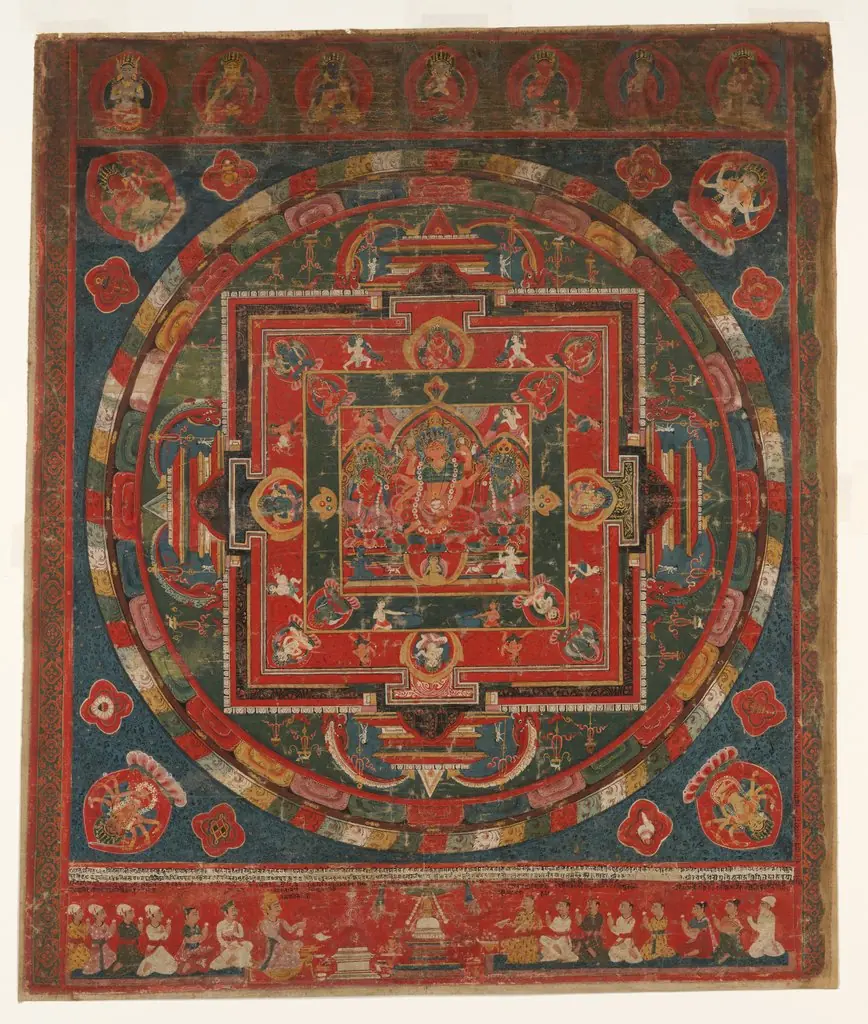 Vasudhara Mandala
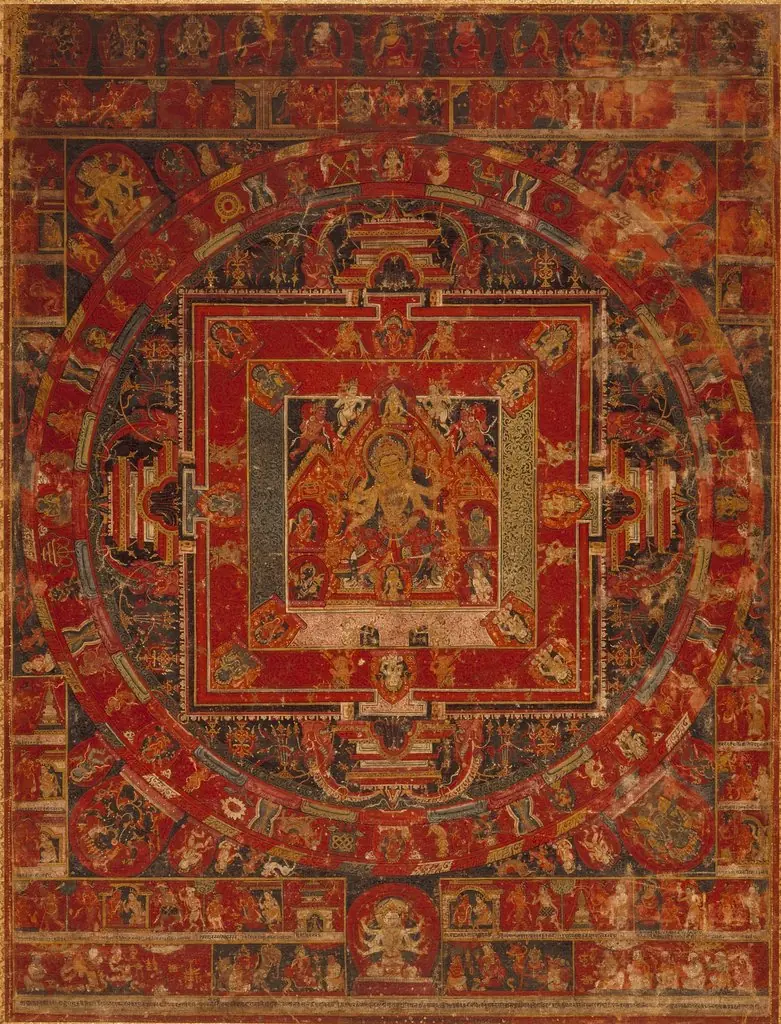 Mandala of Vasudhara
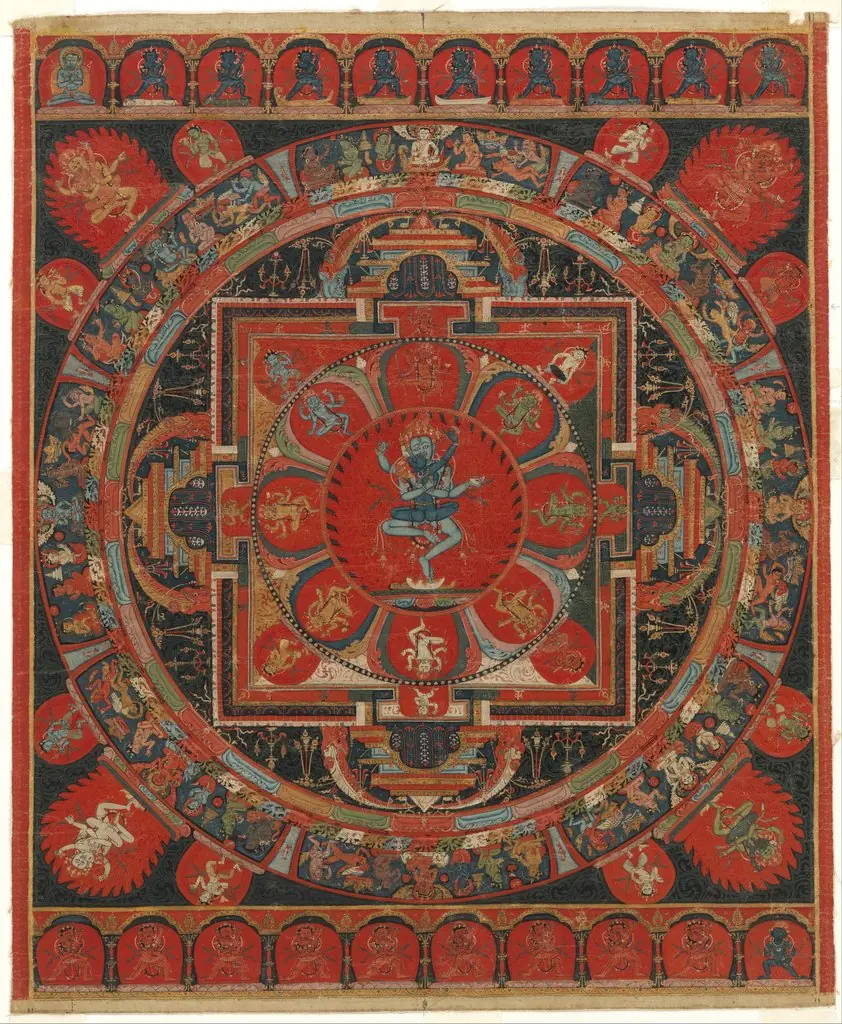 Hevajra Mandala
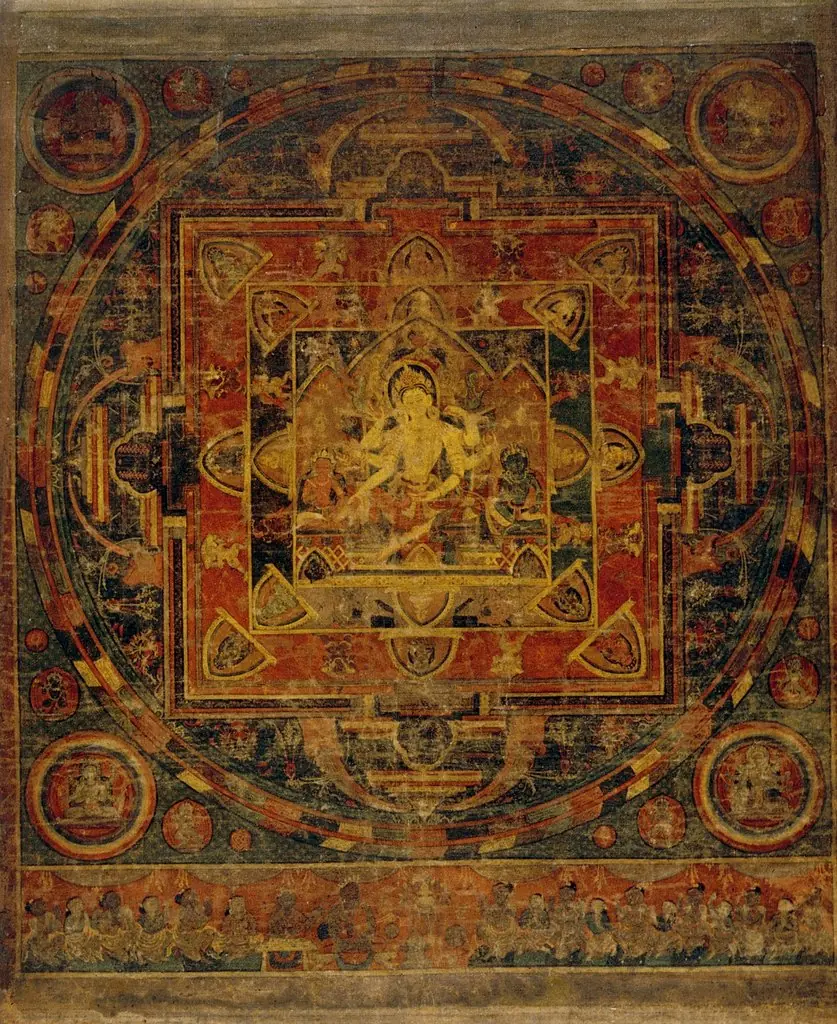 Mandala of Vasudhara
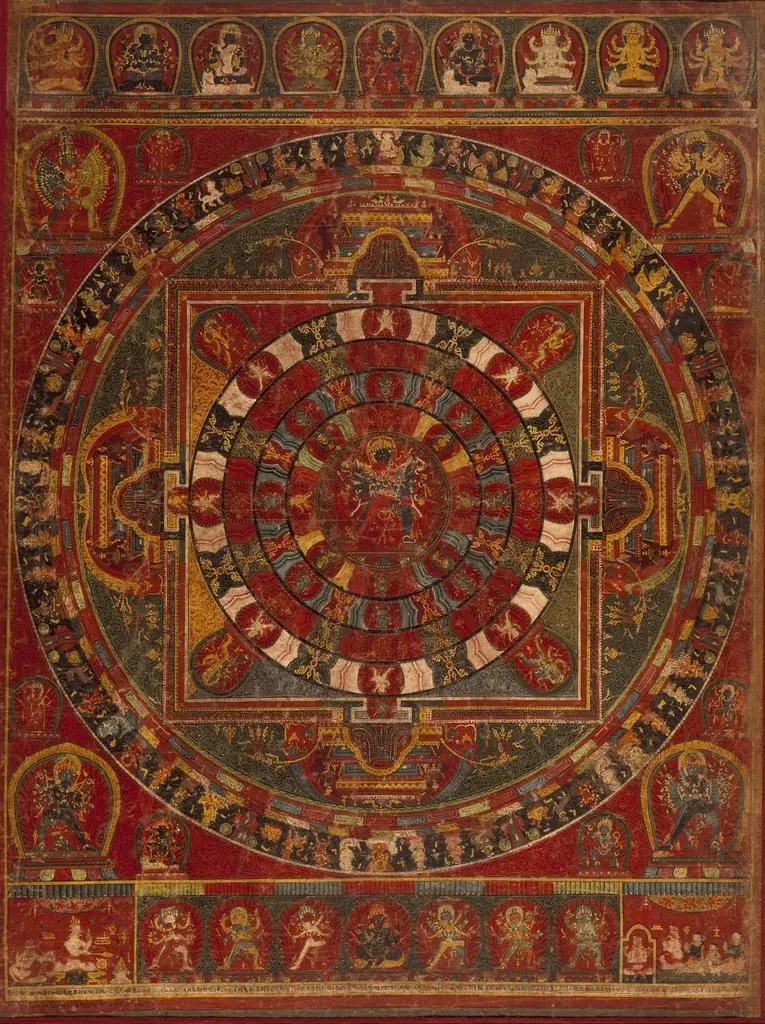 Mandala of the Buddhist Deity Chakrasamvara
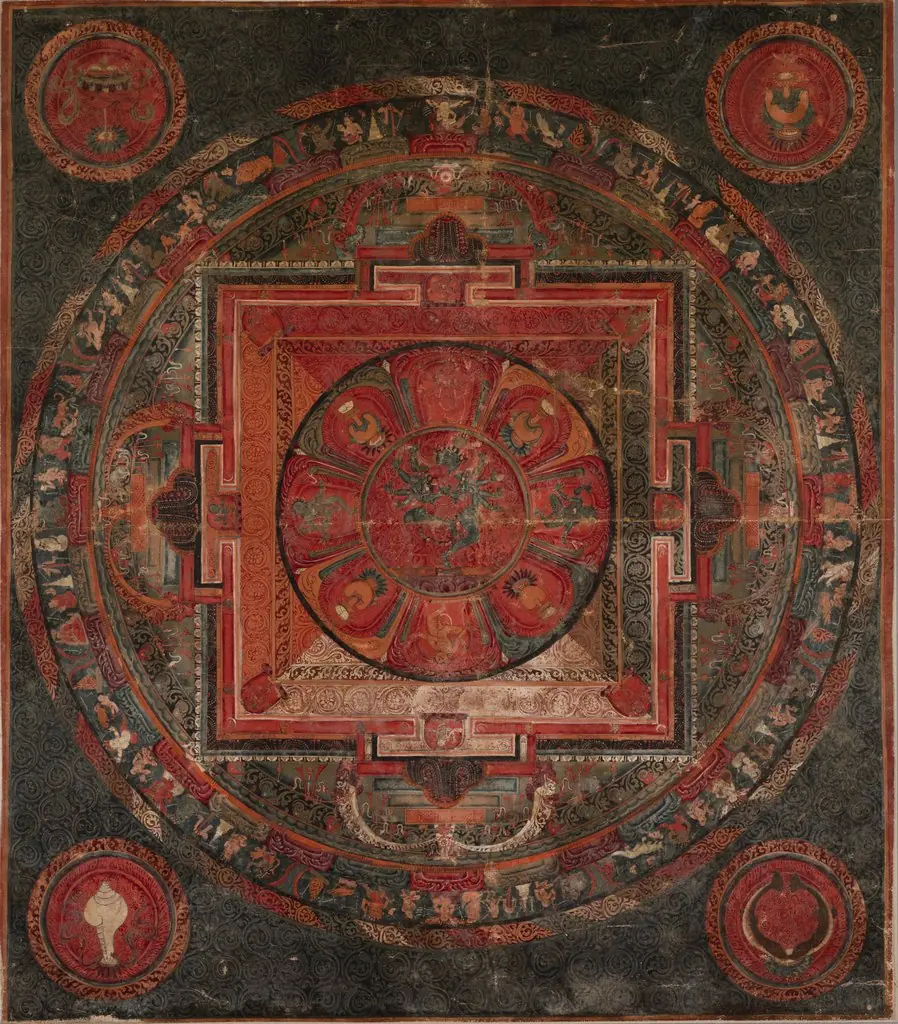 Mandala of Chakrasamvara and Vajravarahi
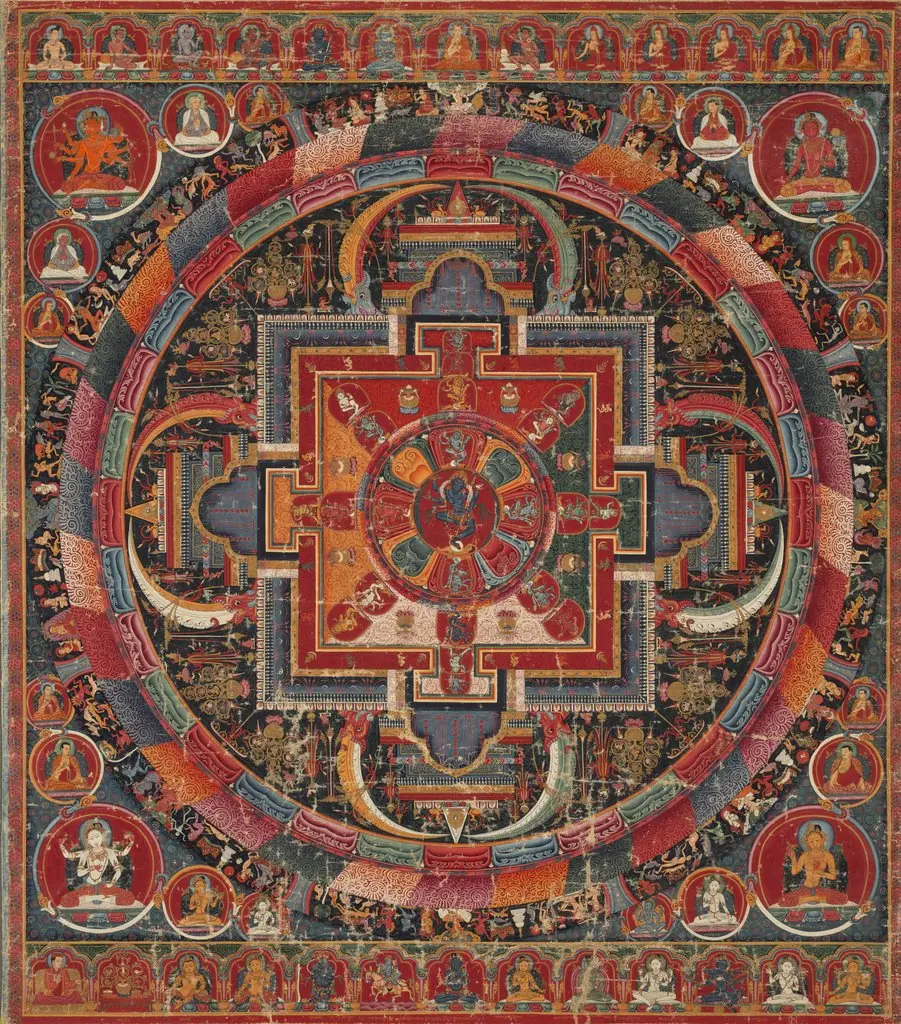 Twenty-three Deity Nairatma Mandala
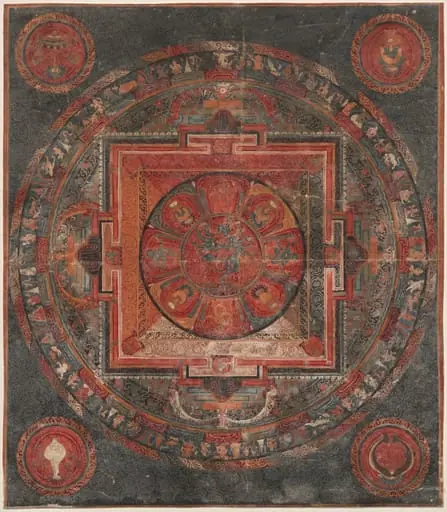 Mandala of Chakrasamvara and Vajravarahi
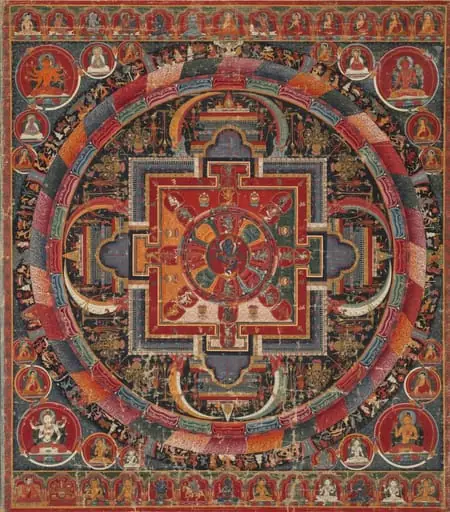 Twenty-three Deity Nairatma Mandala
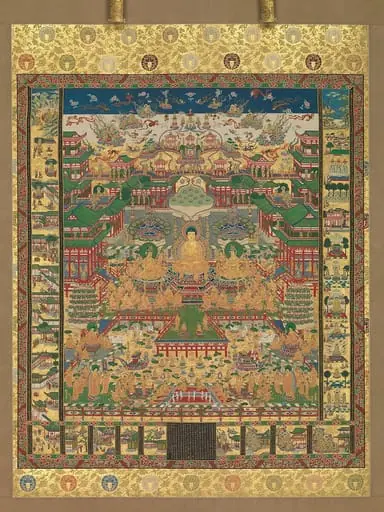 当麻曼荼羅|Taima Mandala
 Three Mandalas