Artwork
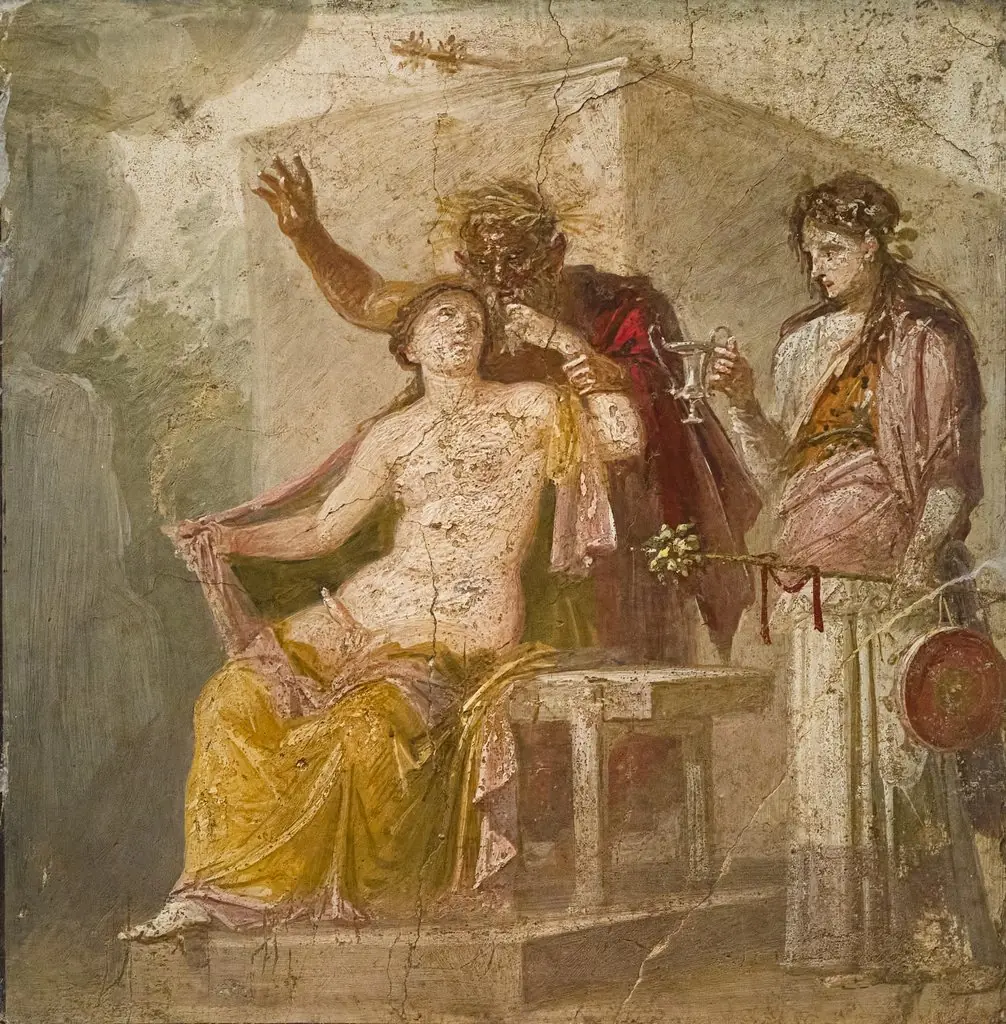
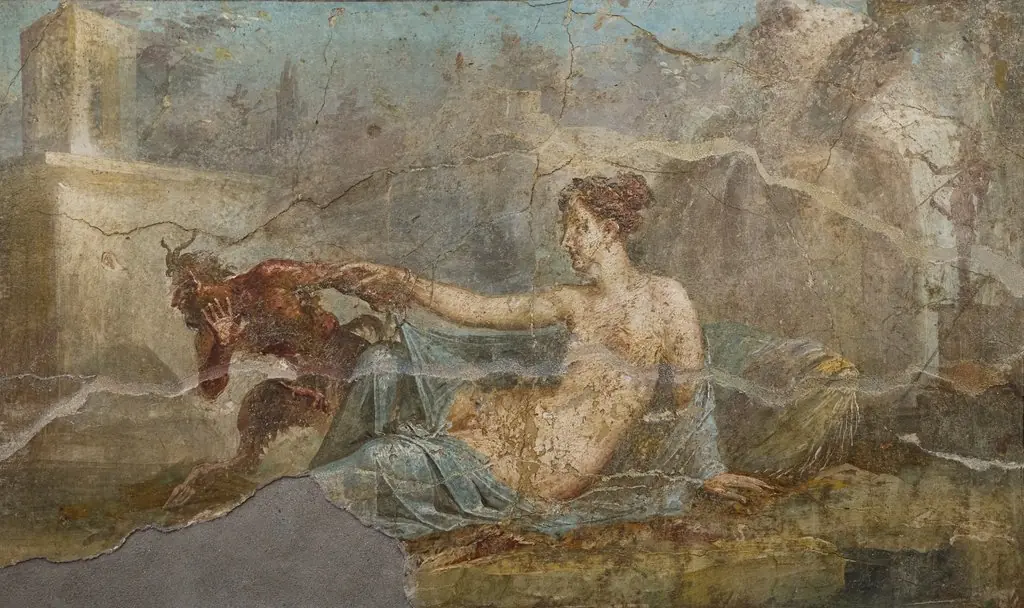
Polyphemus receives a letter from Galatea.
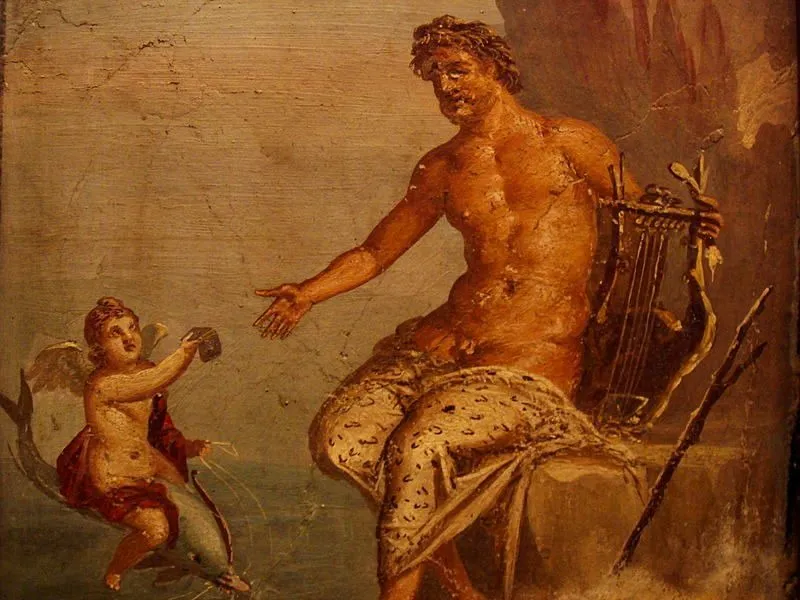
Polyphemus receives a letter from Galatea. is a fresco painting by Unknown. It is held in the collection of the Naples National Archaeological Museum. The work is a fresco portraying a moment from classical mythology in which the Cyclops Polyphemus is presented with a written message.
About this work
Overview
The work is a fresco portraying a moment from classical mythology in which the Cyclops Polyphemus is presented with a written message. Executed directly onto wet plaster, the composition centers on a massive, muscular figure seated on a rock, his gaze directed toward a small, winged messenger offering a letter.
Subject & Meaning
Polyphemus, the one‑eyed giant of the Odyssey, is shown in a rare, contemplative pose, suggesting a pause in his usual violent narrative. The presence of the cherubic courier implies the arrival of a missive from Galatea, the sea‑nymph he loves, highlighting themes of unrequited affection and the tension between brute strength and tender longing.
Technique & Style
Rendered in true fresco, pigments were applied while the plaster was still damp, allowing the colors to become an integral part of the wall surface. The artist employed a muted palette for the background, letting the figure’s flesh tones and the delicate white of the winged attendant stand out. Visible cracks and surface wear testify to the medium’s vulnerability over time.
History & Provenance
The fresco’s origins lie in a decorative program of a domestic or public space where mythological subjects were popular.
The fresco’s origins lie in a decorative program of a domestic or public space where mythological subjects were popular. Although specific documentation of its commission is lacking, its stylistic traits align with late Renaissance or early Baroque fresco cycles that favored narrative scenes from antiquity. The work has survived with notable damage, yet remains a valuable example of mythological fresco painting.
Artist & collection

Museum
Naples National Archaeological Museum
Continue through works from the same source collection.
 Domestic Scene
 Giacomo and Cardinal Marco, investing Andrea, Abbot of San Zeno, with his Benefice
 The Nymph of Fontainebleau
 Portrait of a Woman
 Madonna and Child with Saints in the Enclosed Garden
 Venus and Minerva
 Family Group of Four on Sofa
 Wall painting from Room H of the Villa of P. Fannius Synistor at Boscoreale
 Alexander the Great in the Workshop of Apelles
 Heracles and Omphale
 Medor și Angelica
 MAN Naples 27875
 Apollo and the Muses
 Apollon og Hermes
 The deification of Aeneas
 MAN Naples 27700
 The Judgement of Paris (cartoon for the south panel of the ceiling, dining room, Dorchester House)
 Chronos răpind pe Amor lui Venus
 Ceres, Bachus și Venus
 Galathea with Nereids and Tritons