Artwork
Portrait of Augustus II the Strong (1670–1733)
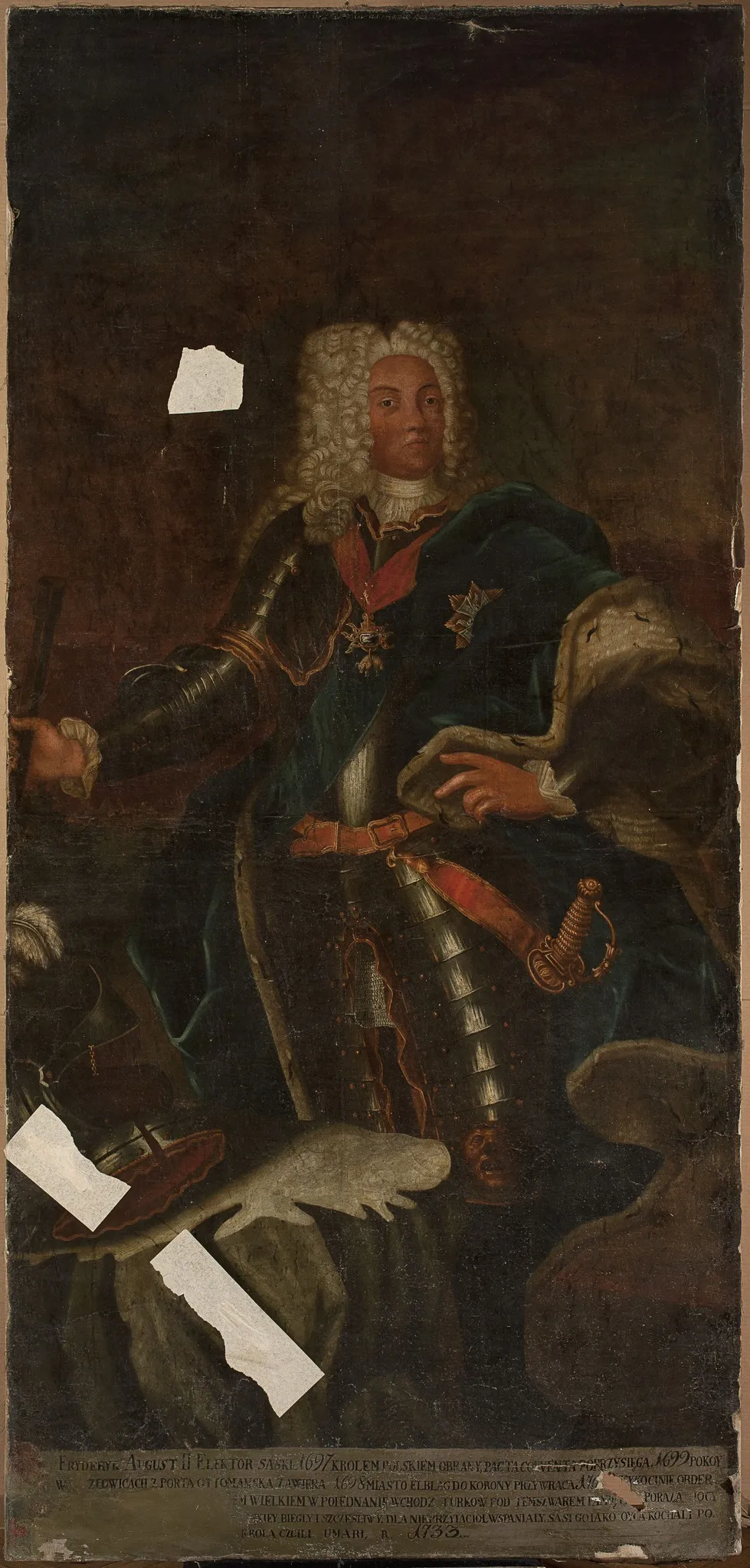
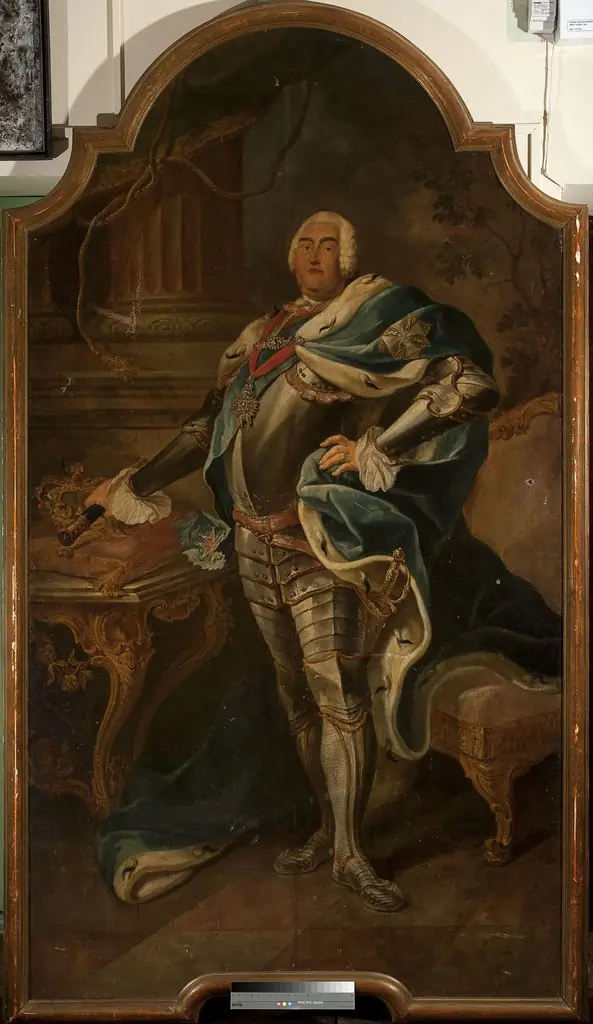
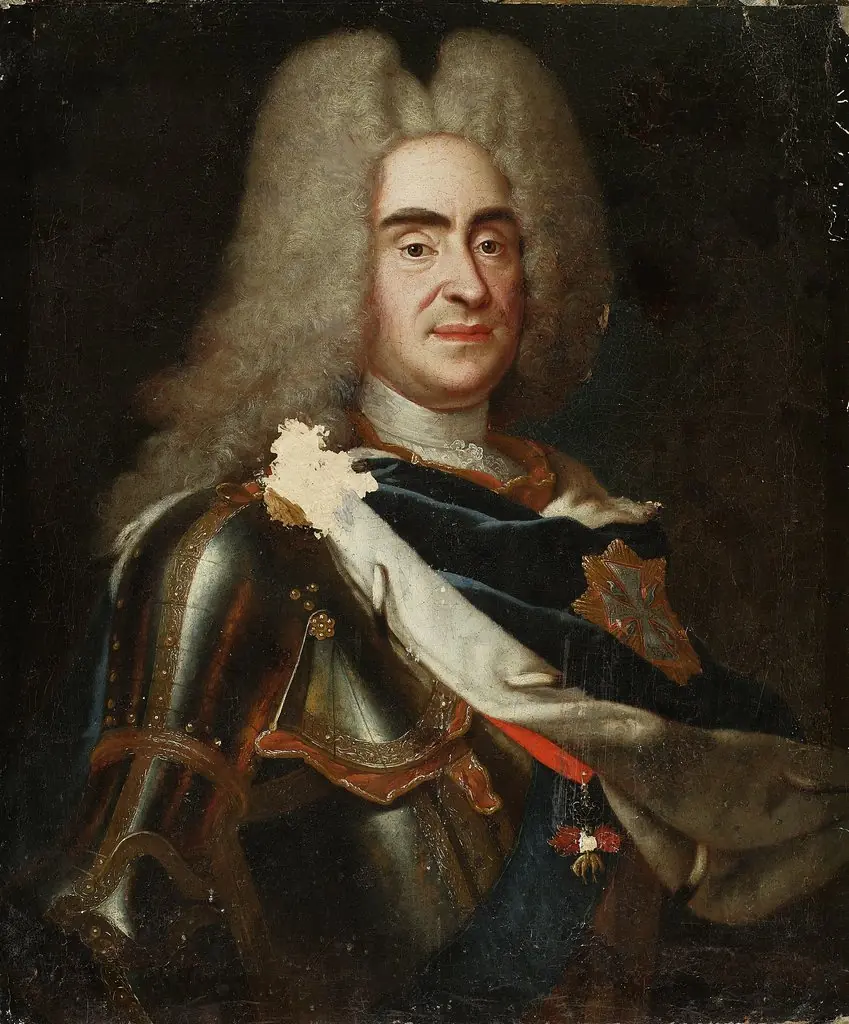
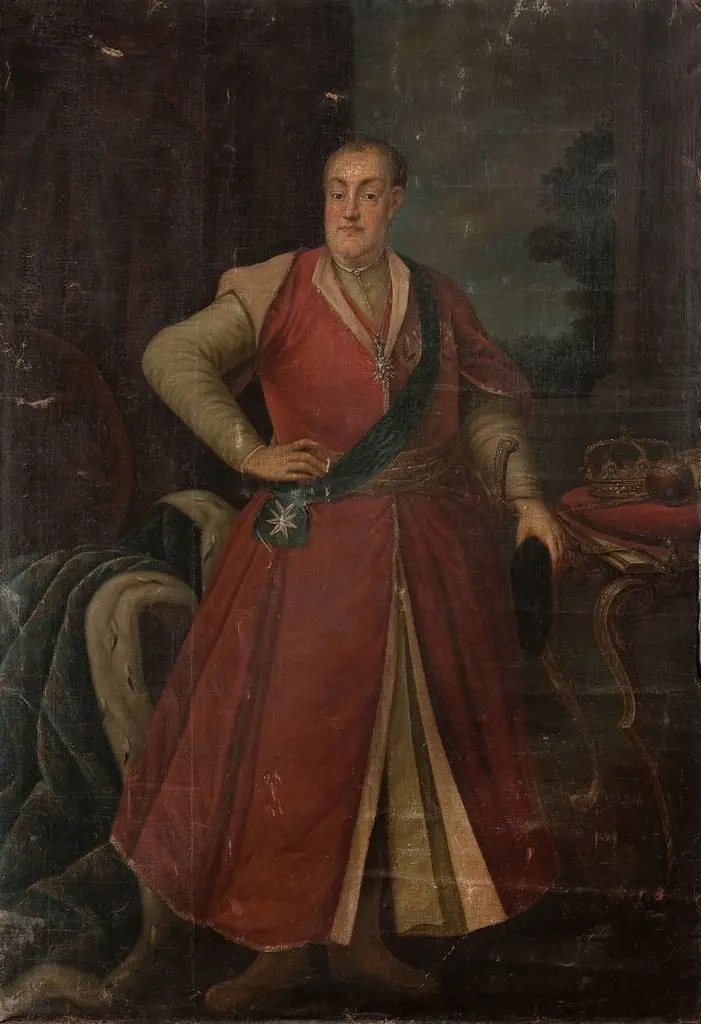
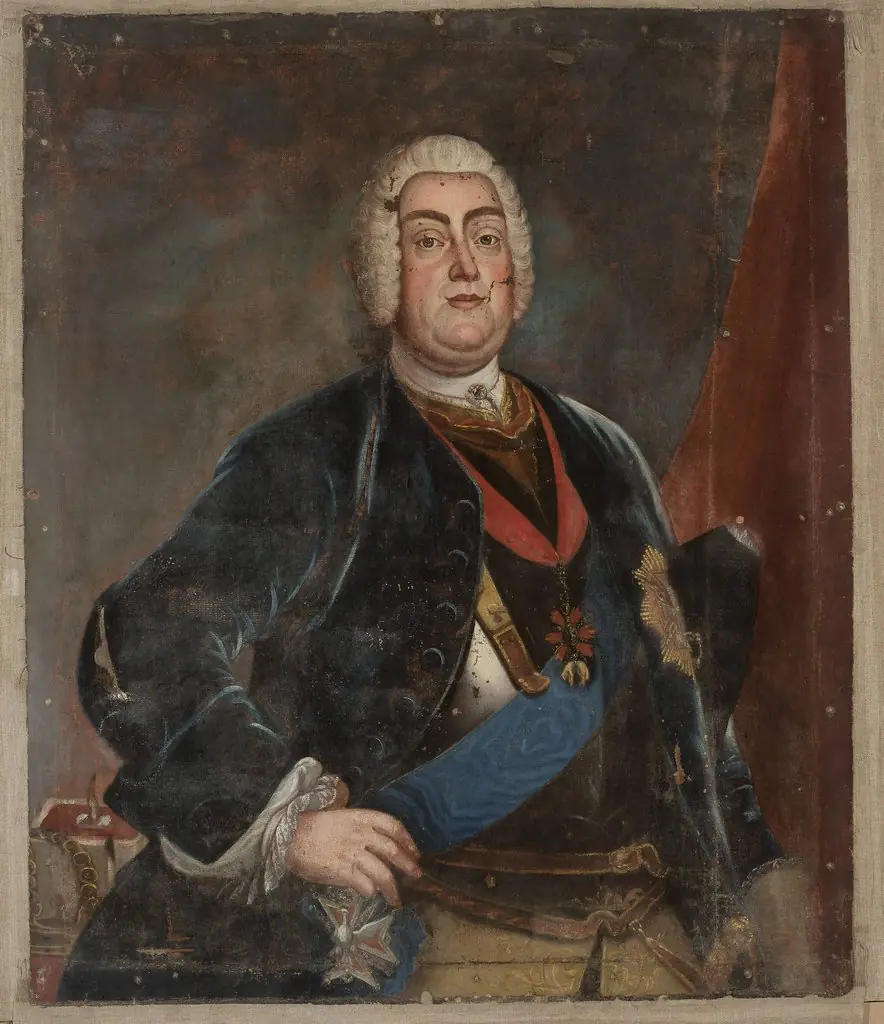
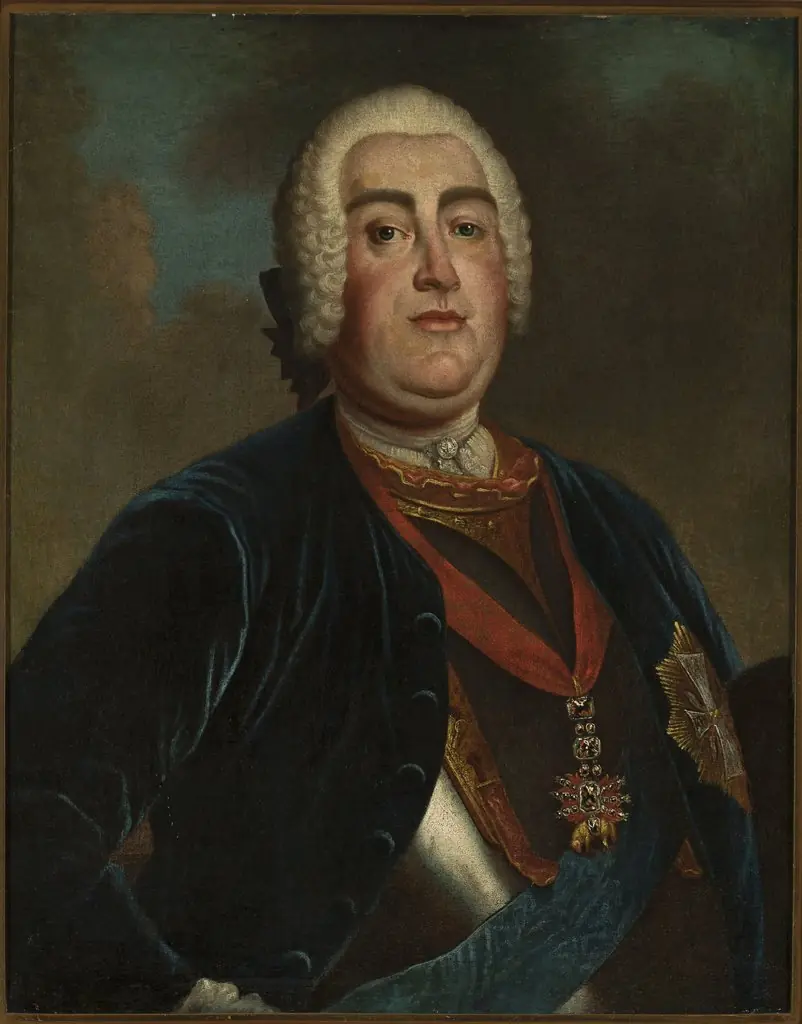
Portrait of Augustus II the Strong (1670–1733) is an oil painting by the Rococo painting artist Unknown. It dates from 1756 and is held in the collection of the National Museum in Warsaw. The oil painting depicts Augustus II the Strong, the Elector of Saxony and King of Poland, seated on a rocky outcrop.
About this work
Overview
The oil painting depicts Augustus II the Strong, the Elector of Saxony and King of Poland, seated on a rocky outcrop. He is dressed in elaborate 17th‑century armor, a vivid red sash, and a powdered white wig, with a gold chain draped around his neck. A calm dog rests at his feet, while a sword leans against the stone, all set against a dark, unadorned background that emphasizes the figure.
Subject & Meaning
The portrait presents the monarch in a martial pose, underscoring his role as a warrior‑king and his claim to authority. The inclusion of the dog, a traditional symbol of loyalty, and the sword reinforce themes of fidelity and power. The lavish armor and sumptuous sash highlight his wealth and status, while the solitary setting suggests a contemplative, almost heroic self‑presentation.
Technique & Style
Executed in oil, the work employs strong chiaroscuro, with dramatic contrasts of light and shadow that model the figure’s features and metallic surfaces.
Executed in oil, the work employs strong chiaroscuro, with dramatic contrasts of light and shadow that model the figure’s features and metallic surfaces. The illumination catches the polished breastplate and the folds of the red sash, while the surrounding darkness isolates the subject. The painter’s handling of texture—metal, fabric, fur—demonstrates a keen observation of material qualities typical of late Baroque portraiture.
History & Provenance
The portrait is identified by a Polish inscription naming Augustus II, though the lettering is partially illegible. Its precise origin and the artist remain uncertain, but the style aligns with court portrait conventions of early 18th‑century Saxony‑Poland. The painting has been part of private collections before entering a public museum, where it serves as a visual document of the ruler’s self‑image.
Artist & collection

 Domestic Scene
 Giacomo and Cardinal Marco, investing Andrea, Abbot of San Zeno, with his Benefice
 The Nymph of Fontainebleau
 Portrait of a Woman
 Madonna and Child with Saints in the Enclosed Garden
 Venus and Minerva
 Family Group of Four on Sofa
 Wall painting from Room H of the Villa of P. Fannius Synistor at Boscoreale