Artwork
The snake enters into an argument with the frog, from a Tuti-nama (Tales of a Parrot): Twenty-sixth Night
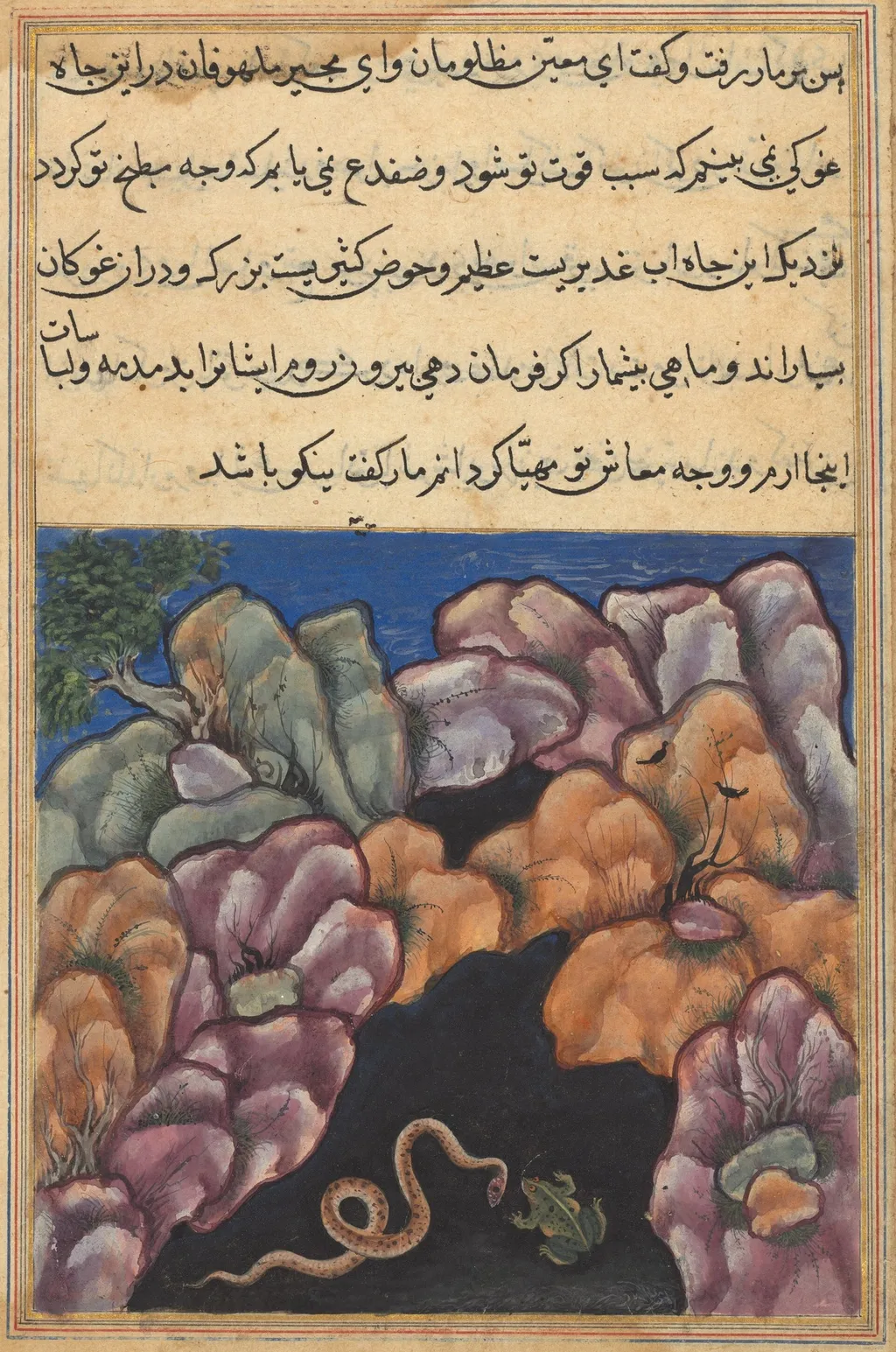
The snake enters into an argument with the frog, from a Tuti-nama (Tales of a Parrot): Twenty-sixth Night is an unspecified painting. It dates from 1560 and is held in the collection of the Cleveland Museum of Art. The work illustrates a quiet encounter between a coiled snake and a seated frog set within a rocky terrain.
About this work
Overview
The work illustrates a quiet encounter between a coiled snake and a seated frog set within a rocky terrain. A modest tree rises among the stones, while a blue sky arches above a nearby water body. The composition centers on the two animals, whose forms are rendered against a backdrop that balances earth and water, creating a tranquil atmosphere.
Subject & Meaning
The painting portrays a moment of dialogue—or dispute—between the snake and the frog, a motif drawn from the twenty‑sixth night of the Persian illustrated collection known as the Tuti‑nama, or Tales of a Parrot. By depicting these creatures in a calm landscape, the image reflects the narrative’s moral or allegorical content, emphasizing interaction between contrasting beings.
Technique & Style
Executed in a painted medium, the piece employs a restrained palette of muted earth tones for the rocks and foliage, contrasted with the bright azure of sky and water. The snake’s body follows a gentle curve, guiding the viewer’s eye, while the frog’s still posture provides a counterbalance. Textural brushwork suggests the roughness of stone and the delicate foliage of the tree.
Context
Illustrations such as this were integral to the Tuti‑nama, a 16th‑century Persian manuscript that combined prose with visual storytelling. The work reflects the period’s interest in animal fables and the use of illustrated books to convey ethical lessons, situating the scene within a broader tradition of miniature painting.
Legacy
While the painting remains a component of the larger manuscript, its isolated study offers insight into the visual language of Persian narrative art. The careful balance of natural elements and animal figures continues to inform scholarly understanding of how moral tales were visually mediated in the early modern Islamic world.
Artist & collection

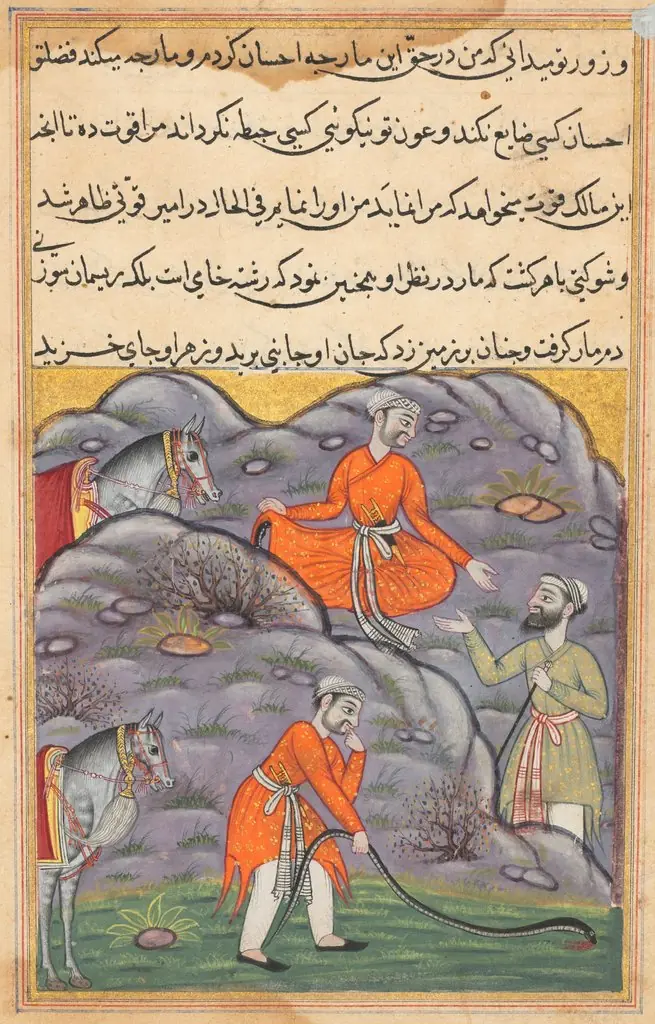 The Emir slays the snake after giving it shelter, from a Tuti-nama (Tales of a Parrot): Forty-fifth Night
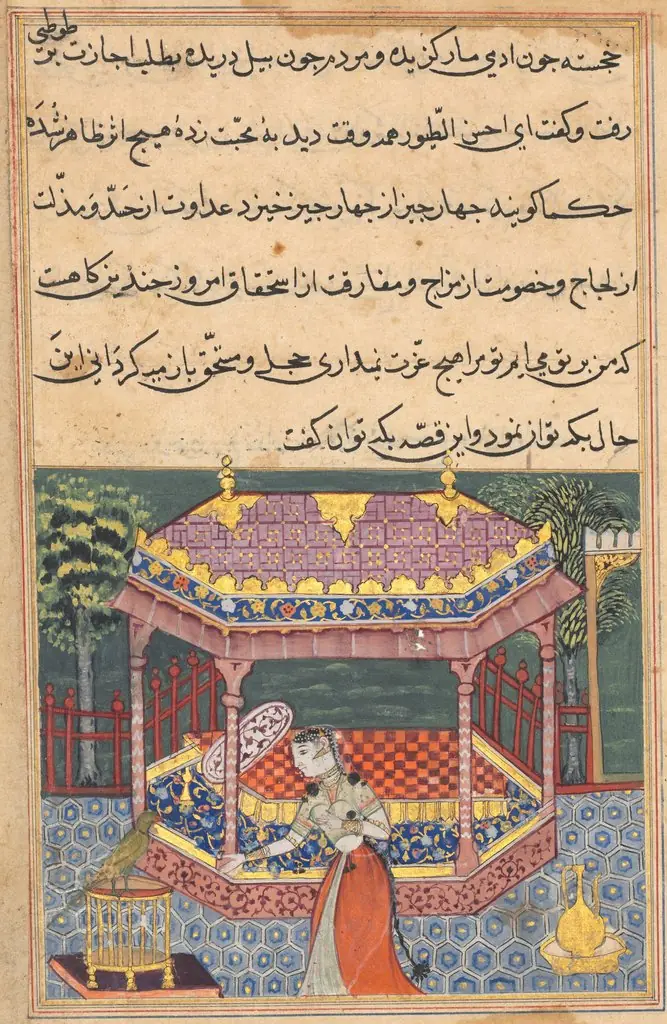 The parrot addresses Khujasta at the beginning of the thirty-seventh night, from a Tuti-nama (Tales of a Parrot)
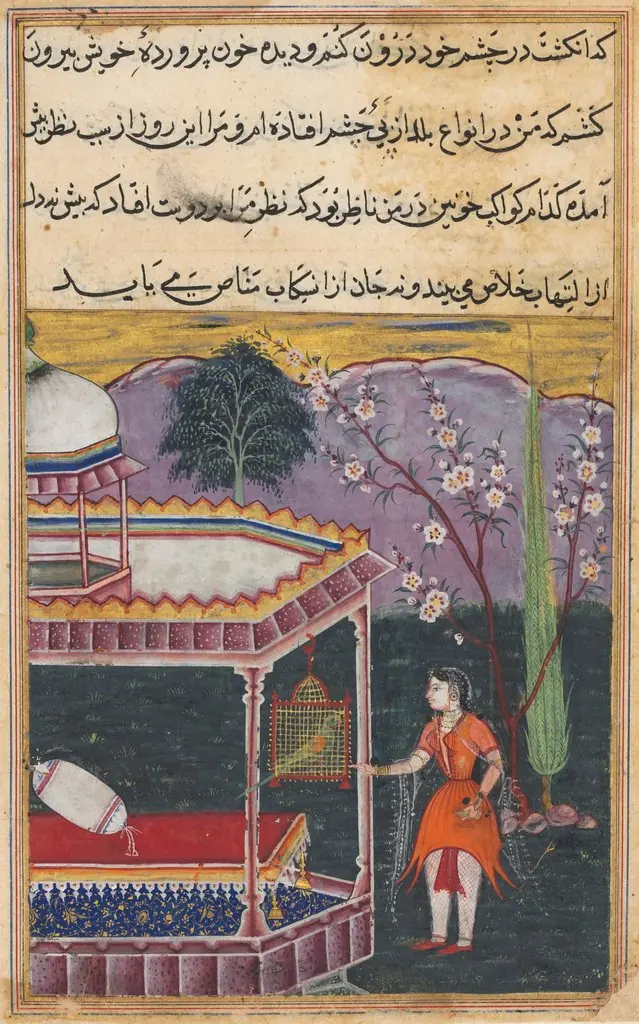 The Parrot Addresses Khujasta at the Beginning of the Eighth Night, from a Tuti-nama (Tales of a Parrot)
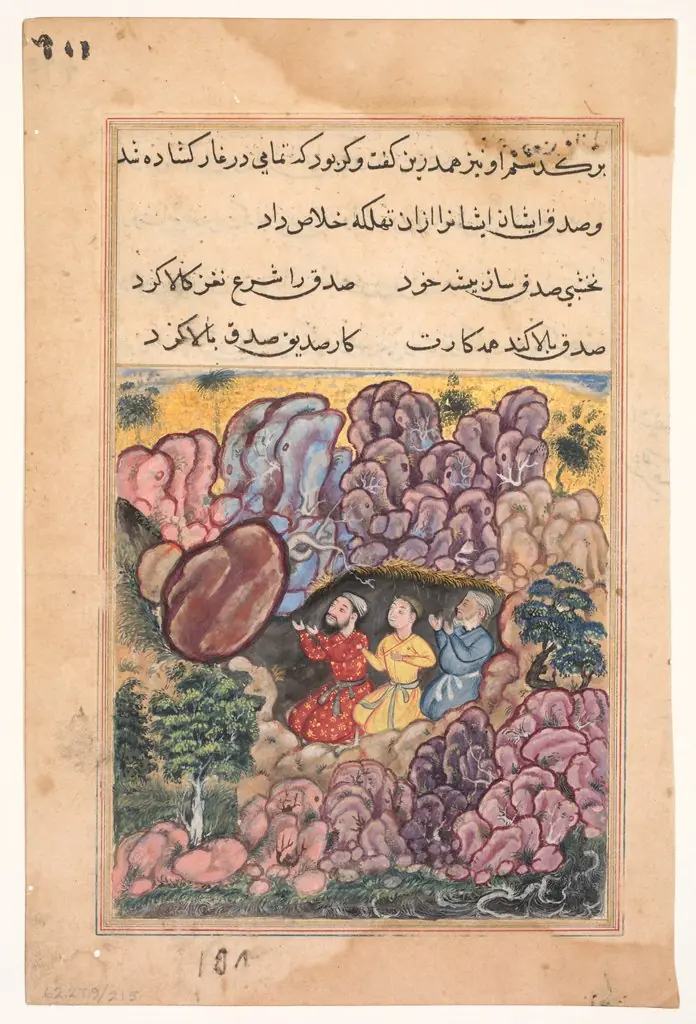 The tale of the three men trapped in a cave by a rolling boulder, from a Tuti-nama (Tales of a Parrot): Thirty-second Night
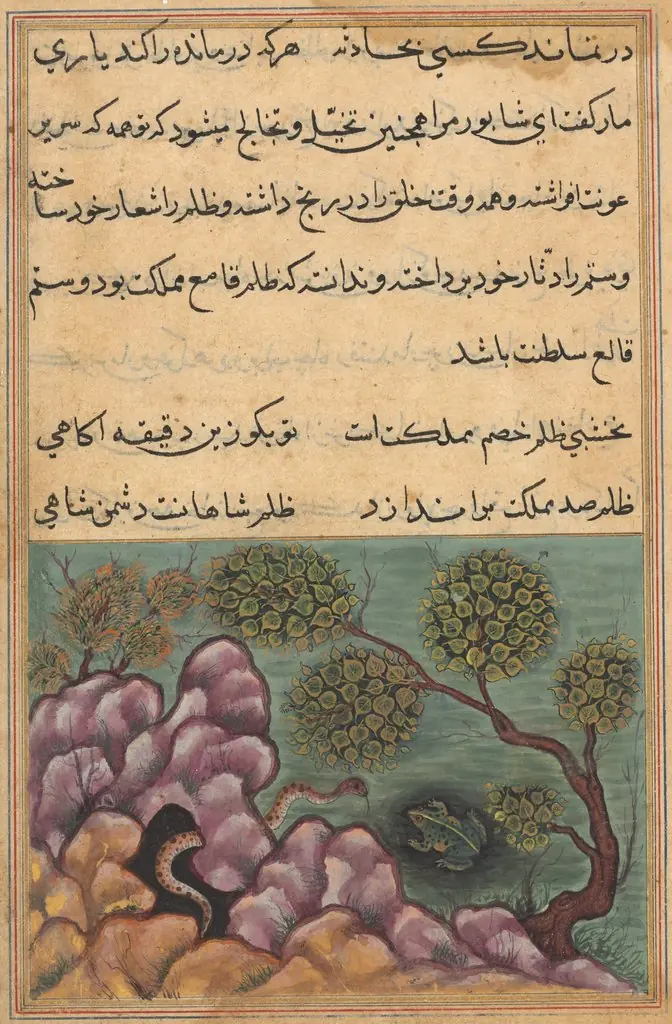 The dethroned frog Shapur seeks the help of the serpent, from a Tuti-nama (Tales of a Parrot): Twenth-sixth Night
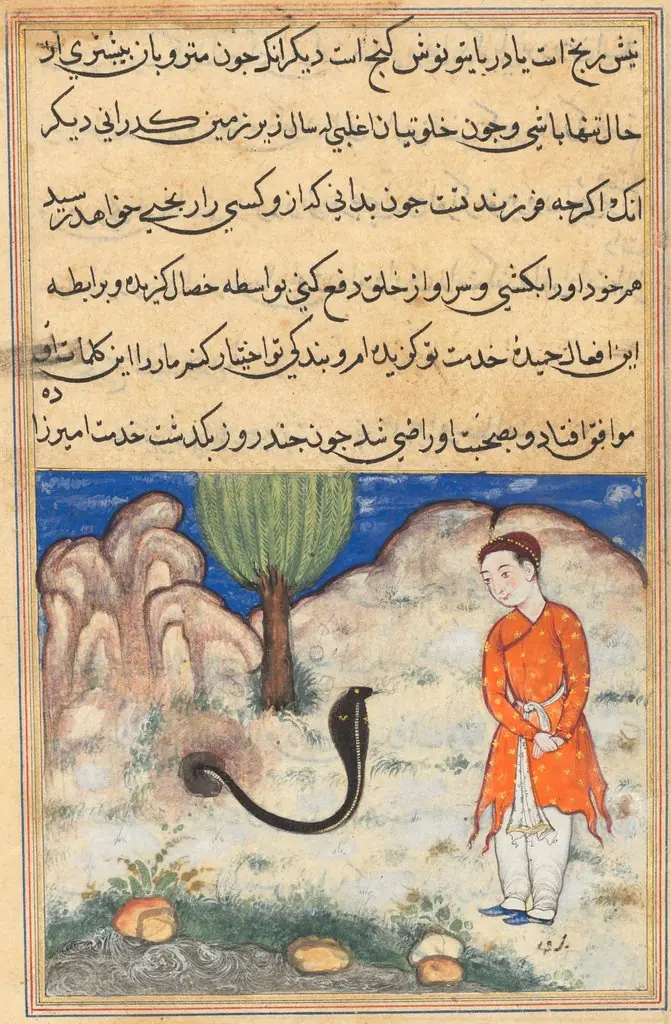 The prince, a son of the ruler of Sistan, enters the service of a snake, from a Tuti-nama (Tales of a Parrot): Thirty-seventh Night
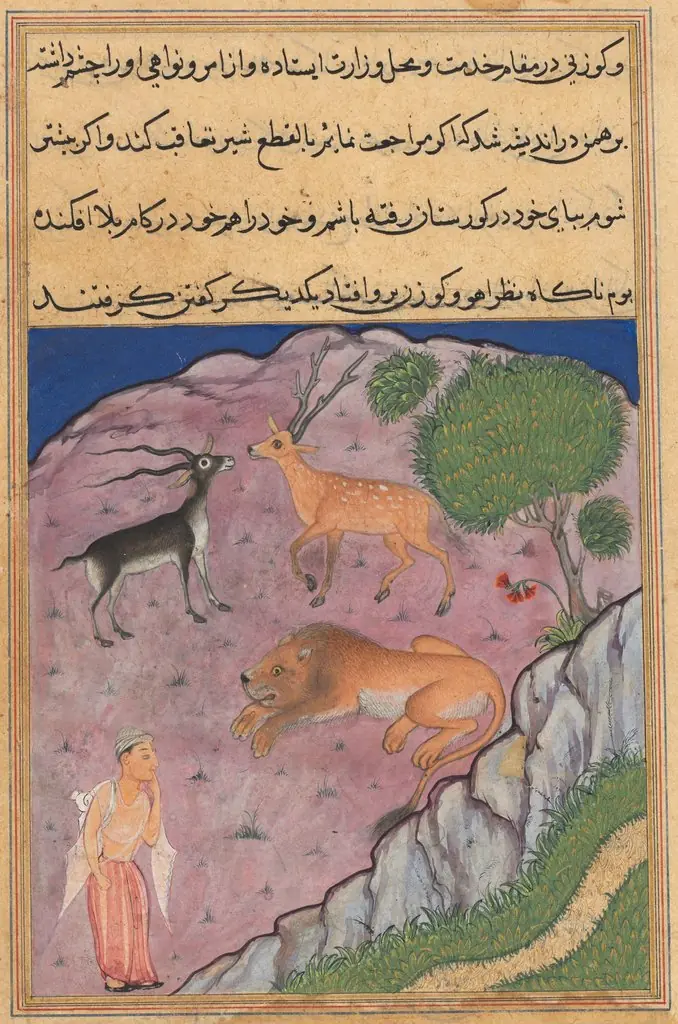 The Brahman comes upon a lion who has a deer and a gazelle as his viziers, from a Tuti-nama (Tales of a Parrot): Twenty-first Night