Artwork
The Raja’s daughter, born with three breasts, accompanies her blind husband and his hunchback guide on a journey, from a Tuti-nama (Tales of a Parrot): Forty-second Night
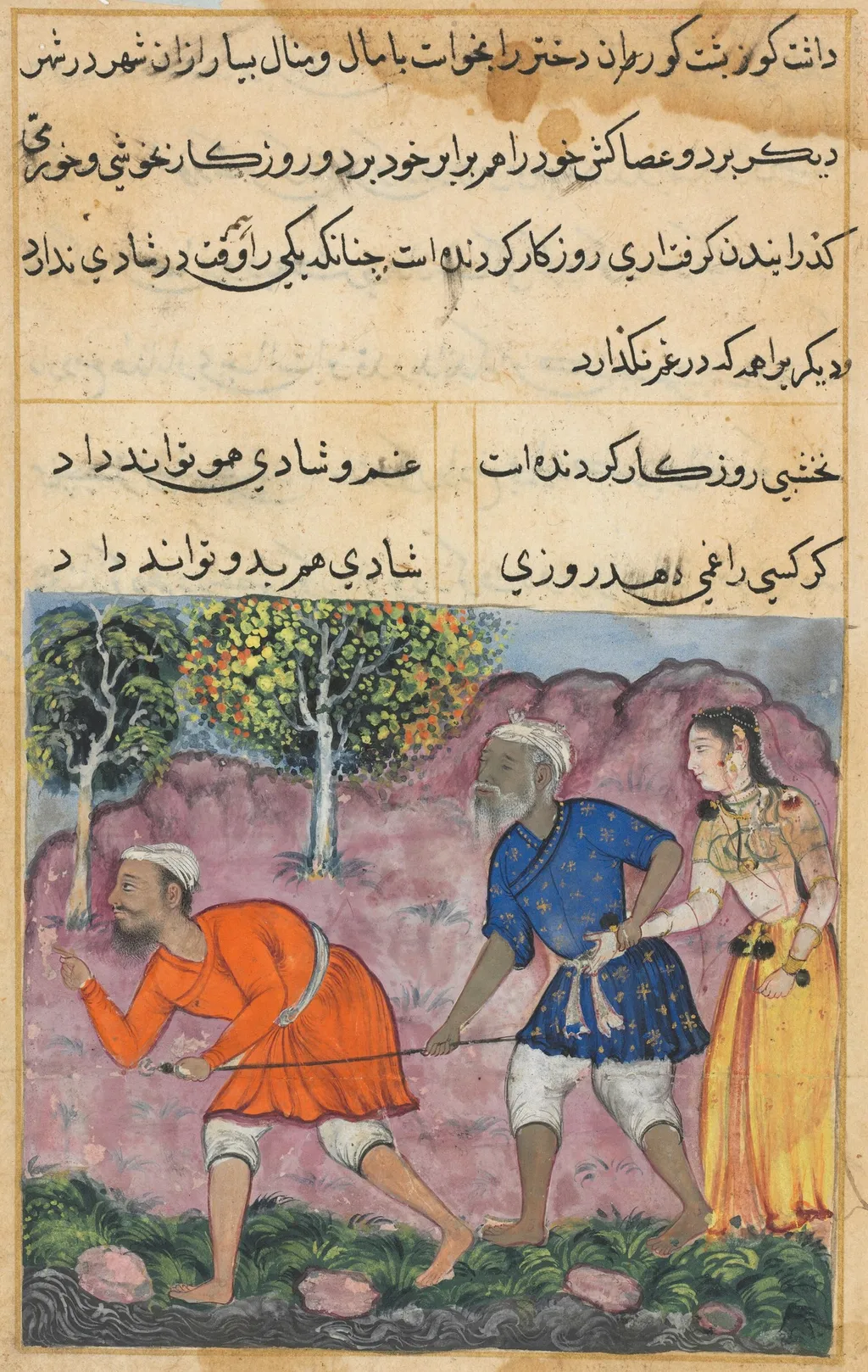
The Raja’s daughter, born with three breasts, accompanies her blind husband and his hunchback guide on a journey, from a Tuti-nama (Tales of a Parrot): Forty-second Night is an unspecified painting. It dates from 1560 and is held in the collection of the Cleveland Museum of Art.
About this work
Overview
The miniature illustrates a scene from the forty‑second night of the Persian illustrated manuscript known as the Tuti‑nama, or Tales of a Parrot.
The miniature illustrates a scene from the forty‑second night of the Persian illustrated manuscript known as the Tuti‑nama, or Tales of a Parrot. In the composition three figures traverse a vivid landscape: a blind man in blue and white garments leaning on a staff, a hunch‑backed guide in orange supporting him, and a woman in a gold dress walking beside them. The background is rendered with pink clouds, verdant trees and scattered blossoms, typical of the manuscript’s decorative palette.
Subject & Meaning
The narrative depicts the Raja’s daughter, who is described as being born with three breasts, accompanying her blind husband and his hunch‑backed escort on a journey. The episode reflects themes of loyalty and perseverance within the larger collection of moral tales, emphasizing the heroine’s devotion despite extraordinary circumstances.
Technique & Style
Executed in the traditional Persian miniature technique, the work combines fine brushwork with mineral pigments to achieve luminous colors. The figures are outlined in delicate ink lines, while the landscape employs a flattened perspective and stylized foliage, characteristic of 16th‑century courtly illustration.
History & Provenance
The painting originates from a hand‑copied Tuti‑nama manuscript produced in the Safavid period, likely in the early 1500s. The specific folio has passed through several private collections before being acquired by a major American museum in the late 20th century, where it remains in the Asian art department.
Context
The Tuti‑nama is a didactic anthology of fables and moral stories, often illustrated to accompany the text. This particular vignette aligns with the broader tradition of Persian narrative art, where visual storytelling reinforces the ethical lessons conveyed in the accompanying verses.
Artist & collection

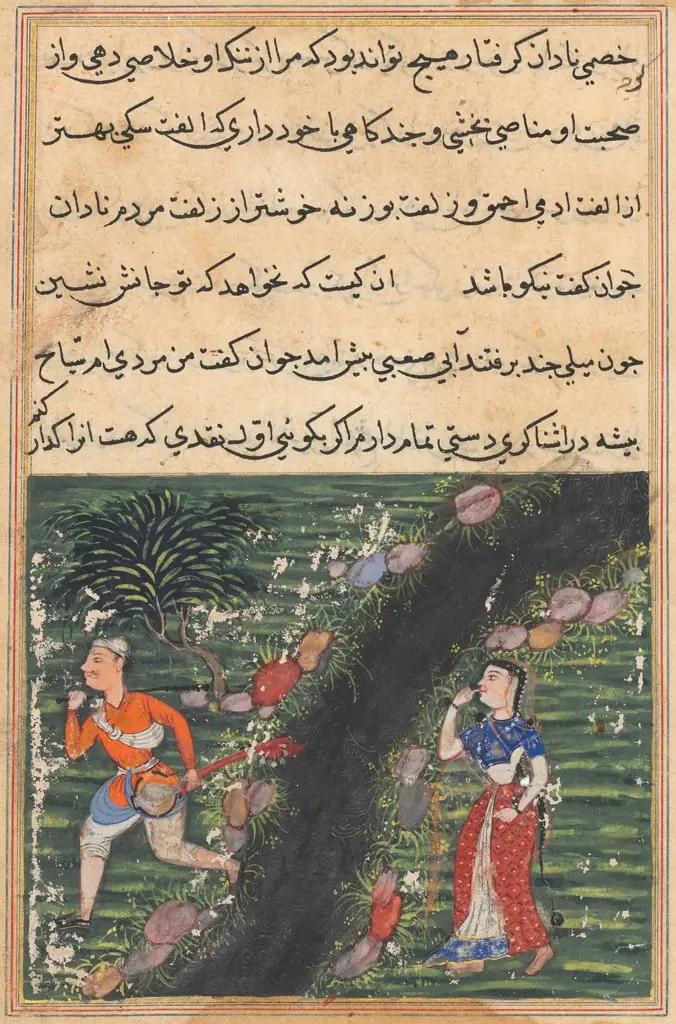 The vagabond crosses a stream with the possessions of the daughter-in-law of the king of Banaras and absconds, from a Tuti-nama (Tales of a Parrot): Sixteenth Night
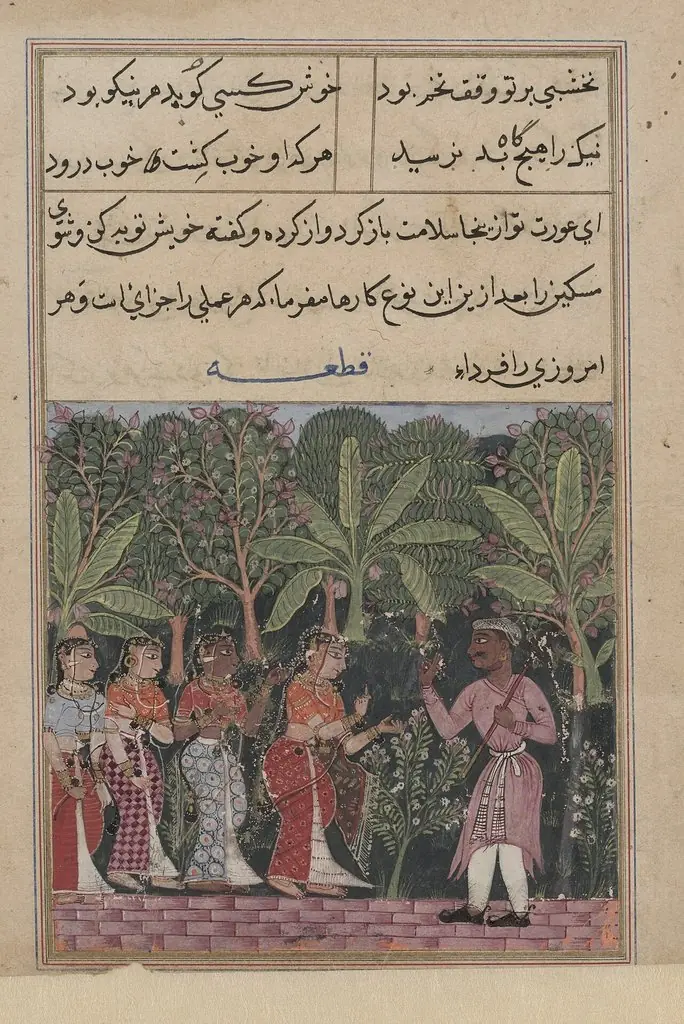 The merchant’s daughter meets the gardener, from a Tuti-nama (Tales of a Parrot): Twelfth Night
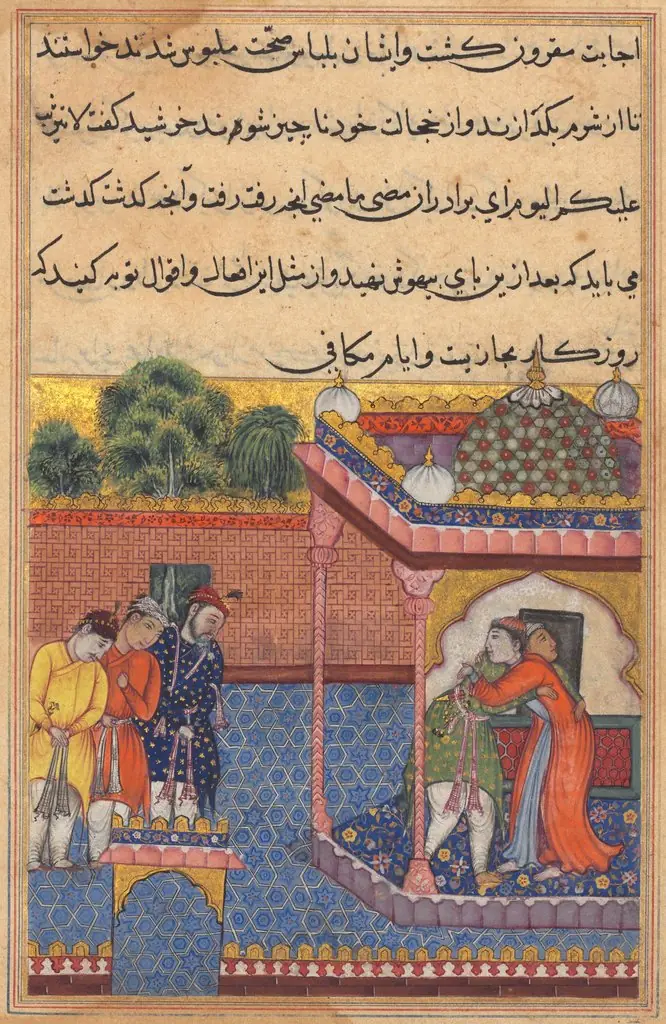 Khurshid reunited with her husband Utarid, from a Tuti-nama (Tales of a Parrot): Thirty-second Night
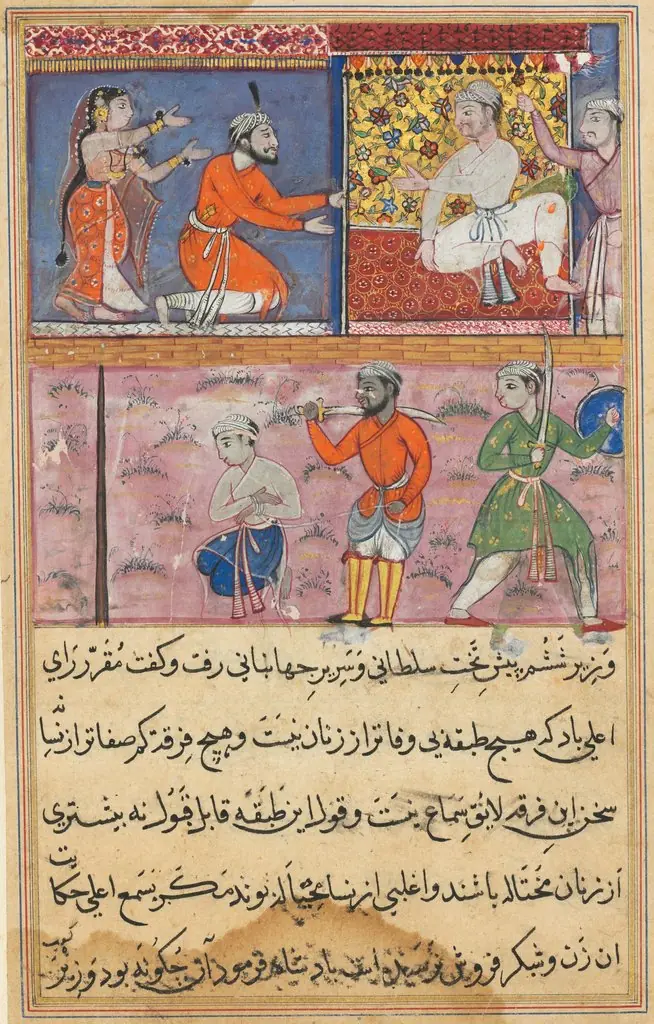 The prince sent back to the place of execution for the sixth time, from a Tuti-nama (Tales of a Parrot): Eighth Night
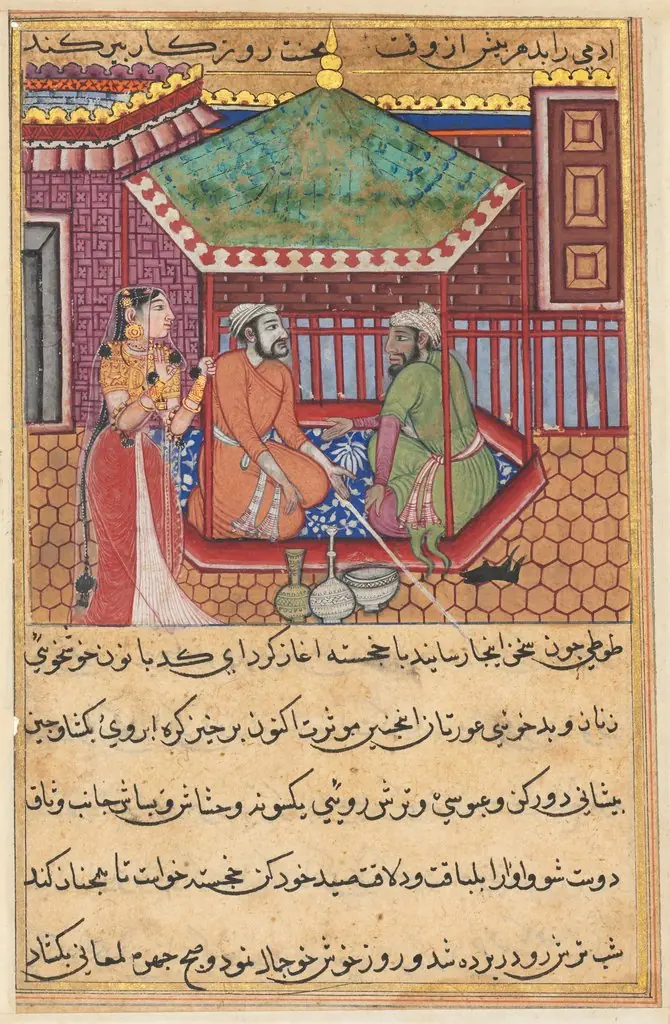 The eldest brother explains the reason for his youthful appearance, from a Tuti-nama (Tales of a Parrot): Forty-ninth Night
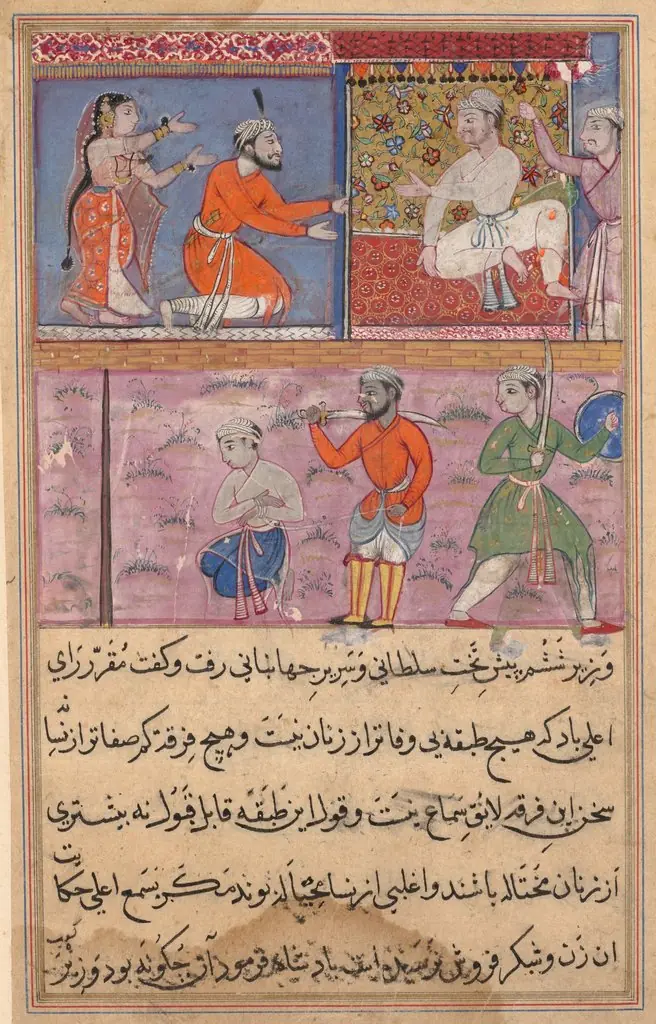 Page from Tales of a Parrot (Tuti-nama): text page
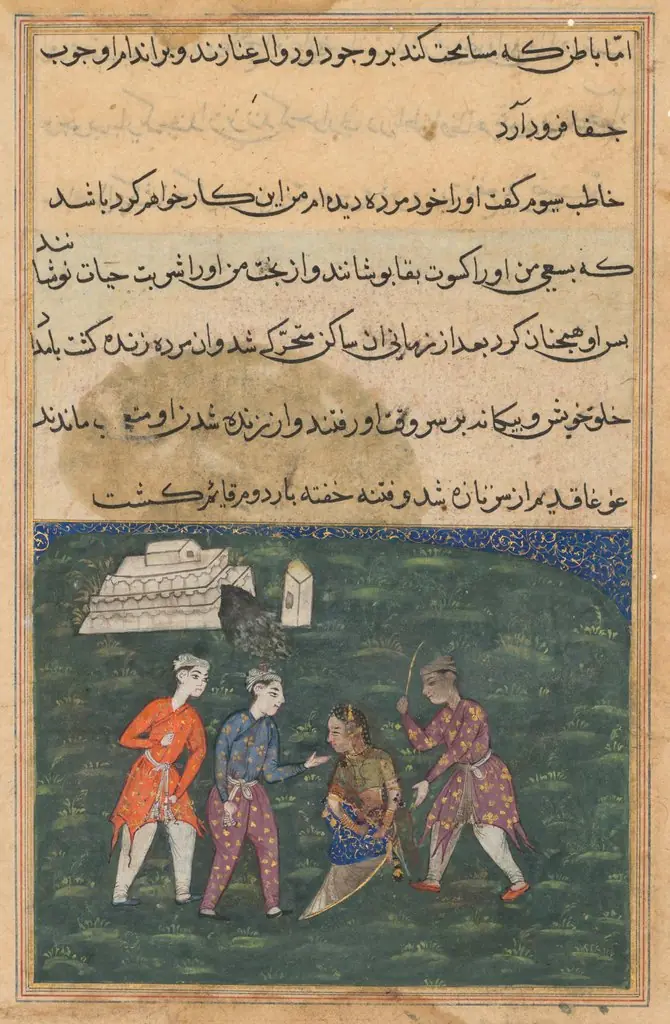 The third suitor strikes the devotee’s daughter and thus restores her to life, from a Tuti-nama (Tales of a Parrot): Twentieth Night
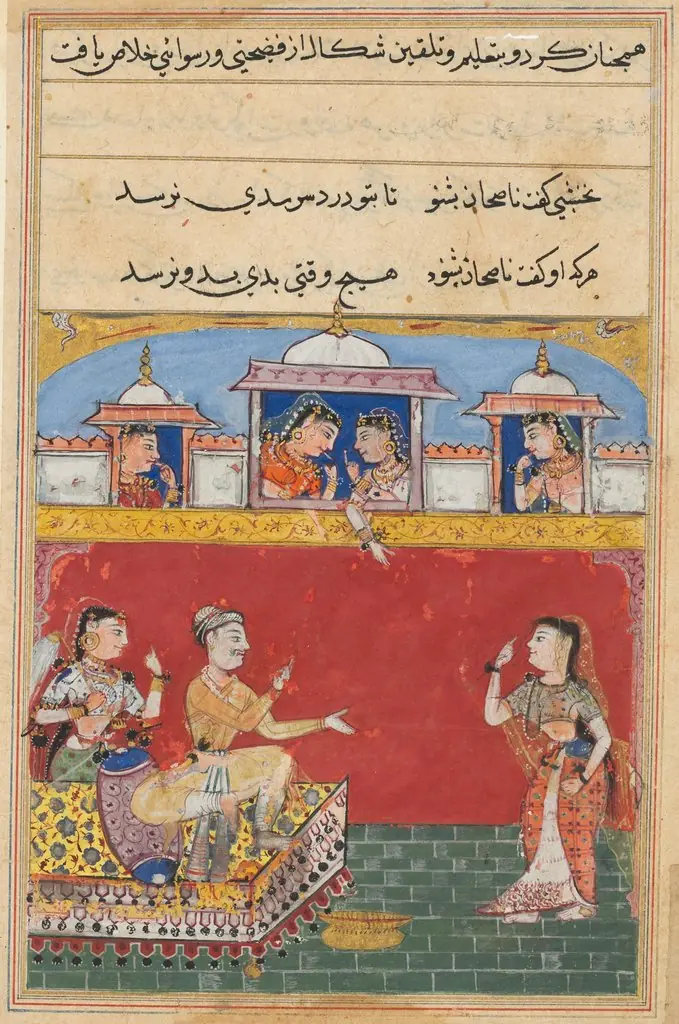 The daughter-in-law returns from her misadventure, feigning insanity, from a Tuti-nama (Tales of a Parrot): Sixteenth Night
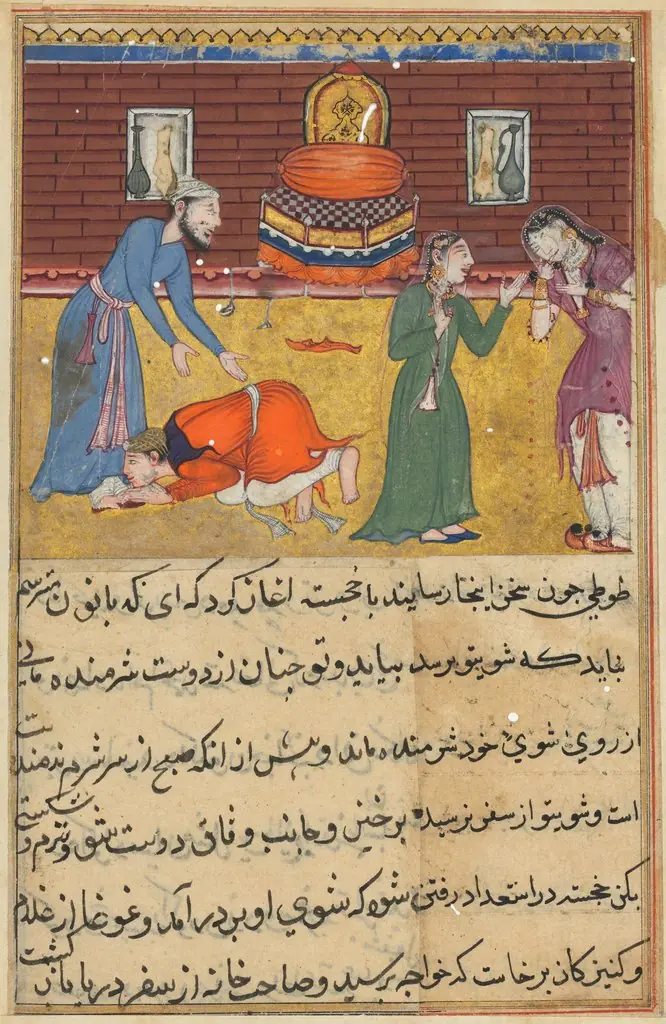 The pious man’s son, now a king, reveals himself to his father; his nurse upbraids his unfaithful mother, from a Tuti-nama (Tales of a Parrot): Fifty-second Night