Artwork
The Immortal Chang Kuo-lao at Repose
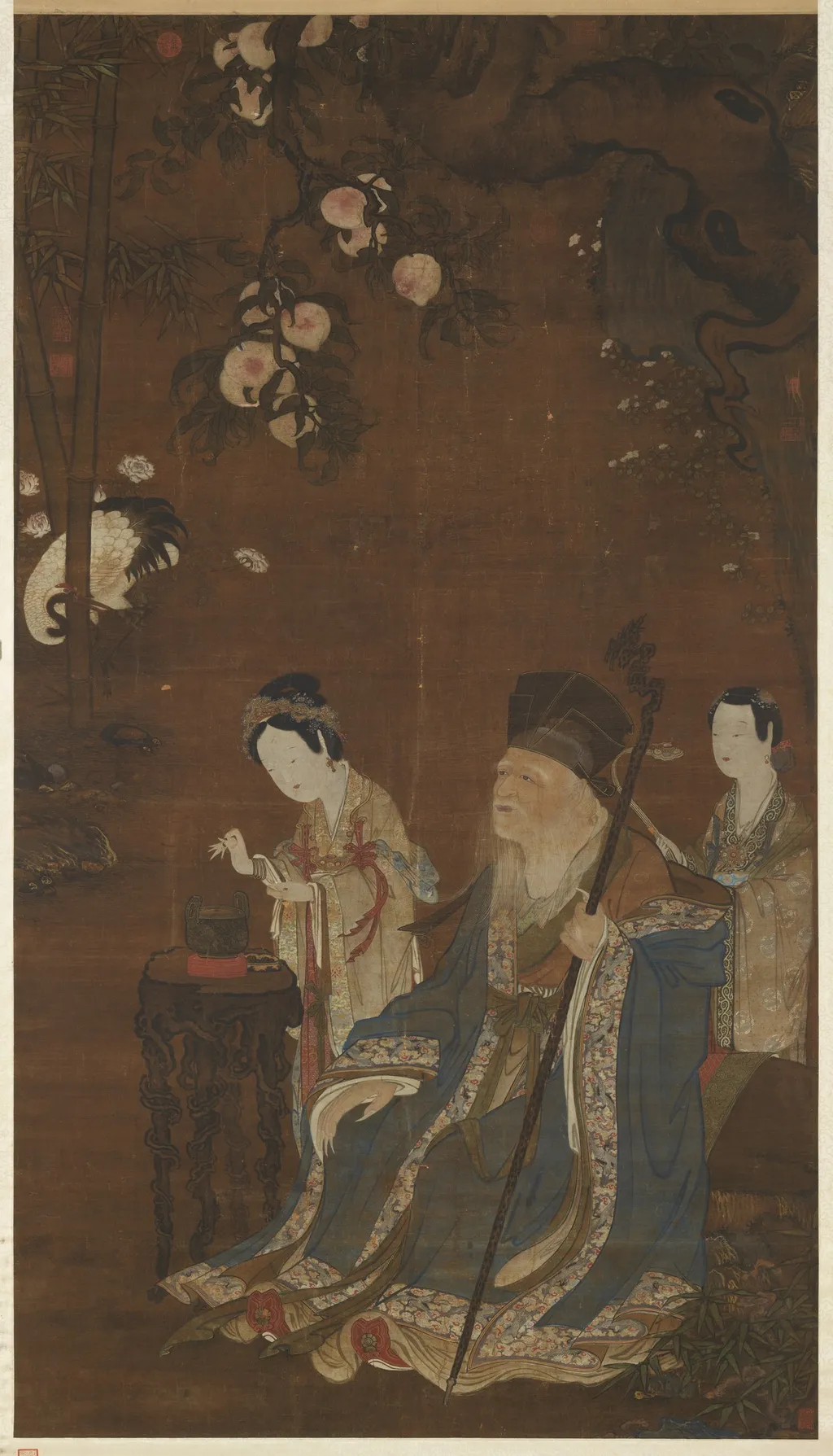
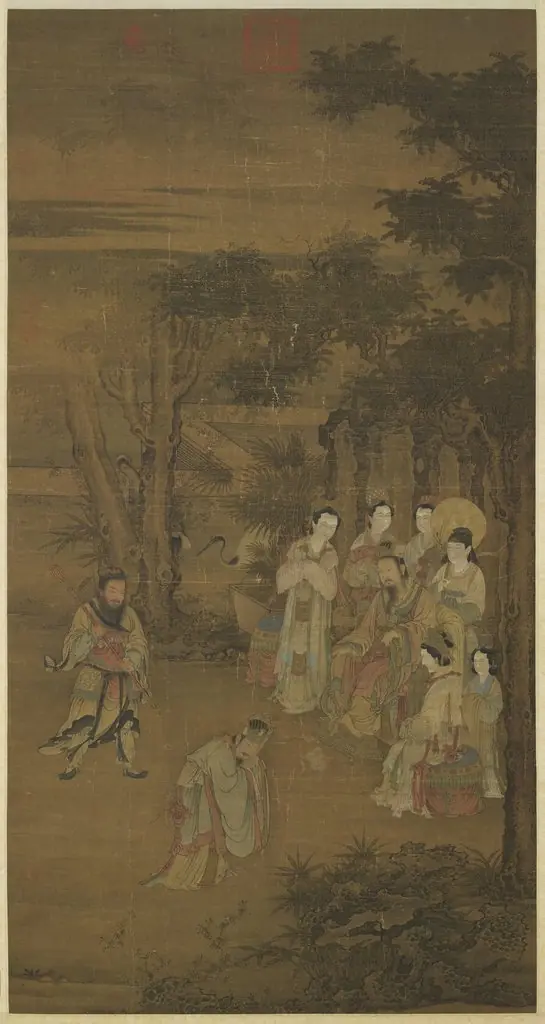
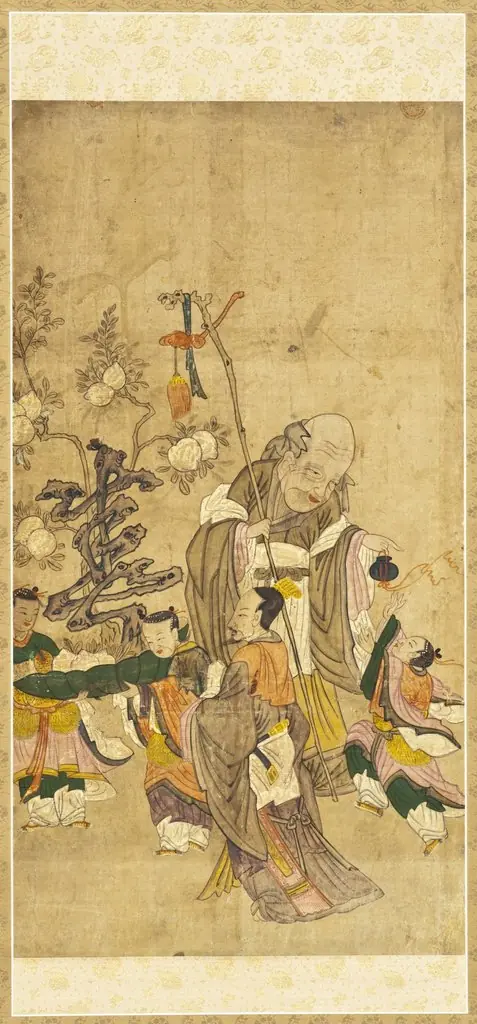
The Immortal Chang Kuo-lao at Repose is an unspecified painting by Unknown. It is held in the collection of the National Palace Museum. This ink-and-color painting portrays a quiet moment involving three figures in classical Chinese dress.
About this work
Overview
The setting is subdued, with warm earth tones and faint floral motifs suggesting a tranquil, otherworldly space, free from overt narrative action.
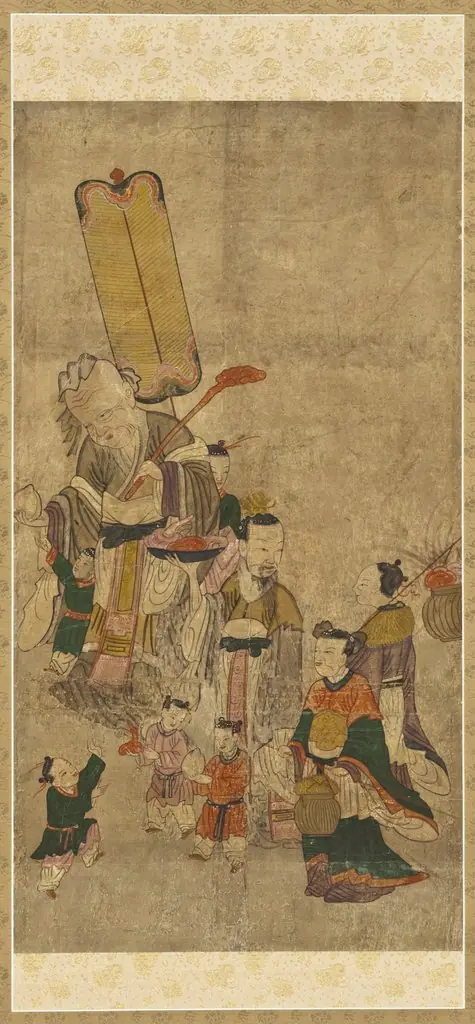
This ink-and-color painting portrays a quiet moment involving three figures in classical Chinese dress. The central figure, an aged man with a long white beard, rests on a low stool, staff in hand. Two women flank him—one offering a small object, the other observing silently. The setting is subdued, with warm earth tones and faint floral motifs suggesting a tranquil, otherworldly space, free from overt narrative action.
Subject & Meaning
The central figure is identified as Chang Kuo-lao, one of the Eight Immortals of Daoist legend, known for his longevity and mystical powers. His calm posture and the offering from the woman imply reverence and ritual, possibly symbolizing the transmission of spiritual essence or elixir. The scene reflects Daoist ideals of harmony, stillness, and the quiet dignity of transcendence.
Technique & Style
The painting employs fine brushwork to render delicate patterns on robes and subtle textures in skin and fabric. Colors are muted yet precise, with blue, tan, and red accents grounding the figures in a soft, atmospheric background. Lines are controlled and elegant, emphasizing serenity over drama. The composition is balanced, with figures arranged to guide the eye gently across the scene.
History & Provenance
The work is attributed to the Yuan or early Ming dynasty, a period when Daoist themes flourished in court and monastic art. Its style aligns with literati traditions that favored symbolic restraint over realism. While its early ownership is undocumented, it entered institutional collections in the 20th century, likely through private acquisitions or temple transfers.
Context
During the Yuan dynasty, Daoist imagery gained prominence as scholars and artists turned inward amid political upheaval. Paintings of the Eight Immortals served both devotional and philosophical purposes, embodying ideals of withdrawal, wisdom, and natural harmony. This work fits within a broader trend of depicting immortals in contemplative, everyday moments rather than grand mythic events.
Legacy
The painting contributes to a visual tradition that elevated Daoist immortals as models of quiet virtue. Its understated composition influenced later depictions of spiritual figures in Chinese art, reinforcing the value of stillness and symbolic gesture over theatricality. It remains a reference point for studies of religious iconography in late imperial painting.
Artist & collection

 Domestic Scene
 Giacomo and Cardinal Marco, investing Andrea, Abbot of San Zeno, with his Benefice
 The Nymph of Fontainebleau
 Portrait of a Woman
 Madonna and Child with Saints in the Enclosed Garden
 Venus and Minerva
 Family Group of Four on Sofa
 Wall painting from Room H of the Villa of P. Fannius Synistor at Boscoreale