Artwork
Page from Tales of a Parrot (Tuti-nama): text page
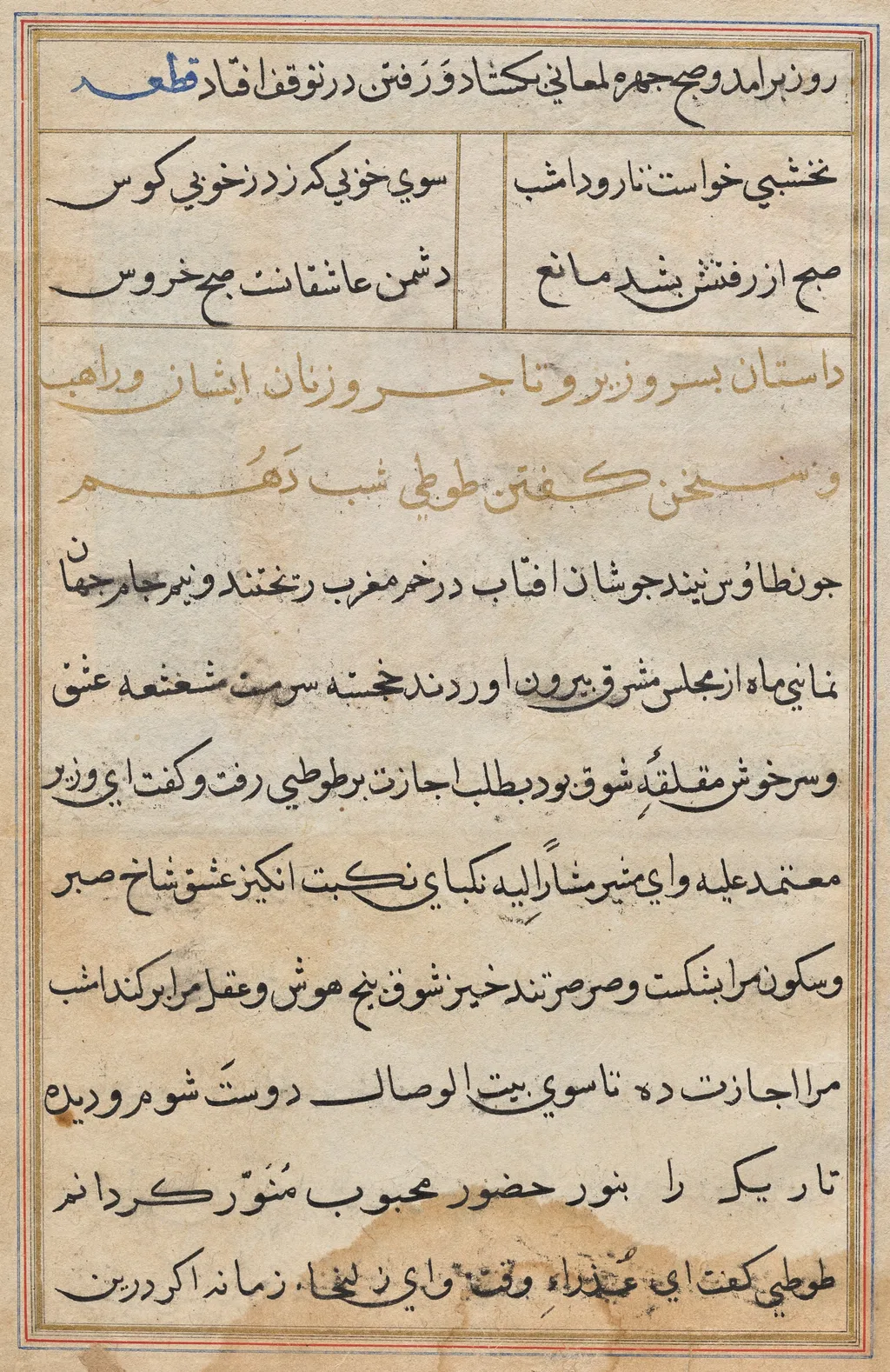
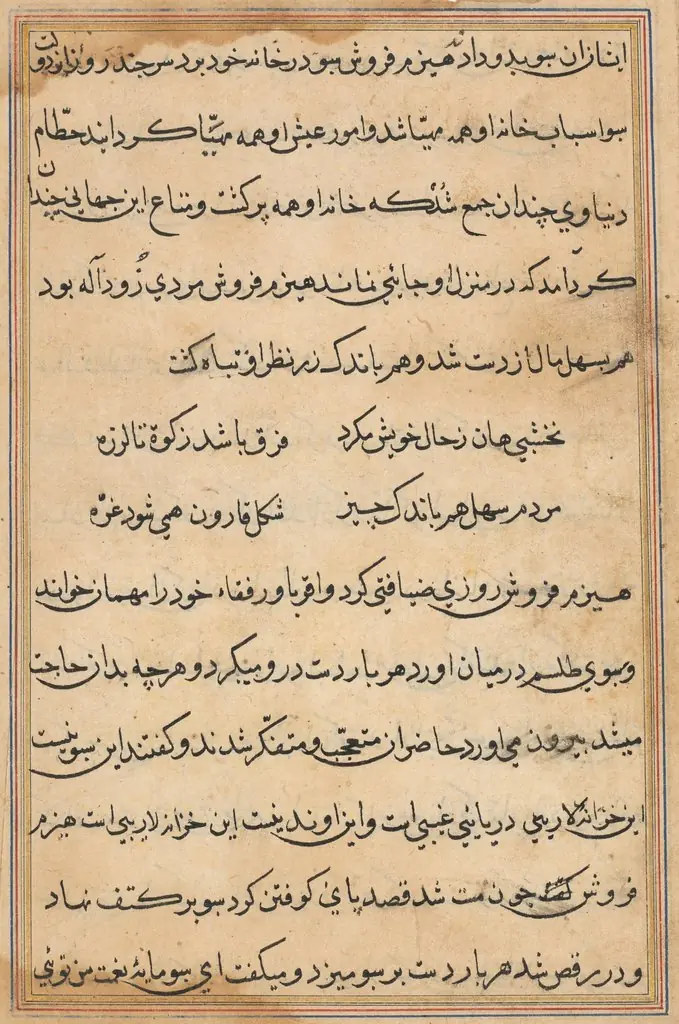
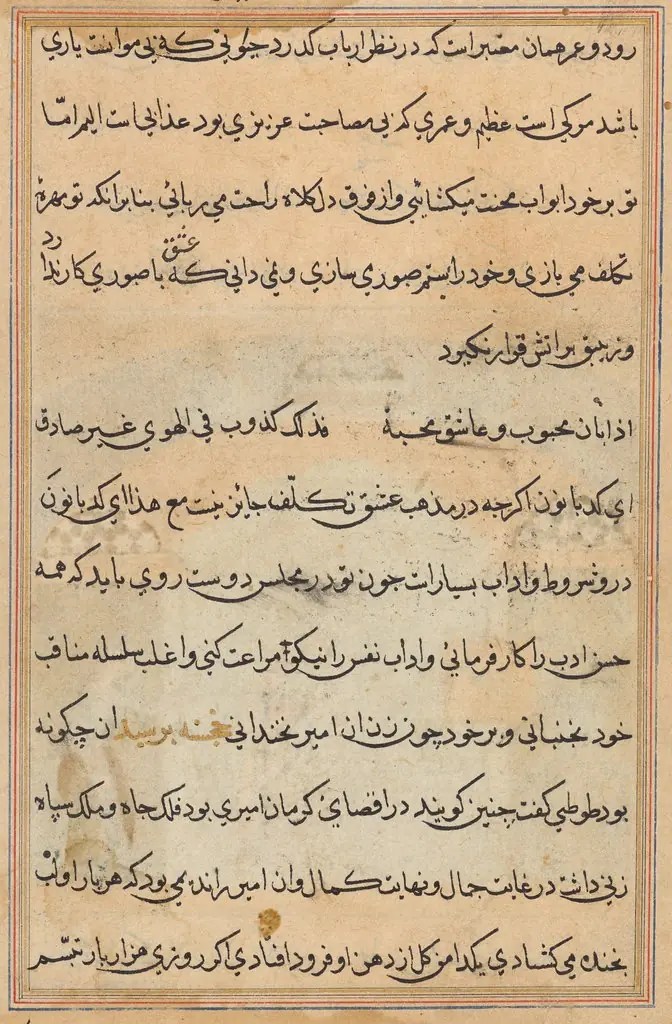
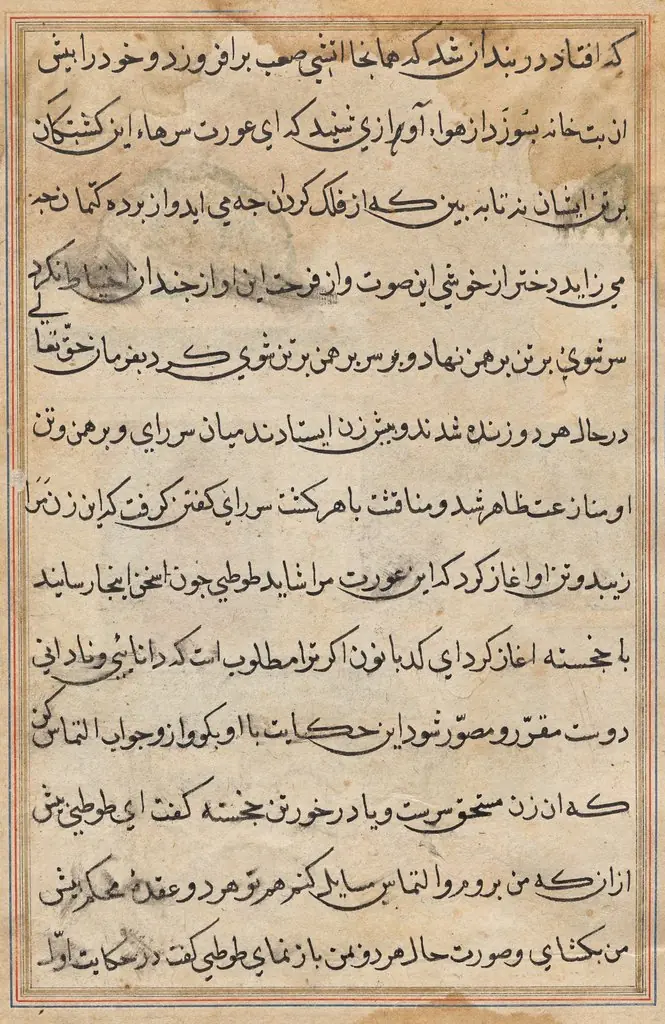
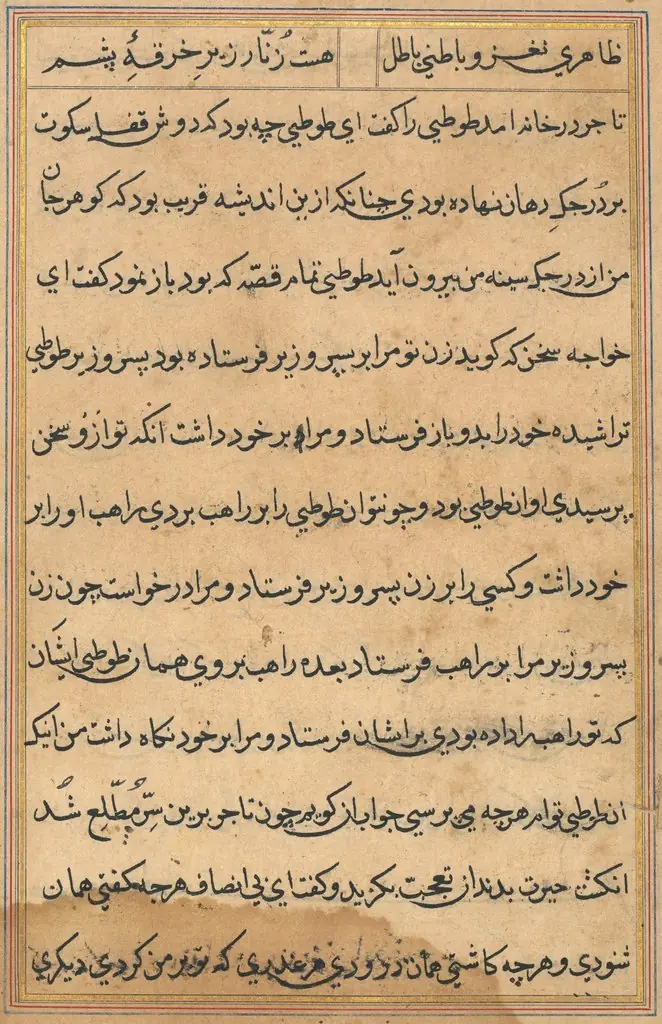
Page from Tales of a Parrot (Tuti-nama): text page is an unspecified painting. It dates from 1560 and is held in the collection of the Cleveland Museum of Art. This object is a single folio from the Persian illustrated manuscript known as the Tales of a Parrot (Tuti‑nama).
About this work
Overview
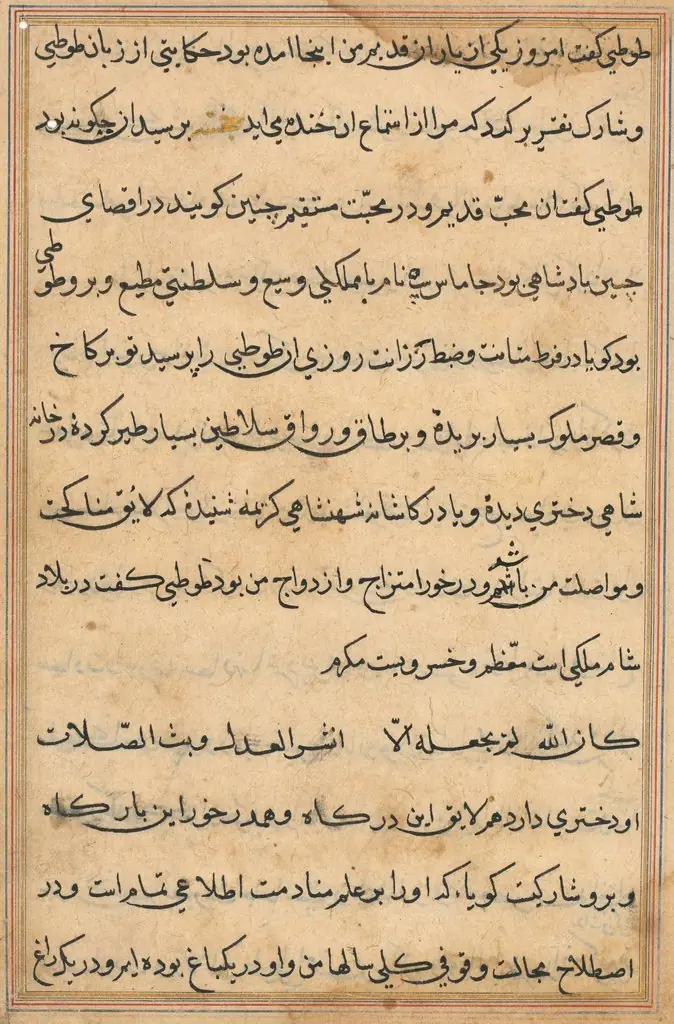
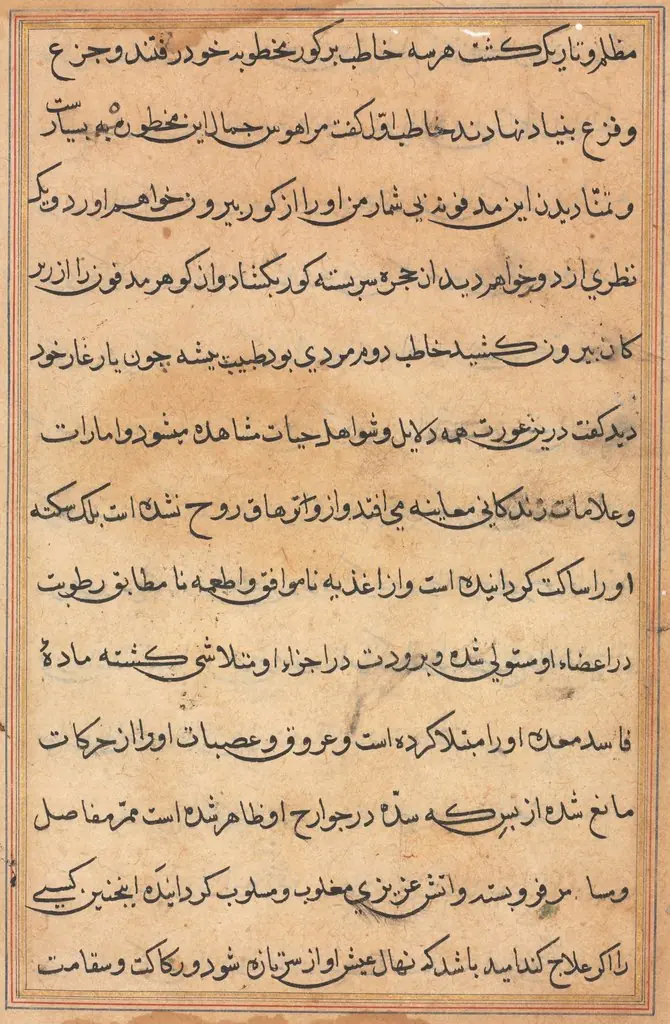
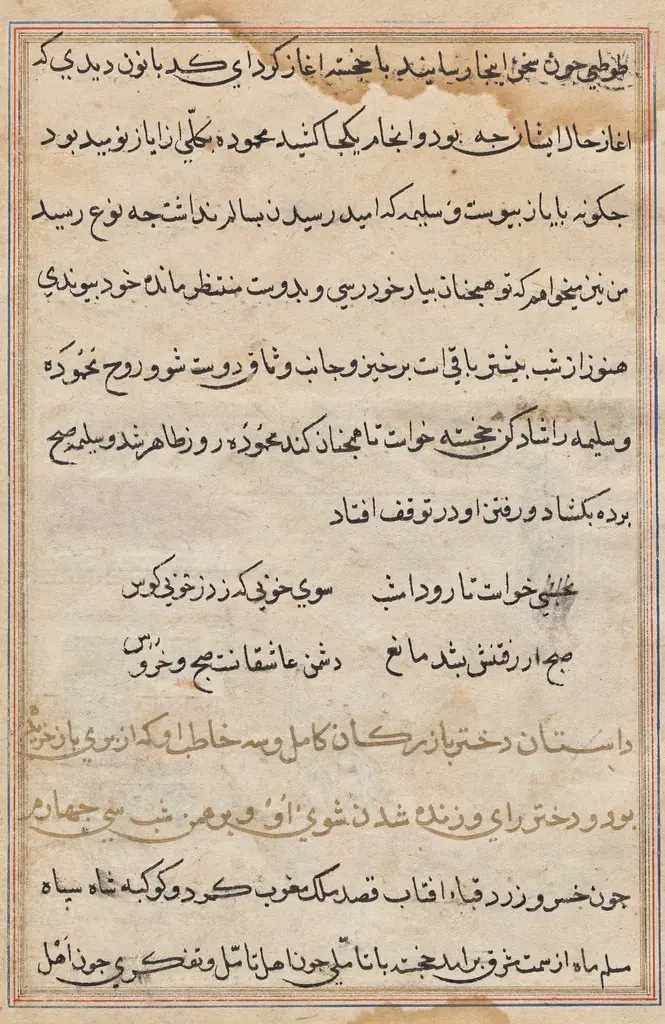
This object is a single folio from the Persian illustrated manuscript known as the Tales of a Parrot (Tuti‑nama). Executed as a painted page, it consists of a sheet of aged paper densely covered with black ink calligraphy, the script filling the entire surface within a narrow red frame.
Subject & Meaning
The page contains continuous Persian prose, likely a narrative excerpt from the collection of moral stories that give the Tuti‑nama its name. A brief line in blue at the top functions as a heading, indicating the beginning of a particular tale or section.
Technique & Style
The calligrapher employed a fine brush to lay down uniform black ink, with occasional lines appearing slightly deeper, suggesting variations in pressure or ink density. Decorative touches include a thin red border that delineates the text area, a few gold‑inked words in the upper margin, and a blue heading, adding subtle chromatic accents to the otherwise monochrome composition.
History & Provenance
The paper shows signs of age, such as brownish stains along its edges, confirming its historic origin. While the precise date and previous ownership are not detailed here, the folio is part of a larger manuscript tradition that circulated in Persian literary circles.
Context
The Tuti‑nama belongs to a genre of illustrated books that combined moral instruction with entertainment, popular in the Islamic world from the medieval period onward. Such manuscripts often featured elaborate calligraphy and occasional miniature paintings, though this particular leaf focuses on text rather than illustration.
Legacy
Pages like this illustrate the high level of craftsmanship in Persian book production and serve as primary sources for scholars studying literary, linguistic, and artistic practices of the era.
Artist & collection

 Page from Tales of a Parrot (Tuti-nama): text page
 Page from Tales of a Parrot (Tuti-nama): text page
 Page from Tales of a Parrot (Tuti-nama): text page
 Page from Tales of a Parrot (Tuti-nama): text page
 Page from Tales of a Parrot (Tuti-nama): text page
 Page from Tales of a Parrot (Tuti-nama): text page
 Page from Tales of a Parrot (Tuti-nama): text page
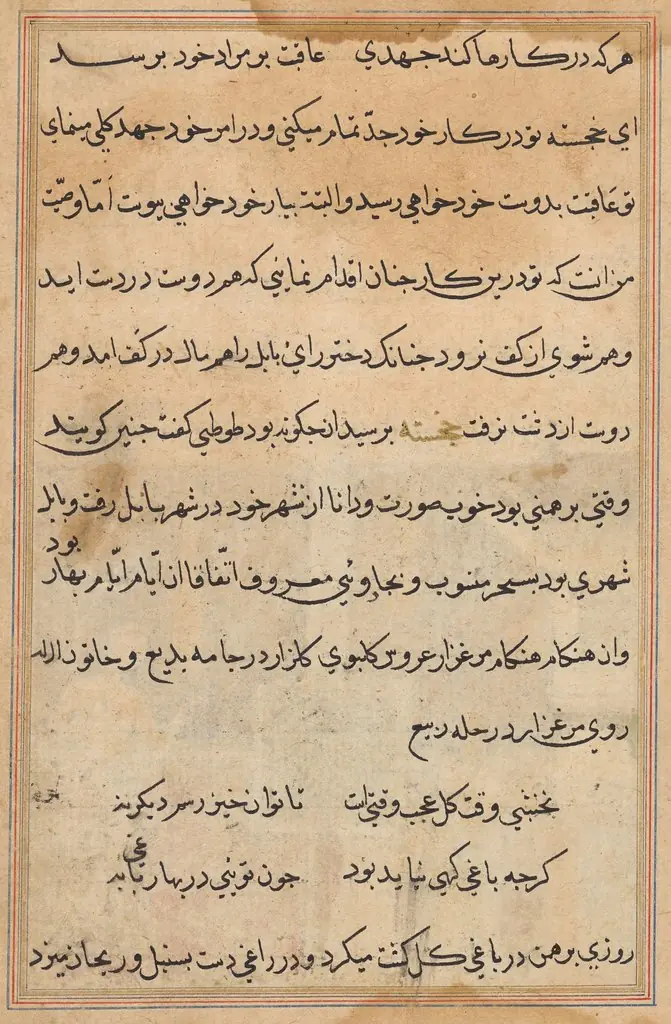 Page from Tales of a Parrot (Tuti-nama): text page
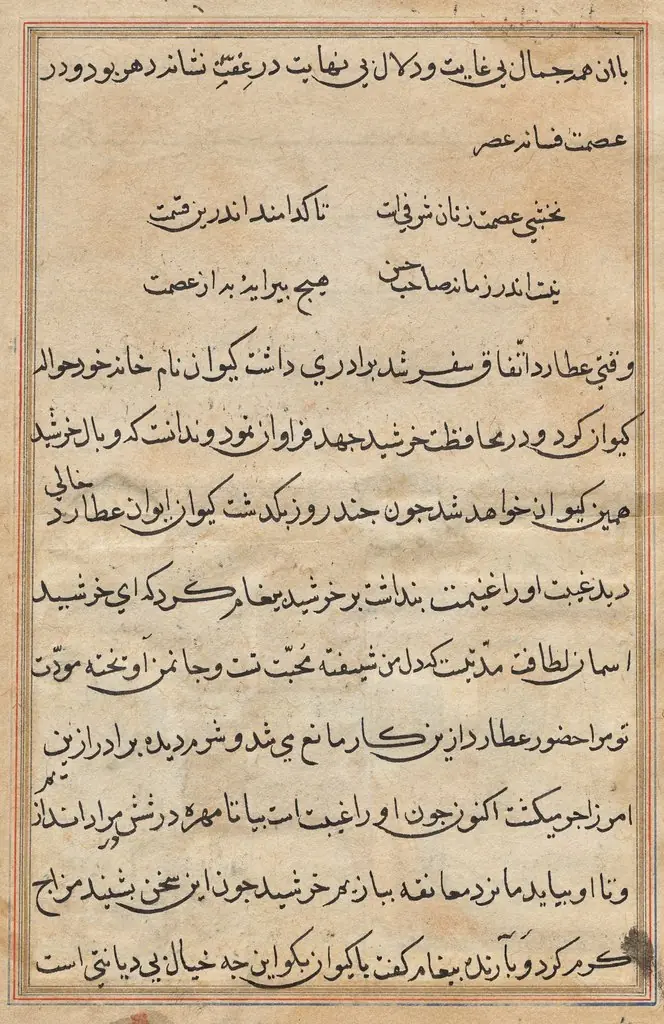 Page from Tales of a Parrot (Tuti-nama): text page
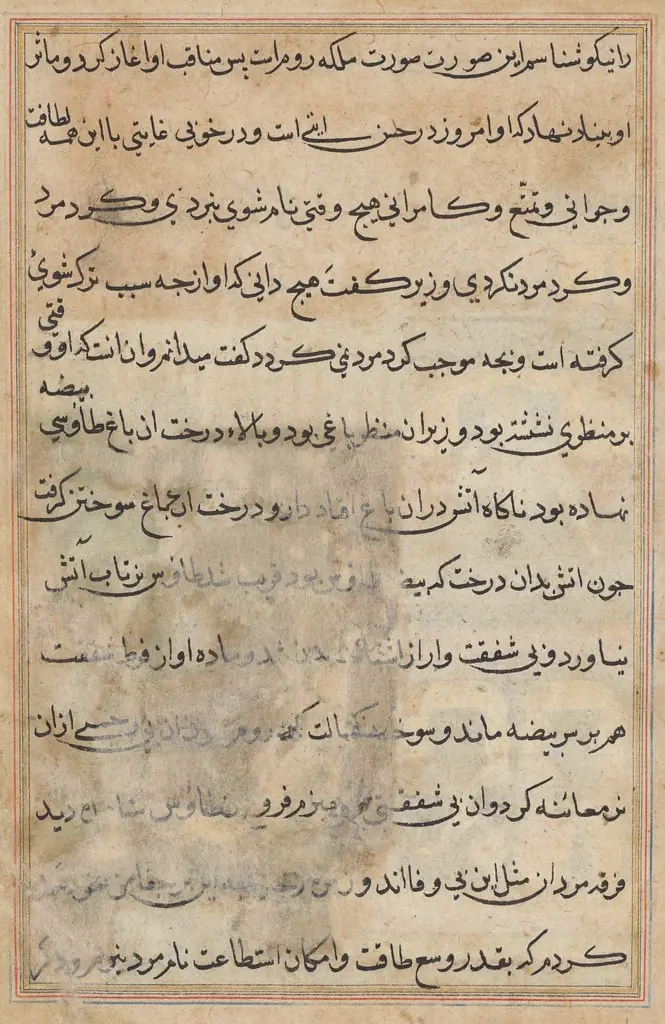 Page from Tales of a Parrot (Tuti-nama): text page
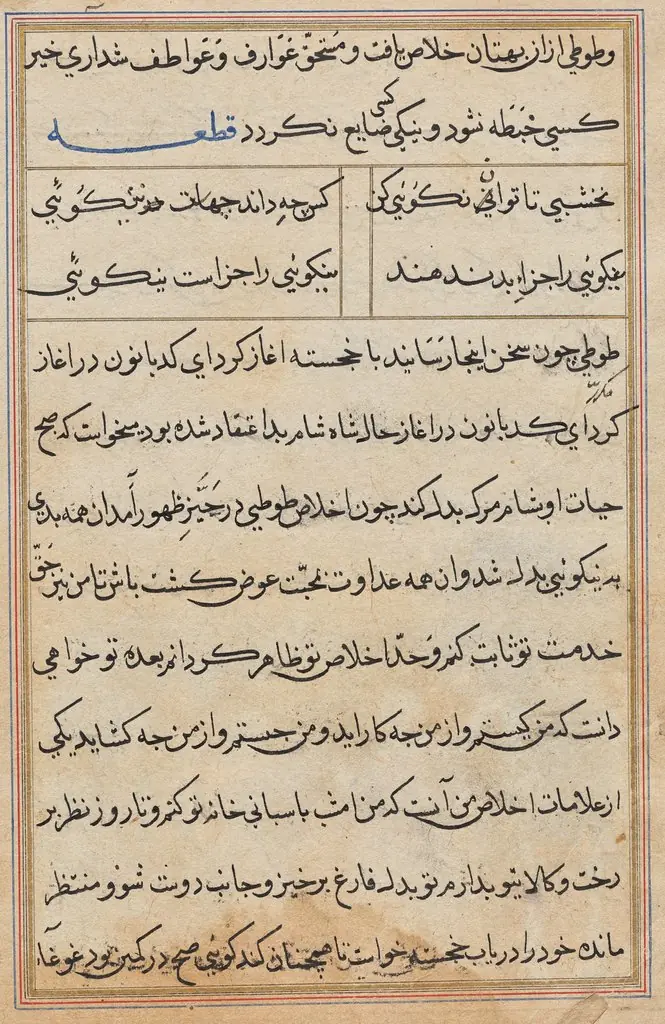 Page from Tales of a Parrot (Tuti-nama): text page