Artwork
Page from Tales of a Parrot (Tuti-nama): text page
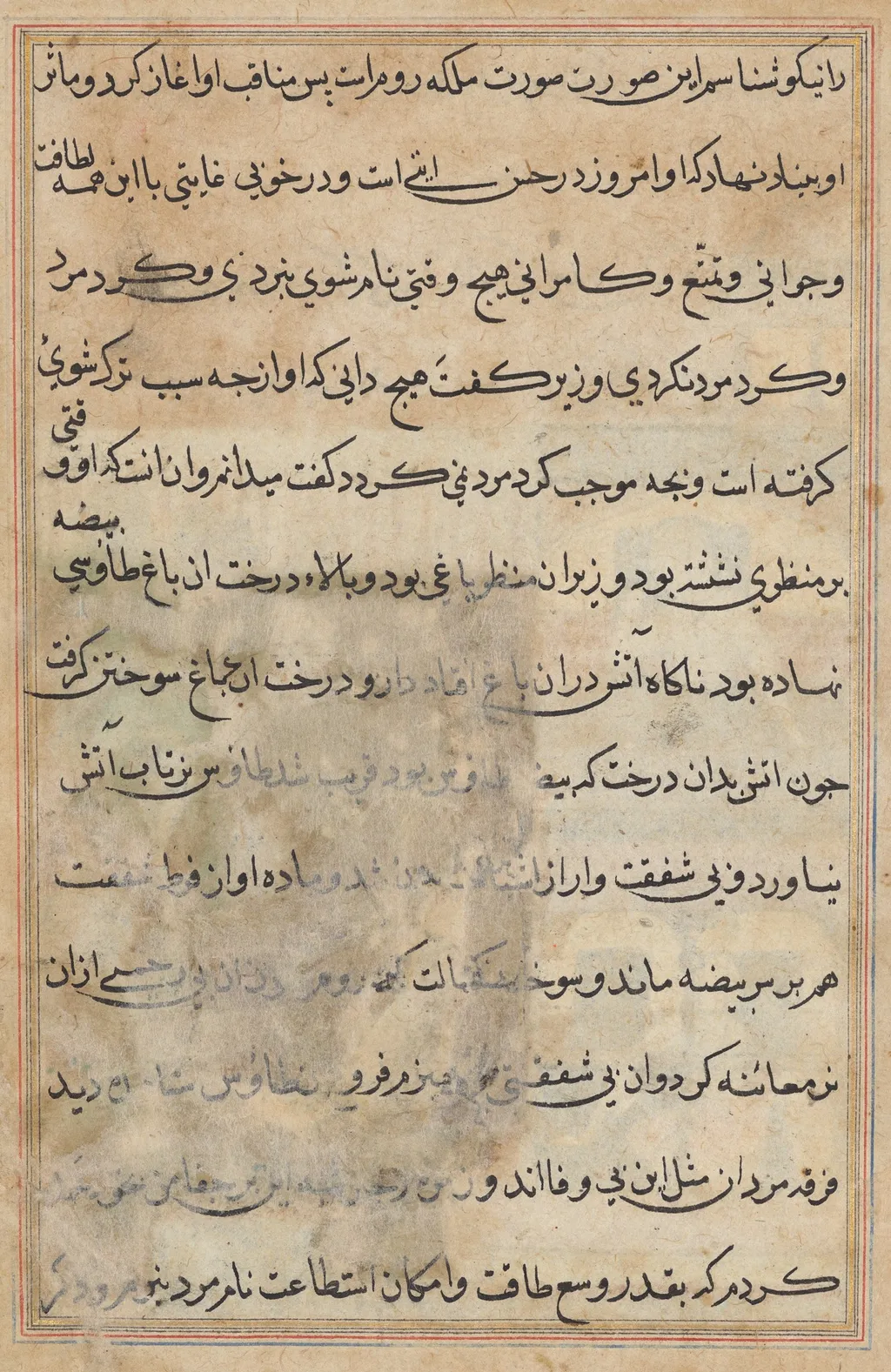
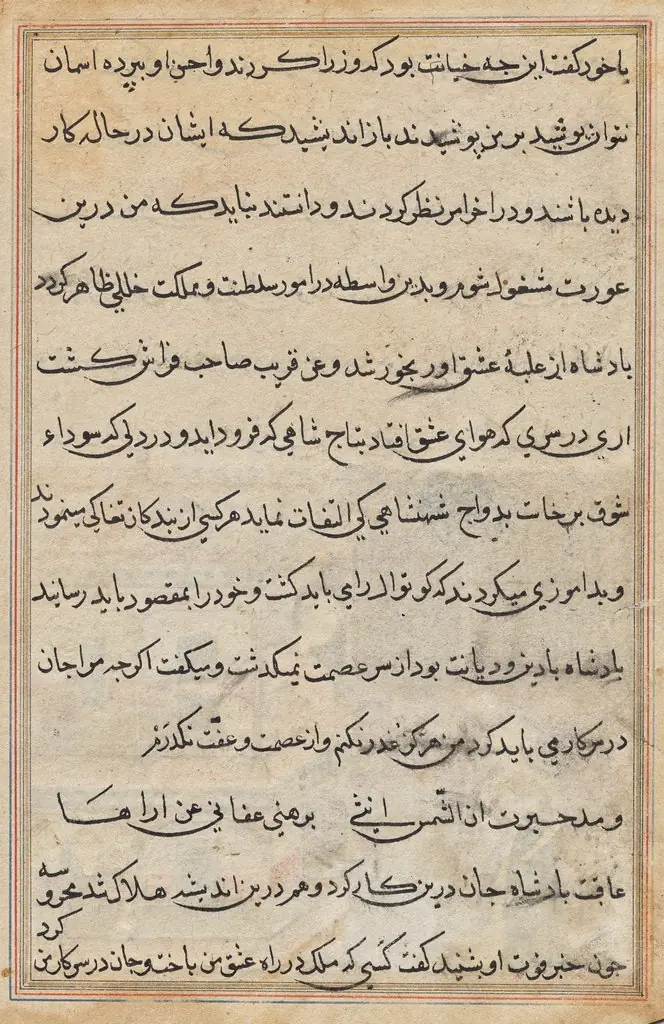
Page from Tales of a Parrot (Tuti-nama): text page is an unspecified painting. It dates from 1560 and is held in the collection of the Cleveland Museum of Art. The object is a single page from the illustrated manuscript known as *Tuti‑nama* (Tales of a Parrot).
About this work
Overview
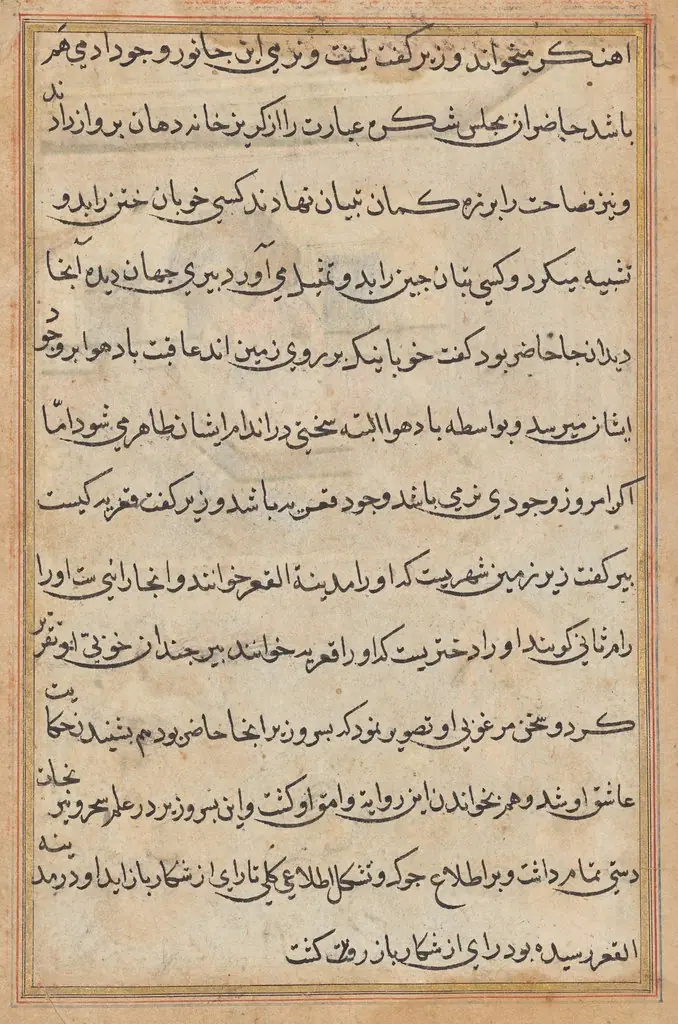
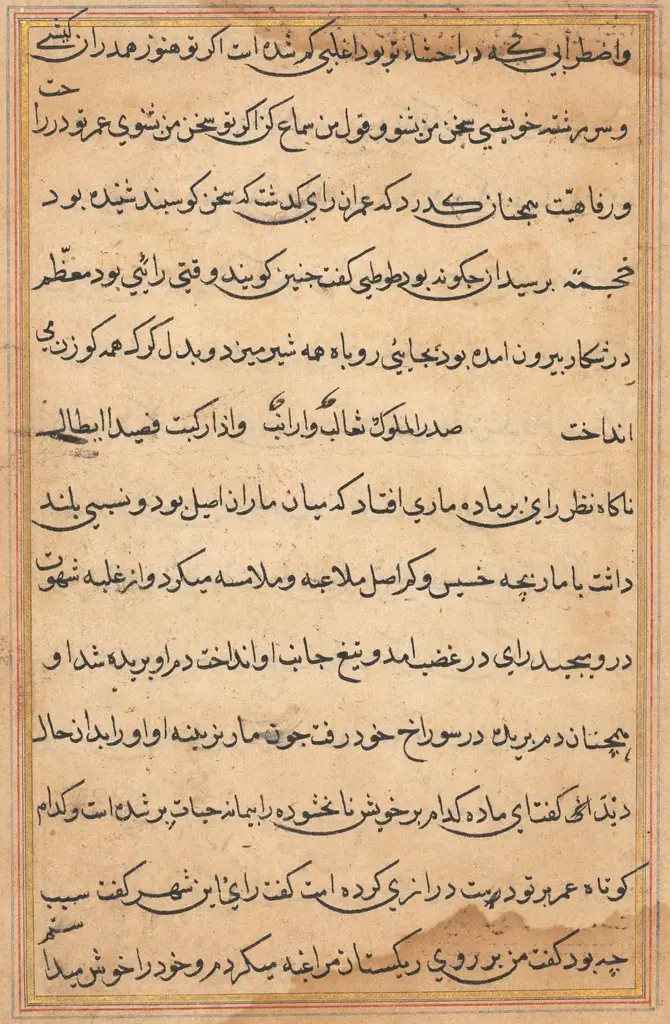
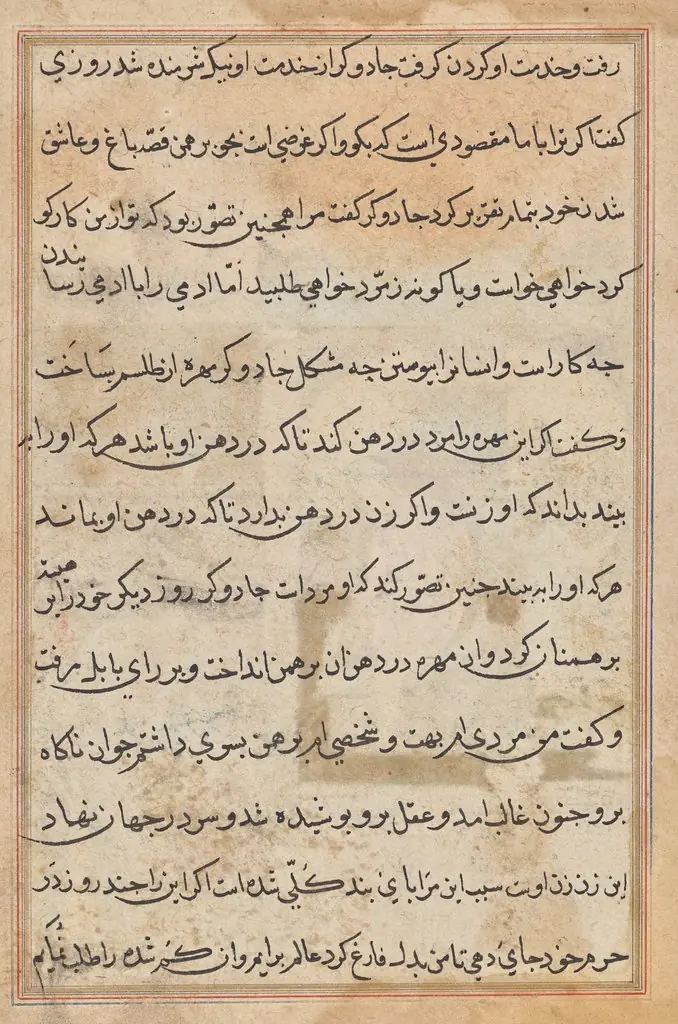
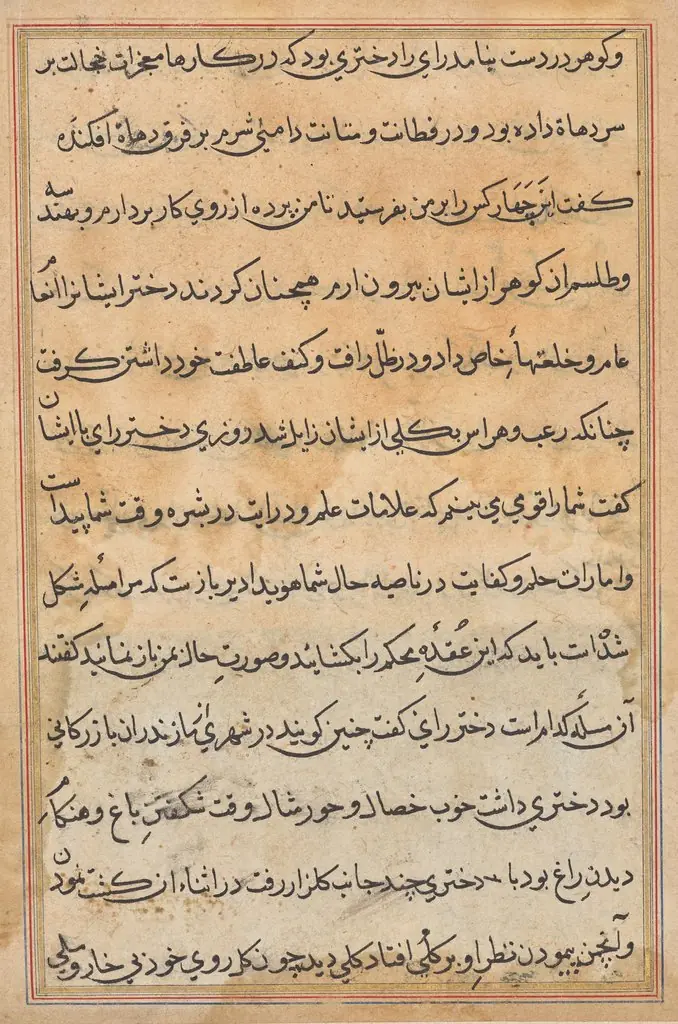
The object is a single page from the illustrated manuscript known as *Tuti‑nama* (Tales of a Parrot). It consists of a sheet of aged paper, slightly yellowed with faint spotting, upon which dense black calligraphy fills the surface. A narrow red line runs along the perimeter, framing the text. The page exemplifies the visual character of Persian literary codices.
Technique & Style
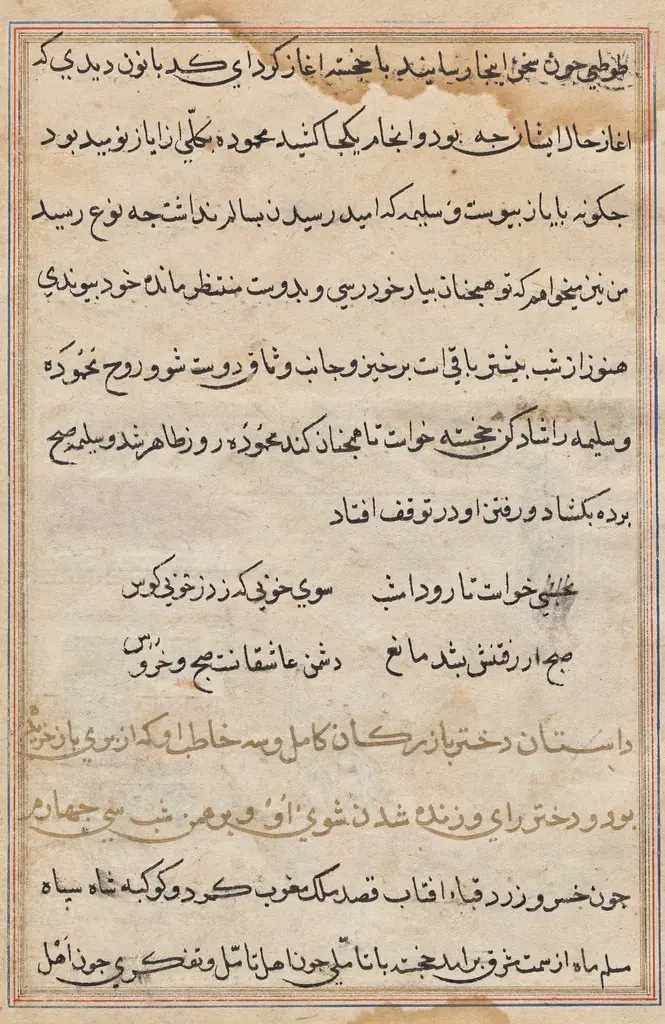
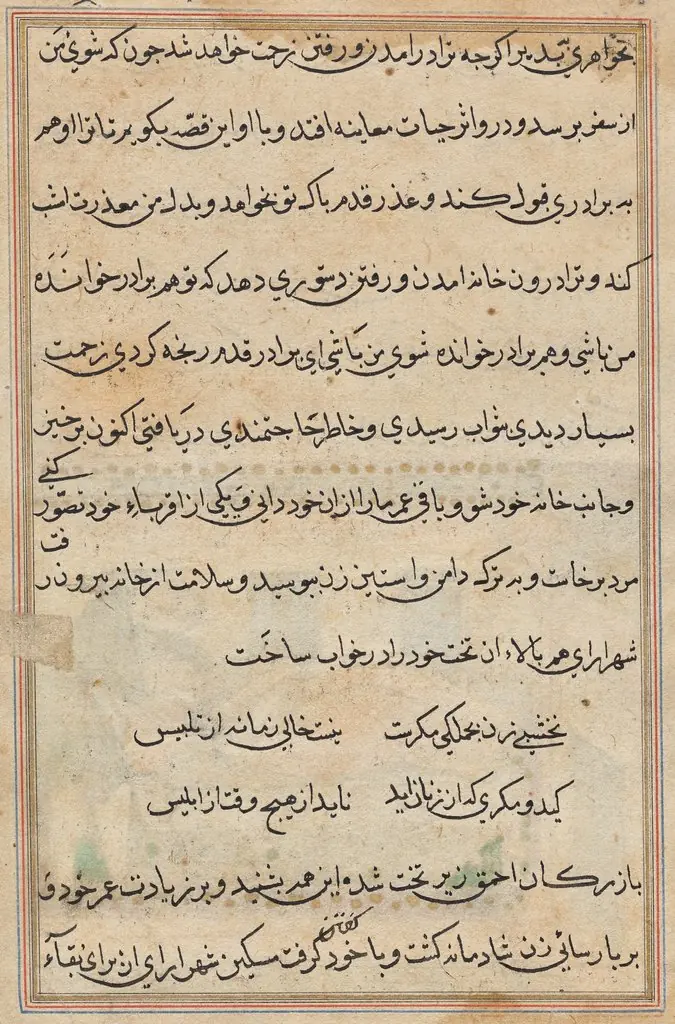
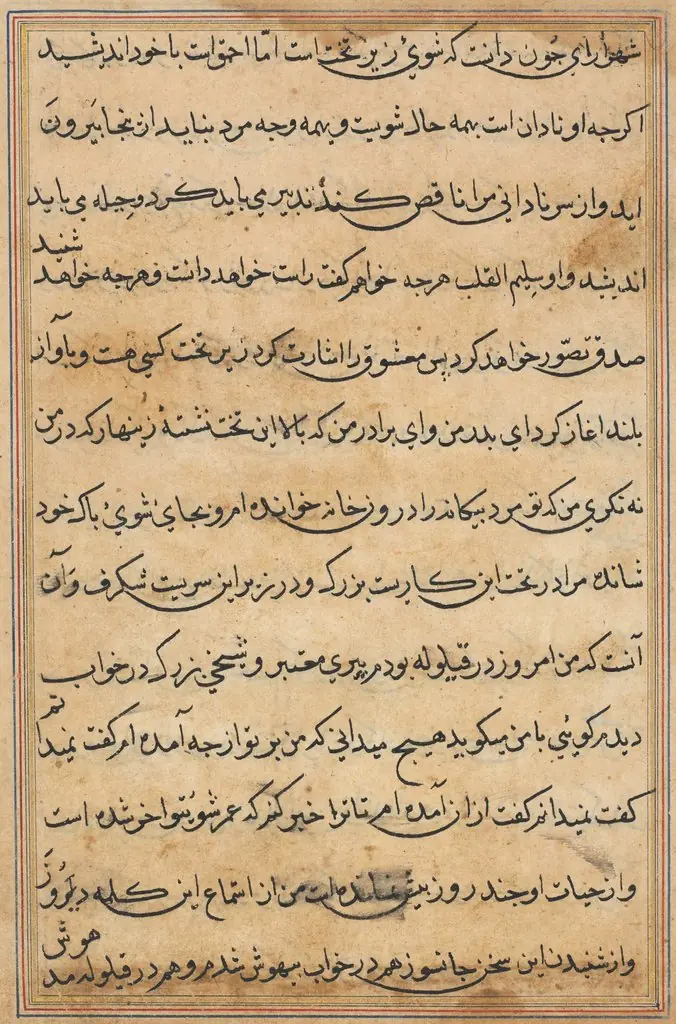
The inscription is rendered in nastaʿlīq, the elegant Persian script that blends fluid cursive strokes with angular forms. This calligraphic hand, prevalent in Persian books from the Safavid era onward, allows tight packing of text while maintaining legibility. Variations in line darkness reflect the hand of the scribe, a common feature in manuscript production.
Context
*Tuti‑nama* is a collection of moral anecdotes and fables that circulated widely in the Persianate world. Such texts were often copied for elite patrons, serving both educational and decorative purposes. The use of nastaʿlīq and the red marginal framing align the page with the aesthetic conventions of Persian illustrated books of the early modern period.
History & Provenance
The specific leaf is now part of a museum collection, having entered through acquisition from a private collection of Persian manuscripts. Its preservation in a controlled environment has retained the original script and border, allowing scholars to study the material culture of Persian bookmaking.
Artist & collection

 Page from Tales of a Parrot (Tuti-nama): text page
 Page from Tales of a Parrot (Tuti-nama): text page
 Page from Tales of a Parrot (Tuti-nama): text page
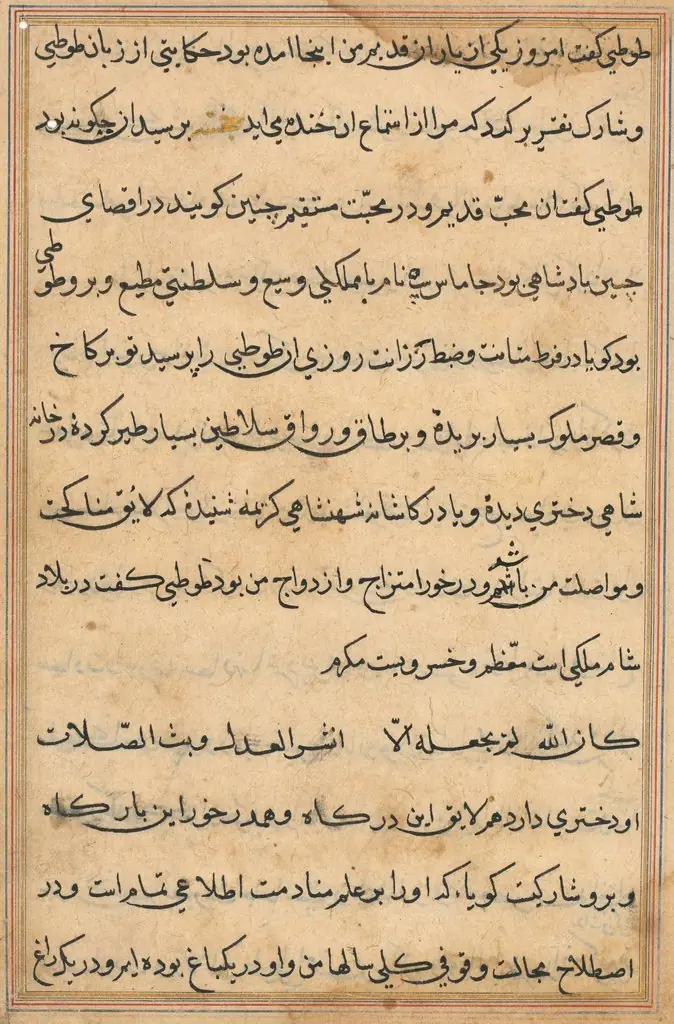 Page from Tales of a Parrot (Tuti-nama): text page
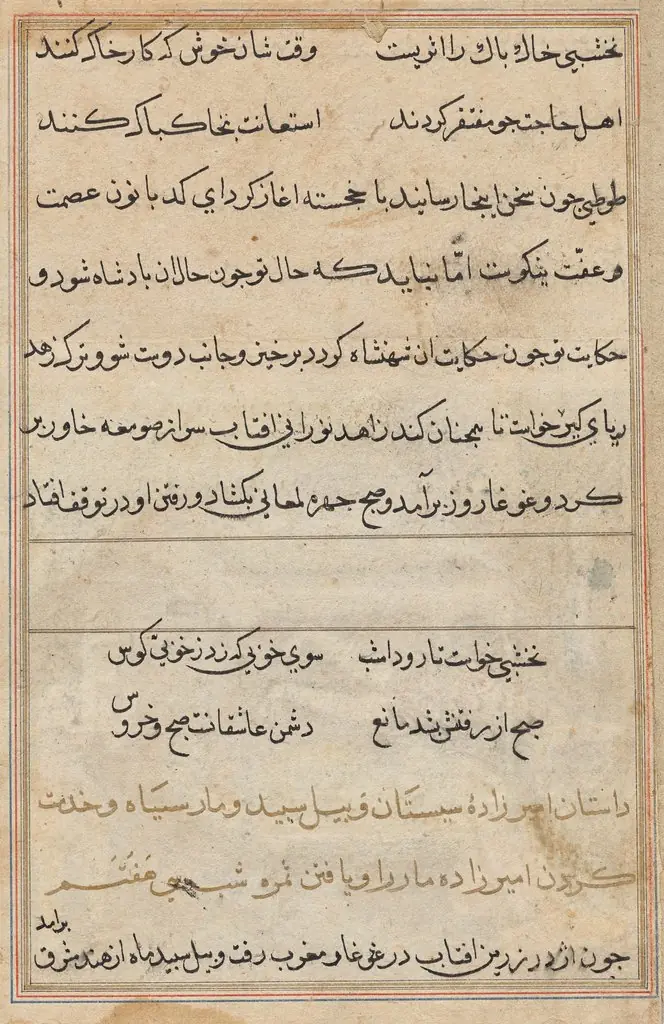 Page from Tales of a Parrot (Tuti-nama): text page
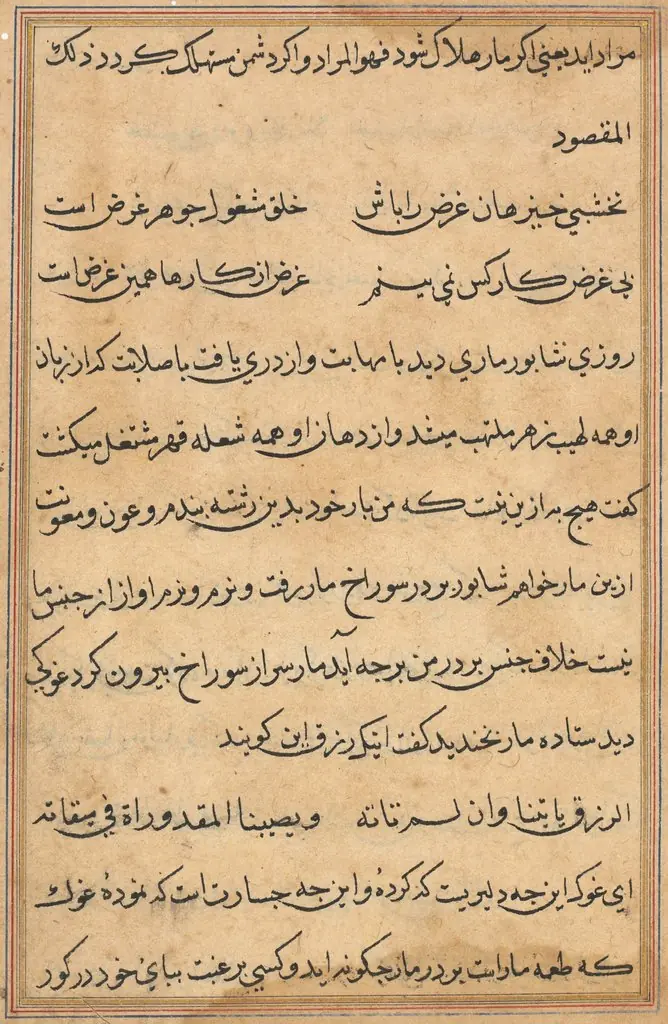 Page from Tales of a Parrot (Tuti-nama): text page
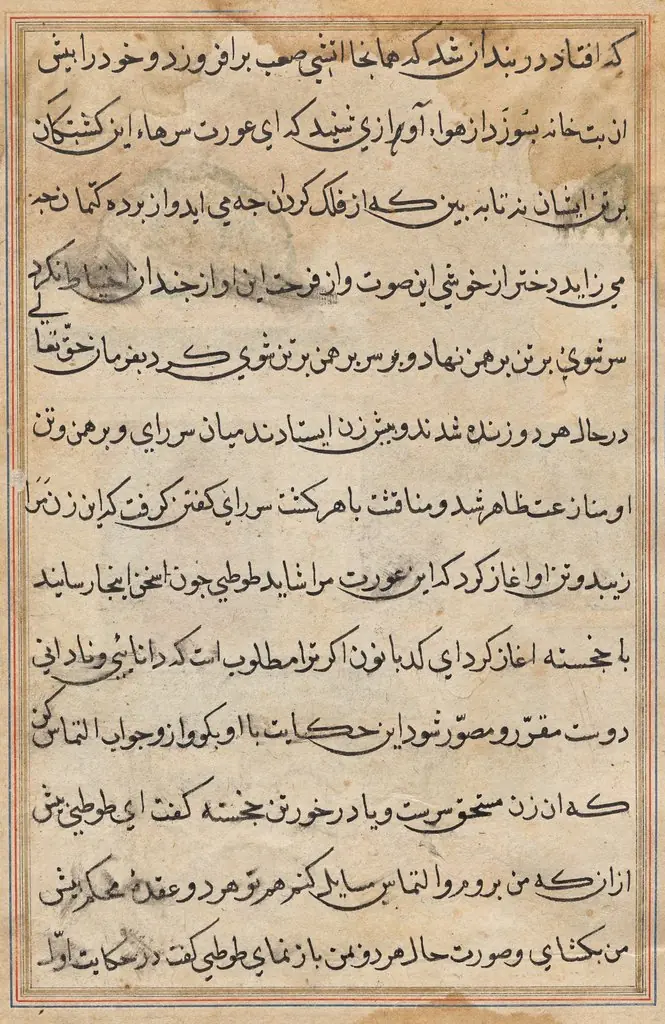 Page from Tales of a Parrot (Tuti-nama): text page
 Page from Tales of a Parrot (Tuti-nama): text page
 Page from Tales of a Parrot (Tuti-nama): text page
 Page from Tales of a Parrot (Tuti-nama): text page
 Page from Tales of a Parrot (Tuti-nama): text page
 Page from Tales of a Parrot (Tuti-nama): text page