Artwork
Bear
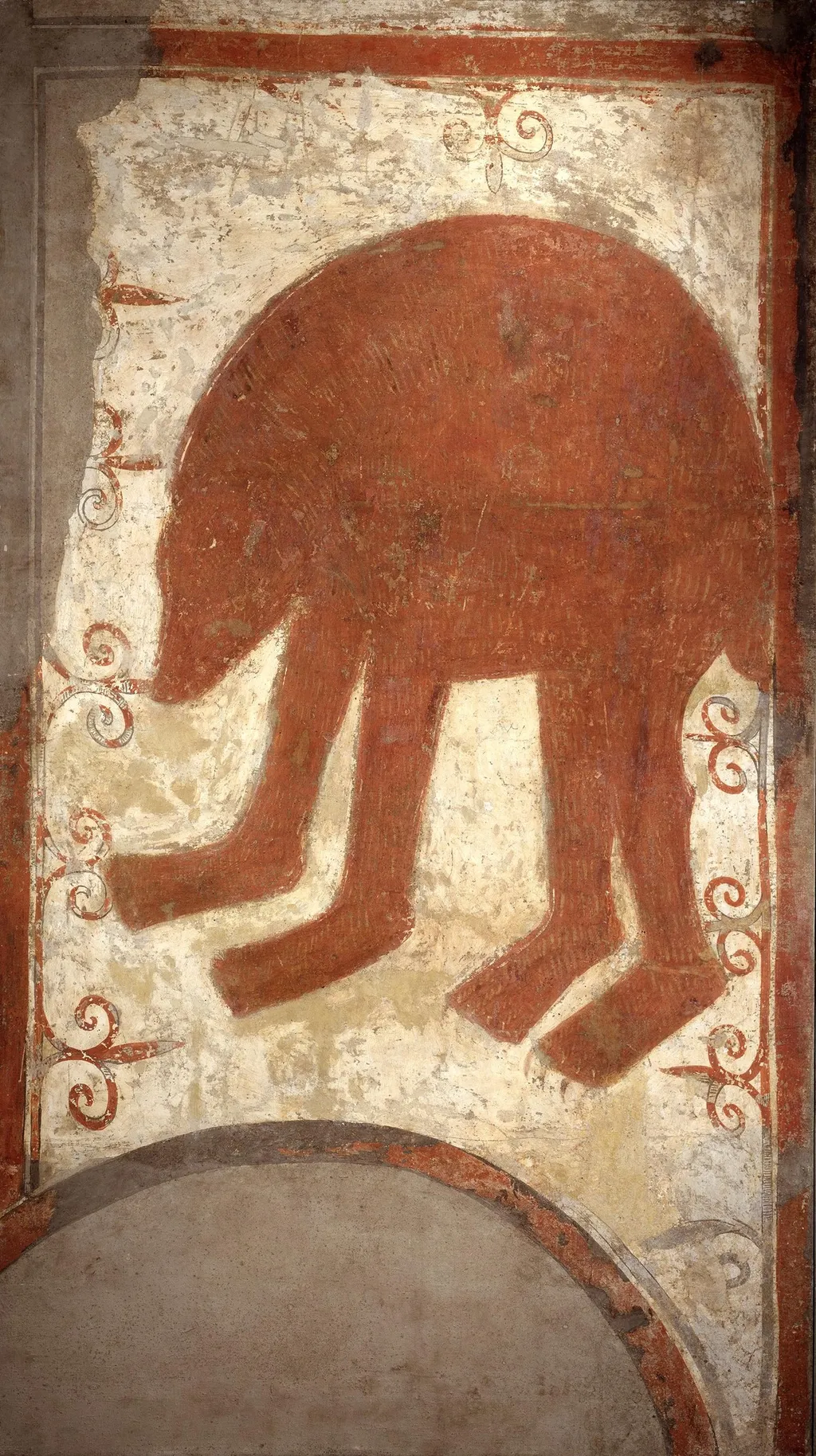
Bear is an unspecified painting by the Byzantine icon painting artist Unknown. It dates from 1125 and is held in the collection of the Museo del Prado.
About this work
Overview
The work titled “Bear” is a painted image depicting a solitary bear upright on its hind legs. Rendered in a limited palette of flat red and white, the figure has a rounded torso and short limbs, with its front paws lifted as if reaching outward. The composition is set against a plain, weathered background edged with faint, faded swirls, and the surface shows signs of age and flaking.
Subject & Meaning
The central figure is a bear, presented in a stylized, almost abstract manner rather than a naturalistic study. The pose—standing and extending its paws—suggests a gesture of inquiry or yearning, though no explicit narrative is provided, leaving interpretation open to the viewer.
Technique & Style
Executed with flat areas of pigment, the painting employs a stark red and white color scheme without gradations or shading. The brushwork appears minimal, and the overall effect is one of graphic simplicity. The surface bears evidence of extensive aging, with paint loss and a cracked, faded appearance that contributes to its antiquated character.
History & Provenance
The piece shows considerable wear, indicating it has been in existence for a long period, though specific details of its creation, ownership, or exhibition history are not documented in the available information.
Context
The work’s aesthetic aligns with a tradition of simplified animal representation found in folk or naïve art, where emphasis is placed on bold color and form rather than realistic detail. Its plain background and decorative swirls echo decorative motifs common in certain regional painting practices.
Artist & collection

 Domestic Scene
 Giacomo and Cardinal Marco, investing Andrea, Abbot of San Zeno, with his Benefice
 The Nymph of Fontainebleau
 Portrait of a Woman
 Madonna and Child with Saints in the Enclosed Garden
 Venus and Minerva
 Family Group of Four on Sofa
 Wall painting from Room H of the Villa of P. Fannius Synistor at Boscoreale
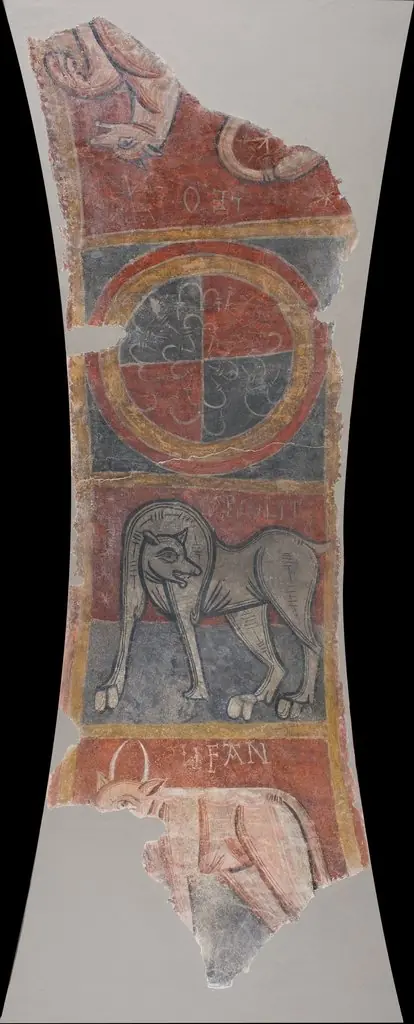 CARCOLITI, elephant and lion from Boí
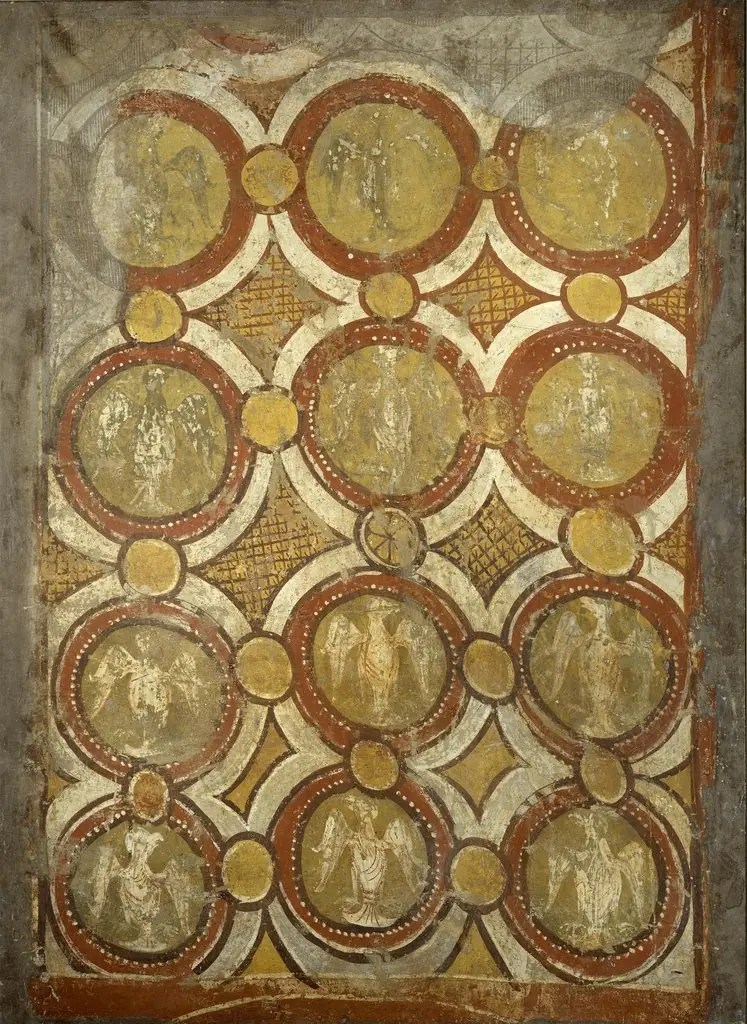 Decorative Panel with Eagles
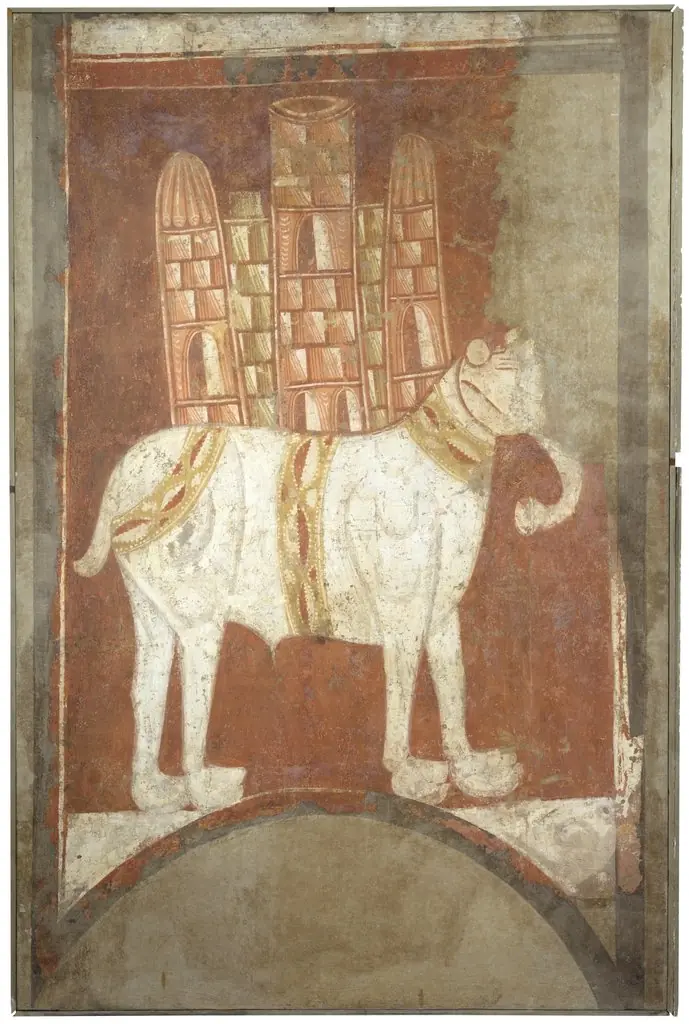 Elephant
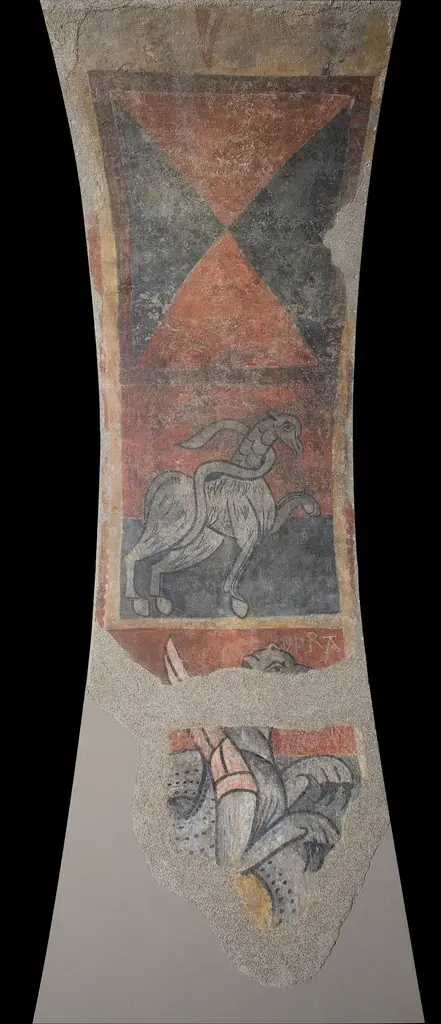 VIPRA (dragon) and other animals from Boí
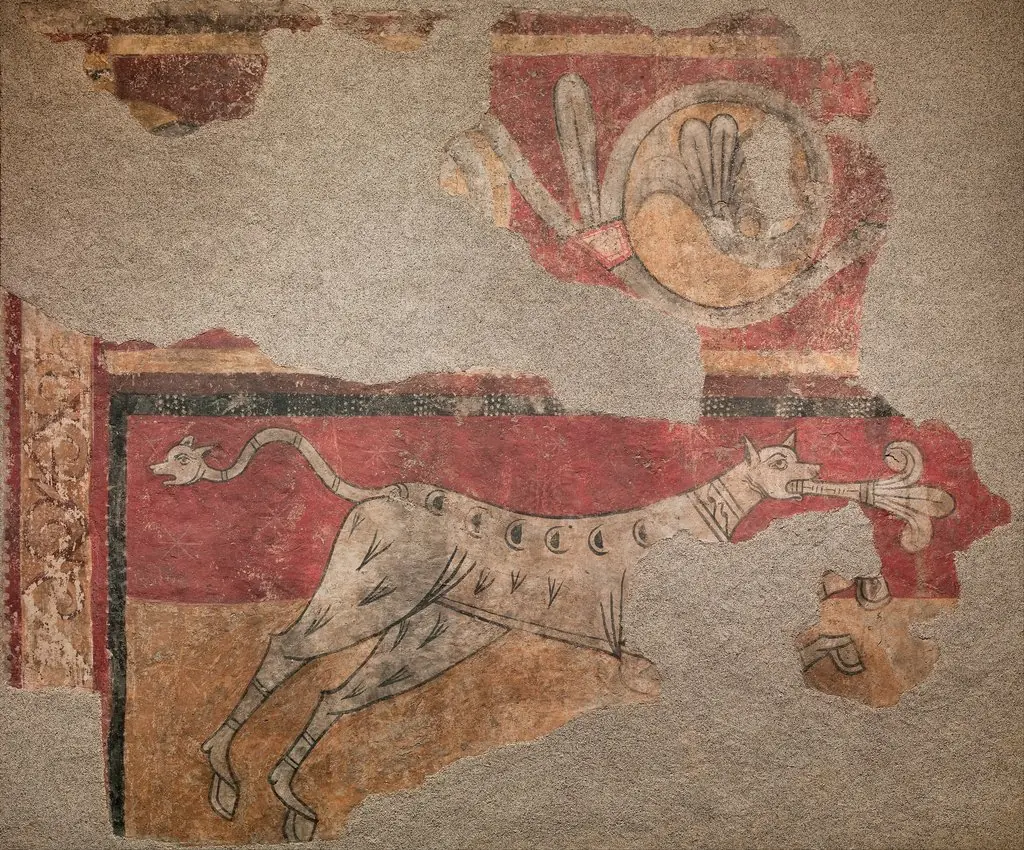 Quadruped with Fleur-de-lis from Boí
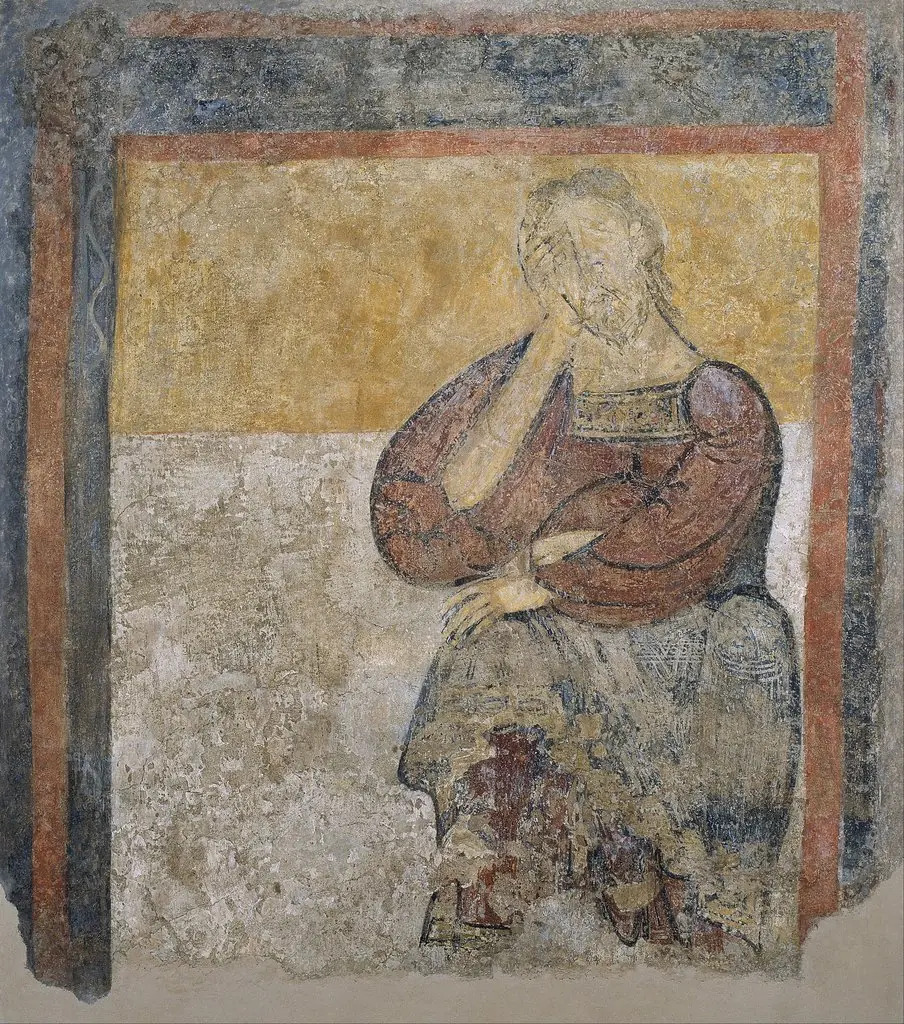 Distressed man from Sant Climent de Taüll
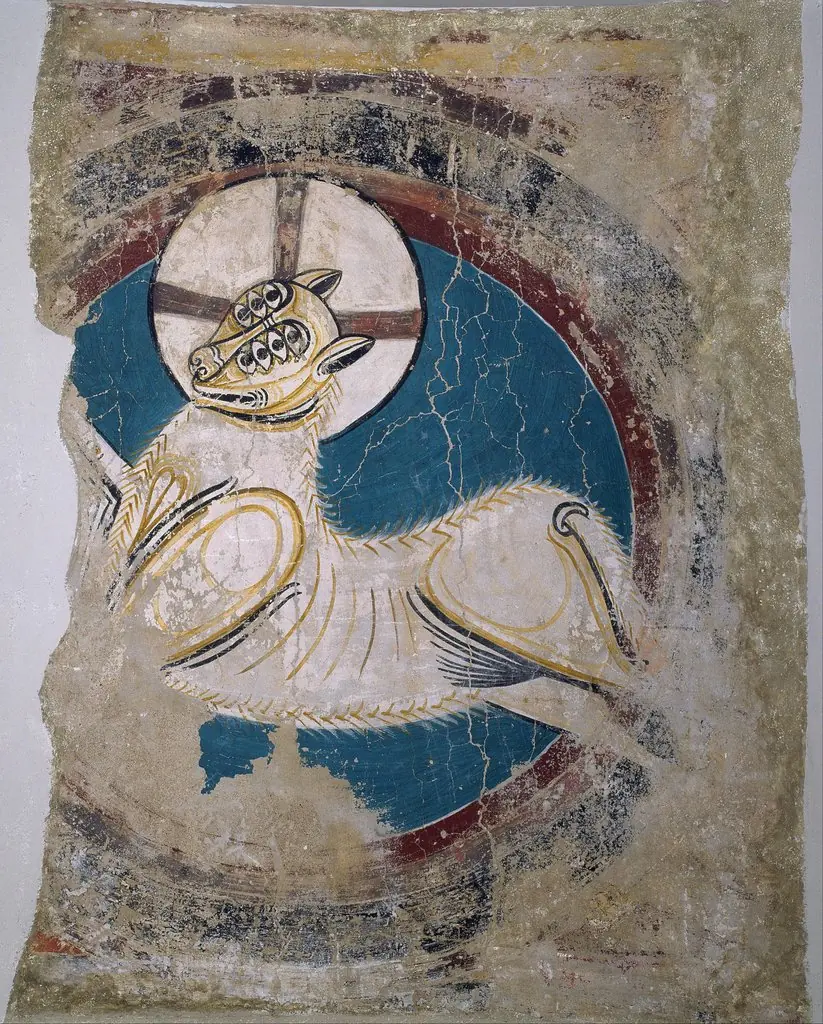 Arch of the Apocalyptic Lamb from Sant Climent de Taüll
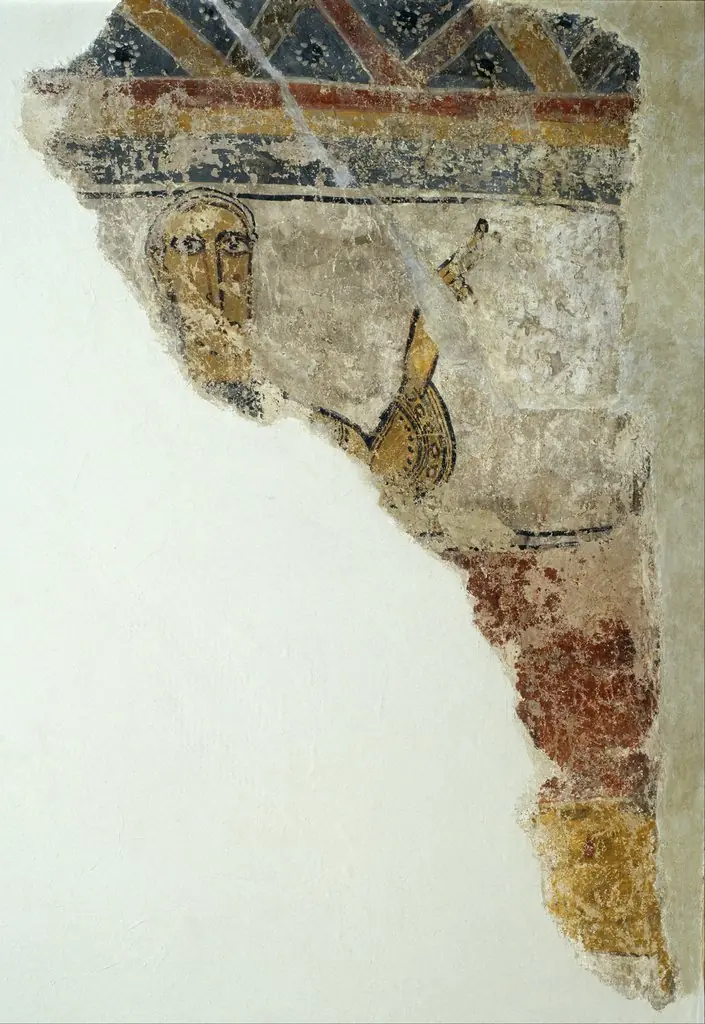 Remains of a figure from Santa Maria de Taüll
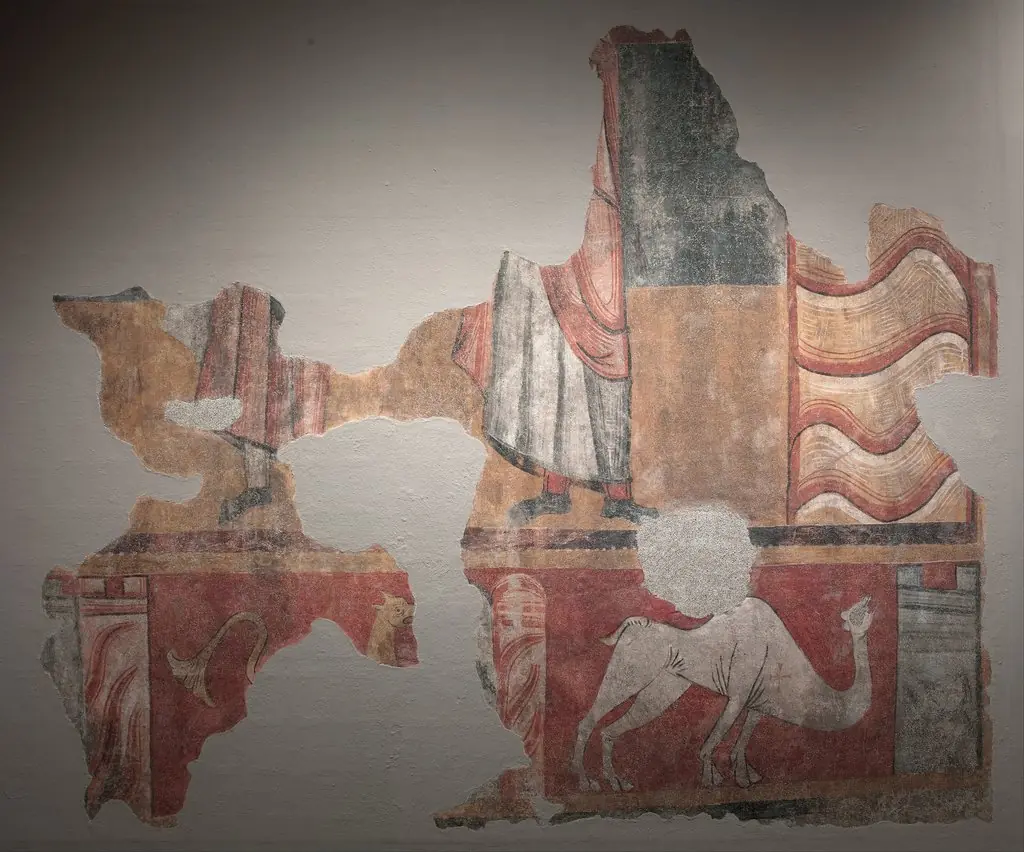 Figures, buildings and bestiary from Boí
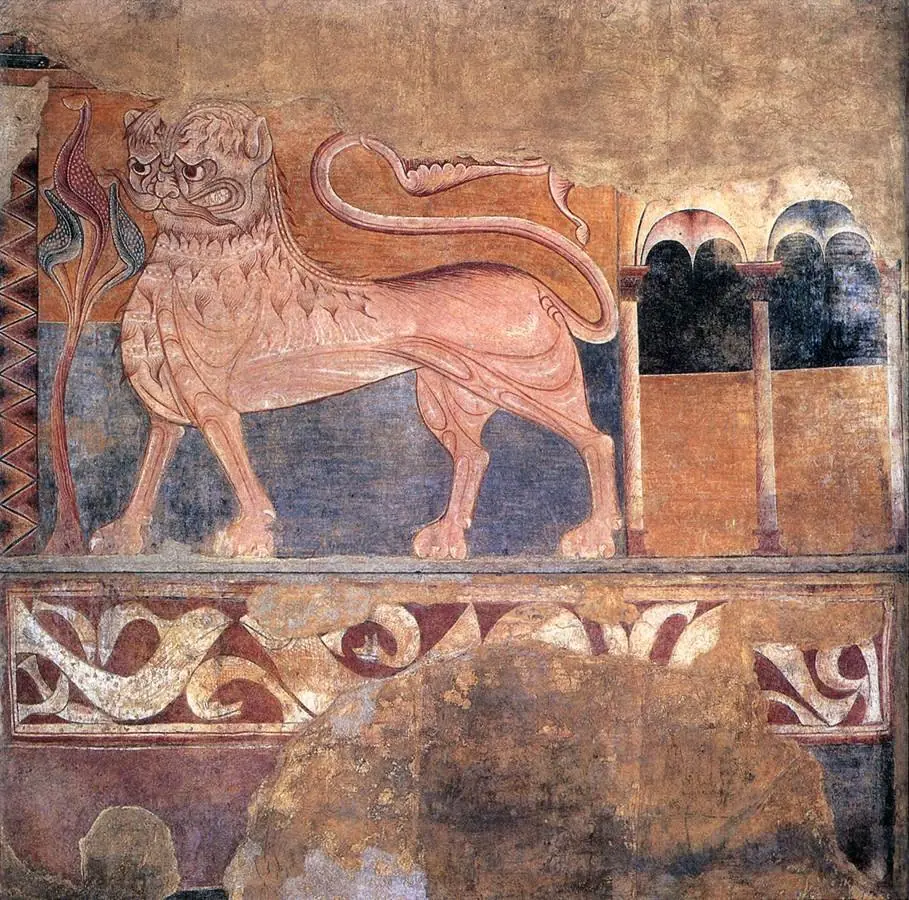 Lion wall painting
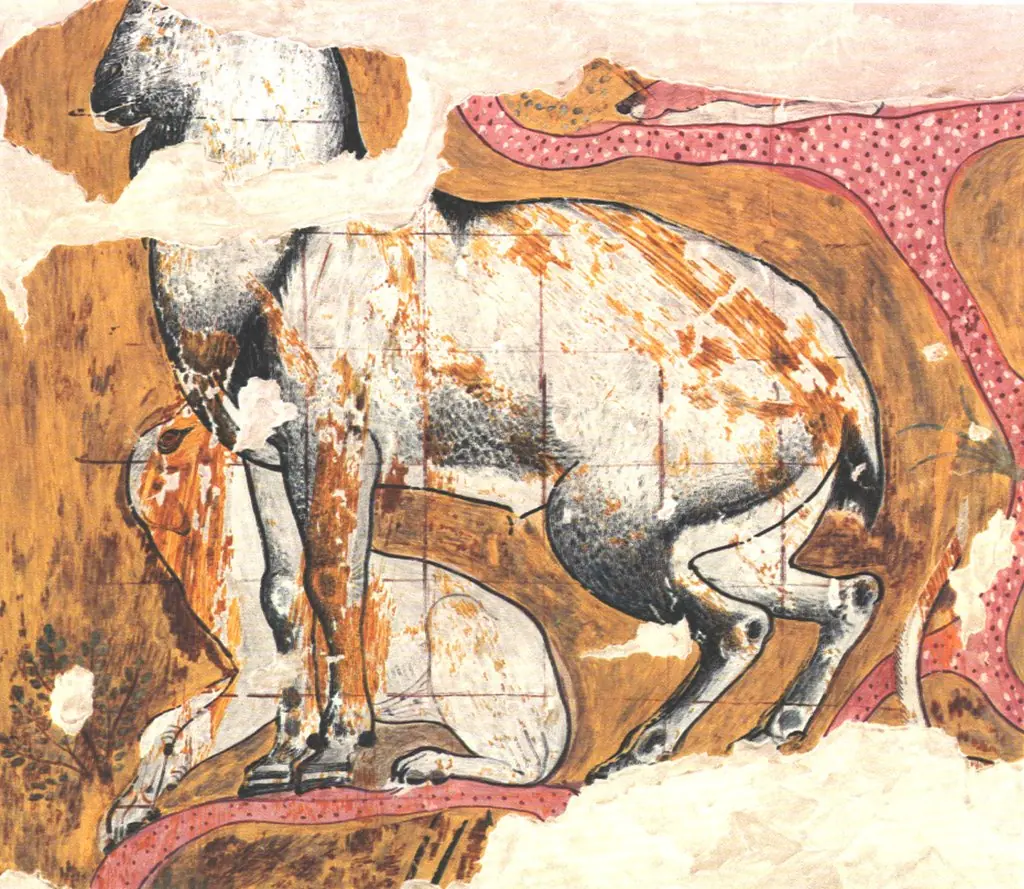 Ibex and Dog from the Tomb of Qenamun
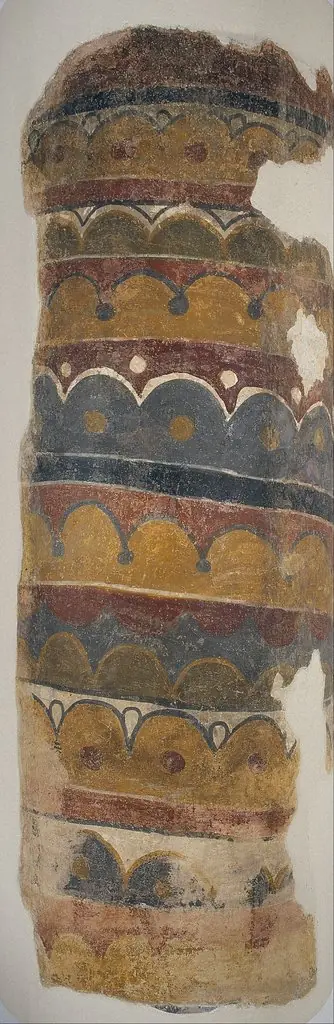 Decorated shaft from Santa Maria de Taüll