Artwork
Distressed man from Sant Climent de Taüll
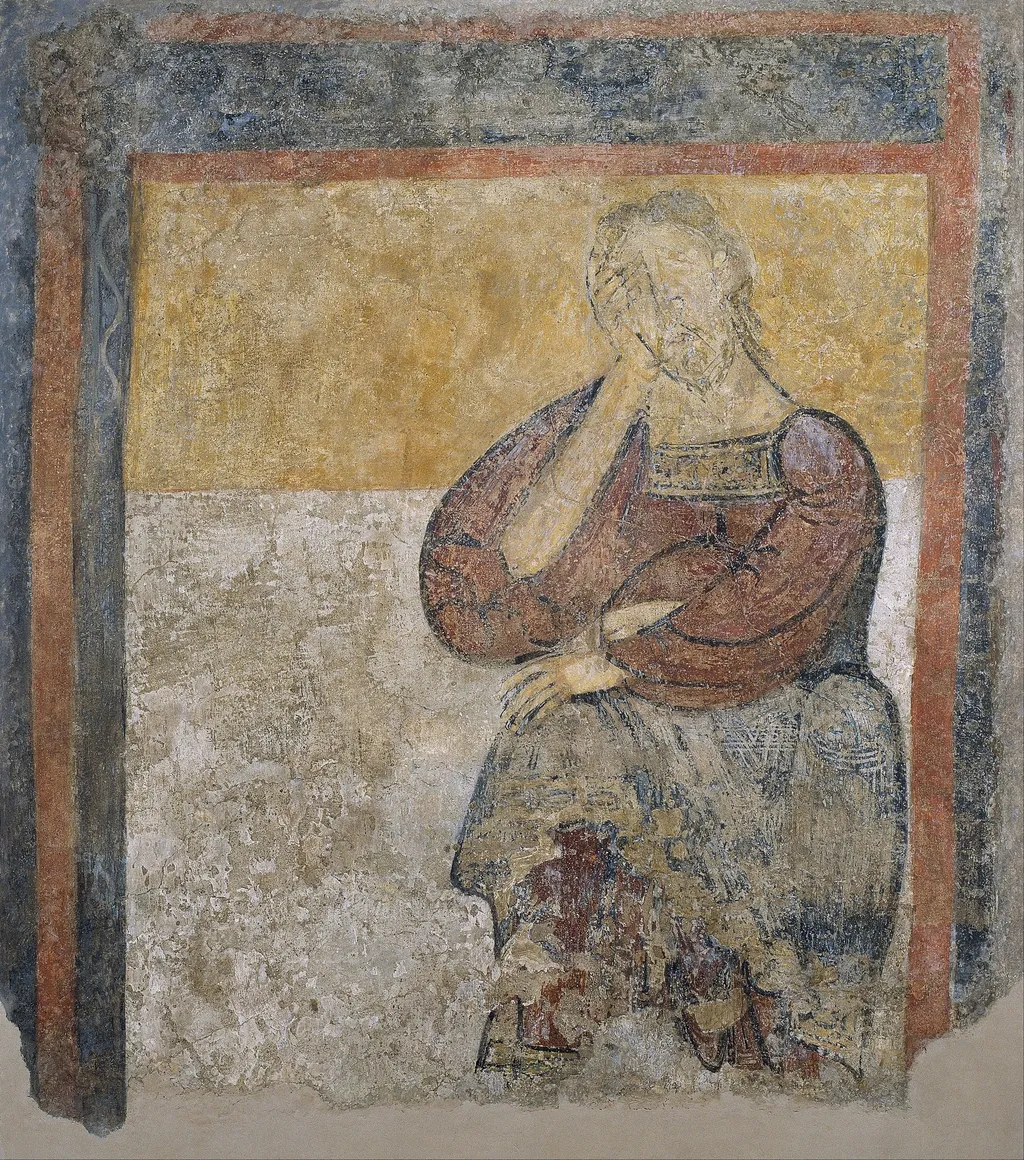
Distressed man from Sant Climent de Taüll is an unspecified painting by the Byzantine icon painting artist Master of Taüll. It dates from 1123 and is held in the collection of the Museu Nacional d'Art de Catalunya. This mural fragment originates from the apse of Sant Climent de Taüll, a Romanesque church in the Catalan Pyrenees.
About this work
Overview
This mural fragment originates from the apse of Sant Climent de Taüll, a Romanesque church in the Catalan Pyrenees. Painted around 1123, it was part of a larger devotional cycle now preserved at the Museu Nacional d'Art de Catalunya. The figure is one of several human forms integrated into a sacred narrative, rendered with the stylized intensity typical of 12th-century Catalan fresco work.
Subject & Meaning
The figure, shown with head bowed and hands clasped, likely represents a penitent or sorrowful soul within a biblical context. Though not a named saint, his posture evokes human anguish in the face of divine judgment—a common theme in Romanesque ecclesiastical art meant to inspire reflection and contrition among worshippers.
Technique & Style
Executed in tempera on plaster, the figure is rendered with bold outlines and flat, saturated hues. The brown tunic and belt are defined by simple, rhythmic lines; the background’s ochre, orange, and gray tones create a non-naturalistic space that emphasizes spiritual over physical reality. Facial features are minimized, conveying emotion through posture rather than detail.
History & Provenance
The mural was detached from the church wall in the early 20th century during conservation efforts to preserve deteriorating frescoes. Along with other fragments from Sant Climent’s apse, it was transferred to the Museu Nacional d'Art de Catalunya in Barcelona, where it remains part of a curated ensemble of Romanesque religious art.
Context
Created during a period of intense monastic activity in Catalonia, the painting reflects the influence of Cluniac reform ideals that emphasized moral accountability and the emotional weight of sin. The figure’s isolation within the composition mirrors the individual’s spiritual struggle, a theme reinforced by the surrounding scenes of Christ in Majesty.
Legacy
As part of the broader Taüll corpus, this fragment exemplifies the expressive potential of Romanesque muralism beyond its formal rigidity. Though anonymous, the artist’s ability to convey inner turmoil through minimal means has contributed to modern appreciation of medieval art’s psychological depth, influencing later studies of emotion in religious imagery.
Artist & collection
Artist
A fresco painter from the 12th century, this anonymous artist decorated the walls of two small churches in a remote Catalan valley.

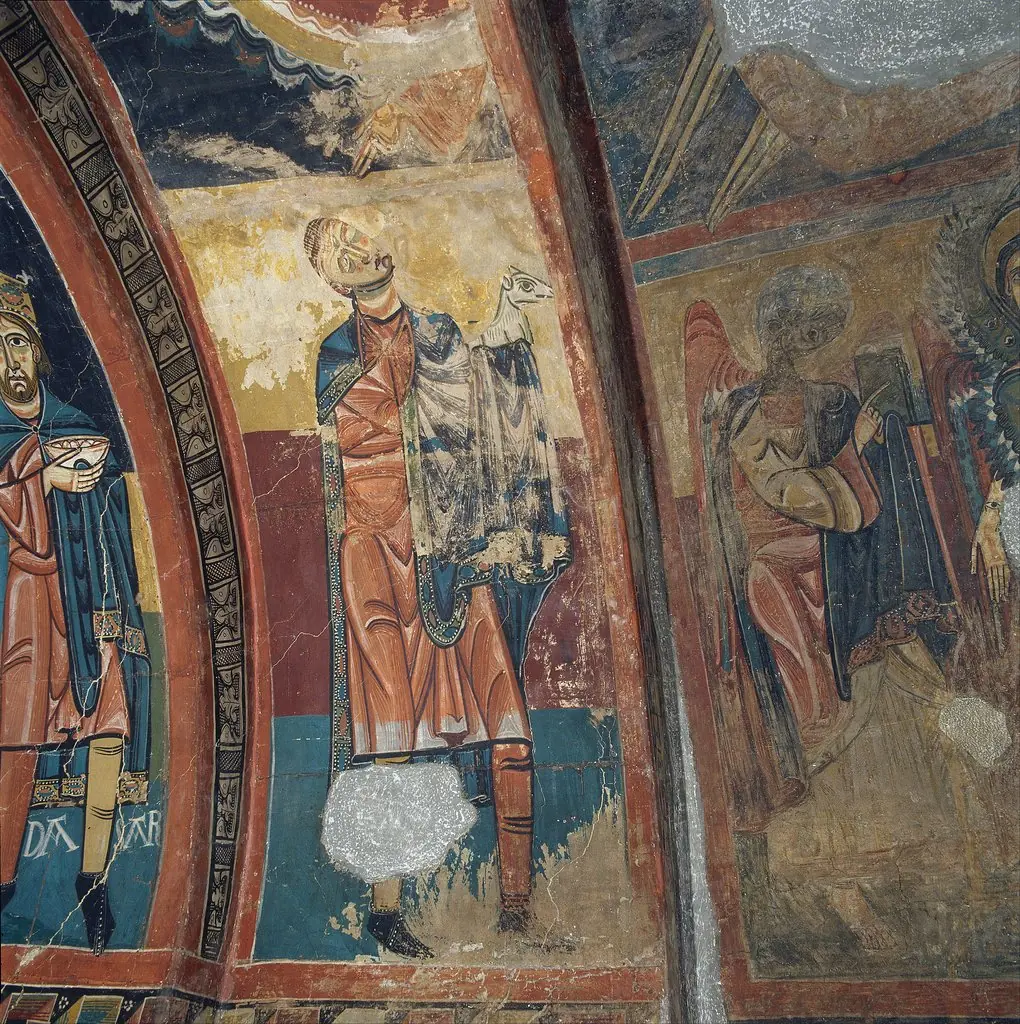 Arch of Abel's Offering from Santa Maria de Taüll
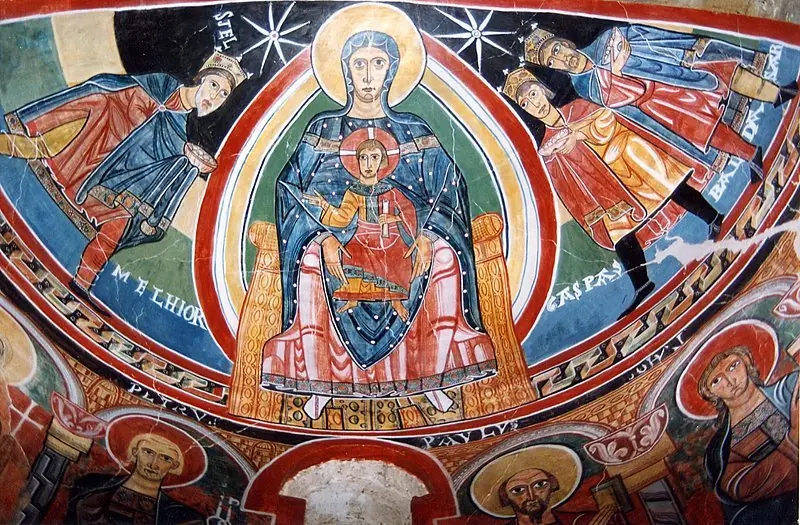 Apse of Santa Maria de Taüll
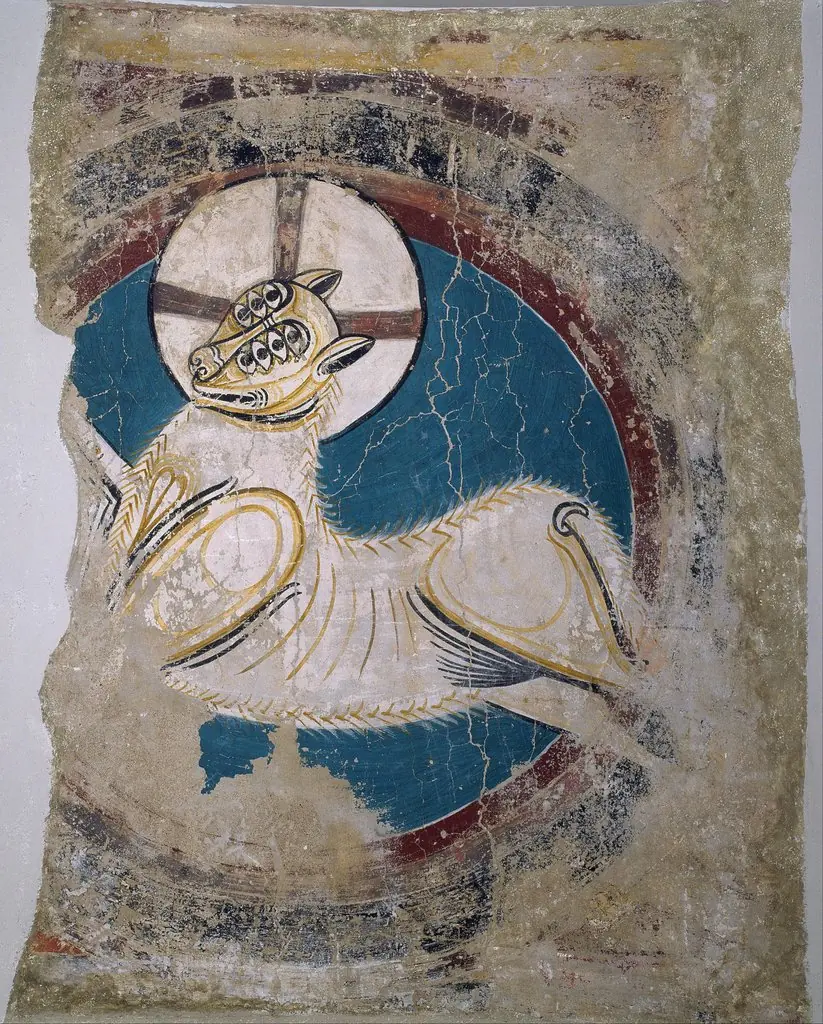 Arch of the Apocalyptic Lamb from Sant Climent de Taüll
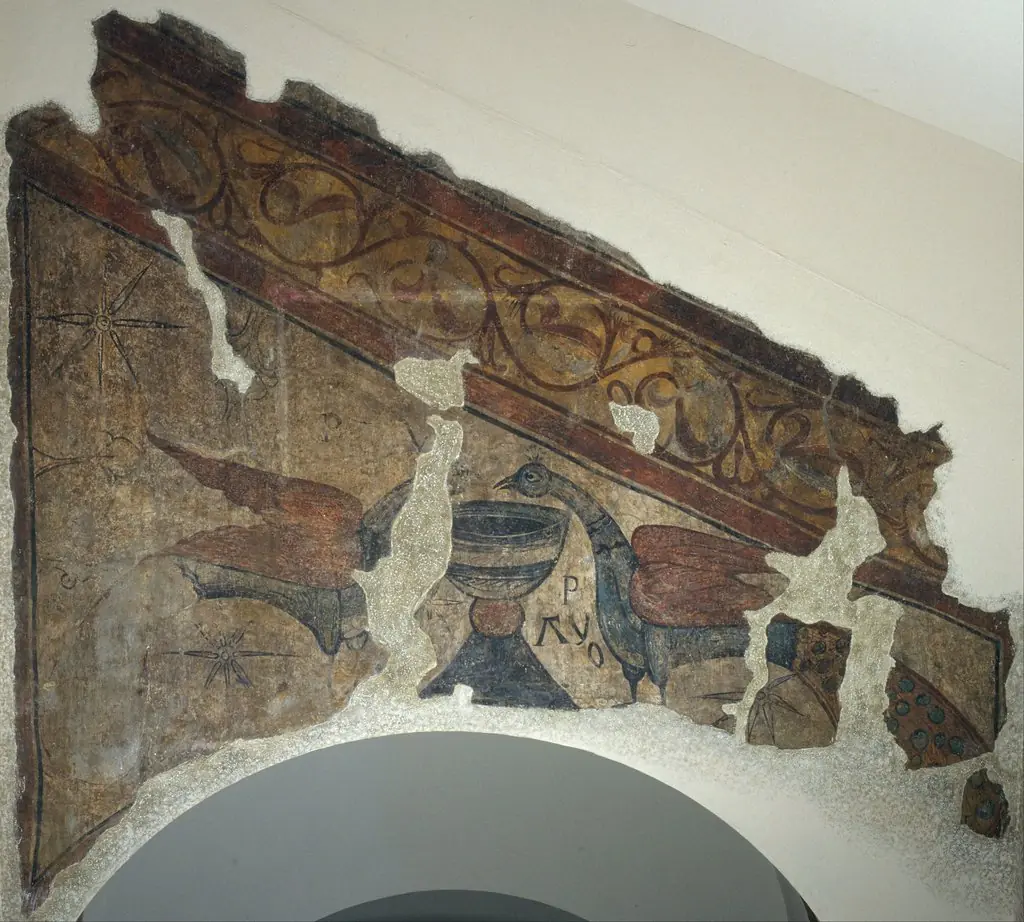 Peacocks drinking from a chalice from Santa Maria de Taüll
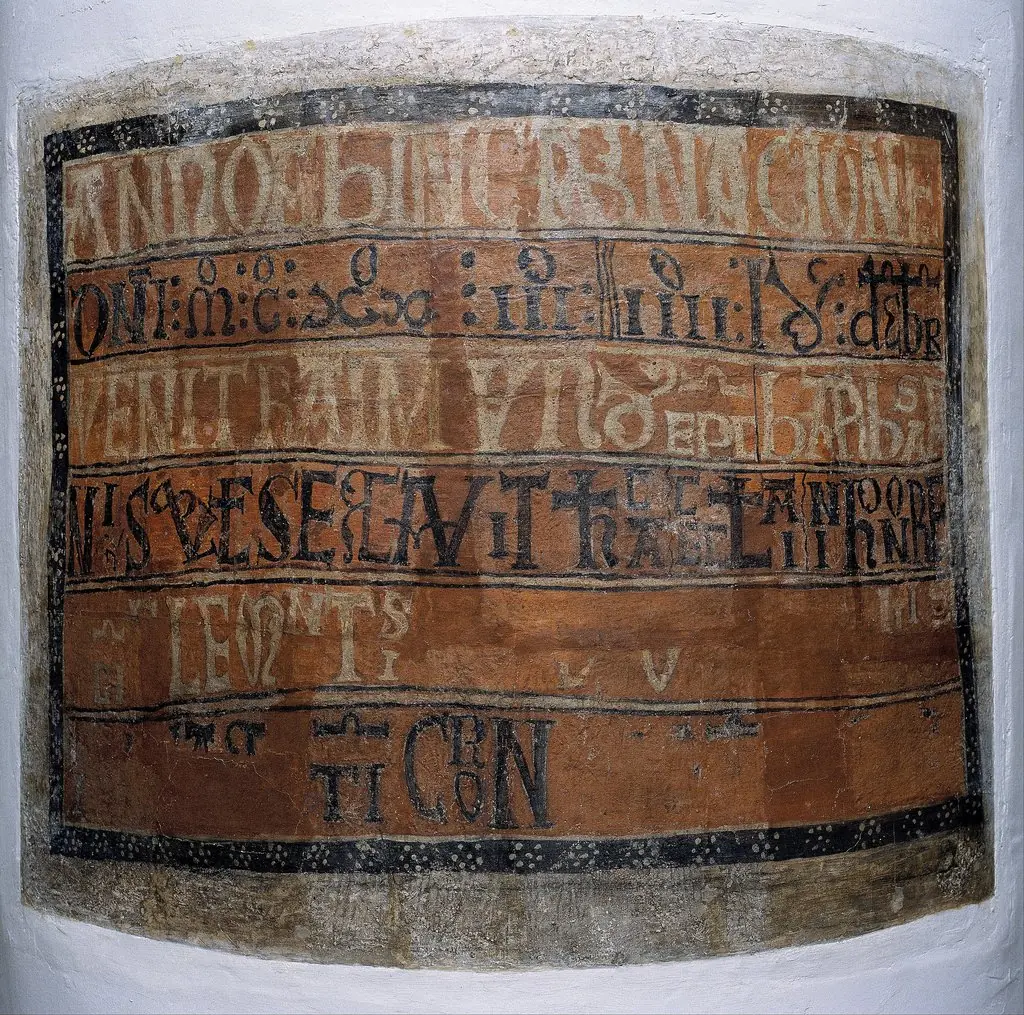 Consecration inscription from Sant Climent de Taüll
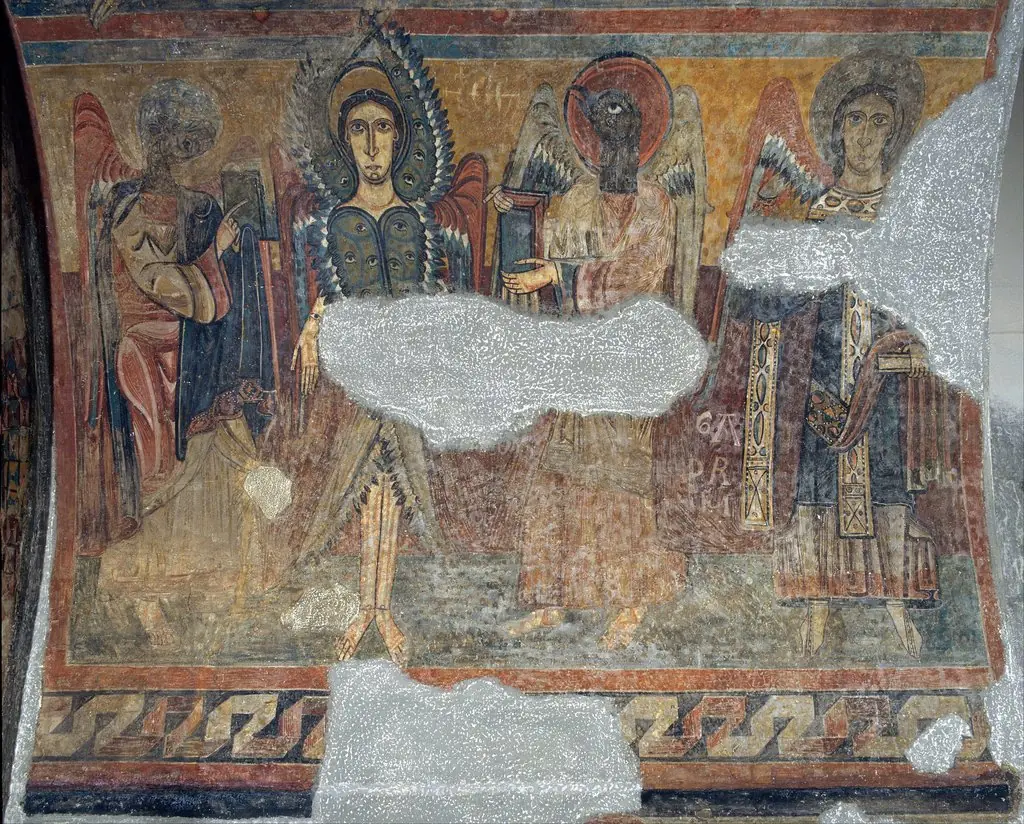 Arch of the Tetramorph with Seraph and Archangel from Santa Maria de Taüll
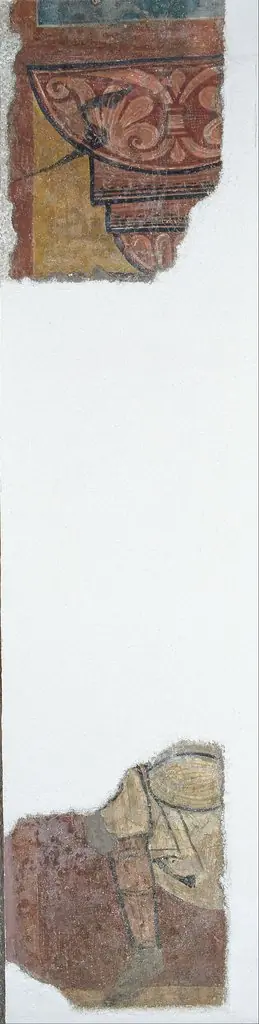 Capital and seated layman from Santa Maria de Taüll
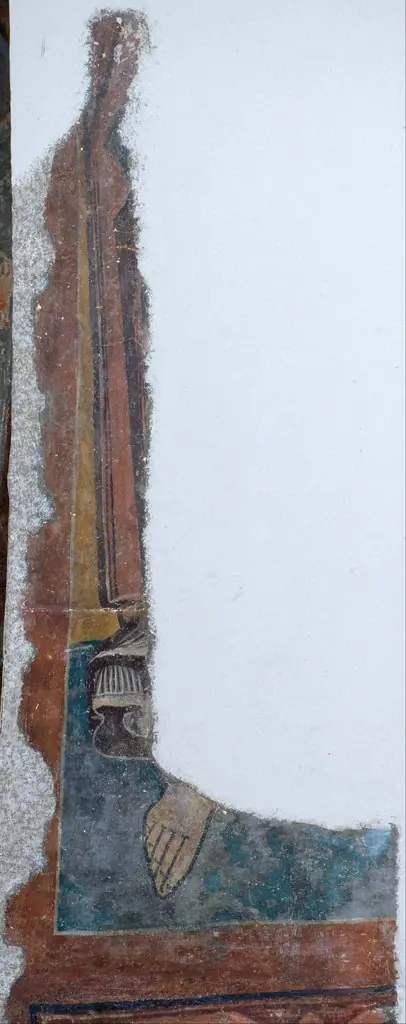 Remains of a figure from Santa Maria de Taüll
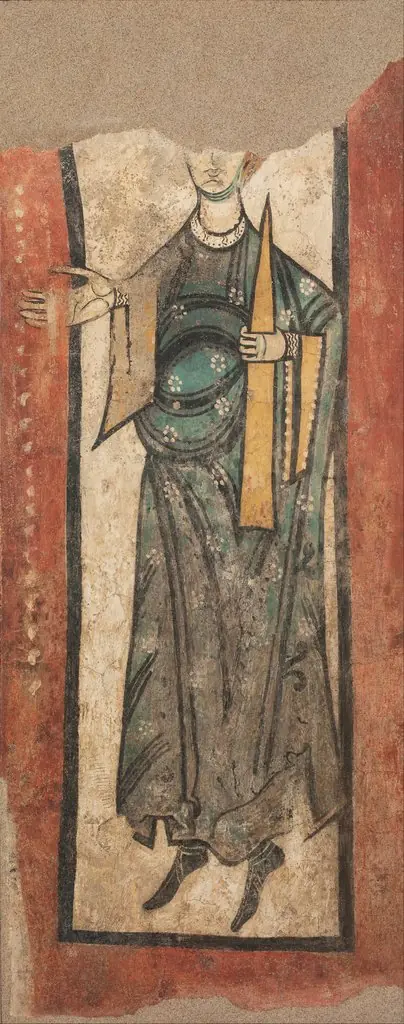 Woman Donor from Esterri d'Àneu
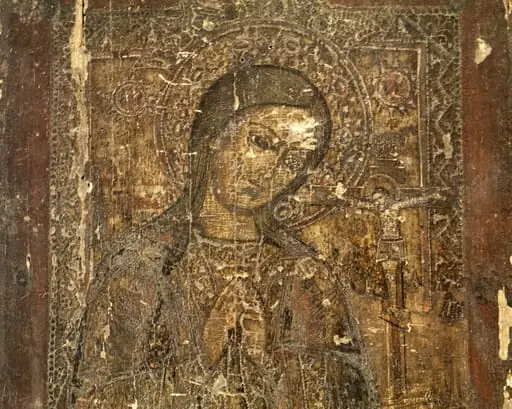 Icoana denumită și "Maica Domnului jalnică" sau îndurerată, o redă pe Maica Domnului în prim plan, cu mâinile împreunate, privind în depărtare către Fiul Ei răstignit pe cruce. Imaginea planurilor este inversată, accentul căzând pe durerea Mamei la moartea lui Iisus, redat în planul îndepărtat, răstignit pe dealul Golgotei. Fecioara Maria, cu capul ușor înclinat spre stânga, are părul despletit, căzând pe umeri, ovalul feței rotunjit, nas subțire și drept, gura mică, ochi migdalați, mari, sprâncenele arcuite, mâinile împreunate la piept.În jurul capului aureolă cu motive geometrice incizate, la fel coroana ce depășește linia de delimitare a chenarului, deasupra aureolei . Tunica are cu mâneci larg cu borduri cu motive geometrice. La baza crucii Răstignirii craniul lui Adam. Pământul sugerat de benzi de culoare alb-gălbui, negru și verde. Chenar dublu, la interior motive geometrice: zigzaguri, puncte și motive fitomorfe. Siclitadele Maicii Domnului în chenare circulare pe fondul aurit. În stânga inscripție parțial indescifrabilă, din care se poate deduce doar numele Mariei(Precista) Bordura marginală(și foița metalică incizată) specifică icoanelor de tip krashnuskha, realizate în centrele de la Holui și Mstera.
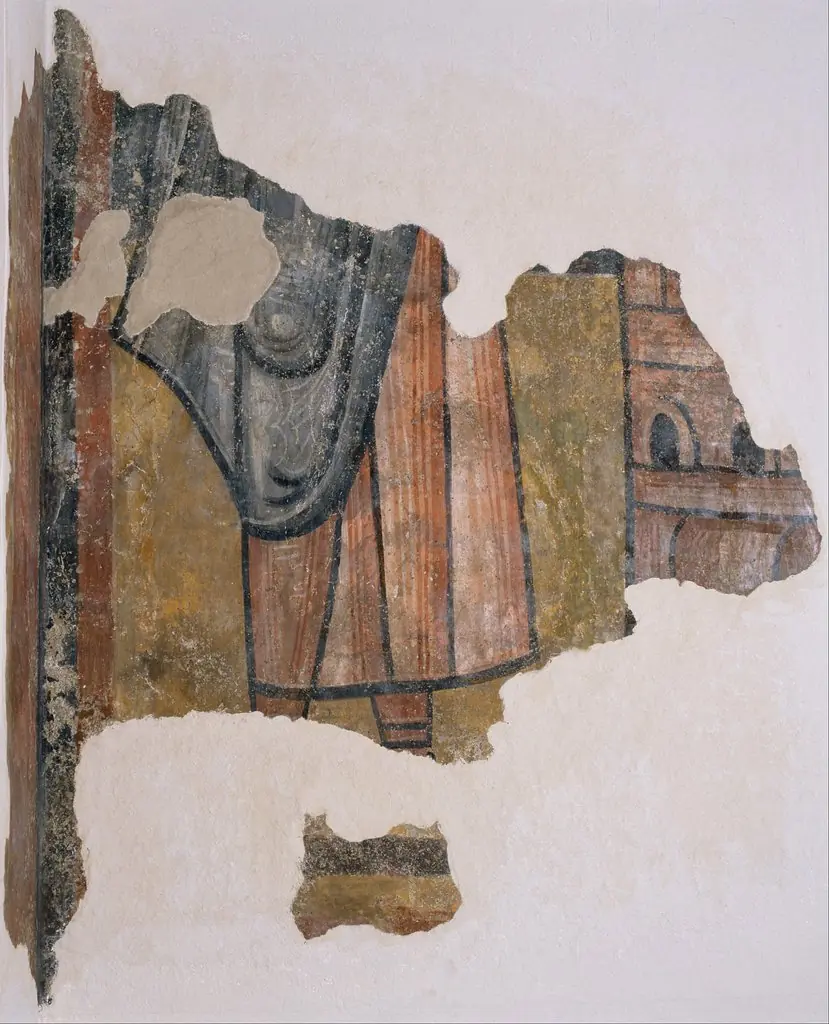 Remains of a figure and buildings from Boí
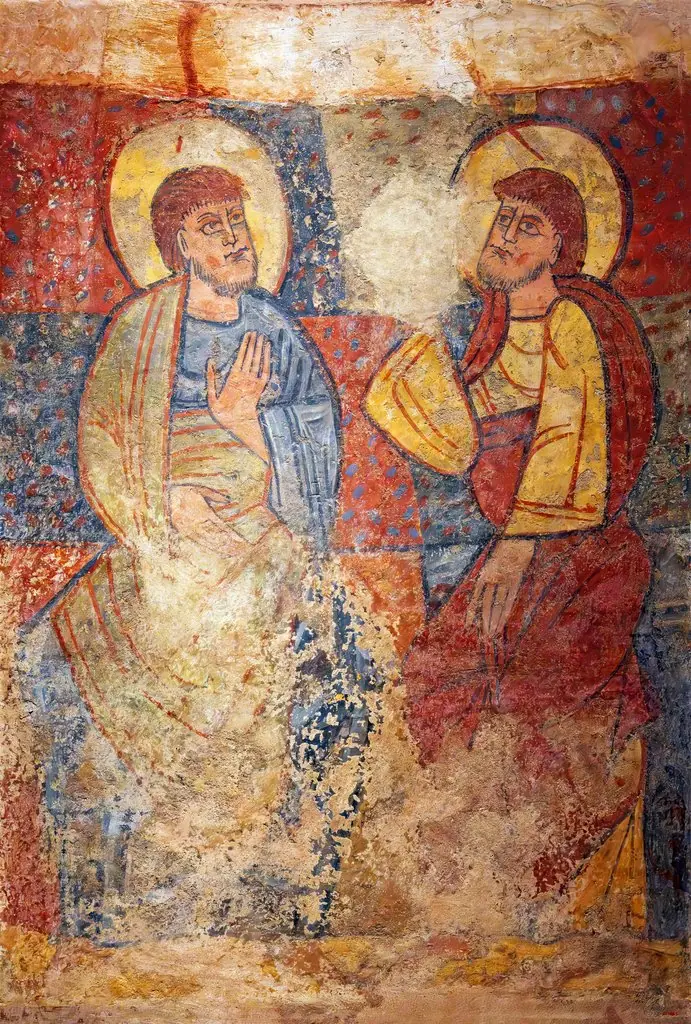 Apòstols de la Pentecosta, de Bellcaire
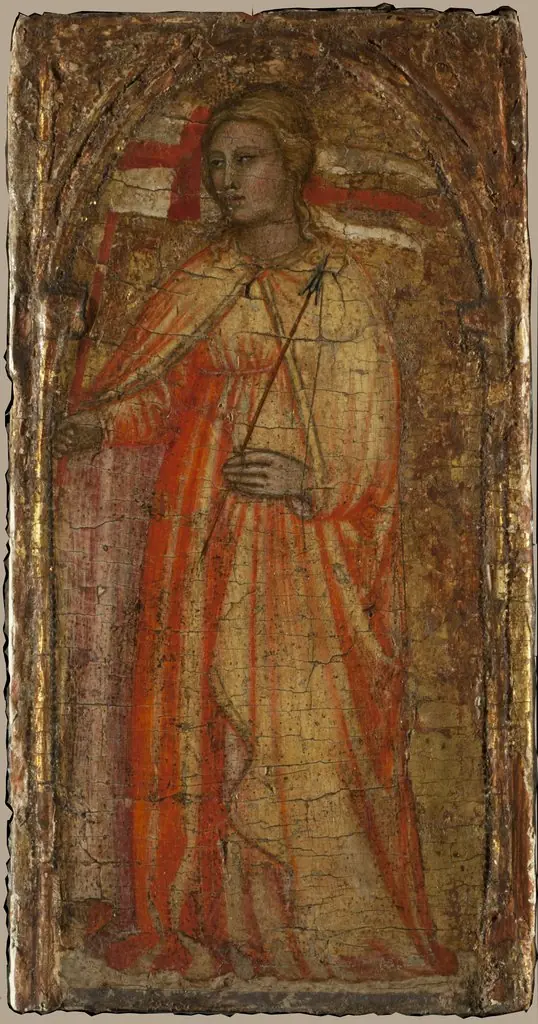 Saint Ursula
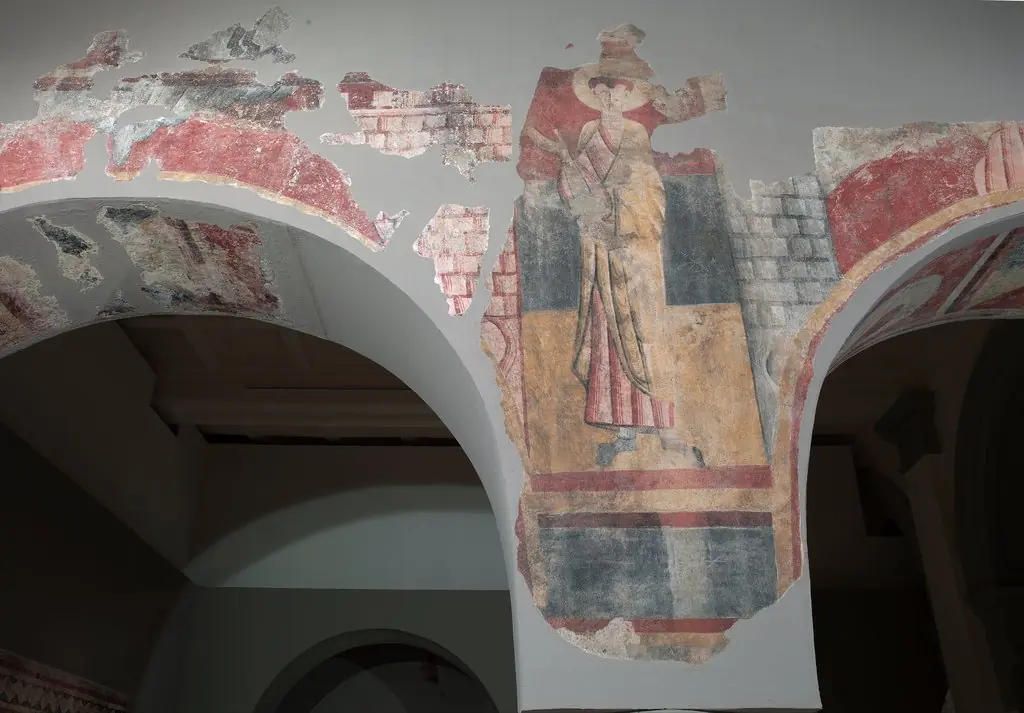 Saint between two towers from Boí
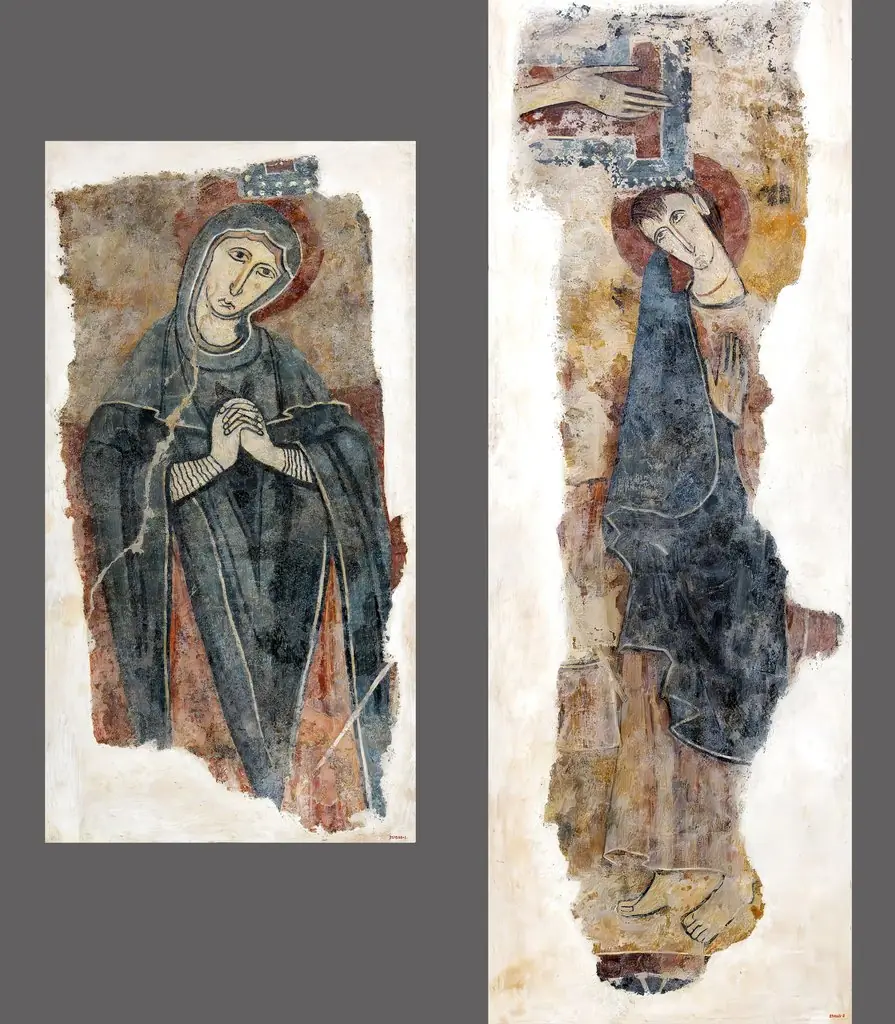 Mare de Déu i Sant Joan Evangelista