Artwork
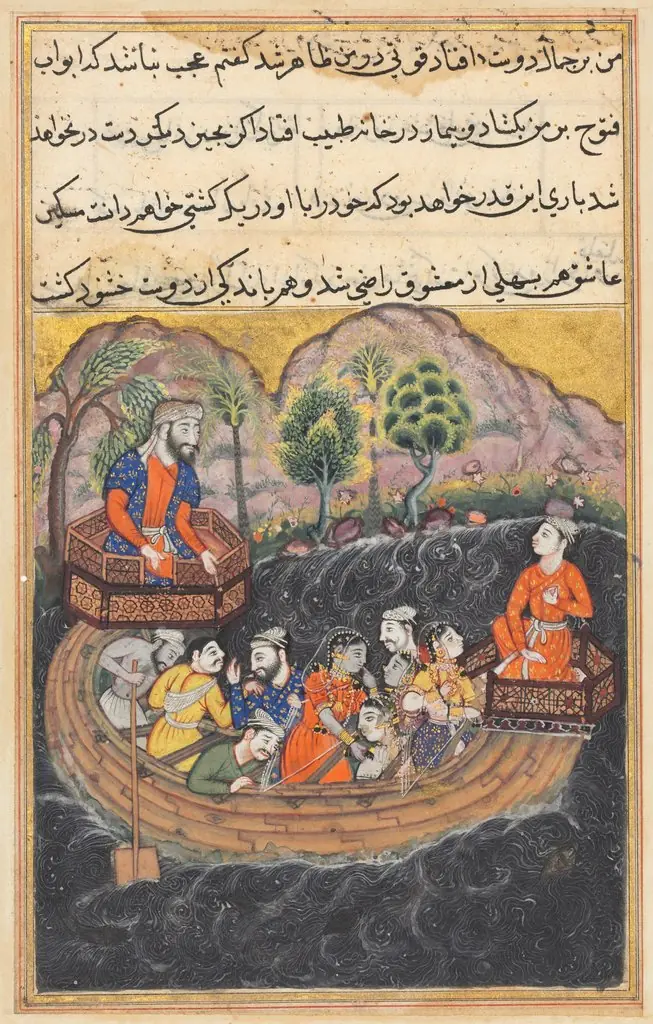
The painting made by the vizier of the emperor of China for the queen of Rum, from a Tuti-nama (Tales of a Parrot): Thirty-ninth Night
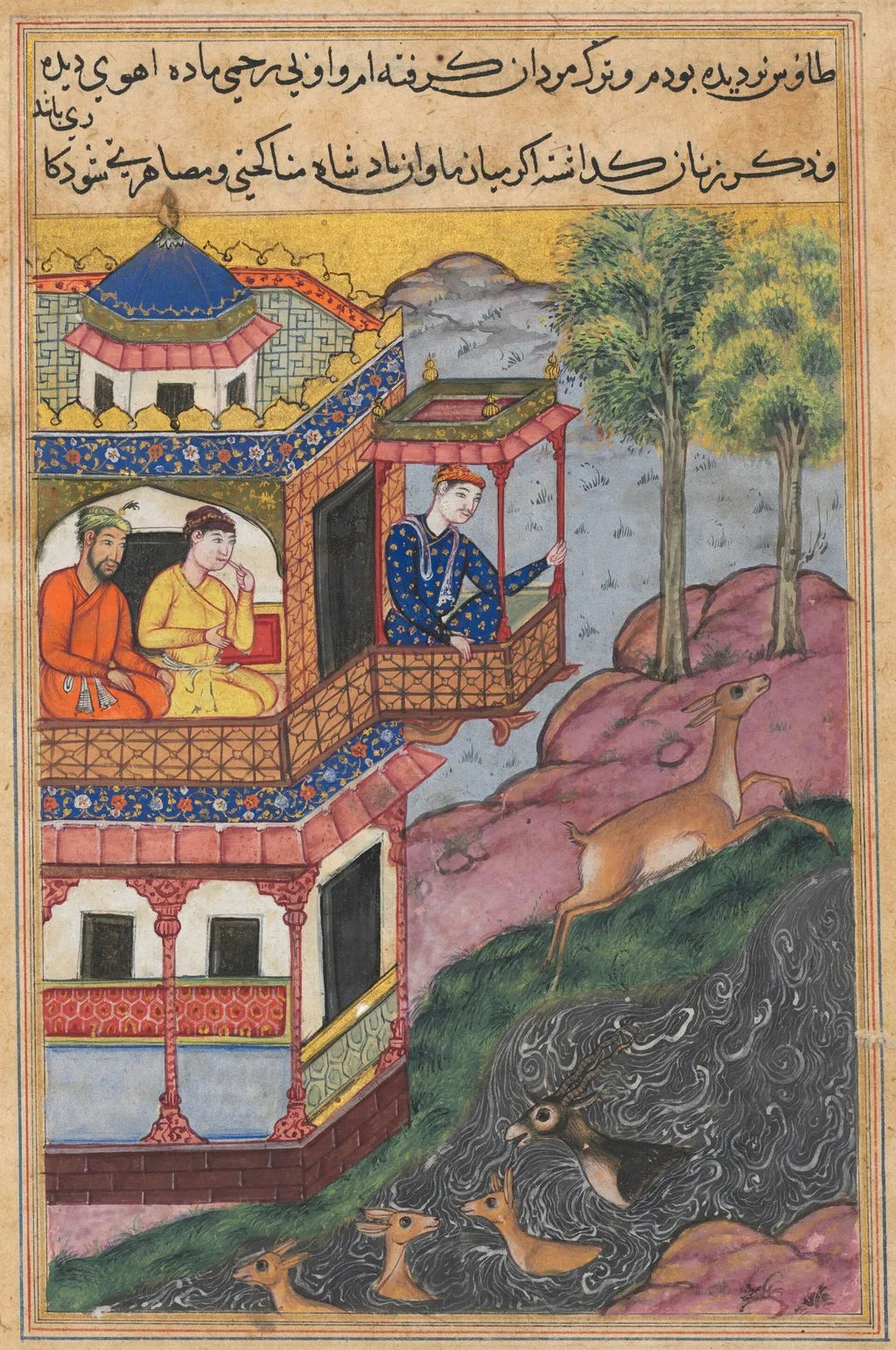
The painting made by the vizier of the emperor of China for the queen of Rum, from a Tuti-nama (Tales of a Parrot): Thirty-ninth Night is an unspecified painting. It dates from 1560 and is held in the collection of the Cleveland Museum of Art.
About this work
Overview
The work, titled “The painting made by the vizier of the emperor of China for the queen of Rum, from a Tuti‑nama (Tales of a Parrot): Thirty‑ninth Night,” is an oil painting in the collection of the Cleveland Museum of Art. It presents a layered composition of architectural balconies, figures in vivid robes, and a natural foreground of deer and a solitary tree, rendered in a bright palette of blues, yellows, oranges and greens.
Subject & Meaning
At the center of the scene two men—one clothed in orange, the other in yellow—are seated on a richly ornamented balcony, their gazes directed toward a third figure in a blue robe who gestures from an opposite balcony. Below, a herd of deer ascends a slope, while a lone tree rises in the distance, suggesting a juxtaposition of courtly interaction and untamed landscape, a motif common in narrative illustrations of the Tuti‑nama.
Technique & Style
The color scheme is saturated, with complementary hues—orange against blue, yellow against green—enhancing the scene’s rhythmic balance.
The artist employs a flattened spatial arrangement, allowing decorative patterns on the balustrades to dominate the visual field. Brushwork is precise in the rendering of textiles, while the foliage and animal forms are suggested with looser strokes, creating a contrast between human sophistication and natural vigor. The color scheme is saturated, with complementary hues—orange against blue, yellow against green—enhancing the scene’s rhythmic balance.
History & Provenance
Created as an illustration for the 39th night of the medieval Persian collection Tuti‑nama, the painting was commissioned by a Chinese imperial vizier as a diplomatic gift to the queen of Rum. It entered the Cleveland Museum of Art’s holdings through a 20th‑century acquisition, though the exact path of ownership prior to its museum entry remains documented only in limited archival records.
Context
The piece reflects a period of cultural exchange between the Song‑Dynasty court and the Seljuk realms, where literary works were often visualized for elite audiences. Its narrative content aligns with the tradition of illustrated manuscripts that blended courtly etiquette with moral storytelling, while the inclusion of wildlife underscores the era’s appreciation for natural symbolism within artistic commissions.
Artist & collection

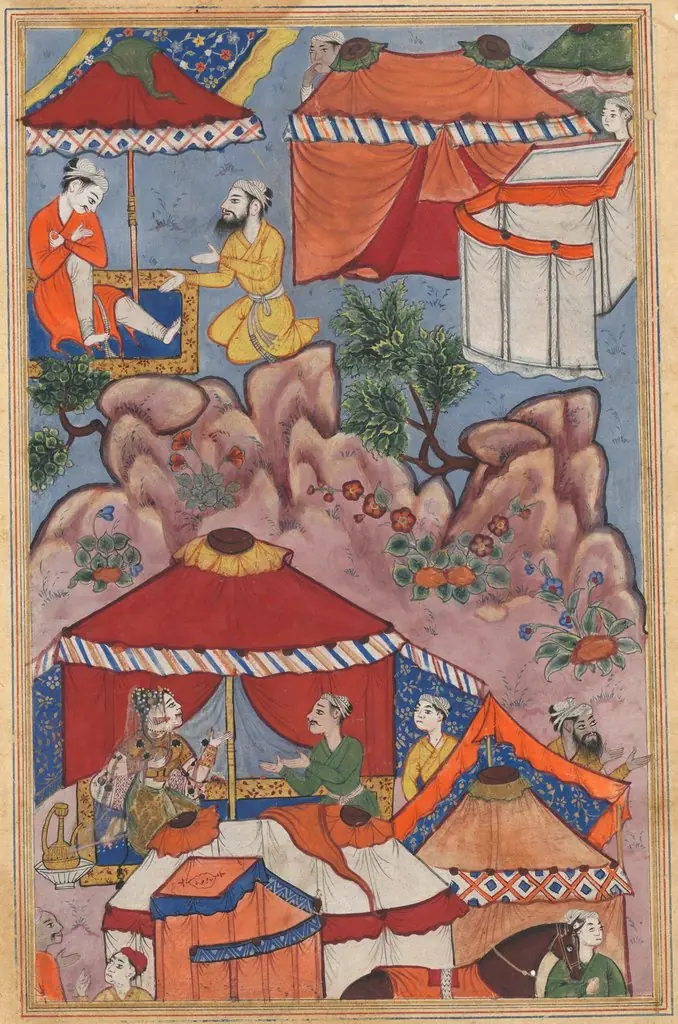 Bashir confides his love for Habbaza to an Arab friend, and sends him to her with a message, from a Tuti-nama (Tales of a Parrot): Twenty-fourth Night
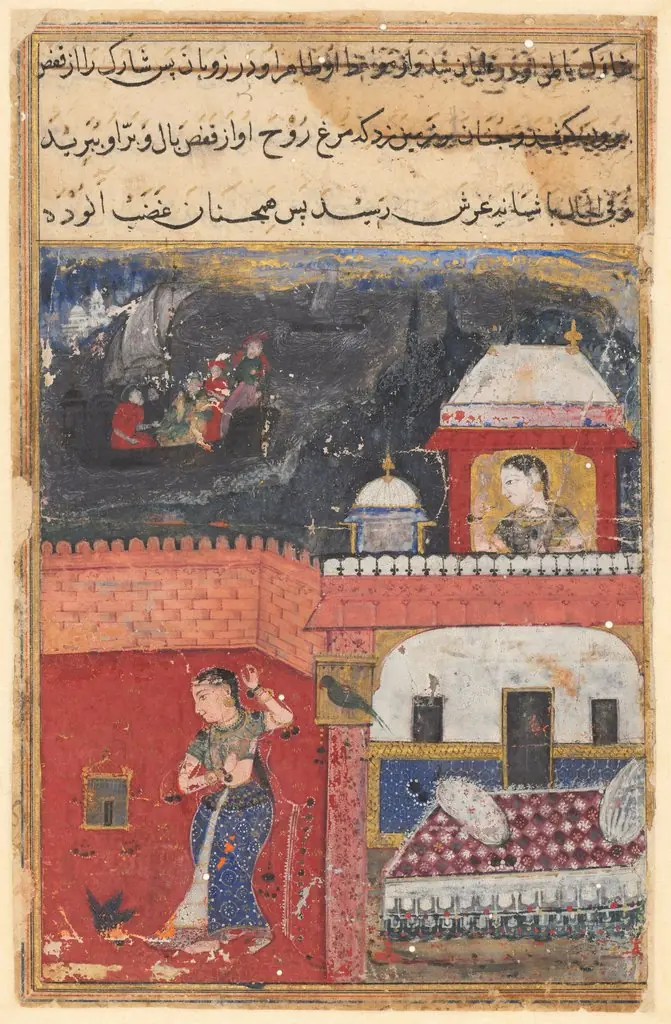 Khujasta kills the pet mynah who advises her not to be unfaithful to Maymun, her husband, from a Tuti-nama (Tales of the Parrot): First Night
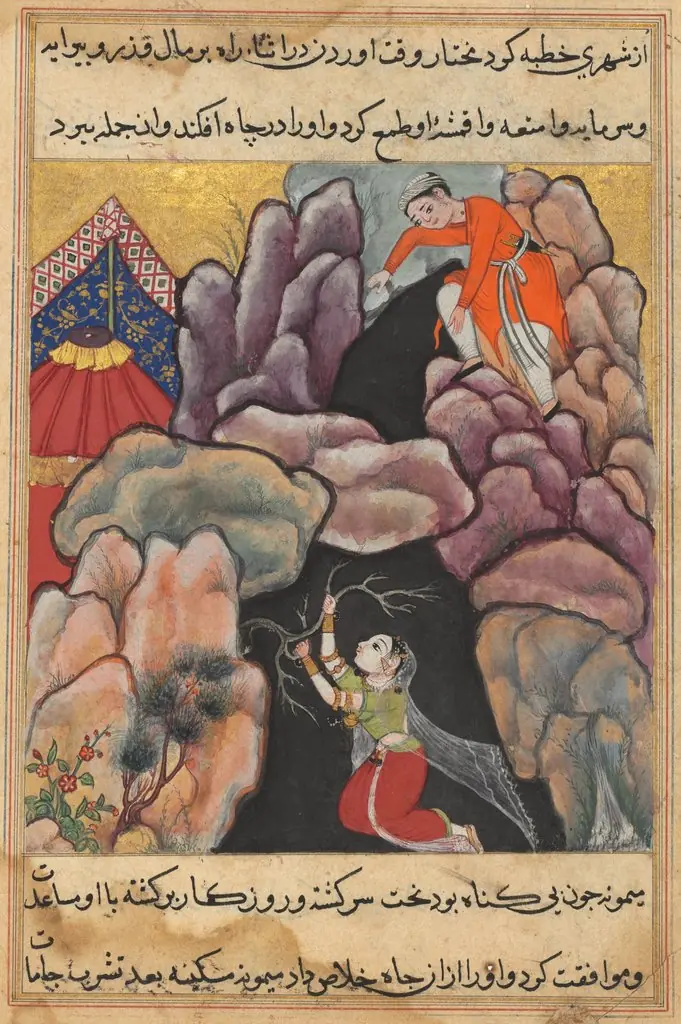 Mukhtar throws his wife Maimuna into the pit, but she saves herself, from a Tuti-nama (Tales of a Parrot): Twenty-fifth Night
 The young man of Baghdad joins the Hashimi’s boat as a sailor to find his slave-girl on board, from a Tuti-nama (Tales of a Parrot): Forty-eighth Night