Artwork
The young man of Baghdad joins the Hashimi’s boat as a sailor to find his slave-girl on board, from a Tuti-nama (Tales of a Parrot): Forty-eighth Night
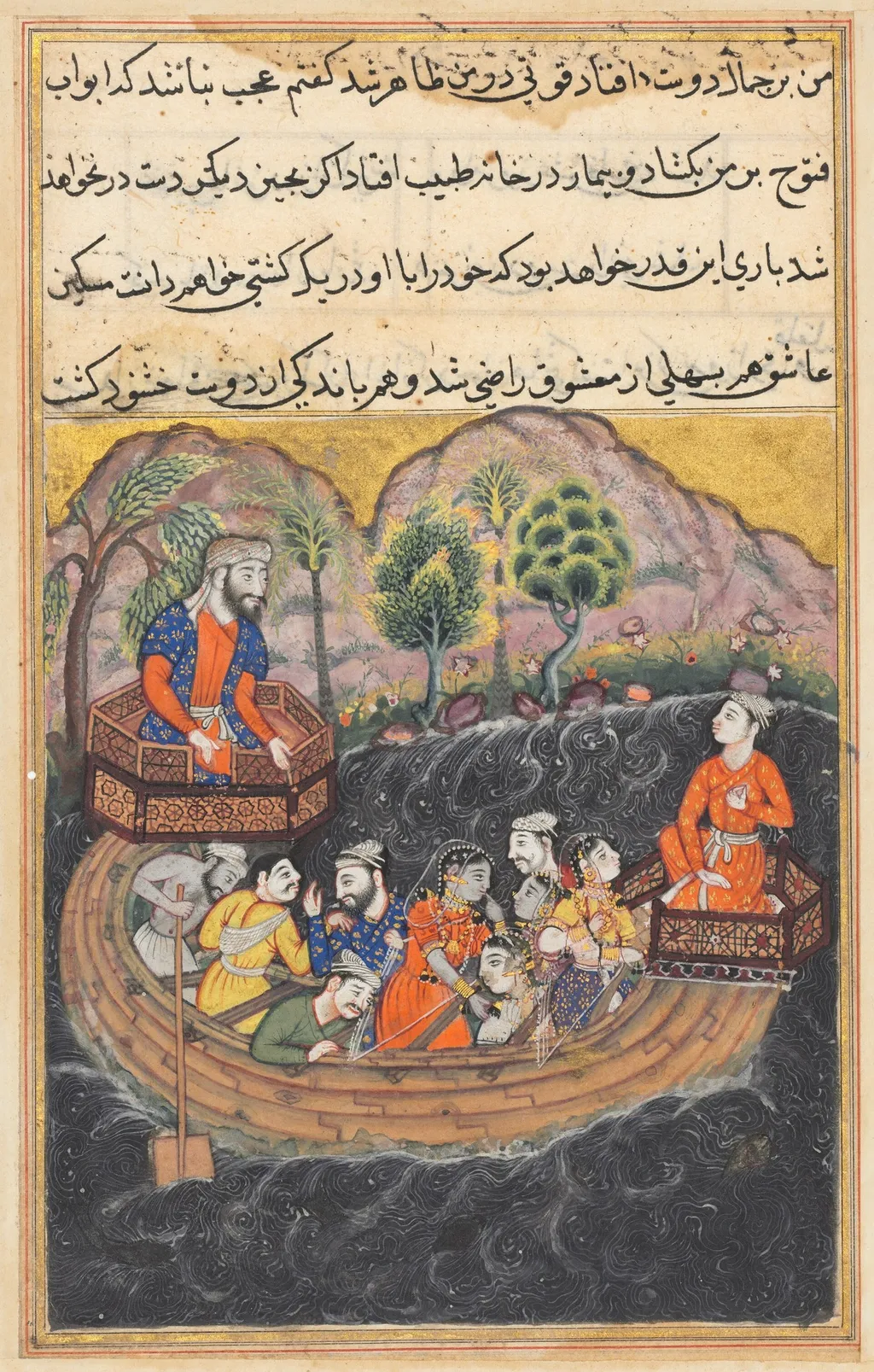
The young man of Baghdad joins the Hashimi’s boat as a sailor to find his slave-girl on board, from a Tuti-nama (Tales of a Parrot): Forty-eighth Night is an unspecified painting. It dates from 1560 and is held in the collection of the Cleveland Museum of Art. The work depicts a river scene in which a group of figures occupy a boat amid verdant hills.
About this work
Overview
The work depicts a river scene in which a group of figures occupy a boat amid verdant hills. A man in an orange robe stands on a balcony above the vessel, while passengers in vivid yellow and red garments fill the deck. Musicians and seated travelers suggest a narrative moment, rendered with swirling water and lively detail.
Subject & Meaning
The composition illustrates a passage from the Tuti‑nama, a collection of Persian tales. In this episode, a young man from Baghdad boards a Hashimi vessel in search of a slave‑girl he has seen aboard. The inclusion of musicians and the animated atmosphere emphasize the story’s romantic and adventurous tone.
Technique & Style
Executed in a decorative painting style, the piece combines bold, saturated colors with intricate patterning of water and foliage. The figures are rendered with flat modeling and stylized drapery, while the script at the top adds a calligraphic element that integrates text and image, a common feature in Persian narrative art.
History & Provenance
The painting originates from the manuscript tradition of the Tuti‑nama, likely produced in the Persianate world during the late medieval period. It entered the collection of the Cleveland Museum of Art, where it is displayed alongside other works that illuminate the region’s illustrated literary heritage.
Context
Narrative paintings such as this were used to visually accompany literary texts, enhancing the storytelling experience for readers. The depiction of a river journey reflects the cultural significance of travel and trade routes in the Islamic world, while the presence of musicians underscores the role of music in courtly and popular entertainment.
Artist & collection

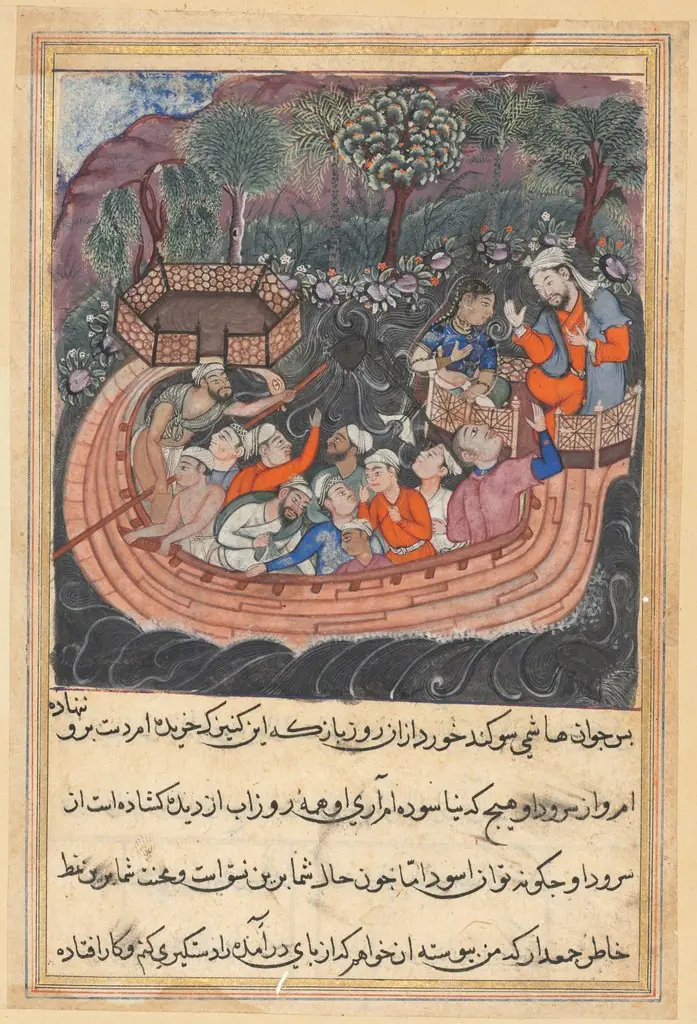 The young man of Baghdad reveals his true identity to the Hashimi, from a Tuti-nama (Tales of a Parrot: Forty-eighth Night
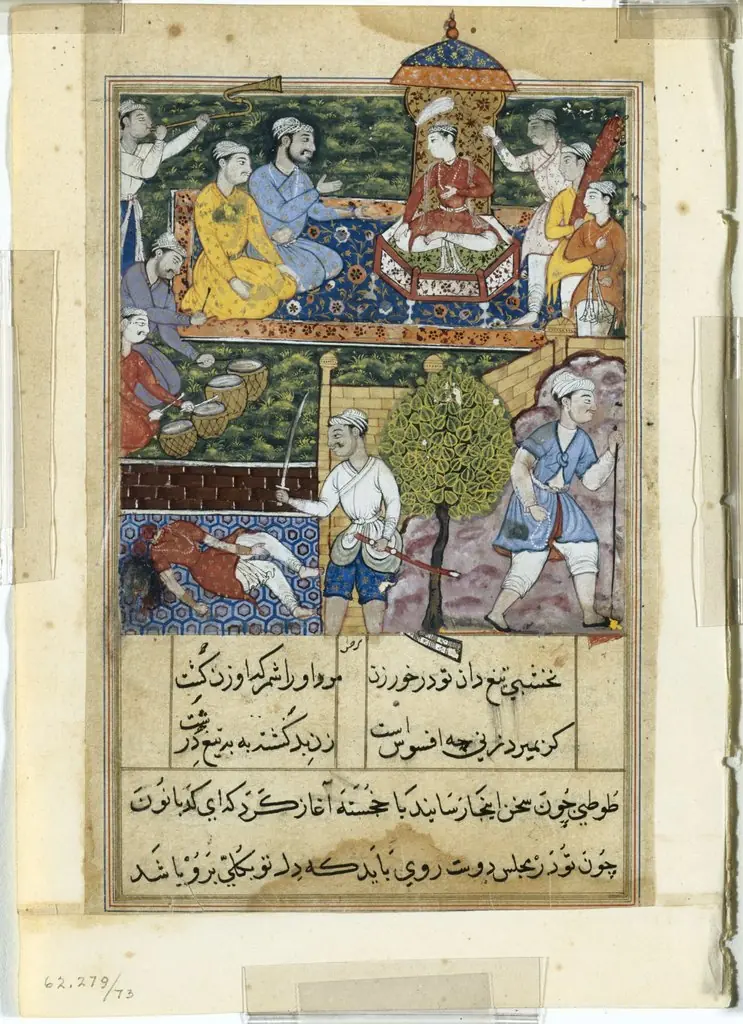 The young prince is crowned and the wicked handmaiden is executed, from a Tuti-nama (Tales of a Parrot): Eighth Night
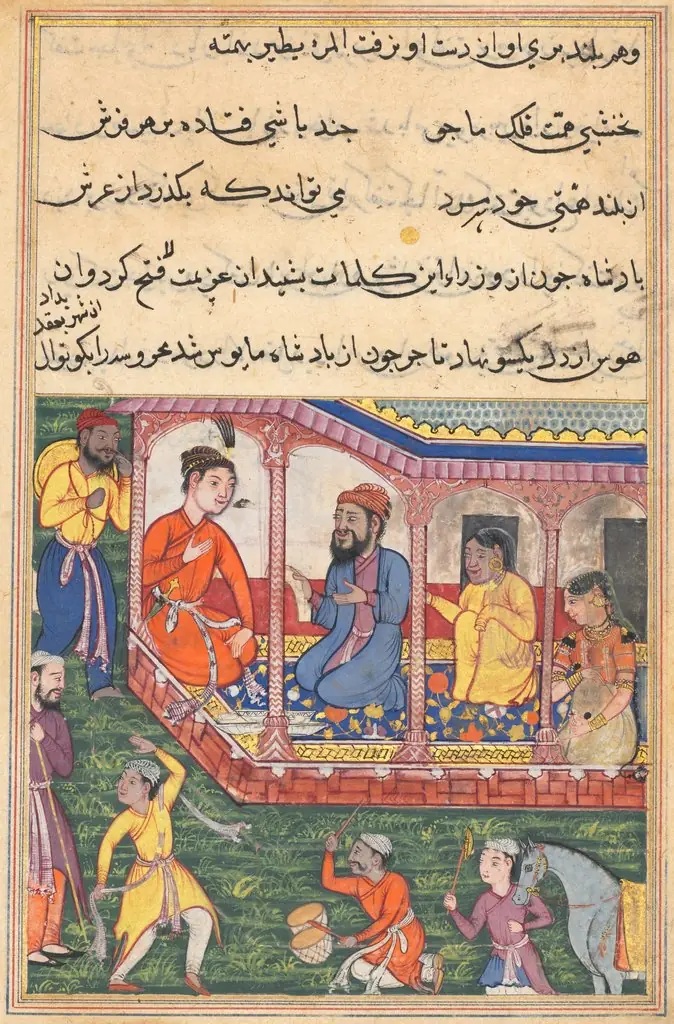 Mahrusa’s marriage to the prefect of the city, from a Tuti-nama (Tales of a Parrot): Thirty-sixth Night
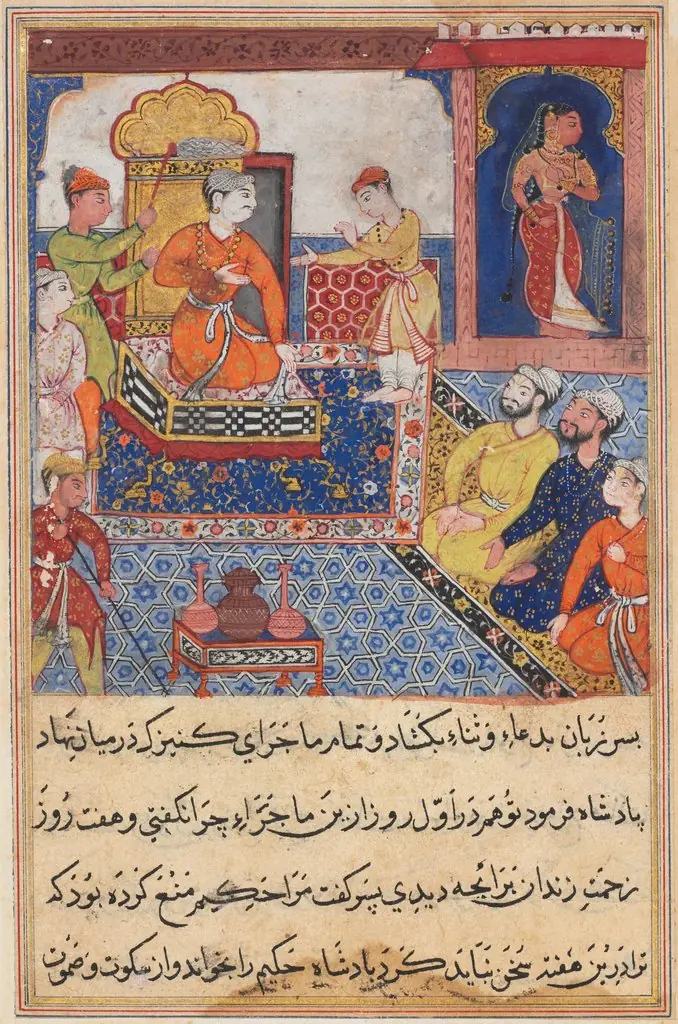 The young prince recounts his experiences to his father, the king, from a Tuti-nama (Tales of a Parrot): Eighth Night
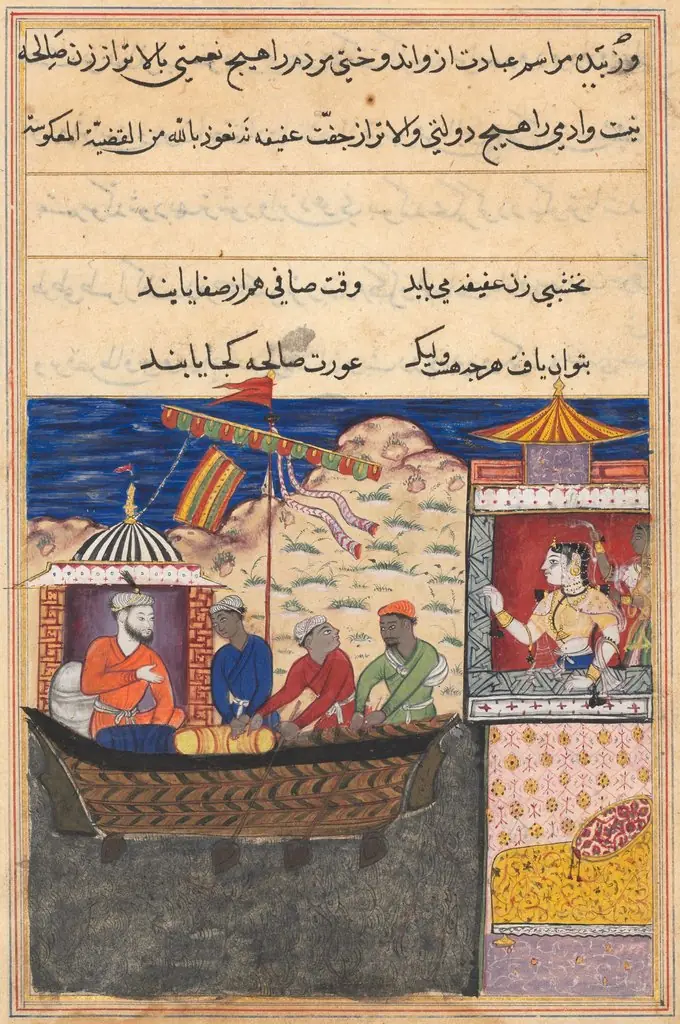 The merchant Mansur departs on a sea voyage, leaving his wife behind, from a Tuti-nama (Tales of a Parrot): Seventeenth Night
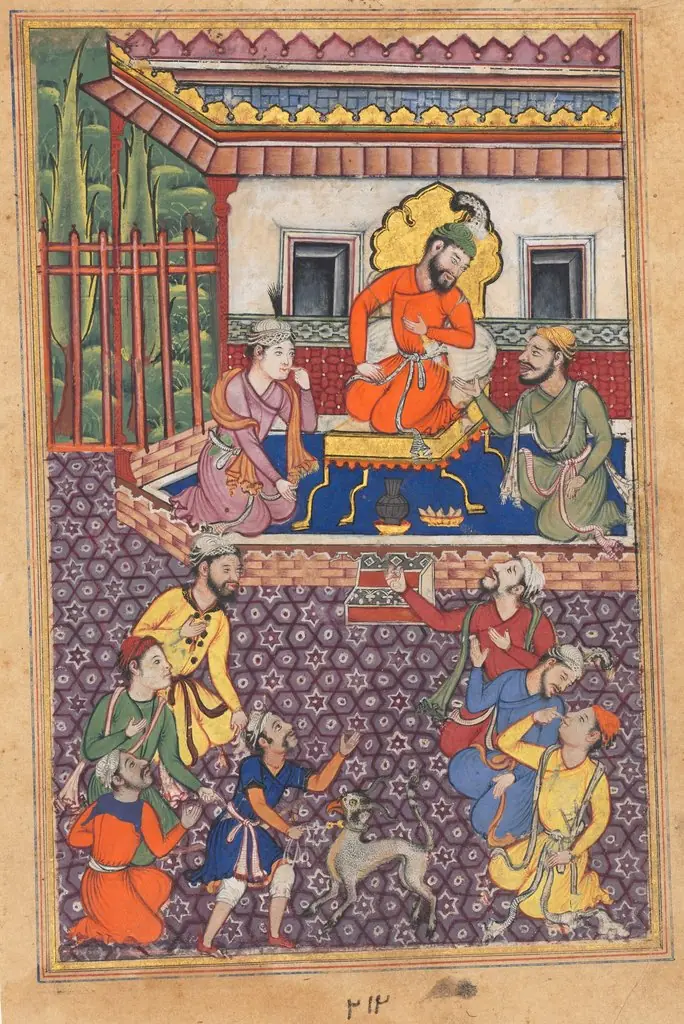 The court of the Raja of Ujjain, from a Tuti-nama (Tales of a Parrot): Forty-sixth Night
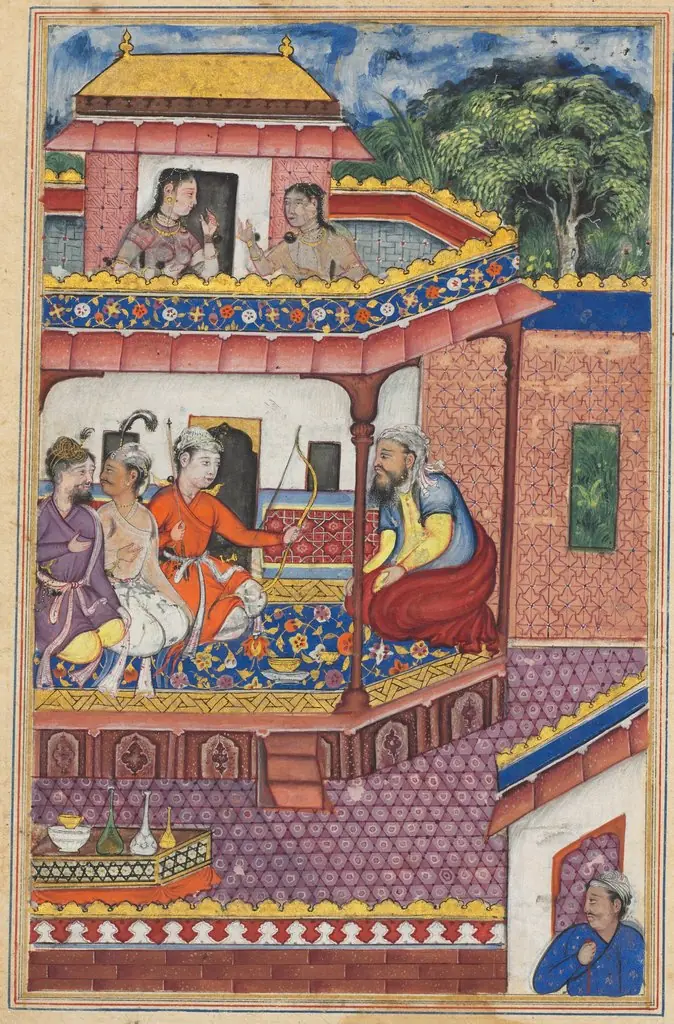 The three young men present themselves as suitors for the hand of Zuhra, the daughter of the merchant of Kabul, from a Tuti-nama (Tales of a Parrot): Thirty-fourth Night
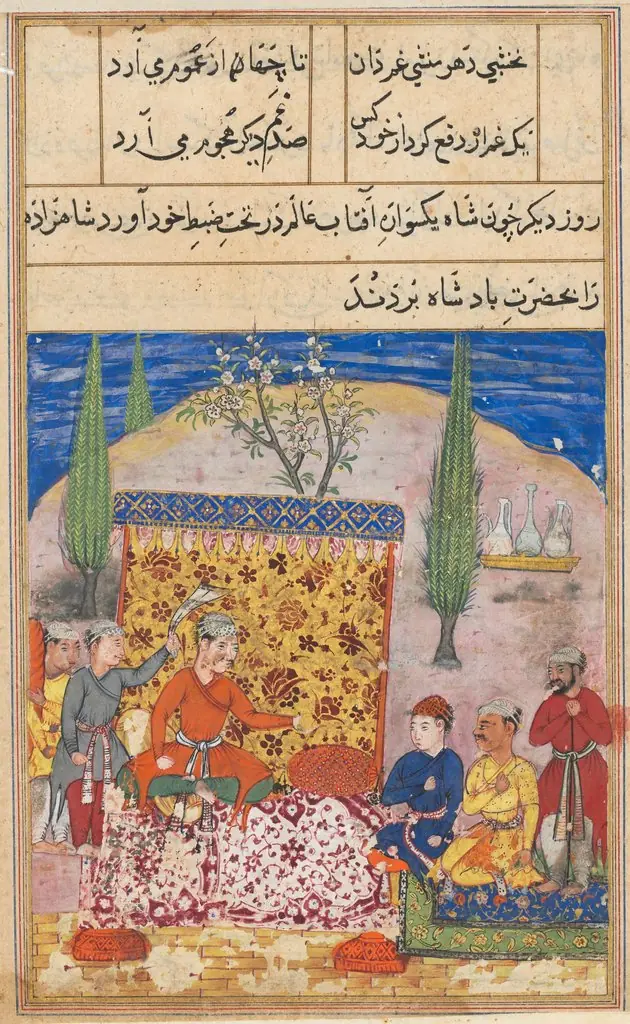 The young prince is presented to the king, his father, by his teacher, but refuses to speak, from a Tuti-nama (Tales of a Parrot): Eighth Night
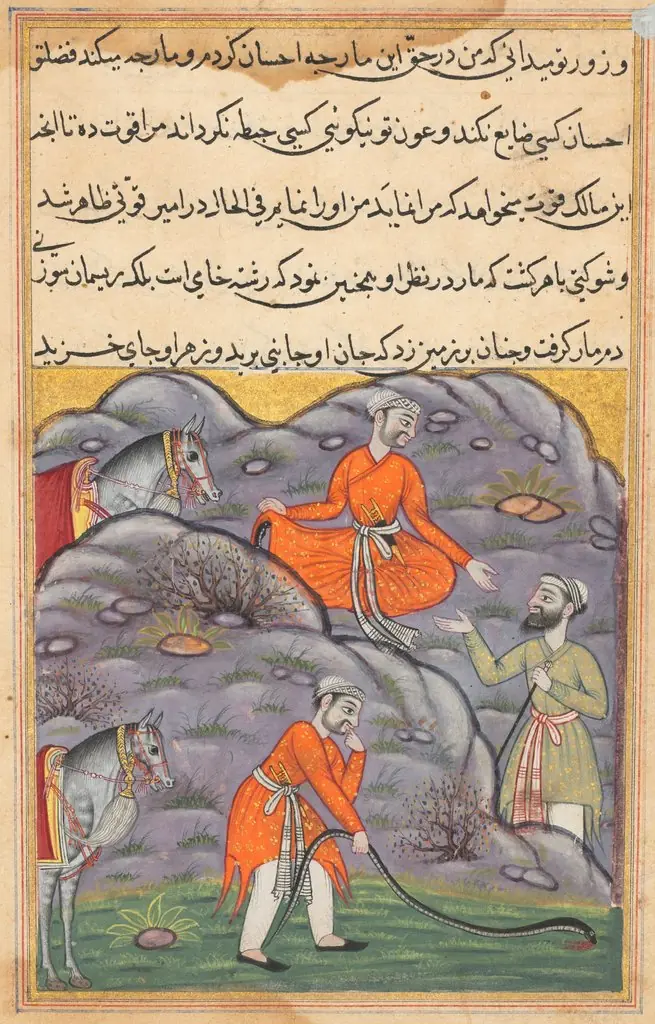 The Emir slays the snake after giving it shelter, from a Tuti-nama (Tales of a Parrot): Forty-fifth Night
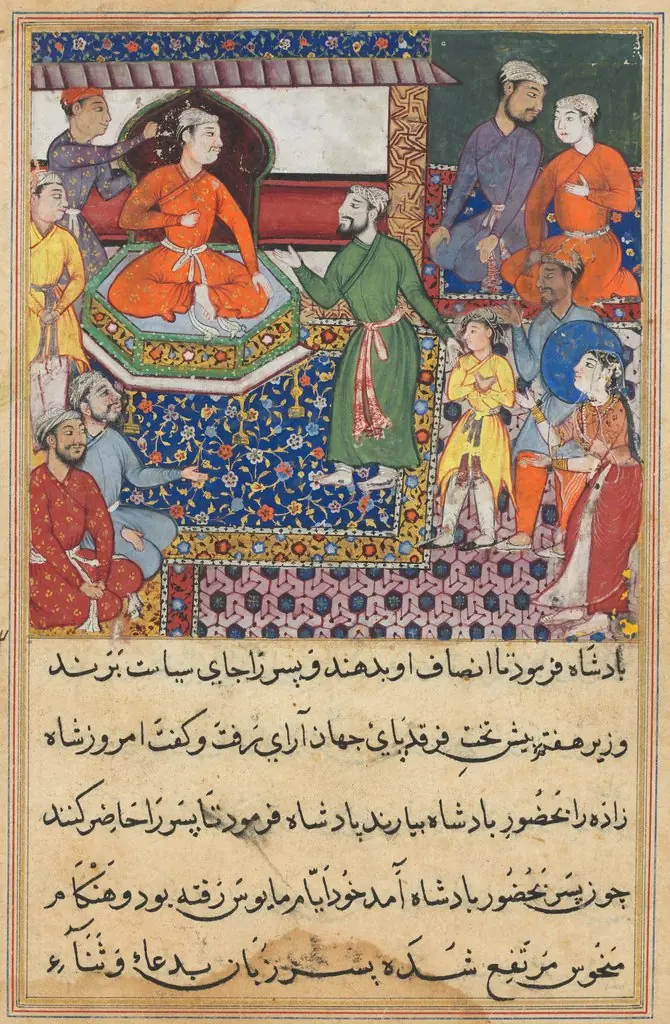 The handmaiden again pleads for the death of the prince, from a Tuti-nama (Tales of a Parrot): Eighth Night