Artwork
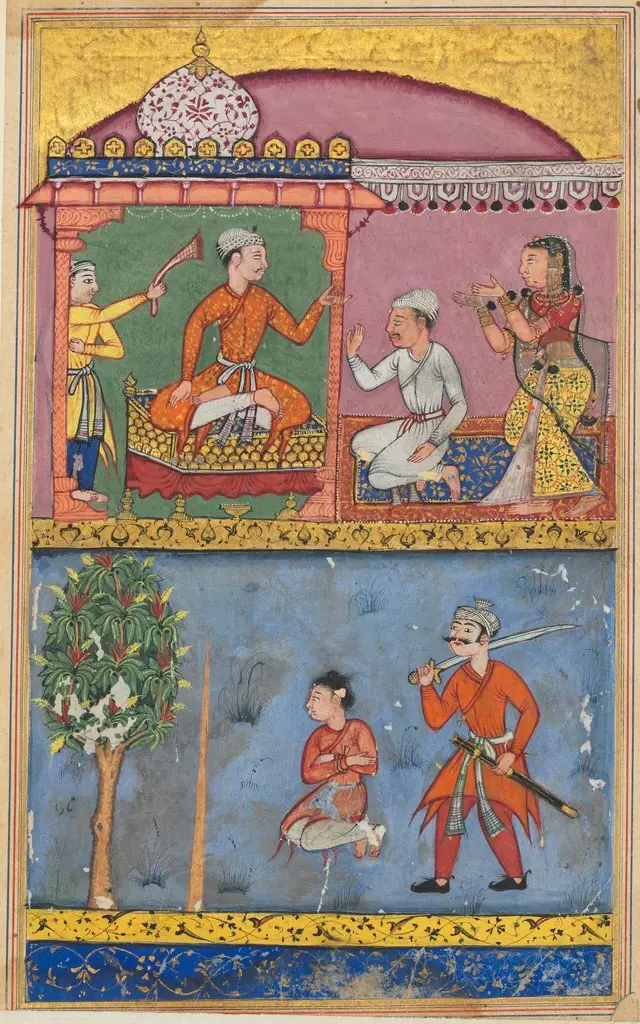
Mukhtar throws his wife Maimuna into the pit, but she saves herself, from a Tuti-nama (Tales of a Parrot): Twenty-fifth Night
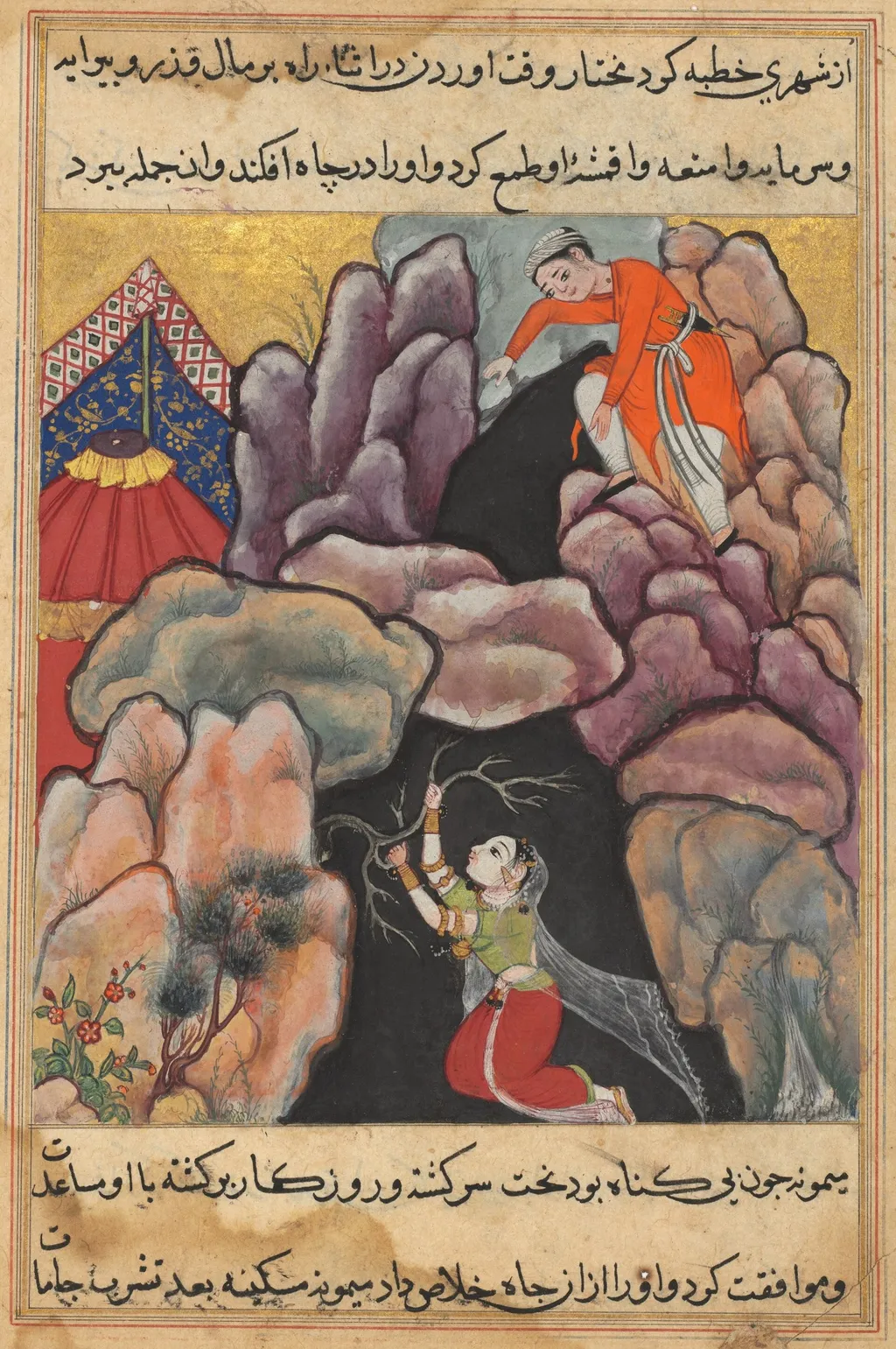
Mukhtar throws his wife Maimuna into the pit, but she saves herself, from a Tuti-nama (Tales of a Parrot): Twenty-fifth Night is an unspecified painting. It dates from 1560 and is held in the collection of the Cleveland Museum of Art. The work illustrates a dramatic episode from the Persian narrative collection known as the Tuti‑nama, or Tales of a Parrot.
About this work
Overview
The work illustrates a dramatic episode from the Persian narrative collection known as the Tuti‑nama, or Tales of a Parrot. In the scene, a woman clings to a tree branch while a man leans over a rocky precipice, both figures rendered in vivid, contrasting hues. The composition centers on the tension between the two characters against a dark, atmospheric background.
Subject & Meaning
The painting visualizes the moment when Mukhtar attempts to cast his wife Maimuna into a pit, yet she manages to rescue herself. The woman's strained grip on the branch and the man's forward‑leaning posture convey desperation and conflict, emphasizing themes of betrayal, survival, and the moral reversals common in the Tuti‑nama stories.
Technique & Style
Executed with bold, saturated colors—green and red for the female figure, orange and white for the male—the artist employs a dynamic diagonal composition that heightens the sense of movement. The stark contrast between the illuminated figures and the shadowy backdrop creates depth, while the simplified forms and exaggerated gestures reflect a narrative illustration tradition rather than a naturalistic approach.
Context
The painting belongs to a series illustrating individual nights from the twenty‑fifth story of the Tuti‑nama, a medieval Persian collection of moral tales narrated by a parrot. Such visual adaptations were used to accompany manuscript copies, serving both decorative and didactic purposes within courtly or scholarly settings.
Legacy
Works derived from the Tuti‑nama have informed later Persian and South Asian visual storytelling, influencing miniature painting and folk art that depict moral anecdotes. This particular scene continues to be referenced in studies of narrative art for its clear portrayal of tension and its use of color to delineate character roles.
Artist & collection

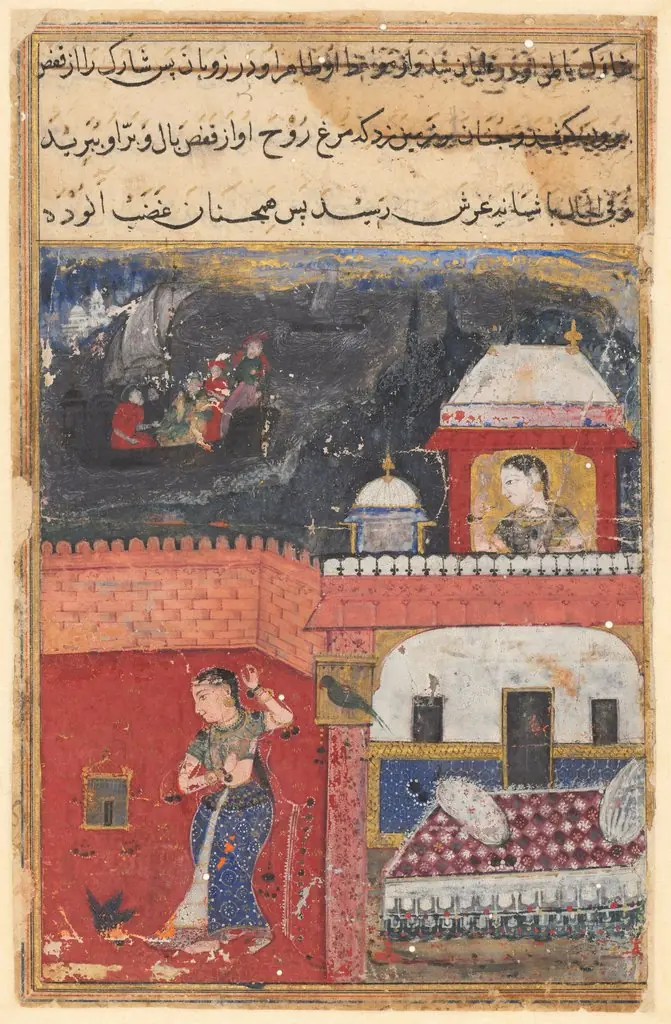 Khujasta kills the pet mynah who advises her not to be unfaithful to Maymun, her husband, from a Tuti-nama (Tales of the Parrot): First Night
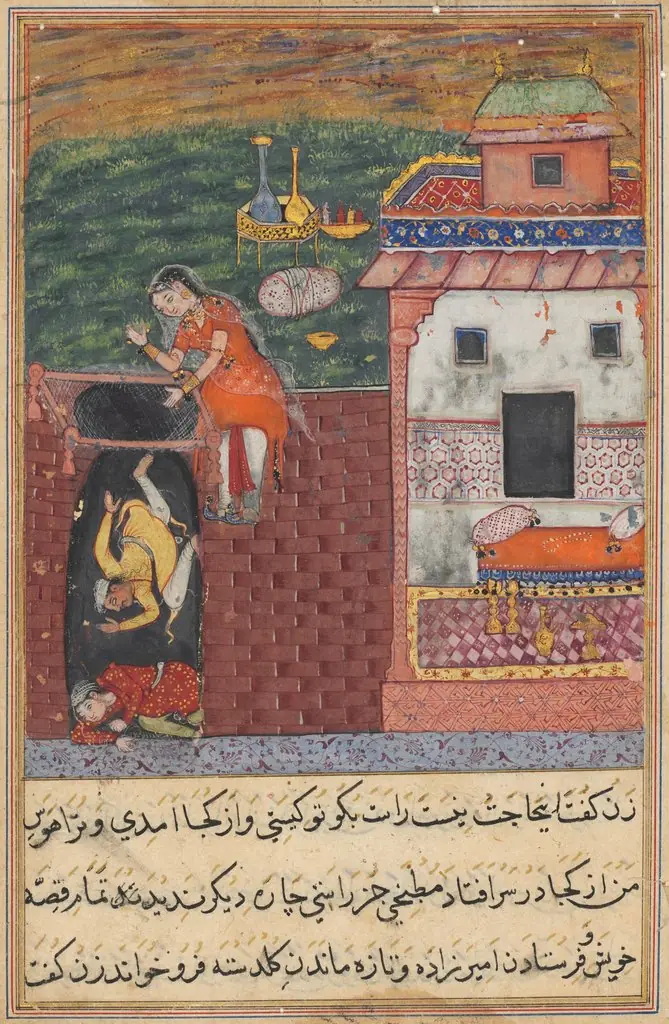 The two cooks, who attempt to seduce the warrior’s loyal wife, are trapped by her in a cellar, from a Tuti-nama (Tales of a Parrot): Fourth Night
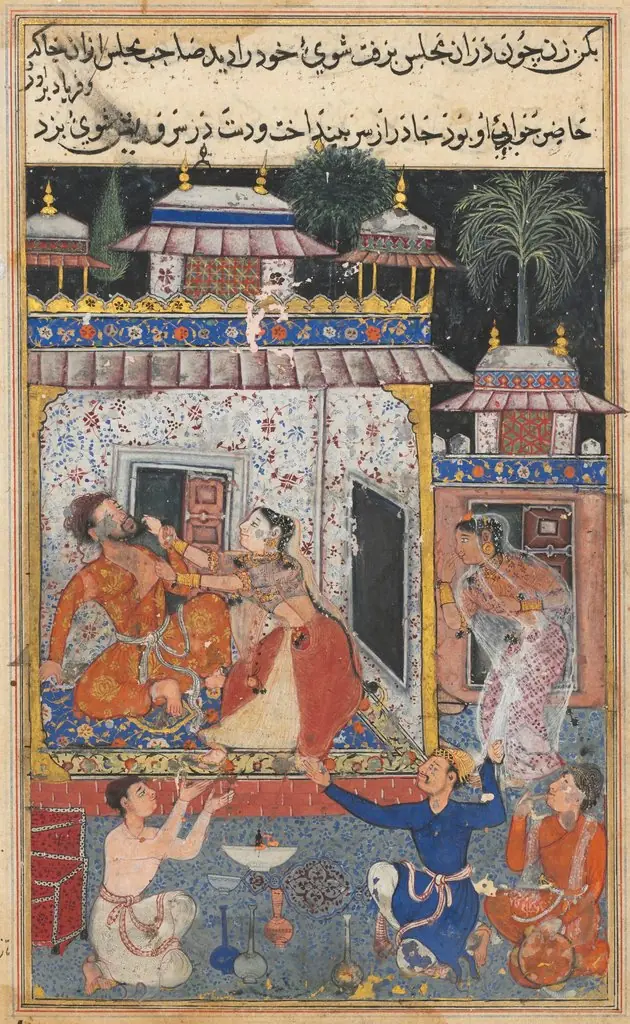 The deceitful wife assaults her erring husband, from a Tuti-nama (Tales of a Parrot): Eighth Night
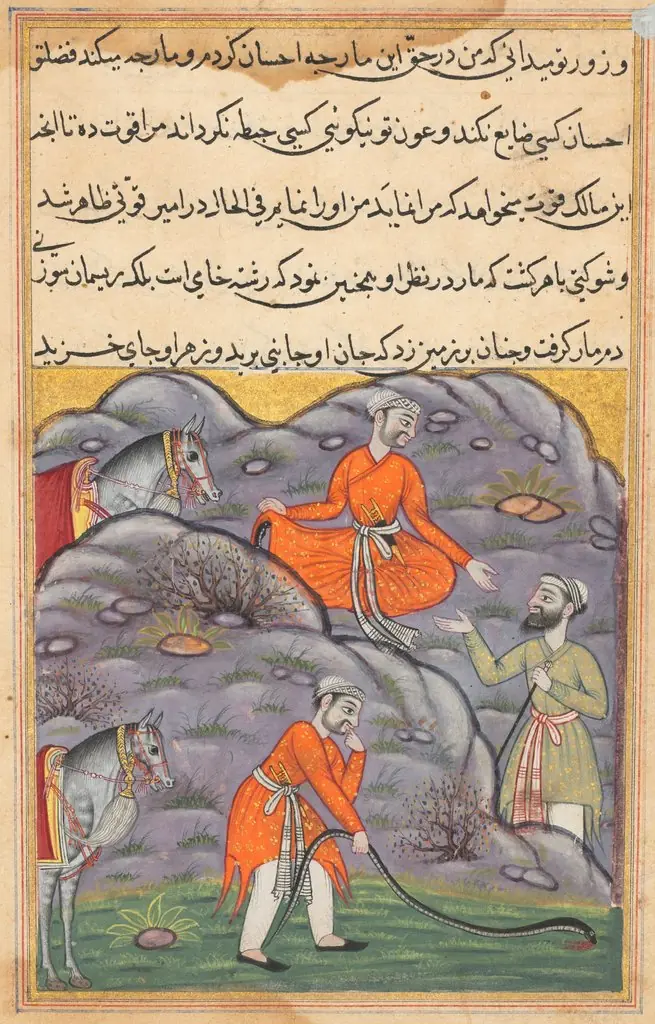 The Emir slays the snake after giving it shelter, from a Tuti-nama (Tales of a Parrot): Forty-fifth Night
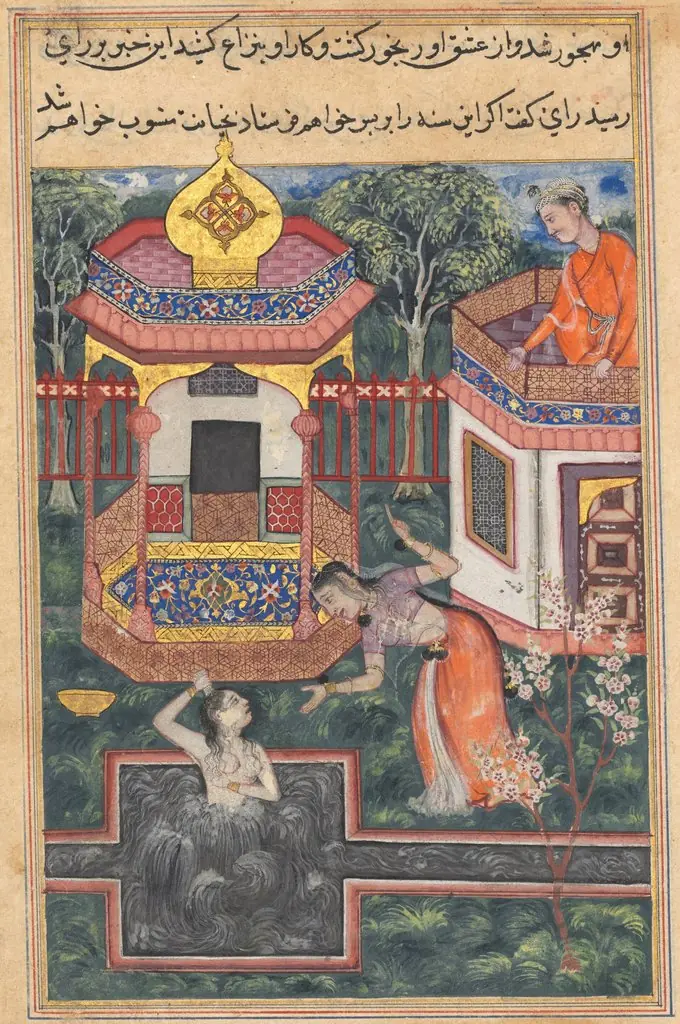 The son of the king of Babylon sees the Brahman transformed into a woman bathing and falls in love with her, from a Tuti-nama (Tales of a Parrot): Thirty-fifth Night
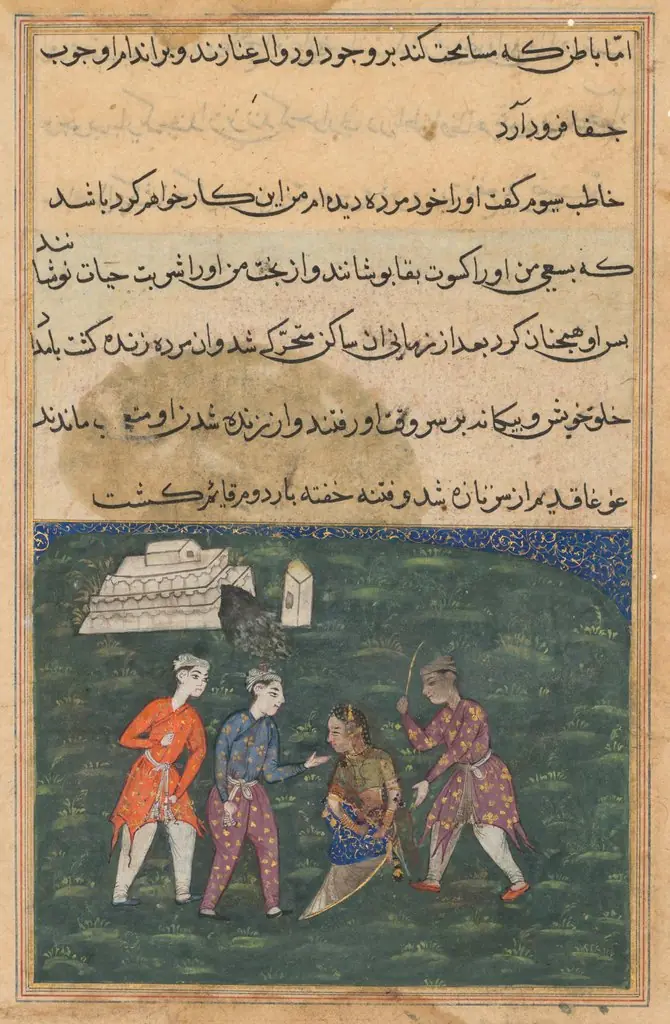 The third suitor strikes the devotee’s daughter and thus restores her to life, from a Tuti-nama (Tales of a Parrot): Twentieth Night
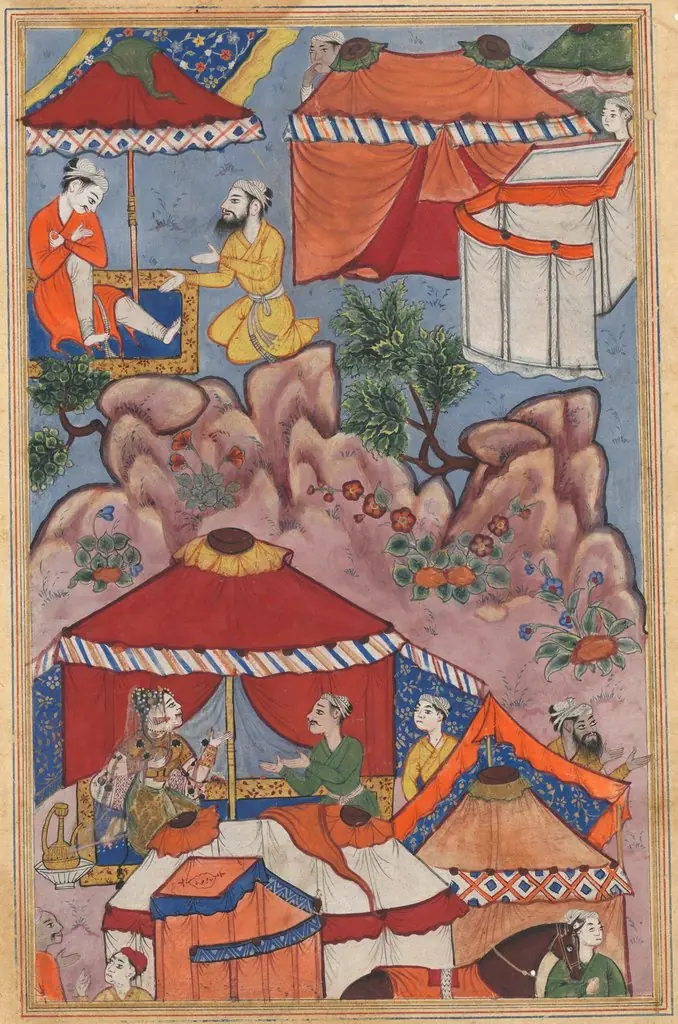 Bashir confides his love for Habbaza to an Arab friend, and sends him to her with a message, from a Tuti-nama (Tales of a Parrot): Twenty-fourth Night
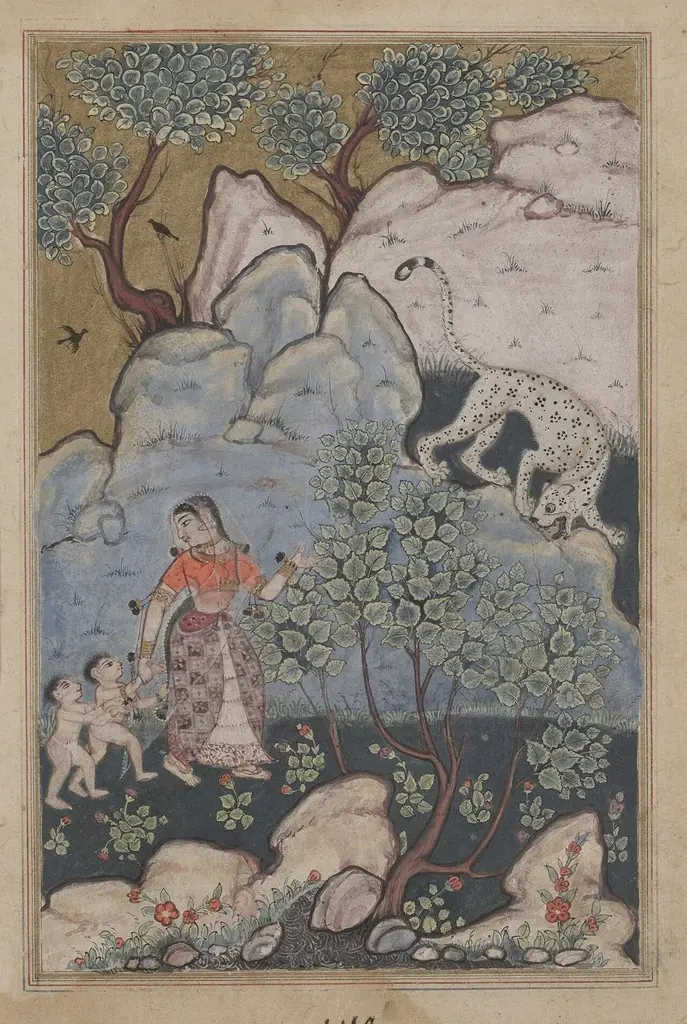 A woman with two children, having abandoned her home, goes into the forest where she encounters a leopard, from a Tuti-nama (Tales of a Parrot): Thirtieth Night
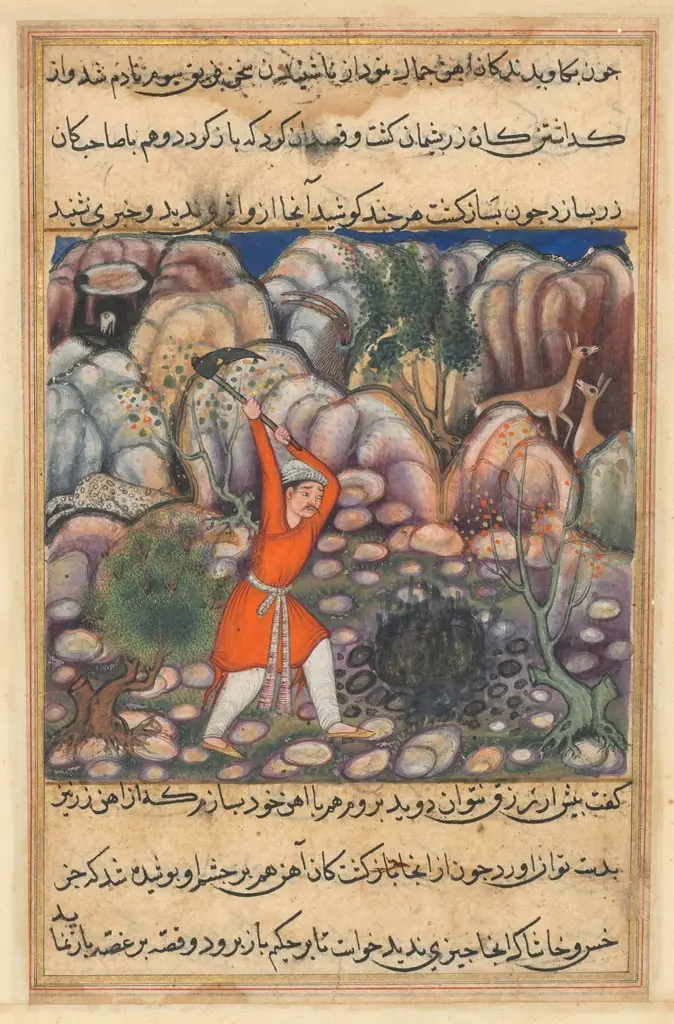 The fourth man digs at the spot where he dropped the shell, expecting jewels, but discovering mere iron, from a Tuti-nama (Tales of a Parrot): Forty-seventh Night
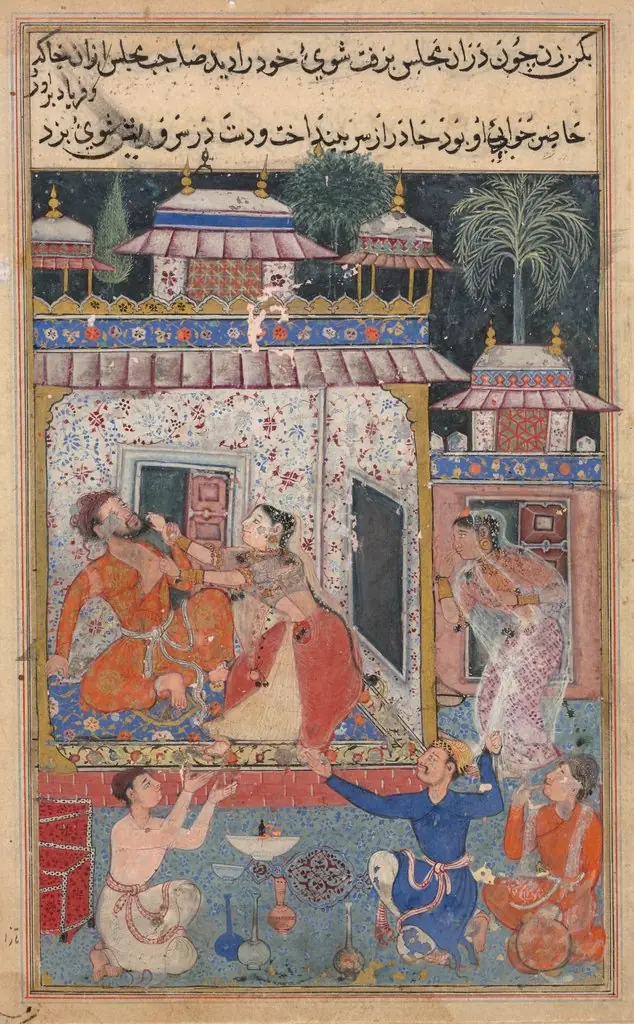 Page from Tales of a Parrot (Tuti-nama): text page
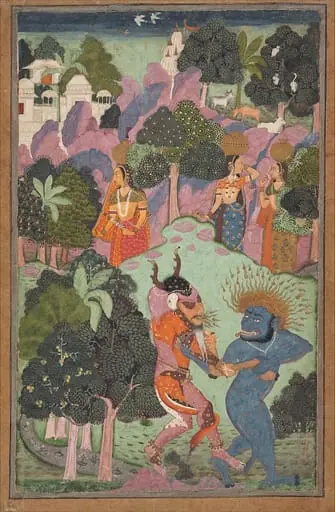 Untitled
 The handmaiden appeals for justice and the prince is taken to the execution site for the fourth time, from a Tuti-nama (Tales of a Parrot): Eighth Night