Artwork
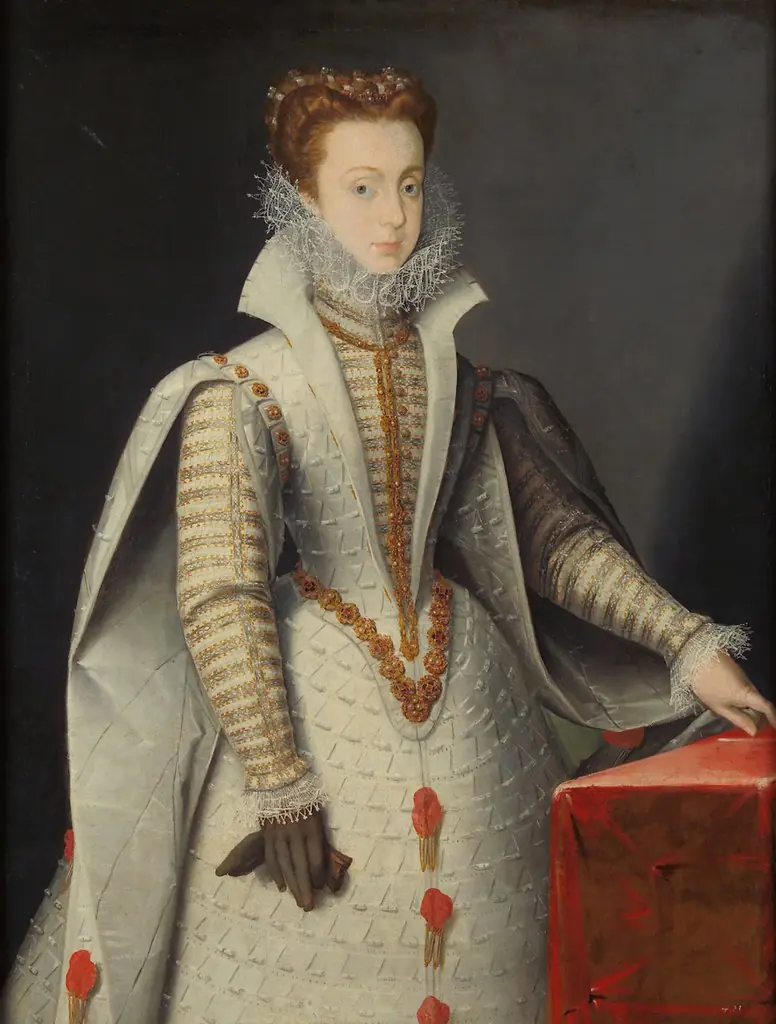
Anna von Dänemark (1574-1619), Königin von England, Brustbild
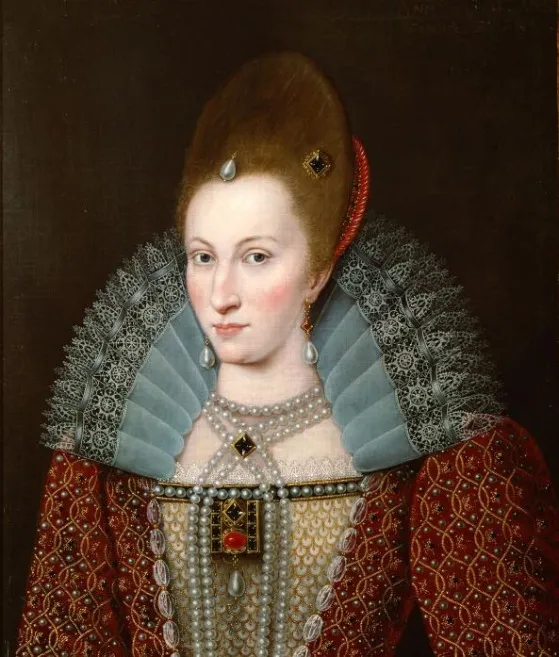
Anna von Dänemark (1574-1619), Königin von England, Brustbild is an oil painting by the Early Baroque Italian artist Unknown. It dates from 1605 and is held in the collection of the Kunsthistorisches Museum. This portrait depicts Anna of Denmark, queen consort of England, as a full-length bust against a dark background.
About this work
Overview
This portrait depicts Anna of Denmark, queen consort of England, as a full-length bust against a dark background. Executed in oil paint, it emphasizes her royal status through elaborate attire and refined lighting. The composition focuses tightly on her upper body, drawing attention to facial expression and clothing details without distracting elements.
Subject & Meaning
Anna of Denmark, wife of James I, is portrayed with dignified composure, reflecting her position as queen. Her attire—elaborate lace collar, richly patterned gown, and pearl-and-stone jewelry—signals wealth and status. The restrained gaze and upright posture convey authority rather than intimacy, aligning with courtly ideals of female royalty in early 17th-century England.
Technique & Style
The artist employs chiaroscuro to model the queen’s face and collar with subtle gradations of light and shadow, enhancing three-dimensionality.
The artist employs chiaroscuro to model the queen’s face and collar with subtle gradations of light and shadow, enhancing three-dimensionality. Slashed sleeves reveal contrasting fabric beneath, a fashionable detail rendered with precision. The dark background isolates the figure, heightening the luminosity of her skin and jewelry, suggesting a controlled, studio-based execution typical of royal portraiture of the period.
History & Provenance
Painted during Anna’s time in England after her marriage to James I in 1589, the portrait likely originated in the royal court’s artistic circle. Though the artist remains unidentified, its style aligns with Flemish and English court painters active around 1600. It remained within royal collections, documented in inventories of the early 17th century.
Context
Anna’s portrait reflects the fusion of Danish and English court aesthetics following her arrival in Britain. The lace collar and slashed sleeves echo continental fashion, while the formal pose and jewel-heavy adornment conform to English royal portraiture conventions. Such images served political purposes, projecting stability and legitimacy through visual grandeur.
Legacy
The portrait stands as a representative example of early Jacobean royal imagery, preserving the visual language of queenship in a transitional period. It contributes to the historical record of how female monarchs were visually constructed—controlled, adorned, and distant—offering insight into the intersection of gender, power, and representation in Stuart England.
Artist & collection

 Domestic Scene
 Giacomo and Cardinal Marco, investing Andrea, Abbot of San Zeno, with his Benefice
 The Nymph of Fontainebleau
 Portrait of a Woman
 Madonna and Child with Saints in the Enclosed Garden
 Venus and Minerva
 Family Group of Four on Sofa
 Wall painting from Room H of the Villa of P. Fannius Synistor at Boscoreale
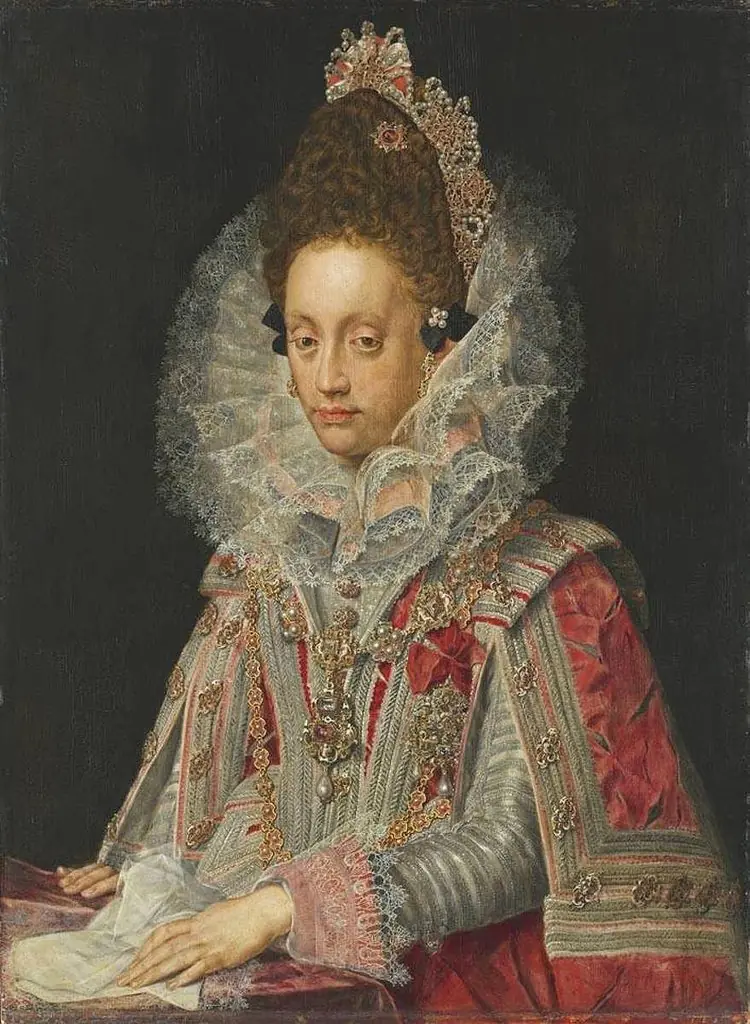 Bildnis der Herzogin Magdalena von Bayern, Gemahlin Herzog Wolfgang Wilhelms von Pfalz-Neuburg, im Hochzeitsstaat (1597-1628)
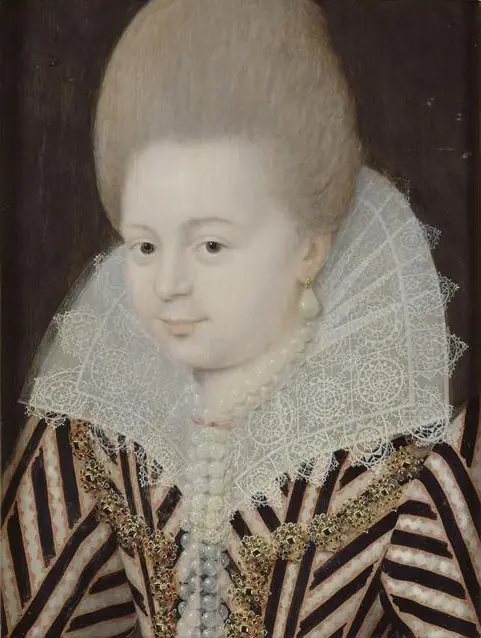 Inconnue, dite autrefois Diane d’Andouins, comtesse de Gramont, ou la belle Corisande
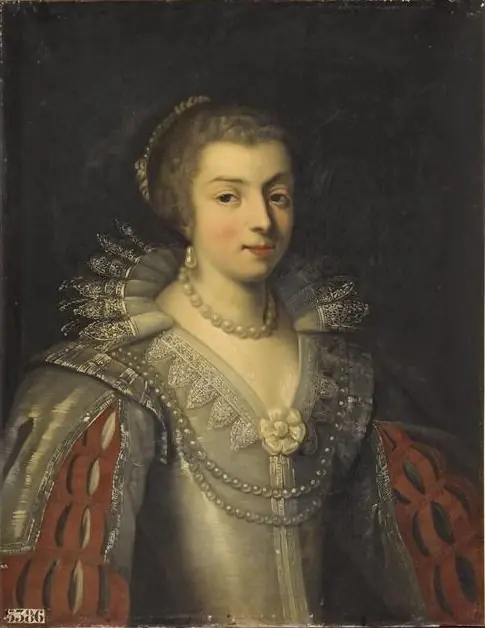 Marie de Rohan-Montbazon, duchesse de Luynes, puis de Chevreuse (1600-1679)
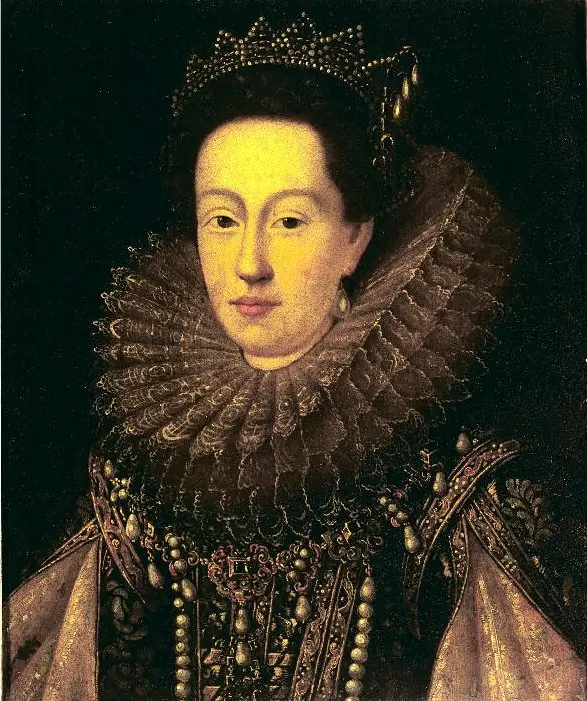 Portrait of a Lady (possibly Margaret of Savoy)
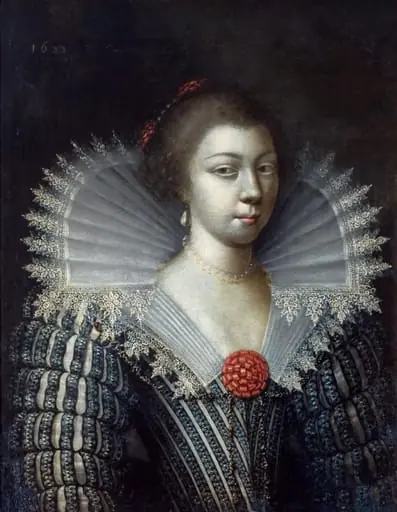 Portret de femeie
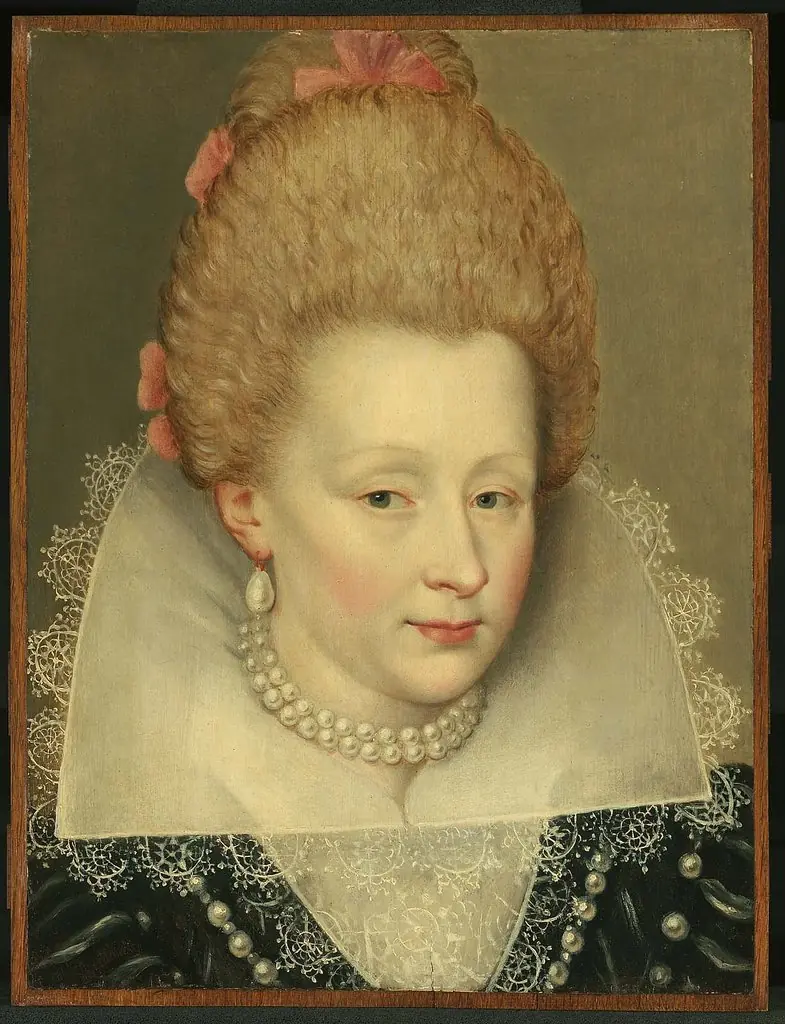 Portrait of a Woman
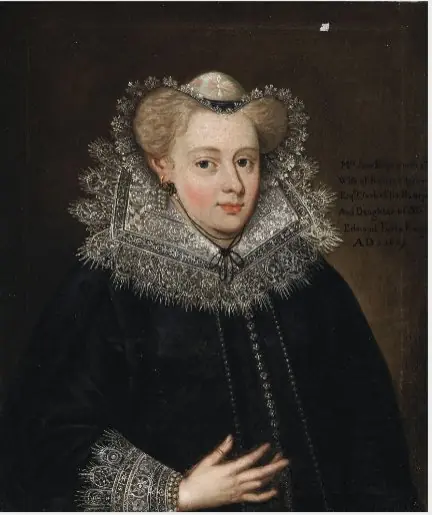 Portrait of Jane Tuite, Wife of Francis Edgeworth
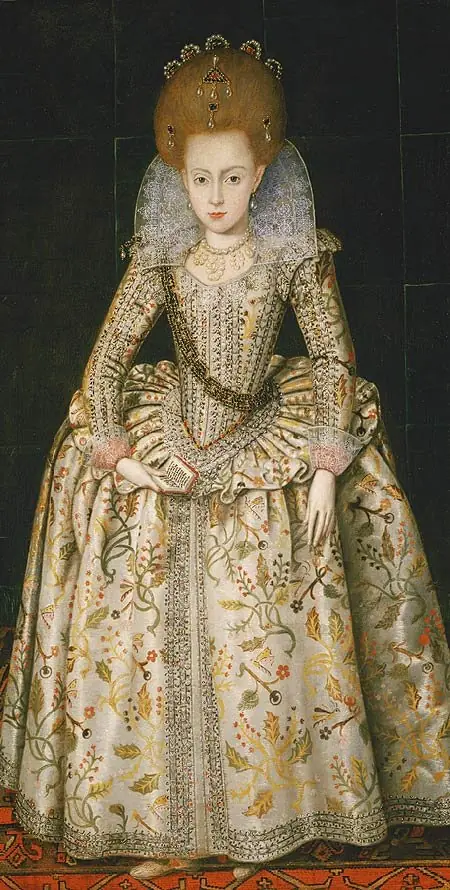 Princess Elizabeth (1596–1662), Later Queen of Bohemia
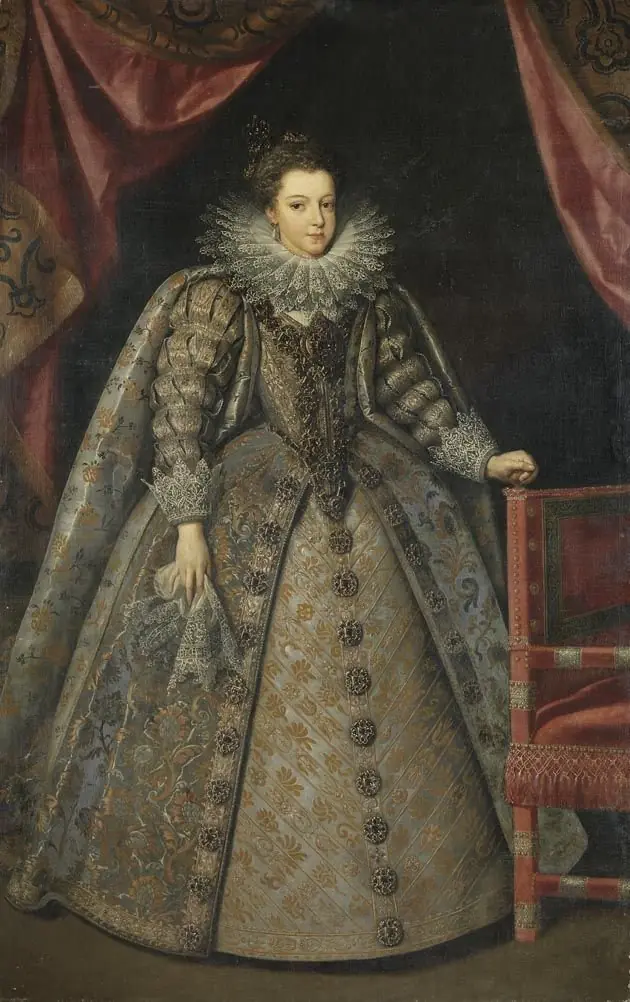 Elisabeth von Bourbon (1602-1644)
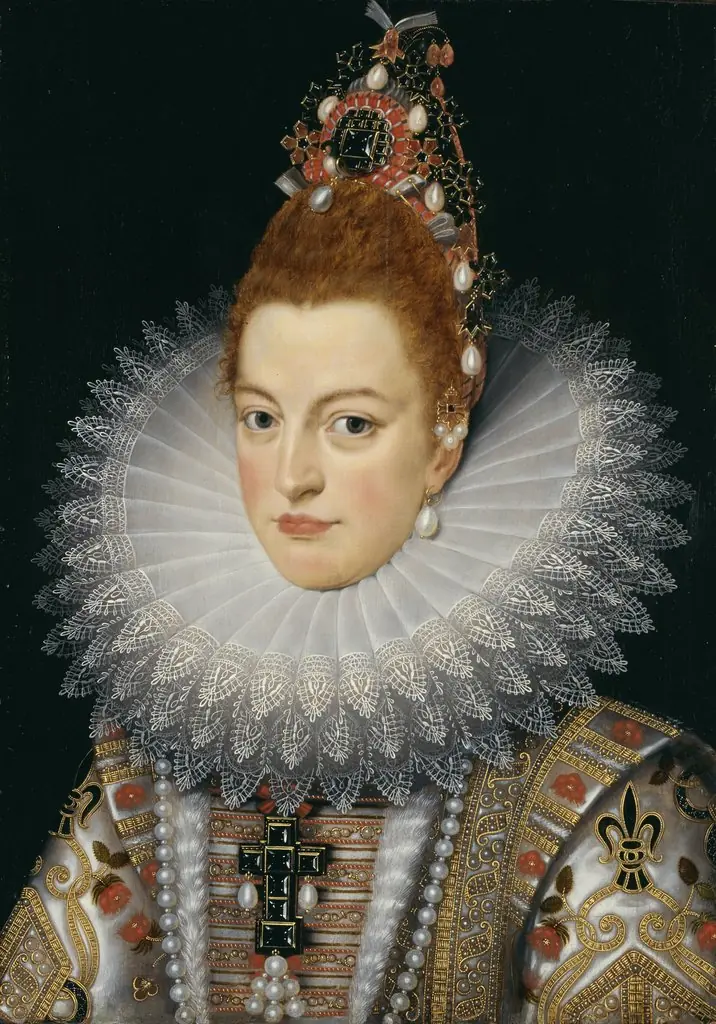 Portrait of Archduchess Isabella
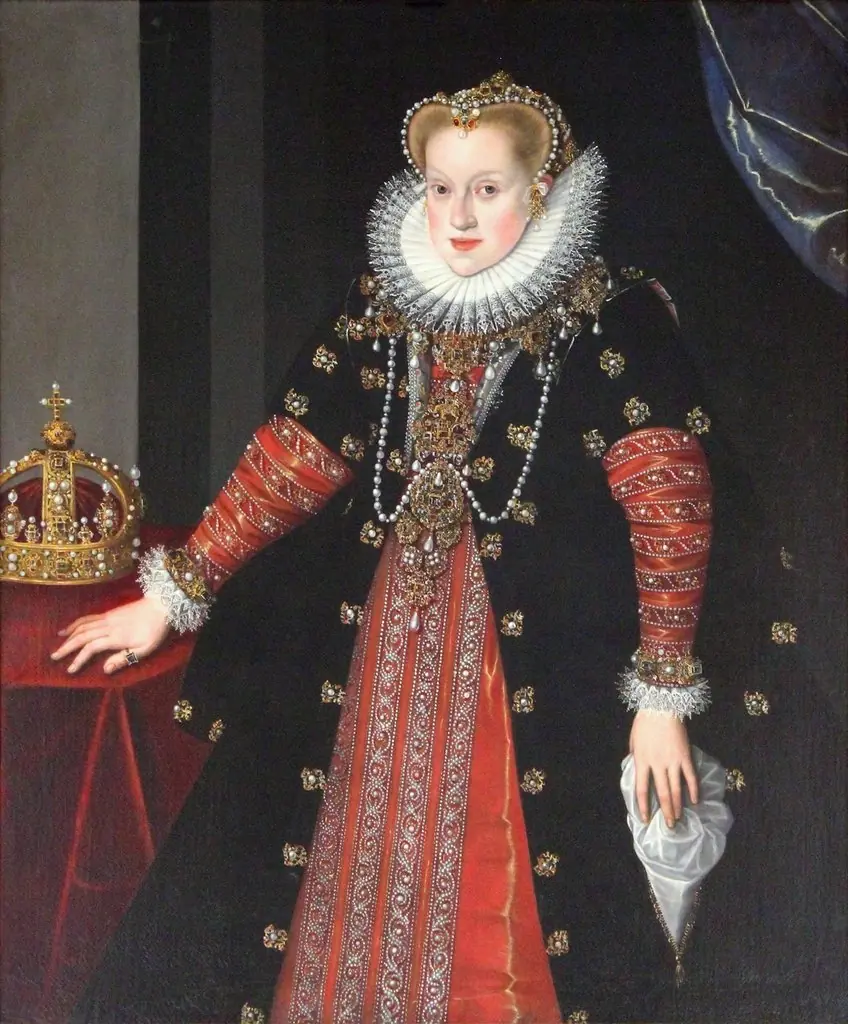 Portrait of Anne of Austria, Queen of Poland (1573-1598)
 Herzogin Margarete von Joyeuse (1564-1625), Dreiviertelbildnis