Artwork
Landkarte der habsburgischen Erblande mit Kompaß (Karte des österreichisch-türkischen Kriegsschauplatzes)
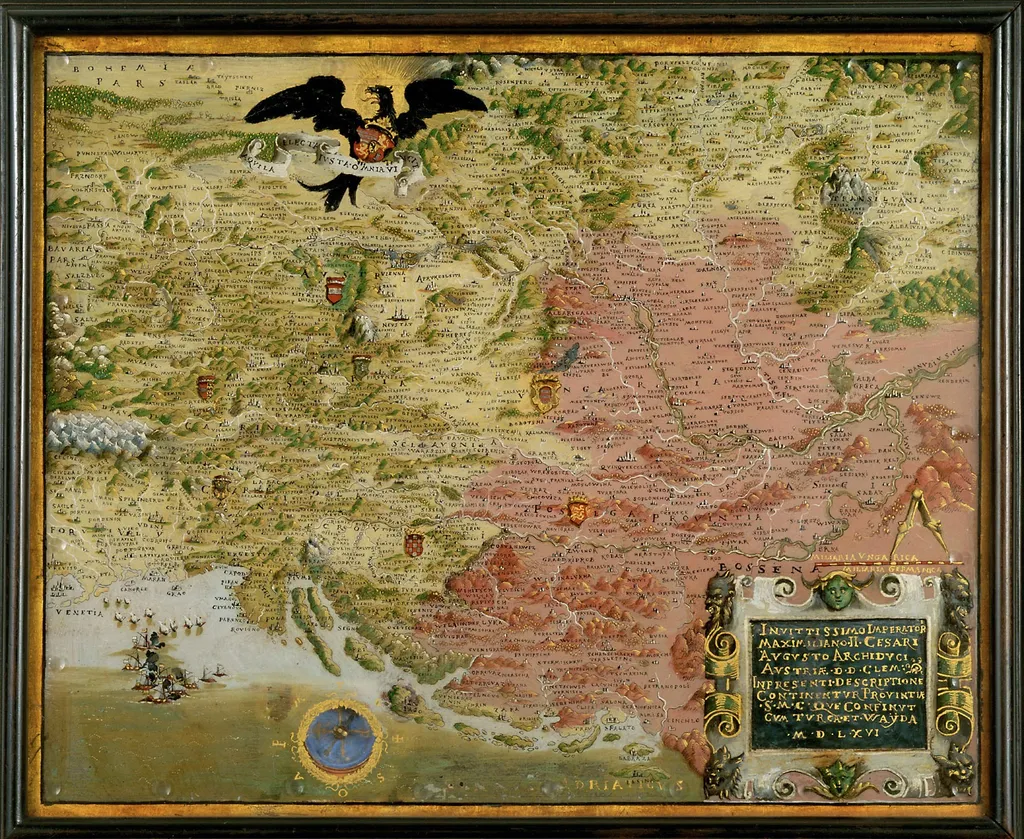
Landkarte der habsburgischen Erblande mit Kompaß (Karte des österreichisch-türkischen Kriegsschauplatzes) is an unspecified painting by the Early Baroque Italian artist Unknown. It dates from 1566 and is held in the collection of the Kunsthistorisches Museum.
About this work
Overview
Landkarte der habsburgischen Erblande mit Kompaß is a painting that visually represents the Habsburg hereditary lands, incorporating a compass and focusing on the Austro-Turkish War theater. Executed in a mixed-media approach, combining elements of cartography with artistic rendering, the work blends geographical accuracy with symbolic elements.
Subject & Meaning
The subject centers on the territorial claims and military engagements of the Habsburg Empire during the Austro-Turkish conflict. The inclusion of a compass may symbolize navigational control and strategic oversight, highlighting the Empire's efforts to assert dominance over the depicted regions.
Technique & Style
The painting utilizes a mixed-media technique, blending traditional cartographic methods with artistic elements. The style reflects a blend of functional map-making and illustrative art, characteristic of 17th- to 18th-century European depictions of territorial conflicts.
History & Provenance
Due to the lack of specific provenance details in the provided facts, the exact creation date, artist, and ownership history of 'Landkarte der habsburgischen Erblande mit Kompaß' cannot be accurately described. It is associated with the Austro-Turkish War, suggesting a creation date within the conflict's timeframe (e.g., late 17th to early 18th century).
Context
Created amidst the Austro-Turkish War, this painting reflects the geopolitical tensions and territorial disputes between the Habsburg Empire and the Ottoman Empire. It would have served as a strategic tool or a symbolic representation of imperial claims.
Legacy
The legacy of this work lies in its historical documentation of the Austro-Turkish conflict's geographical stakes. It contributes to the understanding of how cartography was used as a tool for political assertion during European imperial conflicts, though its direct influence on subsequent art or cartography is not prominently documented.
Artist & collection

 Domestic Scene
 Giacomo and Cardinal Marco, investing Andrea, Abbot of San Zeno, with his Benefice
 The Nymph of Fontainebleau
 Portrait of a Woman
 Madonna and Child with Saints in the Enclosed Garden
 Venus and Minerva
 Family Group of Four on Sofa
 Wall painting from Room H of the Villa of P. Fannius Synistor at Boscoreale
 Road Map of Central Europe
 Novi Belgii Novaeque Angliae nec non Pennsylvaniae et partis Virginiae tabula multis in locis emendata
 Untitled
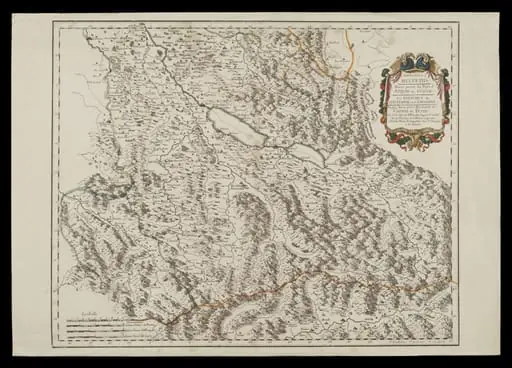 H Beard Print Collection
![View of Venice [upper left block], by Jacopo de' Barbari](https://artifactworldgallery.com/img/jacopo-de-barbari--view-of-venice-upper-left-block--5b60543442b987bc-w320.webp) View of Venice [upper left block]
View of Venice [upper left block]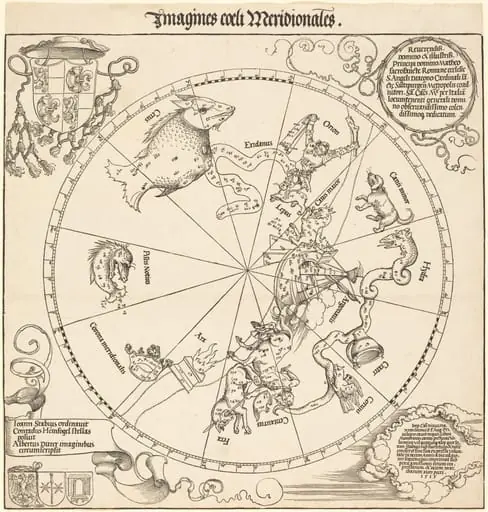 The Southern Celestial Hemisphere
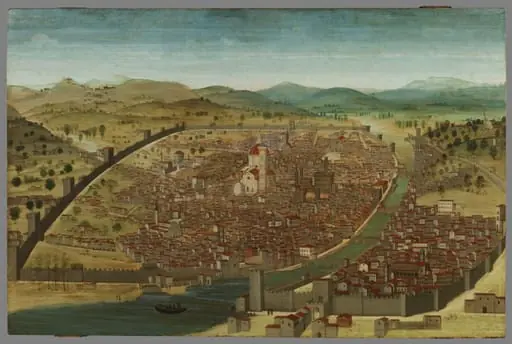 View of Florence from the South West
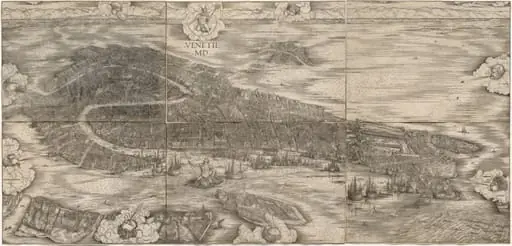 View of Venice
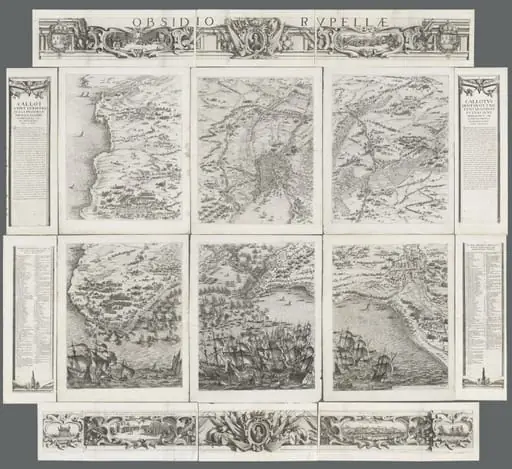 The Siege of La Rochelle
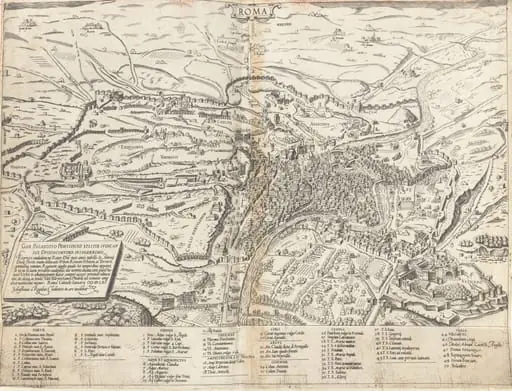 Topographical Map of Modern Rome
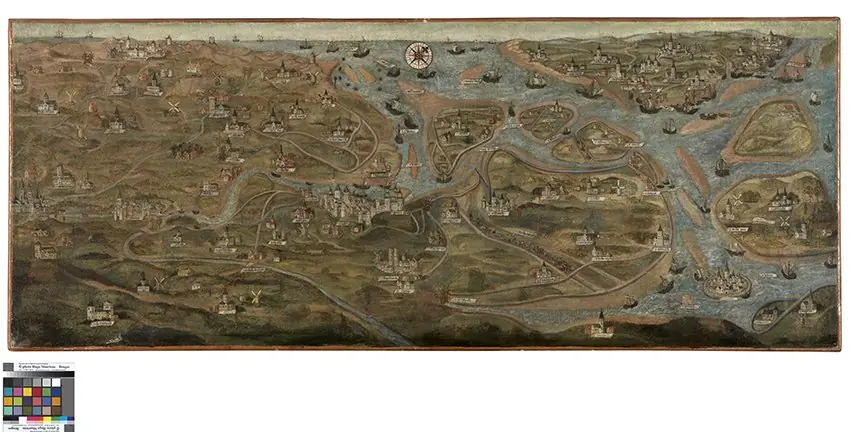 Map of the Zwin Area
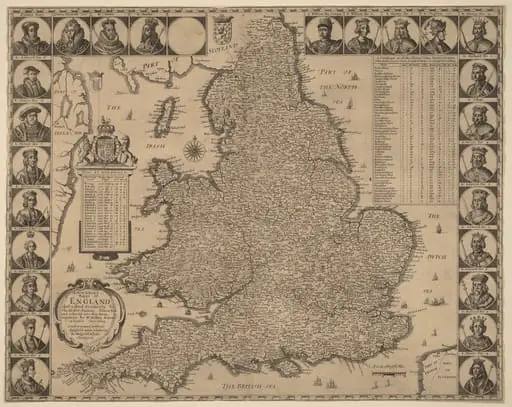 A New and Exact Mappe of England