Artwork
H Beard Print Collection
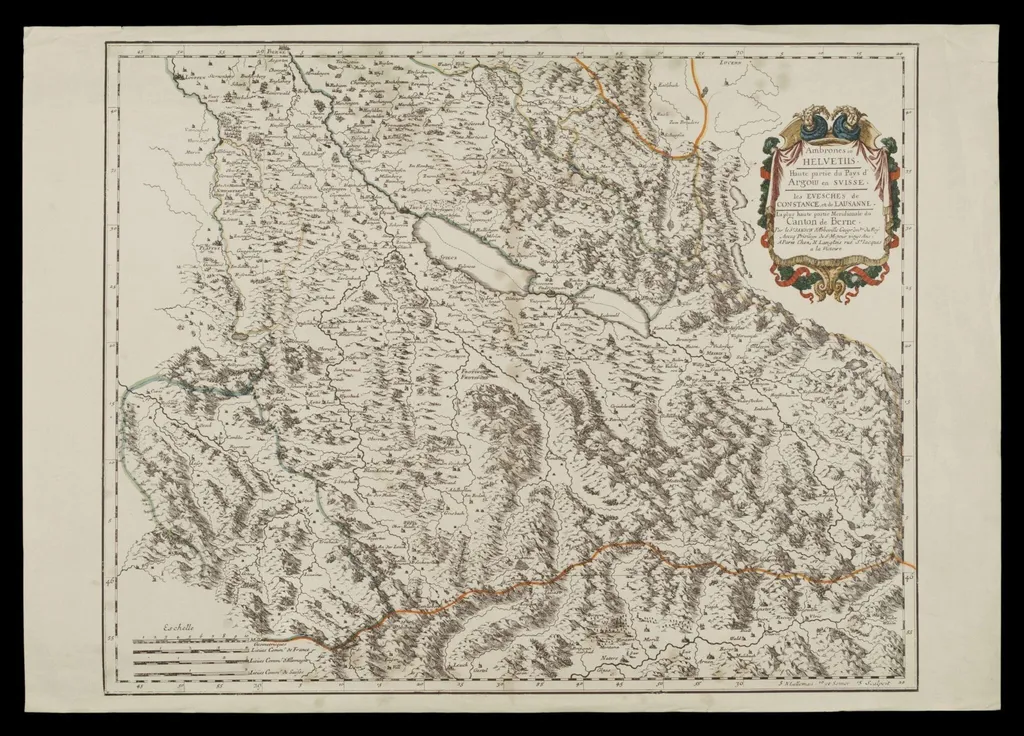
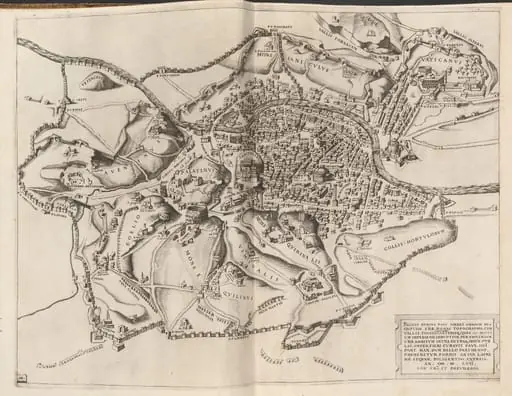
H Beard Print Collection is a print by the Baroque artist Unknown. It dates from 1660 and is held in the collection of the Victoria and Albert Museum.
About this work
It copies an earlier map by Nicolas d’Abbeville, printed exactly 200 years after his version.
This print shows a detailed map from 1660. It marks the routes of ancient tribes called Ambrones in what’s now Switzerland. The lines are crisp, and the place names are small but clear.
It copies an earlier map by Nicolas d’Abbeville, printed exactly 200 years after his version. The original was meant for travelers or soldiers, not art. You can still see the fold lines where it was carried in a pocket.
Look for the Victoria and Albert Museum if you want to see the real thing.
Overview
This print reproduces a 1660 cartographic sheet that charts the movements of the Ambrones, an ancient tribe, across the region now identified as Switzerland. Rendered in a clear, linear style, the map displays place names in modest lettering and delineates routes with precise lines, preserving the functional character of the original document.
Subject & Meaning
The map records the geographic path of the Ambrones, offering insight into the tribal dynamics of early European history. By visualising their routes, the work serves as a historical reference for the settlement and migration patterns that shaped the Helvetian landscape during antiquity.
Technique & Style
Executed as a print, the image reproduces the fine line work and typographic details of the 1660 source. The crispness of the lines and the legibility of the small labels reflect the technical standards of early modern cartography, emphasizing accuracy over decorative embellishment.
History & Provenance
The original map was created by cartographer Nicolas d'Abbeville in 1660, intended for practical use by travelers or military personnel. This modern edition, produced two centuries later, mirrors the initial design without alteration, retaining physical traces such as fold lines that indicate its historical handling as a portable document.
Context
In the seventeenth century, maps like d'Abbeville's were essential tools for navigation and strategic planning, particularly in the fragmented political terrain of the Swiss cantons. The depiction of the Ambrones aligns with contemporary scholarly interest in documenting ancient peoples within modern geographic frameworks.
Legacy
While primarily a functional artifact, the map contributes to the broader corpus of historical cartography that informs present‑day understandings of early European tribal movements. Its preservation and re‑production allow researchers to examine the cartographic conventions and geographic knowledge of the period.
Artist & collection

 Domestic Scene
 Giacomo and Cardinal Marco, investing Andrea, Abbot of San Zeno, with his Benefice
 The Nymph of Fontainebleau
 Portrait of a Woman
 Madonna and Child with Saints in the Enclosed Garden
 Venus and Minerva
 Family Group of Four on Sofa
 Wall painting from Room H of the Villa of P. Fannius Synistor at Boscoreale
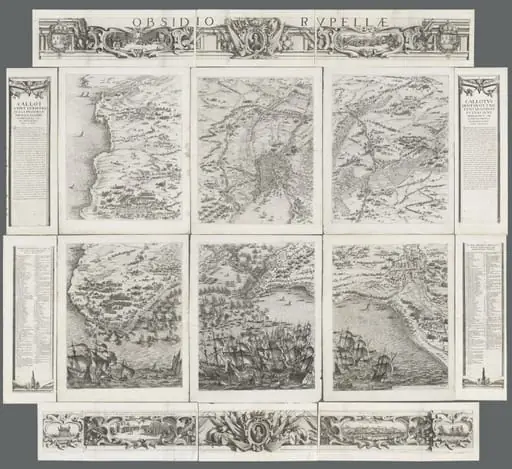 The Siege of La Rochelle
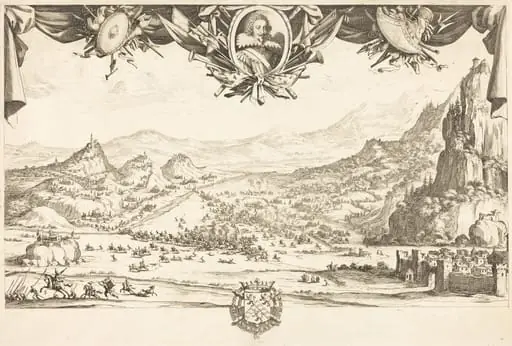 The Combat of Avigliana
![The Siege of Breda [plate 3 of 6], by Jacques Callot](https://artifactworldgallery.com/img/jacques-callot--the-siege-of-breda-plate-3-of-6--c43bd4a835426ed7-w320.webp) The Siege of Breda [plate 3 of 6]
The Siege of Breda [plate 3 of 6]![The Siege of La Rochelle [plate 7 of 16; set comprises 1952.8.97-112], by Jacques Callot](https://artifactworldgallery.com/img/jacques-callot--the-siege-of-la-rochelle-plate-7-of-16-set-comprises-1952-8--ed3ab4aaddd2281d-w320.webp) The Siege of La Rochelle [plate 7 of 16; set comprises 1952.8.97-112]
The Siege of La Rochelle [plate 7 of 16; set comprises 1952.8.97-112]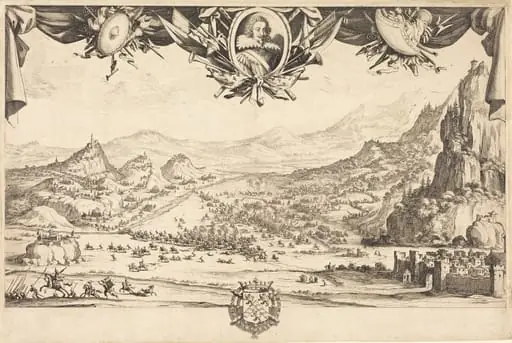 The Combat of Avigliana
![The Siege of Breda [plate 5 of 6], by Jacques Callot](https://artifactworldgallery.com/img/jacques-callot--the-siege-of-breda-plate-5-of-6--26a8f60b8b09e851-w320.webp) The Siege of Breda [plate 5 of 6]
The Siege of Breda [plate 5 of 6]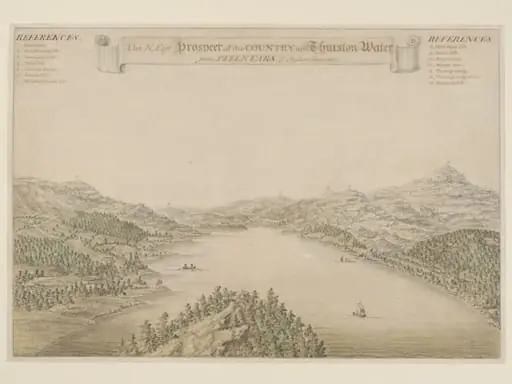 The North East Prospect of the Country up Thurston Water from Peelnears
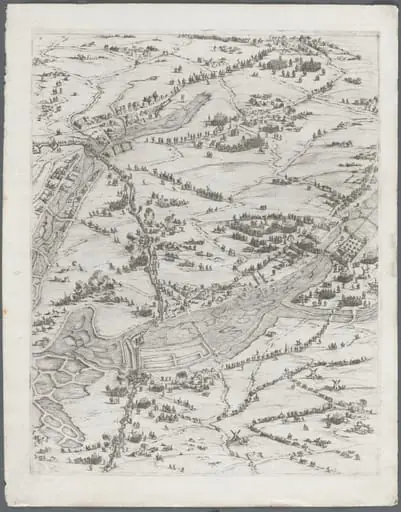 The Siege of La Rochelle: Plate 7
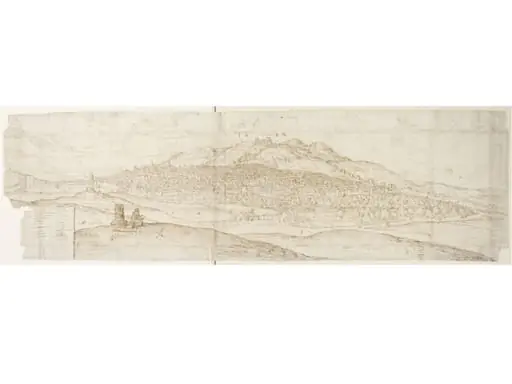 Panoramic View of Jaén, with the Figure of a Man Sketching in the Foreground
![The Siege of La Rochelle [plate 6 of 16; set comprises 1952.8.97-112], by Jacques Callot](https://artifactworldgallery.com/img/jacques-callot--the-siege-of-la-rochelle-plate-6-of-16-set-comprises-1952-8--87e690454dc011ee-w320.webp) The Siege of La Rochelle [plate 6 of 16; set comprises 1952.8.97-112]
The Siege of La Rochelle [plate 6 of 16; set comprises 1952.8.97-112]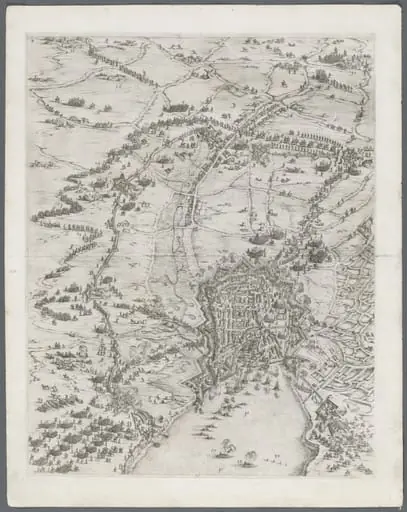 The Siege of La Rochelle: Plate 6
 Topographical Map of Ancient Rome