Artwork
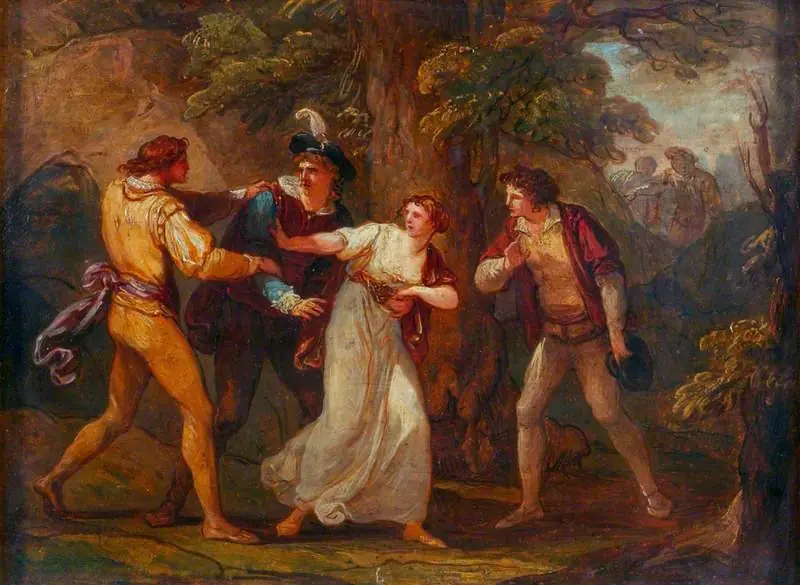
The Elopement (from Richardson's, 'Clarissa', book I, letter 94)
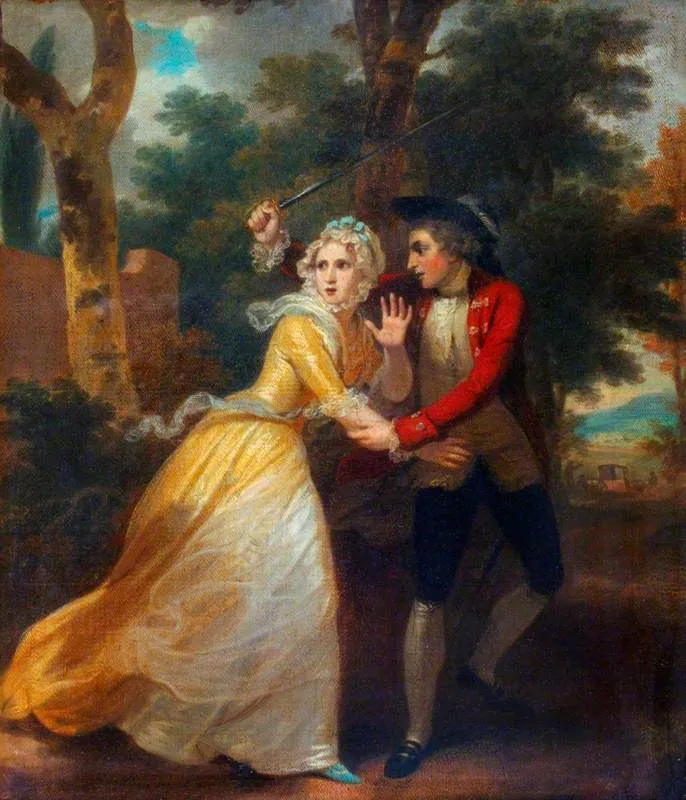
The Elopement (from Richardson's, 'Clarissa', book I, letter 94) is an oil painting by the Rococo painting artist Unknown. It dates from 1793 and is held in the collection of the Victoria and Albert Museum. The work, titled *The Elopement* and taken from the first book of Richardson’s novel *Clarissa*, portrays a moment of forced departure.
About this work
Overview
The work, titled *The Elopement* and taken from the first book of Richardson’s novel *Clarissa*, portrays a moment of forced departure. Rendered in oil, the canvas captures a man in a red coat and black hat seizing a woman in a yellow dress, her left hand clutching a sword. Behind them a tranquil landscape of trees and clouded sky offers a calm counterpoint to the urgent foreground.
Subject & Meaning
The scene illustrates a dramatic encounter between two 18th‑century figures, suggesting a narrative of resistance and escape. The woman’s defensive grip on a sword contrasts with the man’s firm hold on her arm, implying a struggle between personal agency and coercion, a theme resonant with the novel’s exploration of virtue under pressure.
Technique & Style
Executed in oil paint, the composition balances chiaroscuro and delicate coloration. The bright yellows of the woman’s gown and the deep reds of the man’s coat are rendered with precise brushwork, while the background employs softer, atmospheric tones to convey depth. The painter’s handling of light delineates the figures against the muted landscape, enhancing the tension.
History & Provenance
The painting is part of the collection at the Victoria and Albert Museum in London. Its acquisition details are recorded by the museum, which lists the work under the title referencing Richardson’s *Clarissa*, indicating its origin as an illustration of the literary source rather than a standalone narrative.
Context
Created as a visual interpretation of a passage from Samuel Richardson’s epistolary novel, the artwork reflects 18th‑century interests in moral dilemmas and sentimental drama. By situating the figures within an idyllic natural setting, the artist aligns the personal crisis with broader Enlightenment concerns about nature, virtue, and societal expectations.
Artist & collection

 Domestic Scene
 Giacomo and Cardinal Marco, investing Andrea, Abbot of San Zeno, with his Benefice
 The Nymph of Fontainebleau
 Portrait of a Woman
 Madonna and Child with Saints in the Enclosed Garden
 Venus and Minerva
 Family Group of Four on Sofa
 Wall painting from Room H of the Villa of P. Fannius Synistor at Boscoreale
 The Bride of Lammermoor (from Sir Walter Scott's novel)
 Before
 After
After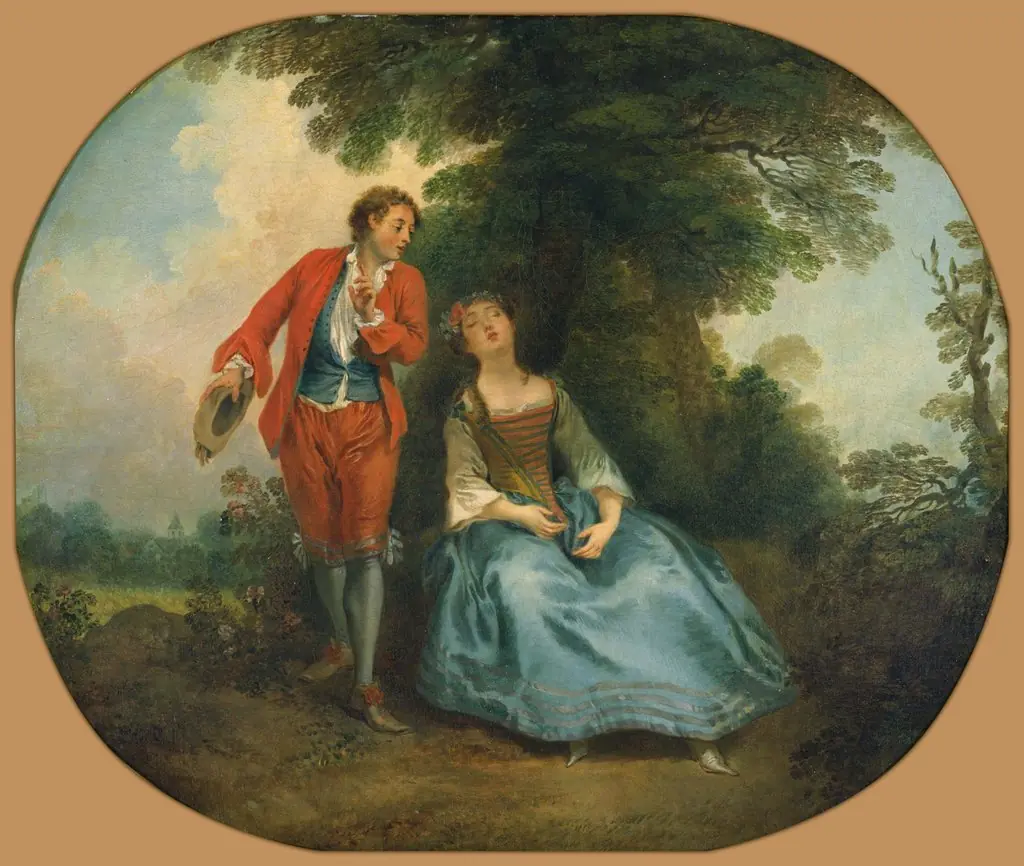 Sleeping Shepherdess
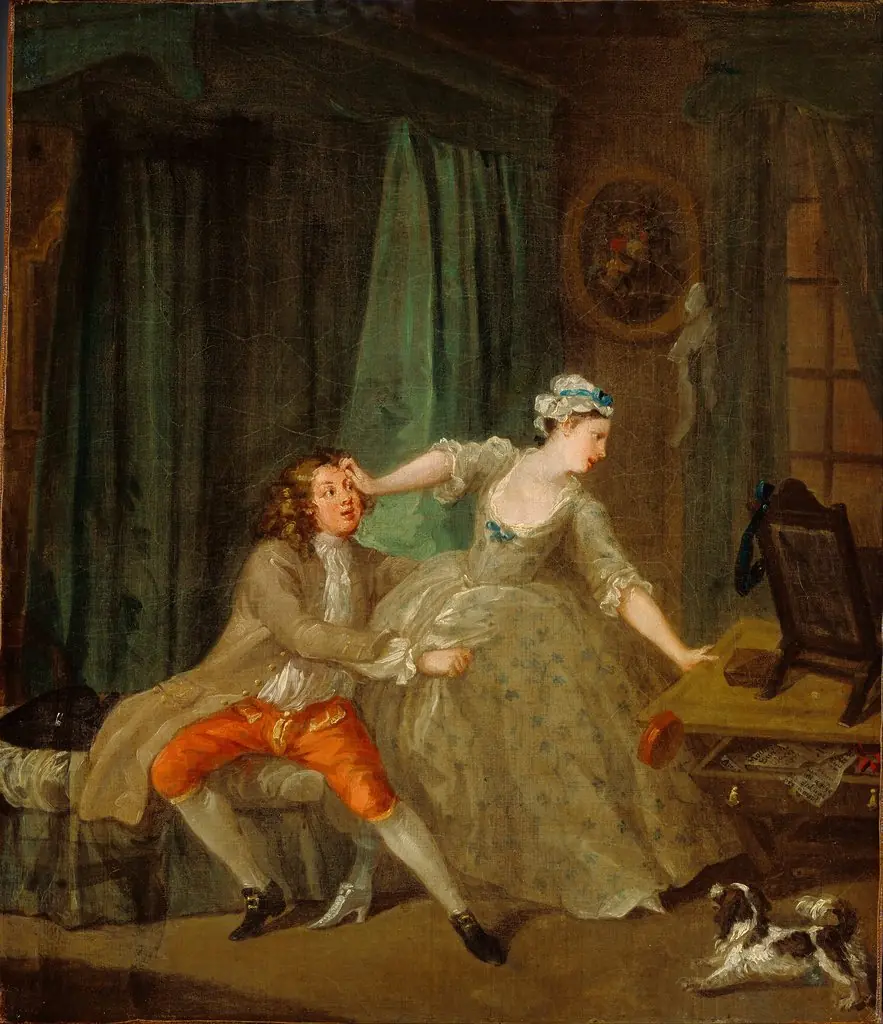 Before
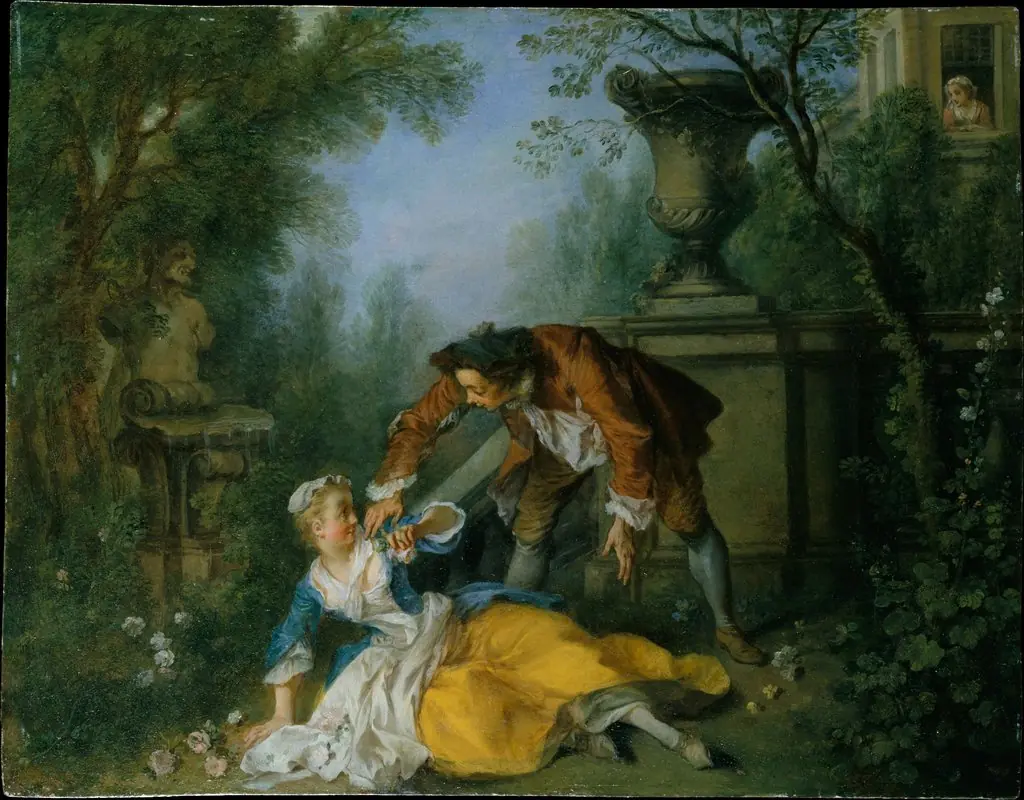 The Servant Justified
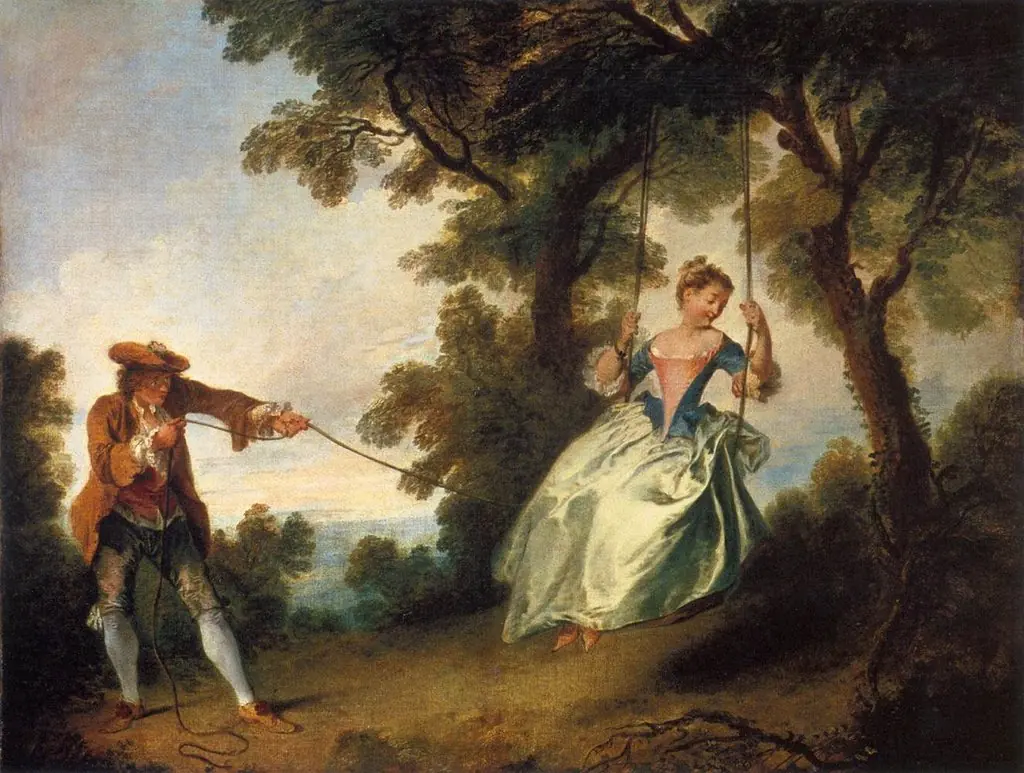 The Swing
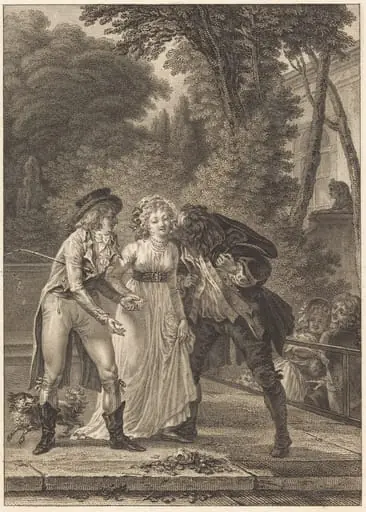 Le baiser rendu: Le baiser rendu
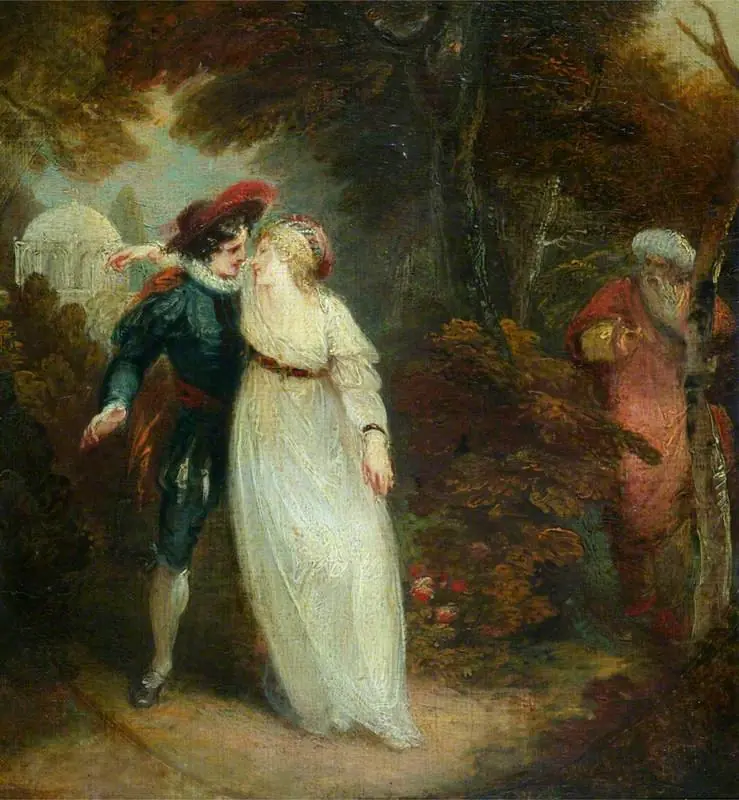 Zoraida, Discovered by Her Father, Agimorato, in the Arms of Rui Pérez de Viedma (from Cervantes' 'Don Quixote', Part I, Chapter 14)
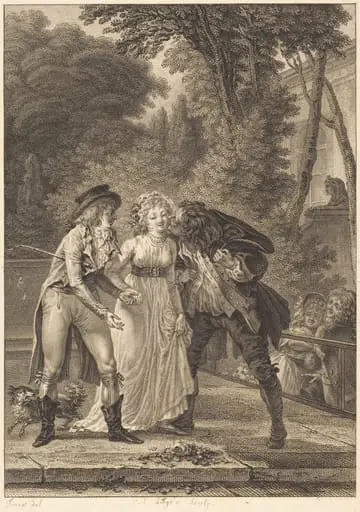 Le baiser rendu: Le baiser rendu
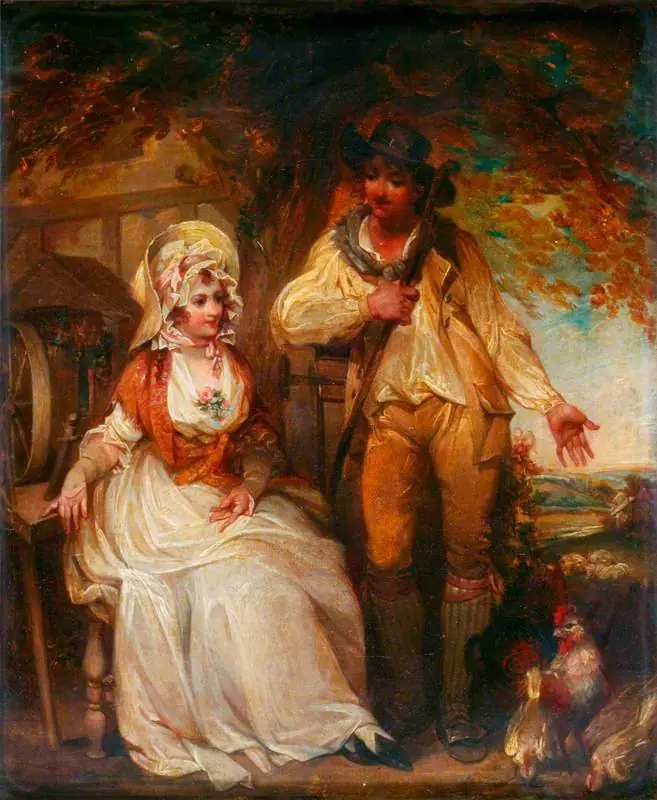 Courtship
 Sketch for 'The Two Gentlemen of Verona' (Act II, Scene 3 of the play by William Shakespeare)