Artwork
After
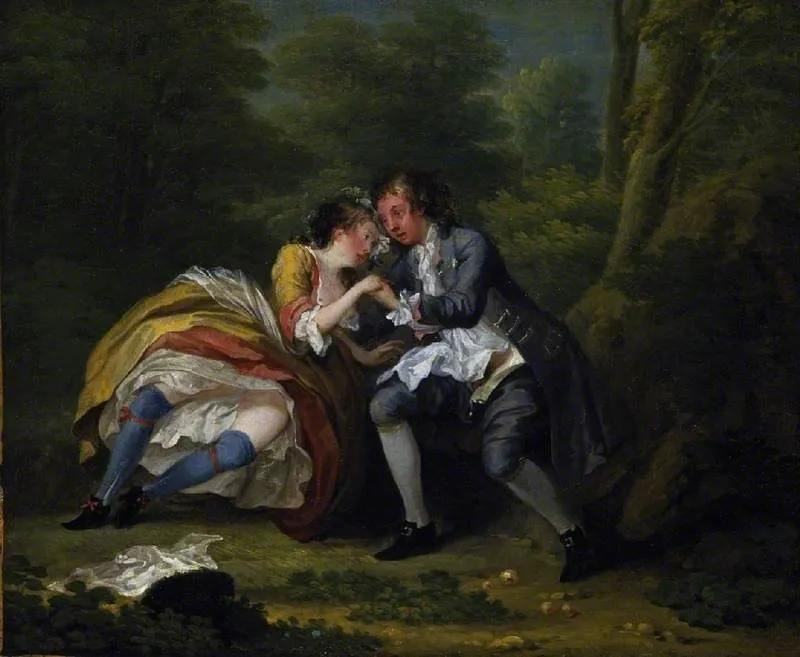
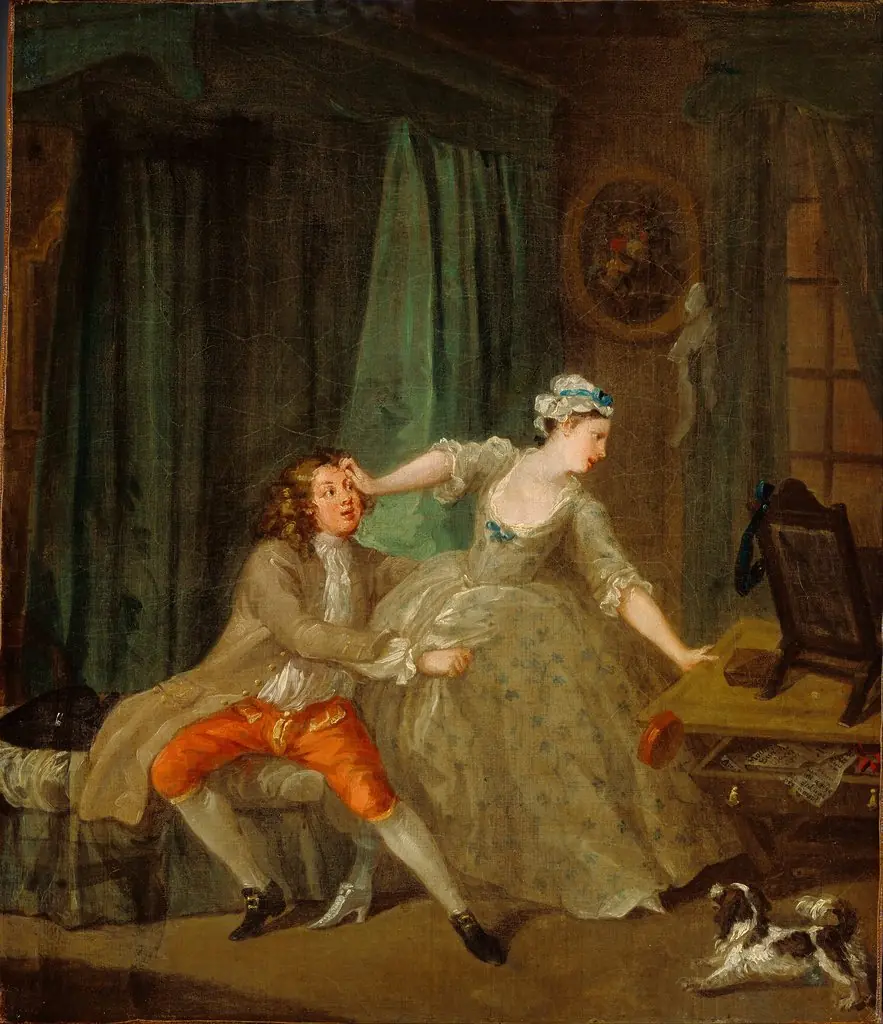
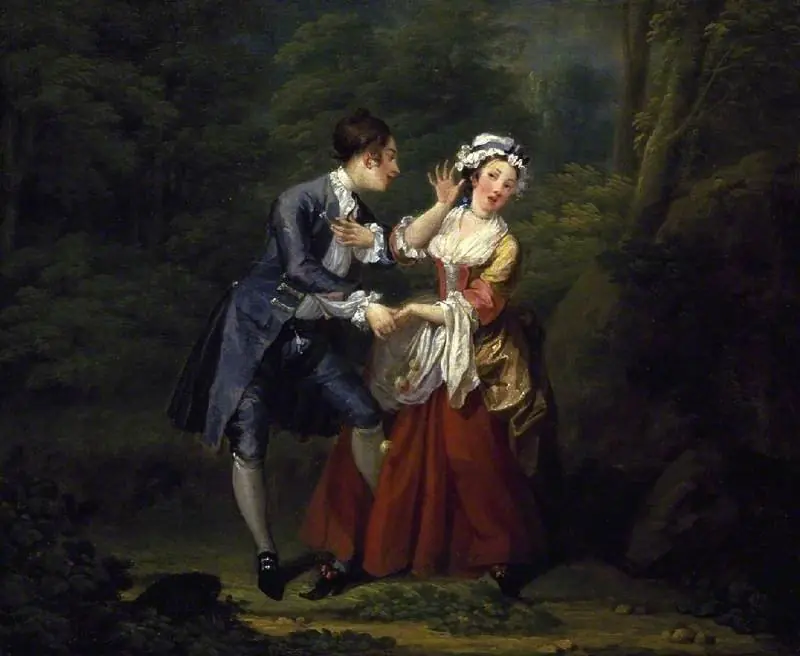
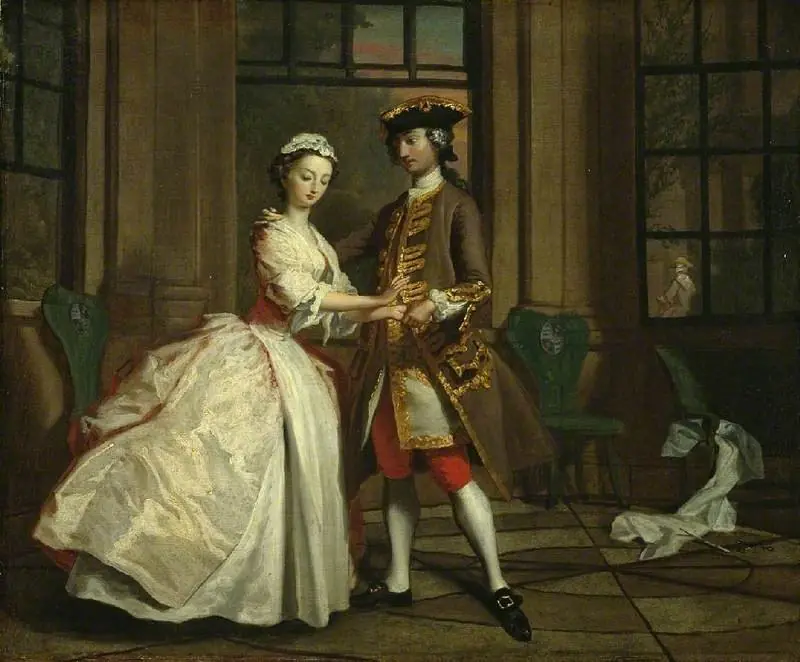
After is an oil painting by the Rococo painting artist William Hogarth. It dates from 1731 and is held in the collection of the Fitzwilliam Museum.
About this work
Overview
After is a 1731 oil painting by William Hogarth, characteristic of the Rococo movement. It depicts a genre scene of everyday life, showcasing the artist's propensity for narrative and social commentary.
Subject & Meaning
The painting portrays a man and woman in intimate proximity within a forest setting, adorned in 18th-century attire. Scattered objects in the foreground and a somber, shadowy background suggest a narrative of potentially illicit or private encounter, aligning with Hogarth's satirical exploration of social themes.
Technique & Style
Executed in oil paint, the work exemplifies Rococo's emphasis on detail and everyday subjects. Hogarth's use of contrasting colors (notably the woman's yellow dress and the man's blue suit) against a dark backdrop highlights his skill in composing visually engaging, story-driven scenes.
History & Provenance
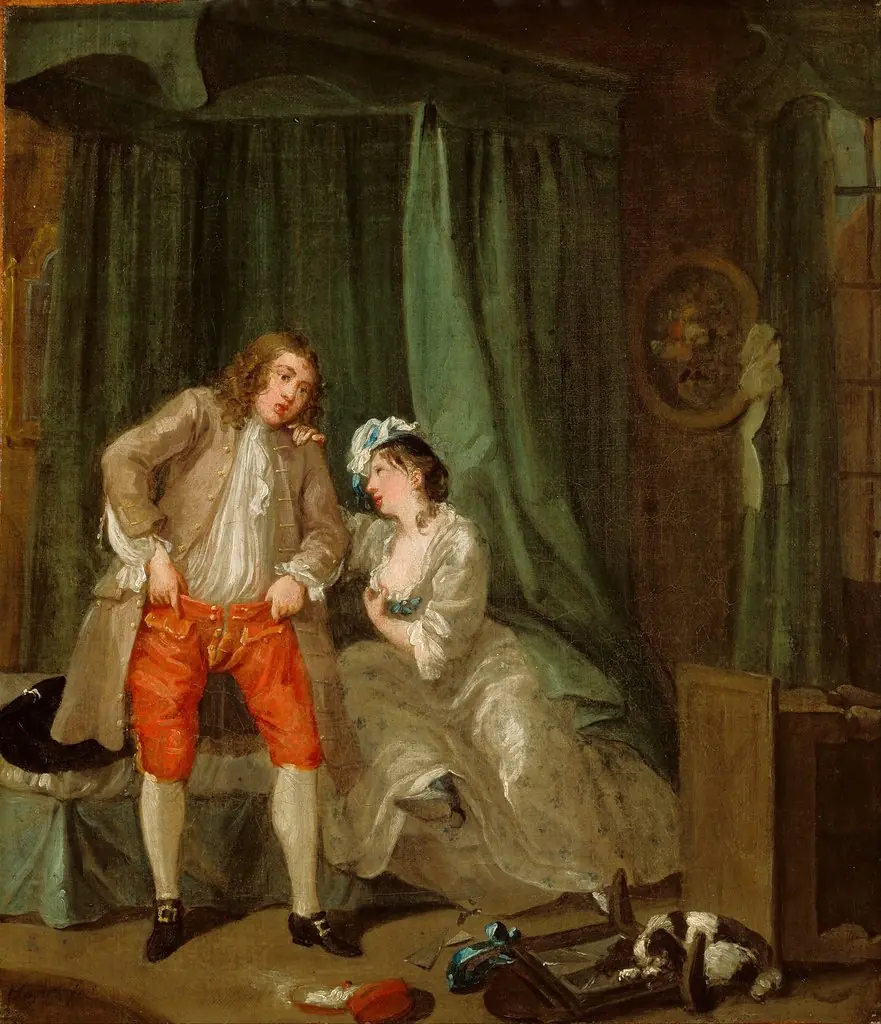
Created in 1731, After reflects Hogarth's period of producing influential sequential and satirical works, such as *A Harlot's Progress* and *Marriage A-la-Mode*. The painting's specific provenance details are not provided here.
Context
As a genre scene, After sits alongside works of other artists exploring daily life, though Hogarth's unique satirical lens sets it apart. It would have been viewed by 18th-century audiences familiar with his narrative and often morally charged depictions of society.
Legacy
After contributes to Hogarth's legacy as a pioneer in satirical and narrative painting, influencing later political satire and comic-like sequential art forms.
Artist & collection
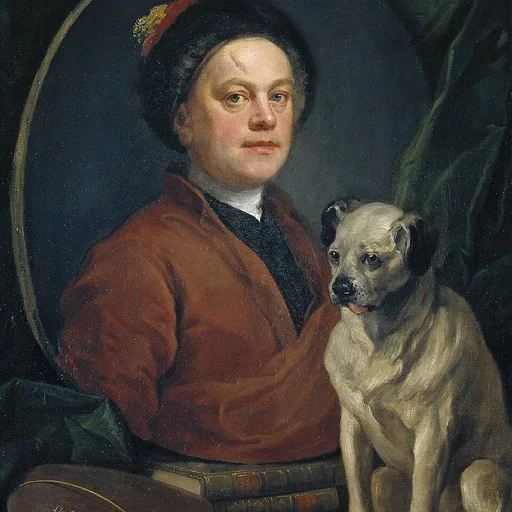
Artist
William Hogarth (; 10 November 1697 – 26 October 1764) was an English painter, engraver, satirist, cartoonist and writer.