Artwork
Legend of Durga
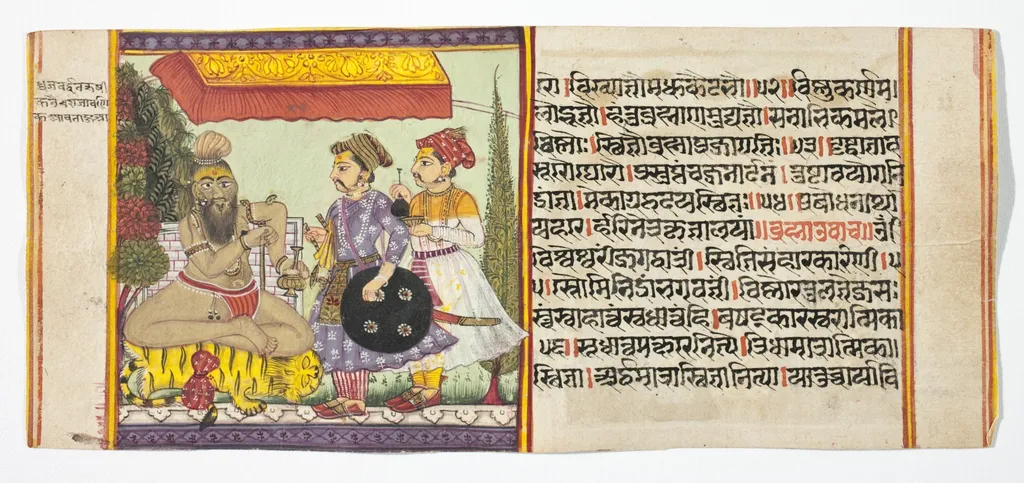
Legend of Durga is an unspecified painting by Unknown. It is held in the collection of the Detroit Institute of Arts.
About this work
Overview
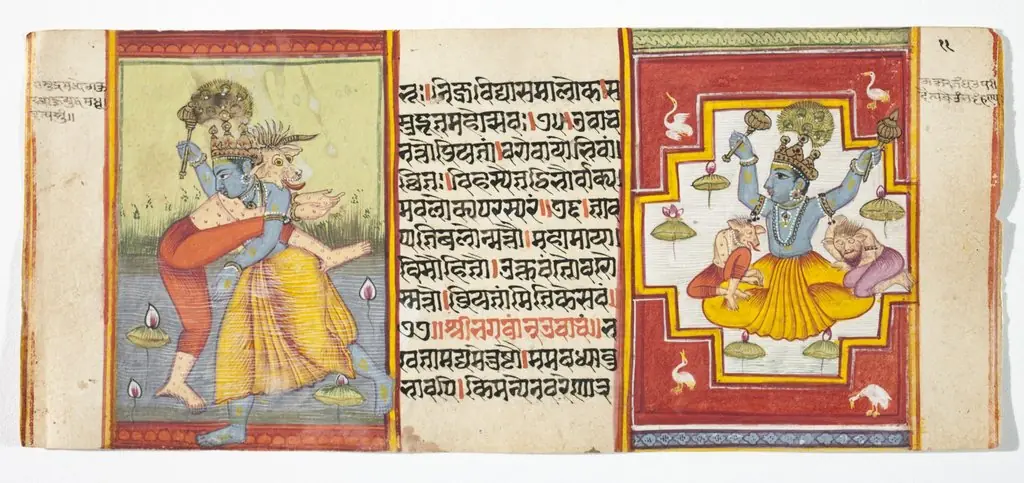
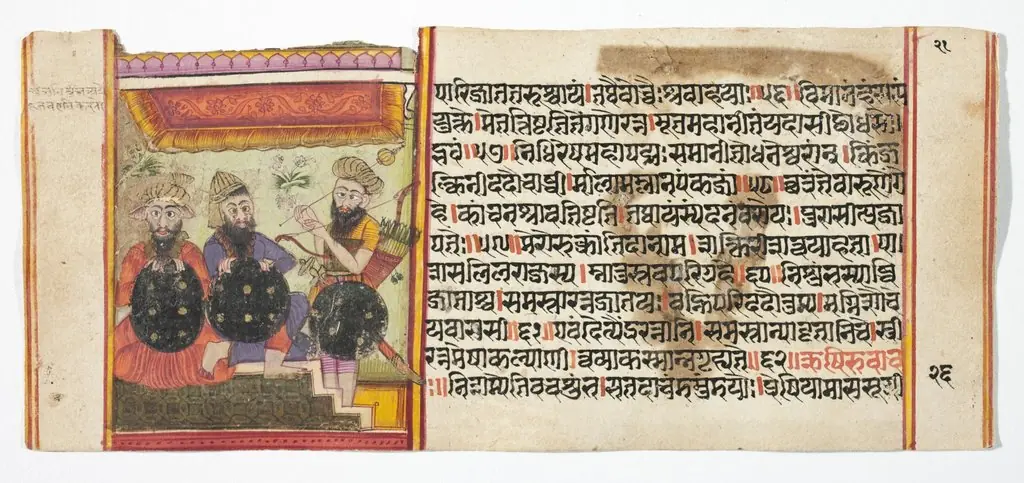
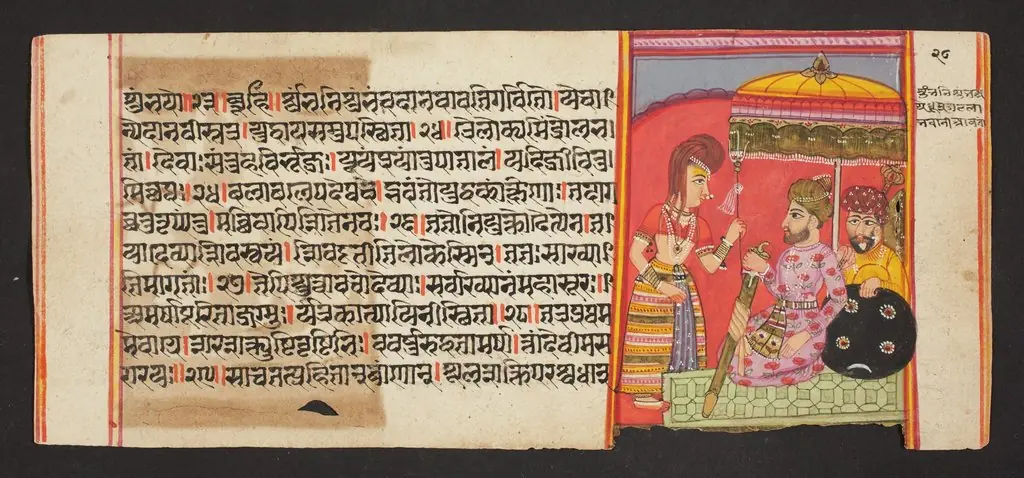
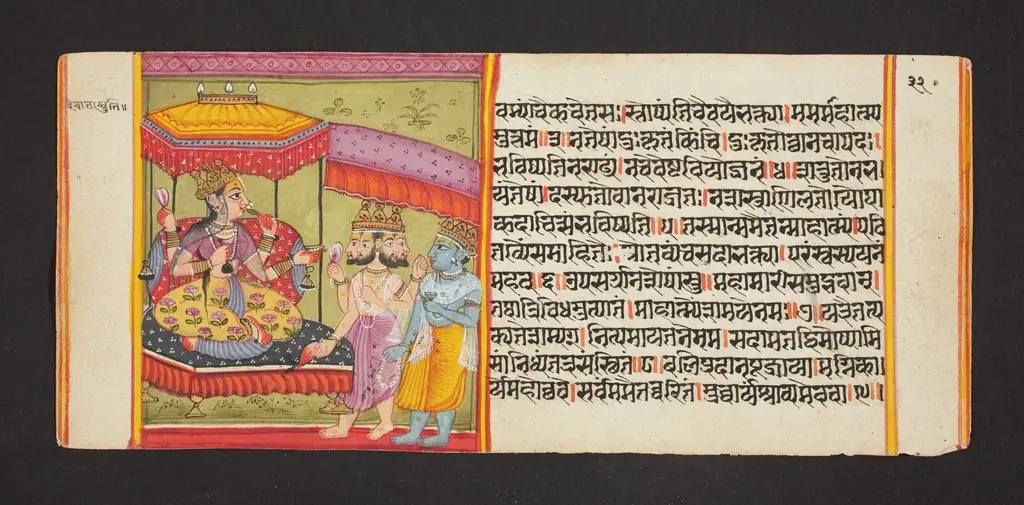
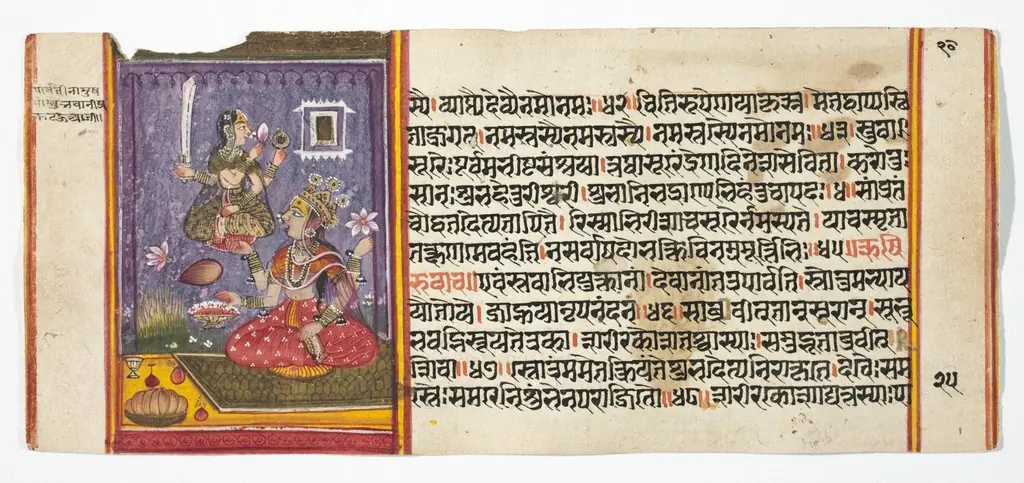
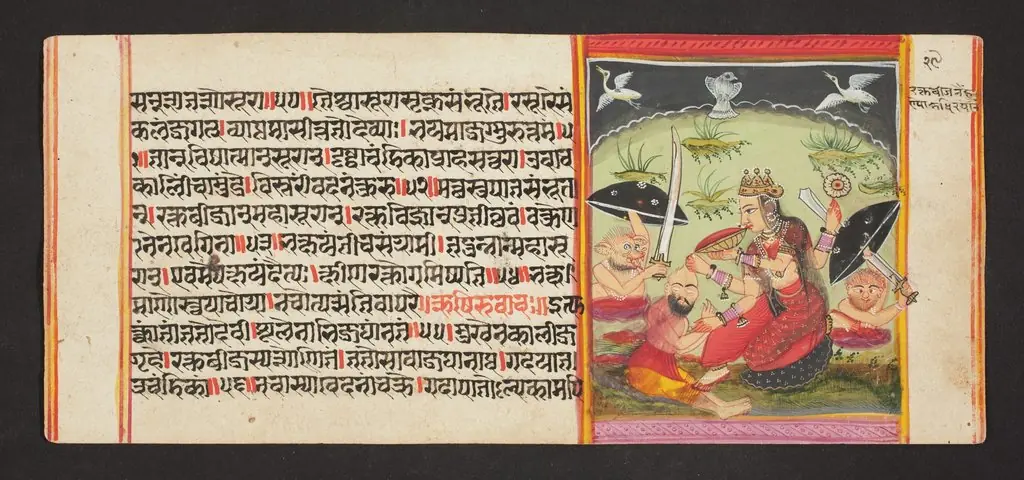
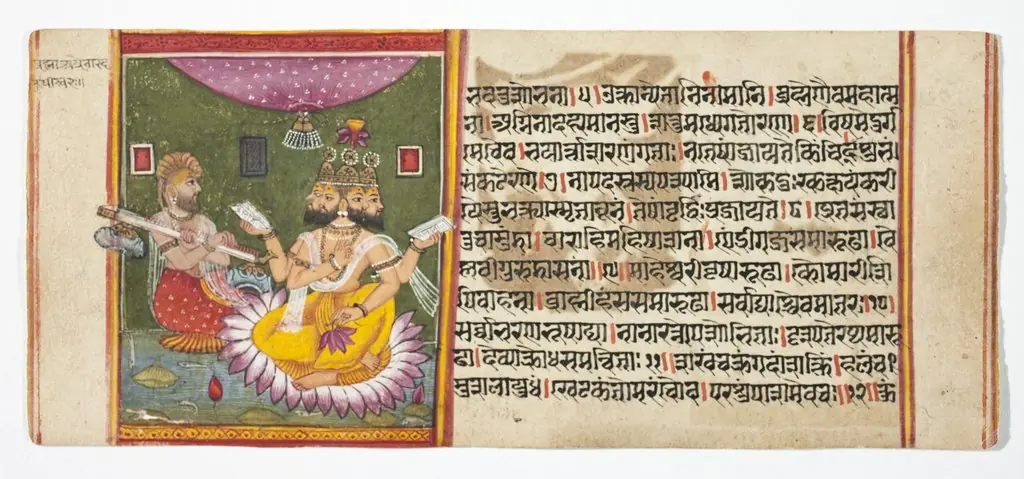
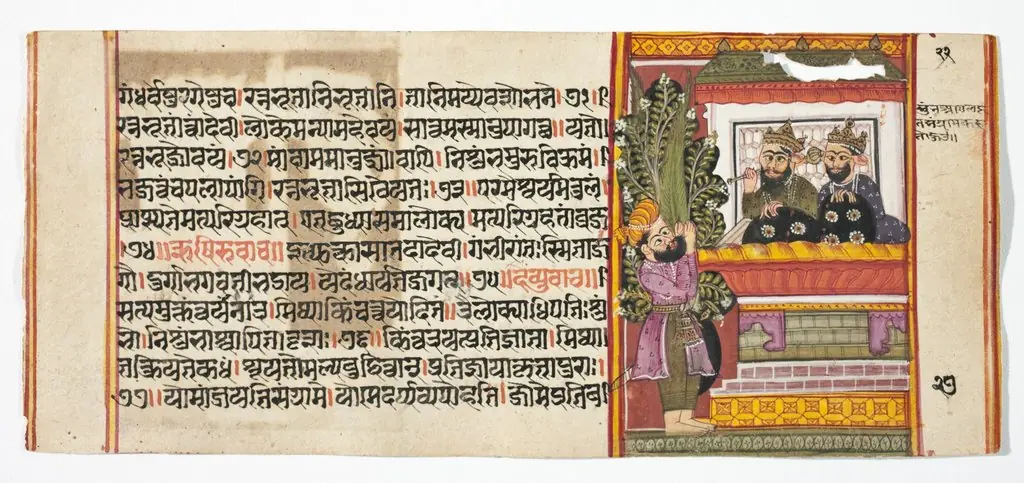
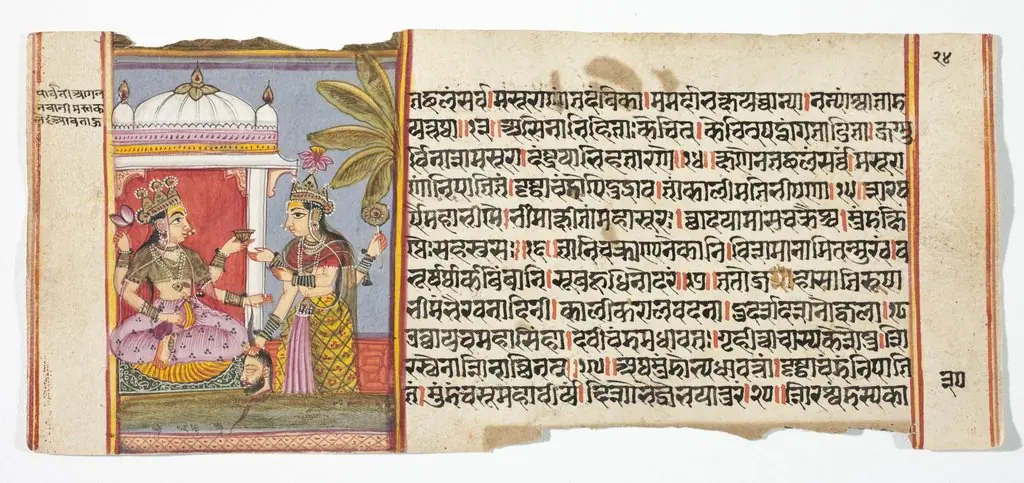
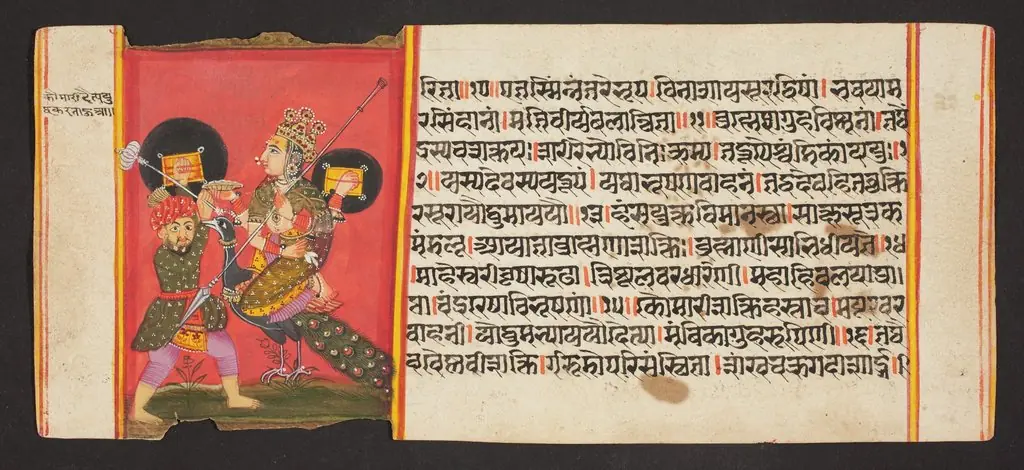
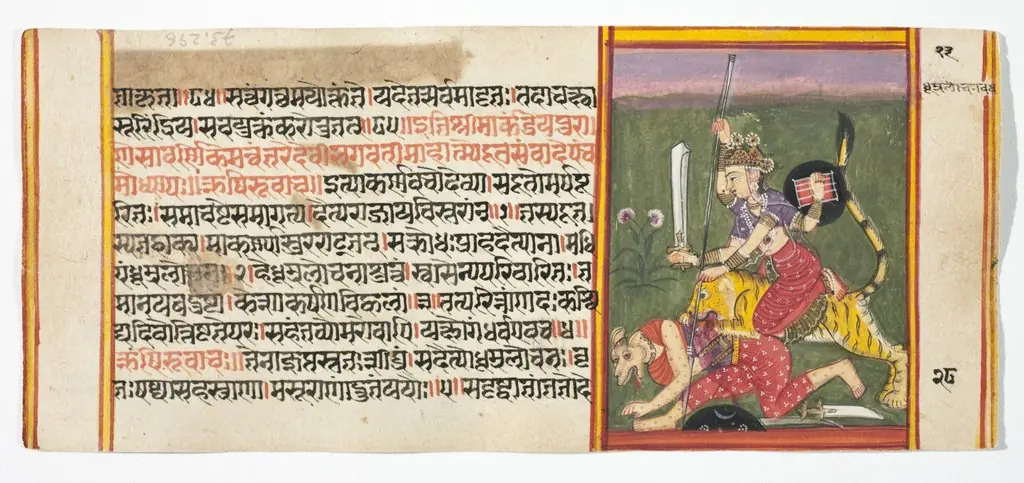
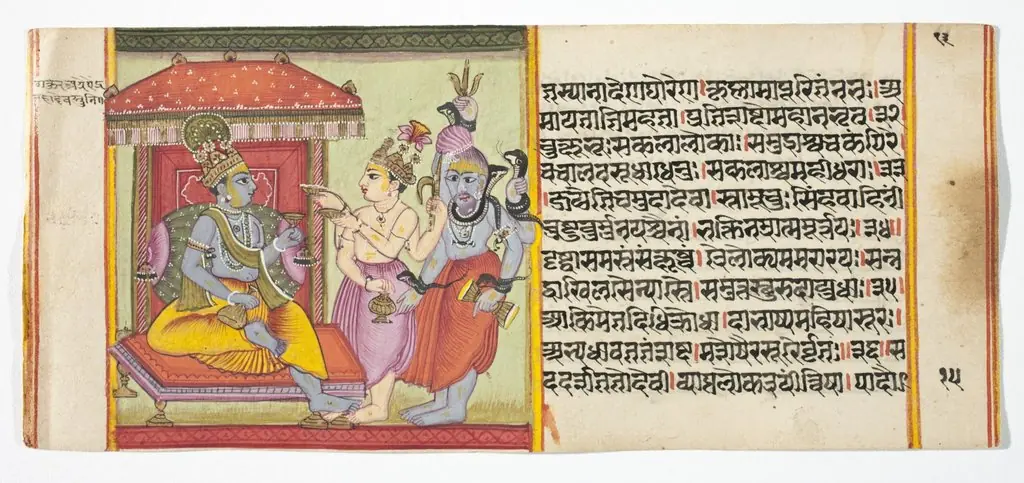
This painting illustrates a narrative scene from Hindu mythology, likely drawn from the legend of Durga.
This painting illustrates a narrative scene from Hindu mythology, likely drawn from the legend of Durga. Three figures are arranged in a compact composition, each distinguished by colorful, symbolic attire. The central figure’s purple robe with floral motifs, the right figure’s yellow and white garments, and the left figure’s red loincloth and tiger mount suggest a divine or mythological context. The background includes architectural and natural elements common in Indian miniature traditions.
Subject & Meaning
The central figure may represent Durga, the warrior goddess, while the bearded man seated on the tiger is likely Mahishasura, the buffalo demon she defeats. The figure to the right could be a devotee or attendant. The tiger, a symbol of power and ferocity, reinforces the theme of divine triumph over chaos. The presence of text implies the scene is part of a larger illustrated manuscript, possibly a devotional or epic narrative.
Technique & Style
The painting employs flat planes of color and fine linear detail, typical of Indian miniature painting. Attire is rendered with intricate patterns, and the background’s muted green wall and red awning create a stylized, non-naturalistic space. Figures are arranged hierarchically, with emphasis on symbolic elements rather than perspective. The brushwork is precise, suggesting skilled craftsmanship within a regional workshop tradition.
History & Provenance
The painting likely originates from a 17th- to 19th-century Indian manuscript, possibly from the Pahari or Rajasthani schools, known for devotional themes. Its survival as a single folio indicates it was once part of a bound codex. The unclear text may be in Sanskrit or a regional language, and its partial preservation suggests the manuscript was fragmented over time, perhaps through colonial-era dispersal.
Context
Depictions of Durga slaying Mahishasura were common in Hindu art, especially during festivals like Navaratri. This image reflects a devotional culture where visual narratives served both religious instruction and ritual contemplation. The inclusion of a seated figure on the tiger aligns with iconographic conventions where the demon’s defeat is shown post-victory, emphasizing cosmic order restored through divine intervention.
Legacy
As a fragment of a larger manuscript, this painting contributes to the understanding of regional artistic practices in pre-colonial India. Its preservation offers insight into how mythological stories were visually encoded for audiences familiar with symbolic language. Though isolated, it remains a tangible link to a tradition of illustrated sacred texts that shaped religious expression across South Asia.
Artist & collection

 Domestic Scene
 Giacomo and Cardinal Marco, investing Andrea, Abbot of San Zeno, with his Benefice
 The Nymph of Fontainebleau
 Portrait of a Woman
 Madonna and Child with Saints in the Enclosed Garden
 Venus and Minerva
 Family Group of Four on Sofa
 Wall painting from Room H of the Villa of P. Fannius Synistor at Boscoreale