Artwork
A gentleman
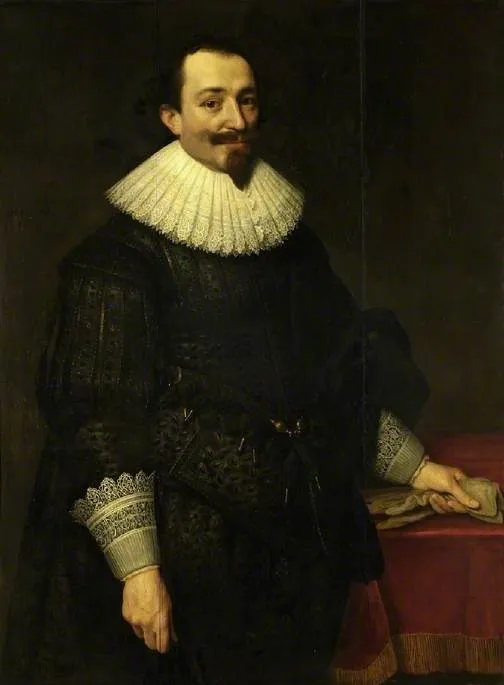
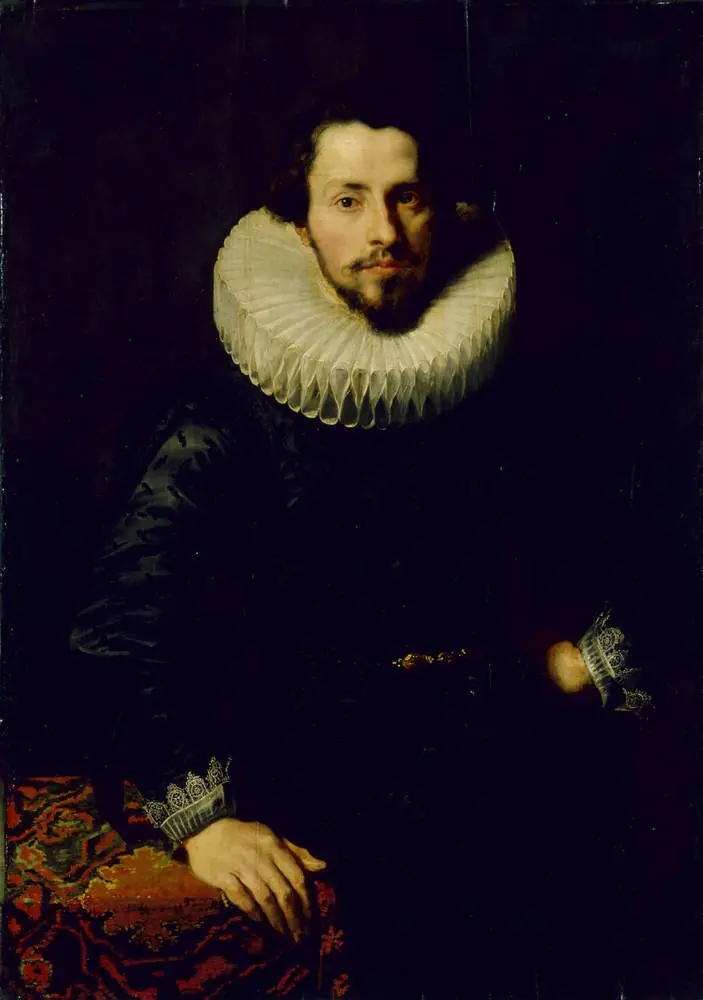
A gentleman is an oil painting by the Dutch Golden Age artist Unknown. It dates from 1629 and is held in the collection of the Fitzwilliam Museum. The work is an oil painting portraying a solitary male figure.
About this work
Overview
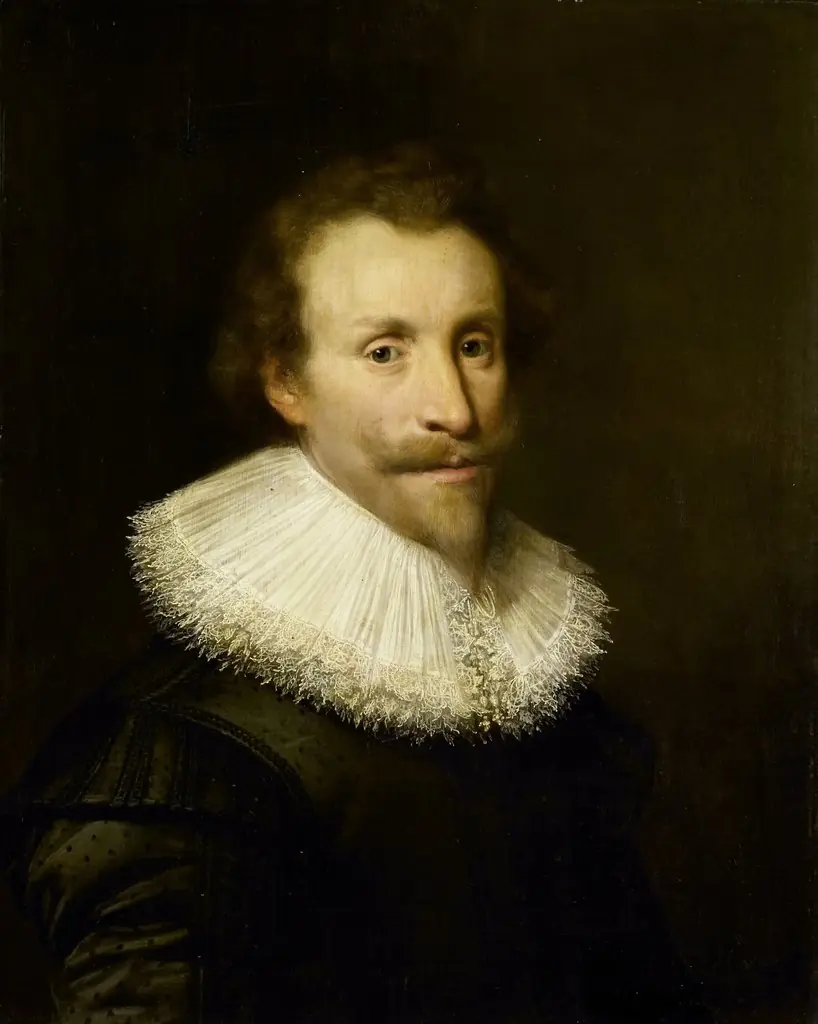
The work is an oil painting portraying a solitary male figure. He is clothed in a dark ensemble highlighted by a white ruffled collar and cuffs, a belt at his waist, and a flowing cloak across his shoulders. The composition places him before a deep, shadowy backdrop, with a hint of red furniture to his right, and his eyes turn slightly toward his left.
Subject & Meaning
The sitter appears as a gentleman of some standing, suggested by his formal attire and the careful rendering of his garments. The somber palette and restrained pose convey a sense of dignity and introspection, while the subtle red element on the adjacent table or chair introduces a muted contrast that may allude to wealth or status.
Technique & Style
Executed in oil on canvas, the painting demonstrates meticulous attention to texture, especially in the fabric’s folds and the sheen of the ruffled collar. The artist employs chiaroscuro to model the figure against the dark background, allowing the white of the collar and the red of the nearby object to emerge as focal points.
History & Provenance
No specific details about the work’s creation date, artist, or ownership history are provided. Consequently, its provenance remains undocumented in the available information.
Context
The portrait aligns with a tradition of 17th‑century European gentlemanly depictions, where formal dress and controlled lighting were used to convey social rank and personal gravitas. The inclusion of a red element reflects a common practice of using a limited color accent to break the monotony of a predominantly dark scheme.
Artist & collection

 Domestic Scene
 Giacomo and Cardinal Marco, investing Andrea, Abbot of San Zeno, with his Benefice
 The Nymph of Fontainebleau
 Portrait of a Woman
 Madonna and Child with Saints in the Enclosed Garden
 Venus and Minerva
 Family Group of Four on Sofa
 Wall painting from Room H of the Villa of P. Fannius Synistor at Boscoreale
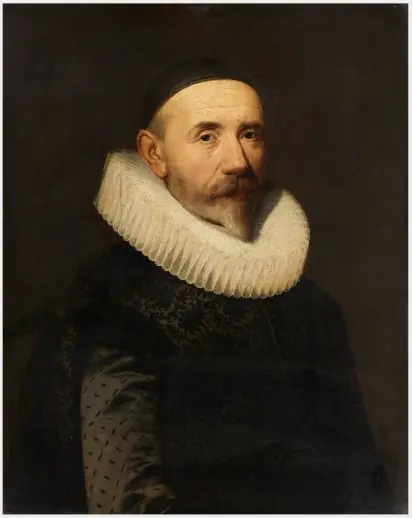 Portrait of a Gentleman
 Portrait of Alexandre della Faille (1589-1653)
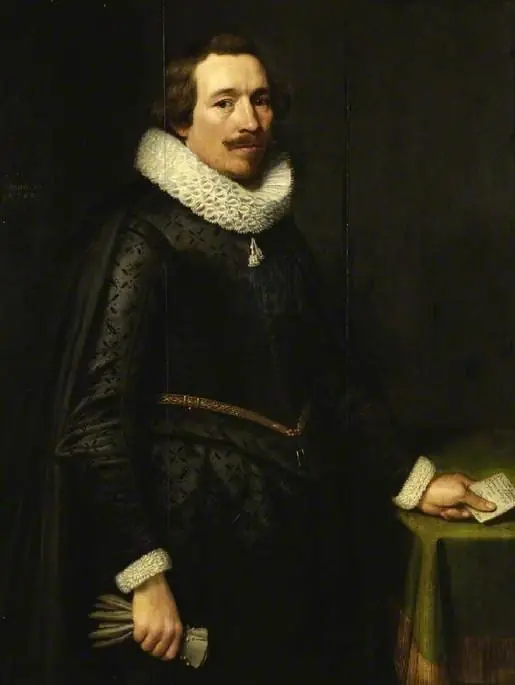 Heyndrik Damensz. van der Graft
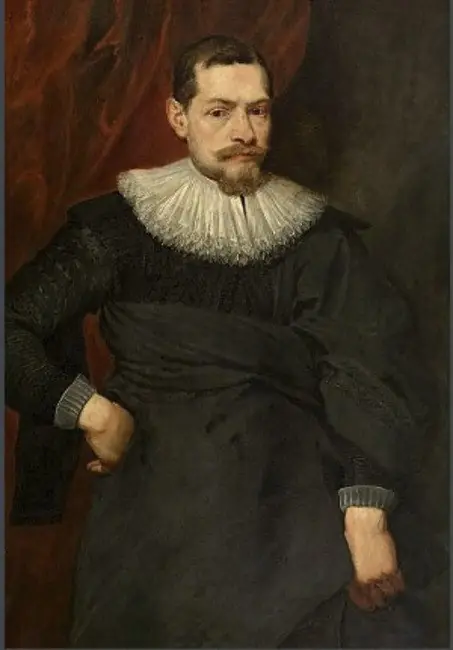 Portrait of man with an unstarched ruff
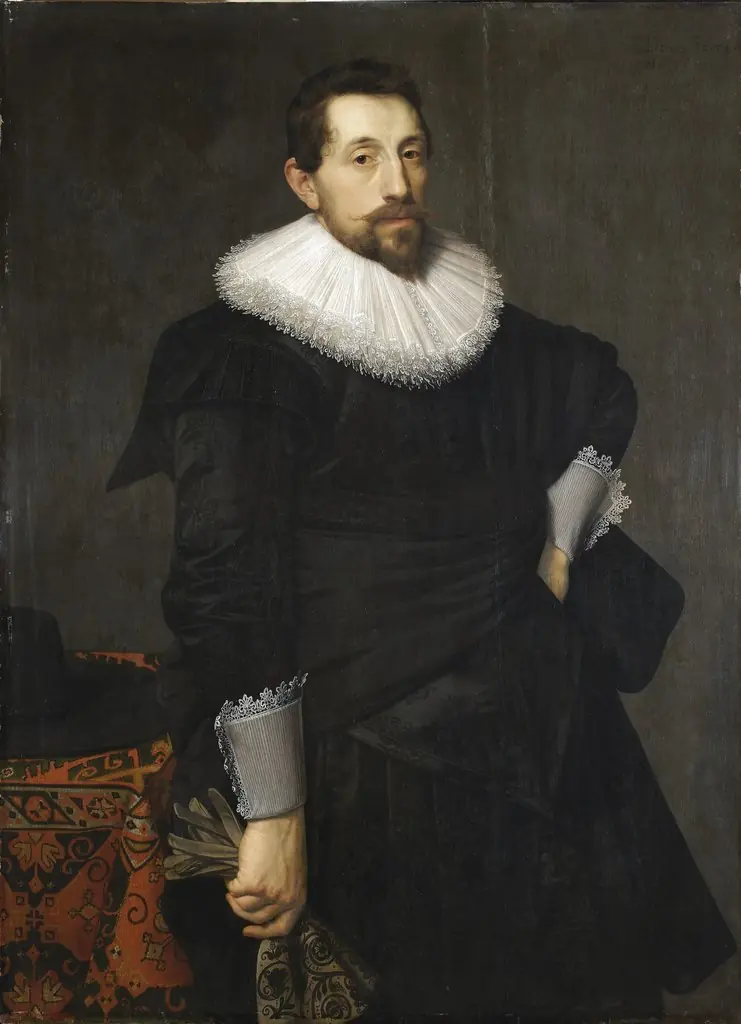 Portrait of a Man with Gloves
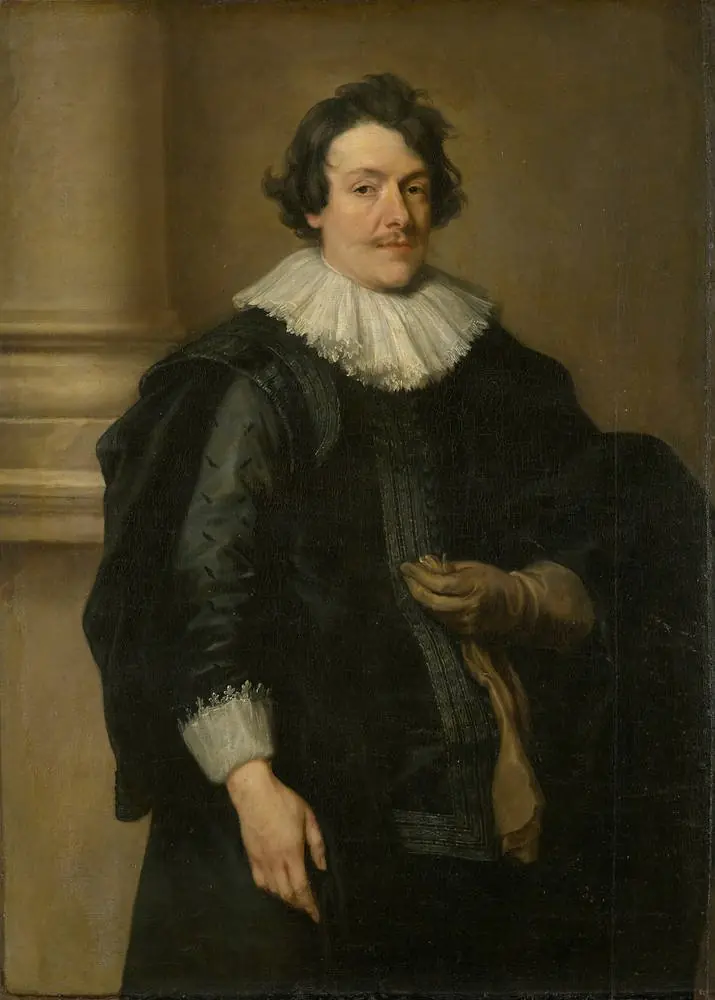 Portrait of a Man in Black before a Column
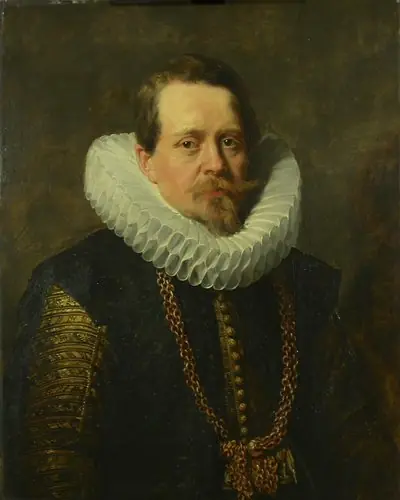 Portrait of Jean Charles de Cordes
 Self-Portrait
 Portrait of Jacob Cats (1577-1660)
 Portrait of a Man at a Table
 Portrait of a Man
 Portrait of a man