Artwork
Jacob en el pozo
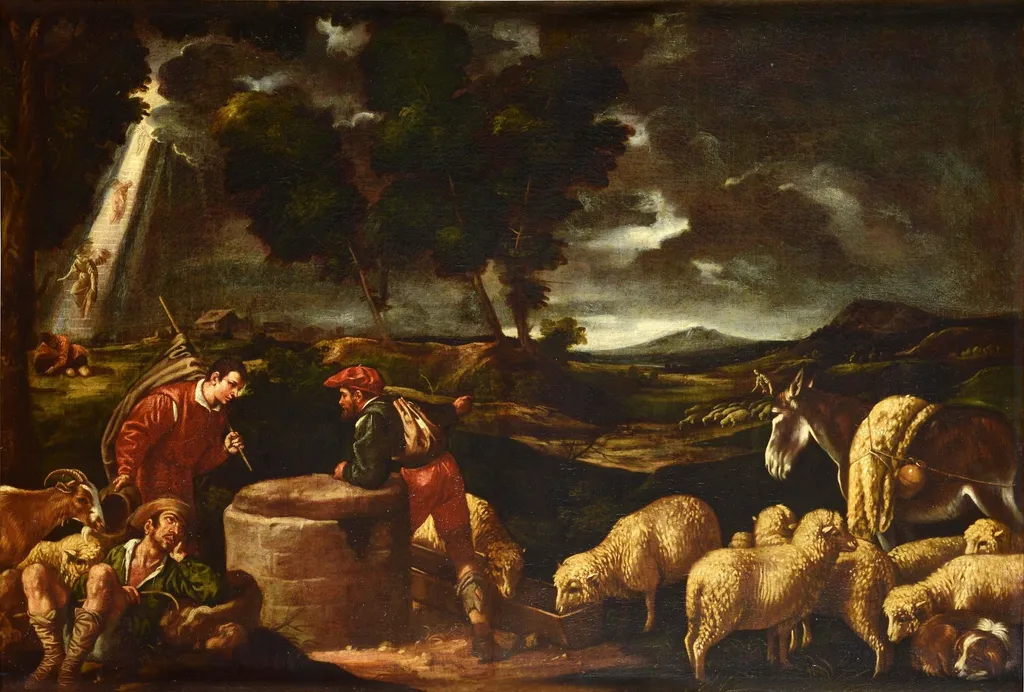
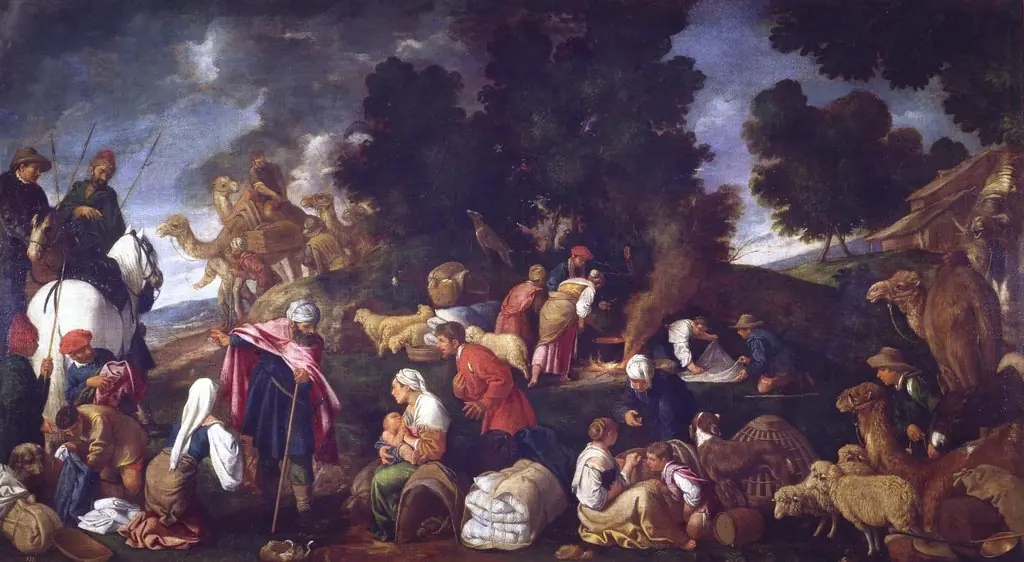
Jacob en el pozo is an oil painting by the Early Baroque Italian artist Unknown. It dates from 1601 and is held in the collection of the Museo del Prado. This oil painting portrays a quiet rural scene centered on a well, where figures and livestock gather in calm interaction.
About this work
Overview
This oil painting portrays a quiet rural scene centered on a well, where figures and livestock gather in calm interaction.
This oil painting portrays a quiet rural scene centered on a well, where figures and livestock gather in calm interaction. The composition emphasizes stillness, with soft natural light casting gentle shadows across the landscape. Earthy hues dominate the palette, reinforcing a sense of grounded, everyday life. The artist uses chiaroscuro to model forms subtly, enhancing spatial depth without dramatic contrast.
Subject & Meaning
The scene depicts a moment of communal rest near a water source, likely referencing biblical narratives of meeting at wells. A man in red holds a staff, suggesting vigilance or guidance, while another seated in green appears at ease among sheep. The absence of tension or action implies a pause in labor, evoking themes of sustenance, patience, and quiet harmony between people and animals.
Technique & Style
The artist employs a restrained use of chiaroscuro to model figures and terrain, with light entering from the left to define volume without harshness. Brushwork is smooth and deliberate, favoring soft transitions between tones. The landscape recedes through muted gradients of green and brown, while the figures are rendered with simple, solid forms that anchor the composition in realism without idealization.
History & Provenance
The painting’s origins are not documented in public records, and no known exhibition history or collector lineage is established. It appears to be a 19th-century work, likely produced in a regional studio or by an artist working outside major urban centers. Its preservation suggests it remained in private hands, possibly within the region where it was painted.
Context
Created during a period when rural life was increasingly idealized in European art, this work reflects a broader cultural interest in pastoral simplicity. While not tied to a specific movement, its quiet realism aligns with regional traditions that valued everyday scenes over grand narratives. The inclusion of livestock and a well points to agricultural rhythms central to rural economies of the time.
Legacy
The painting has not entered major institutional collections or scholarly discourse, and its influence on later artists remains unrecorded. It endures as a modest example of regional realism, preserving a visual record of rural routines and quiet human-animal coexistence. Its value lies in its unembellished depiction of ordinary moments, free from romantic embellishment.
Artist & collection

 Domestic Scene
 Giacomo and Cardinal Marco, investing Andrea, Abbot of San Zeno, with his Benefice
 The Nymph of Fontainebleau
 Portrait of a Woman
 Madonna and Child with Saints in the Enclosed Garden
 Venus and Minerva
 Family Group of Four on Sofa
 Wall painting from Room H of the Villa of P. Fannius Synistor at Boscoreale
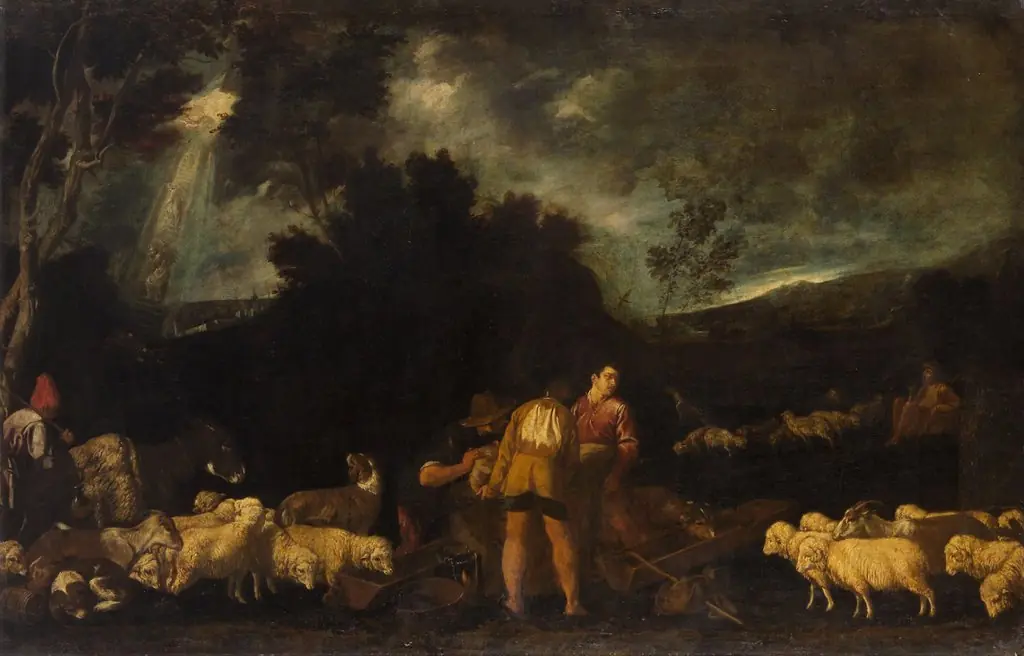 Jacob at the Well (In the background: Jakob's dream of the heavenly ladder)
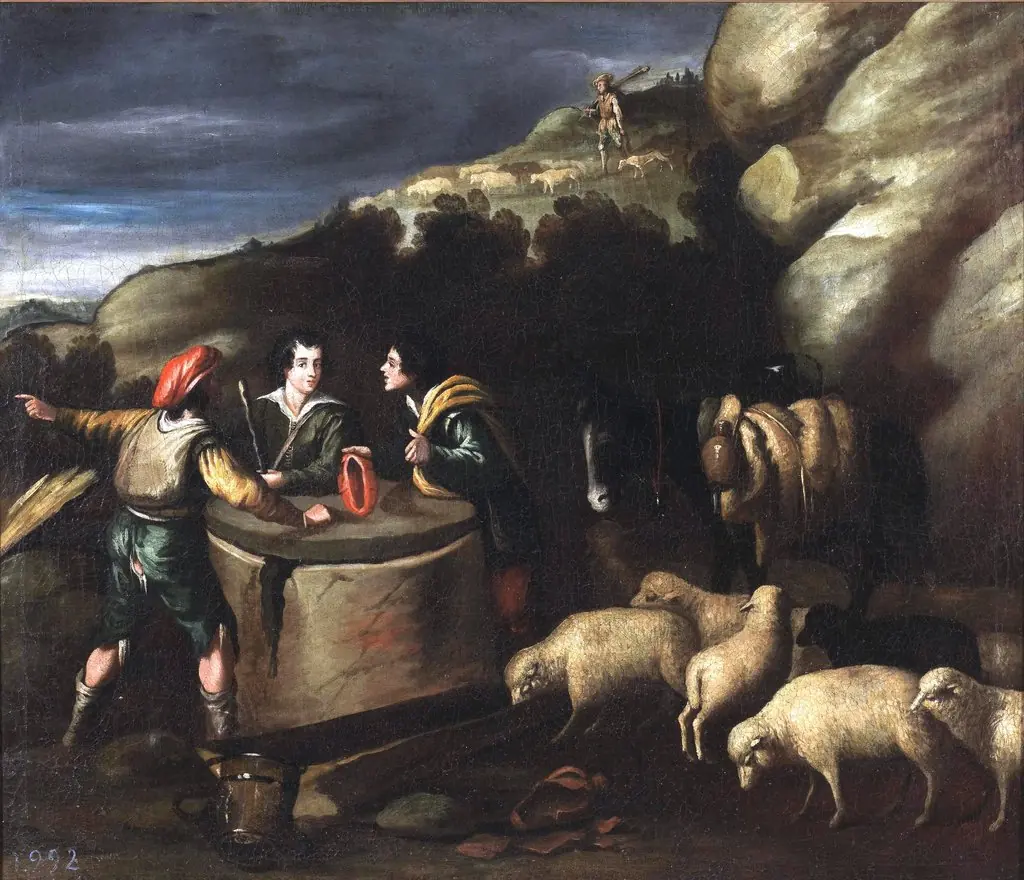 Jacob en el pozo
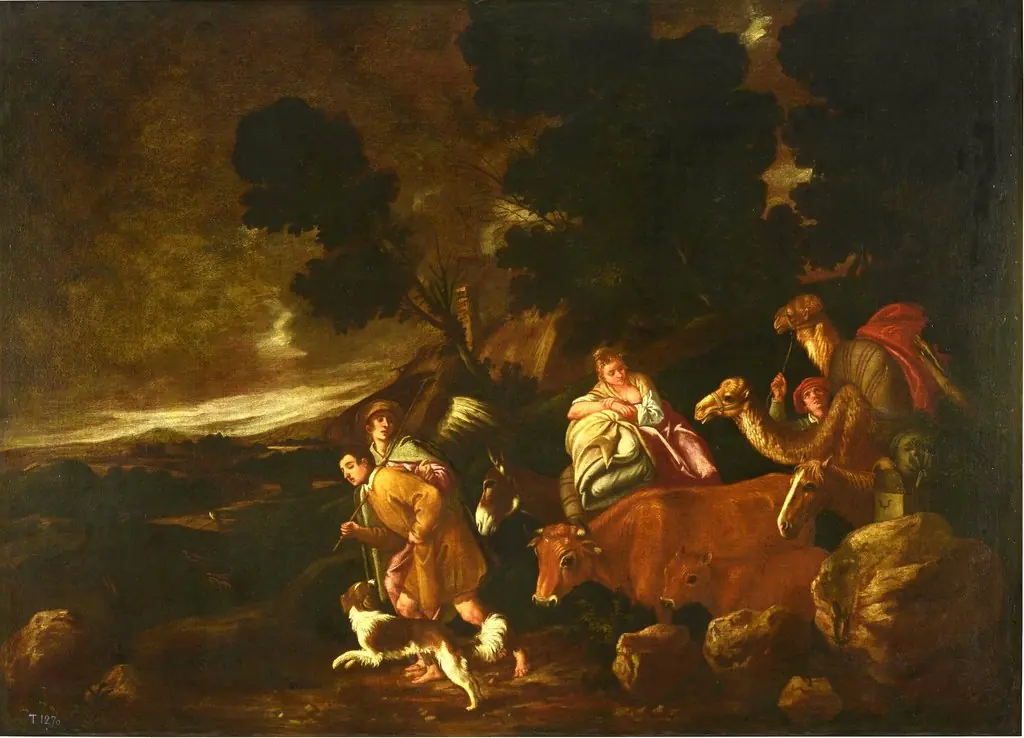 Viaje de Tobías y Sara
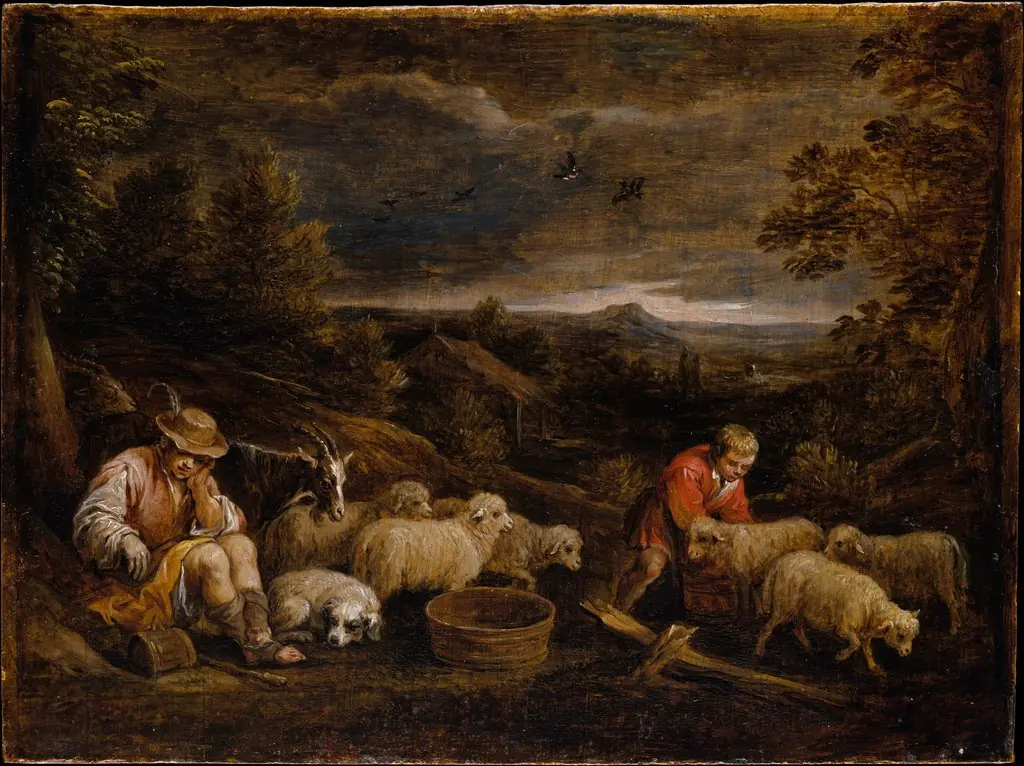 Shepherds and Sheep
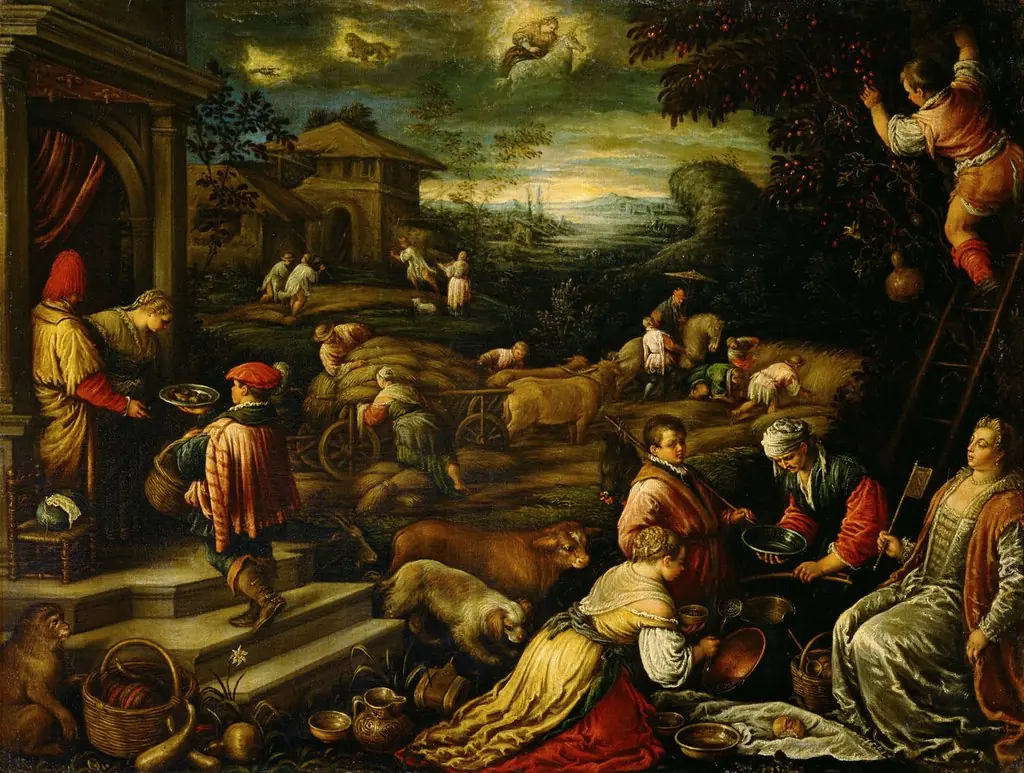 Summer (June, July, August)
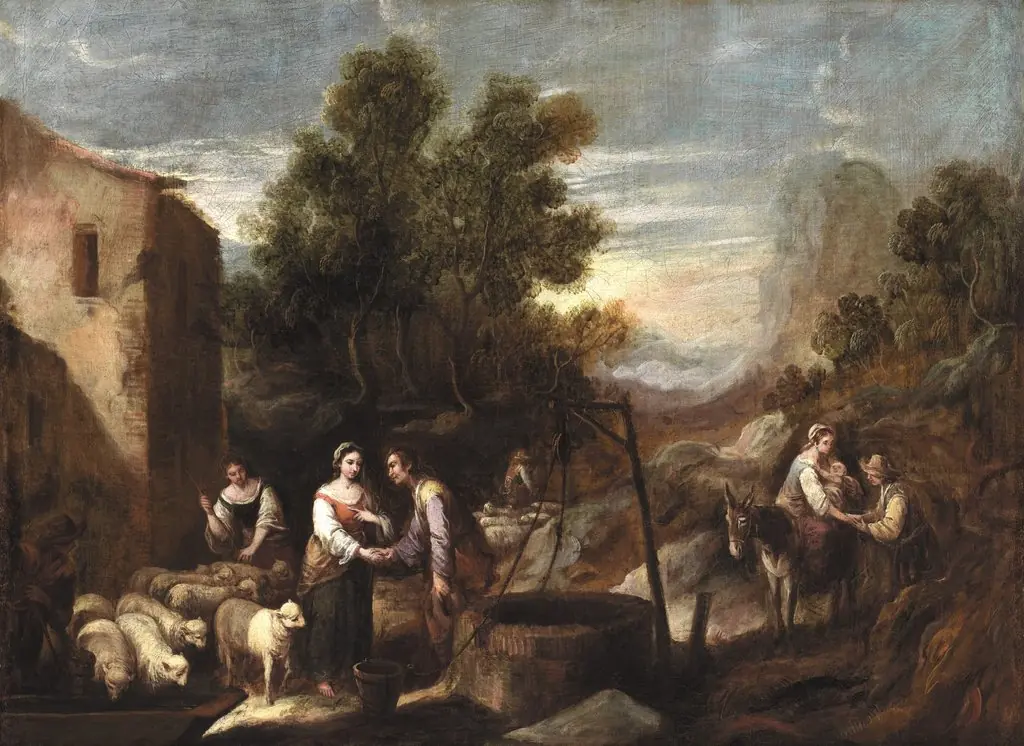 Jacob and Rachel
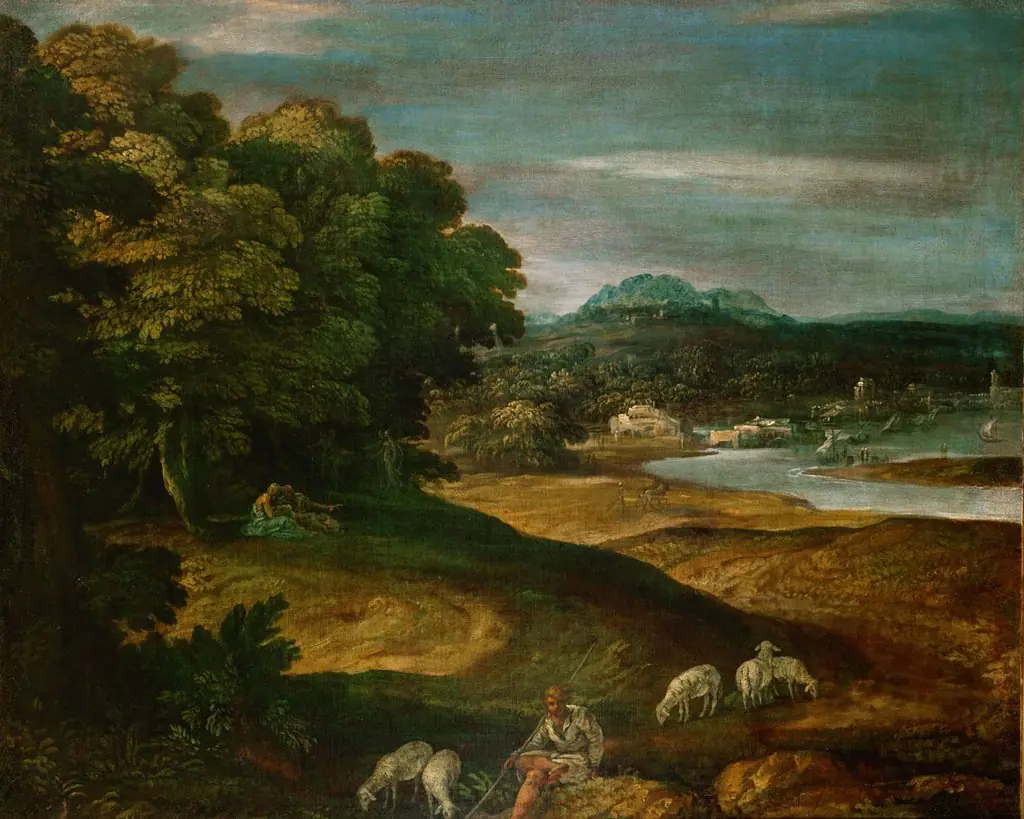 Landschaft mit Hirten und Schafen
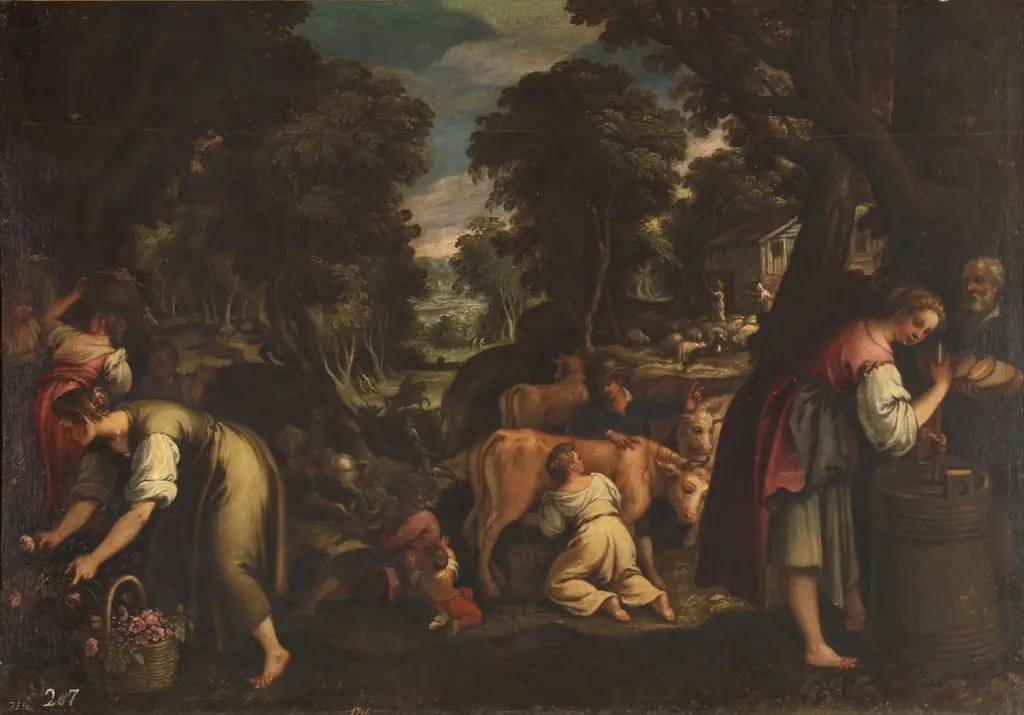 Rural labours or Spring
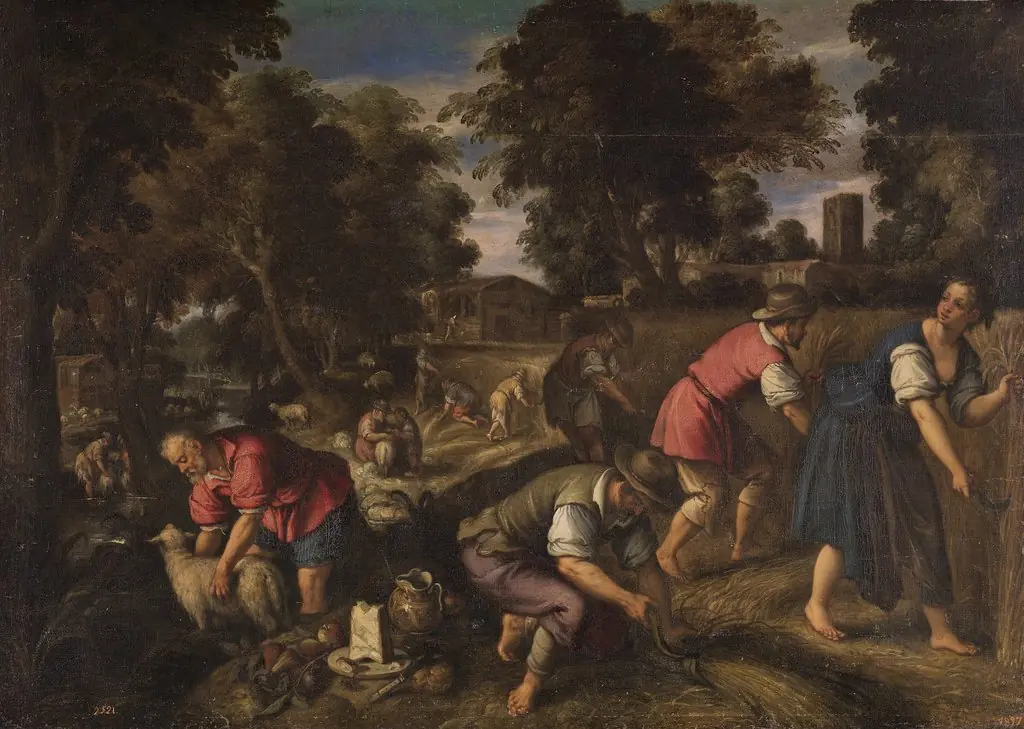 Mowing and Shearing, or The Summer
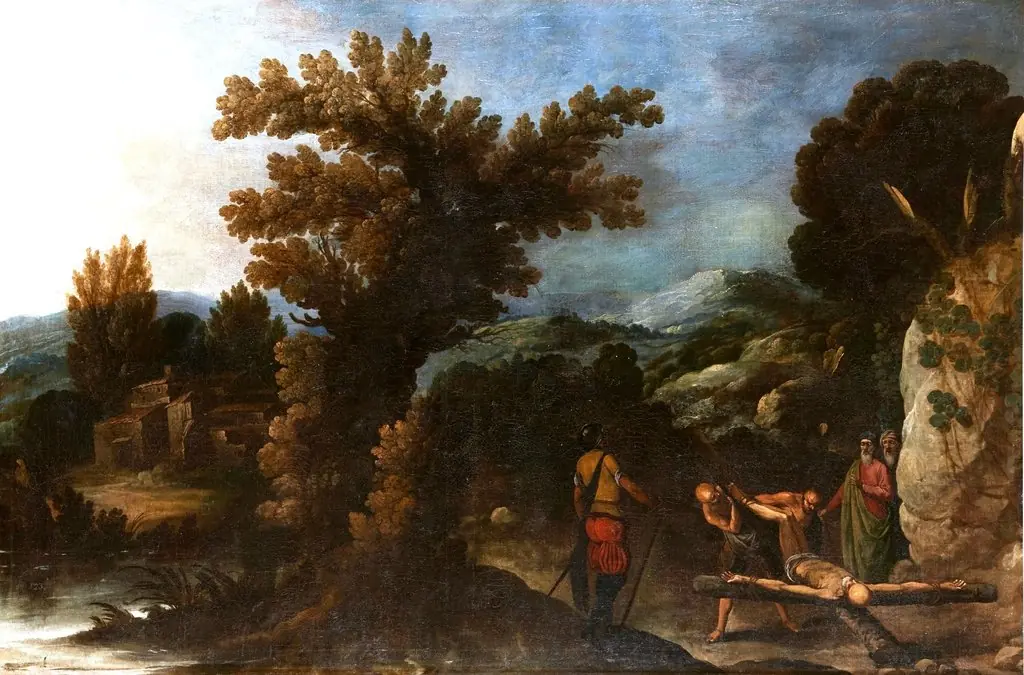 Paisaje con la crucifixión de San Pedro
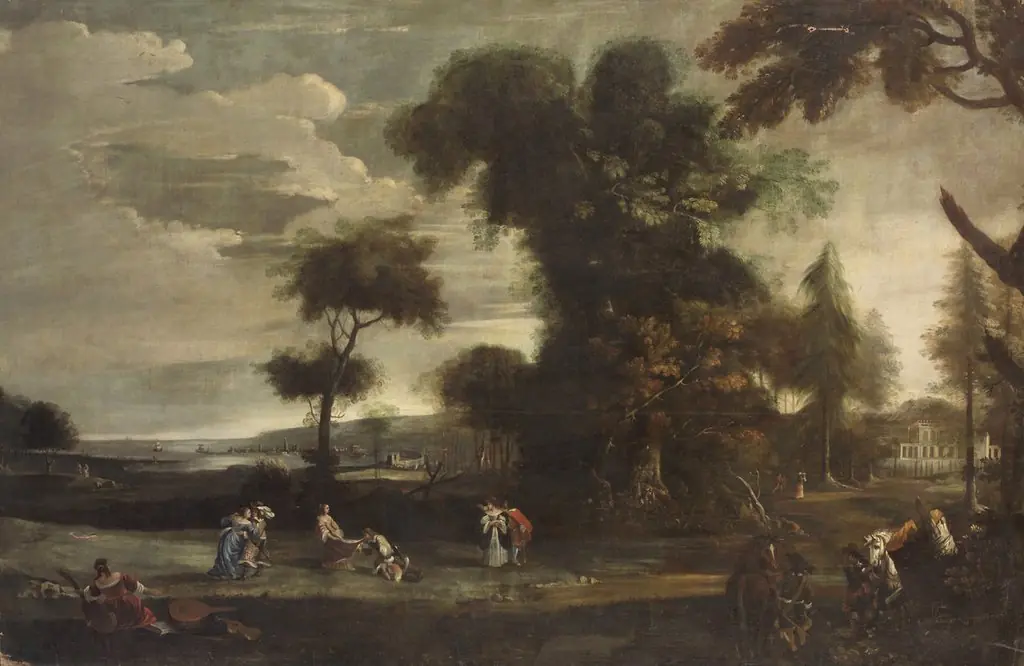 Landscape with love couple
 Labán busca los ídolos