Artwork
Portrait of Susanne le Royer de Brisolliéres
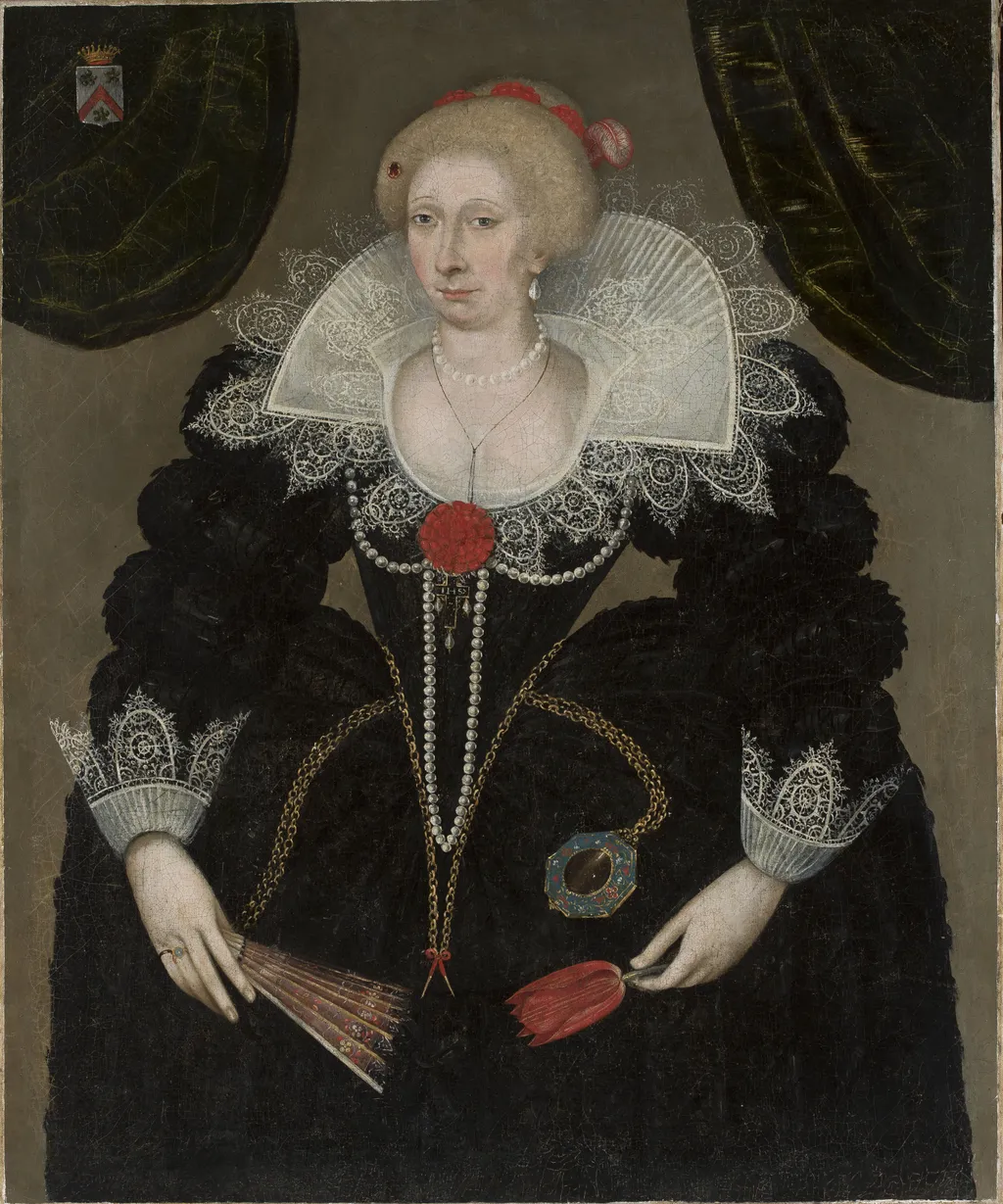
Portrait of Susanne le Royer de Brisolliéres is an oil painting by the Early Baroque Italian artist Unknown. It dates from 1598 and is held in the collection of the National Museum in Warsaw.
About this work
Overview
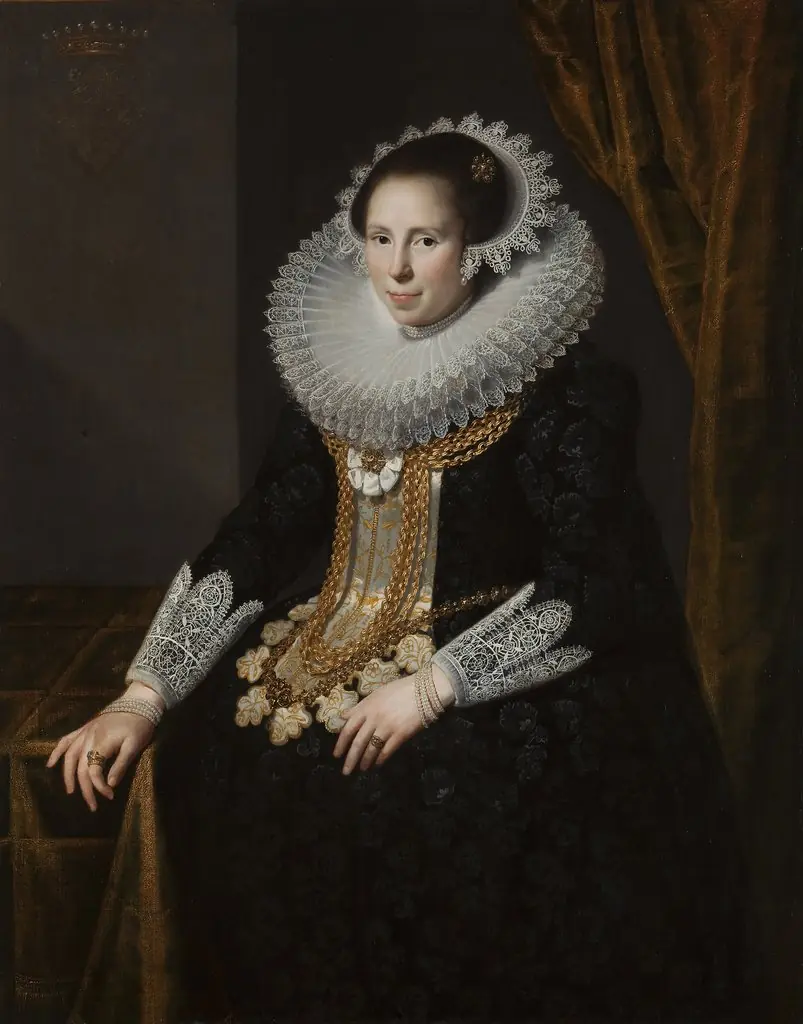
The work is an oil painting titled *Portrait of Susanne le Royer de Brisolliéres*. It presents a seated woman in a dark interior, her figure illuminated against a muted backdrop that includes a draped curtain. The composition focuses on her upper body, emphasizing her attire and accessories, while her direct gaze engages the viewer.
Subject & Meaning
The sitter is identified as Susanne le Royer de Brisolliéres, portrayed in a black dress trimmed with white lace. She holds a fan in her right hand, wears a pearl necklace, and a red flower is placed on her chest, elements that together signal her social standing and personal refinement. Her upright posture and steady eye suggest confidence and presence.
Technique & Style
Executed in oil on canvas, the painting employs a restrained palette of deep shadows and limited highlights to model the figure. Fine brushwork renders the lace, pearls, and fan with delicate detail, while broader strokes suggest the darkened background and curtain. The contrast between the luminous skin tones and the surrounding gloom creates a subtle chiaroscuro effect.
History & Provenance
The portrait is documented as a seventeenth‑century French work, though the precise date and artist remain uncertain. It entered the collection of the Musée des Beaux‑Arts in the early twentieth century, acquired from a private estate that had retained the painting within the le Royer family for several generations.
Context
During the period in which the portrait was likely created, aristocratic women were often depicted in formal attire that highlighted their rank and virtue. The inclusion of a fan, pearls, and a floral ornament aligns with contemporary conventions of feminine elegance, while the dark interior reflects the period’s preference for intimate, restrained settings.
Artist & collection

 Domestic Scene
 Giacomo and Cardinal Marco, investing Andrea, Abbot of San Zeno, with his Benefice
 The Nymph of Fontainebleau
 Portrait of a Woman
 Madonna and Child with Saints in the Enclosed Garden
 Venus and Minerva
 Family Group of Four on Sofa
 Wall painting from Room H of the Villa of P. Fannius Synistor at Boscoreale
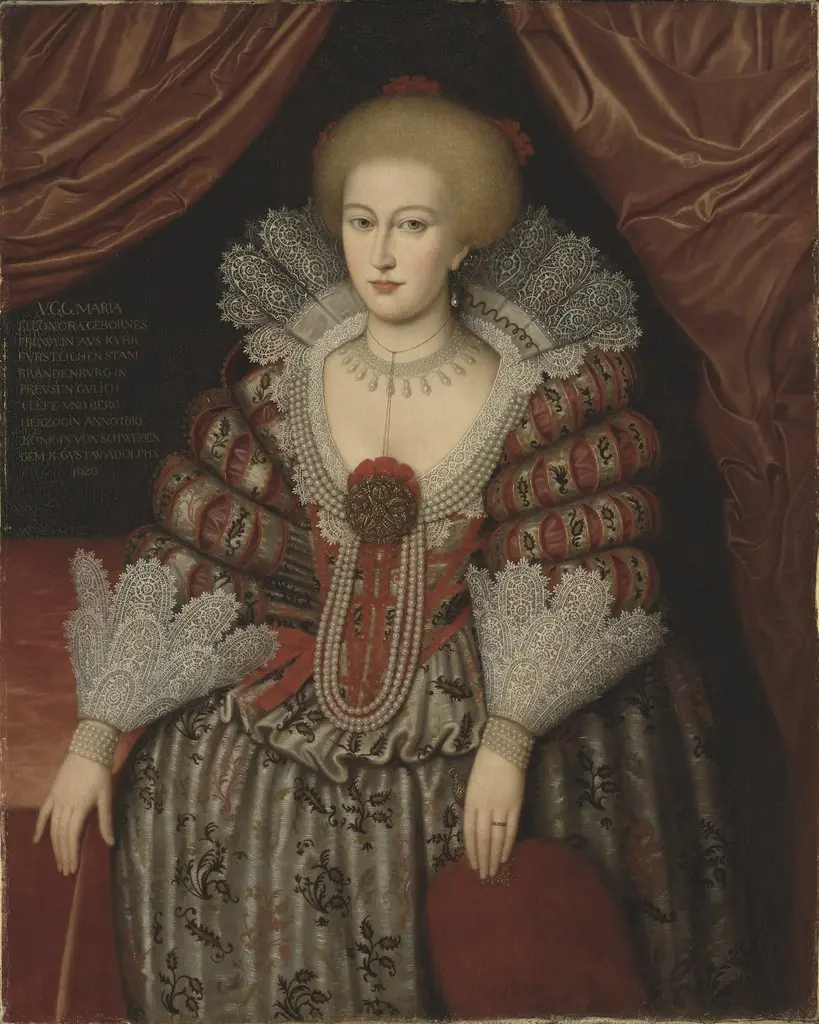 Maria Eleonora (1599-1655), Princess of Brandenburg, Queen of Sweden
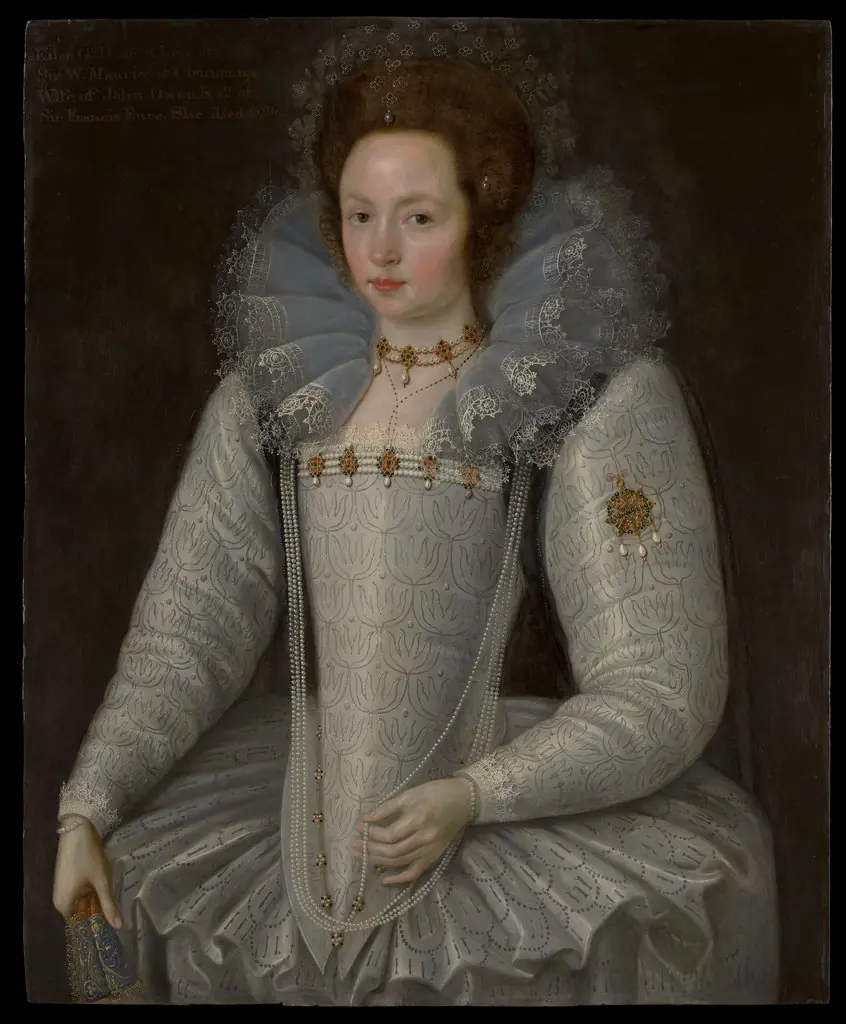 Ellen Maurice (1578–1626)
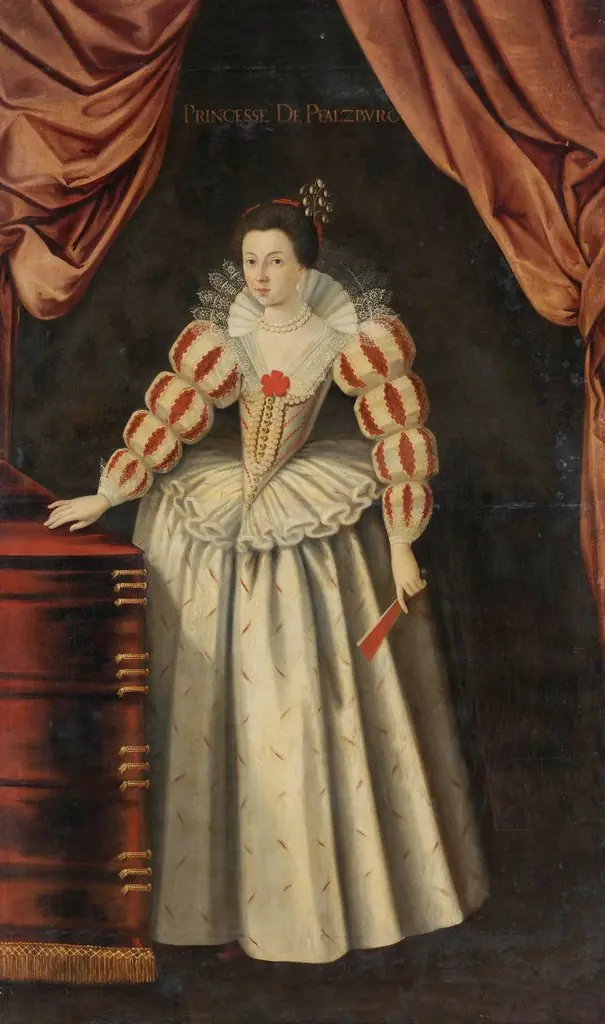 Henriette von Lothringen (1605-1660)
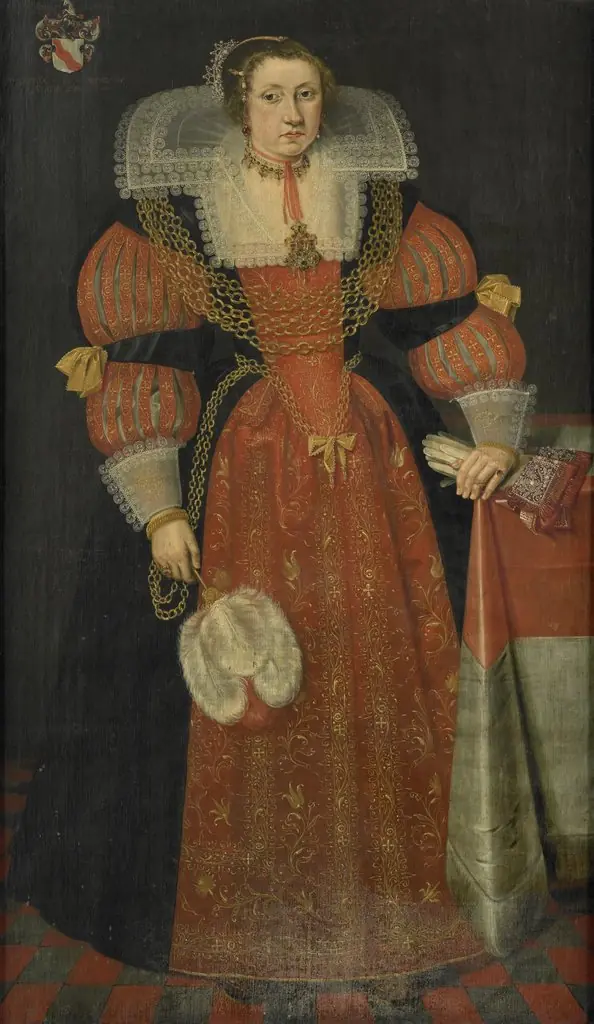 Portrait of Sophia de Vervou (c. 1613-71)
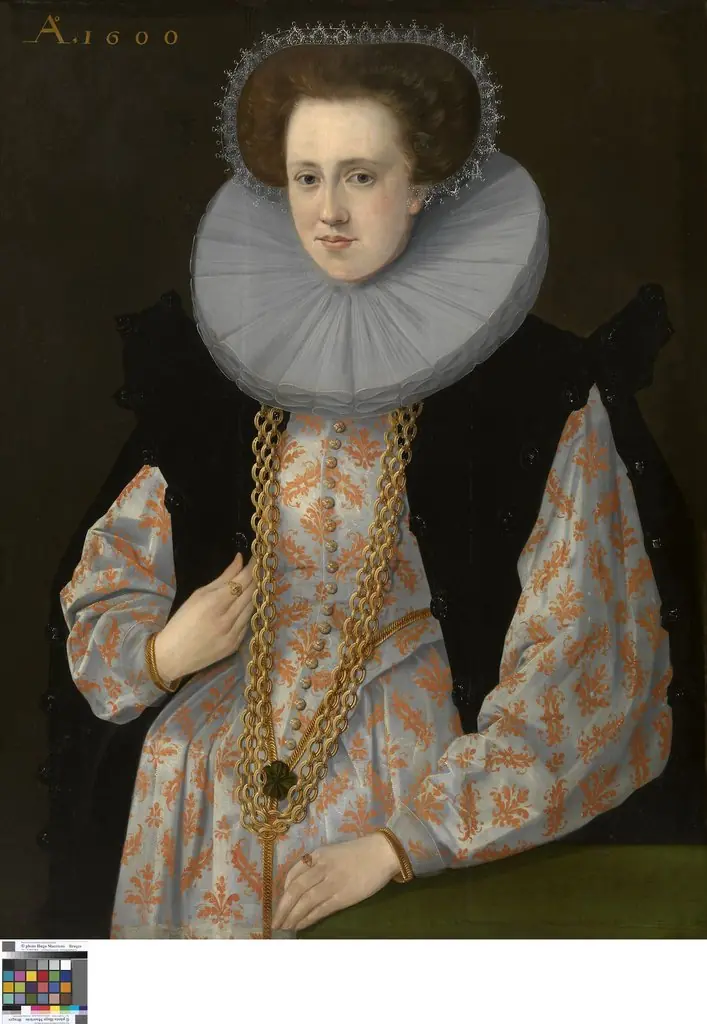 Portret van een vrouw
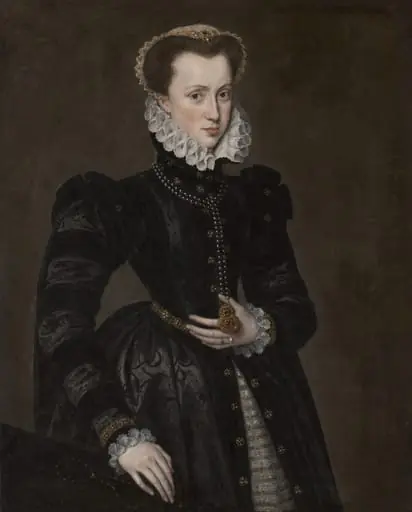 Portrait of a Court Lady
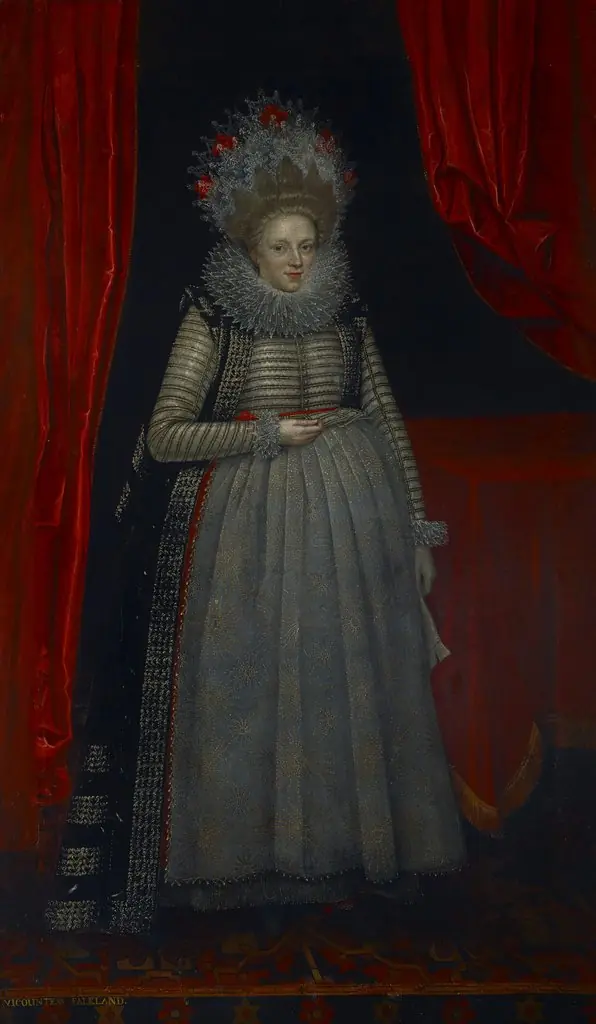 Elizabeth Cary, Viscountess Falkland (1585-1639)
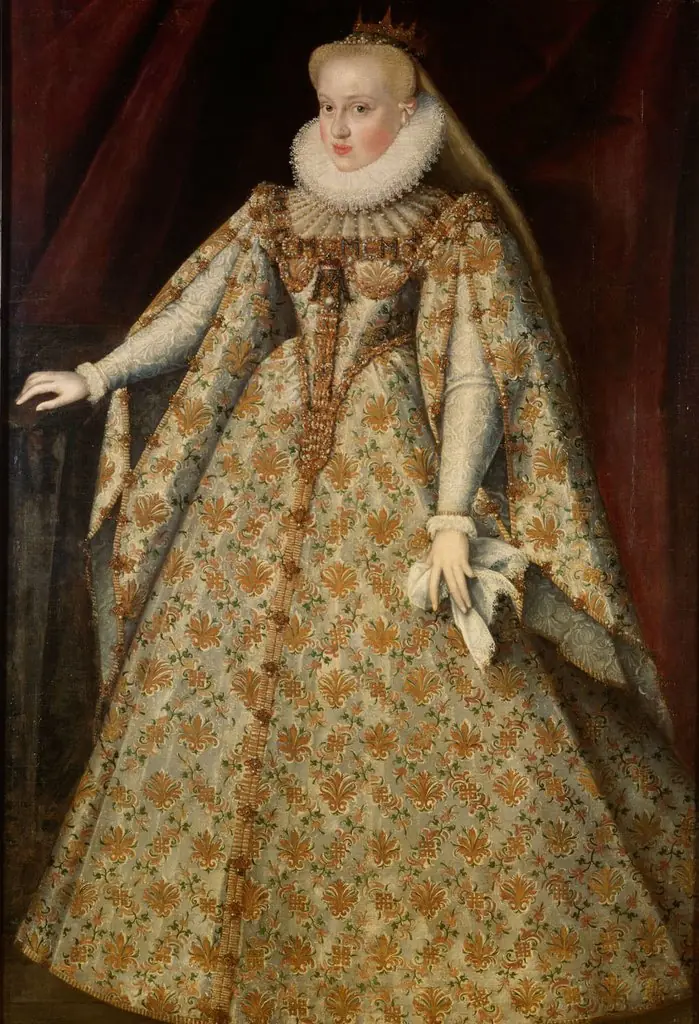 Portrait of Archduchess Maria Christina of Austria (1574–1621)
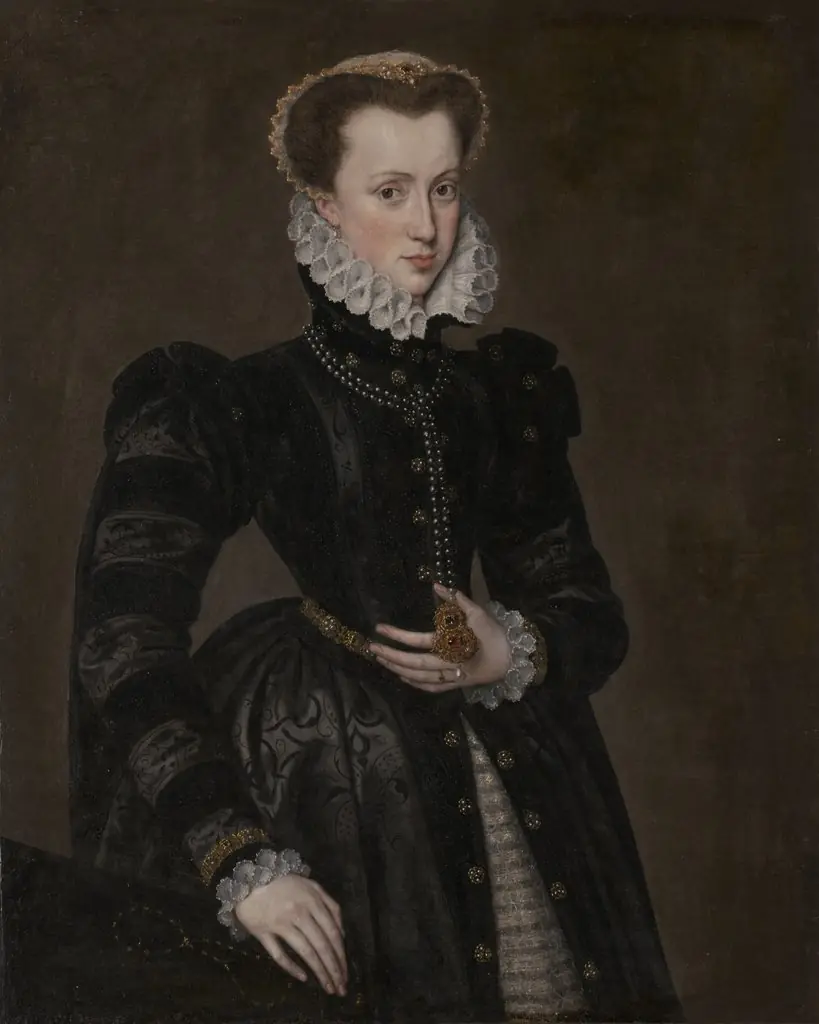 Portrait of a Court Lady
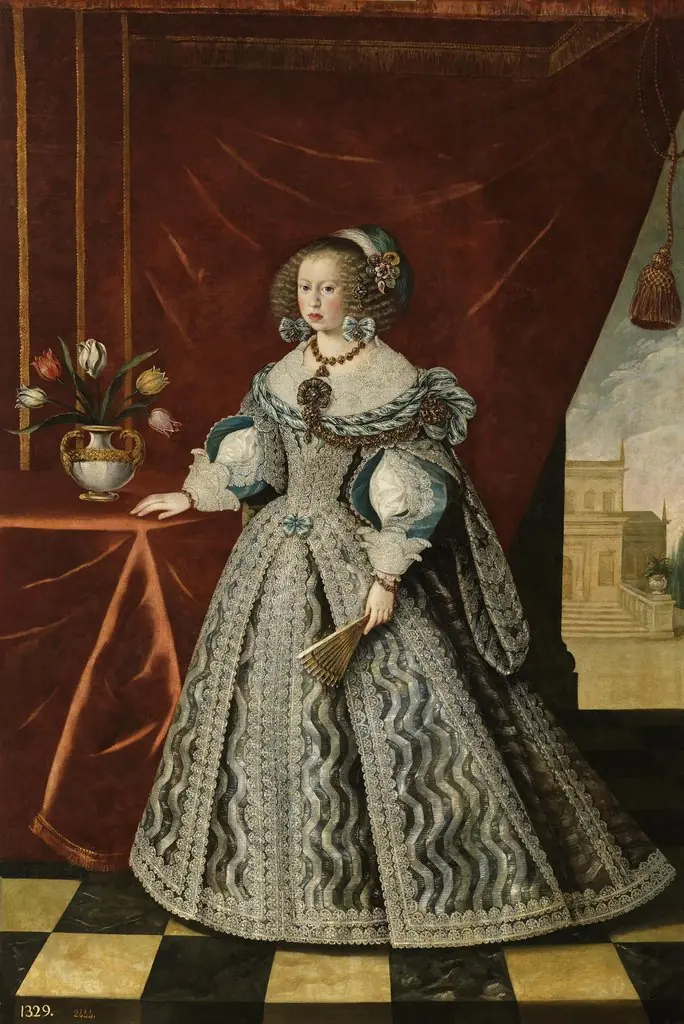 Mariana of Austria
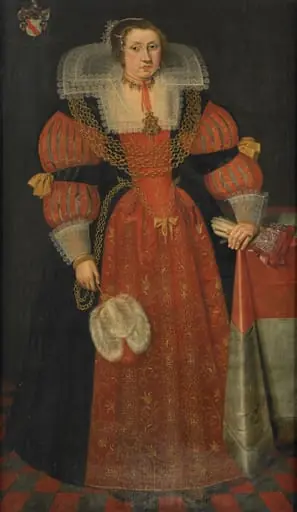 Untitled
 Portrait of Johanna Martens