Artwork
The Virgin Mary with Indigenous (Aymara) Donors
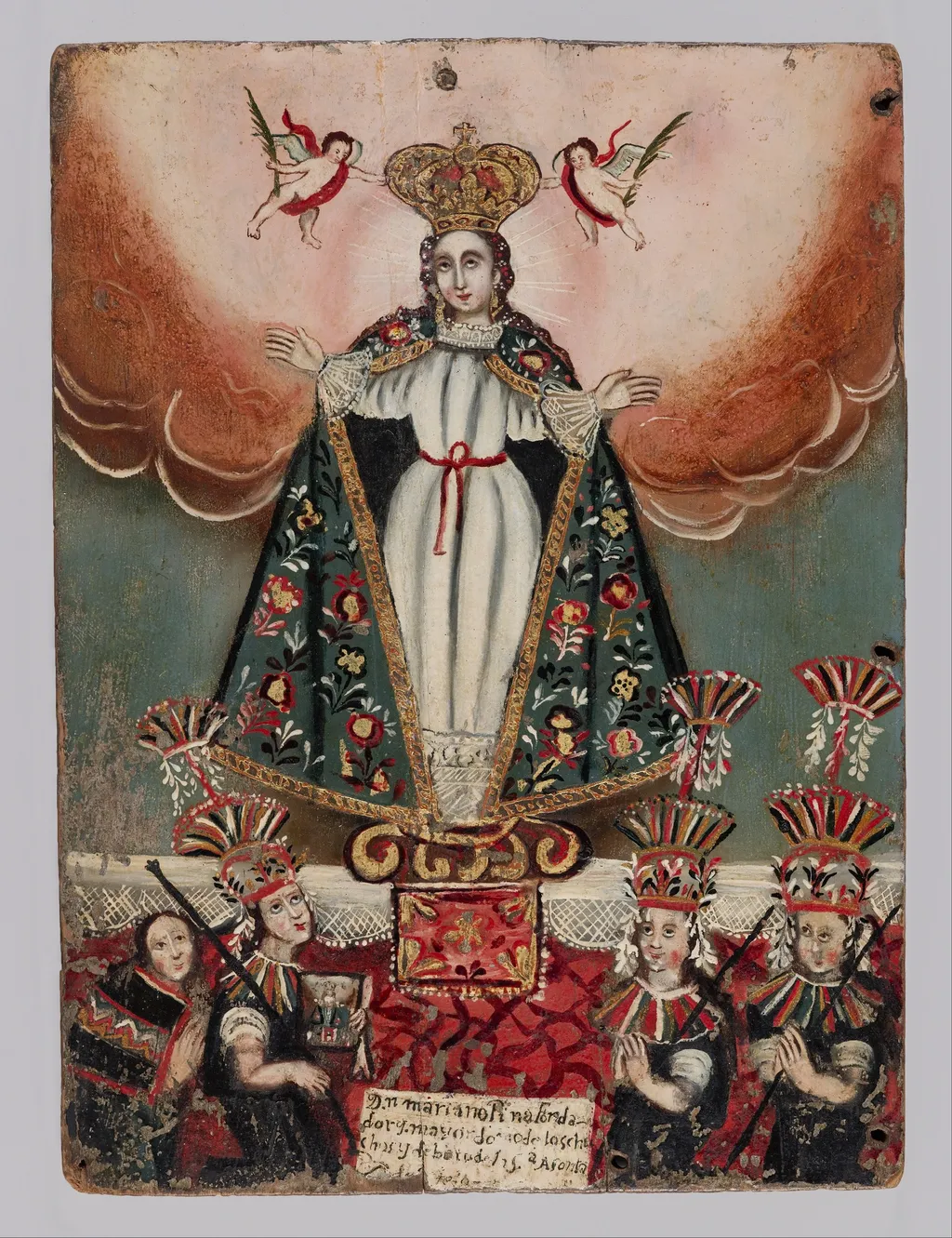
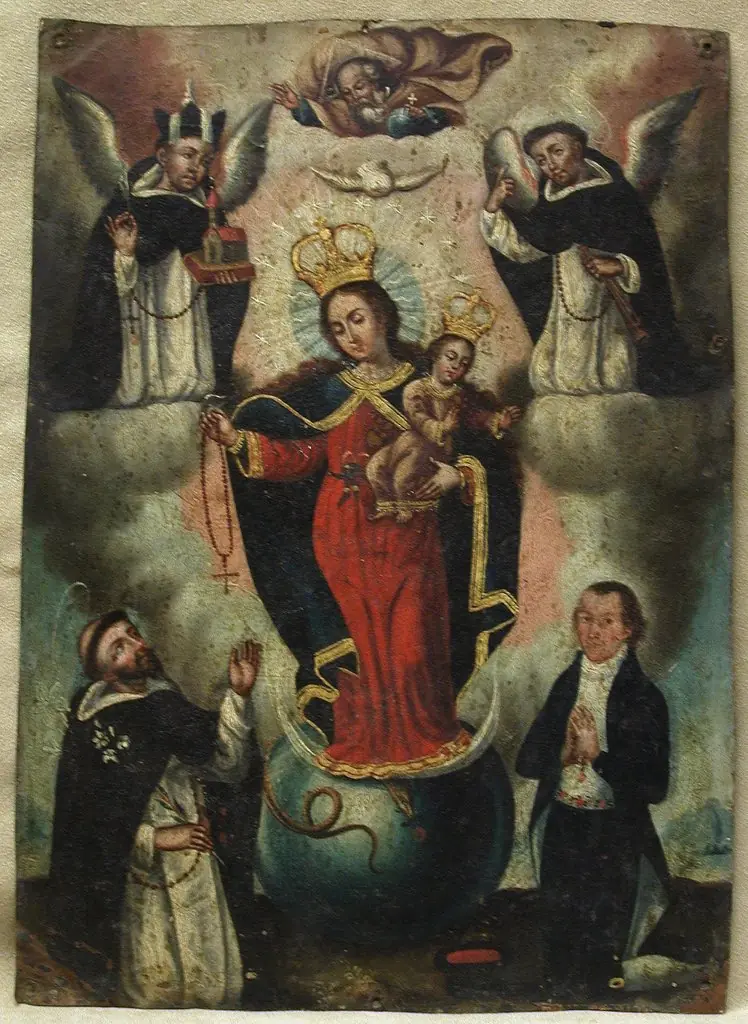
The Virgin Mary with Indigenous (Aymara) Donors is an unspecified painting by the Rococo painting artist Unknown. It dates from 1752 and is held in the collection of the Brooklyn Museum. This colonial-era painting depicts the Virgin Mary as an intercessor surrounded by Indigenous figures from the Andes.
About this work
Overview
The composition blends European Marian iconography with local visual traditions, reflecting the syncretic religious culture of 17th-century Spanish America.
This colonial-era painting depicts the Virgin Mary as an intercessor surrounded by Indigenous figures from the Andes. She is shown elevated on a cloud, holding the Christ Child and a celestial globe, while four kneeling donors offer reverence. The composition blends European Marian iconography with local visual traditions, reflecting the syncretic religious culture of 17th-century Spanish America.
Subject & Meaning
The Virgin Mary, crowned and celestial, symbolizes divine authority and protection. Her gesture with the globe suggests dominion over the world, while the Christ Child embodies salvation. The kneeling figures, dressed in Aymara attire with feathered headdresses, represent local patrons who commissioned the work, asserting their spiritual inclusion within a colonial religious framework.
Technique & Style
The painting employs vivid pigments and strong outlines typical of Andean colonial art, contrasting with the muted, indistinct background. Figures are rendered with flattened perspective and decorative detail, emphasizing pattern and symbolism over naturalism. The cherubs and celestial elements follow European models, while the donors’ clothing reflects regional textile traditions.
History & Provenance
Created in the late 1600s, likely in present-day Bolivia or Peru, the work was commissioned by Indigenous elites within the Spanish colonial system. Such paintings often served devotional purposes in local churches or private chapels. The donors’ inclusion signals their social status and desire for spiritual legitimacy within a hierarchical colonial society.
Context
During the colonial period, Catholic imagery was adapted to incorporate Indigenous identities as a means of conversion and control. This painting exemplifies how native communities negotiated their place within the Church by commissioning art that honored both Christian doctrine and their own cultural visibility, blending aesthetics and belief systems.
Legacy
The painting remains a key example of Andean colonial art, illustrating the complex interplay between imposed religious symbols and Indigenous agency. It informs contemporary scholarship on cultural hybridity and continues to be studied for its representation of native identity within colonial visual culture.
Artist & collection

 Domestic Scene
 Giacomo and Cardinal Marco, investing Andrea, Abbot of San Zeno, with his Benefice
 The Nymph of Fontainebleau
 Portrait of a Woman
 Madonna and Child with Saints in the Enclosed Garden
 Venus and Minerva
 Family Group of Four on Sofa
 Wall painting from Room H of the Villa of P. Fannius Synistor at Boscoreale
 Virgin of Carmel Saving Souls in Purgatory
 Virgin of Bethlehem
 Madonna with Christ Child, St. Dominic, St. Francis, and Indian Worshippers
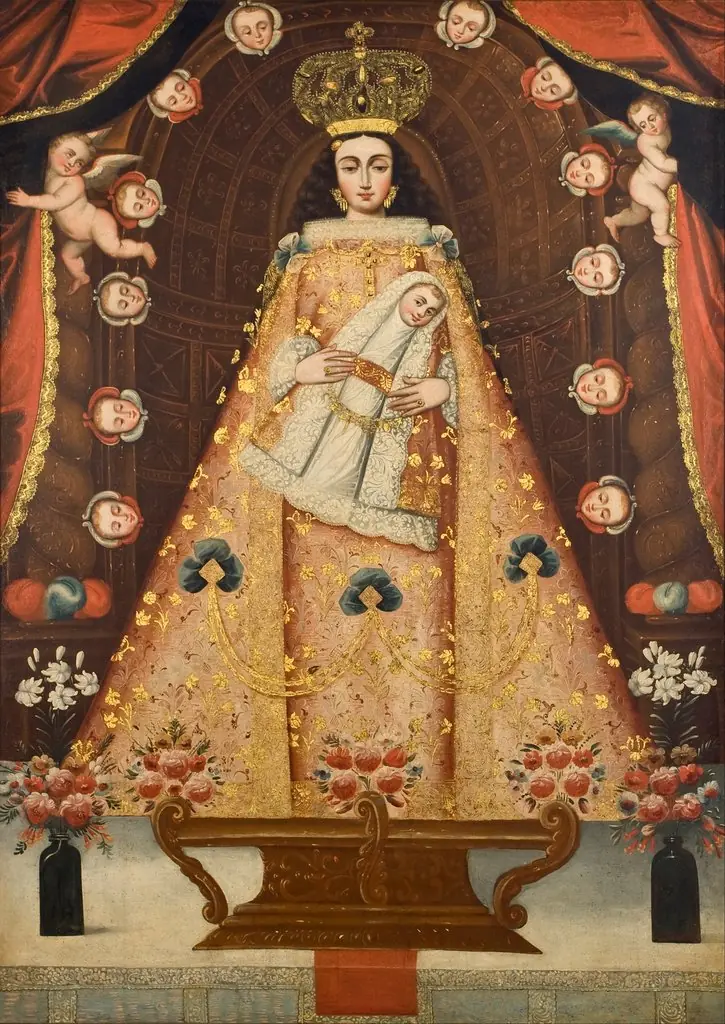 Virgin of Bethlehem
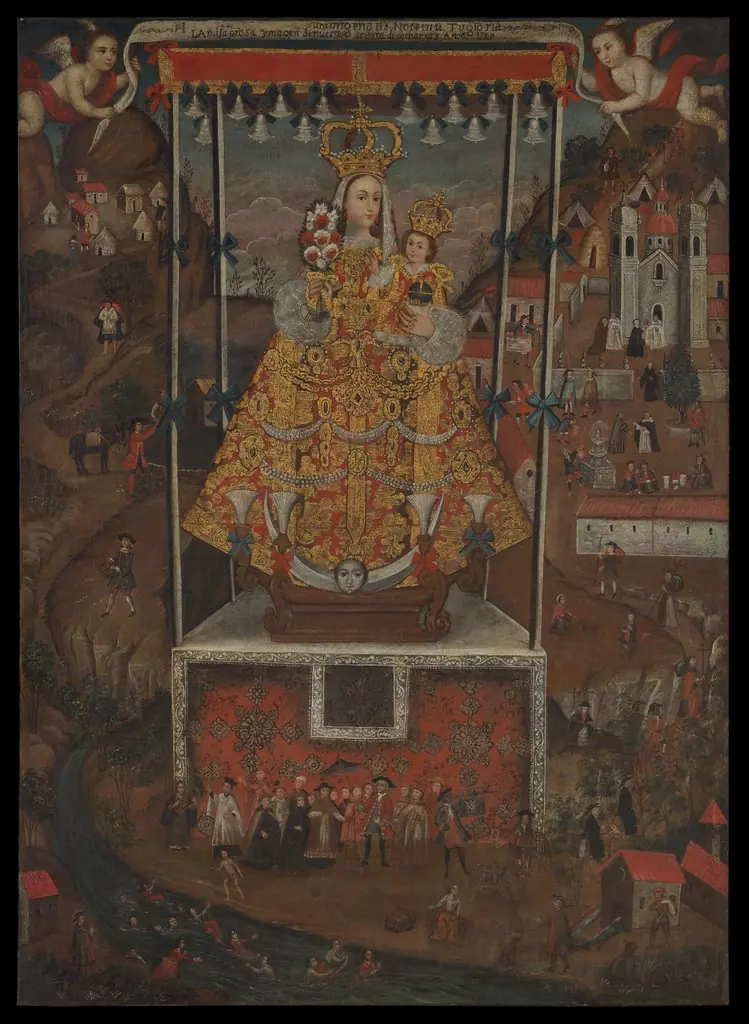 Our Lady of Cocharcas
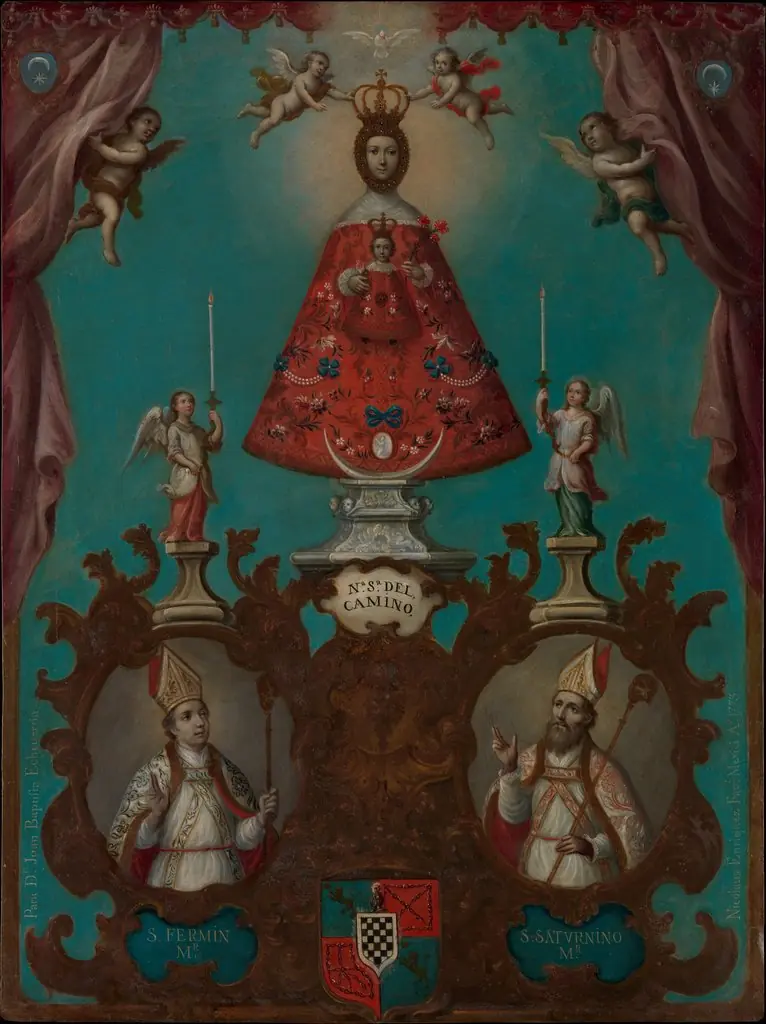 The Virgin of El Camino with St. Fermín and St. Saturnino
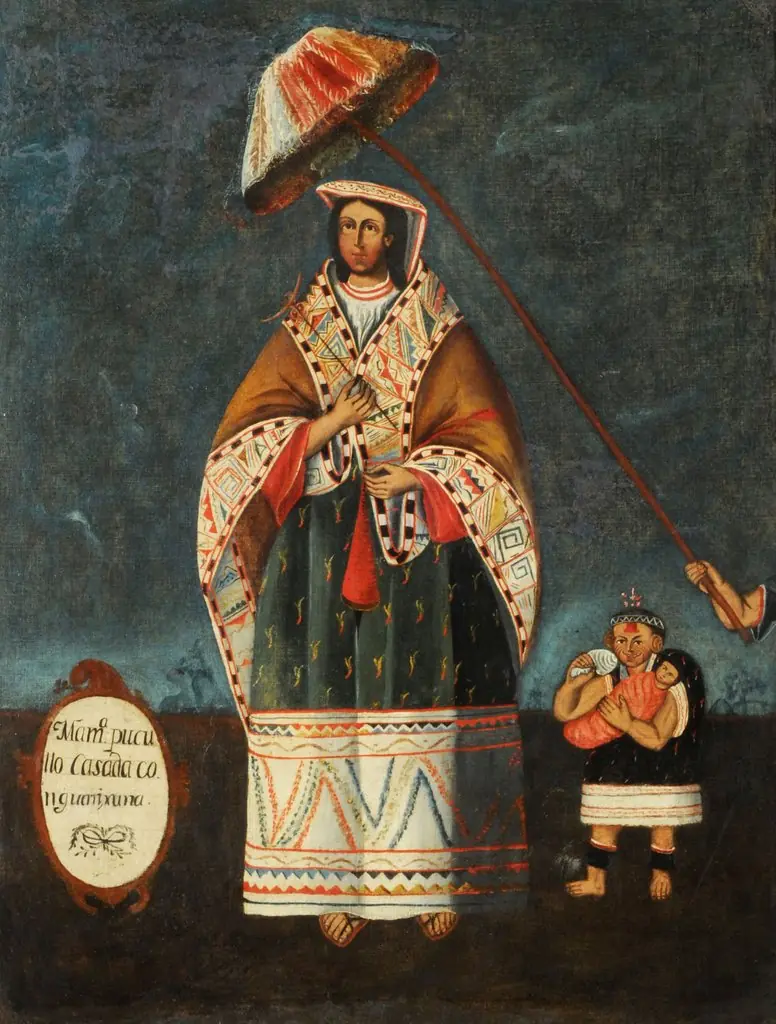 Mama Cucullo
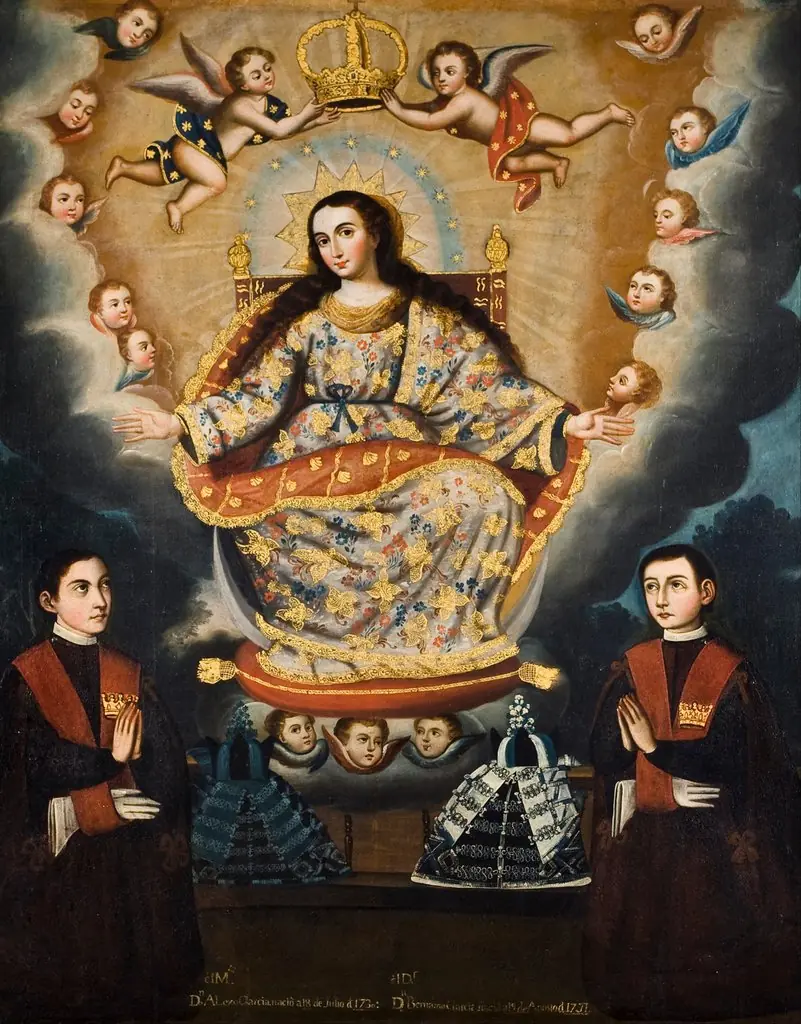 Seated Madonna with Graduation of the García Brothers
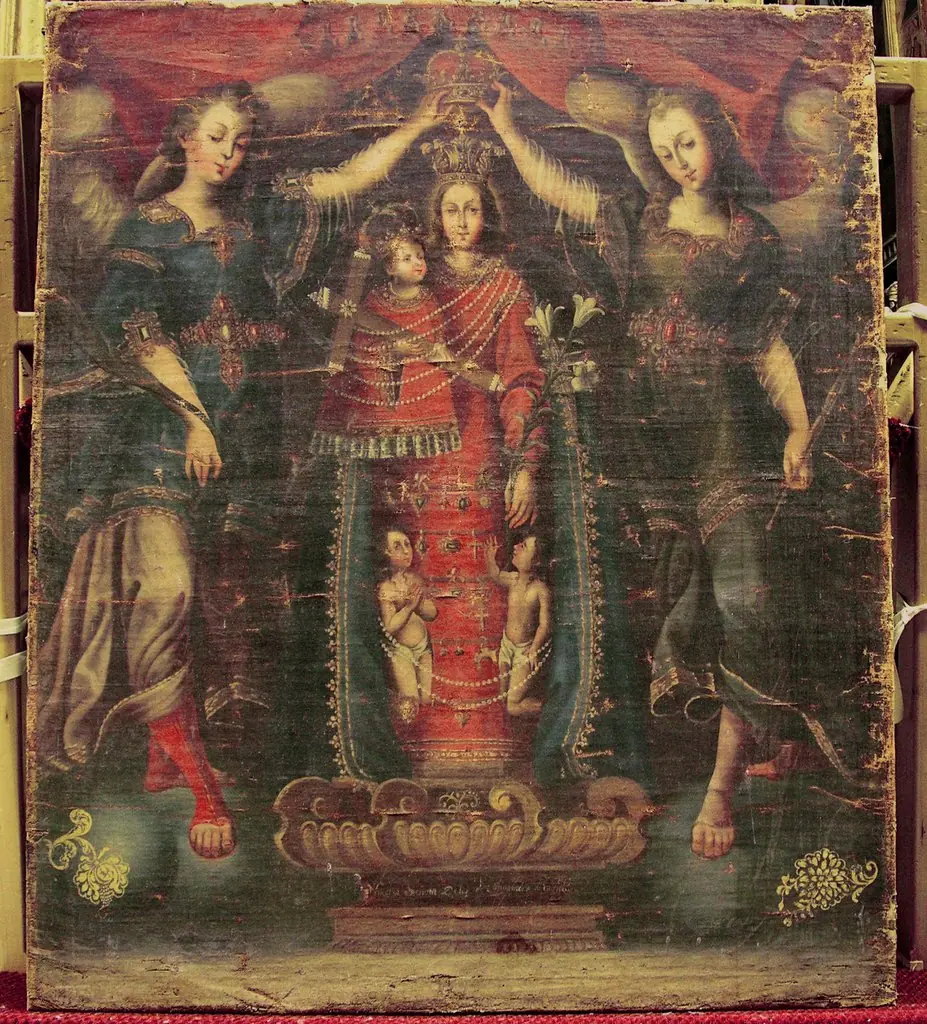 Nuestra Señora de los Desamparados (Our Lady of the Forsaken)
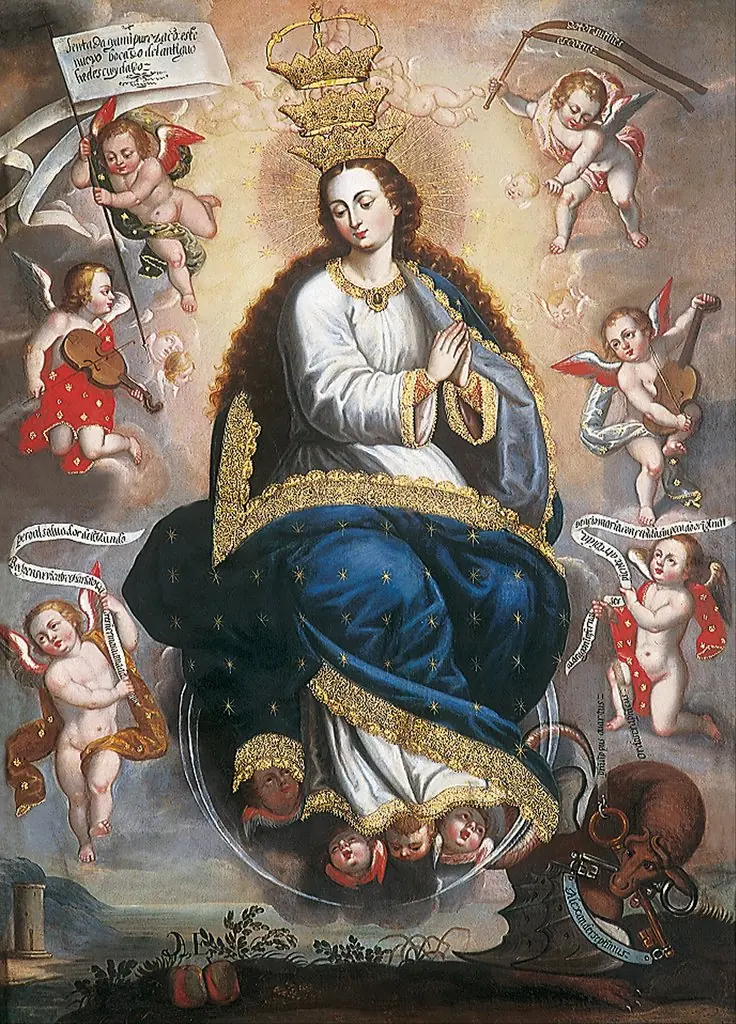 Immaculate Virgin Victorious over the Serpent of Heresy
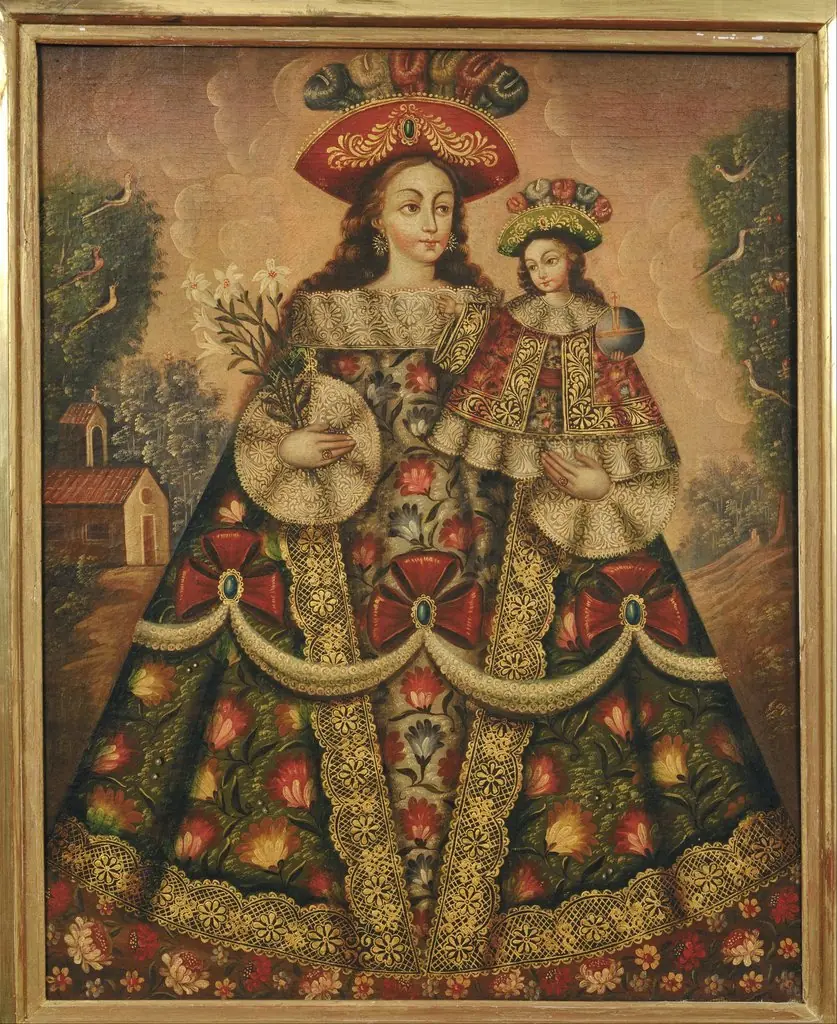 The Virgin of the Pilgrims and Child
 Virgin of the Rosary with Dominican Saints and Donor