Artwork
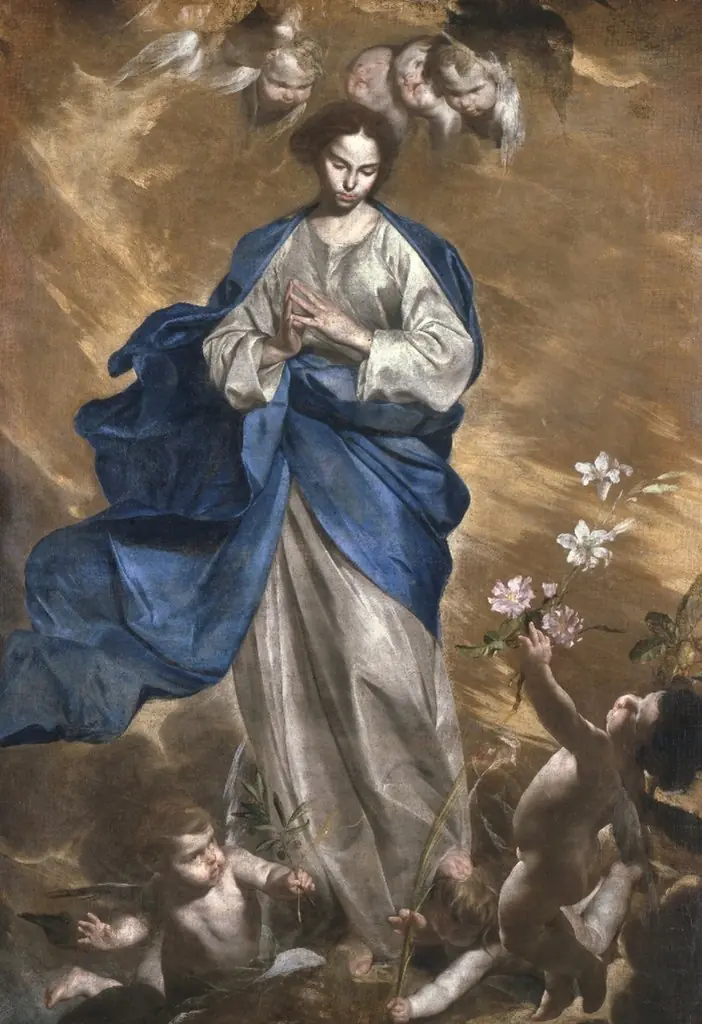
Immaculate Virgin Victorious over the Serpent of Heresy
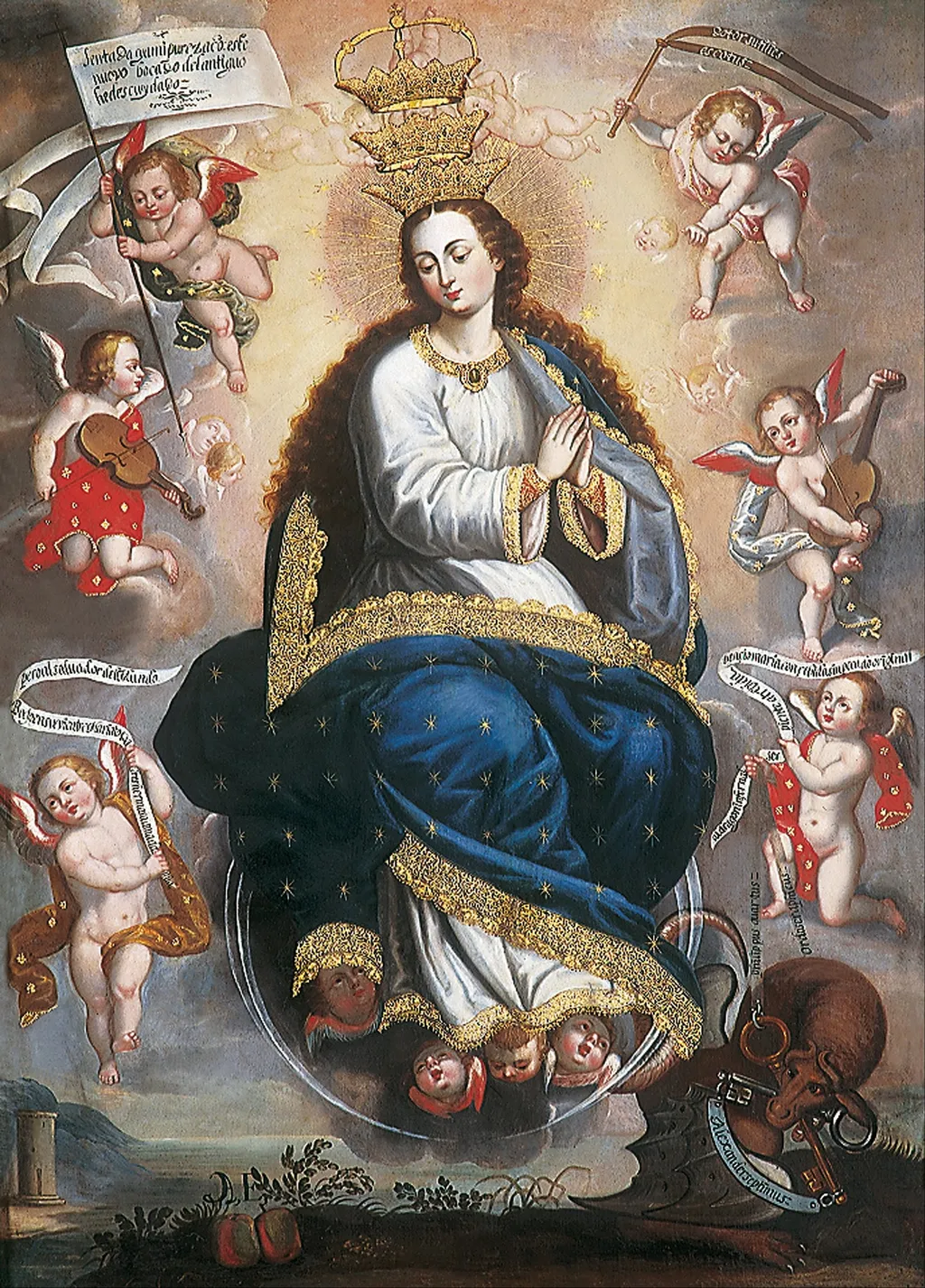
Immaculate Virgin Victorious over the Serpent of Heresy is an oil painting by the Byzantine icon painting artist Basilio Santa Cruz Pumacallao. It dates from 1690 and is held in the collection of the Lima Art Museum.
About this work
Overview
Created in 1690 by Basilio Santa Cruz Pumacallao, this oil painting portrays the Virgin Mary standing triumphantly over a coiled serpent. The composition is dominated by a luminous halo surrounding the figure, whose white robe and blue mantle are accentuated by a regal crown. Beneath her, the serpent is subdued, while a group of cherubic figures encircles the scene, each bearing symbolic objects.
Subject & Meaning
The work presents Mary as the Immaculate Virgin, embodying purity and divine intercession. The defeated serpent at her feet serves as a visual metaphor for the triumph of orthodoxy over heretical forces. The surrounding cherubs, holding items such as a flag, a violin, and a scythe, contribute to a celebratory atmosphere that underscores the victory of faith and the protective role of the Virgin.
Technique & Style
Its composition incorporates Byzantine iconographic conventions, evident in the flat, frontal presentation of the Virgin and the stylized halos.
Executed in oil on canvas, the painting reflects the Cuzco School’s synthesis of European Baroque influences and local artistic traditions. Its composition incorporates Byzantine iconographic conventions, evident in the flat, frontal presentation of the Virgin and the stylized halos. The use of bright, saturated colors and intricate detailing of textiles and accessories demonstrates the artist’s skill in rendering both material richness and symbolic depth.
History & Provenance
Basilio Santa Cruz Pumacallao, a painter of Quechua and Ladino heritage from Cusco, produced the piece during the colonial period when Spanish religious art was being disseminated throughout the Andes. The painting entered the collection of the Museo de Arte de Lima, where it remains part of the museum’s permanent holdings, representing an important example of 17th‑century Andean religious painting.
Context
The artwork belongs to the broader tradition of colonial Baroque religious imagery introduced by Spanish missionaries, which was adapted by indigenous and mestizo artists into a distinctive Cuzco School aesthetic. By integrating European iconography with local symbolic language, the painting illustrates the cultural exchange and syncretism that characterized artistic production in Peru during the late 1600s.
Own this work as a print
Artist & collection
Artist
Basilio Pacheco de Santa Cruz Pumacallao (1635–1710) or Basilio de Santa Cruz Puma Callao was a Peruvian painter of Quechua (Inca) and Ladino origin from Cusco, Peru.

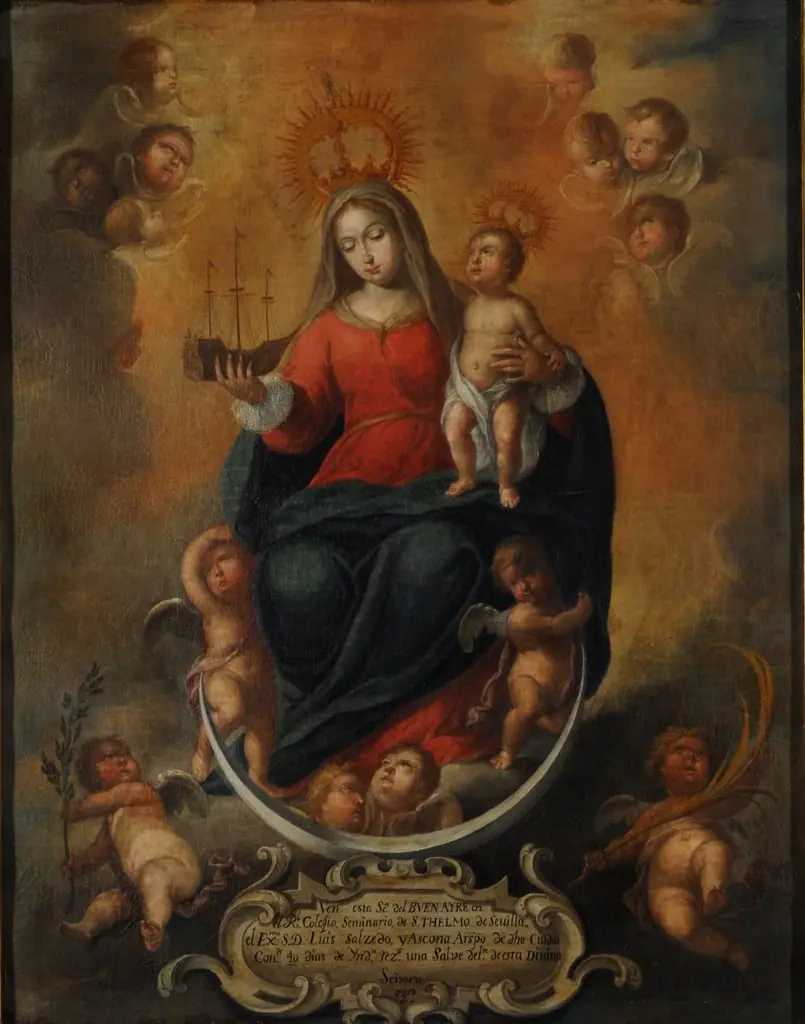 The Virgin of Buen Ayre
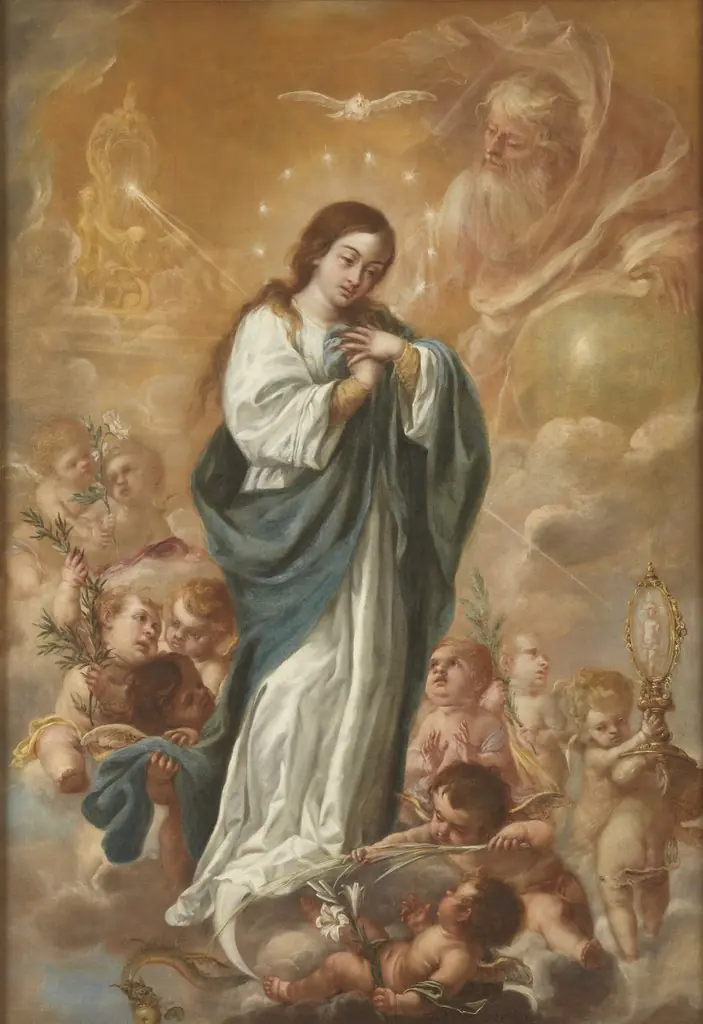 Immaculate Conception
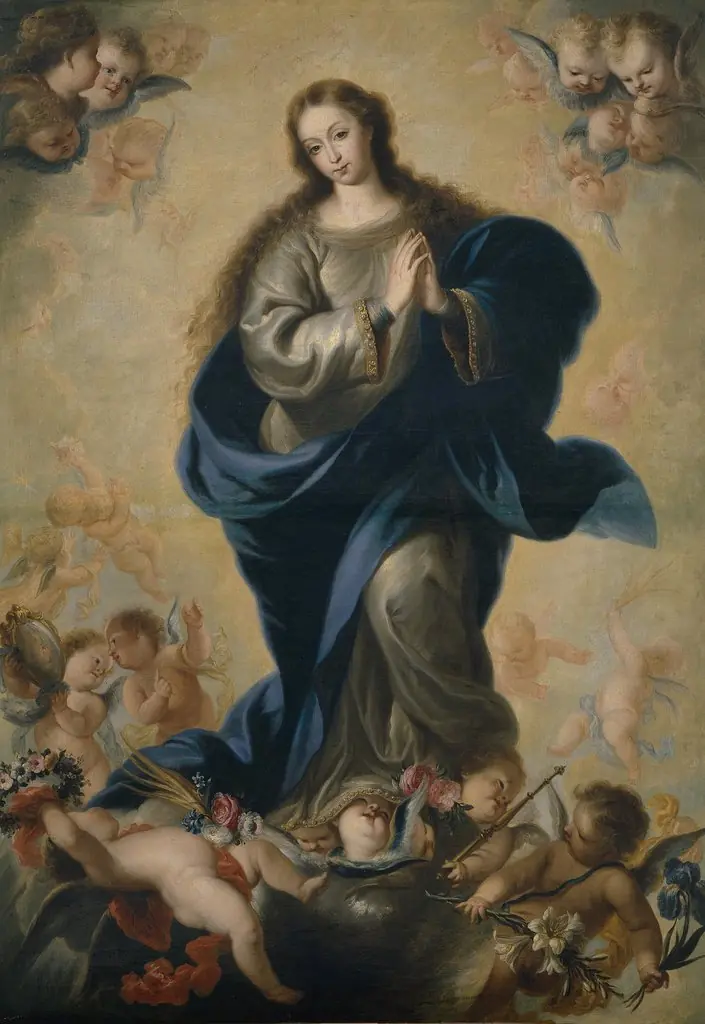 The Immaculate Conception
 The Immaculate Conception
 Virgin of Carmel Saving Souls in Purgatory
 The Immaculate Conception
 The Immaculate Conception
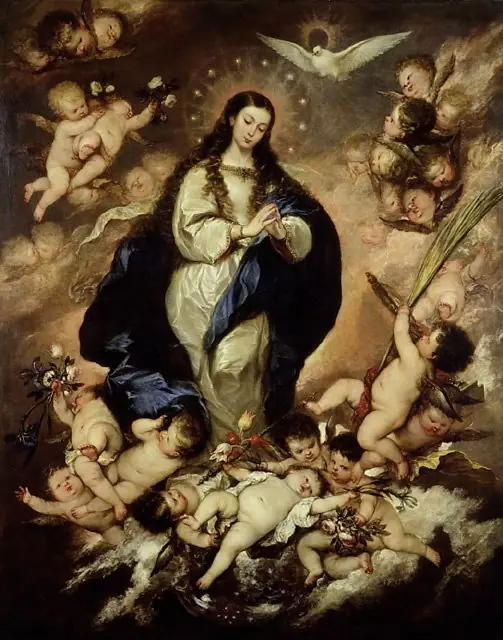 The Immaculate Conception
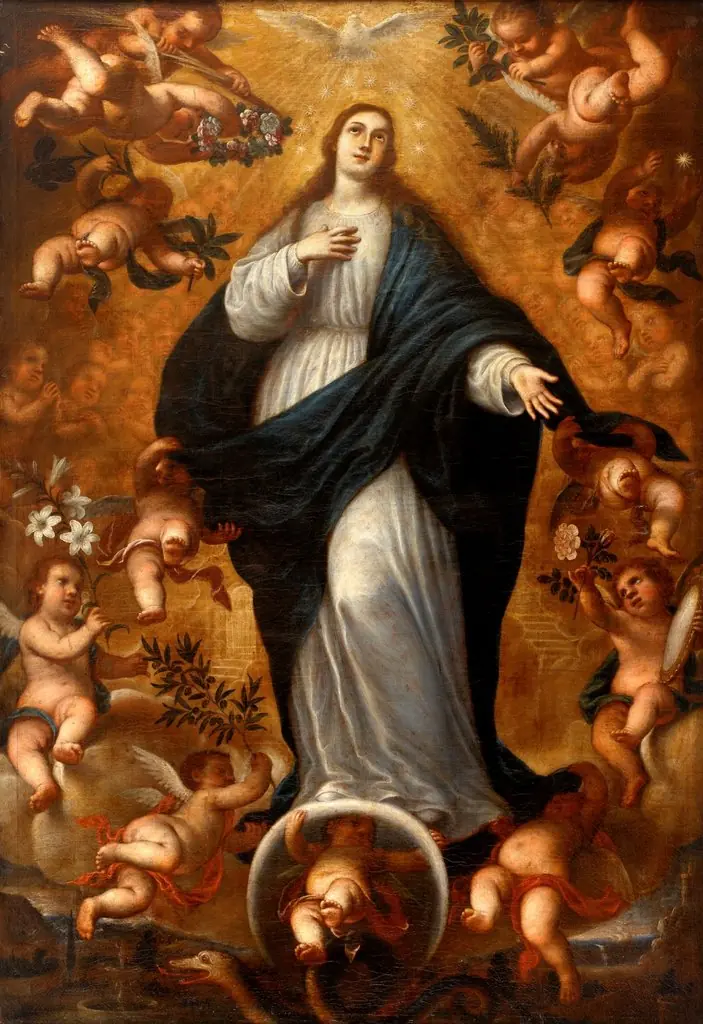 La Purísima
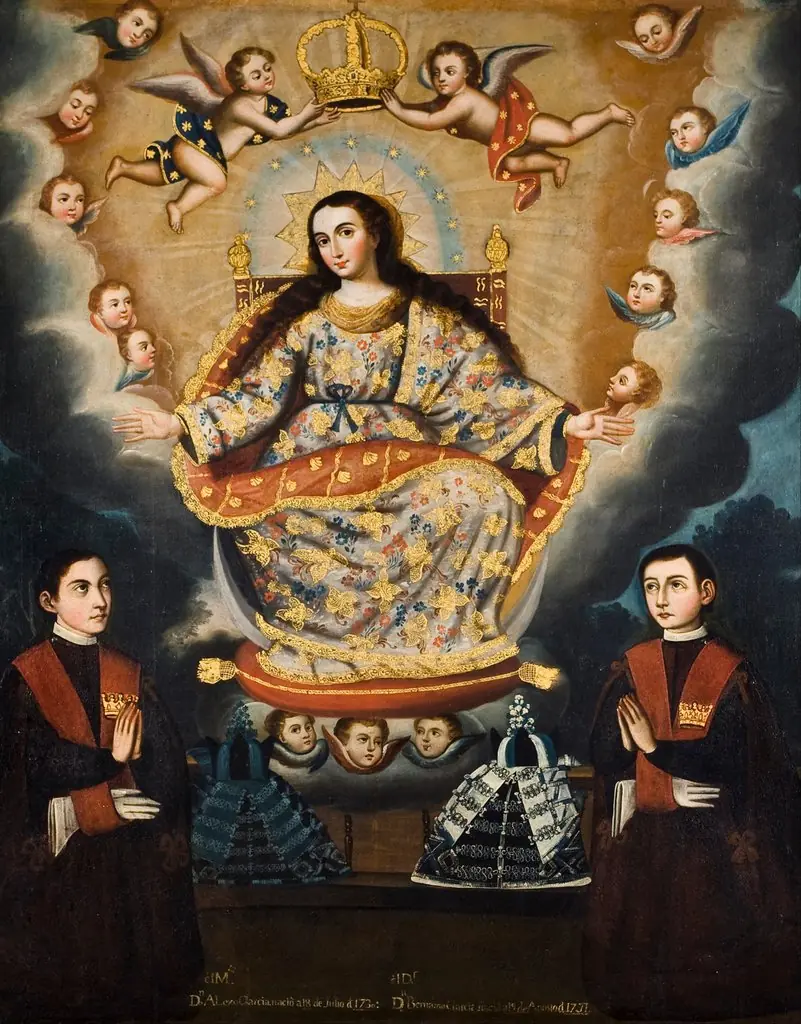 Seated Madonna with Graduation of the García Brothers
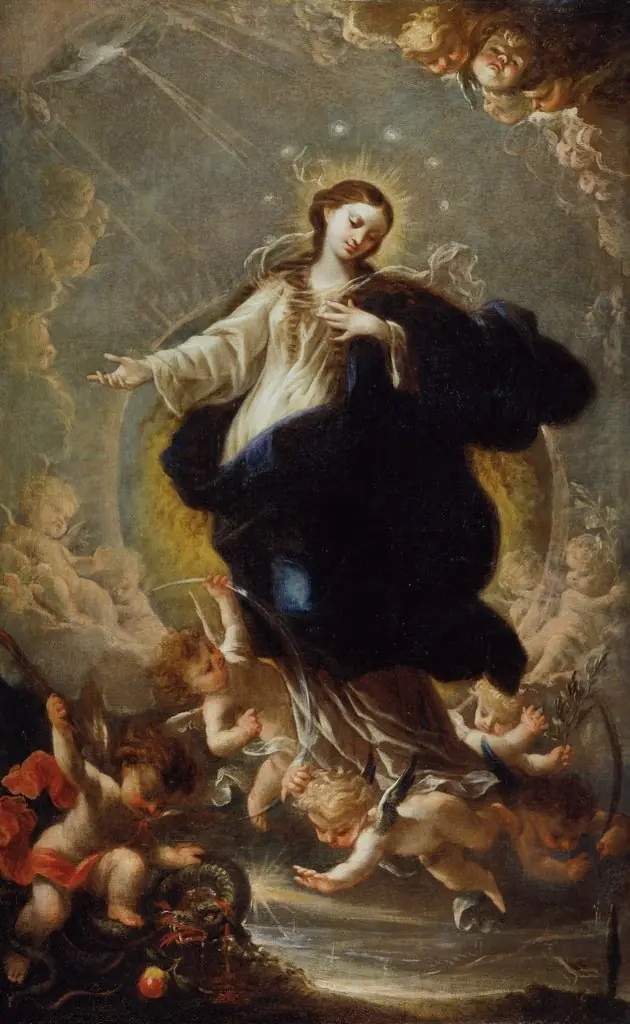 The Immaculate Conception
 The Immaculate Virgin