Artwork
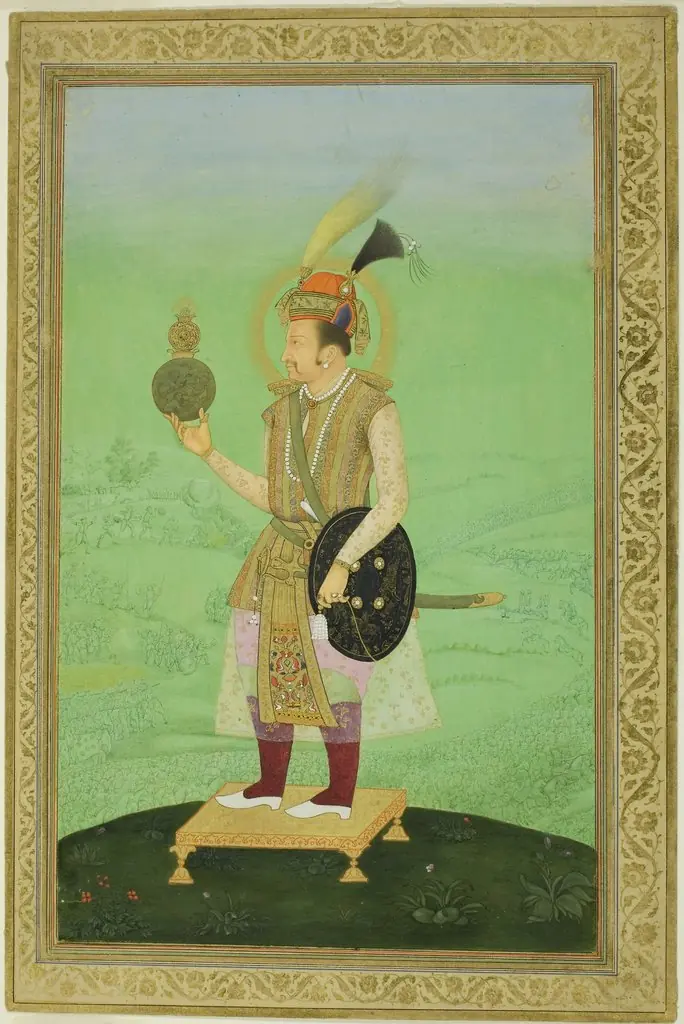
Portrait of Prince Murad Baksh (1624–1661)
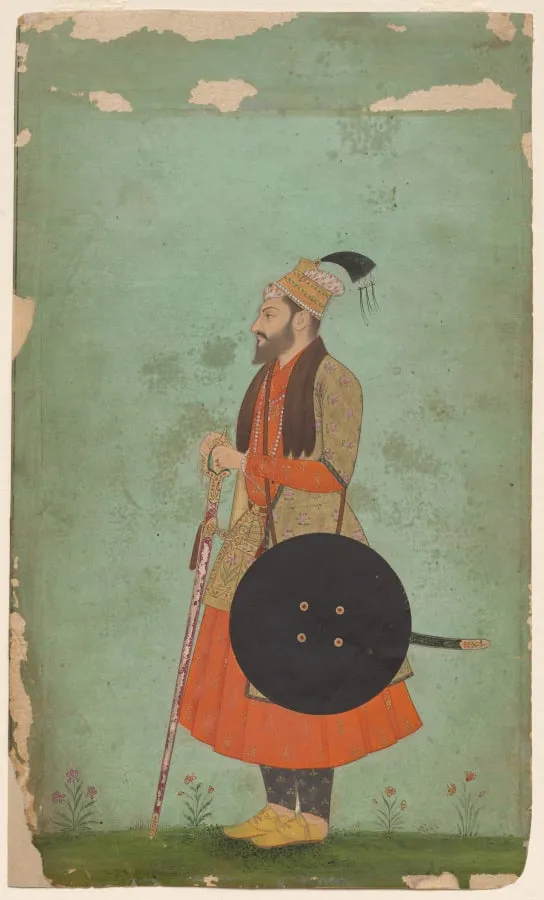
Portrait of Prince Murad Baksh (1624–1661) is an unspecified painting by the Baroque artist Unknown. It dates from 1655 and is held in the collection of the Cleveland Museum of Art.
About this work
He was part of a brutal family fight for the throne—his side won, but he didn’t live long after.
A young man in a gold coat and fur collar stands with a sword and shield. His face is calm, but his eyes seem watchful.
This is Prince Murad Baksh, the youngest son of Mughal Emperor Shah Jahan. He was part of a brutal family fight for the throne—his side won, but he didn’t live long after. The painting shows him at his peak, before the betrayals began.
To see more portraits like this, look up *Mughal India, court of Shah Jahan (1627–58)*.
Overview
This portrait captures Prince Murad Baksh, the youngest son of Emperor Shah Jahan, in his early thirties during a moment of political ascendancy. Dressed in a golden coat of honor with a fur collar and armed with a sword and shield, he is presented as a noble warrior. The composition emphasizes his status within the Mughal court, reflecting his role in the dynastic conflicts that defined the late 1650s.
Subject & Meaning
Murad Baksh is depicted not merely as a royal figure but as a military commander poised for leadership. His calm expression and alert gaze suggest a man aware of the precariousness of power. The regalia he wears—symbols of imperial favor and martial authority—underscore his position in the succession struggle, even as the portrait subtly foreshadows the betrayal that would end his life.
Technique & Style
Rendered in the refined Mughal miniature tradition, the portrait employs delicate brushwork and rich pigments to convey texture and luminosity. The gold embroidery of the coat is rendered with precision, while the fur collar and metallic surfaces reflect subtle gradations of light. The background is muted, focusing attention on the prince’s poised figure and expressive face, characteristic of Shah Jahan-era court portraiture.
History & Provenance
Created during the height of Shah Jahan’s reign, the portrait likely originated in the imperial atelier before Murad Baksh’s downfall. After his alliance with Aurangzeb led to the defeat of their elder brother Dara Shikoh in 1658, Murad was imprisoned and later executed in 1661. The painting may have been retained in royal collections as a record of a fallen prince, its survival reflecting its historical significance rather than continued favor.
Context
The portrait belongs to a period of intense dynastic rivalry within the Mughal court, where succession was determined by military force rather than primogeniture. Murad Baksh’s alignment with Aurangzeb was a strategic move in a broader conflict that reshaped imperial authority. Such portraits served as both personal identifiers and political tools, affirming loyalty and status amid shifting alliances.
Legacy
Though Murad Baksh’s life ended in betrayal, this portrait preserves his image as a figure of potential before his fall. It stands as a quiet testament to the volatility of Mughal succession politics, where imperial imagery could outlast the subjects it celebrated. The work contributes to the visual record of a dynasty in transition, documenting the human cost of power.
Artist & collection

 Domestic Scene
 Giacomo and Cardinal Marco, investing Andrea, Abbot of San Zeno, with his Benefice
 The Nymph of Fontainebleau
 Portrait of a Woman
 Madonna and Child with Saints in the Enclosed Garden
 Venus and Minerva
 Family Group of Four on Sofa
 Wall painting from Room H of the Villa of P. Fannius Synistor at Boscoreale
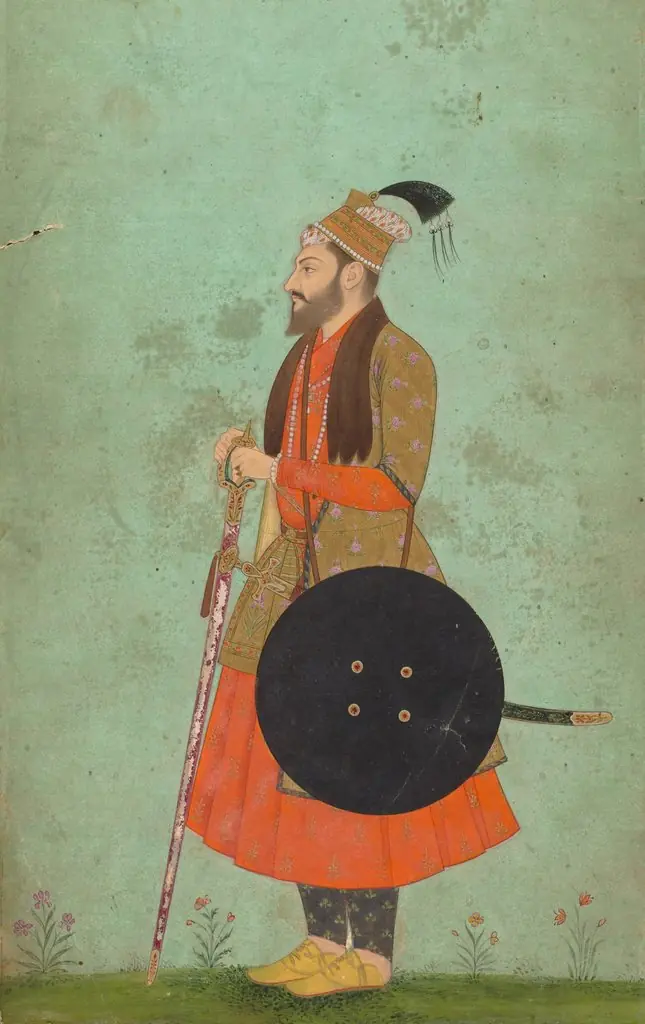 Portrait of Prince Murad Baksh (1624–1661)
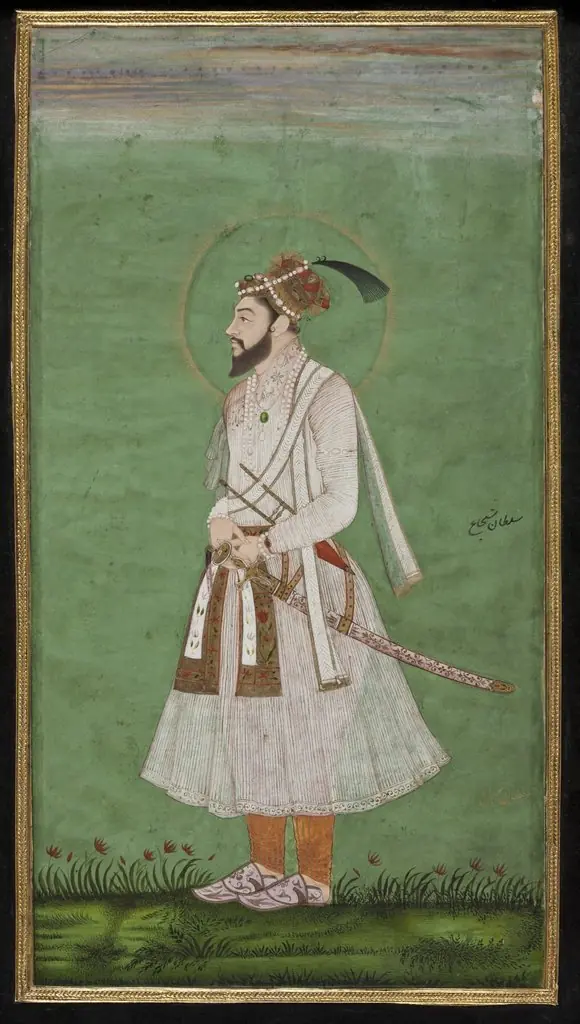 Portrait of a Mughal Prince, possibly a copy of a portrait of Sultan Shuja (1616-1659)
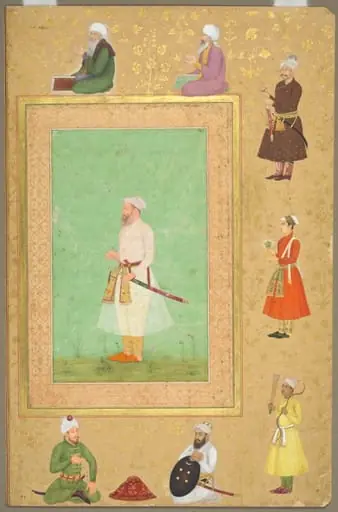 Portrait of Asaf Khan (1569–1641), from the Late Shah Jahan Album
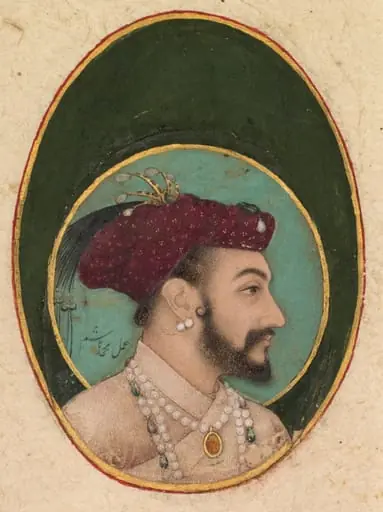 Shah Jahan
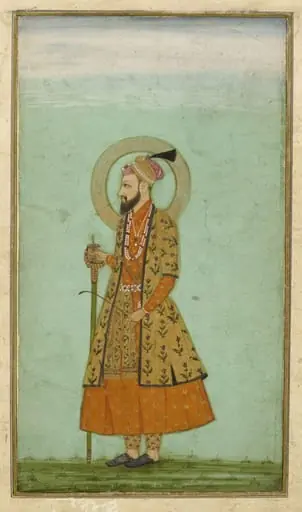 The emperor 'Alamgir (Aurangzeb)
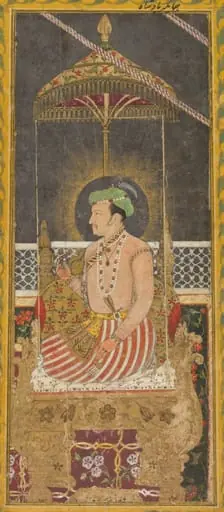 Posthumous portrait of Emperor Jahangir under a canopy (recto)
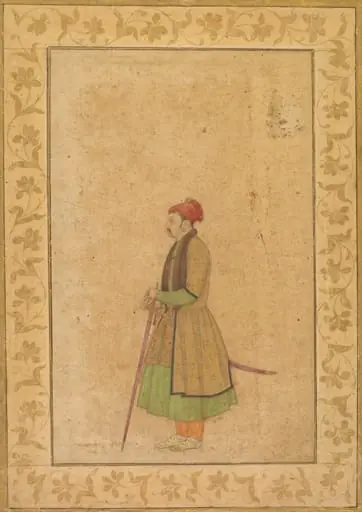 Portrait of Raja Ram Singh of Amber (r. 1667-1688) with a Deccan Sword (recto)
 Portrait of Emperor Jahangir
 Zain Khan Koka