Artwork
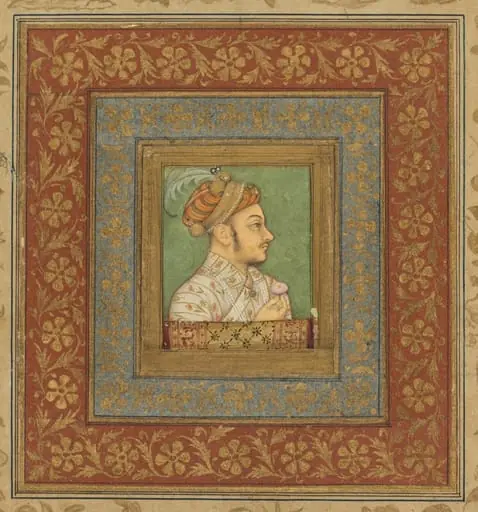
Posthumous portrait of Emperor Jahangir under a canopy (recto)
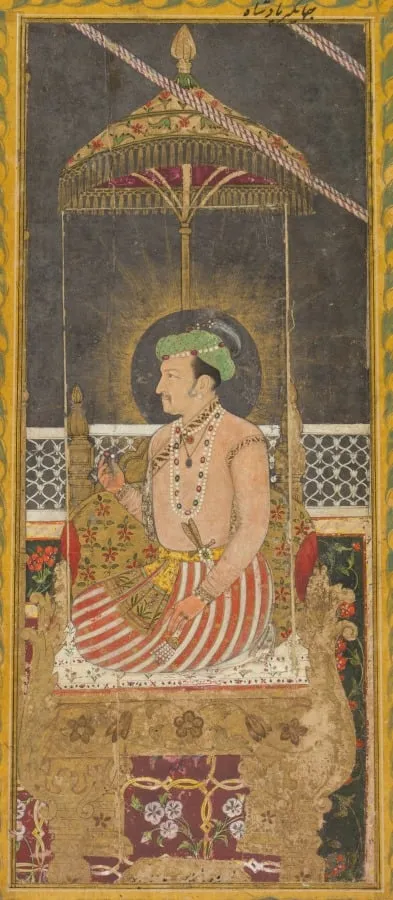
Posthumous portrait of Emperor Jahangir under a canopy (recto) is an unspecified painting by the Baroque artist Unknown. It dates from 1650 and is held in the collection of the Cleveland Museum of Art. The work is a posthumous portrait of the Mughal ruler Jahangir, rendered on a canvas that shows him seated beneath an opulent gold canopy.
About this work
Overview
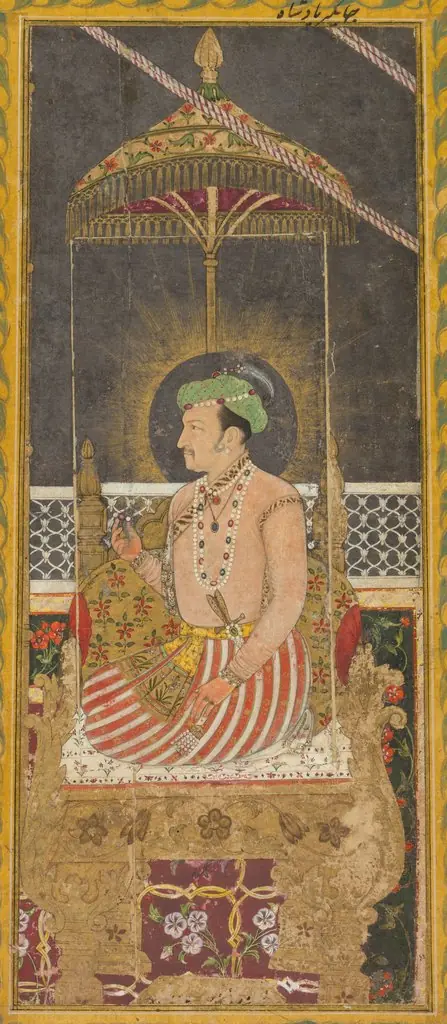
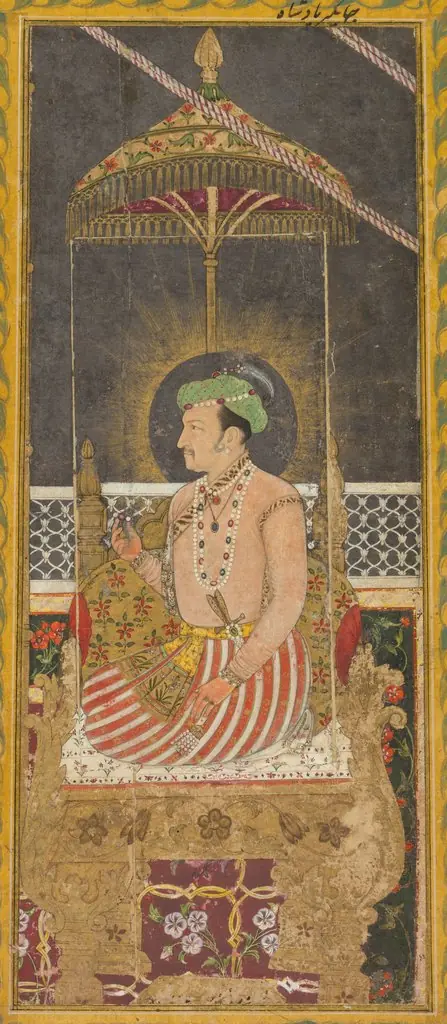
The work is a posthumous portrait of the Mughal ruler Jahangir, rendered on a canvas that shows him seated beneath an opulent gold canopy. He is positioned on a richly jeweled throne, clutching a globe and a book, while a luminous aura radiates from behind his head, delineating his imperial presence.
Subject & Meaning
The composition emphasizes Jahangir’s authority and cosmopolitan outlook, symbolized by the globe and the illuminated halo that suggests divine endorsement. The white marble railing framing the scene reinforces a sense of regal enclosure, while the sumptuous garments and jewels convey the wealth and cultural sophistication associated with his reign.
Technique & Style
Executed with the meticulous brushwork characteristic of Mughal court painters, the artist applied minute strokes to render the sparkle of pearls, the sheen of gold, and the intricate patterns of the textiles. This attention to detail creates a tactile illusion of opulence, reflecting the refined aesthetic standards of the period.
History & Provenance
Created several decades after Jahangir’s death in 1627, the portrait was likely commissioned by his son, Shah Jahan, as a means of commemorating the former emperor’s legacy. The painting has remained within collections of Mughal art, serving as a visual record of imperial iconography from the early 17th century.
Context
Jahangir’s rule marked a phase of expanding trade and diplomatic contacts with European powers such as England and Portugal, situating the Mughal Empire within the broader Age of Exploration. The portrait’s emphasis on global symbols mirrors his efforts to position his court as a hub of international exchange.
Artist & collection

 Domestic Scene
 Giacomo and Cardinal Marco, investing Andrea, Abbot of San Zeno, with his Benefice
 The Nymph of Fontainebleau
 Portrait of a Woman
 Madonna and Child with Saints in the Enclosed Garden
 Venus and Minerva
 Family Group of Four on Sofa
 Wall painting from Room H of the Villa of P. Fannius Synistor at Boscoreale
 Posthumous portrait of Emperor Jahangir under a canopy (recto)
 Posthumous portrait of Emperor Jahangir under a canopy (recto); Calligraphy (verso)
 Portrait of Emperor Jahangir
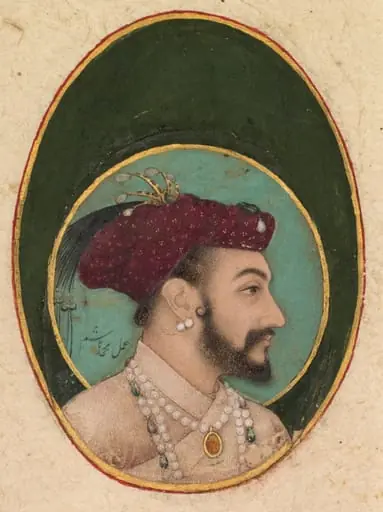 Shah Jahan
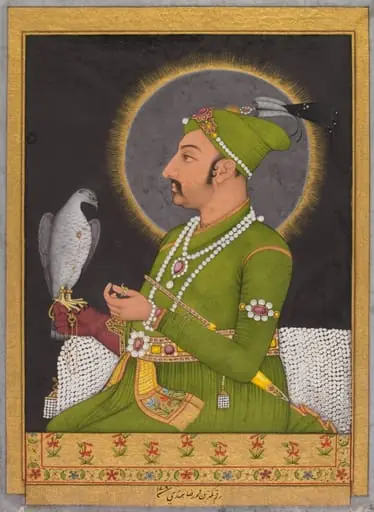 Posthumous portrait of the Mughal emperor Muhammad Shah (reigned 1719–1748) holding a falcon (recto)
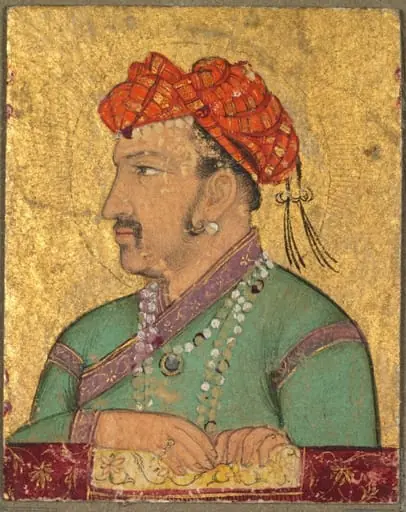 Portrait Jewel of Emperor Jahangir
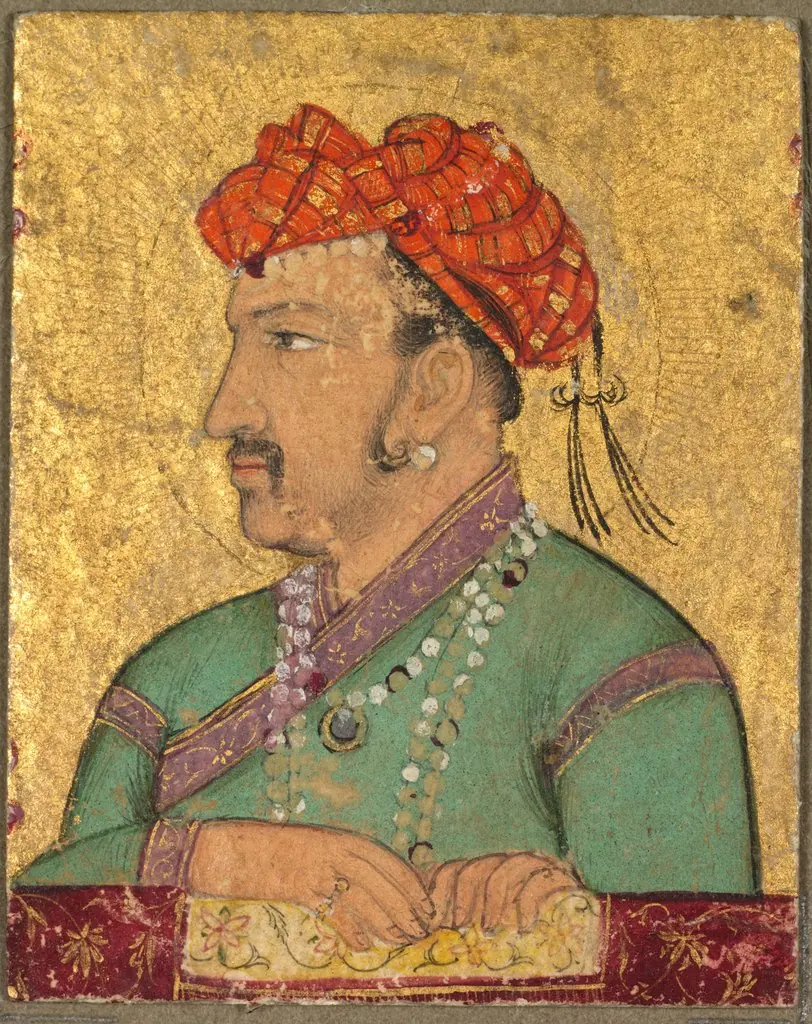 Portrait Jewel of Emperor Jahangir
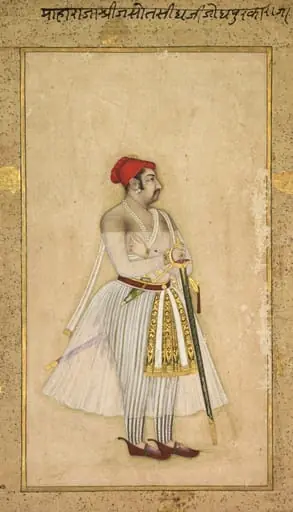 Jaswant Singh of Jodhpur (reigned 1635–1678)
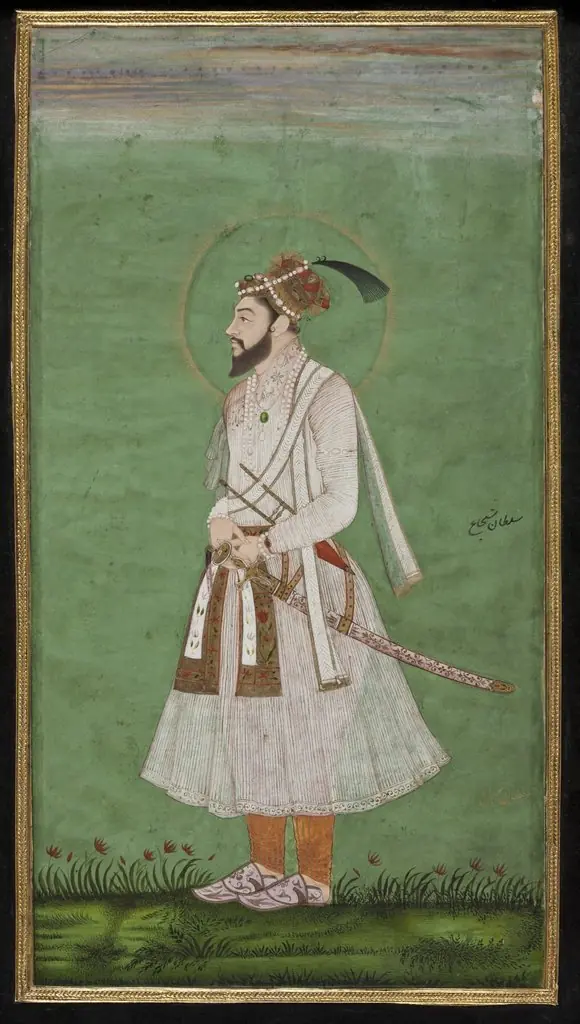 Portrait of a Mughal Prince, possibly a copy of a portrait of Sultan Shuja (1616-1659)
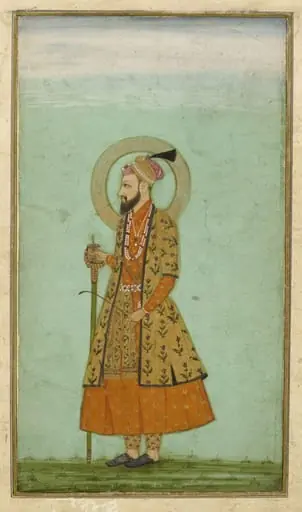 The emperor 'Alamgir (Aurangzeb)
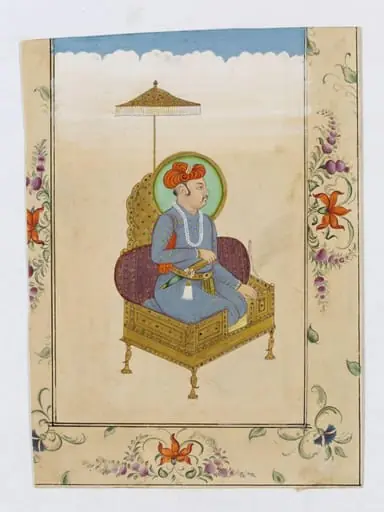 Emperor Jahangir
 Portrait of Murad Bakhsh (1624–61)