Artwork
Landscape
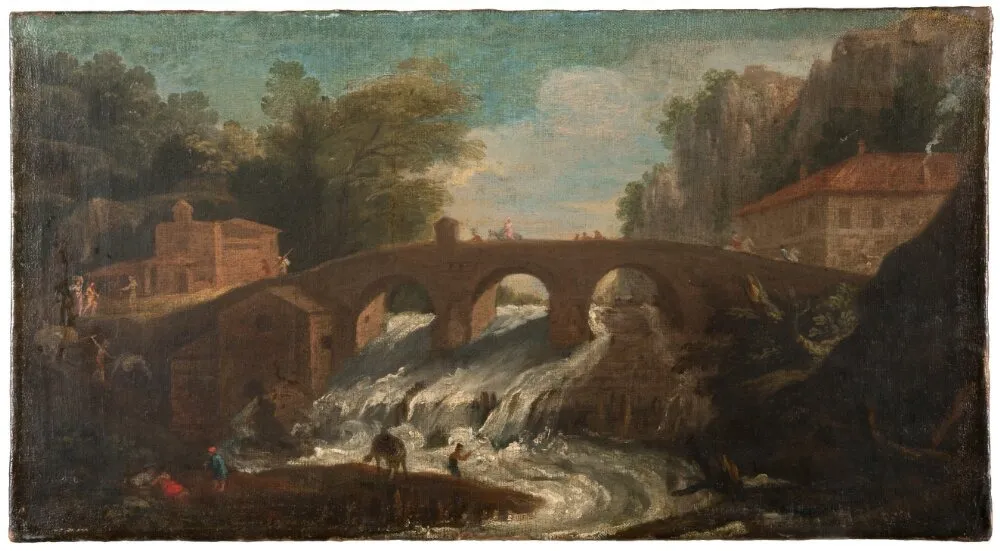
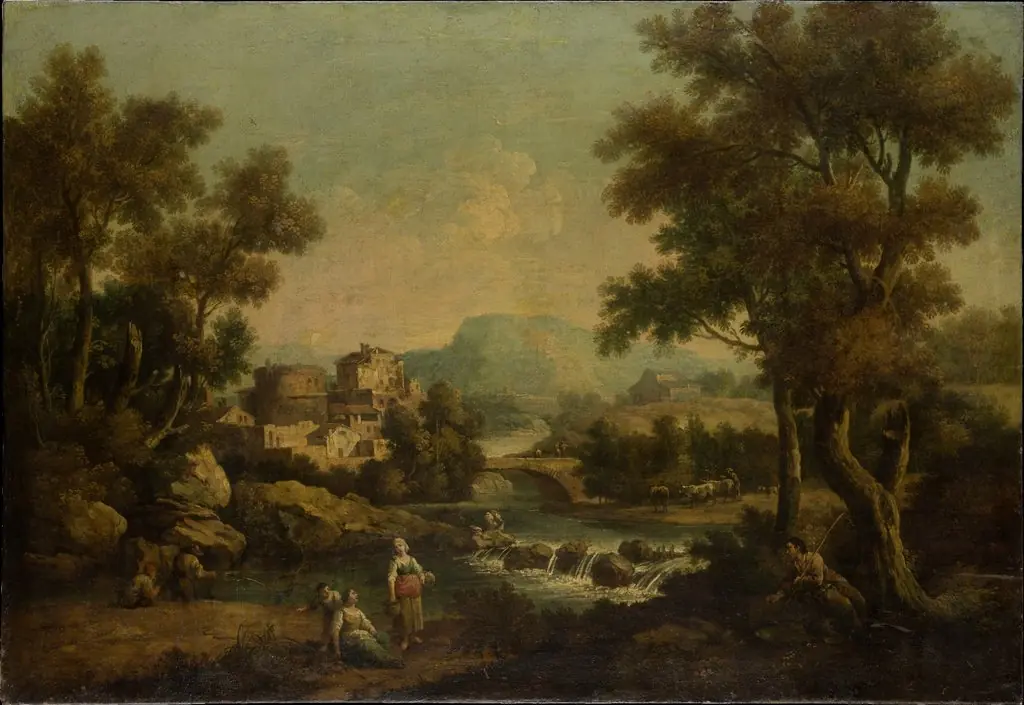
Landscape is an oil painting by the Rococo painting artist Unknown. It dates from 1749 and is held in the collection of the Nationalmuseum.
About this work
Overview
This oil painting presents a tranquil rural landscape centered on a stone bridge crossing a winding river. The composition balances natural elements—dense foliage, rolling terrain—with subtle human presence. The medium allows for layered pigments that enhance the tactile quality of foliage, water, and stone, encouraging close observation of texture and light.
Subject & Meaning
The scene includes small figures near the bridge and along the riverbank, engaged in quiet, everyday tasks. Their placement suggests harmony between human activity and the natural environment, without narrative drama. The bridge functions as both a physical passage and a visual anchor, connecting foreground and background while implying continuity rather than conflict.
Technique & Style
Oil paint is applied with careful modulation, creating soft transitions between light and shadow across the trees and water. The brushwork varies from fine detailing in the bridge’s stonework to looser strokes in the distant foliage, building spatial depth. The river’s surface reflects ambient light with gentle ripples, reinforcing the calm mood of the scene.
History & Provenance
The painting’s origin and early ownership are not documented in available records. It lacks inscriptions or signatures that would confirm the artist or date of creation. Its preservation suggests it was kept in private collections, though no exhibition history or archival references are currently known.
Context
The composition aligns with 18th- or early 19th-century European landscape traditions that favored idealized nature over dramatic or romanticized vistas. Such works often reflected contemporary ideals of order, serenity, and the pastoral, appealing to viewers seeking respite from urban or industrial change.
Legacy
Though not widely reproduced or studied, the painting contributes to a broader body of quiet landscape works that emphasized observation over spectacle. Its restrained palette and focus on everyday presence offer a counterpoint to more theatrical interpretations of nature from the same period.
Artist & collection

 Domestic Scene
 Giacomo and Cardinal Marco, investing Andrea, Abbot of San Zeno, with his Benefice
 The Nymph of Fontainebleau
 Portrait of a Woman
 Madonna and Child with Saints in the Enclosed Garden
 Venus and Minerva
 Family Group of Four on Sofa
 Wall painting from Room H of the Villa of P. Fannius Synistor at Boscoreale
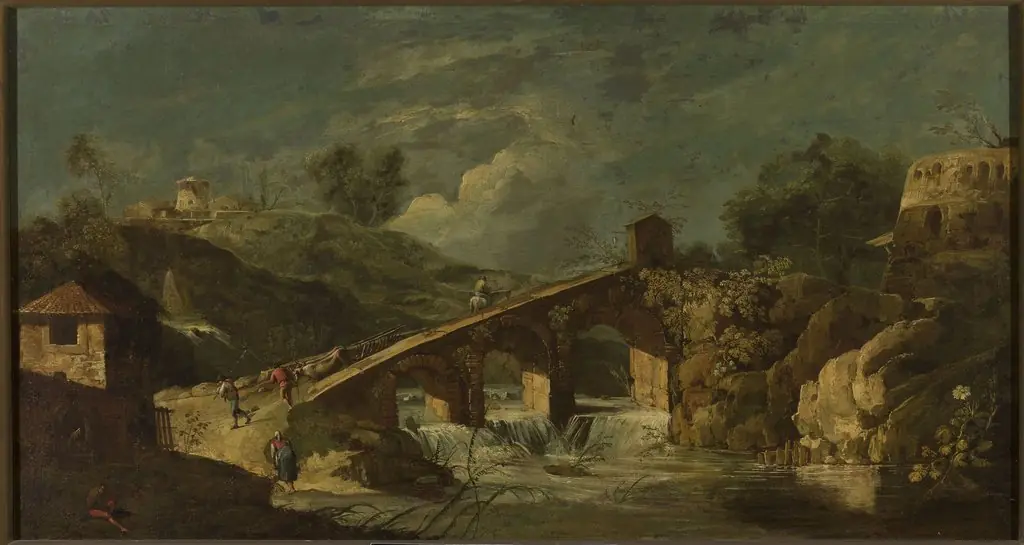 Landscape with a bridge
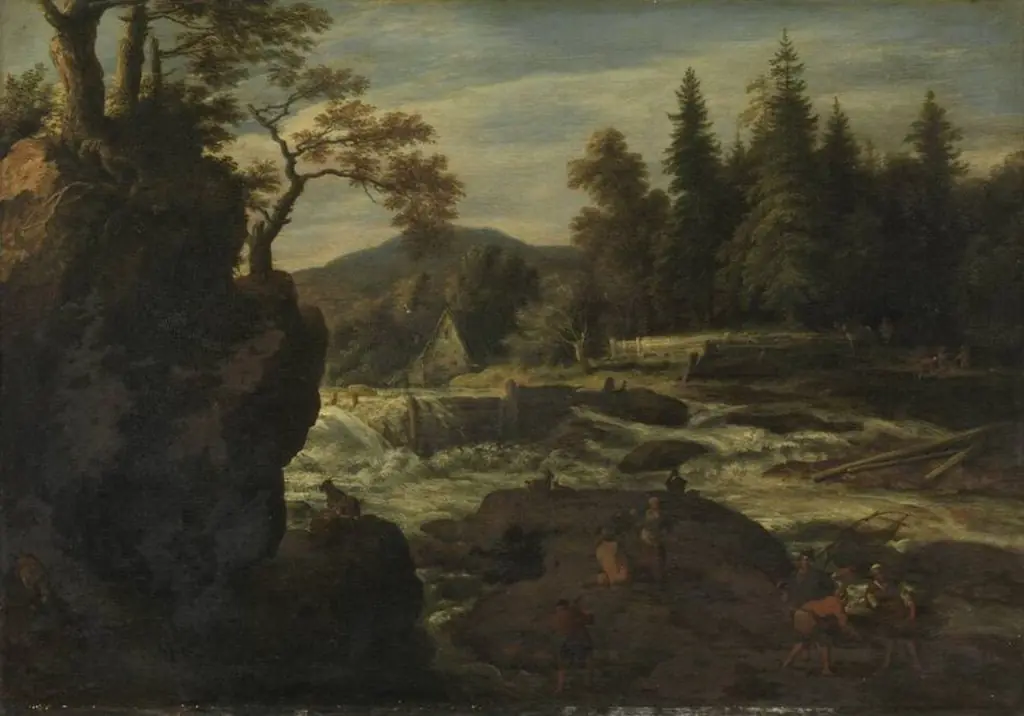 Landscape with waterfall
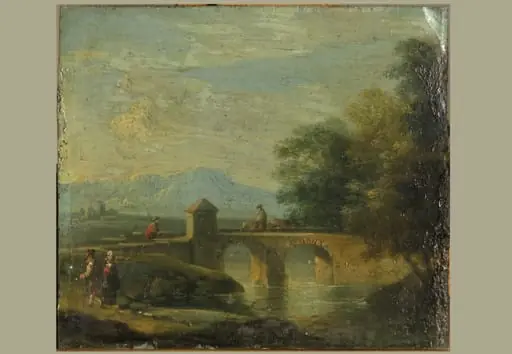 Mic peisaj cu pod. Pandant: Mic peisaj cu cetate
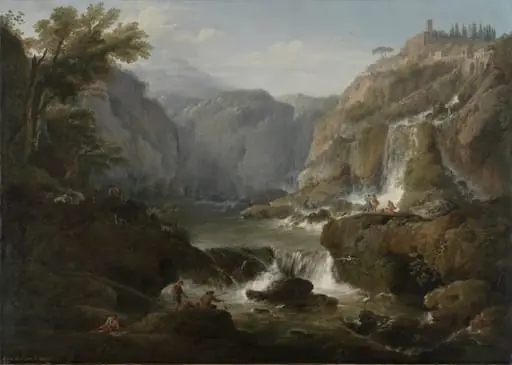 The Waterfalls at Tivoli
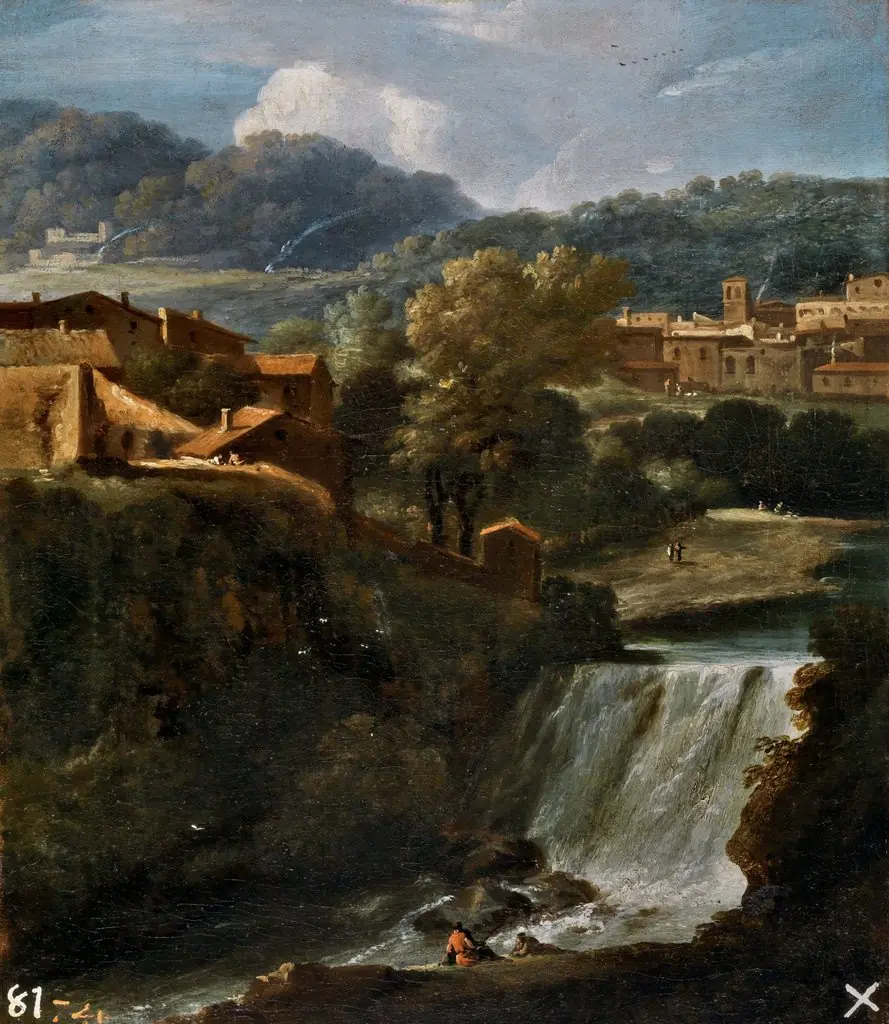 Paisaje con cascada
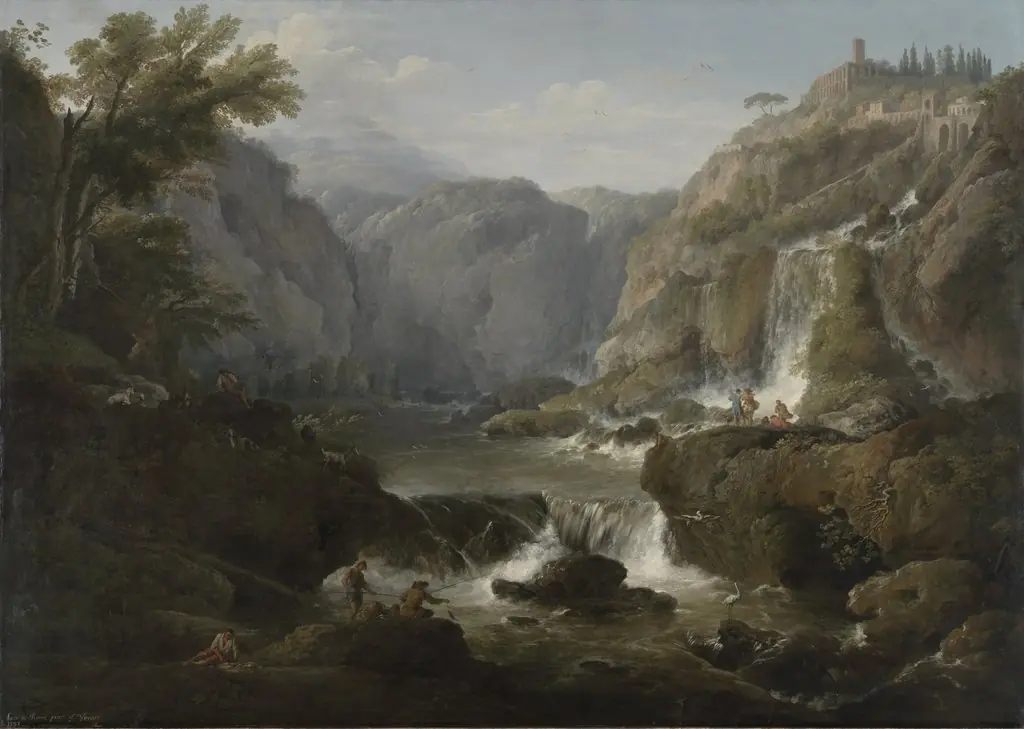 The Waterfalls at Tivoli
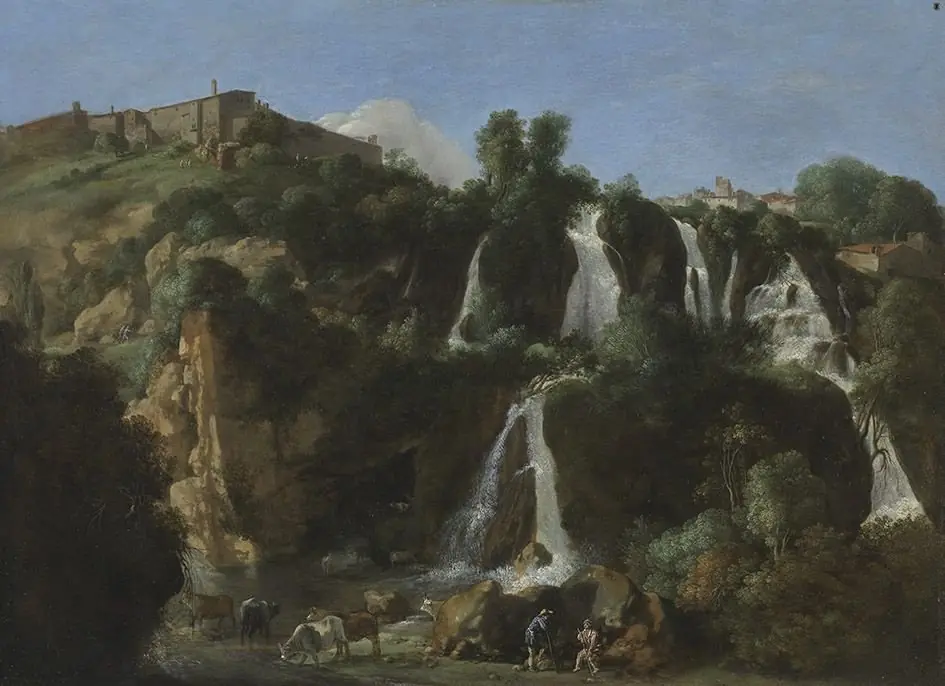 The Tivoli waterfalls
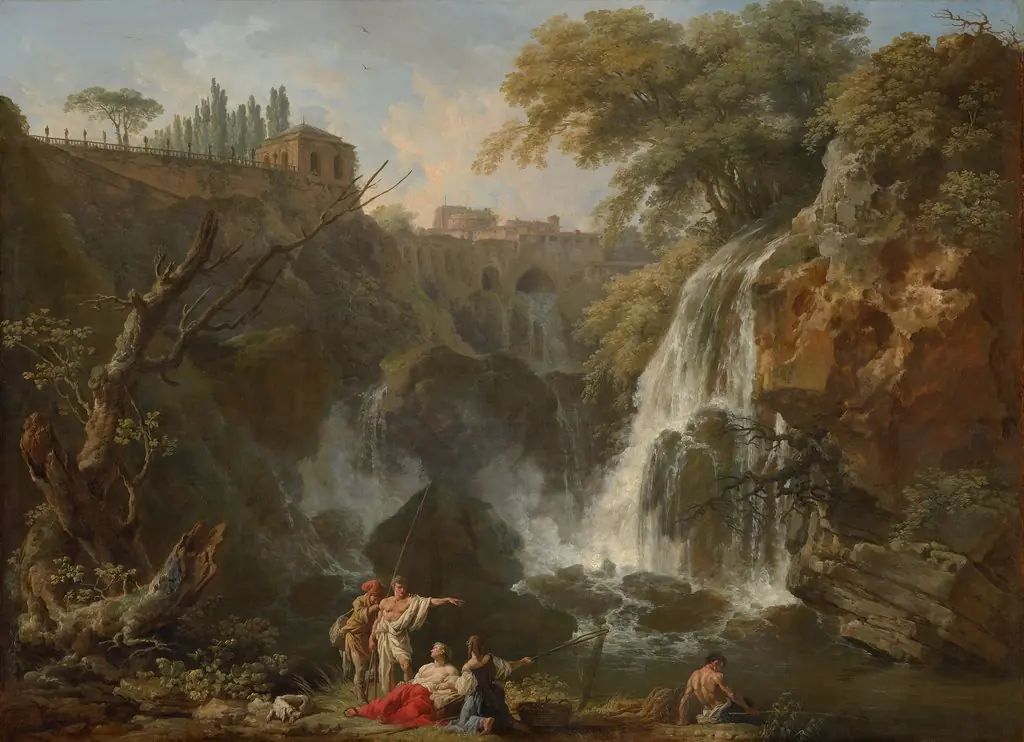 The Waterfalls at Tivoli, with the Villa of Maecenas
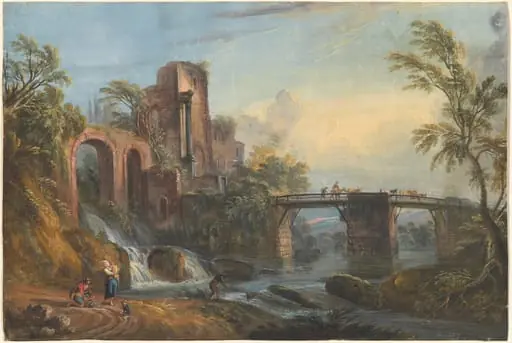 Dawn Landscape with Classical Ruins
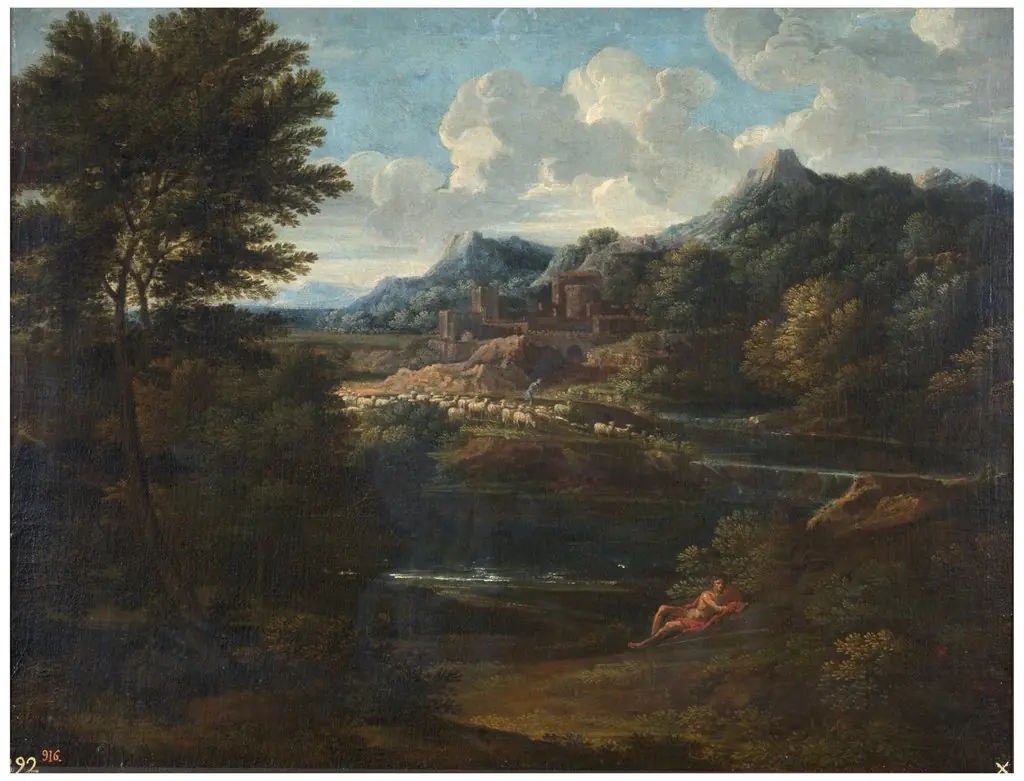 Paisaje con pastor
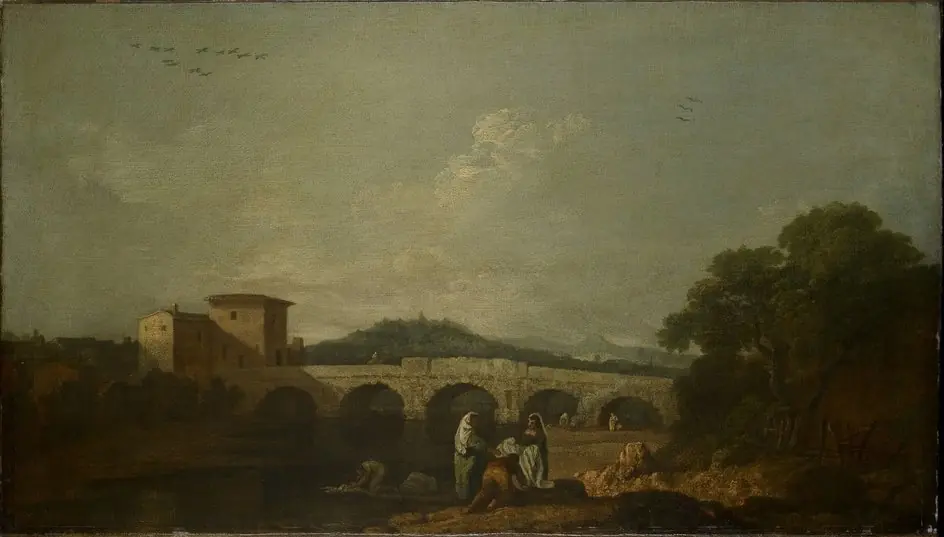 Bridge of Augustus at Rimini
 Italian Landscape with a Mountain Stream