Artwork
The Death of Samson
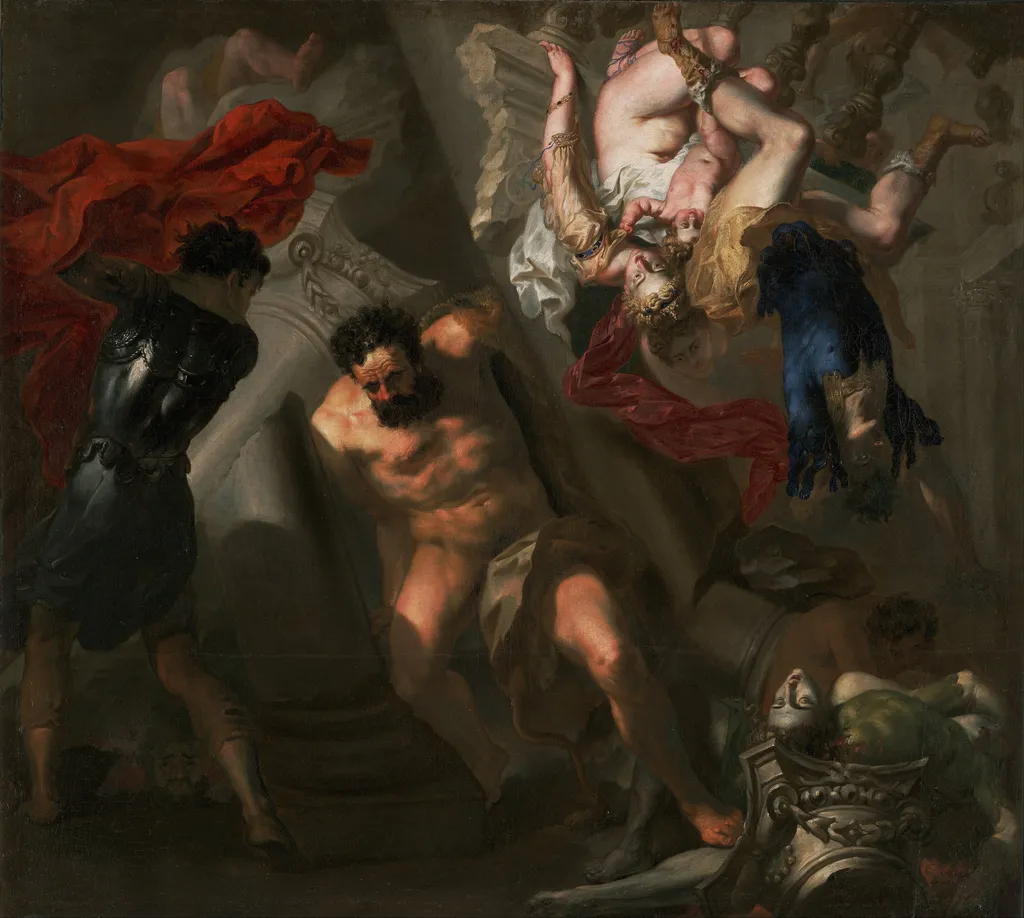
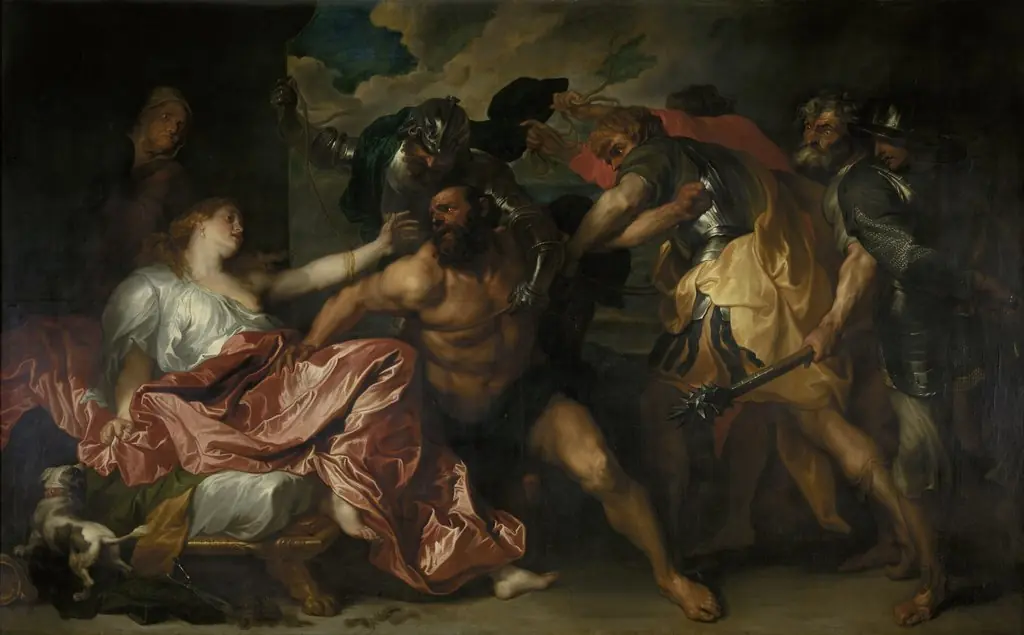
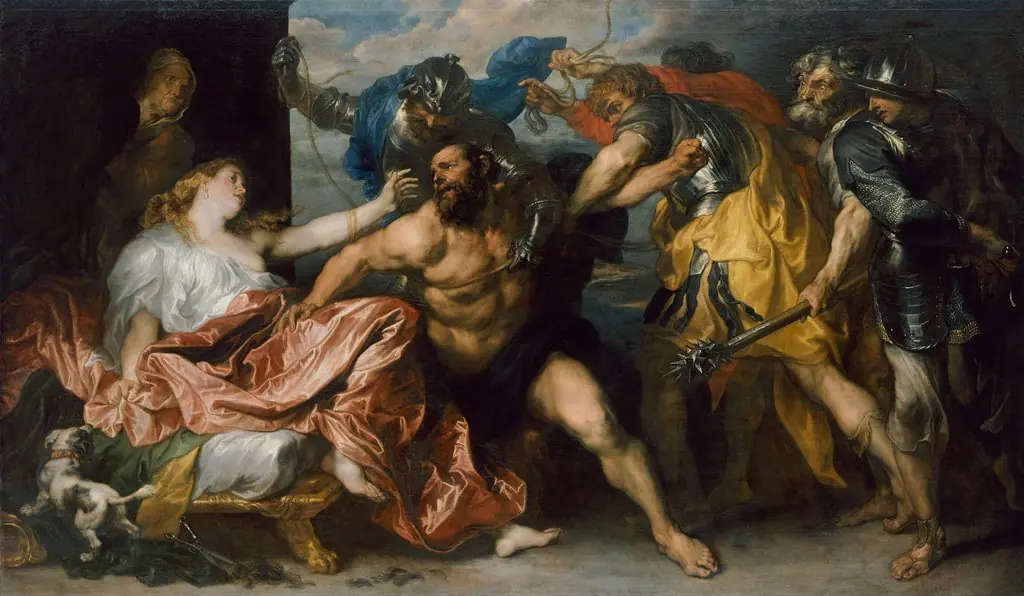
The Death of Samson is an oil painting by the Early Baroque Italian artist Unknown. It dates from 1650 and is held in the collection of the J. Paul Getty Museum. This oil painting depicts a moment of violent collapse, centered on a massive male figure being overpowered by a woman.
About this work
Overview
The palette is restrained, dominated by earth tones and muted grays, lending the scene a somber, almost documentary gravity.
This oil painting depicts a moment of violent collapse, centered on a massive male figure being overpowered by a woman. Surrounding figures and scattered objects amplify the turmoil. The palette is restrained, dominated by earth tones and muted grays, lending the scene a somber, almost documentary gravity. The composition is crowded yet carefully balanced, drawing attention to the central struggle without overt theatricality.
Subject & Meaning
The scene illustrates the biblical story of Samson’s death, in which he is betrayed by Delilah and brought low by the Philistines. The naked man is Samson, his strength spent; the woman in white is Delilah, pulling him toward ruin. The armored figure to the left likely represents a Philistine commander, observing the fulfillment of their plot. The moment captures betrayal and divine retribution, rendered without moralizing.
Technique & Style
The artist employs a subdued chromatic range, avoiding vivid contrasts to emphasize psychological weight over spectacle. Brushwork is controlled yet expressive, particularly in the drapery and musculature, suggesting movement without flamboyance. Figures are rendered with anatomical precision, their postures conveying tension and fatigue. The spatial depth is shallow, compressing the chaos into a tight, intimate frame.
History & Provenance
The painting emerged in the early 17th century, likely from a Northern European workshop influenced by Caravaggisti traditions. It passed through private collections in the Low Countries before entering a public collection in the late 19th century. No definitive record of the artist survives, though stylistic elements align with followers of Rubens or Rembrandt. Its survival suggests it was valued for its narrative gravity rather than celebrity.
Context
Created during a period when biblical themes were frequently explored in secular art, the painting reflects a broader cultural interest in moral and physical downfall. The muted tones and restrained drama contrast with the more ornate Baroque styles of the time, aligning instead with a quieter, introspective trend in Northern European painting. Such works often served as meditations on power, vulnerability, and fate.
Legacy
Though not widely reproduced or celebrated in its time, the painting contributes to a lesser-known strand of biblical realism that prioritized emotional restraint over spectacle. It influenced later 19th-century artists interested in psychological depth over heroic grandeur. Today, it remains a quiet testament to the enduring power of narrative painting grounded in human frailty.
Artist & collection

 Domestic Scene
 Giacomo and Cardinal Marco, investing Andrea, Abbot of San Zeno, with his Benefice
 The Nymph of Fontainebleau
 Portrait of a Woman
 Madonna and Child with Saints in the Enclosed Garden
 Venus and Minerva
 Family Group of Four on Sofa
 Wall painting from Room H of the Villa of P. Fannius Synistor at Boscoreale