Artwork
The daughter of the king of the jinns bows before the King of Kings who has just undergone the ordeal of passing through the boiling oil to emerge as a youth, from a Tuti-nama (Tales of a Parrot): Seventh Night
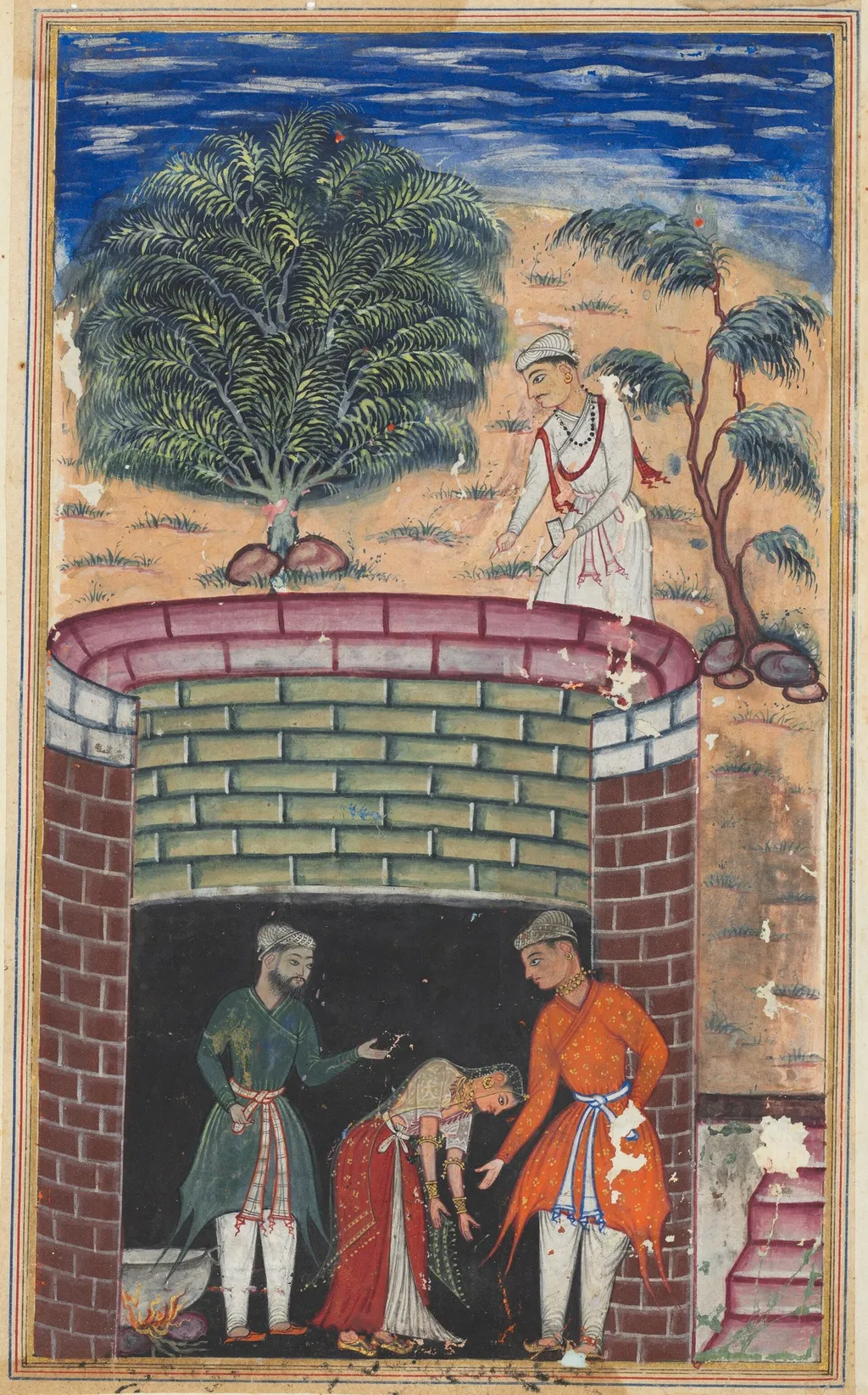
The daughter of the king of the jinns bows before the King of Kings who has just undergone the ordeal of passing through the boiling oil to emerge as a youth, from a Tuti-nama (Tales of a Parrot): Seventh Night is an unspecified painting. It dates from 1560 and is held in the collection of the Cleveland Museum of Art.
About this work
Overview
Four figures are arranged before a brick structure: two men within a dark doorway, a kneeling woman in red, and a standing figure in white outside the entrance.
The work, titled *The daughter of the king of the jinns bows before the King of Kings who has just undergone the ordeal of passing through the boiling oil to emerge as a youth, from a Tuti‑nama (Tales of a Parrot): Seventh Night*, depicts a small narrative scene rendered in a flat, decorative style. Four figures are arranged before a brick structure: two men within a dark doorway, a kneeling woman in red, and a standing figure in white outside the entrance.
Subject & Meaning
The central action shows a woman, identified as the daughter of a jinn king, kneeling in a gesture of deference toward a man dressed in orange, who is presumed to be the “King of Kings” after his trial by boiling oil. The composition suggests a moment of submission and transformation, echoing the moral or magical themes typical of the *Tuti‑nama* storytelling tradition.
Technique & Style
Executed with a limited palette, the painting emphasizes bold colors—green, orange, red, and white—against a muted architectural background. The figures are outlined with fine lines, and details such as the orange‑clad figure’s belt and jewelry are highlighted to draw attention. The flat perspective and stylized rendering align with Persian miniature conventions of the period.
History & Provenance
The piece originates from a manuscript illustration of the *Tuti‑nama*, a collection of moral tales featuring a parrot narrator. While the exact date and workshop are not specified, such illustrations were commonly produced in the Persianate world between the 15th and 18th centuries. The work now belongs to the collection of the Cleveland Museum of Art.
Context
Illustrations like this served both decorative and didactic purposes, accompanying literary texts that conveyed ethical lessons through fantastical episodes. The scene reflects the interplay of human and supernatural characters, a hallmark of Persian narrative art, and illustrates the cultural exchange between courtly literature and visual representation.
Artist & collection

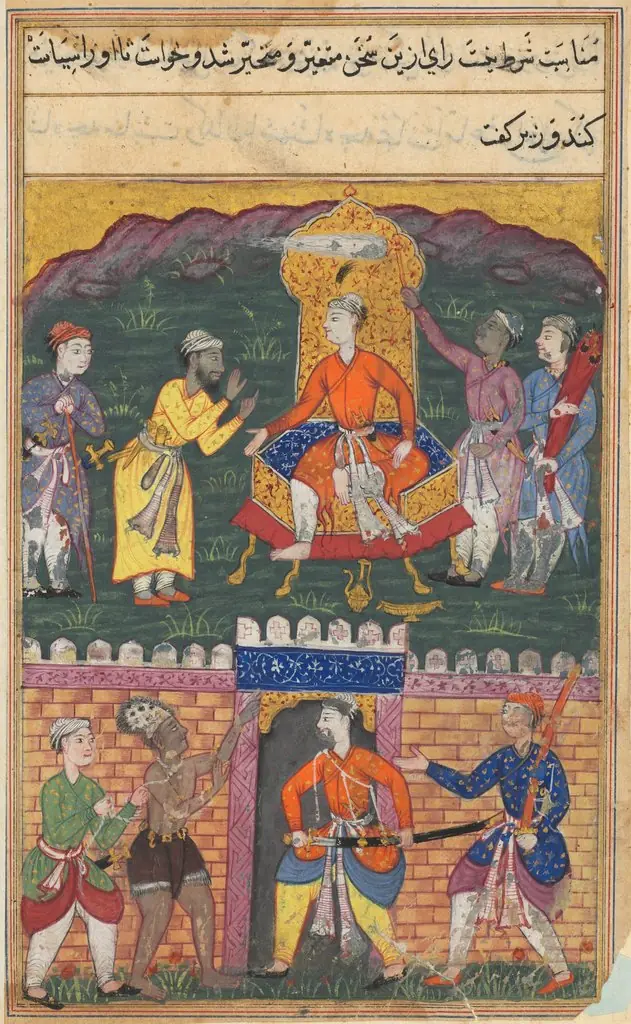 The vizier dissuades the king of Bahilistan from executing the dervish who asks for his daughter’s hand in marriage, from a Tuti-nama (Tales of a Parrot): Seventh Night
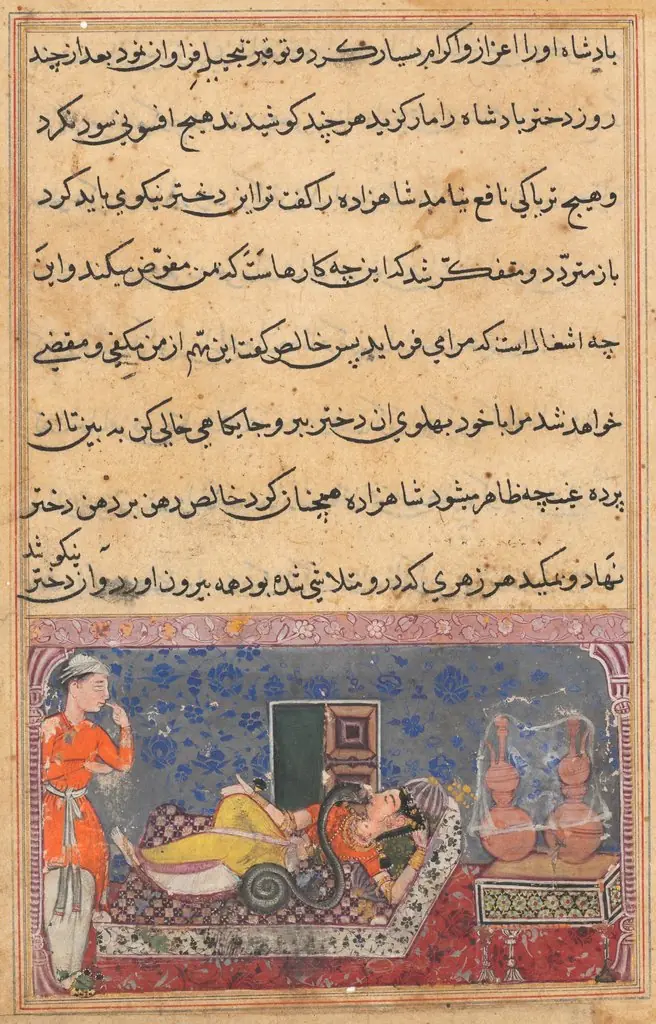 Khalis repays the prince for his kindness by changing into a snake and sucking the poison from the king’s daughter, from a Tuti-nama (Tales of a Parrot): Eighteenth Night
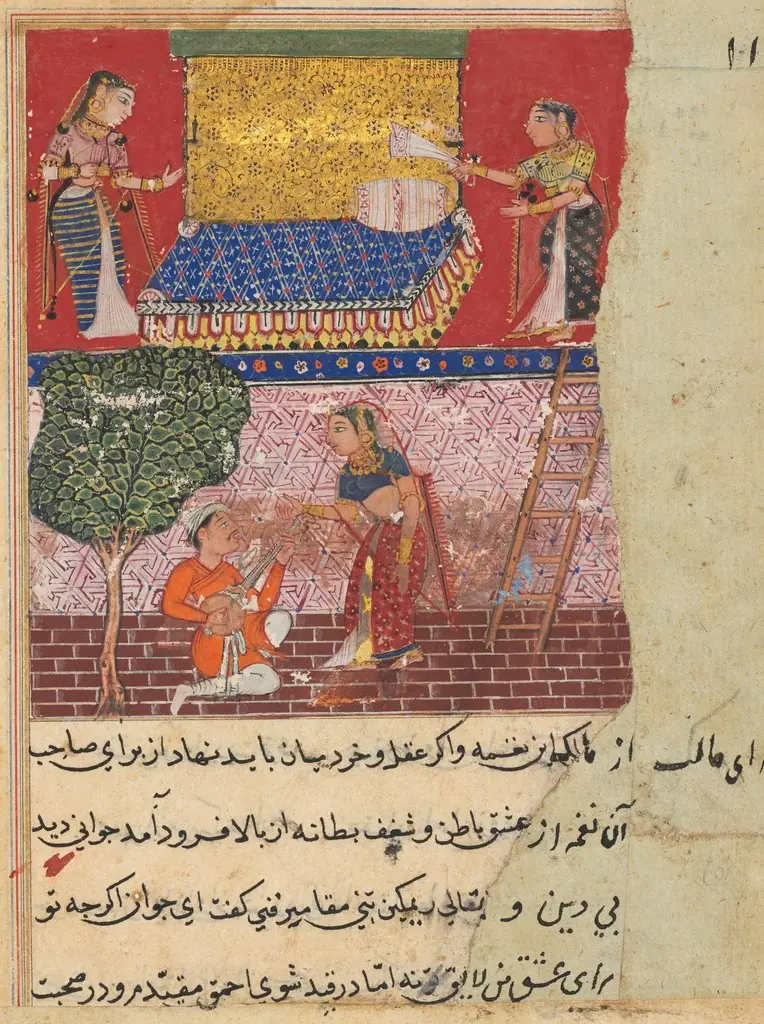 The daughter-in-law of the king of Banaras, charmed by the music of a vagabond, comes down to meet him, from a Tuti-nama (Tales of a Parrot): Sixteenth Night
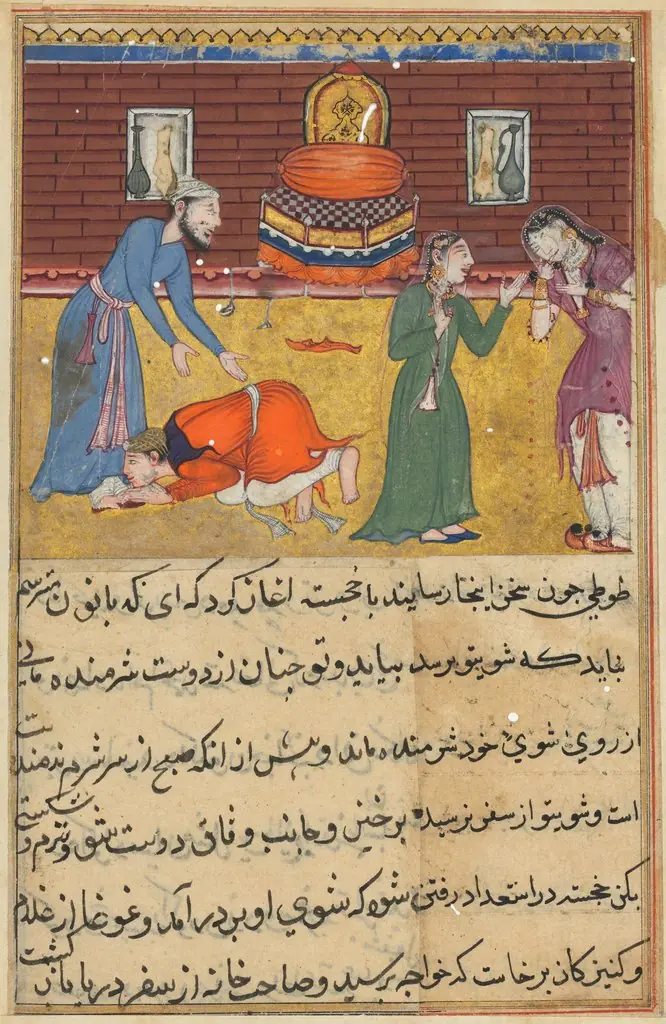 The pious man’s son, now a king, reveals himself to his father; his nurse upbraids his unfaithful mother, from a Tuti-nama (Tales of a Parrot): Fifty-second Night
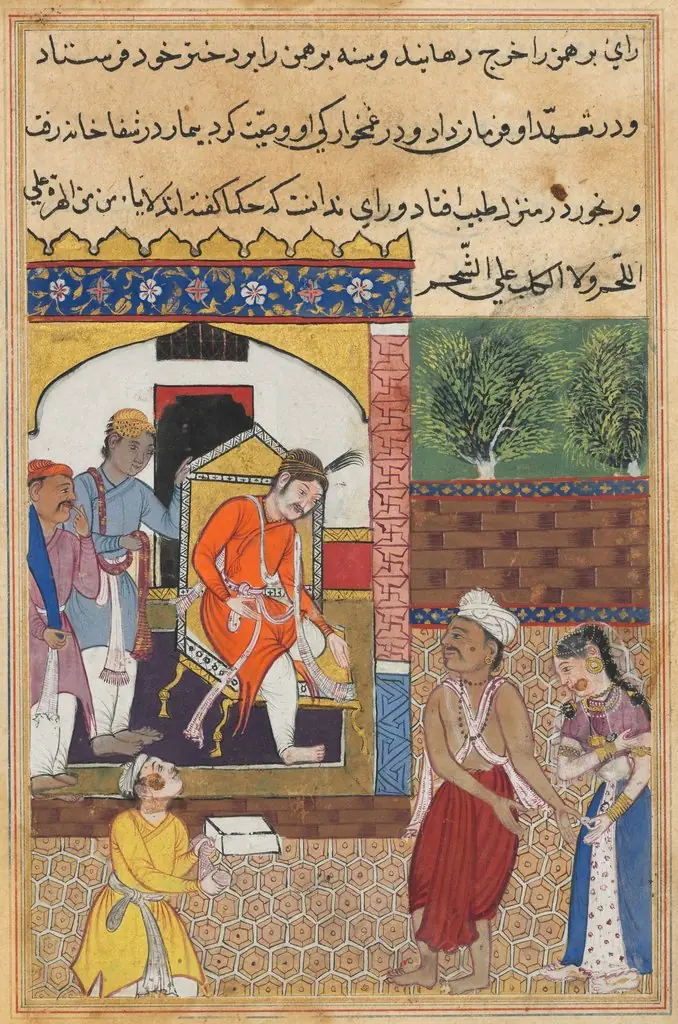 The magician, disguised as a Brahman, visits the king of Babylon, from a Tuti-nama (Tales of a Parrot): Thirty-fifth Night
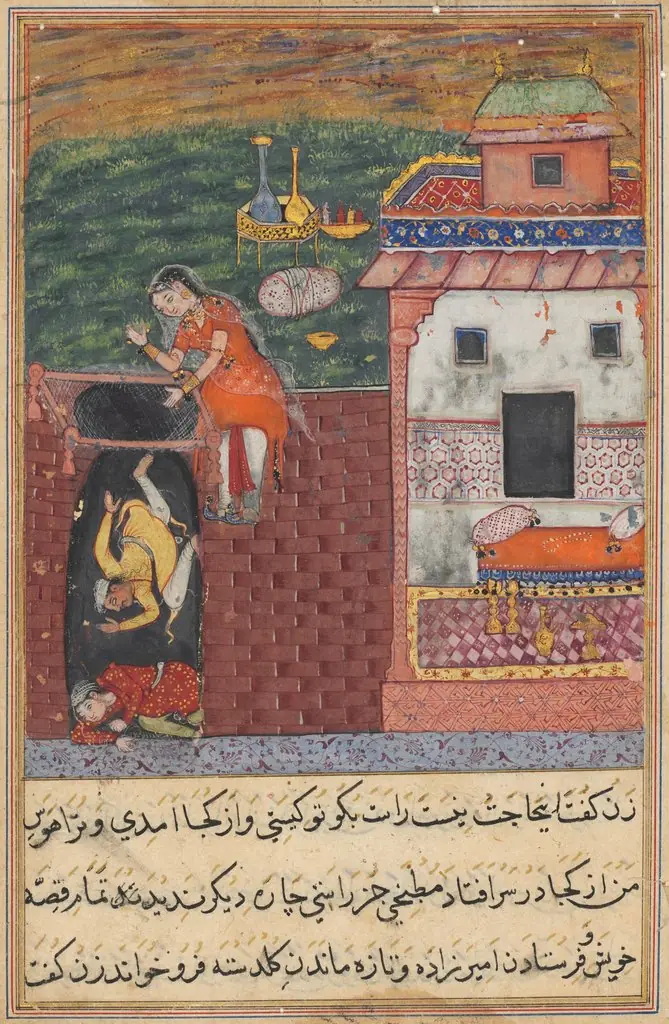 The two cooks, who attempt to seduce the warrior’s loyal wife, are trapped by her in a cellar, from a Tuti-nama (Tales of a Parrot): Fourth Night
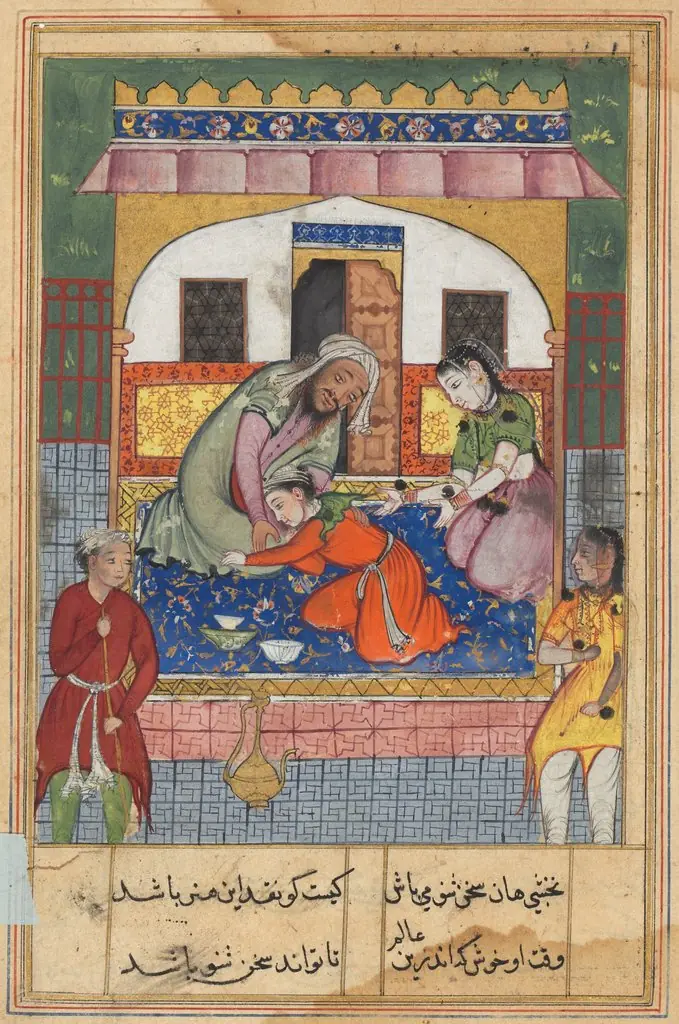 Repenting his conduct, ‘Ubaid falls at the feet of his parents, from a Tuti-nama (Tales of a Parrot): Forty-second Night