Artwork
The pious man’s son, now a king, reveals himself to his father; his nurse upbraids his unfaithful mother, from a Tuti-nama (Tales of a Parrot): Fifty-second Night
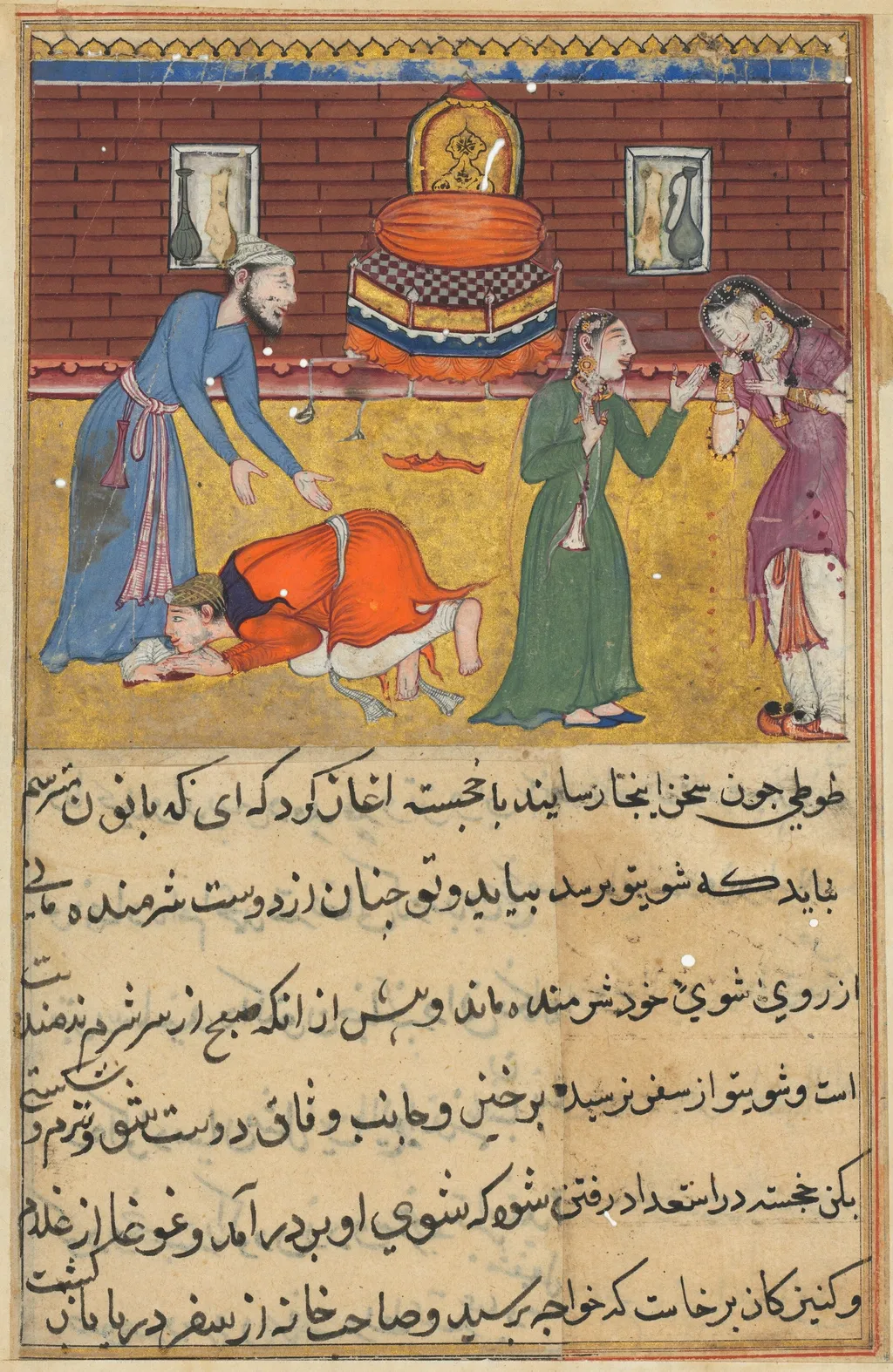
The pious man’s son, now a king, reveals himself to his father; his nurse upbraids his unfaithful mother, from a Tuti-nama (Tales of a Parrot): Fifty-second Night is an unspecified painting. It dates from 1560 and is held in the collection of the Cleveland Museum of Art.
About this work
Overview
The work illustrates a narrative episode from the fifty‑second night of the Persian illustrated manuscript known as the Tuti‑nama, or Tales of a Parrot.
The work illustrates a narrative episode from the fifty‑second night of the Persian illustrated manuscript known as the Tuti‑nama, or Tales of a Parrot. Set within an opulently adorned interior of red‑brick walls and gilded flooring, four figures occupy the space: a kneeling man in blue, a fallen figure in orange, and two standing women dressed in green and purple. The composition captures a moment of revelation and accusation within the story.
Subject & Meaning
The scene depicts the son of a devout man, now a king, unveiling his identity to his father. Simultaneously, a nurse chastises the mother for infidelity, pointing to the wounded man on the ground. The juxtaposition of revelation and rebuke underscores themes of loyalty, lineage, and moral judgment central to the tale.
Technique & Style
Rendered with vivid pigments and strong contour lines, the painting employs a flat, decorative approach typical of Persian miniature art. The use of saturated blues, oranges, greens, and purples creates visual contrast, while the intricate architectural details—lamp, shelves, jars, and mirror—enhance the sense of a lavish domestic setting.
History & Provenance
The image originates from a hand‑illuminated copy of the Tuti‑nama, a 16th‑century Persian manuscript that compiled moral stories and fables. The specific folio corresponds to the fifty‑second night of the collection, a period when such illustrated books were commissioned for elite patrons and circulated among courts.
Context
Within the broader tradition of Persian narrative painting, the Tuti‑nama exemplifies the synthesis of literary and visual culture. The work reflects the era’s emphasis on didactic storytelling, where moral lessons were conveyed through elaborate scenes that combined text and image in a single page.
Artist & collection

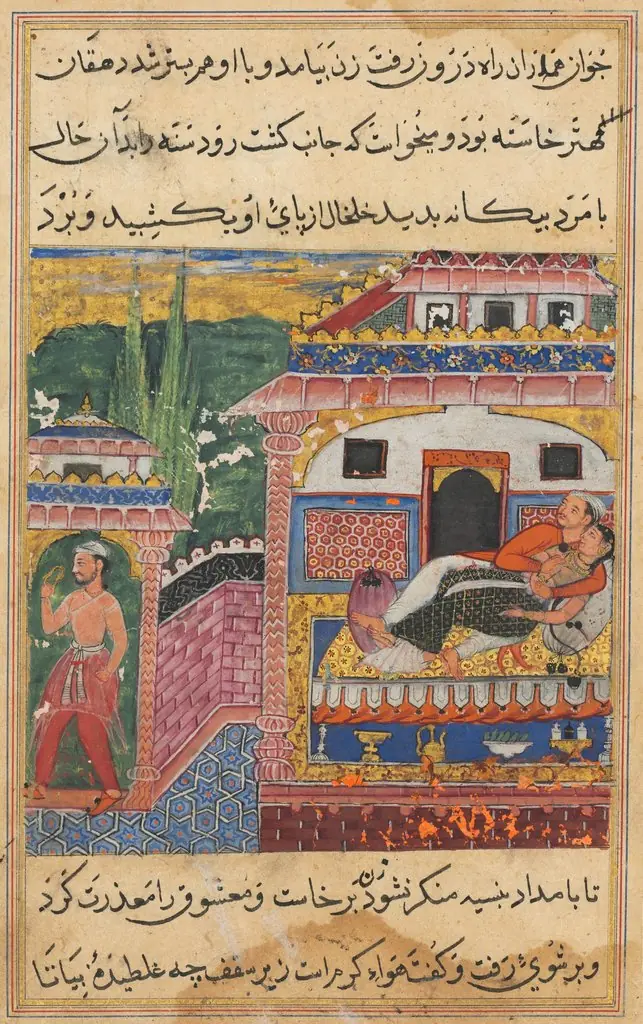 The farmer, father of the son with the deceitful wife, steals away with her anklet while she is in bed with her lover, from a Tuti-nama (Tales of a Parrot): Eighth Night
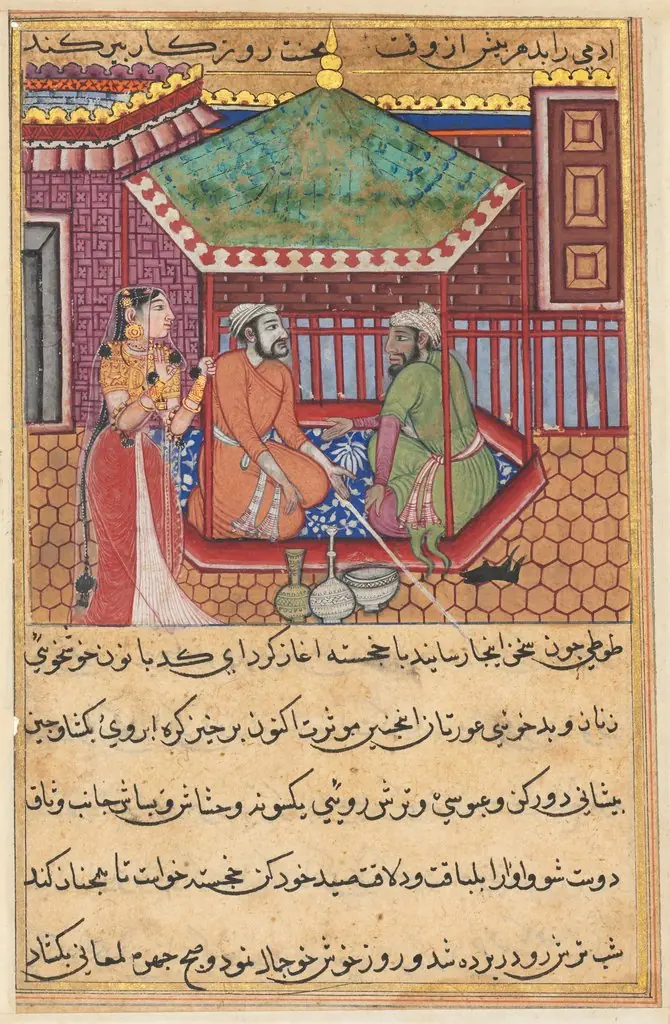 The eldest brother explains the reason for his youthful appearance, from a Tuti-nama (Tales of a Parrot): Forty-ninth Night
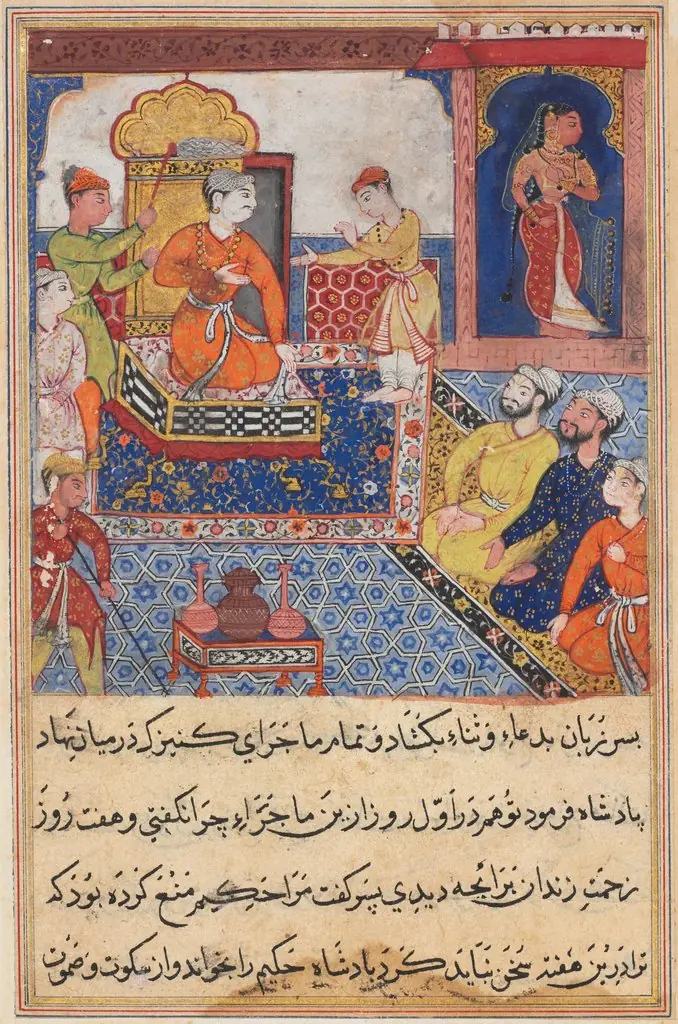 The young prince recounts his experiences to his father, the king, from a Tuti-nama (Tales of a Parrot): Eighth Night
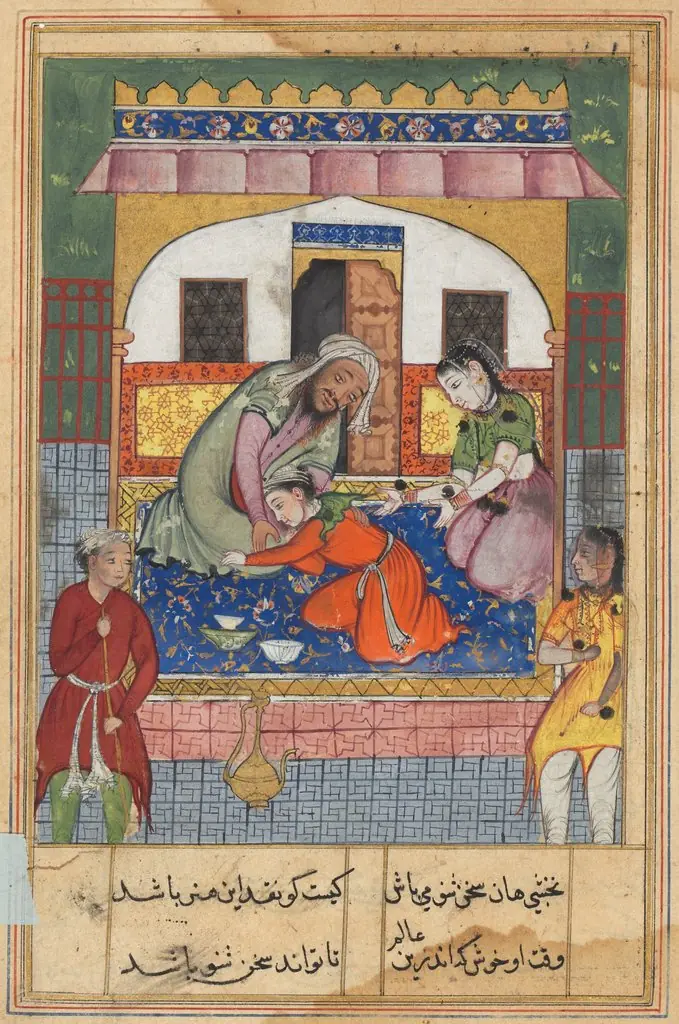 Repenting his conduct, ‘Ubaid falls at the feet of his parents, from a Tuti-nama (Tales of a Parrot): Forty-second Night
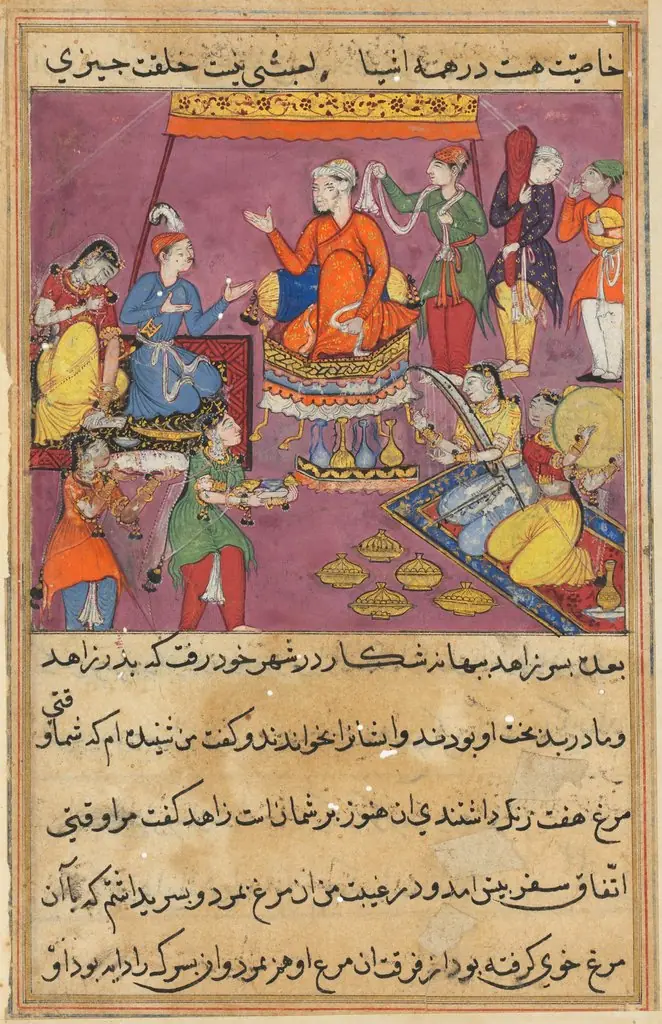 The king gives his daughter in marriage to the pious man’s son, from a Tuti-nama (Tales of a Parrot): Fifty-second Night
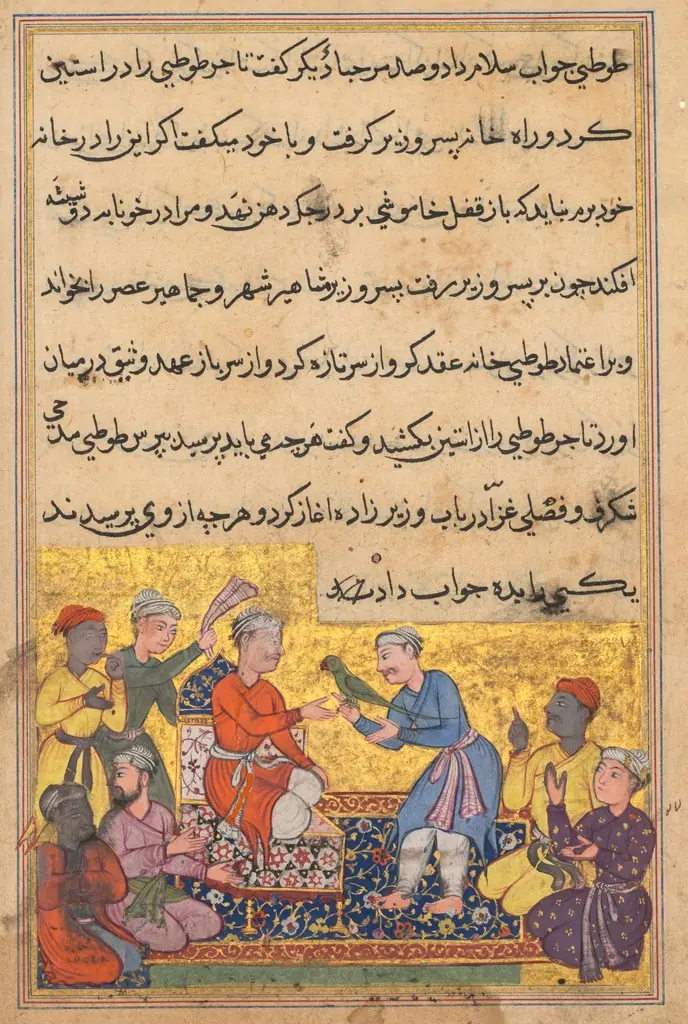 The magic parrot of the merchant talks to the vizier’s son, from a Tuti-nama (Tales of a Parrot): Tenth Night
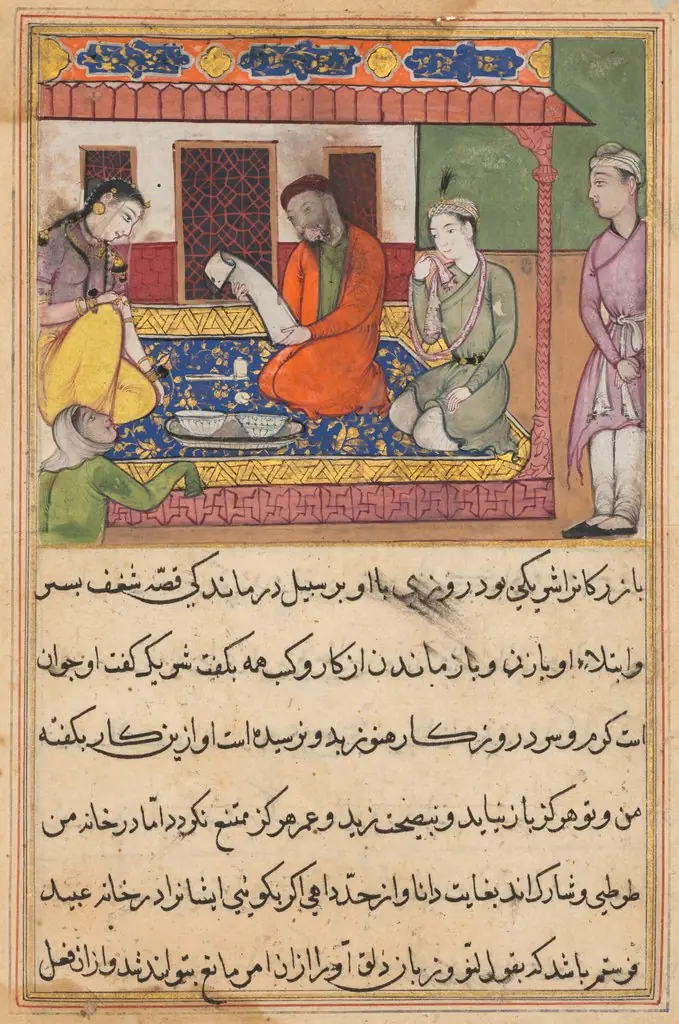 The marriage of ‘Ubaid, son of a merchant of Tirmiz, from a Tuti-nama (Tales of a Parrot): Forty-second Night
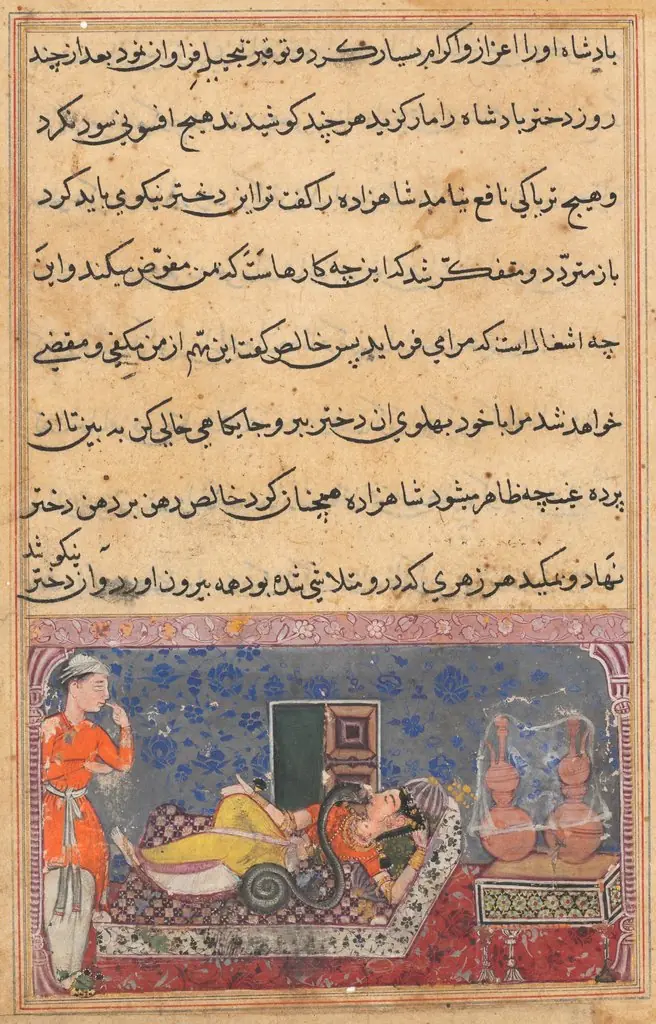 Khalis repays the prince for his kindness by changing into a snake and sucking the poison from the king’s daughter, from a Tuti-nama (Tales of a Parrot): Eighteenth Night
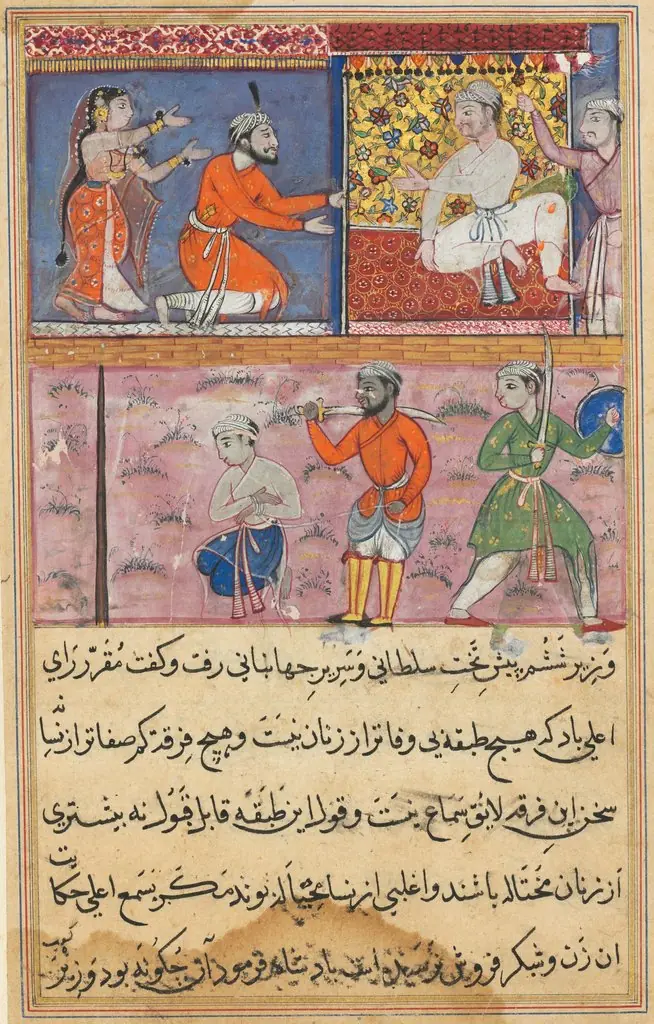 The prince sent back to the place of execution for the sixth time, from a Tuti-nama (Tales of a Parrot): Eighth Night
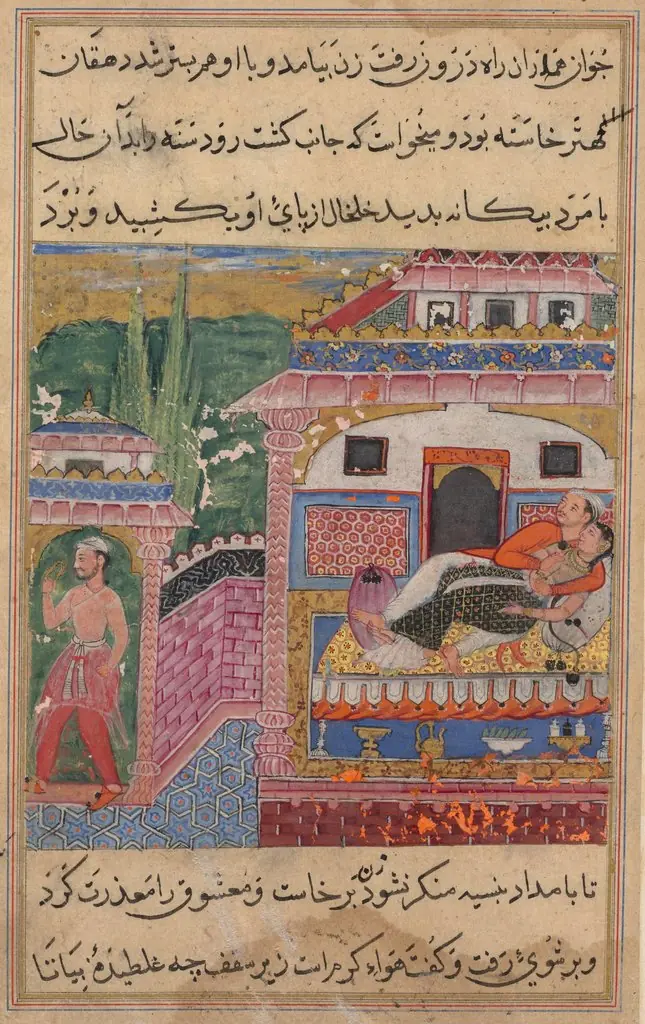 The deceitful wife persuades her husband to sleep in the same place where she had previously slept with her lover, from a Tuti-nama (Tales of a Parrot): Eighth Night
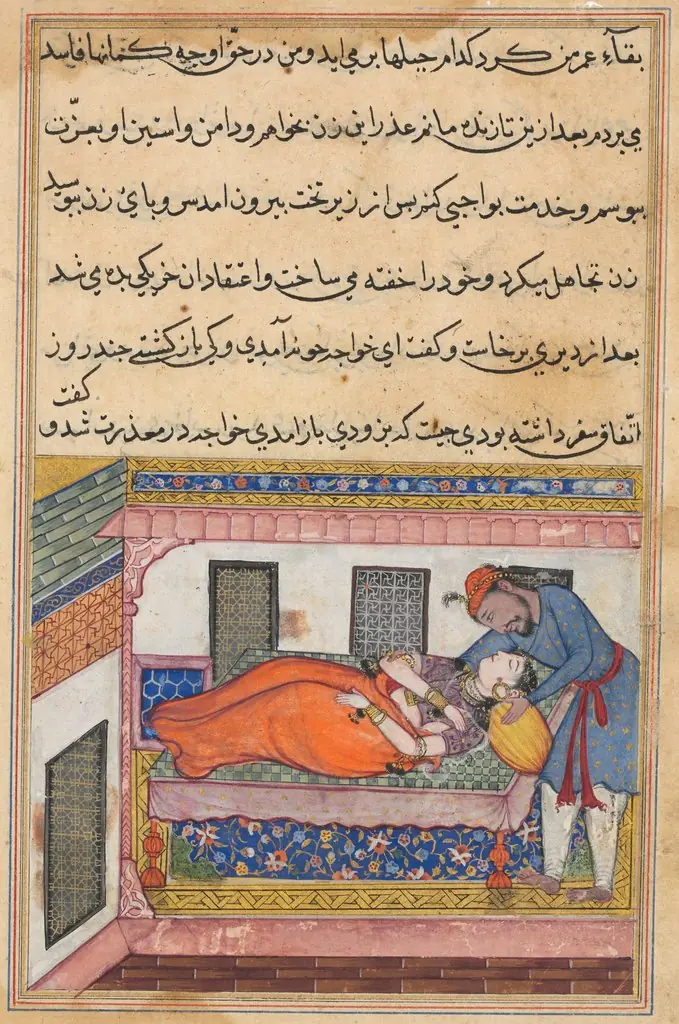 Shahr-Arai’s husband bends to kiss his wife who feigns sleep, from a Tuti-nama (Tales of a Parrot): Fortieth Night
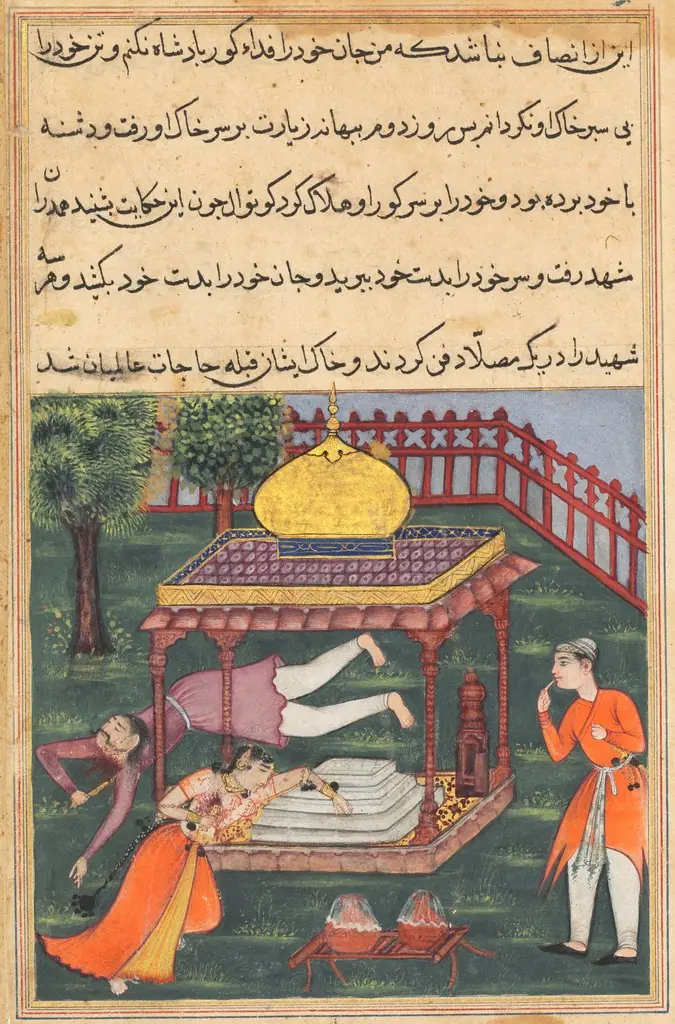 Mahrusa kills herself at the tomb of the king of Zabul, and her husband does likewise, from a Tuti-nama (Tales of a Parrot): Thirty-sixth Night
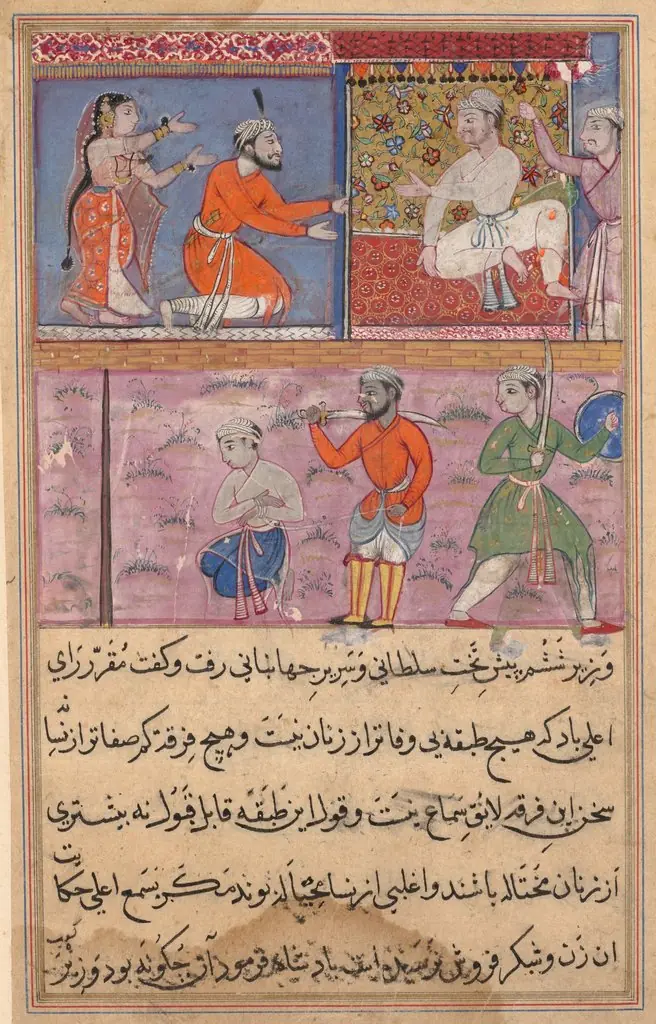 Page from Tales of a Parrot (Tuti-nama): text page
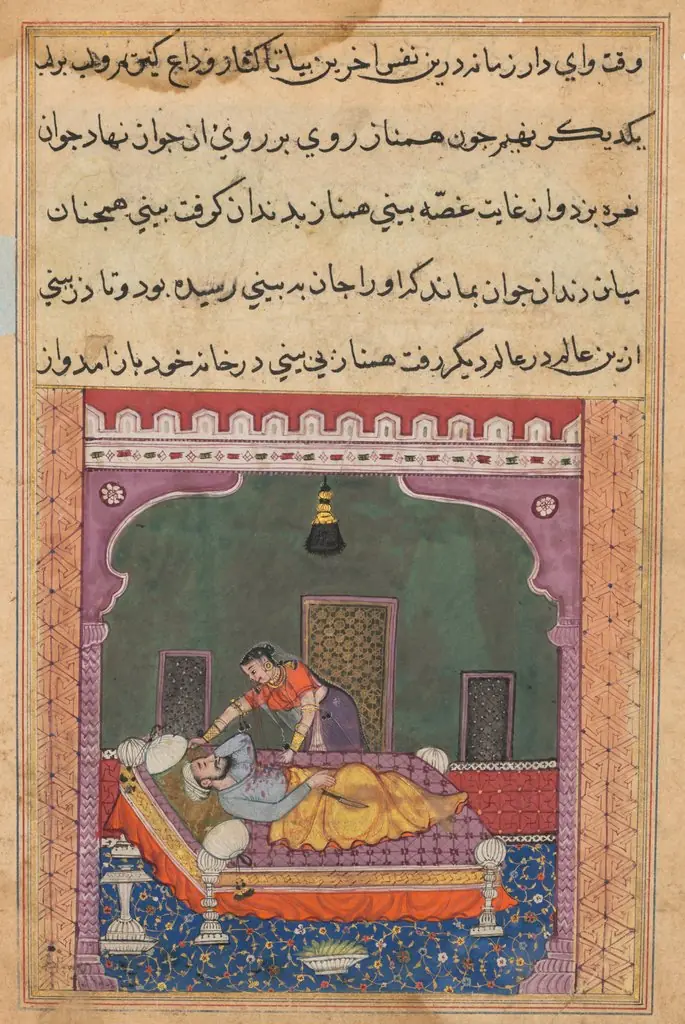 In order to falsely implicate her husband, Hamnaz places a knife by his side and lets the blood dripping from her nose stain his clothes, from a Tuti-nama (Tales of a Parrot): Twenty-fifth Night