Artwork
The daughter-in-law of the king of Banaras, charmed by the music of a vagabond, comes down to meet him, from a Tuti-nama (Tales of a Parrot): Sixteenth Night
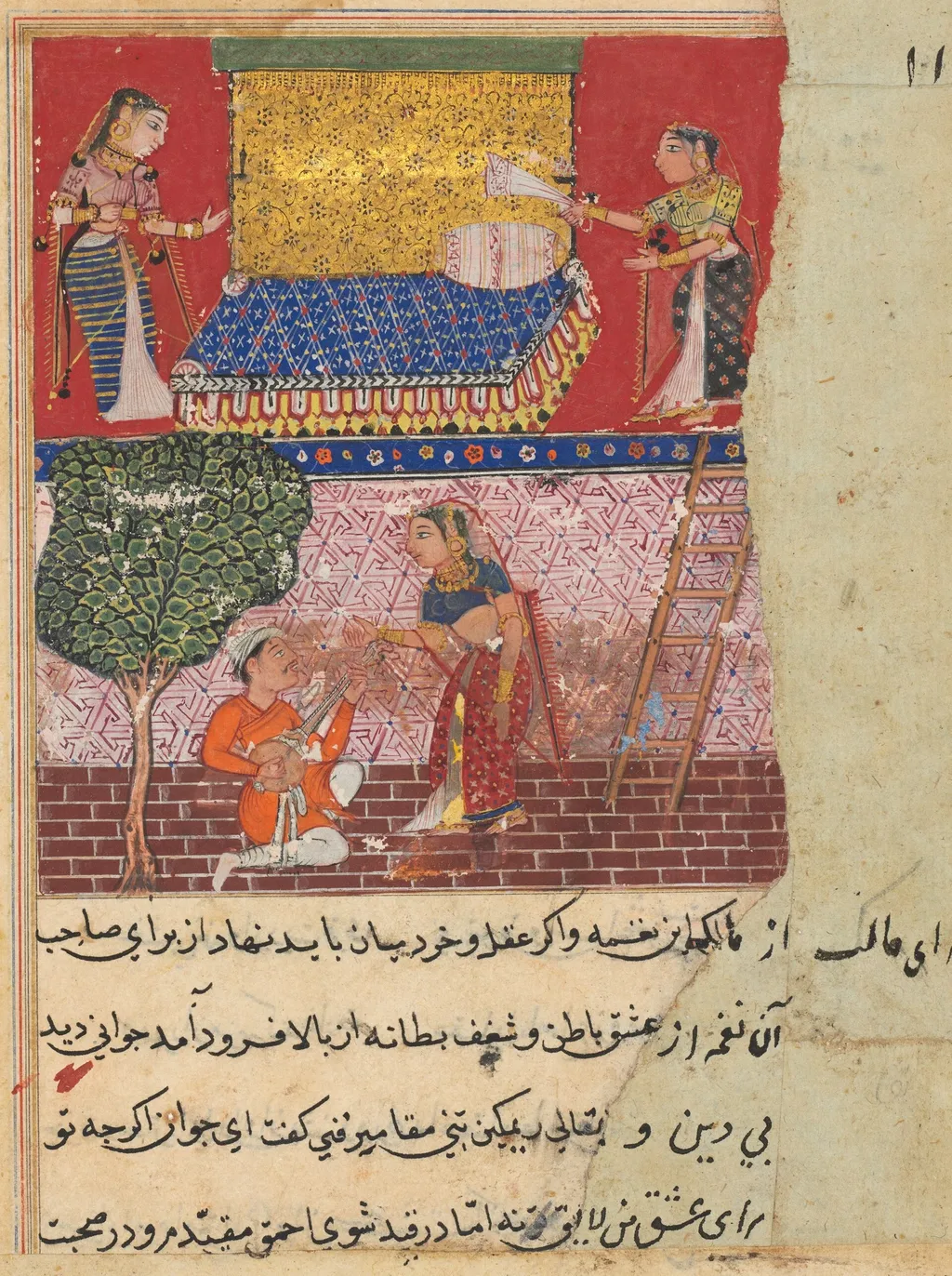
The daughter-in-law of the king of Banaras, charmed by the music of a vagabond, comes down to meet him, from a Tuti-nama (Tales of a Parrot): Sixteenth Night is an unspecified painting. It dates from 1560 and is held in the collection of the Cleveland Museum of Art. The work depicts a bifurcated scene from a narrative in the Tuti‑nama, a collection of Persian tales.
About this work
Overview
The work depicts a bifurcated scene from a narrative in the Tuti‑nama, a collection of Persian tales.
The work depicts a bifurcated scene from a narrative in the Tuti‑nama, a collection of Persian tales. In the upper register a palace bedroom is shown, where two women in vivid, patterned garments stand beside a gilded canopy bed; one holds a fan, the other a letter. The lower register presents an outdoor garden where a woman in red leans against a tree while a man in orange plays a stringed instrument, all set against red‑brick flooring and a pink, diamond‑patterned wall.
Subject & Meaning
The painting illustrates a moment from the sixteenth night of the story, in which the king’s daughter‑in‑law is enchanted by the music of a wandering minstrel and descends from her royal quarters to meet him. The juxtaposition of interior and exterior spaces underscores the transition from courtly confinement to the freedom of the garden, highlighting the allure of music and love across social boundaries.
Technique & Style
Executed in a vivid palette, the artist employs contrasting colors—rich golds and blues for the palace figures versus the simpler orange and red of the garden scene. Linear perspective is suggested through the tiled floor and patterned wall, while decorative motifs on the clothing and canopy reflect Persian miniature traditions, emphasizing ornamental detail over realistic modeling.
History & Provenance
The painting originates from a manuscript illustration of the Tuti‑nama, a 16th‑century Persian compilation of romantic tales. It entered the collection of the Cleveland Museum of Art, where it is currently displayed, having been acquired through the museum’s Asian art acquisitions program.
Artist & collection

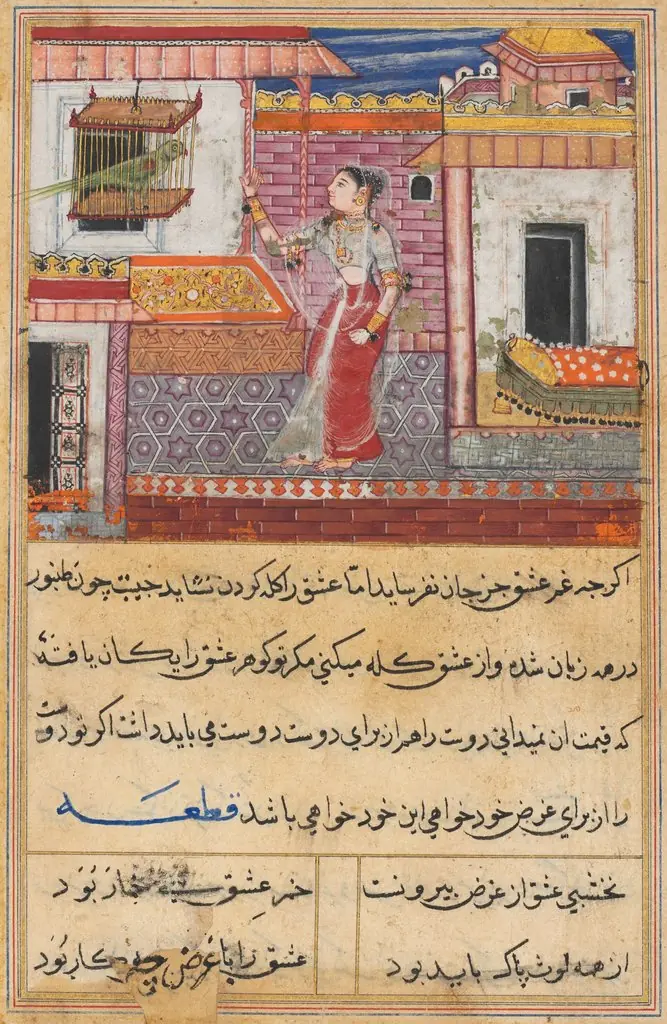 The Parrot Addresses Khujasta at the Beginning of the Thirteenth Night, from a Tuti-nama (Tales of a Parrot)
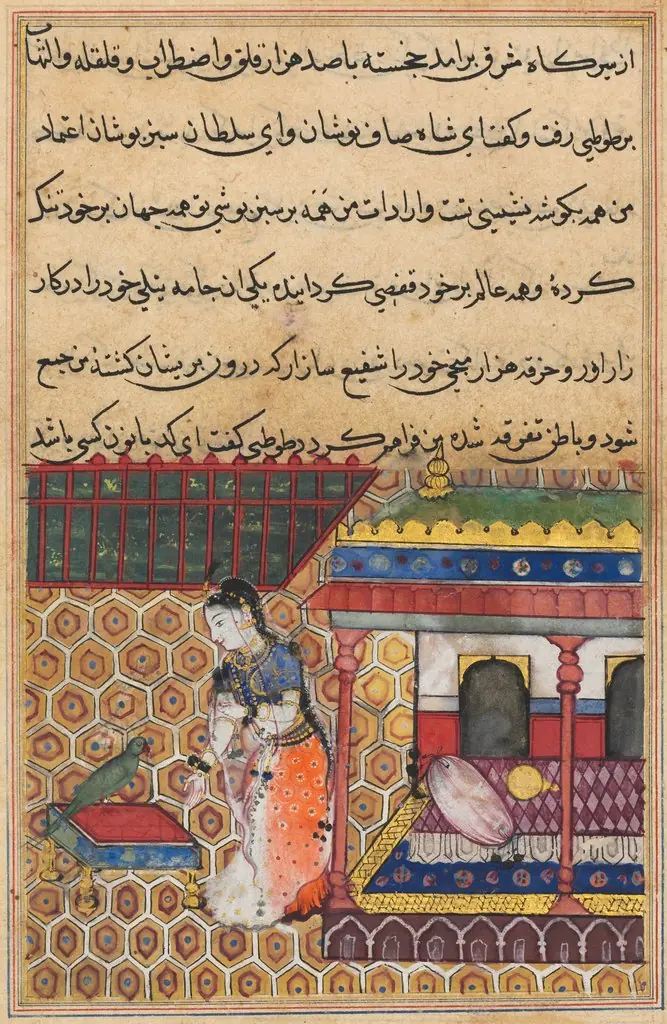 The parrot addresses Khujasta at the beginning of the thirty-eighth night, from a Tuti-nama (Tales of a Parrot)
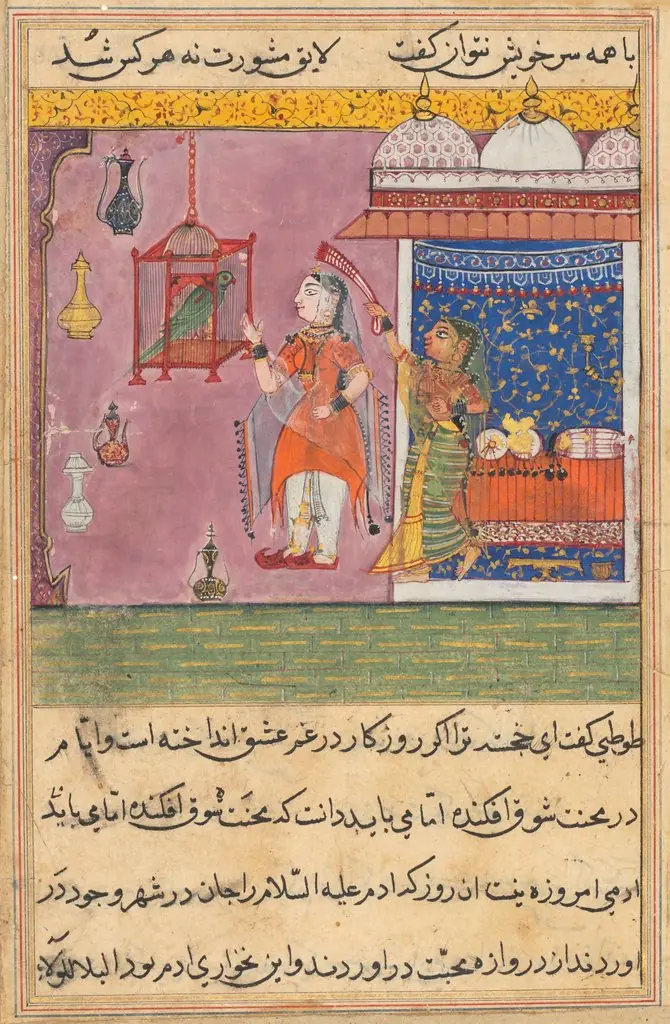 The Parrot Addresses Khujasta at the Beginning of the Nineteenth Night, from a Tuti-nama (Tales of a Parrot)
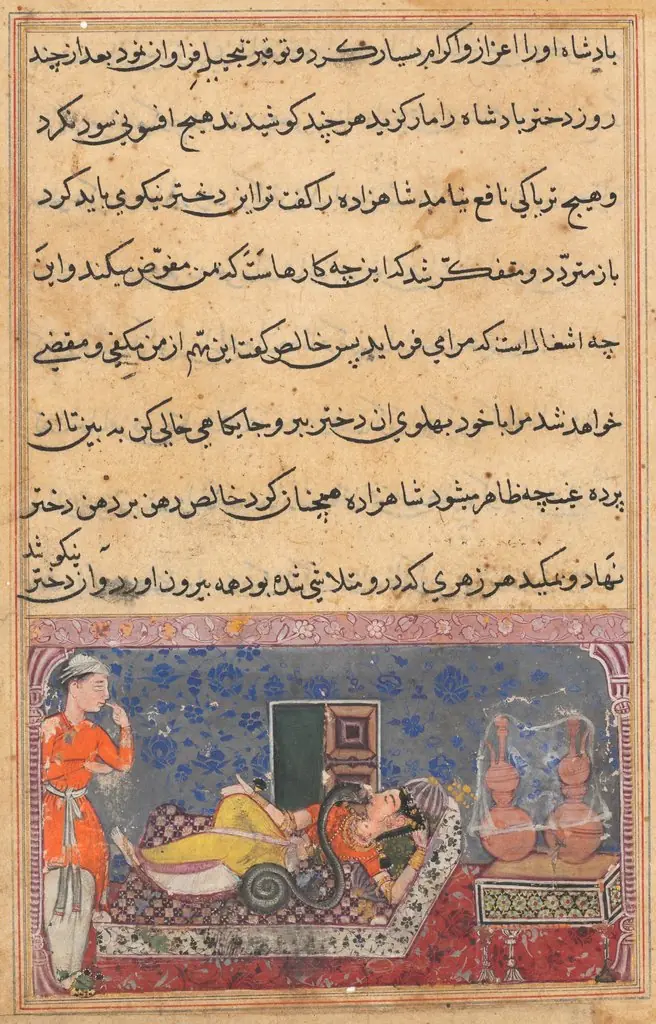 Khalis repays the prince for his kindness by changing into a snake and sucking the poison from the king’s daughter, from a Tuti-nama (Tales of a Parrot): Eighteenth Night
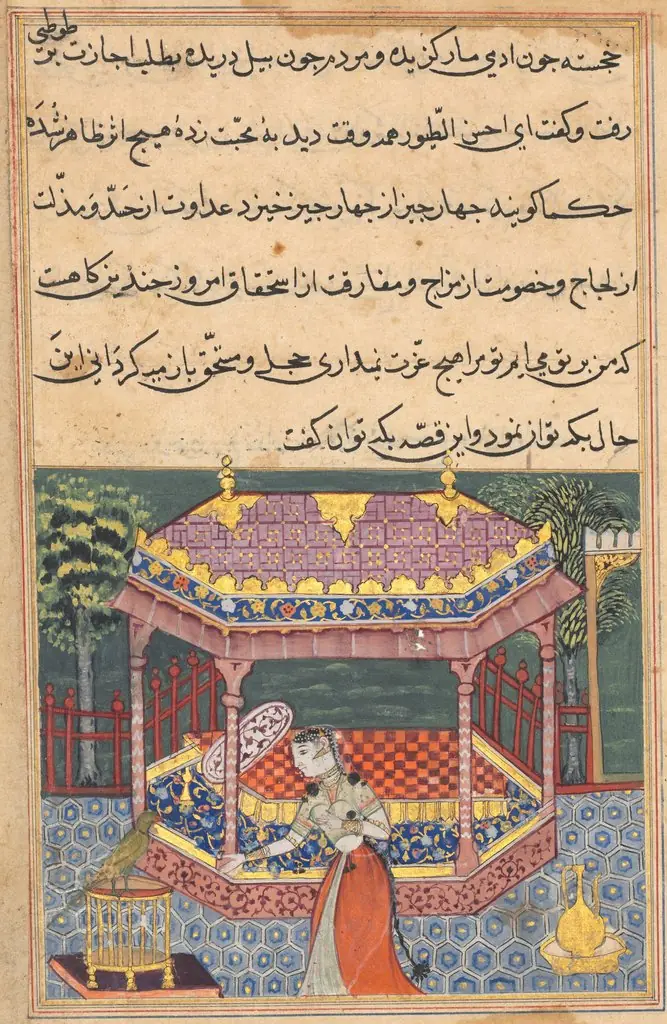 The parrot addresses Khujasta at the beginning of the thirty-seventh night, from a Tuti-nama (Tales of a Parrot)
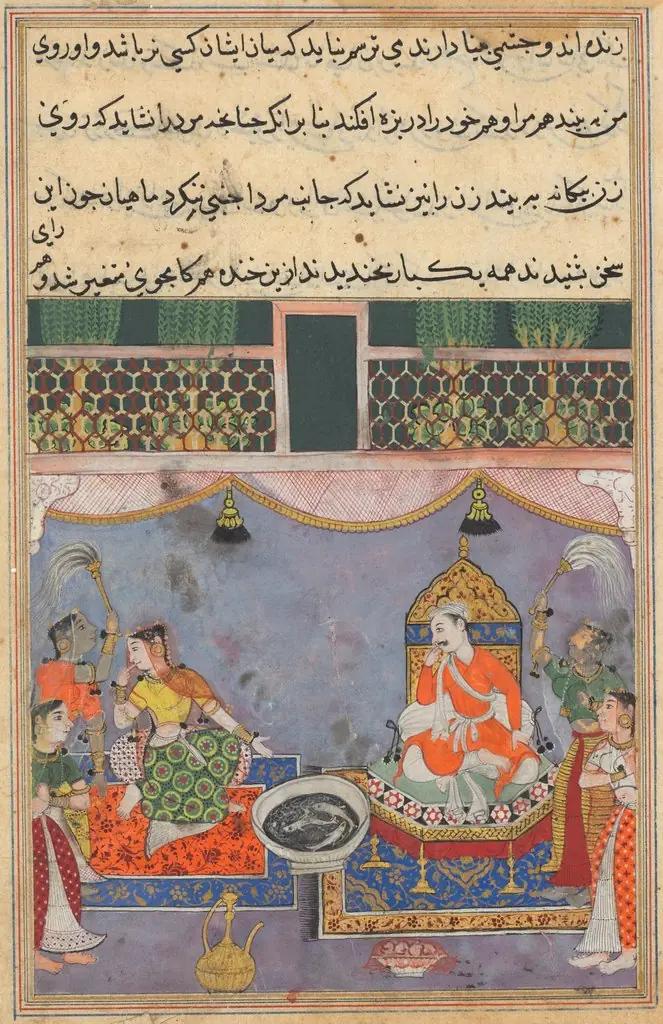 Kamjuy, the wife of the Raja, averts her face from the fishes, from a Tuti-nama (Tales of a Parrot): Twenty-third Night
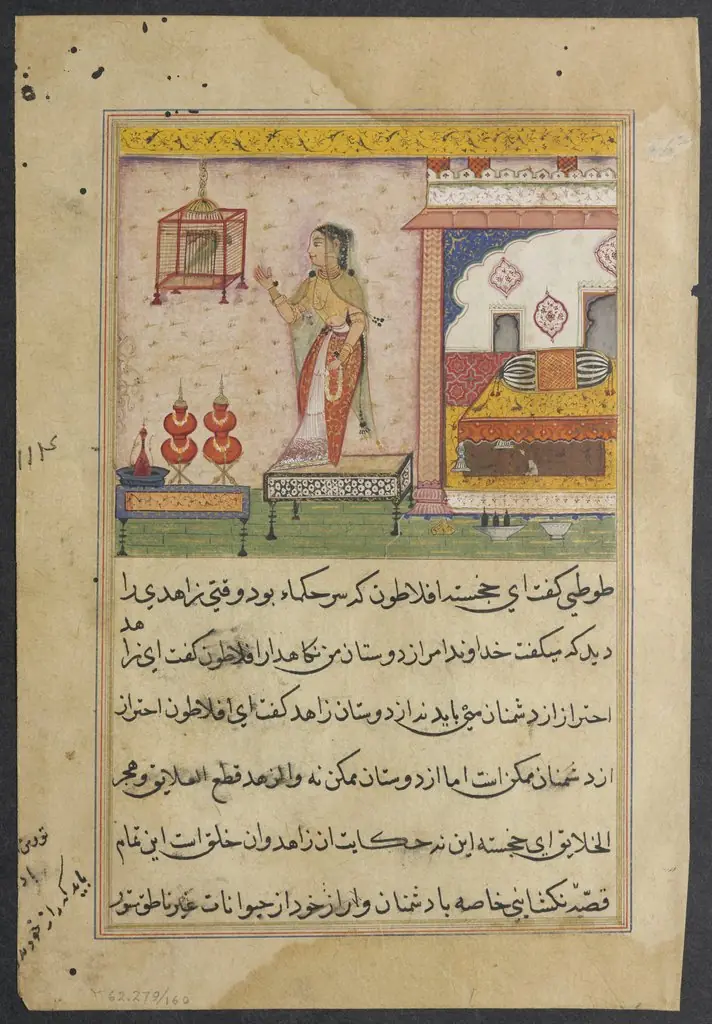 The Parrot Addresses Khujasta at the Beginning of the Twenty-third Night, from a Tuti-nama (Tales of a Parrot)
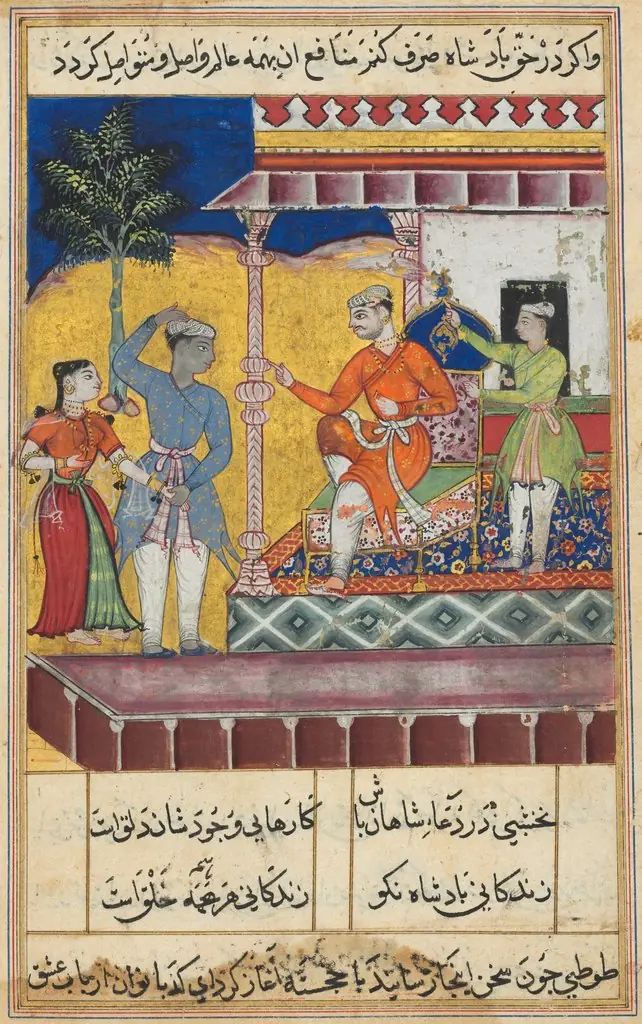 The rejuvenated old man and the daughter of the king of the jinns take leave of the King of Kings, from a Tuti-nama (Tales of a Parrot): Seventh Night
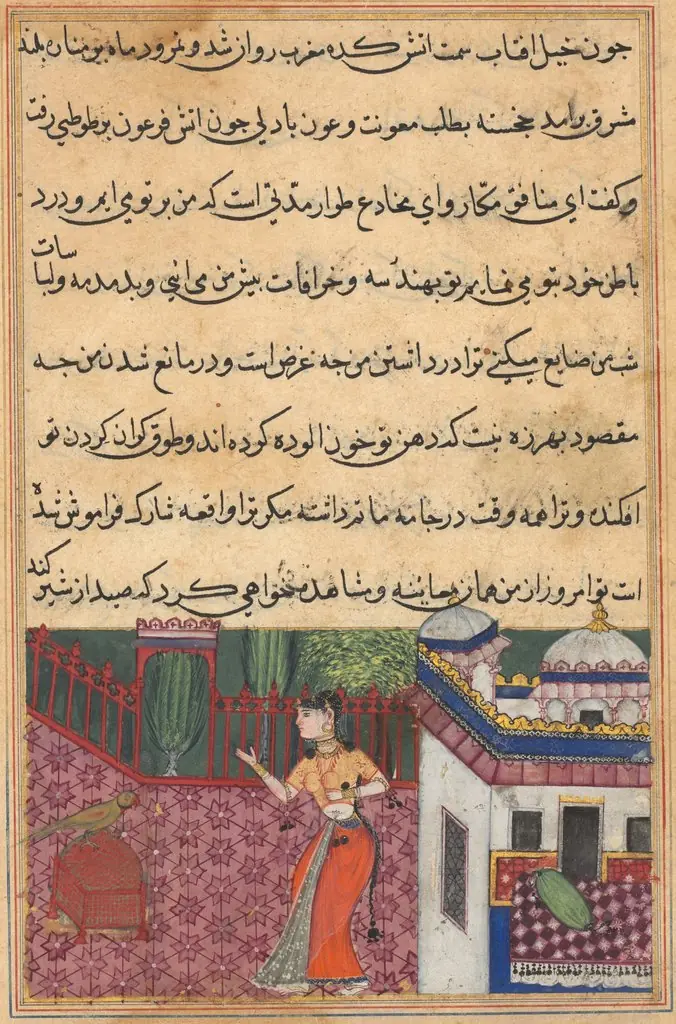 The parrot addresses Khujasta at the beginning of the thirty-third night, from a Tuti-nama (Tales of a Parrot)
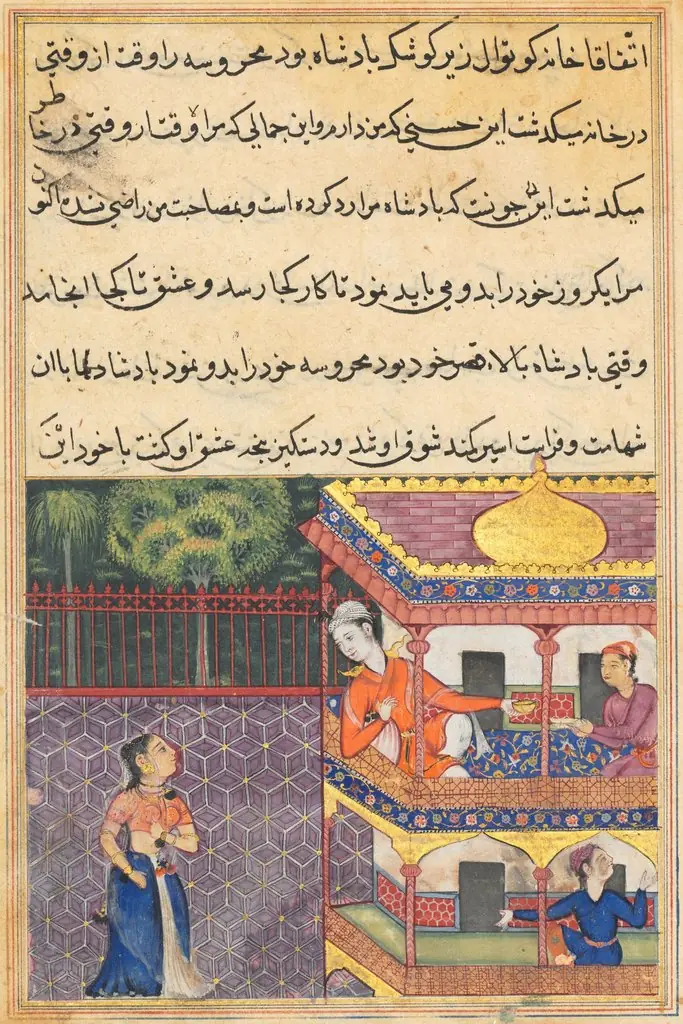 The king of Zabul sees Mahrusa from his palace balcony, from a Tuti-nama (Tales of a Parrot): Thirty-sixth Night
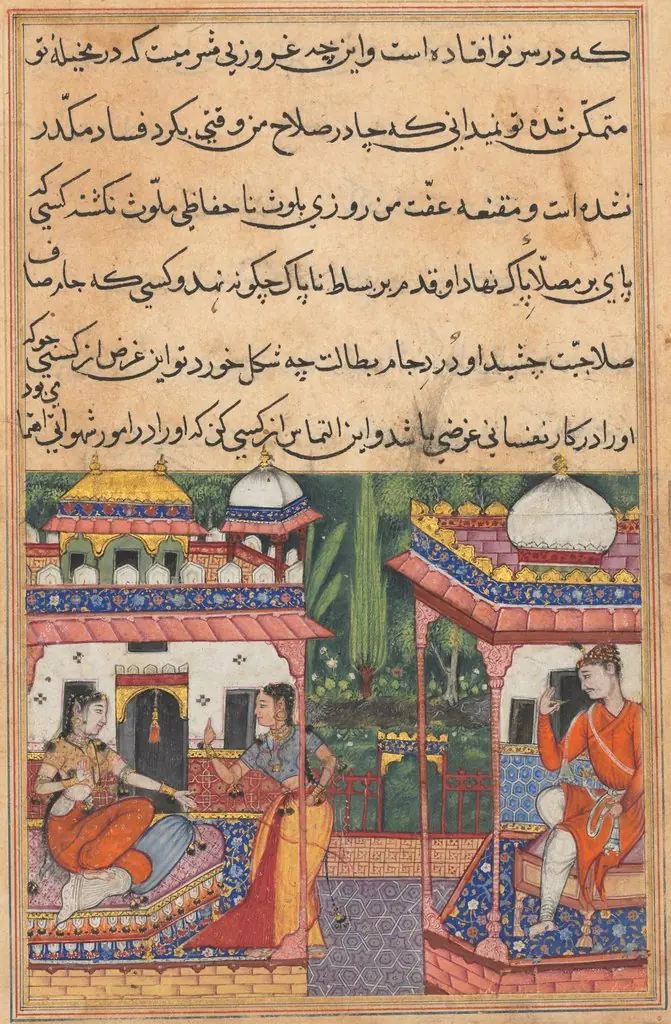 Kaiwan sends a message of love to Khurshid, wife of his brother Utarid who is away on a journey, from a Tuti-nama (Tales of a Parrot): Thirty-second Night
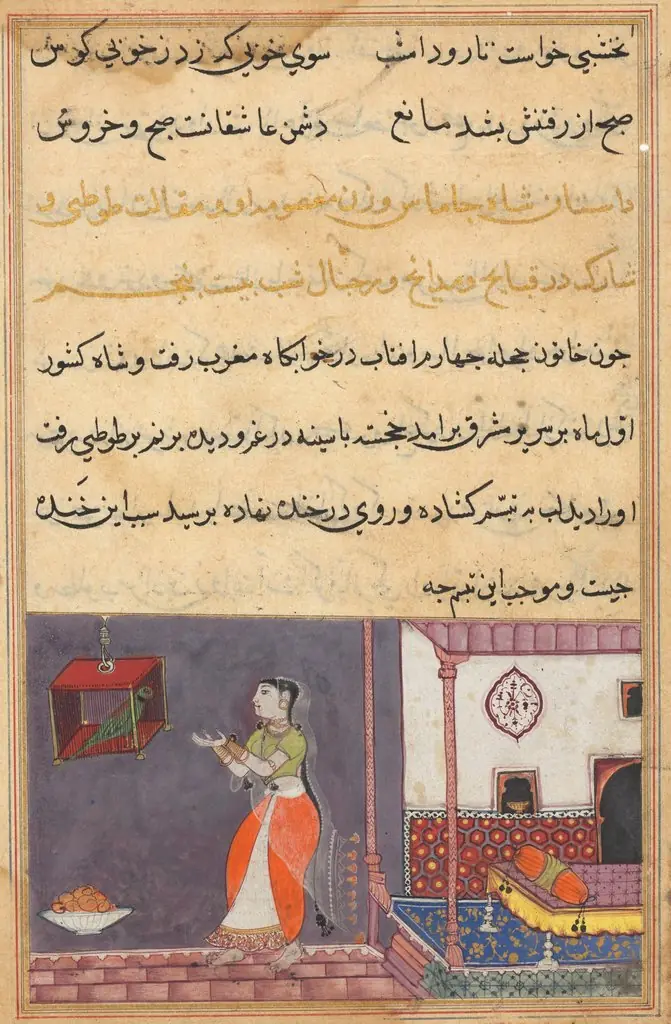 The Parrot Addresses Khujasta at the Beginning of the Twenty-fifth Night, from a Tuti-nama (Tales of a Parrot)
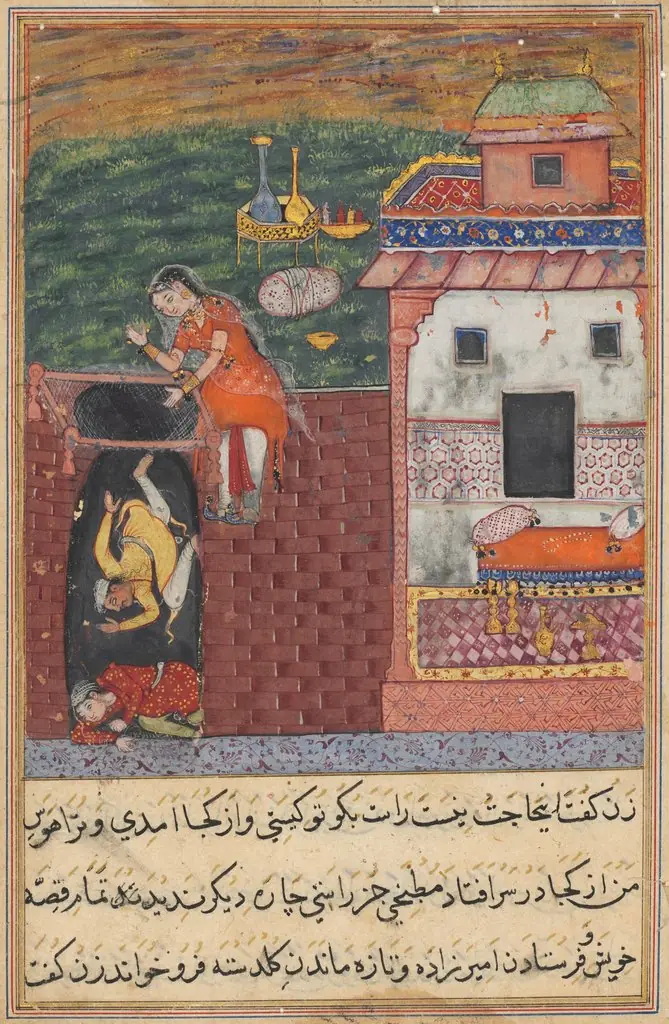 The two cooks, who attempt to seduce the warrior’s loyal wife, are trapped by her in a cellar, from a Tuti-nama (Tales of a Parrot): Fourth Night
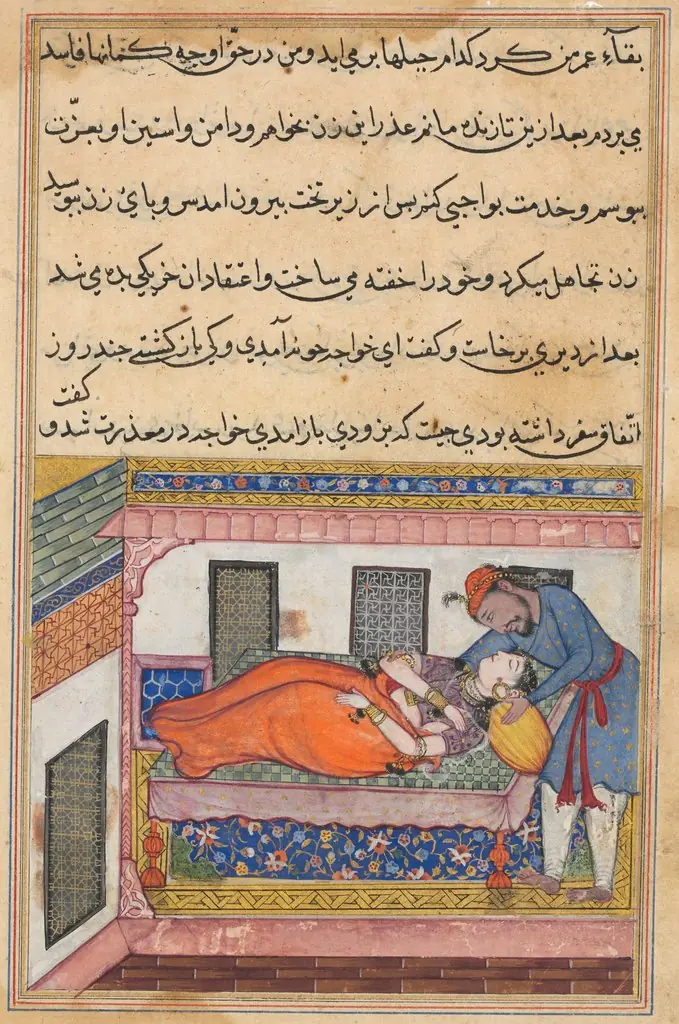 Shahr-Arai’s husband bends to kiss his wife who feigns sleep, from a Tuti-nama (Tales of a Parrot): Fortieth Night