Artwork
Khalis repays the prince for his kindness by changing into a snake and sucking the poison from the king’s daughter, from a Tuti-nama (Tales of a Parrot): Eighteenth Night
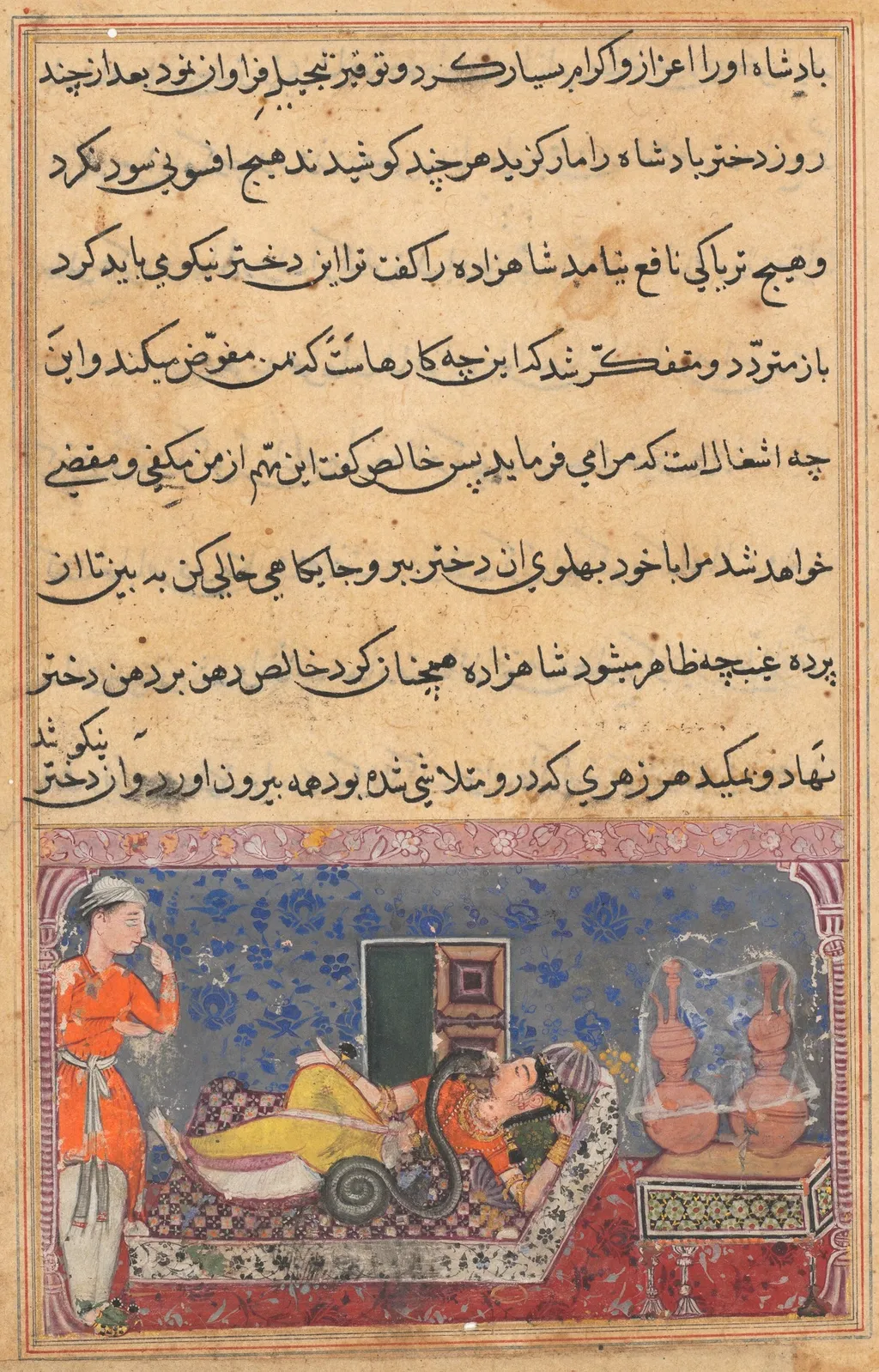
Khalis repays the prince for his kindness by changing into a snake and sucking the poison from the king’s daughter, from a Tuti-nama (Tales of a Parrot): Eighteenth Night is an unspecified painting. It dates from 1560 and is held in the collection of the Cleveland Museum of Art. The miniature illustrates a narrative episode from the eighteenth night of the Tuti‑nama, a Persian collection of fables.
About this work
Overview
A brightly coloured figure in orange leans on a staff, observing a scene in which a man in green and white reclines on a bed beside a sleeping woman.
The miniature illustrates a narrative episode from the eighteenth night of the Tuti‑nama, a Persian collection of fables. A brightly coloured figure in orange leans on a staff, observing a scene in which a man in green and white reclines on a bed beside a sleeping woman. A serpent coils around the woman’s arm, while a servant offers a pitcher, all set against a blue background adorned with stylised floral motifs.
Subject & Meaning
The composition depicts the moment when Khalis, repaying a prince’s kindness, transforms into a snake to draw poison from the king’s daughter, thereby saving her life. The presence of the servant with a pitcher suggests the ritual of cleansing, while the attentive onlooker underscores the moral emphasis on gratitude and self‑sacrifice within the tale.
Technique & Style
Executed in the flat, vivid palette typical of Persian miniature painting, the work employs bold, unmodulated colours—orange, green, white, red and gold—without modelling shadows. Linear outlines define figures and decorative elements, while the background’s patterned blue field provides a stylised setting rather than a realistic space.
History & Provenance
The scene is taken from a manuscript of the Tuti‑nama, a 15th‑century anthology of stories illustrated for elite patrons. The particular folio belongs to a later copy produced in the eighteenth century, reflecting the continued popularity of the text in Persianate courts. Its current location is recorded in the collection of the Cleveland Museum of Art.
Context
Illustrated manuscripts such as this served both literary and didactic functions, pairing text with visual narration to aid comprehension among aristocratic audiences. The story’s emphasis on loyalty and the transformative power of the snake aligns with broader themes in Persian folklore, where animals often embody moral virtues.
Artist & collection

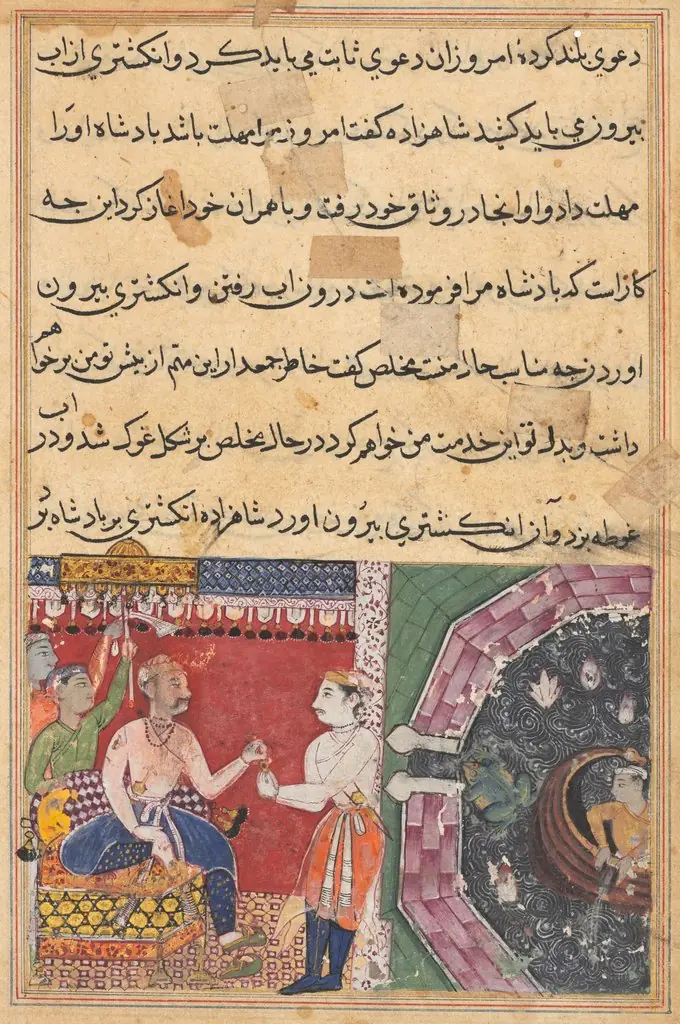 The prince, with the help of Mukhlis who changes into a frog, recovers the ring lost in the sea, and returns it to the king, from a Tuti-nama (Tales of a Parrot): Eighteenth Night
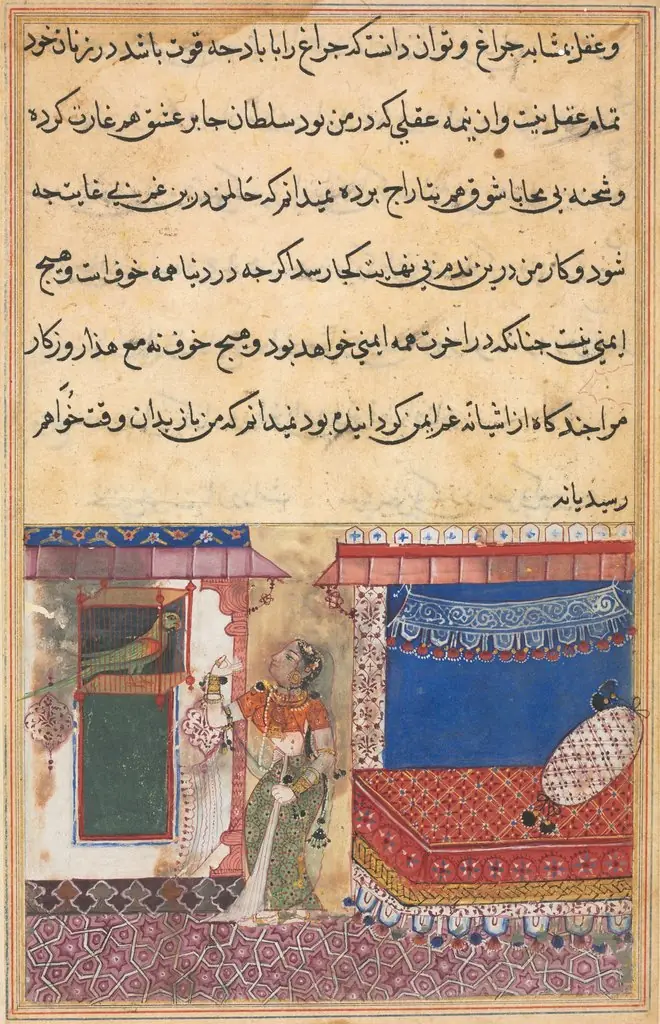 The Parrot Addresses Khujasta at the Beginning of the Eighteenth Night, from a Tuti-nama (Tales of a Parrot)
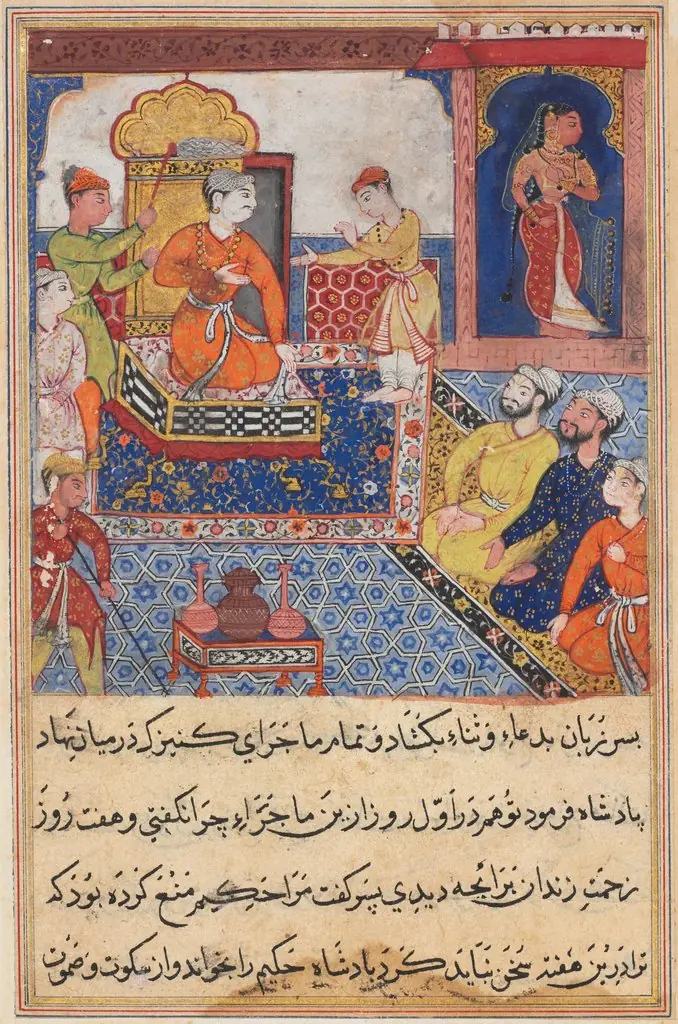 The young prince recounts his experiences to his father, the king, from a Tuti-nama (Tales of a Parrot): Eighth Night
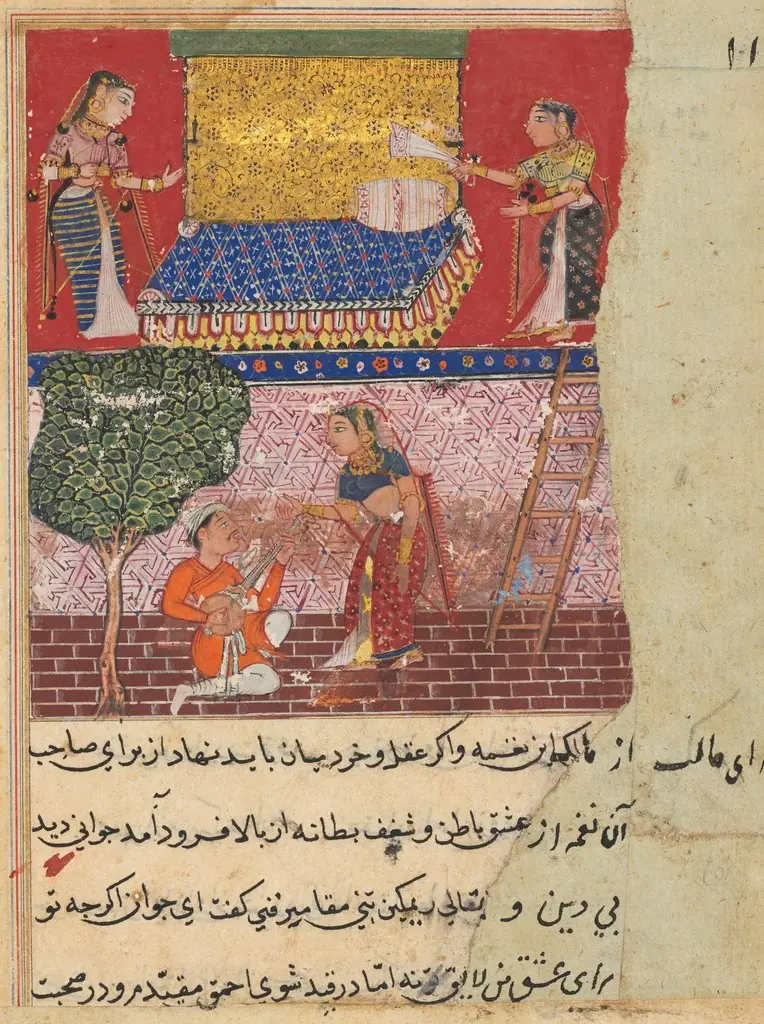 The daughter-in-law of the king of Banaras, charmed by the music of a vagabond, comes down to meet him, from a Tuti-nama (Tales of a Parrot): Sixteenth Night
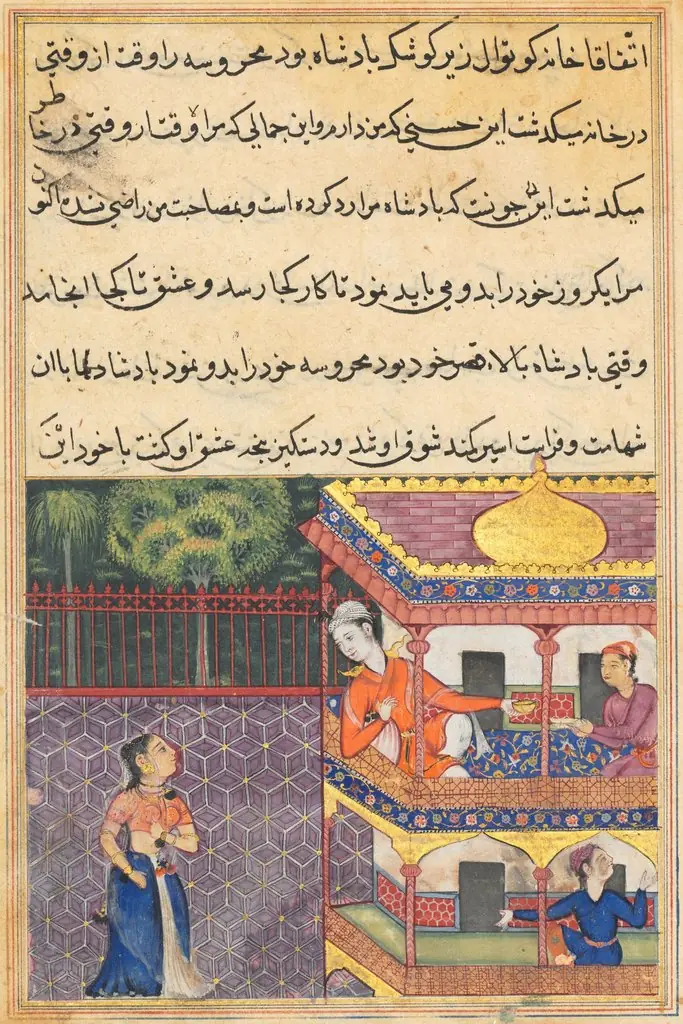 The king of Zabul sees Mahrusa from his palace balcony, from a Tuti-nama (Tales of a Parrot): Thirty-sixth Night
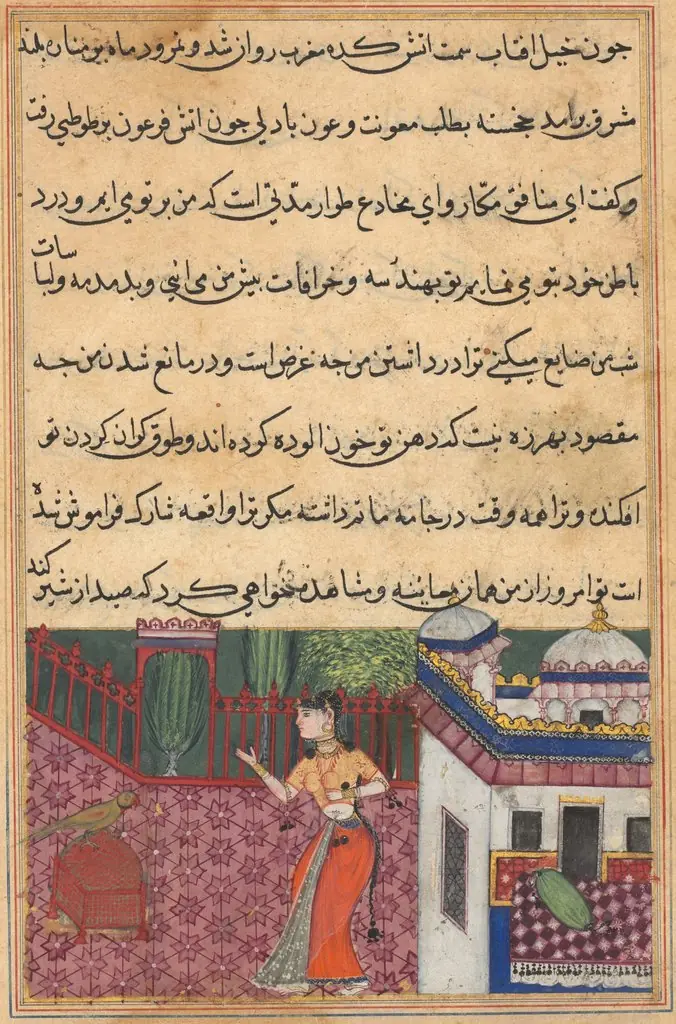 The parrot addresses Khujasta at the beginning of the thirty-third night, from a Tuti-nama (Tales of a Parrot)
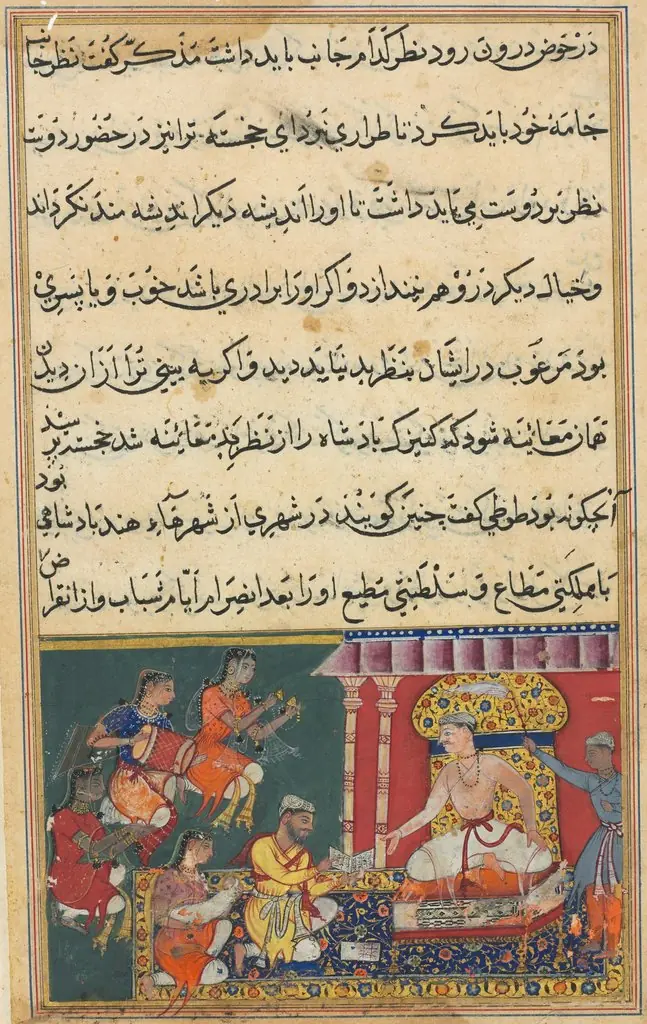 The astrologer predicts a calamity for the newly born prince in his thirteenth year, but one which he would be able to overcome, from a Tuti-nama (Tales of a Parrot): Eighth Night
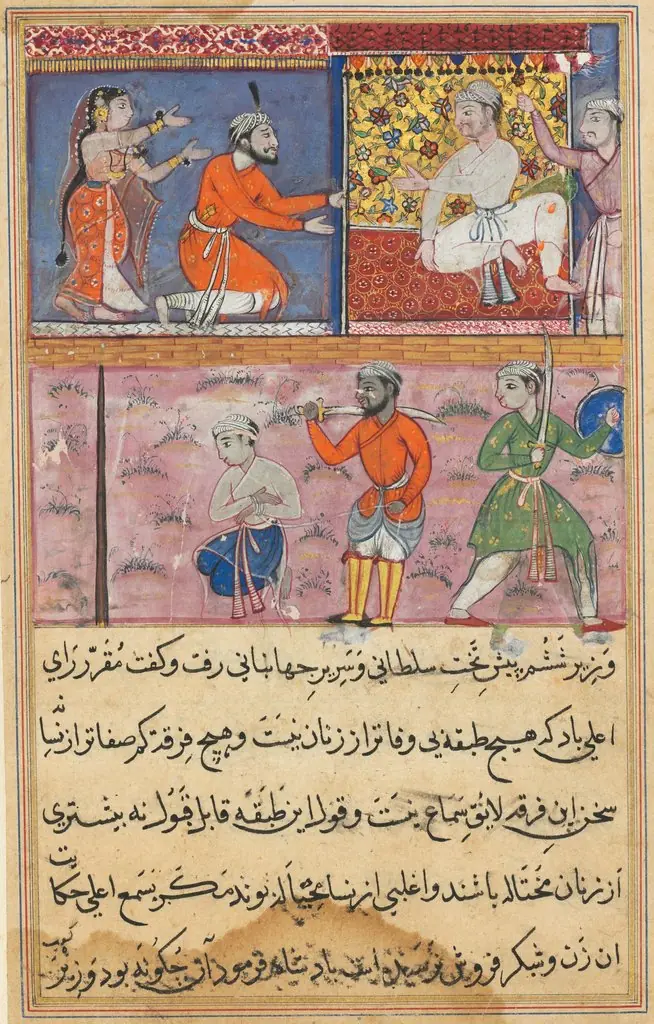 The prince sent back to the place of execution for the sixth time, from a Tuti-nama (Tales of a Parrot): Eighth Night
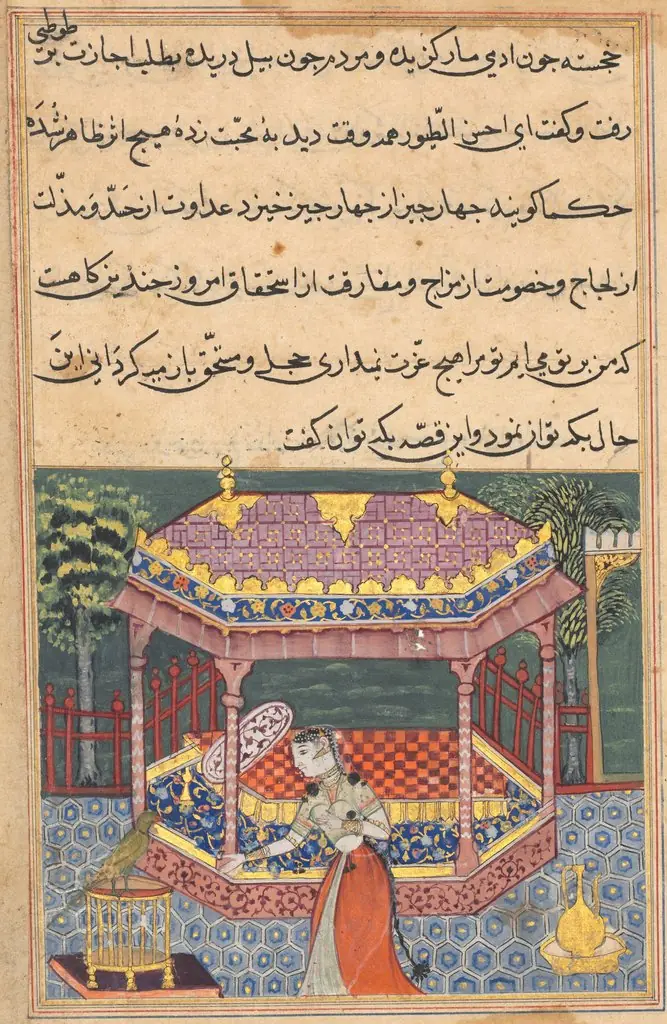 The parrot addresses Khujasta at the beginning of the thirty-seventh night, from a Tuti-nama (Tales of a Parrot)
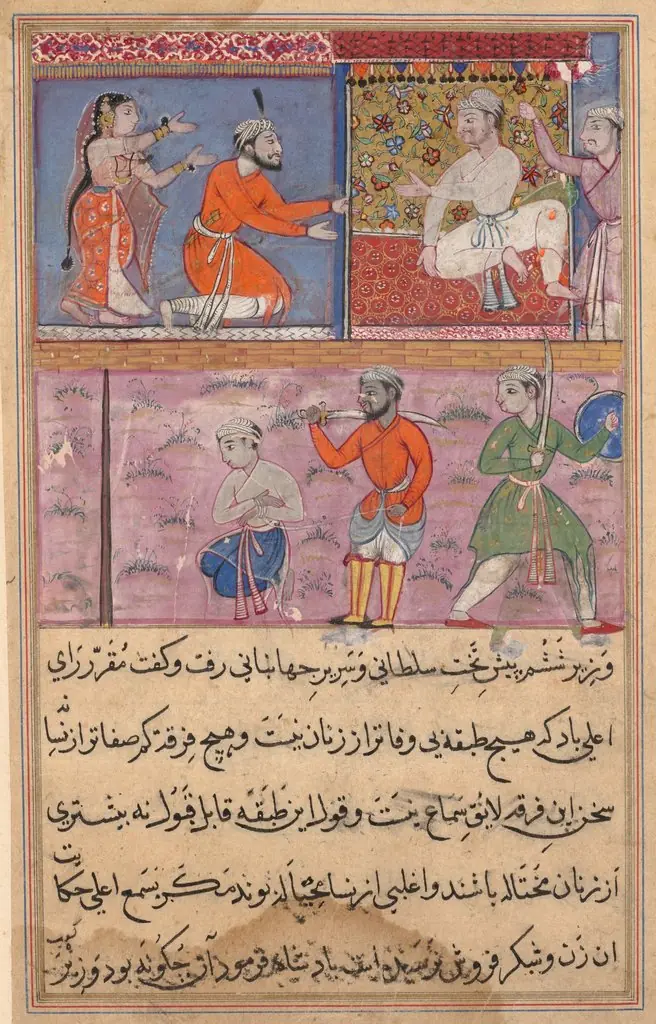 Page from Tales of a Parrot (Tuti-nama): text page
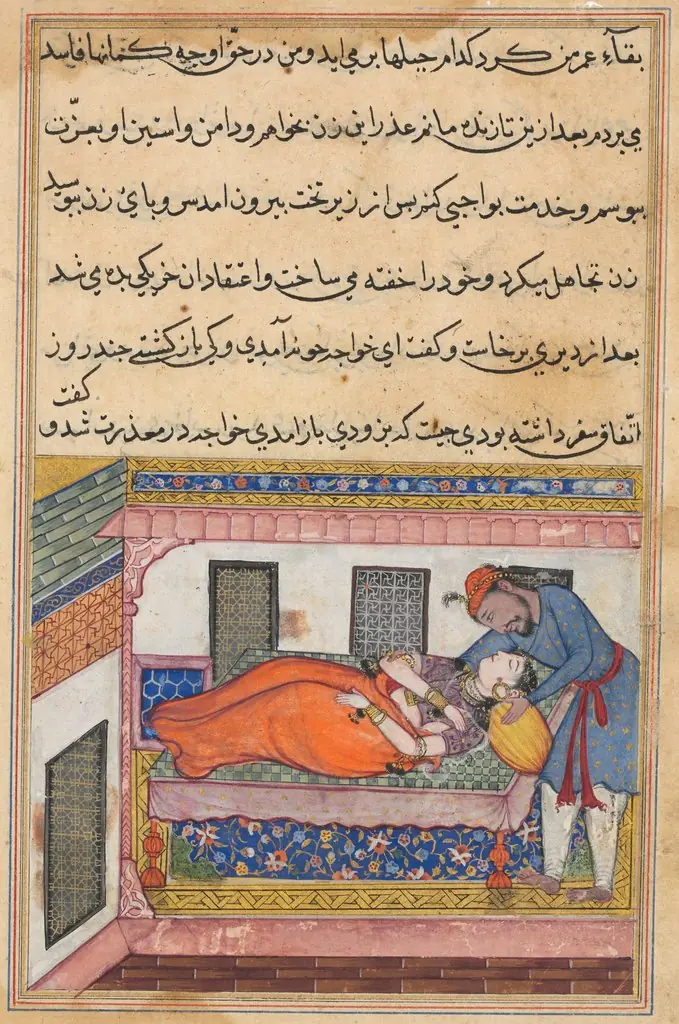 Shahr-Arai’s husband bends to kiss his wife who feigns sleep, from a Tuti-nama (Tales of a Parrot): Fortieth Night
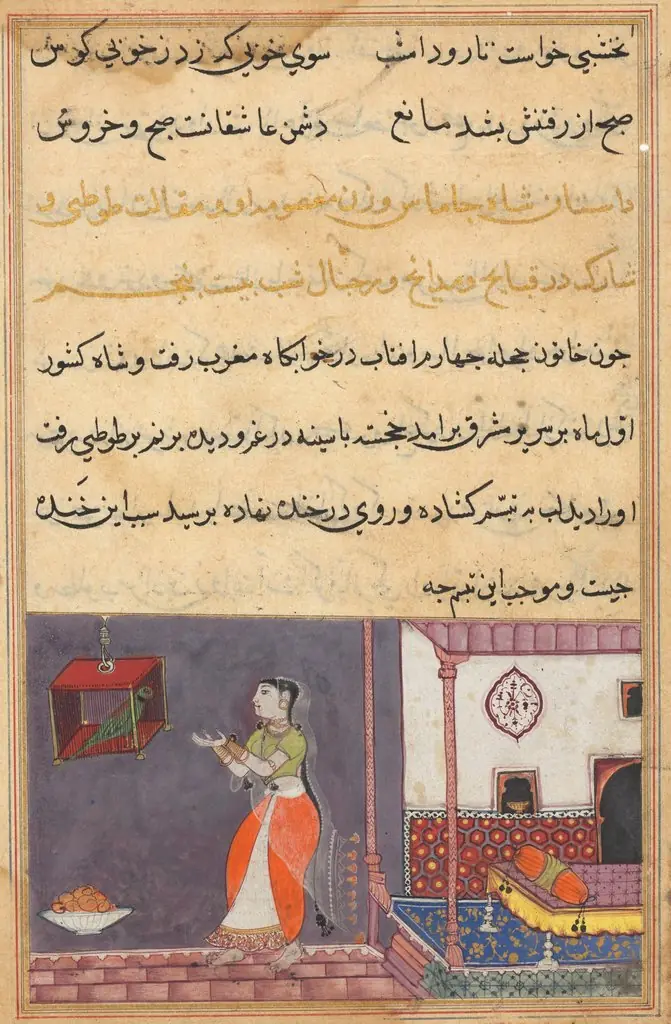 The Parrot Addresses Khujasta at the Beginning of the Twenty-fifth Night, from a Tuti-nama (Tales of a Parrot)