Artwork
Page from Tales of a Parrot (Tuti-nama): text page
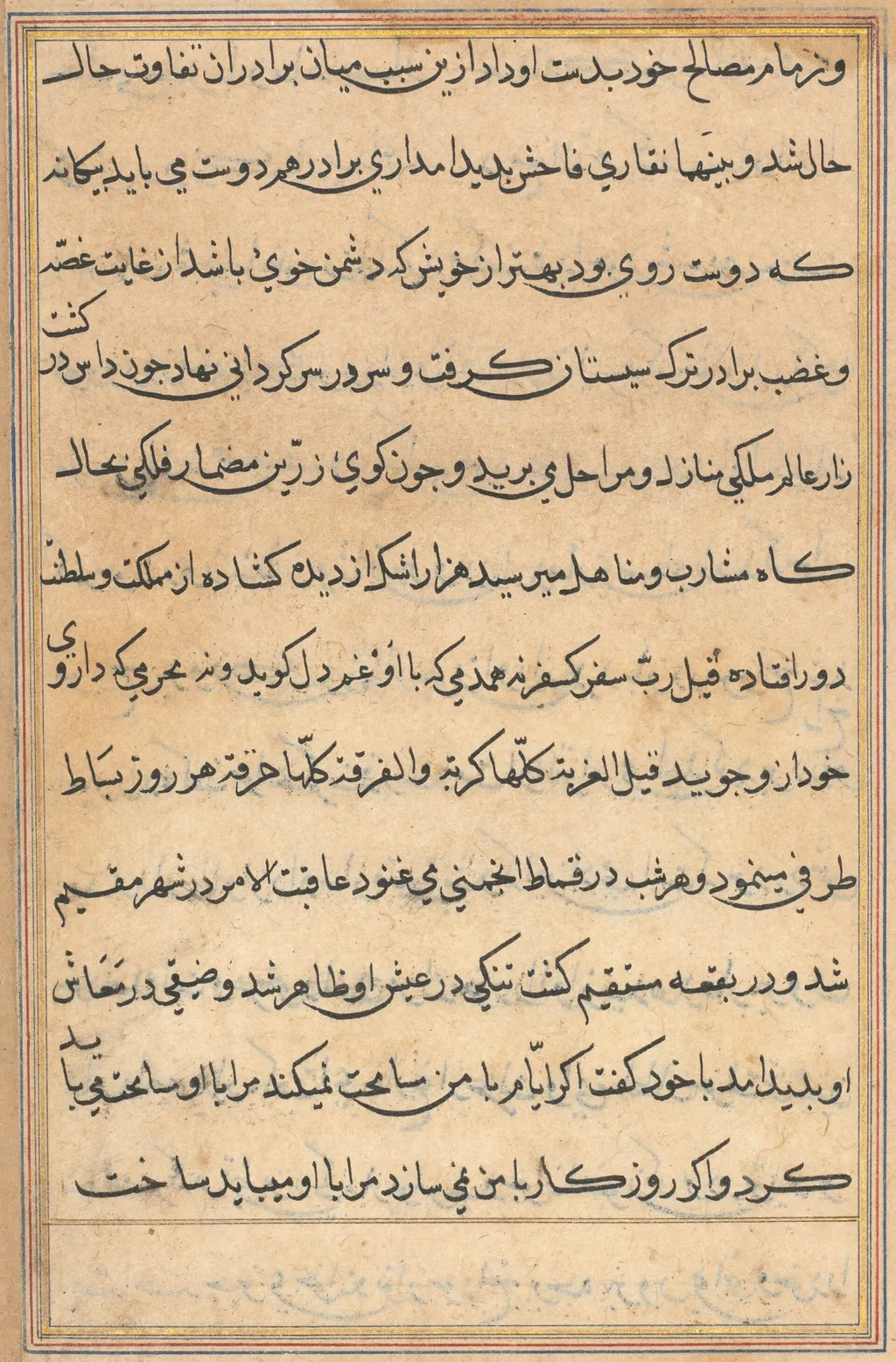
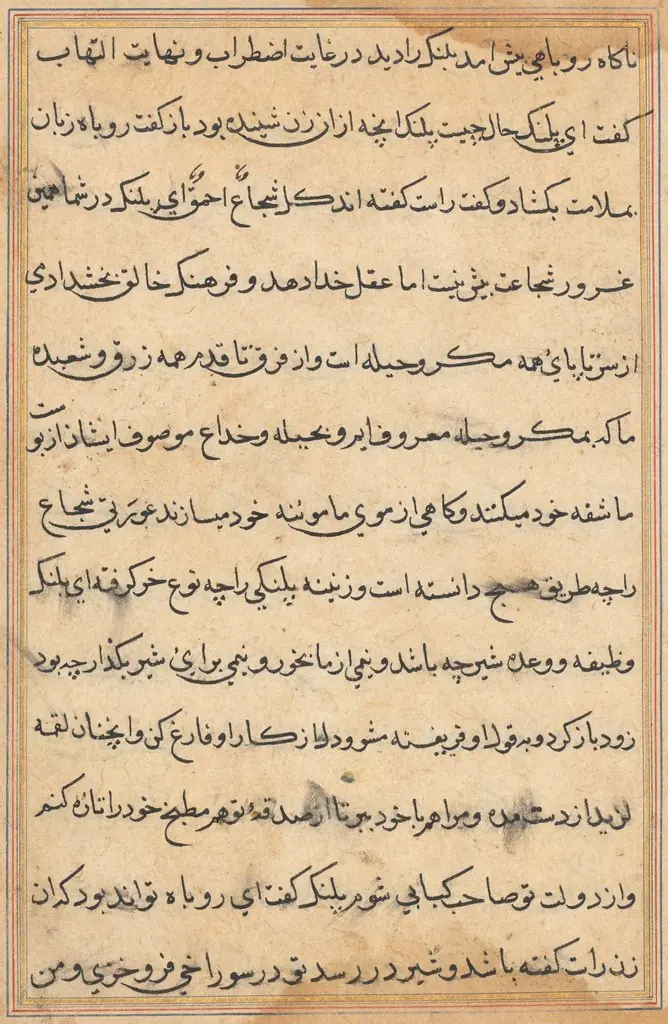
Page from Tales of a Parrot (Tuti-nama): text page is an unspecified painting. It dates from 1560 and is held in the collection of the Cleveland Museum of Art. This illuminated page is a painted manuscript leaf from the Persian narrative collection known as *Tales of a Parrot* (Tuti‑nama).
About this work
Overview
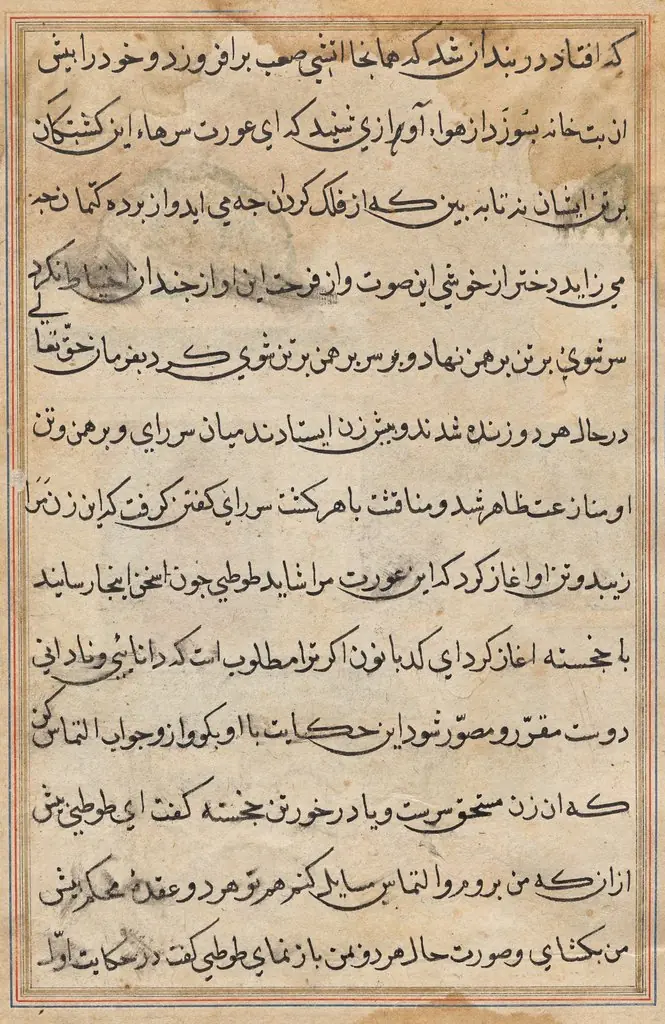
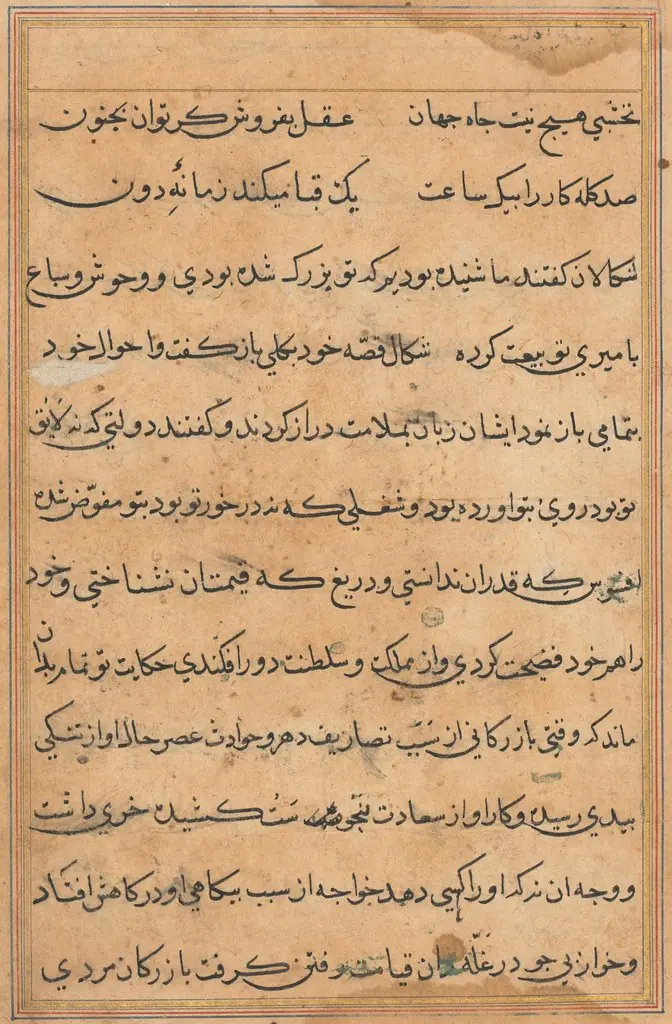
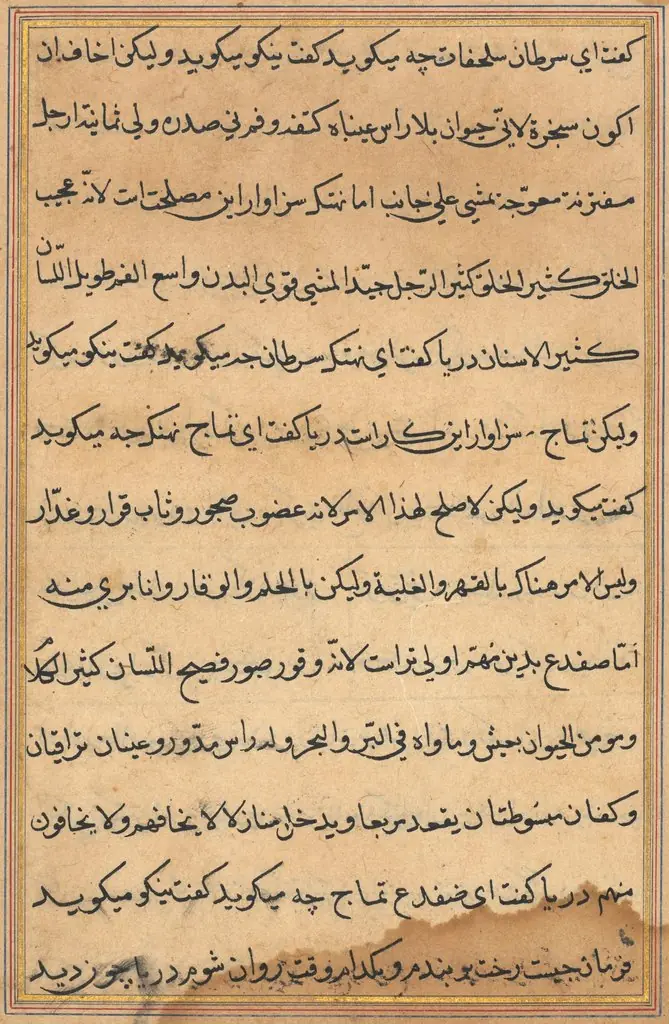
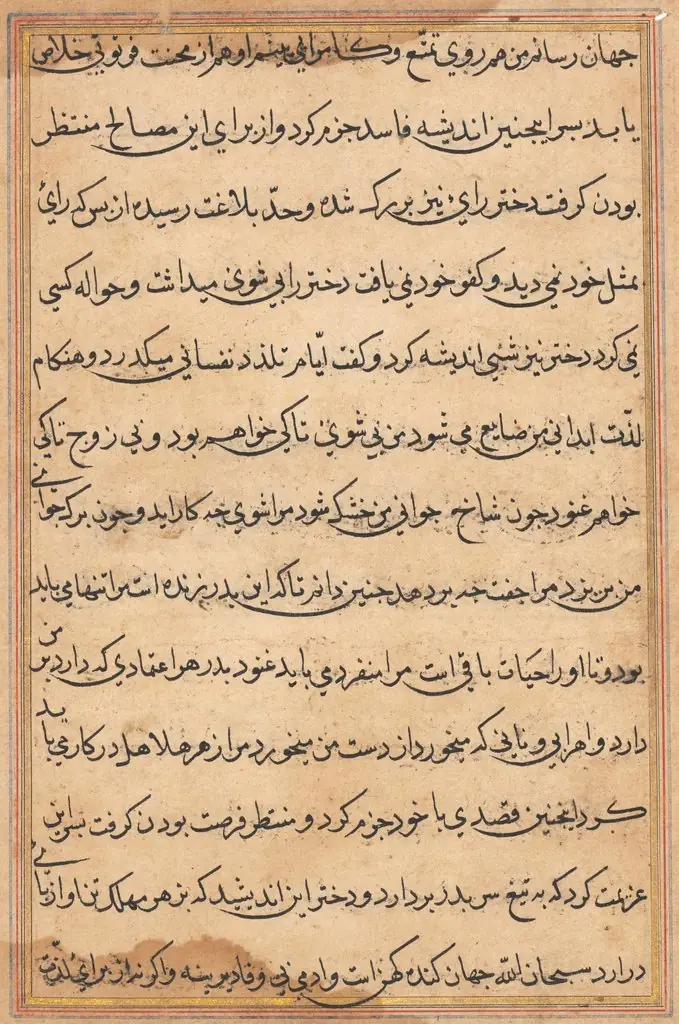
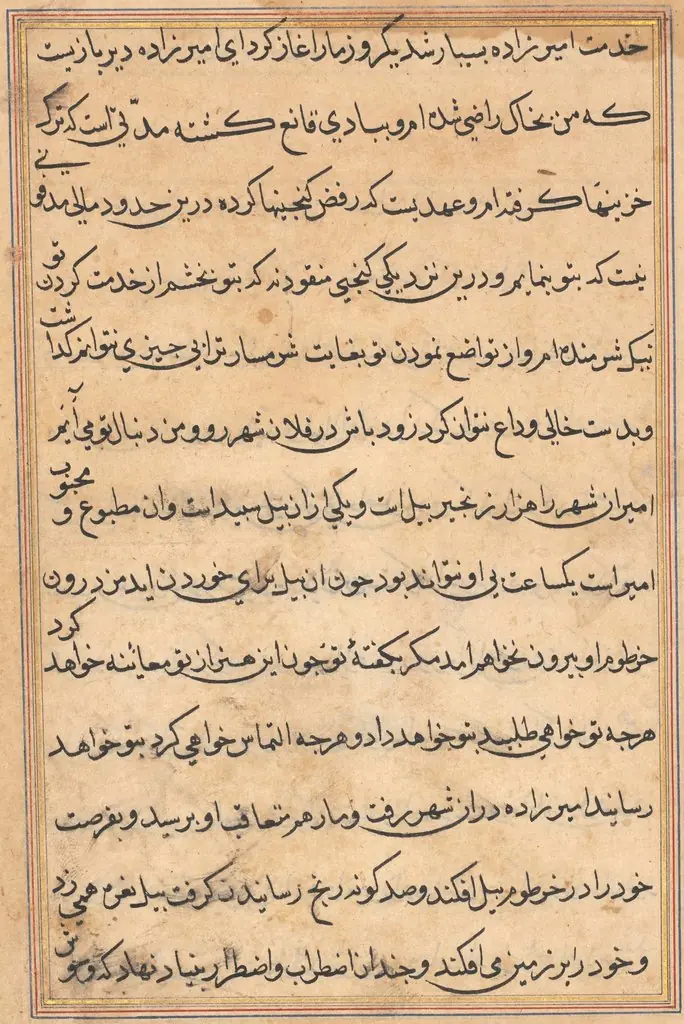
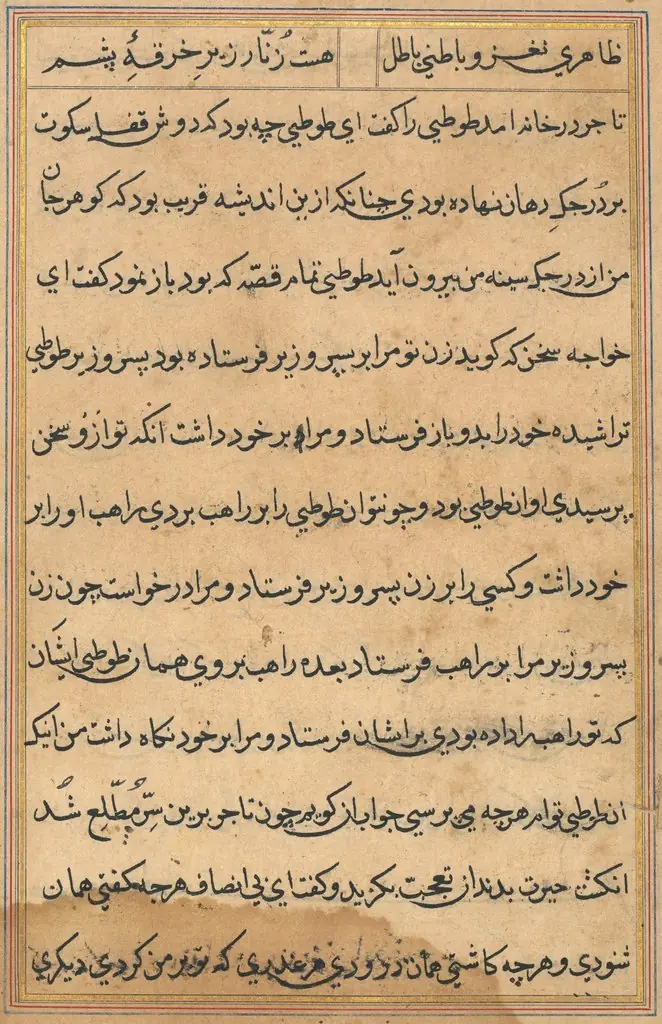
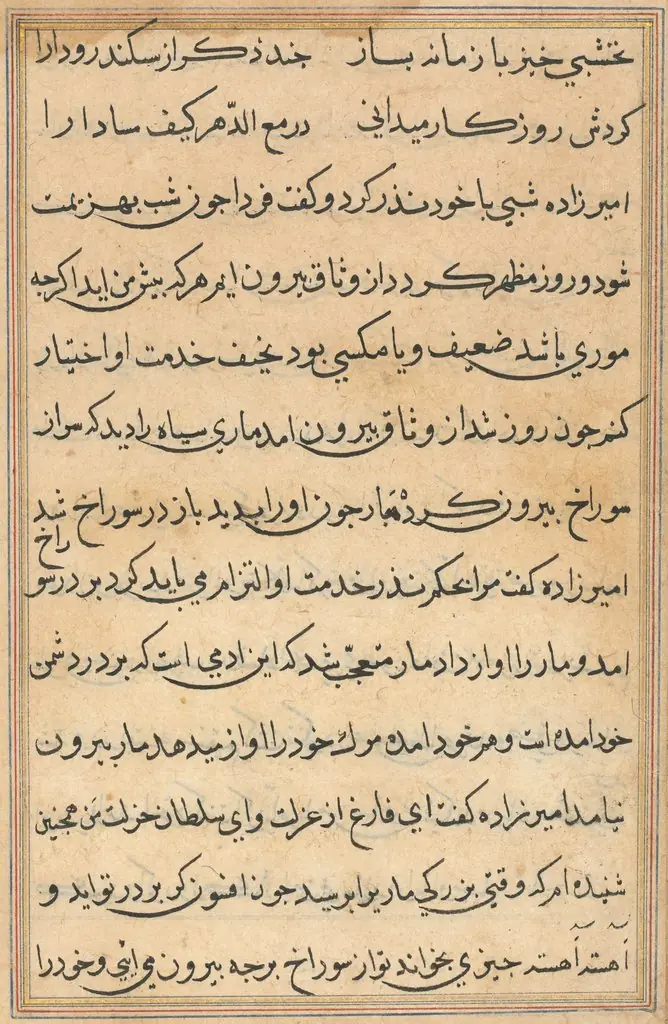
This illuminated page is a painted manuscript leaf from the Persian narrative collection known as *Tales of a Parrot* (Tuti‑nama). Executed on a light‑beige surface, the page is covered entirely with black calligraphic script, bordered by a thin red line and punctuated by occasional tiny blue specks that resemble faint fingerprints.
Subject & Meaning
The text on the leaf forms part of a courtly romance composed for Prince Salim, a member of the Safavid royal household. The story, conveyed through the parrot’s tales, served both entertainment and moral instruction within the elite literary culture of early‑modern Persia.
Technique & Style
The calligraphy displays a controlled hand, balancing graceful curves with precise angular strokes, characteristic of the nastaliq script used in Persian manuscripts. The red border and subtle blue dots are applied in watercolor, providing a restrained decorative framework without overwhelming the textual content.
History & Provenance
The manuscript fragment originates from the Safavid period, likely the 16th or 17th century, and has entered the collection of the Cleveland Museum of Art, where it is displayed as part of the museum’s holdings of Islamic art.
Context
During the Safavid era, illustrated books were commissioned by royal patrons to celebrate literary achievements and reinforce cultural identity. *Tales of a Parrot* reflects this tradition, combining poetic narrative with refined visual presentation for a princely audience.
Artist & collection

 Page from Tales of a Parrot (Tuti-nama): text page
 Page from Tales of a Parrot (Tuti-nama): text page
 Page from Tales of a Parrot (Tuti-nama): text page
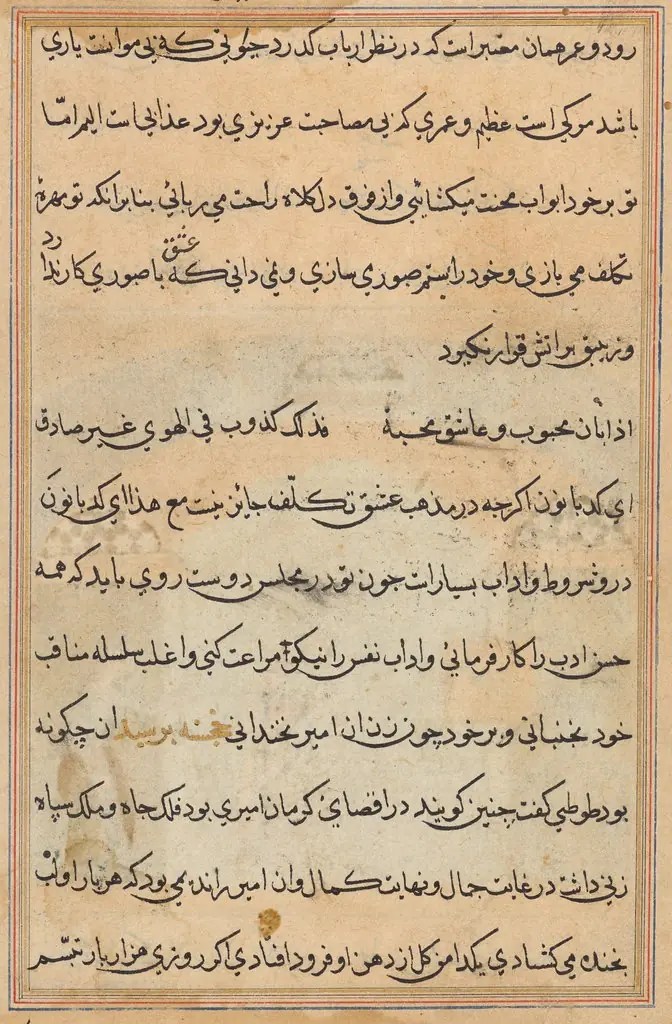 Page from Tales of a Parrot (Tuti-nama): text page
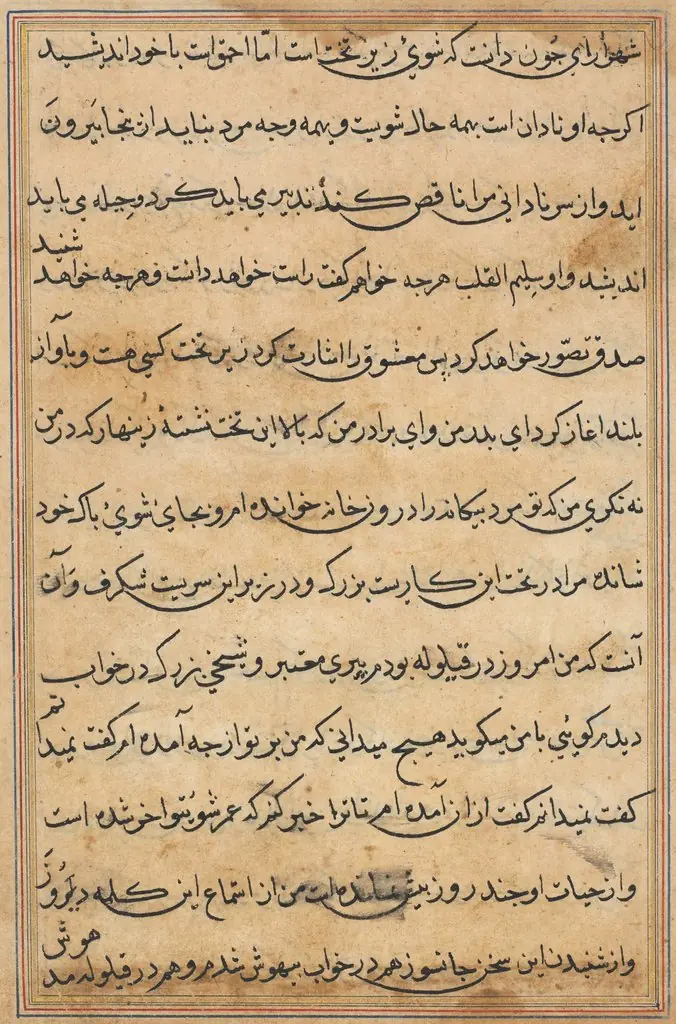 Page from Tales of a Parrot (Tuti-nama): text page
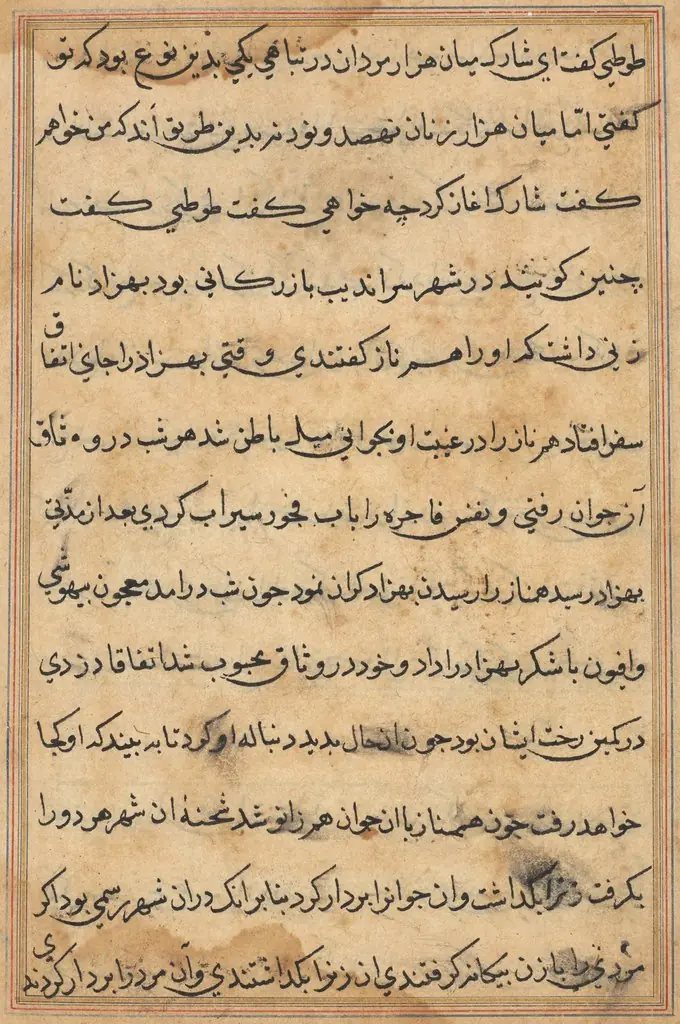 Page from Tales of a Parrot (Tuti-nama): text page
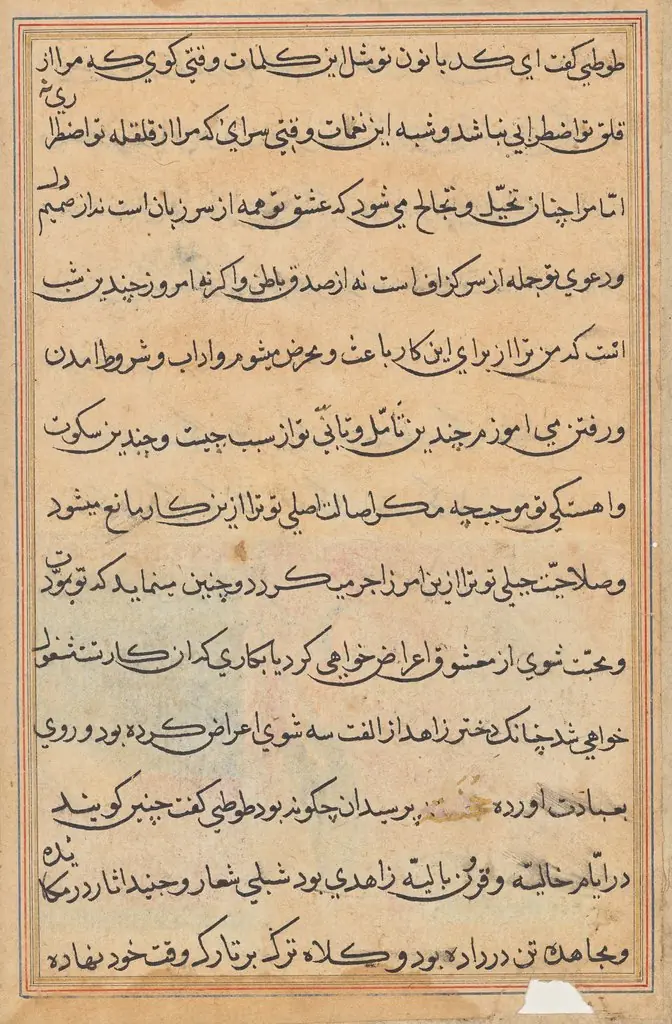 Page from Tales of a Parrot (Tuti-nama): text page
 Page from Tales of a Parrot (Tuti-nama): text page
 Page from Tales of a Parrot (Tuti-nama): text page
 Page from Tales of a Parrot (Tuti-nama): text page
 Page from Tales of a Parrot (Tuti-nama): text page
 Page from Tales of a Parrot (Tuti-nama): text page