Artwork
Tantric Manuscript "Sangrahani Sutra"
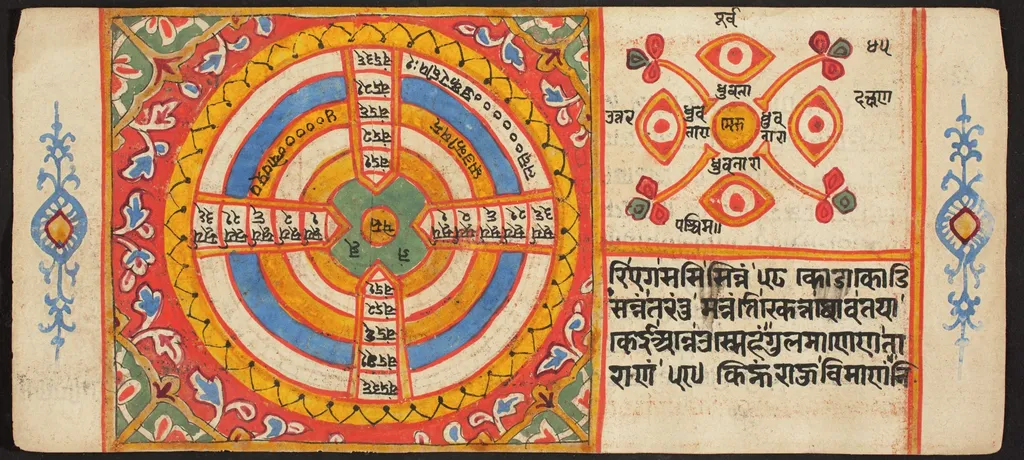
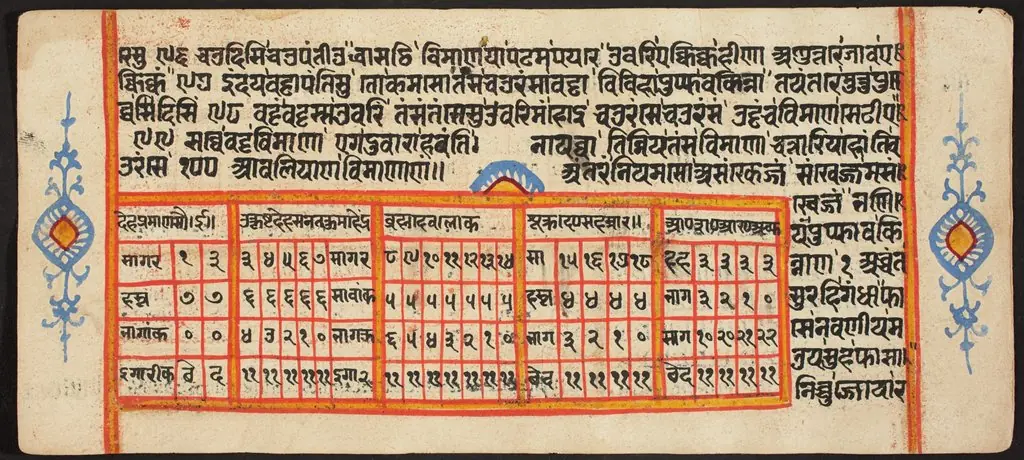
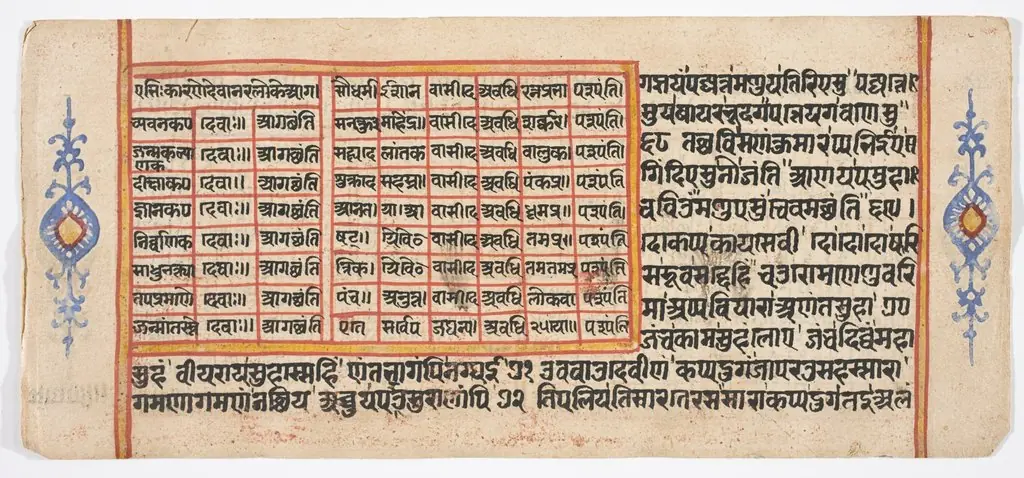
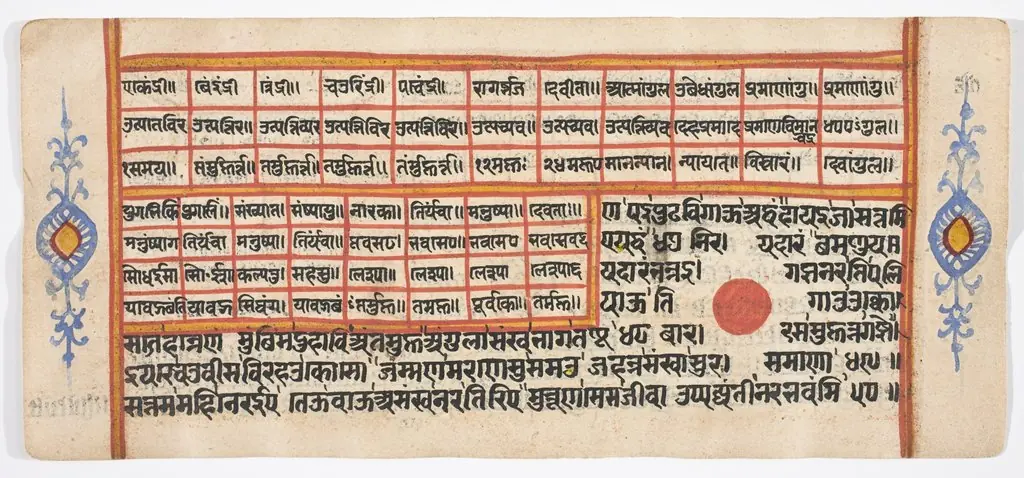
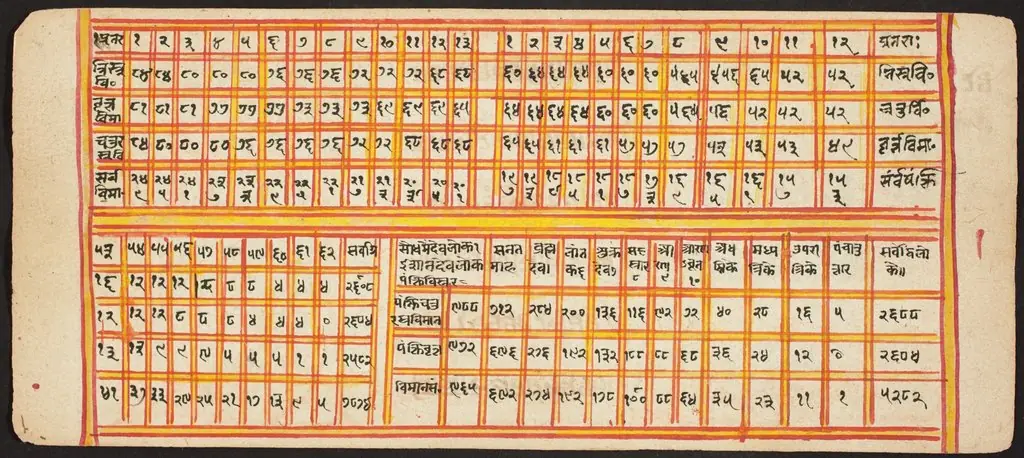
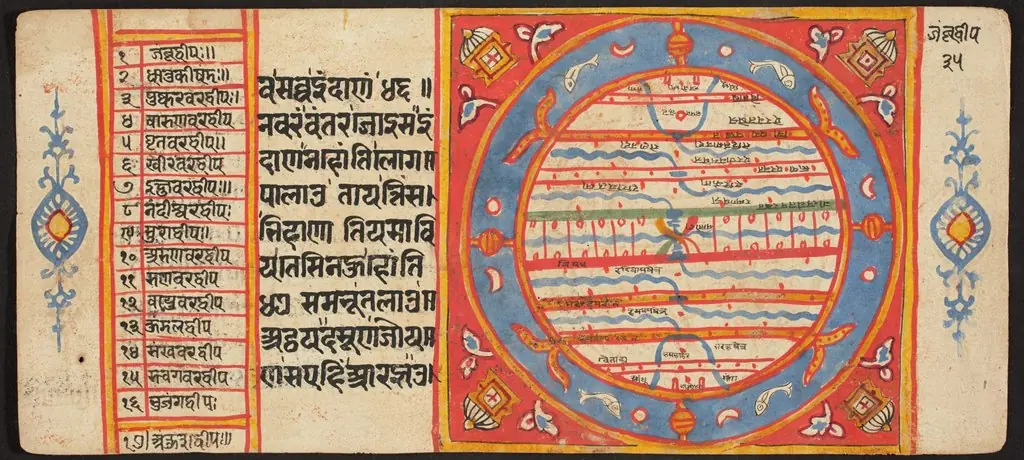
Tantric Manuscript "Sangrahani Sutra" is an unspecified painting by Unknown. It is held in the collection of the Detroit Institute of Arts. This painted manuscript page contains a central circular composition from the Sangrahani Sutra, a tantric Buddhist text.
About this work
Overview
The circle is partitioned into segments filled with geometric motifs and Sanskrit script, suggesting a symbolic map of spiritual principles.
This painted manuscript page contains a central circular composition from the Sangrahani Sutra, a tantric Buddhist text. The design is structured in concentric rings of yellow, blue, red, and white, each bordered by a thin red outline. The background is a muted beige, allowing the vivid inner forms to dominate. The circle is partitioned into segments filled with geometric motifs and Sanskrit script, suggesting a symbolic map of spiritual principles.
Subject & Meaning
The concentric rings and segmented symbols likely represent cosmological and meditative frameworks used in tantric practice. The central yellow may signify enlightenment or the core of consciousness, while surrounding colors could denote elemental or directional forces. The inclusion of Sanskrit syllables implies ritual invocation, and the geometric patterns may correspond to mandalic structures guiding spiritual focus during contemplation.
Technique & Style
The painting employs mineral pigments on paper, with precise hand-drawn lines defining each segment. Colors are applied in flat, unmodulated fields, emphasizing symbolic clarity over naturalism. The sharp boundaries between sections and the uniformity of line work reflect a disciplined, ritual-based aesthetic. The absence of shading or perspective reinforces the image’s function as a sacred diagram rather than a representational scene.
History & Provenance
The manuscript originates from medieval Nepal or Tibet, likely produced in a monastic scriptorium during the 12th to 15th centuries. Such texts were used in esoteric rituals and personal meditation, not public display. Its survival suggests careful preservation within a religious community, possibly passed down through generations of practitioners or stored in temple libraries.
Context
This painting belongs to a tradition of tantric Buddhist manuscripts that visualize abstract doctrines through structured imagery. Similar mandalas appear in ritual objects and wall paintings across the Himalayan region. The Sangrahani Sutra, as a doctrinal summary, required visual aids to convey complex teachings to initiates, making such diagrams essential tools for transmission within esoteric lineages.
Legacy
Though not widely known outside scholarly circles, this type of manuscript influenced later Tibetan thangka painting and ritual art. Its formal language—concentric symmetry, symbolic color, and script integration—remains embedded in tantric visual culture. Modern studies of Buddhist iconography continue to reference such works as key examples of how abstract philosophy was rendered into tangible meditative forms.
Artist & collection

 Domestic Scene
 Giacomo and Cardinal Marco, investing Andrea, Abbot of San Zeno, with his Benefice
 The Nymph of Fontainebleau
 Portrait of a Woman
 Madonna and Child with Saints in the Enclosed Garden
 Venus and Minerva
 Family Group of Four on Sofa
 Wall painting from Room H of the Villa of P. Fannius Synistor at Boscoreale
 Tantric Manuscript "Sangrahani Sutra"
 Tantric Manuscript "Sangrahani Sutra"
 Tantric Manuscript "Sangrahani Sutra"
 Tantric Manuscript "Sangrahani Sutra"
 Tantric Manuscript "Sangrahani Sutra"
 Tantric Manuscript "Sangrahani Sutra"
 Tantric Manuscript "Sangrahani Sutra"
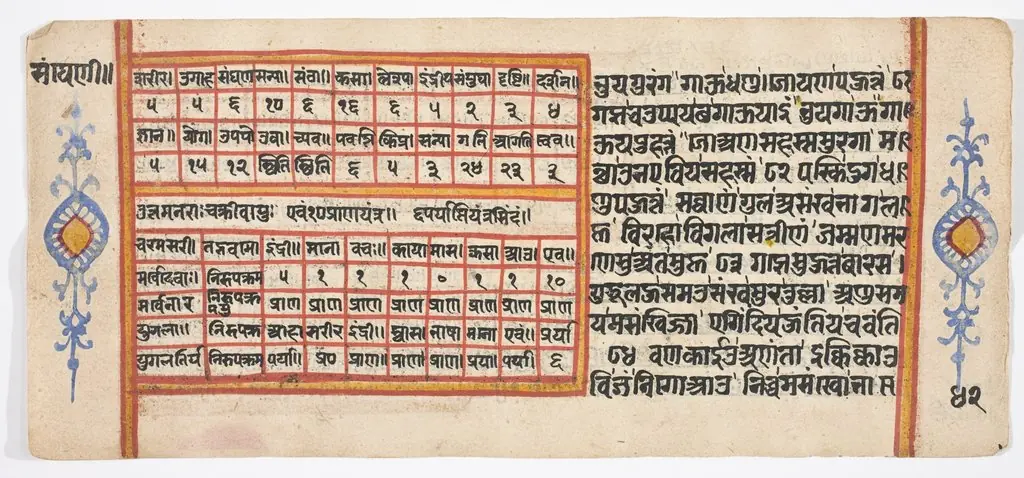 Tantric Manuscript "Sangrahani Sutra"
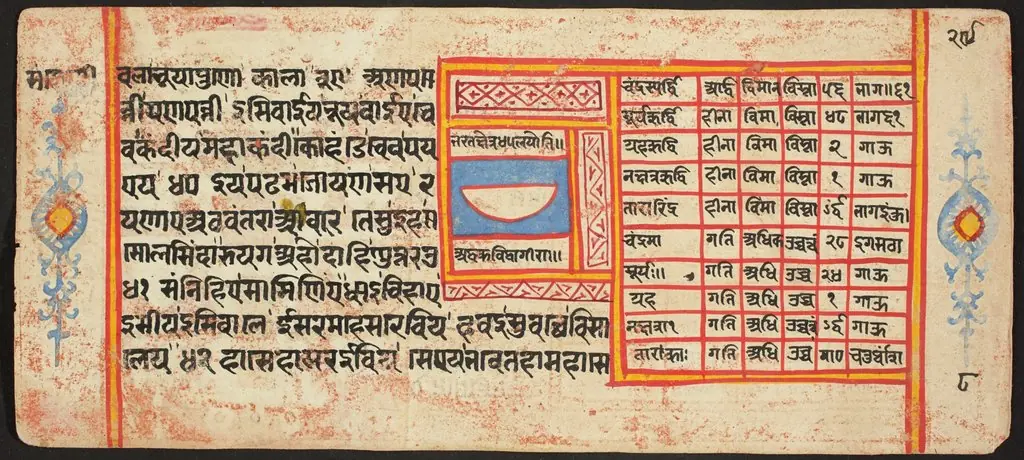 Tantric Manuscript "Sangrahani Sutra"
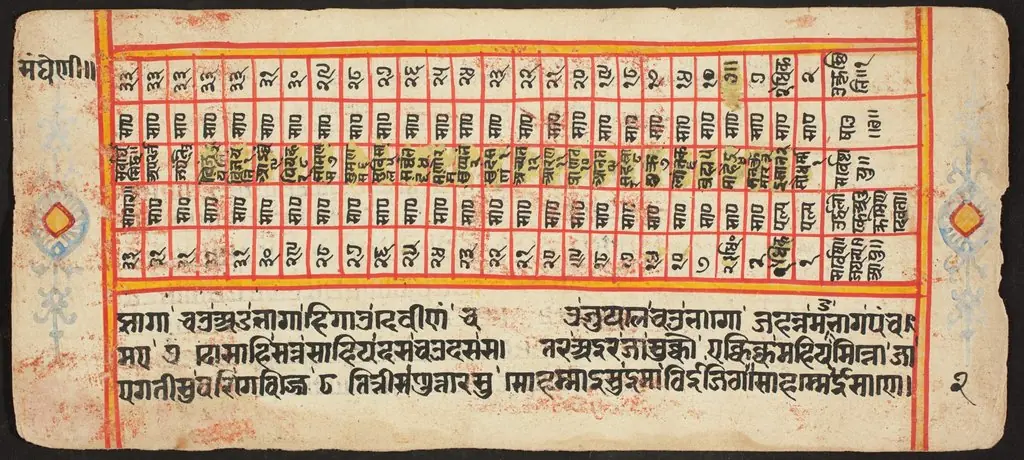 Tantric Manuscript "Sangrahani Sutra"
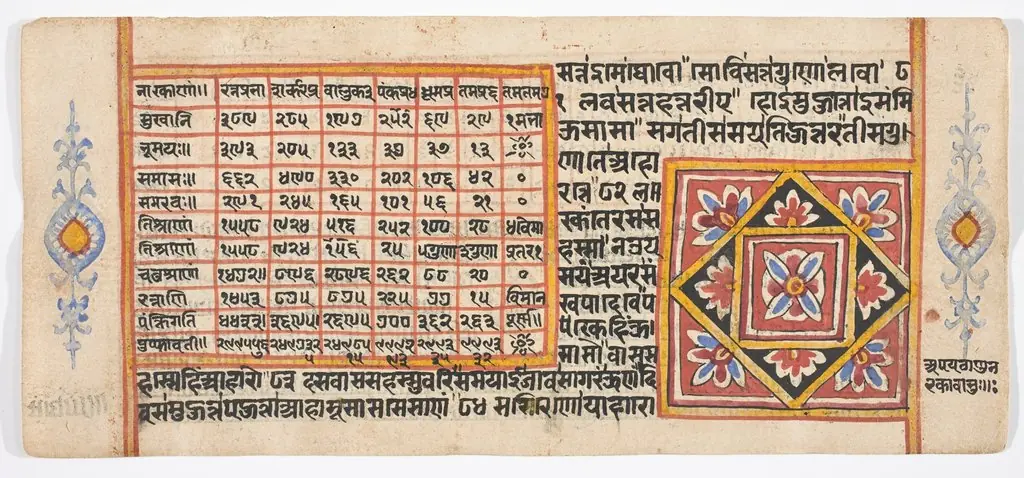 Tantric Manuscript "Sangrahani Sutra"
 Tantric Manuscript "Sangrahani Sutra"