Artwork
Tantric Manuscript "Sangrahani Sutra"
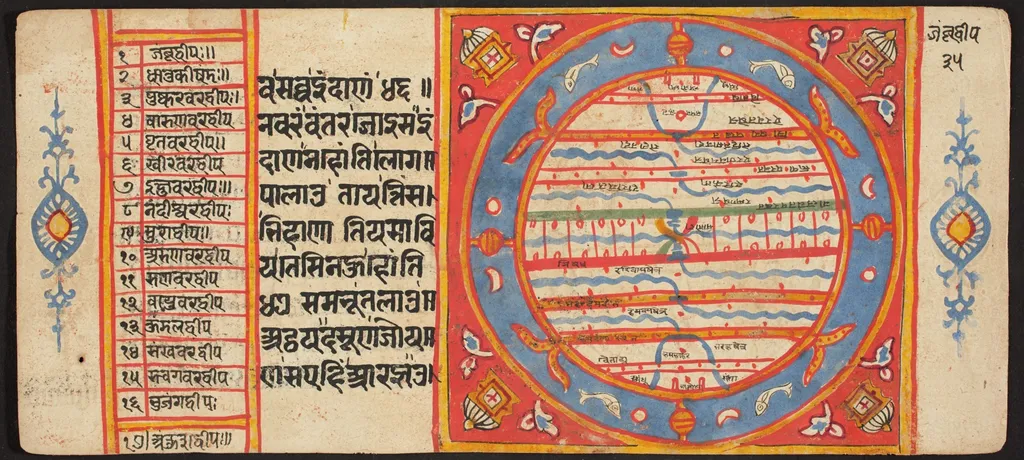
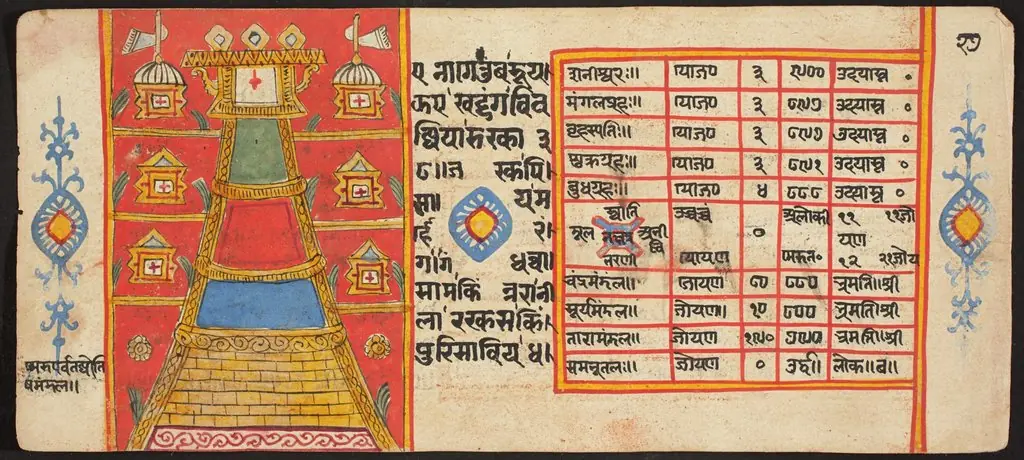
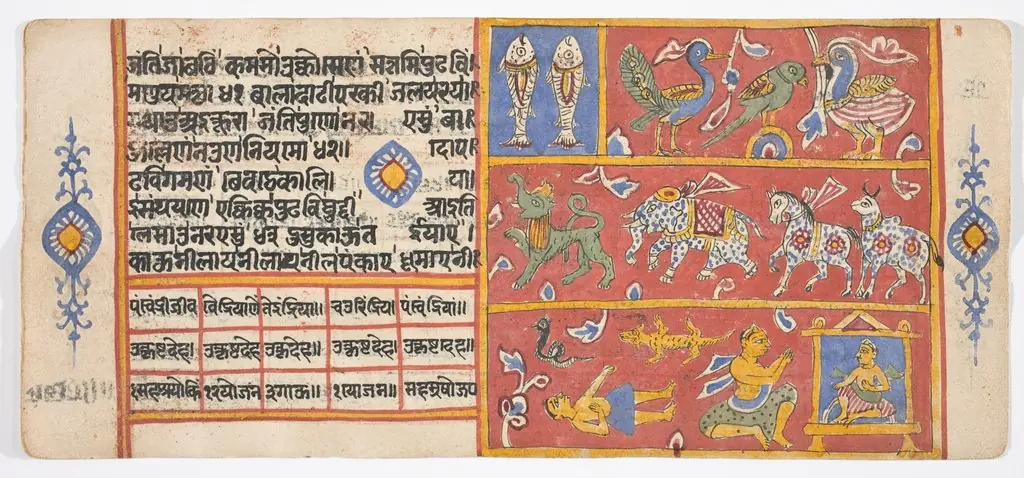
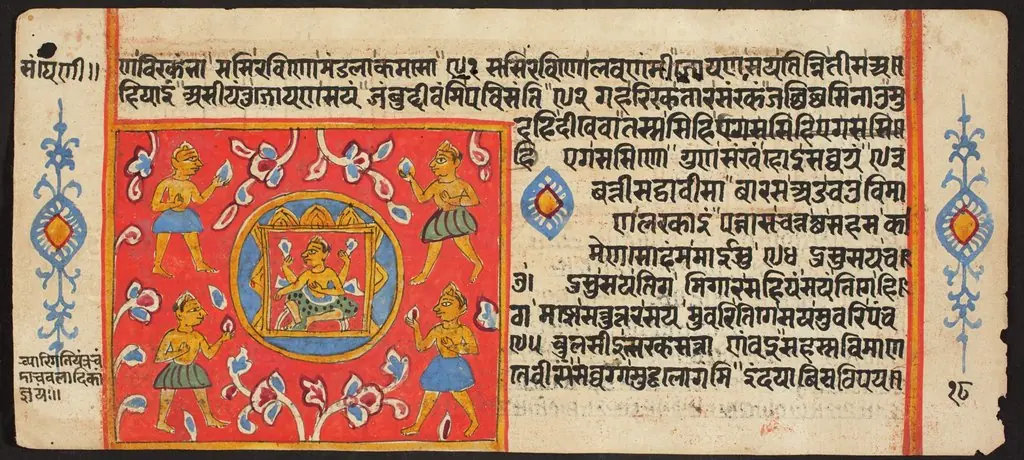
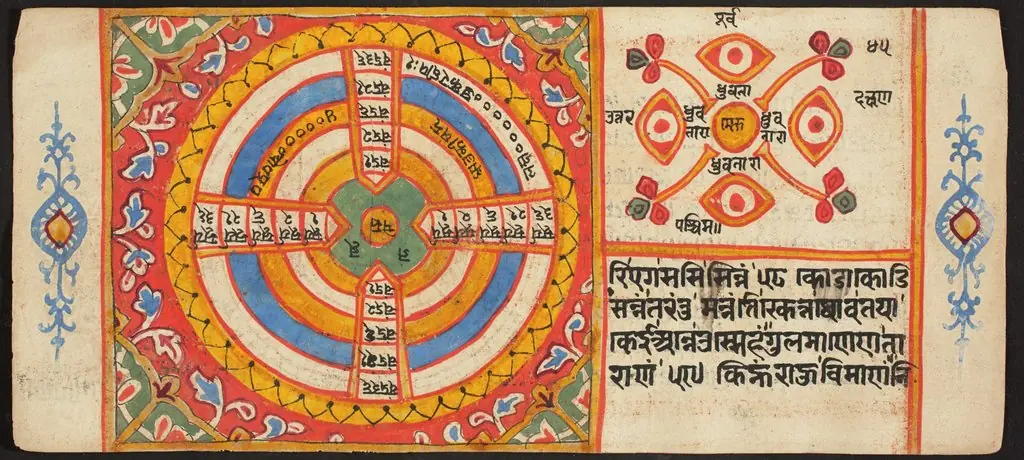
Tantric Manuscript "Sangrahani Sutra" is an unspecified painting by Unknown. It is held in the collection of the Detroit Institute of Arts. This painted manuscript page contains a visual representation of the Sangrahani Sutra, a text associated with Tantric Buddhist traditions.
About this work
Overview
This painted manuscript page contains a visual representation of the Sangrahani Sutra, a text associated with Tantric Buddhist traditions.
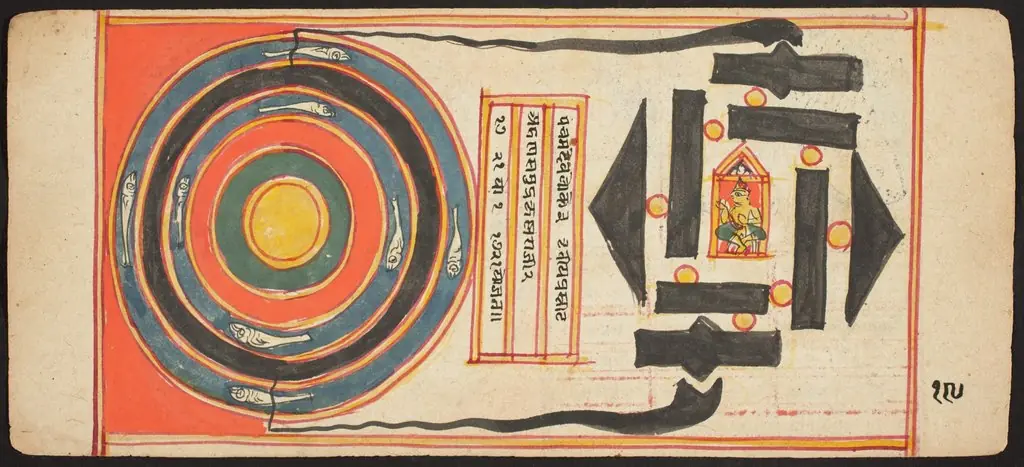
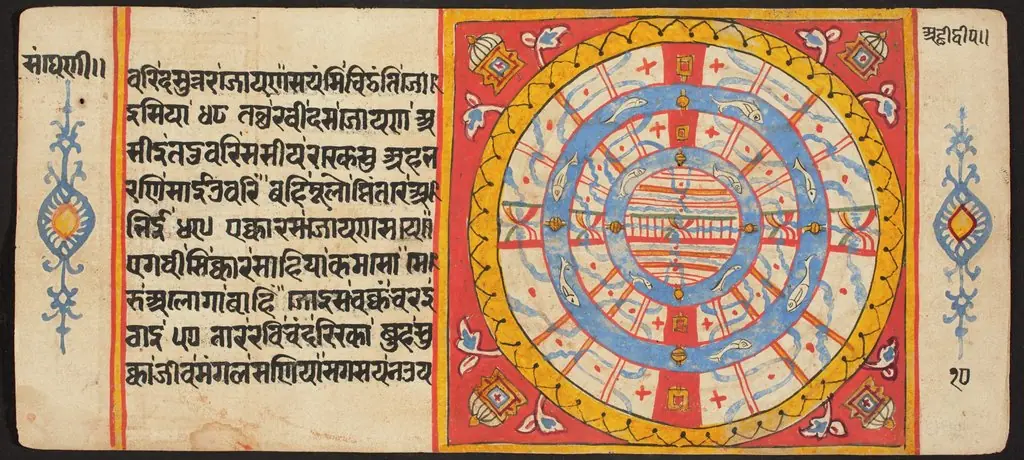
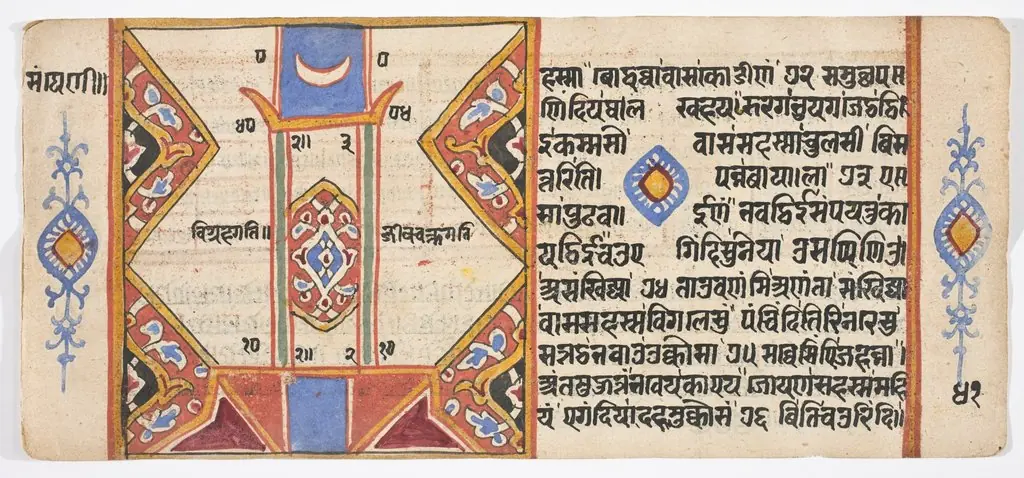
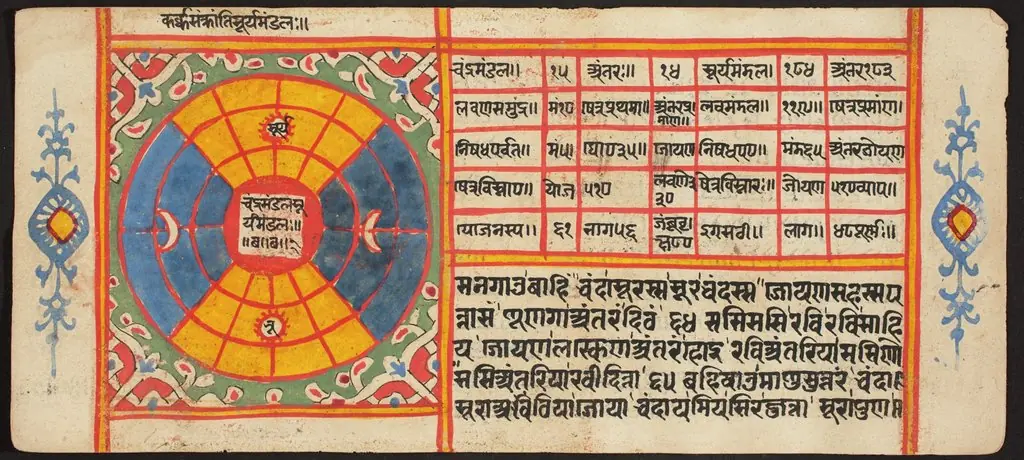
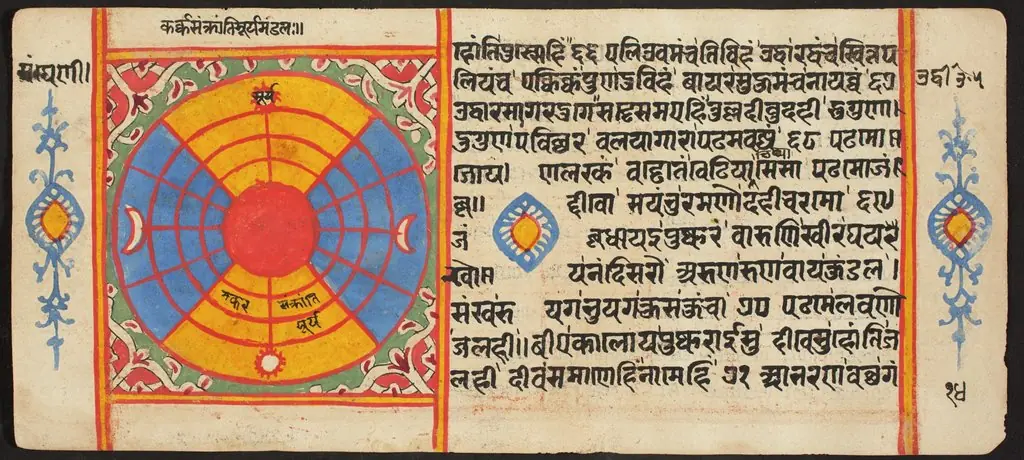
This painted manuscript page contains a visual representation of the Sangrahani Sutra, a text associated with Tantric Buddhist traditions. The composition centers on a circular diagram enclosed within a blue frame, adorned with symbolic motifs. Surrounding elements include a vertical column of script in an undeciphered script, rendered in black ink with red dividers. The background is a muted beige, providing contrast to the vivid internal markings and decorative border.
Subject & Meaning
The central circle likely functions as a mandala, a symbolic cosmogram used in meditative practice. Its segmented structure, marked by red lines, may represent spiritual pathways or cosmic divisions. The border’s fish and shell motifs are traditional symbols of abundance and purity in esoteric Buddhist iconography. Together, these elements serve as a visual aid for ritual contemplation, encoding doctrinal concepts through geometric and natural forms.
Technique & Style
The painting employs fine brushwork and mineral pigments to achieve precise lines and saturated colors. The circular diagram is meticulously divided with red ink, while the border’s ornamental elements are rendered in flat, stylized forms. The script is written in a dense, uniform hand, suggesting a trained scribe. The use of a neutral beige ground allows the symbolic elements to stand out without distraction, reflecting a disciplined aesthetic common in devotional manuscripts.
History & Provenance
The manuscript originates from a Tantric Buddhist context, likely produced in the eastern Indian subcontinent between the 10th and 12th centuries. Its survival suggests it was preserved within a monastic or ritual community. The undeciphered script aligns with regional writing systems used in esoteric texts, though its exact linguistic identity remains unresolved. No documented ownership history exists prior to its modern acquisition.
Context
This page belongs to a tradition of illustrated Tantric scriptures used in meditation and initiation rites. Similar manuscripts were created in monasteries across Bengal and Bihar, where esoteric Buddhism flourished. The integration of geometric diagrams with textual passages reflects a pedagogical method designed to convey complex teachings through both visual and verbal means, bridging oral instruction and visual symbolism.
Legacy
Though the specific text and script remain partially enigmatic, the manuscript exemplifies the sophisticated visual language of medieval Tantric Buddhism. It contributes to scholarly understanding of how ritual knowledge was transmitted through art. Its preservation offers insight into the material culture of religious practice, influencing modern studies of Buddhist iconography and manuscript production in South Asia.
Artist & collection

 Domestic Scene
 Giacomo and Cardinal Marco, investing Andrea, Abbot of San Zeno, with his Benefice
 The Nymph of Fontainebleau
 Portrait of a Woman
 Madonna and Child with Saints in the Enclosed Garden
 Venus and Minerva
 Family Group of Four on Sofa
 Wall painting from Room H of the Villa of P. Fannius Synistor at Boscoreale
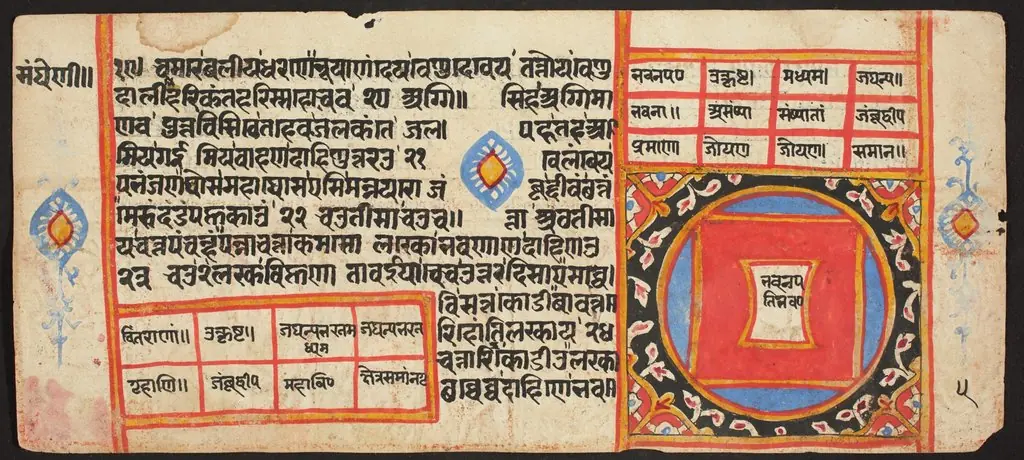 Tantric Manuscript "Sangrahani Sutra"
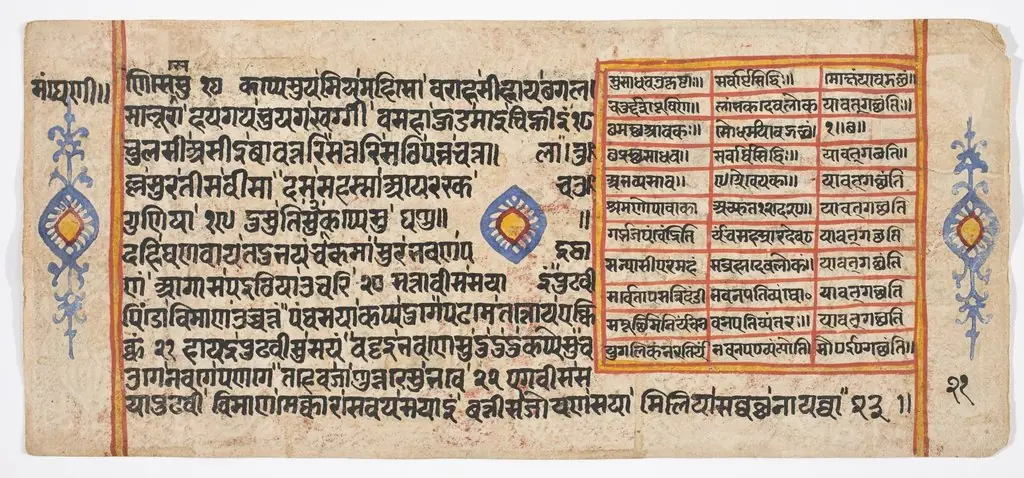 Tantric Manuscript "Sangrahani Sutra"
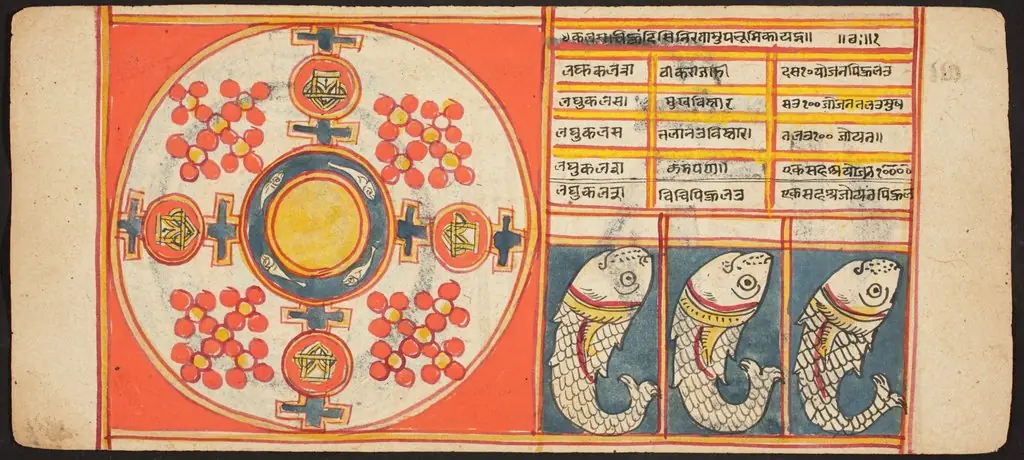 Tantric Manuscript "Sangrahani Sutra"
 Tantric Manuscript "Sangrahani Sutra"
 Tantric Manuscript "Sangrahani Sutra"
 Tantric Manuscript "Sangrahani Sutra"
 Tantric Manuscript "Sangrahani Sutra"
 Tantric Manuscript "Sangrahani Sutra"
 Tantric Manuscript "Sangrahani Sutra"
 Tantric Manuscript "Sangrahani Sutra"
 Tantric Manuscript "Sangrahani Sutra"
 Tantric Manuscript "Sangrahani Sutra"