Artwork
Page from Tales of a Parrot (Tuti-nama): text page
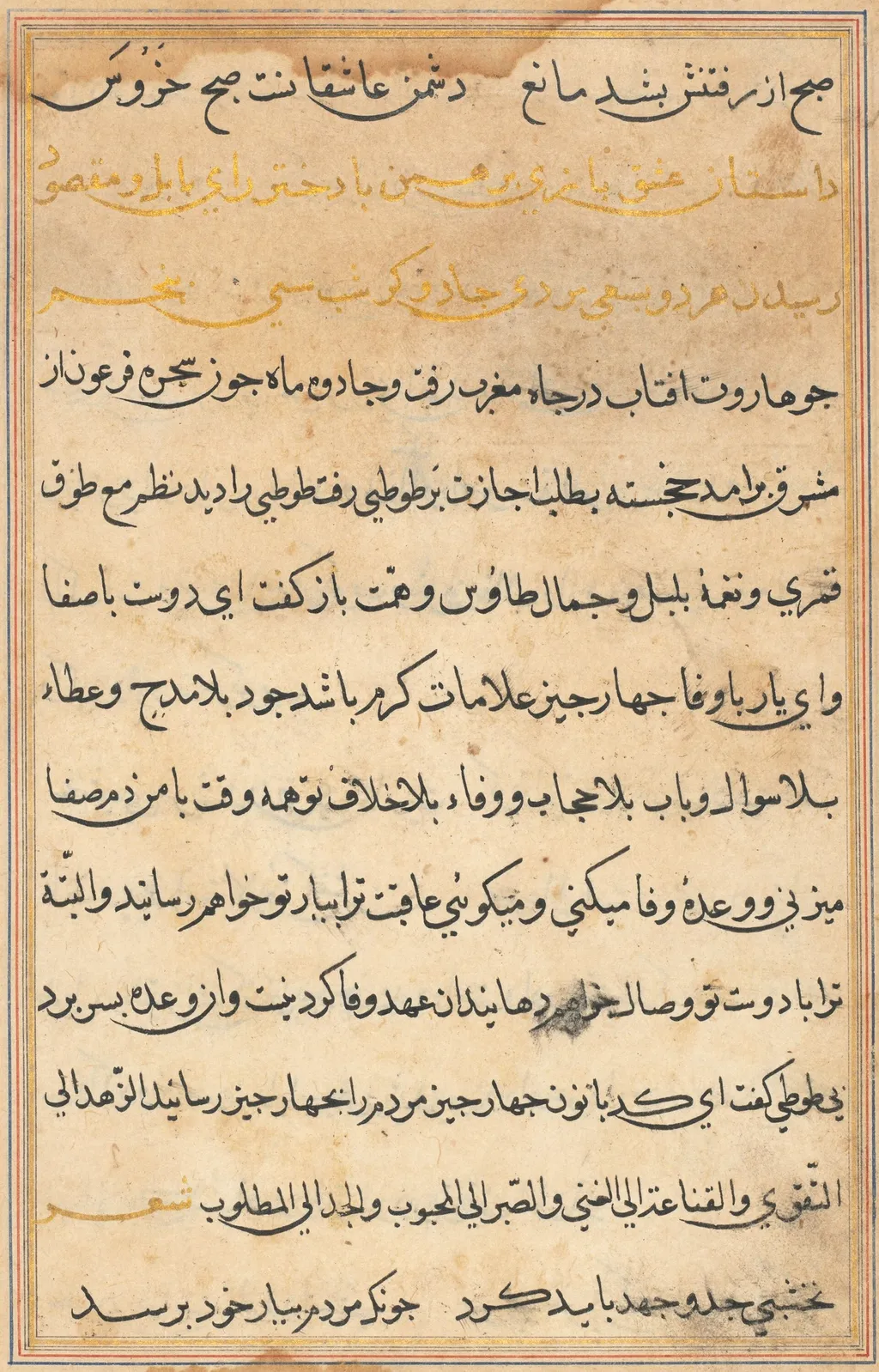
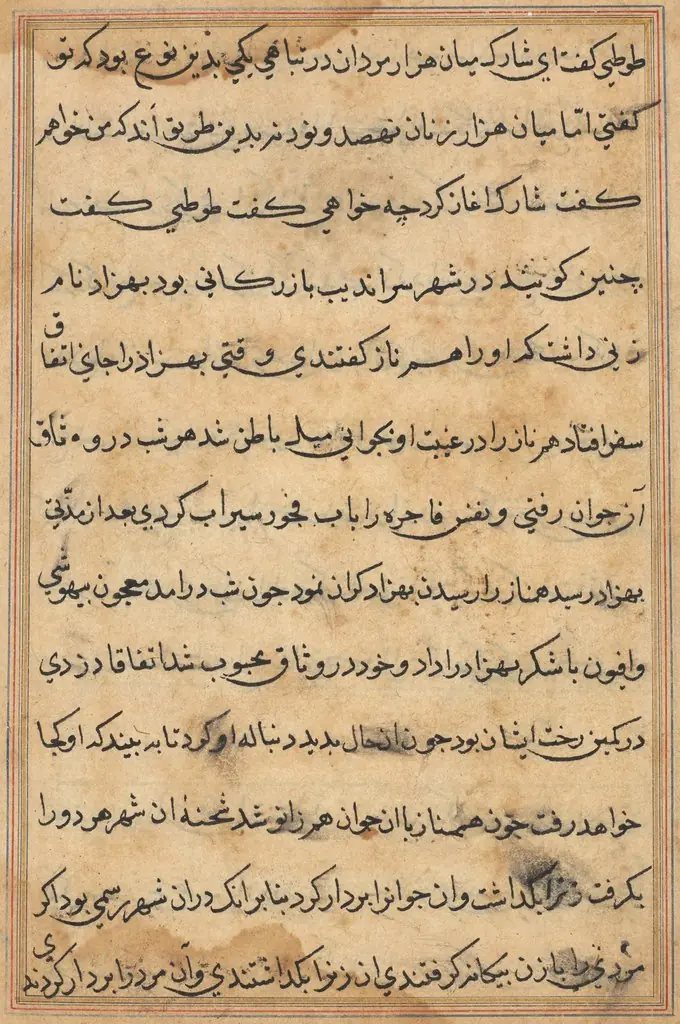
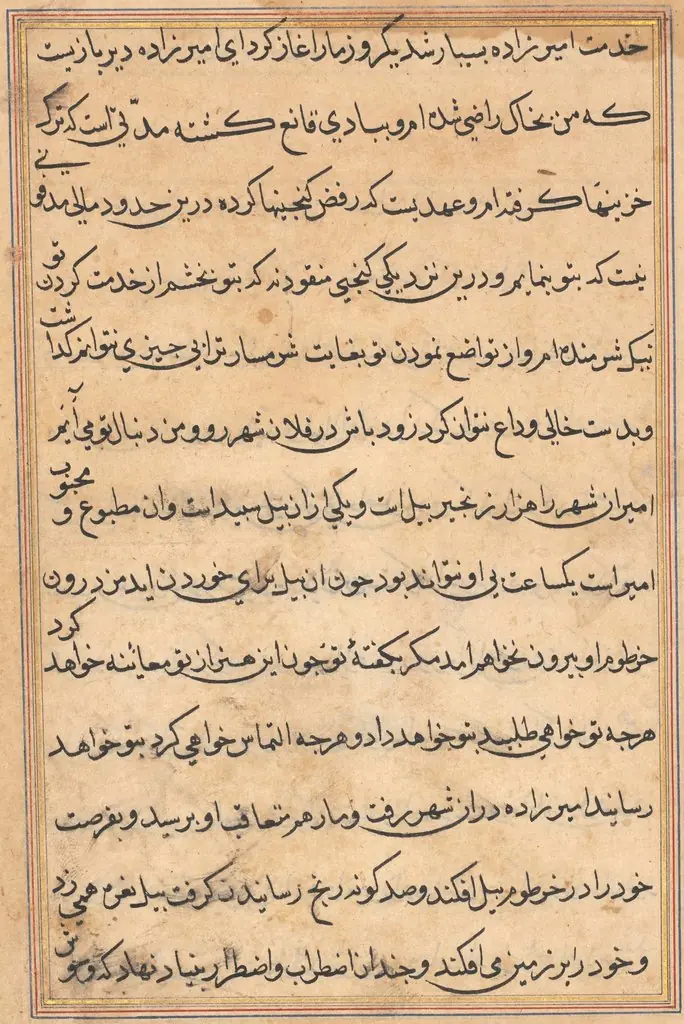
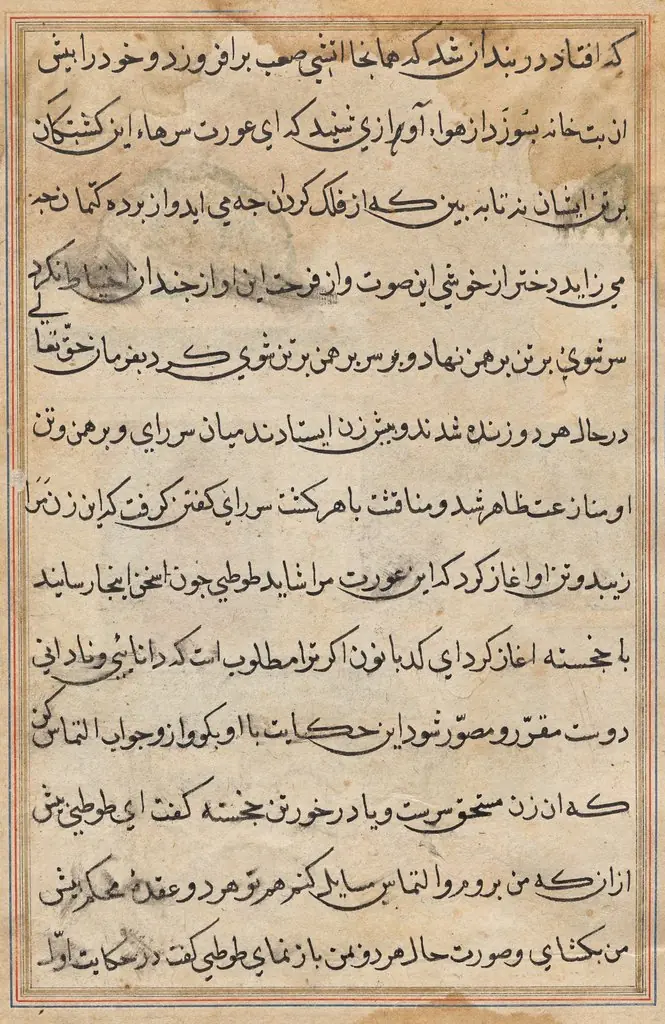
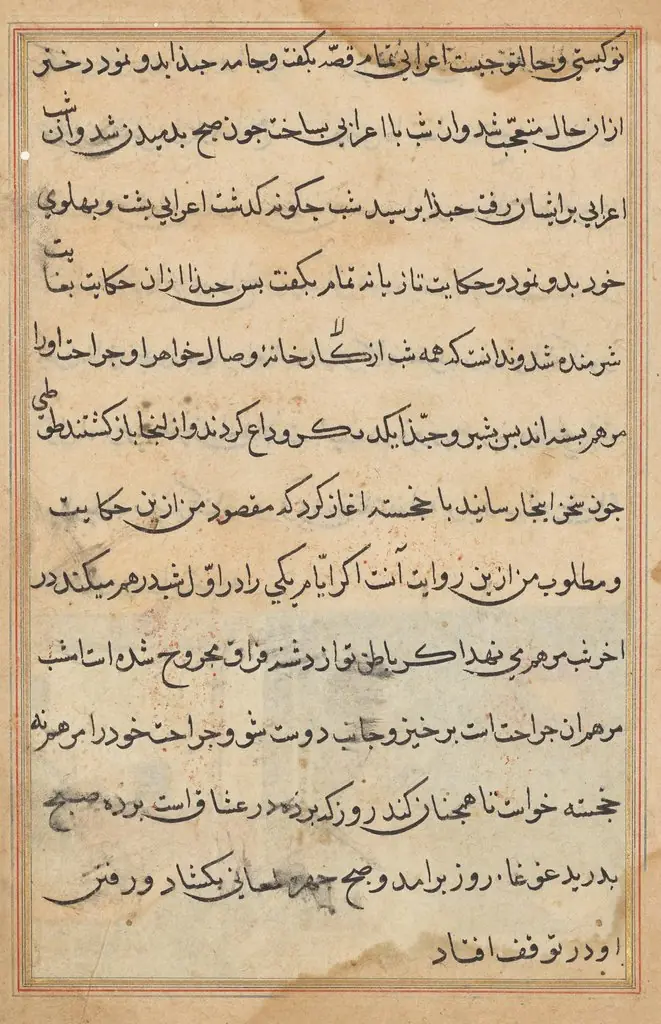
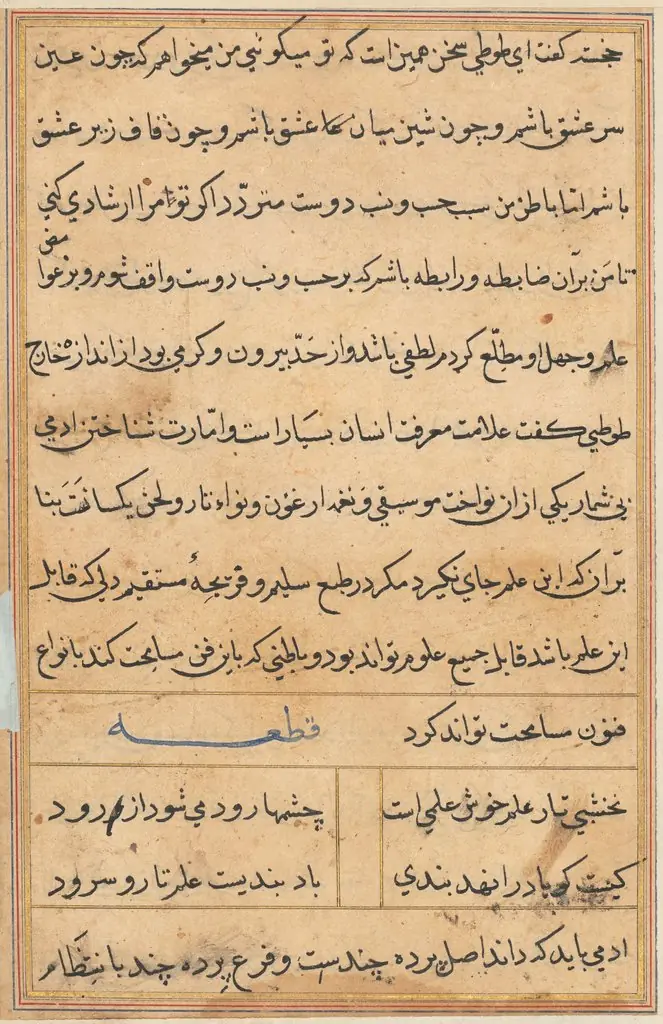
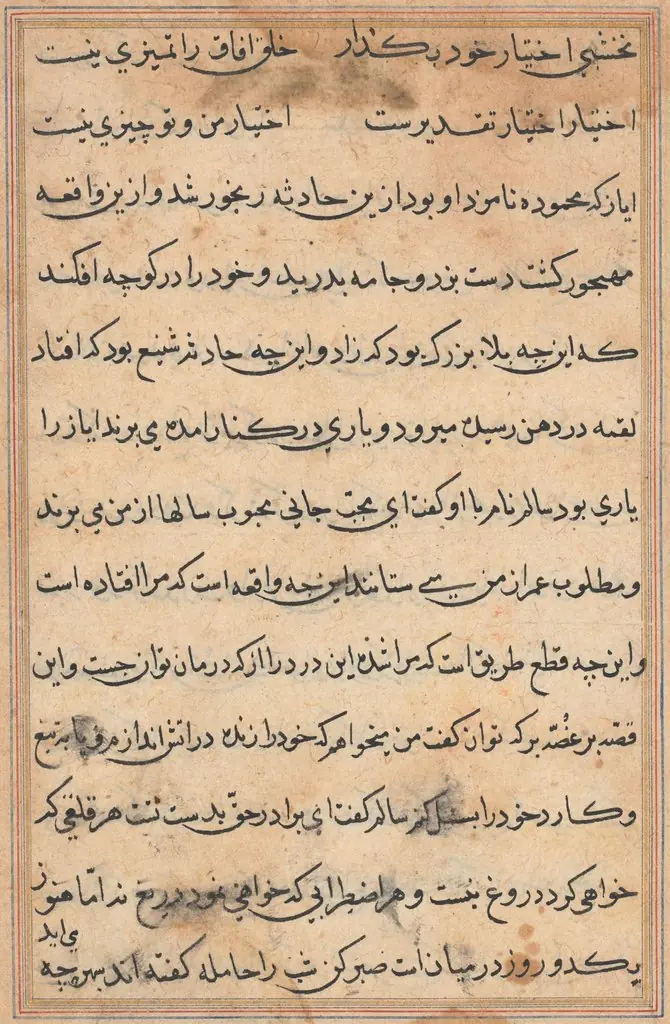
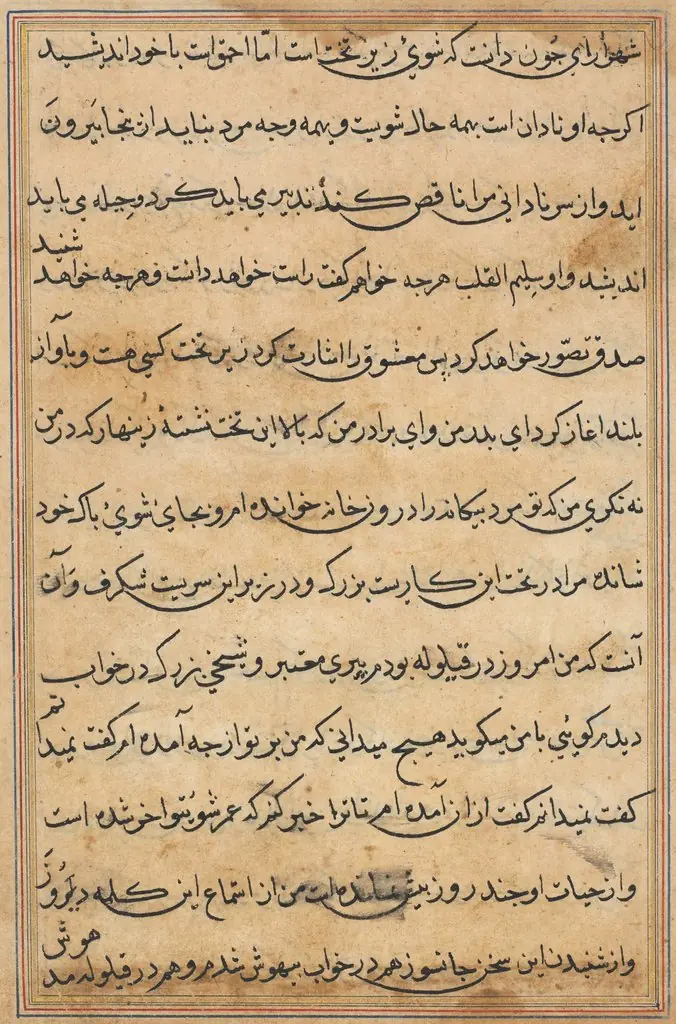
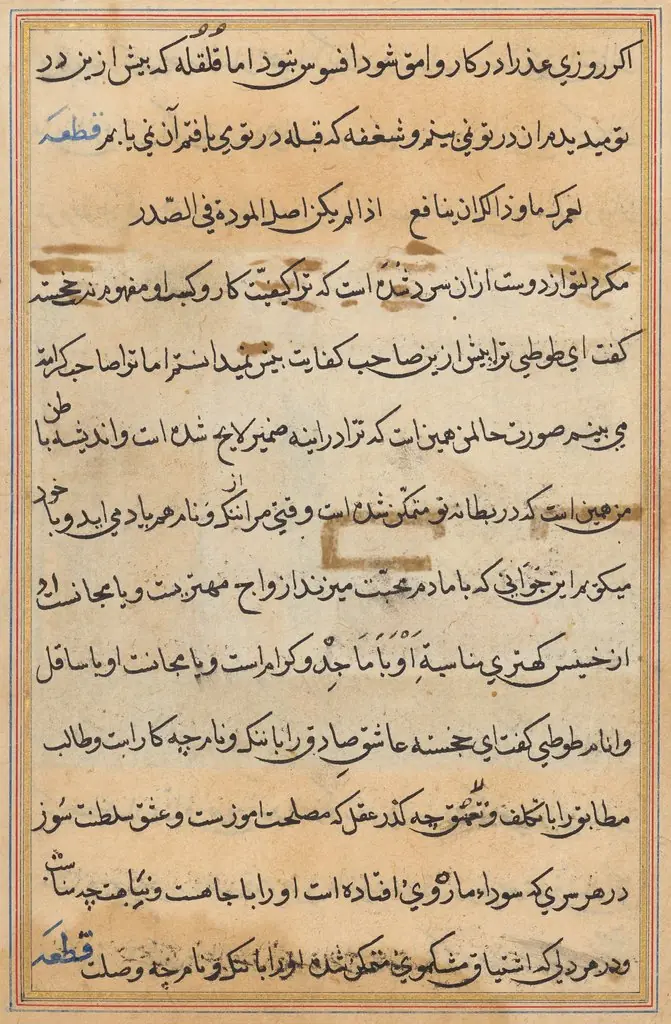
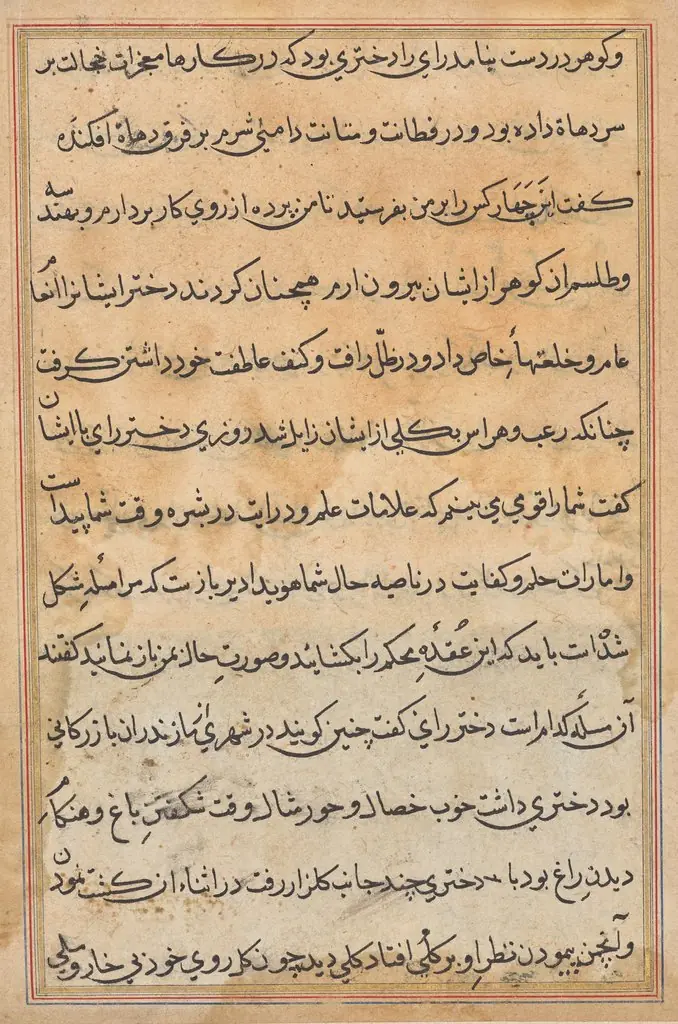
Page from Tales of a Parrot (Tuti-nama): text page is an unspecified painting. It dates from 1560 and is held in the collection of the Cleveland Museum of Art. This illuminated page originates from the Persian manuscript known as the Tales of a Parrot (Tuti‑nama).
About this work
Overview
Executed on paper, the sheet is dominated by flowing black and gold ink that records a narrative composed for a princely patron, Salīṭ.
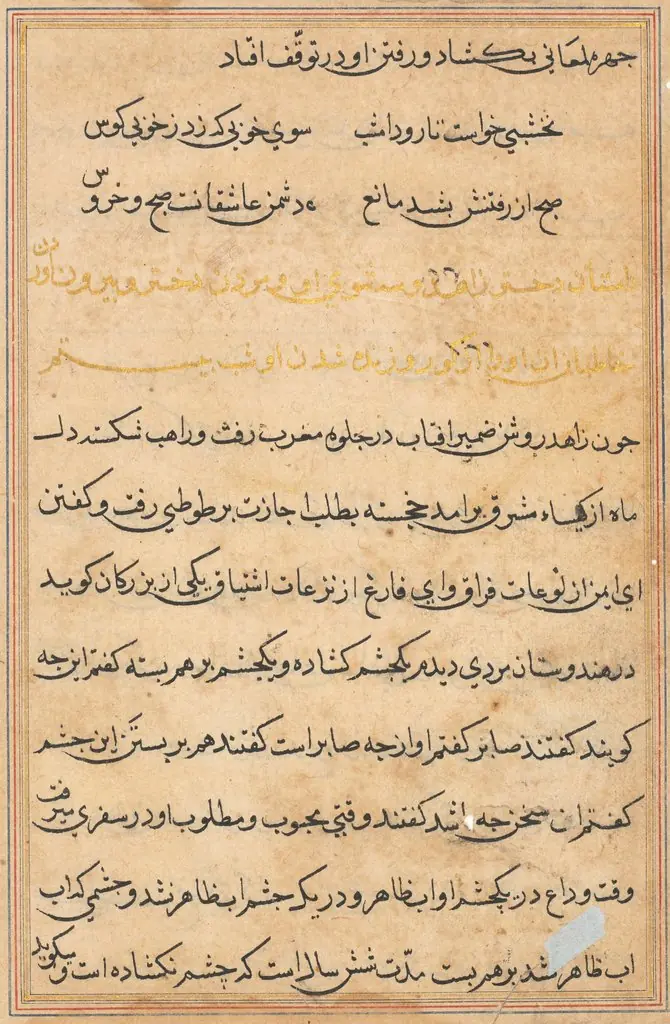
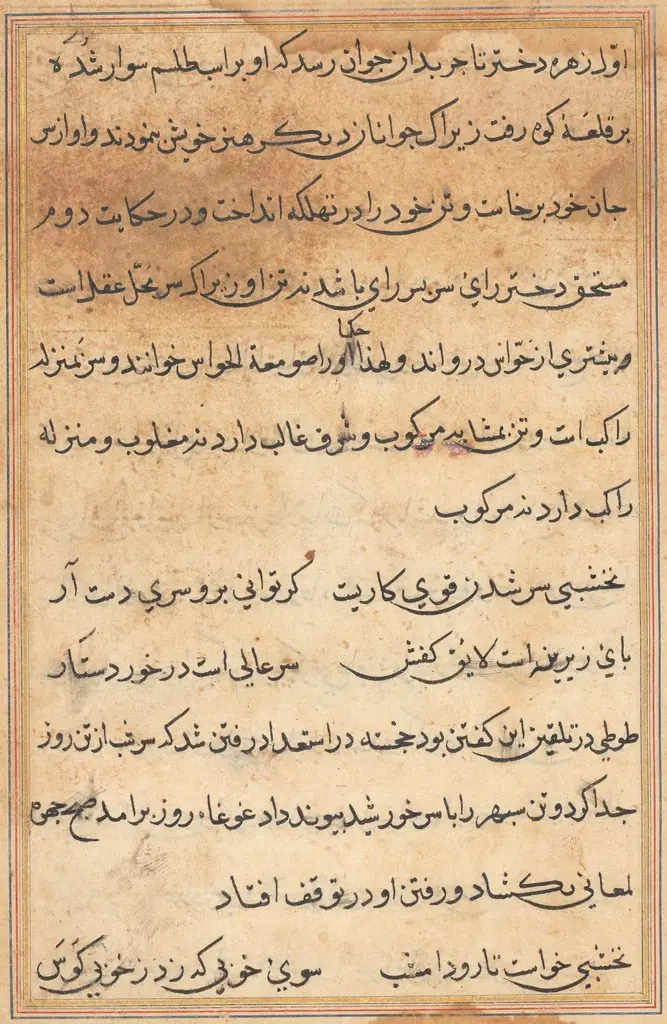
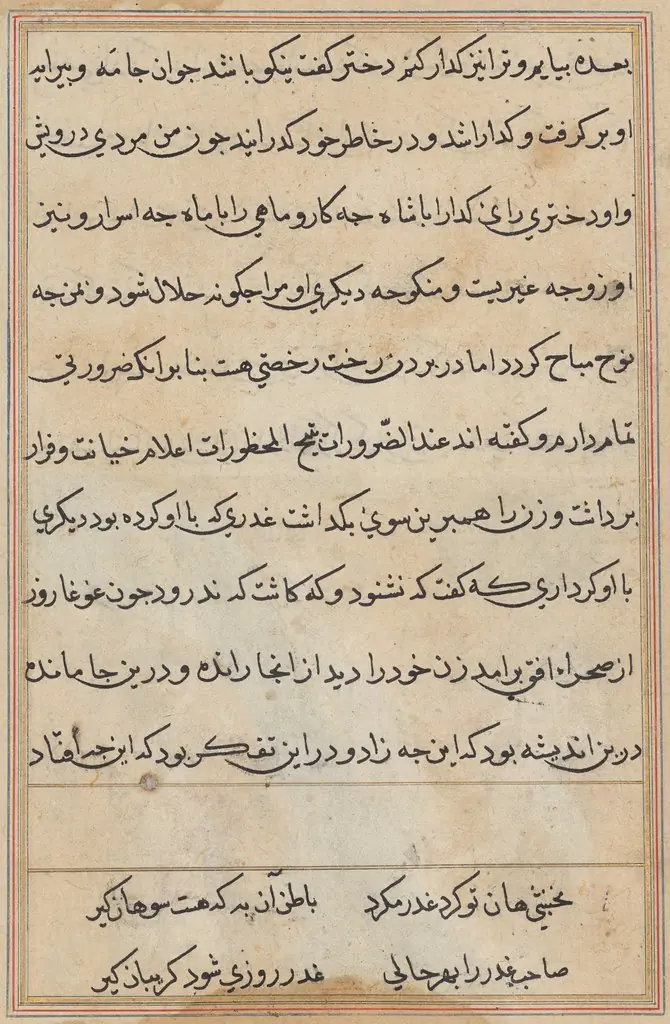
This illuminated page originates from the Persian manuscript known as the Tales of a Parrot (Tuti‑nama). Executed on paper, the sheet is dominated by flowing black and gold ink that records a narrative composed for a princely patron, Salīṭ. The composition balances dense calligraphic text with a faint decorative border, and the surface bears the patina of age, including specks of dirt and slight discoloration.
Subject & Meaning
The written passage conveys a story intended for Prince Salīṭ, reflecting the courtly tradition of gifting literary works to royalty. While the precise tale is not detailed here, the Tuti‑nama typically gathers moral anecdotes and fables, using the parrot as a symbolic storyteller to impart ethical lessons.
Technique & Style
Calligraphers employed both sable black ink and gold pigment, varying line thickness to create visual rhythm and emphasis within the Persian script. The gold, applied with a fine brush, highlights key passages and adds a luminous contrast to the dark text. A subtle, faded border frames the page, suggesting an earlier decorative program now softened by wear.
History & Provenance
The manuscript was commissioned for Prince Salīṭ, a member of the Safavid court, situating its creation in the early modern Persian artistic milieu. Over centuries the folio entered various collections, ultimately becoming part of the Cleveland Museum of Art’s holdings, where it is displayed alongside other pages from the same codex.
Context
Produced during a period when Persian miniaturists and calligraphers collaborated on lavishly illustrated books, this page exemplifies the integration of literary culture and visual refinement. The use of gold ink reflects the patron’s status and the manuscript’s function as a prestigious object of both education and display.
Legacy
Pages such as this continue to inform scholars about Safavid book production, calligraphic conventions, and the role of narrative manuscripts in courtly life. Their preservation in museum collections allows ongoing comparative study with related Persian texts and contributes to a broader understanding of Islamic manuscript art.
Artist & collection

 Page from Tales of a Parrot (Tuti-nama): text page
 Page from Tales of a Parrot (Tuti-nama): text page
 Page from Tales of a Parrot (Tuti-nama): text page
 Page from Tales of a Parrot (Tuti-nama): text page
 Page from Tales of a Parrot (Tuti-nama): text page
 Page from Tales of a Parrot (Tuti-nama): text page
 Page from Tales of a Parrot (Tuti-nama): text page
 Page from Tales of a Parrot (Tuti-nama): text page
 Page from Tales of a Parrot (Tuti-nama): text page
 Page from Tales of a Parrot (Tuti-nama): text page
 Page from Tales of a Parrot (Tuti-nama): text page
 Page from Tales of a Parrot (Tuti-nama): text page