Artwork
Bardd y Brenin, Edward Jones (1752–1824)
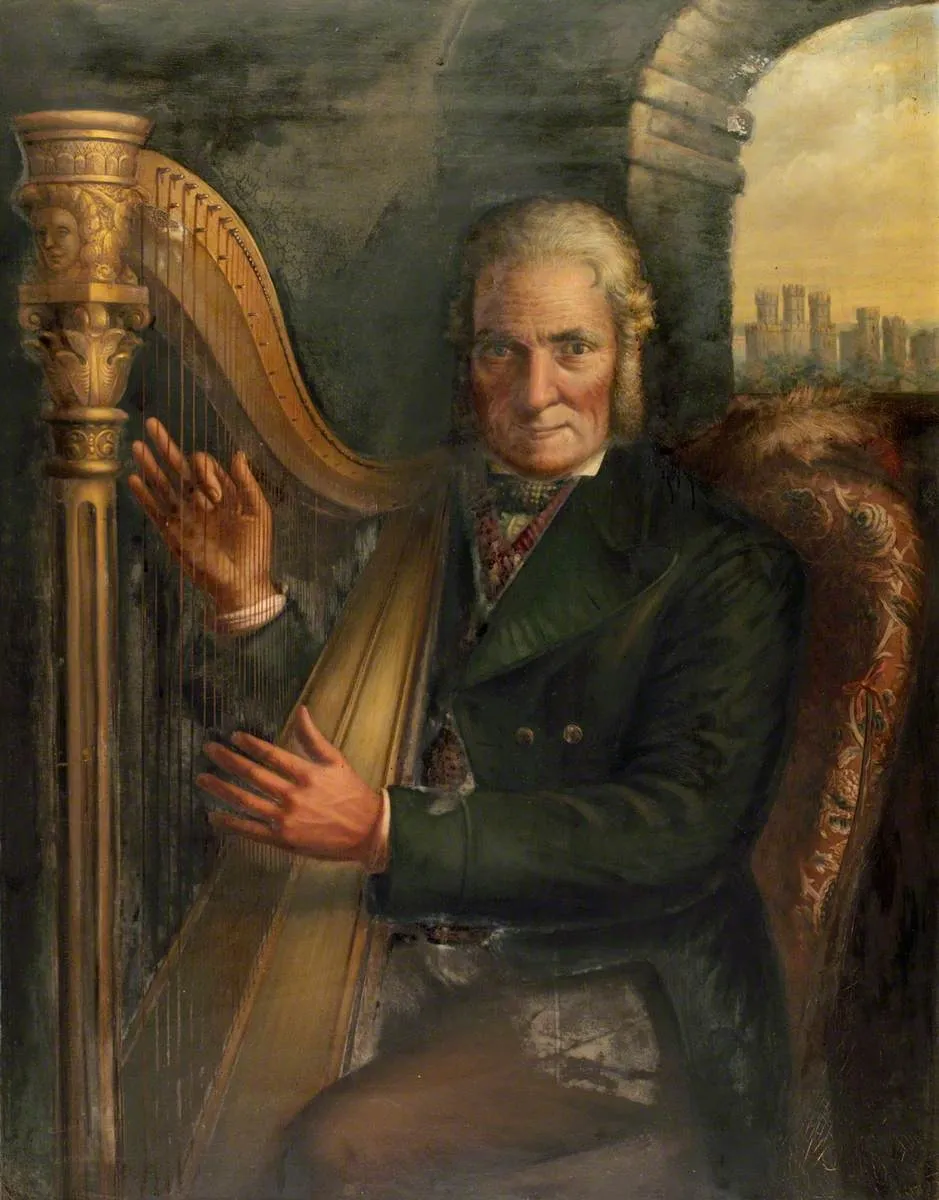
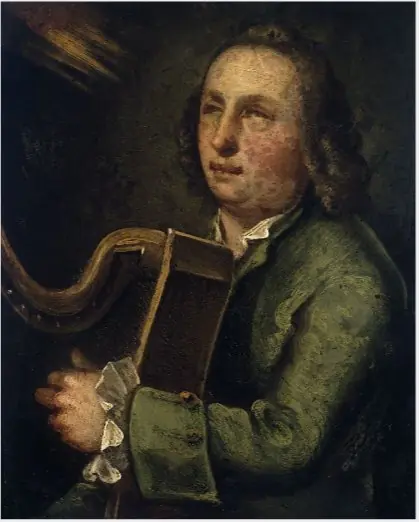
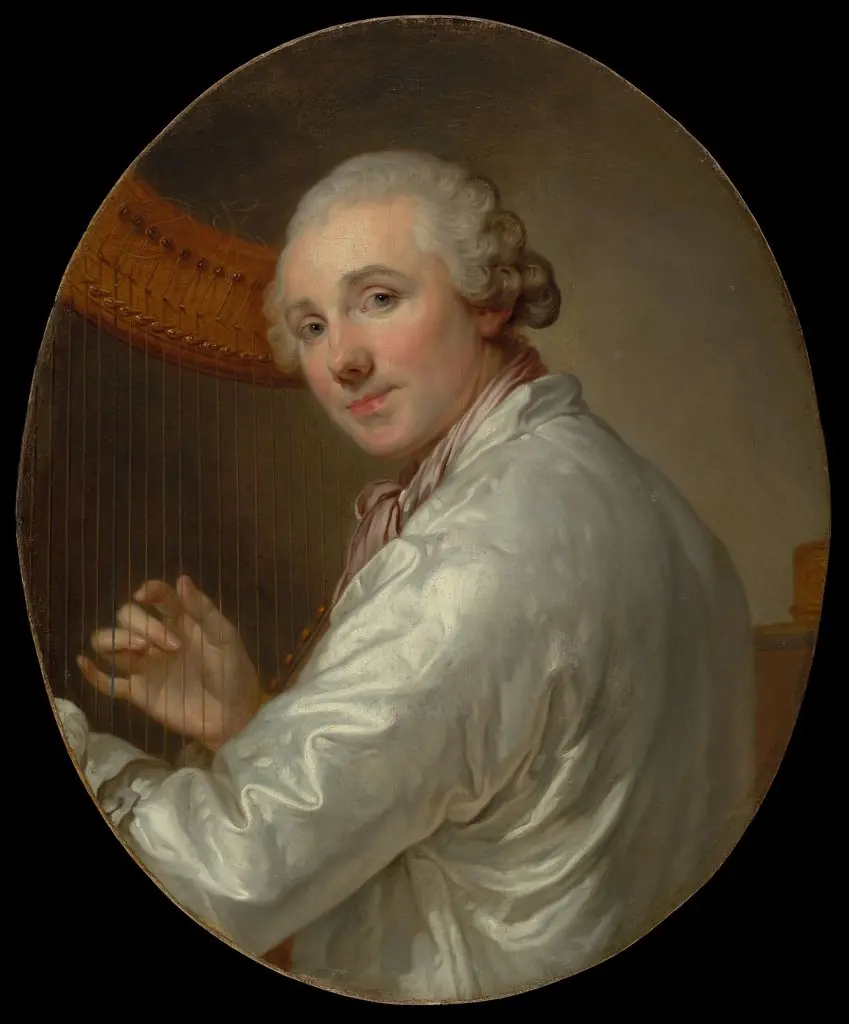
Bardd y Brenin, Edward Jones (1752–1824) is an oil painting by Unknown. It dates from 1900 and is held in the collection of the National Library of Wales. Edward Jones, a Welsh musician and collector of traditional harp music, is depicted in an oil portrait painted after his death.
About this work
Overview
Edward Jones, a Welsh musician and collector of traditional harp music, is depicted in an oil portrait painted after his death. The image presents him seated with a large harp, dressed in formal 18th-century attire. The composition emphasizes stillness and contemplation, with soft illumination drawing attention to his face and hands, while the surrounding space remains muted and shadowed.
Subject & Meaning
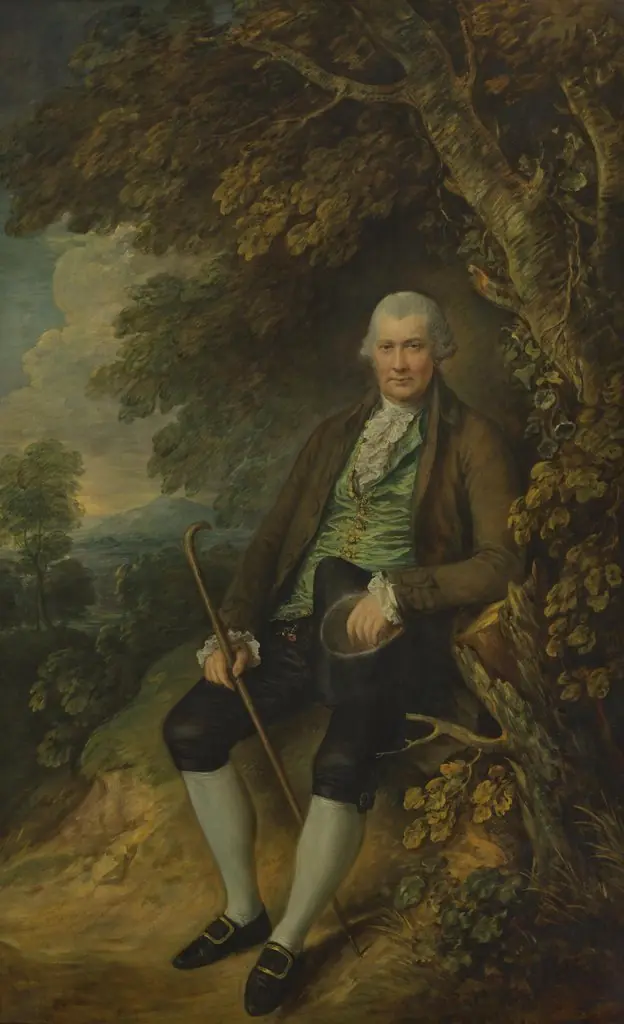
The portrait honors Jones as a preserver of Welsh musical heritage. His calm expression and steady grip on the harp suggest deep connection to his craft. The inclusion of a distant castle and stone wall evokes a sense of place and history, framing him not merely as a performer but as a cultural figure rooted in tradition, even though the image was created posthumously.
Technique & Style
The artist employs chiaroscuro to model the figure, using gentle gradations of light to define the face, hands, and harp’s gold frame against a dark, indistinct background. The texture of the green coat and patterned waistcoat is rendered with subtle brushwork, while the harp’s carved details are suggested rather than fully detailed, reinforcing the focus on the sitter’s presence.
History & Provenance
Painted after Jones’s death in 1824, this portrait is not a contemporary likeness but a retrospective tribute. It likely draws from earlier sketches or descriptions, reflecting 19th-century interest in preserving national cultural figures. The work’s origin and early ownership remain undocumented, though its style aligns with late Georgian portraiture practices in Britain.
Context
Jones was known for compiling Welsh harp melodies and promoting the instrument’s legacy during a time when traditional music faced decline. This portrait emerged in a period of growing romantic nationalism, where figures like him were idealized as guardians of cultural identity. The setting, though vague, evokes a timeless Welsh landscape, reinforcing his symbolic role.
Legacy
The portrait serves as a visual anchor for Jones’s contributions to Welsh music history. Though not painted from life, it became one of the most recognized images associated with him, influencing later depictions and scholarly representations. Its quiet dignity helped cement his status as a cultural icon in Welsh heritage narratives.
Artist & collection

 Domestic Scene
 Giacomo and Cardinal Marco, investing Andrea, Abbot of San Zeno, with his Benefice
 The Nymph of Fontainebleau
 Portrait of a Woman
 Madonna and Child with Saints in the Enclosed Garden
 Venus and Minerva
 Family Group of Four on Sofa
 Wall painting from Room H of the Villa of P. Fannius Synistor at Boscoreale