Artwork
Jugglers before the Doge's Palace
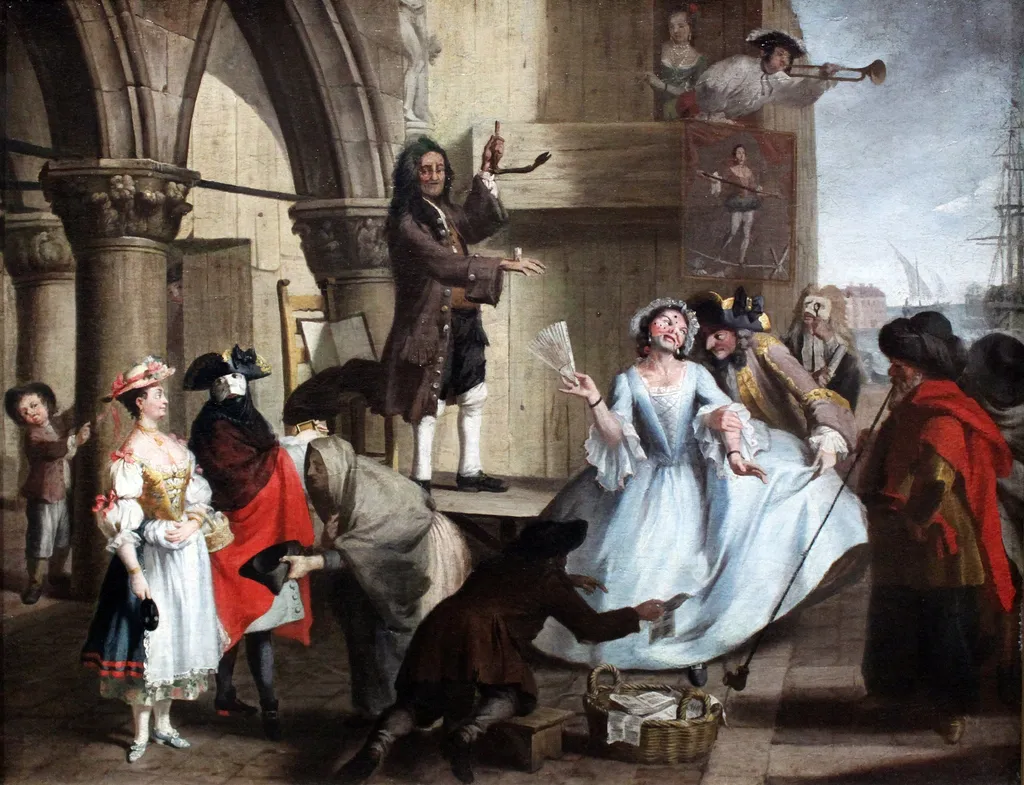
Jugglers before the Doge's Palace is an unspecified painting by the Rococo painting artist Unknown. It dates from 1755 and is held in the collection of the Städel Museum. This painting depicts a group of jugglers performing in front of the Doge's Palace in Venice.
About this work
Overview
This painting depicts a group of jugglers performing in front of the Doge's Palace in Venice. The scene captures a moment of public entertainment, framed by the architectural grandeur of the Venetian government seat. The composition emphasizes the contrast between the lively, informal activity of the performers and the rigid, formal setting behind them.
Subject & Meaning
The jugglers represent common street performers, their gestures and attire suggesting a transient, working-class presence.
The jugglers represent common street performers, their gestures and attire suggesting a transient, working-class presence. Their performance before the seat of political power may imply a subtle commentary on the relationship between authority and popular culture, though no overt satire is evident. The scene reflects everyday life in Renaissance Venice, where public spectacles were part of civic rhythm.
Technique & Style
The artist employs a detailed, observational approach with careful attention to costume, gesture, and spatial depth. Figures are rendered with naturalistic proportions and subtle modeling, while the palace facade is rendered with architectural precision. Light falls evenly across the scene, avoiding dramatic contrasts, reinforcing the documentary tone of the work.
History & Provenance
The painting is attributed to a Venetian painter active in the late 15th or early 16th century, though the artist’s identity remains unconfirmed. It was likely commissioned by a member of the Venetian elite interested in scenes of civic life. The work entered a public collection in the 19th century after passing through private hands in Italy.
Context
During the Renaissance, Venice hosted frequent public festivals and performances, often held near key civic buildings. Jugglers, acrobats, and musicians were common sights, especially during holidays or diplomatic visits. This painting aligns with a growing interest in secular, non-religious subjects among Venetian patrons, reflecting the city’s unique blend of commerce, spectacle, and governance.
Legacy
The painting contributes to a small but significant body of Renaissance works that document urban life beyond religious or mythological themes. It offers insight into the visibility of itinerant performers in Venetian society and the aesthetic appreciation for everyday observation. Though not widely influential in artistic movements, it remains a valuable record of social customs in early modern Venice.
Artist & collection

 Domestic Scene
 Giacomo and Cardinal Marco, investing Andrea, Abbot of San Zeno, with his Benefice
 The Nymph of Fontainebleau
 Portrait of a Woman
 Madonna and Child with Saints in the Enclosed Garden
 Venus and Minerva
 Family Group of Four on Sofa
 Wall painting from Room H of the Villa of P. Fannius Synistor at Boscoreale
 Naamiaistanssiaiset
 Misled: The Ambassador of the Rascals exposes himself from the window of 't Bokki Tavern in the Haarlemmerhout
 Taste in High Life
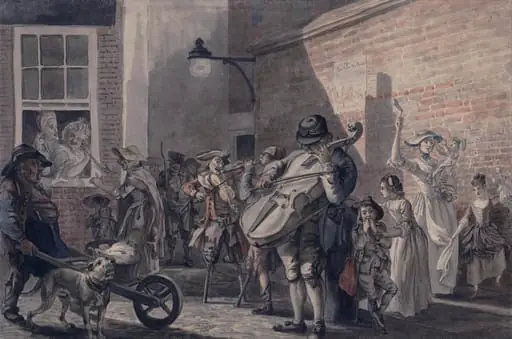 The Asylum for the Deaf
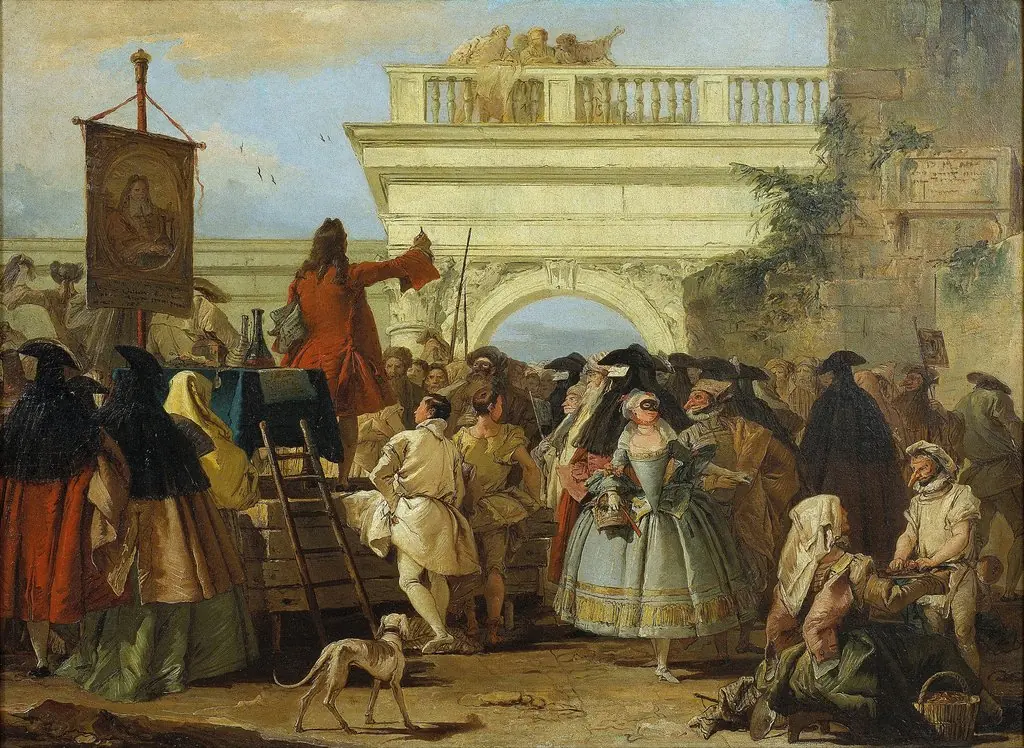 El xarlatà
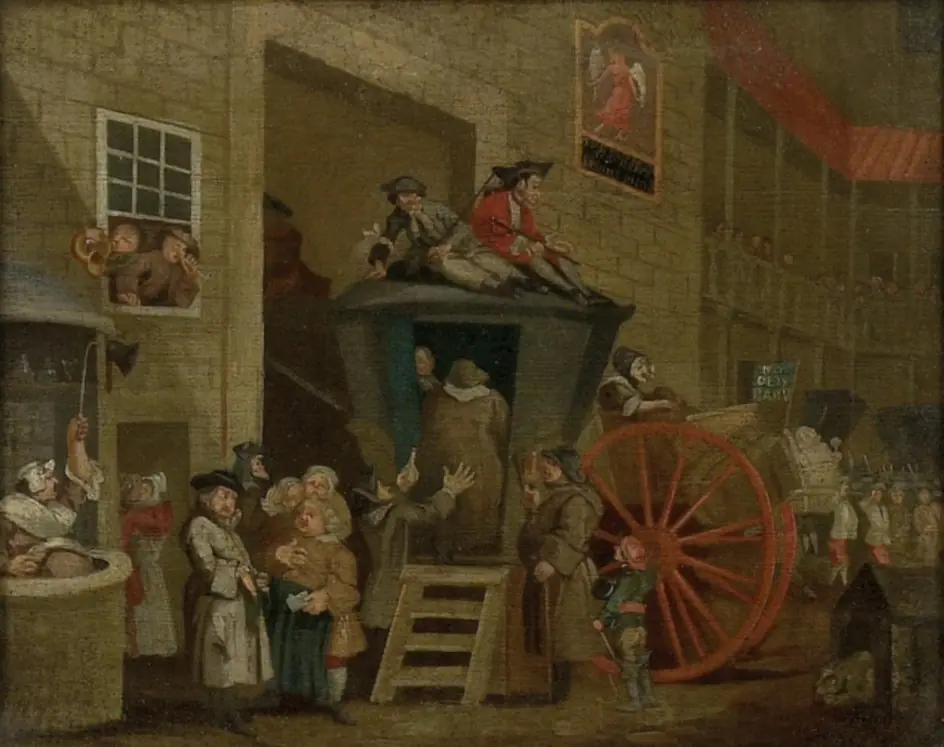 The Stage Coach or The Country Inn Yard
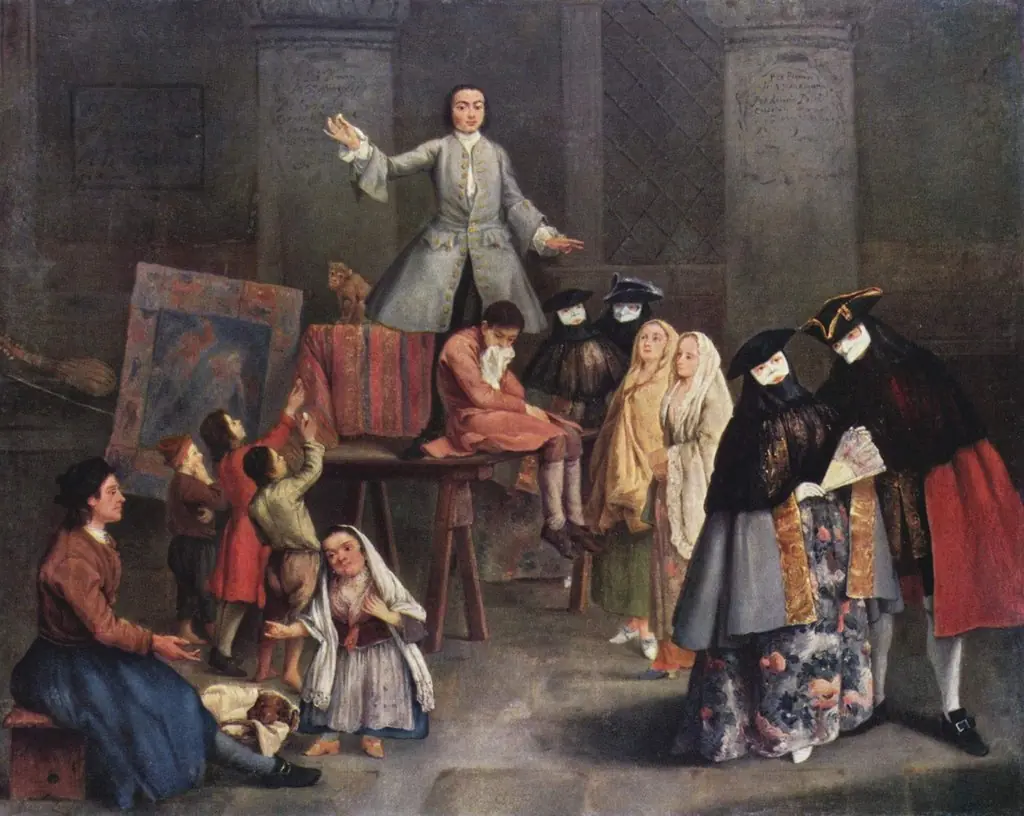 The Toothpuller
 Julestuen, 13. scene
 The Doctor's Visit
 Julestuen, 13. scene
 An Italian Comedy in Verona
 The Dance