Artwork
The facade of the tomb of I'timad ad-daula and his wife Asmat Begum, Agra.
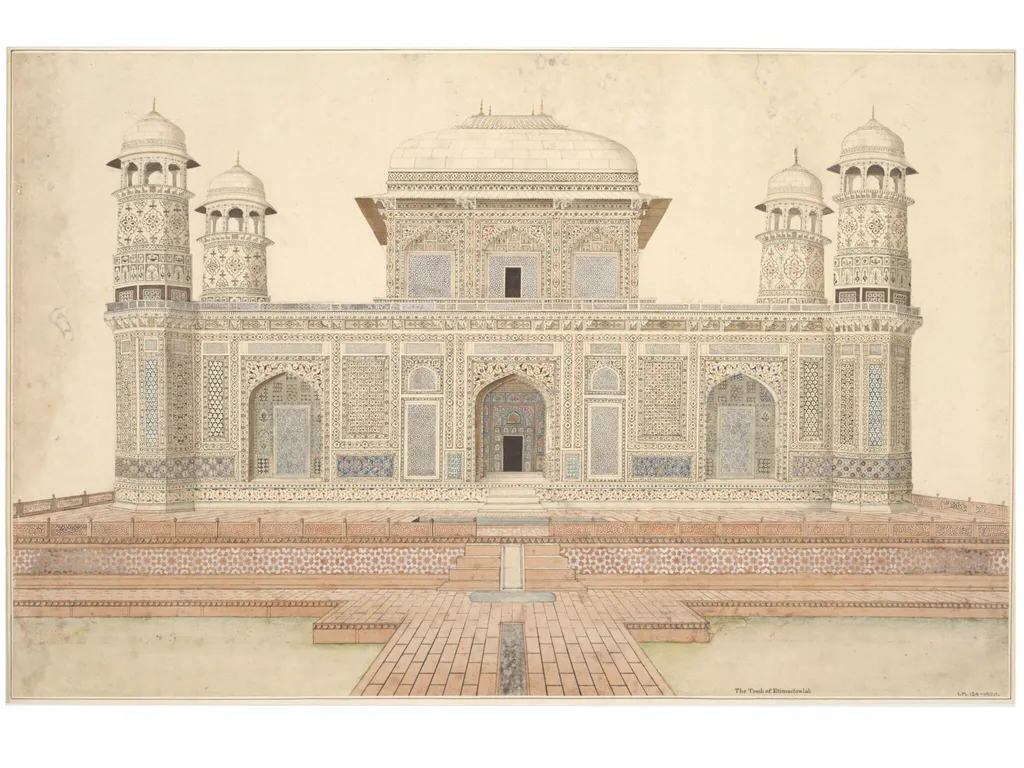
The facade of the tomb of I'timad ad-daula and his wife Asmat Begum, Agra. is a drawing by the Romanticist artist Unknown. It dates from 1819 and is held in the collection of the Victoria and Albert Museum. This early nineteenth‑century drawing records the front elevation of the tomb of I’timad ad‑daula and his wife Asmat Begum in Agra.
About this work
Overview
This early nineteenth‑century drawing records the front elevation of the tomb of I’timad ad‑daula and his wife Asmat Begum in Agra. Executed as part of a series of fifteen illustrations of Mughal monuments, it captures the building’s monumental scale and decorative richness for a British audience.
Subject & Meaning
The composition presents the tomb’s symmetrical façade, marked by four corner towers, a central dome and subsidiary domes, and a series of arched portals. The surface is densely covered with geometric, floral and arabesque motifs rendered in a palette of blues, whites and reds, reflecting the aesthetic principles of Mughal funerary architecture.
Technique & Style
Rendered by artists from Delhi who were working in Calcutta, the drawing combines precise line work with subtle washes of colour to convey depth and texture. Careful hatching defines the relief of the stone surfaces, while delicate shading suggests the play of light across the intricate ornamentation.
History & Provenance
Commissioned between 1816 and 1822 by Colonel Pownell Phipps, the work entered the Phipps family collection and was later bequeathed to the museum by his son, Colonel R.W. Phipps. It remains a valuable documentary record of Agra’s Mughal heritage as seen through early colonial eyes.
Artist & collection

 Domestic Scene
 Giacomo and Cardinal Marco, investing Andrea, Abbot of San Zeno, with his Benefice
 The Nymph of Fontainebleau
 Portrait of a Woman
 Madonna and Child with Saints in the Enclosed Garden
 Venus and Minerva
 Family Group of Four on Sofa
 Wall painting from Room H of the Villa of P. Fannius Synistor at Boscoreale
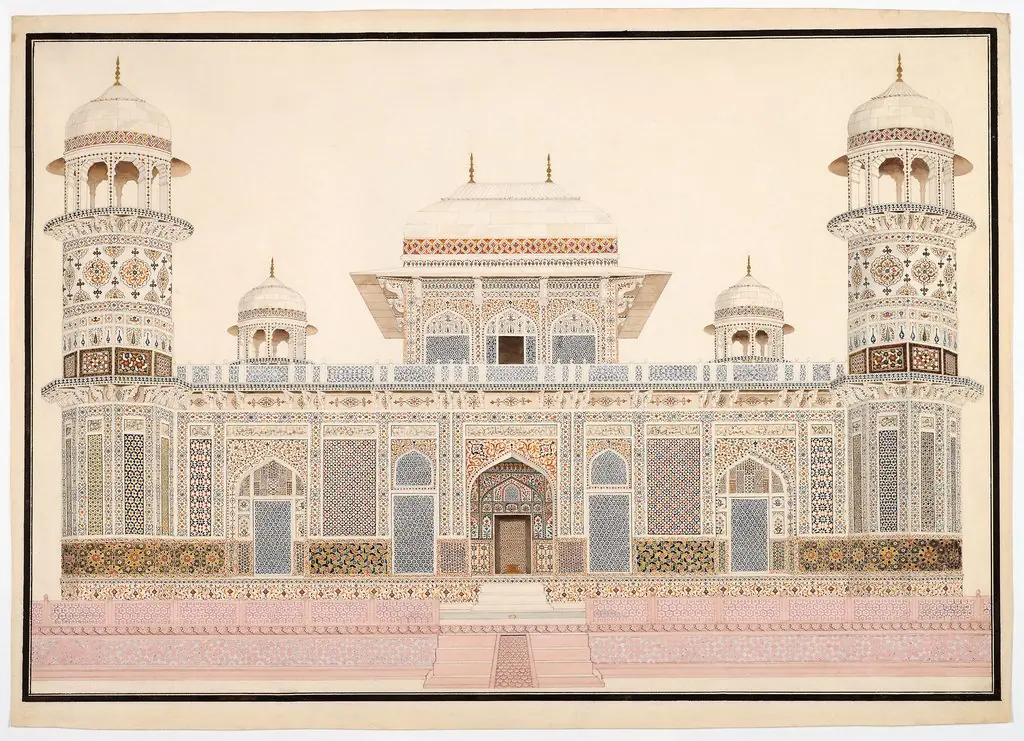 I'timad-ud-Daula's Tomb at Agra
 I'timad-ud-Daula's Tomb at Agra
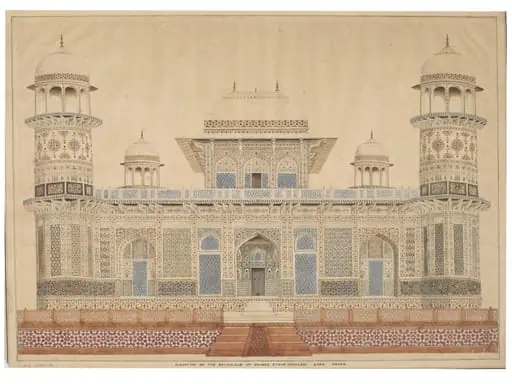 Mausoleum of Itimad ud-Daula.
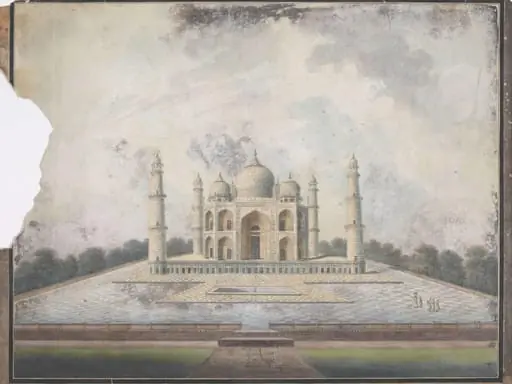 The Taj Mahal, Agra
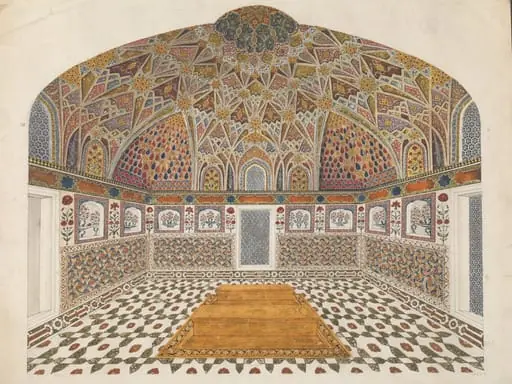 Interior of I'timad ad-Daula's tomb
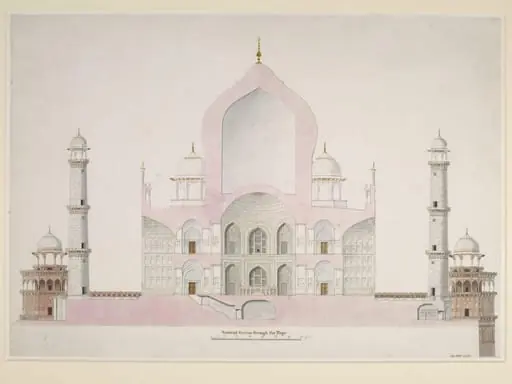 Vertical Section through the Tage
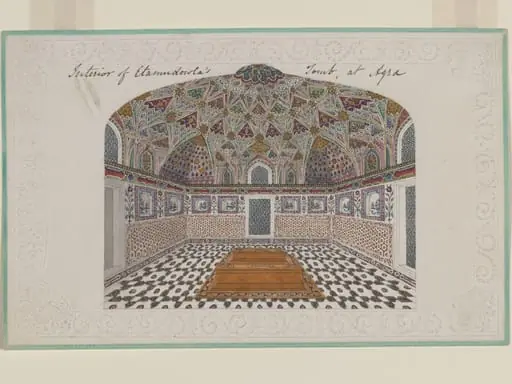 Interior of Tomb of Itimad ud-Daula.
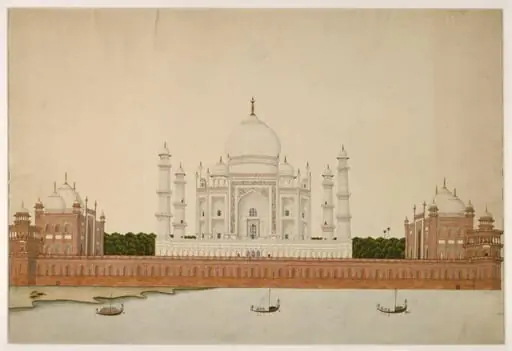 The Taj Mahal
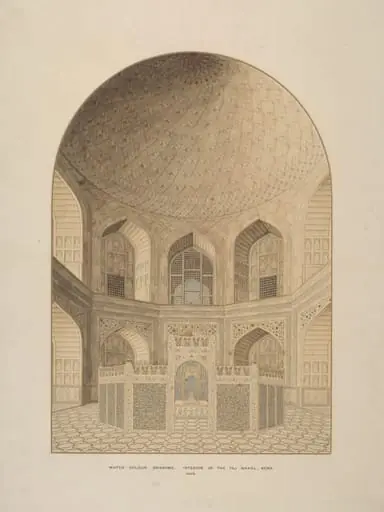 Interior of the Tomb Chamber, Taj Mahal, Agra
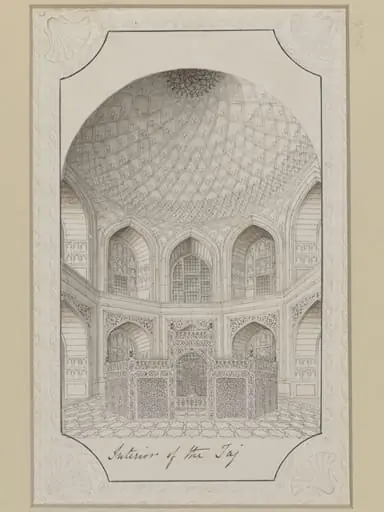 Interior of the Taj Mahal, Agra.
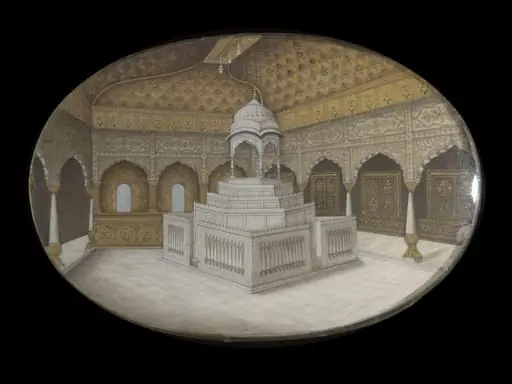 A Mughal tomb.