Artwork
Page from Tales of a Parrot (Tuti-nama): text page
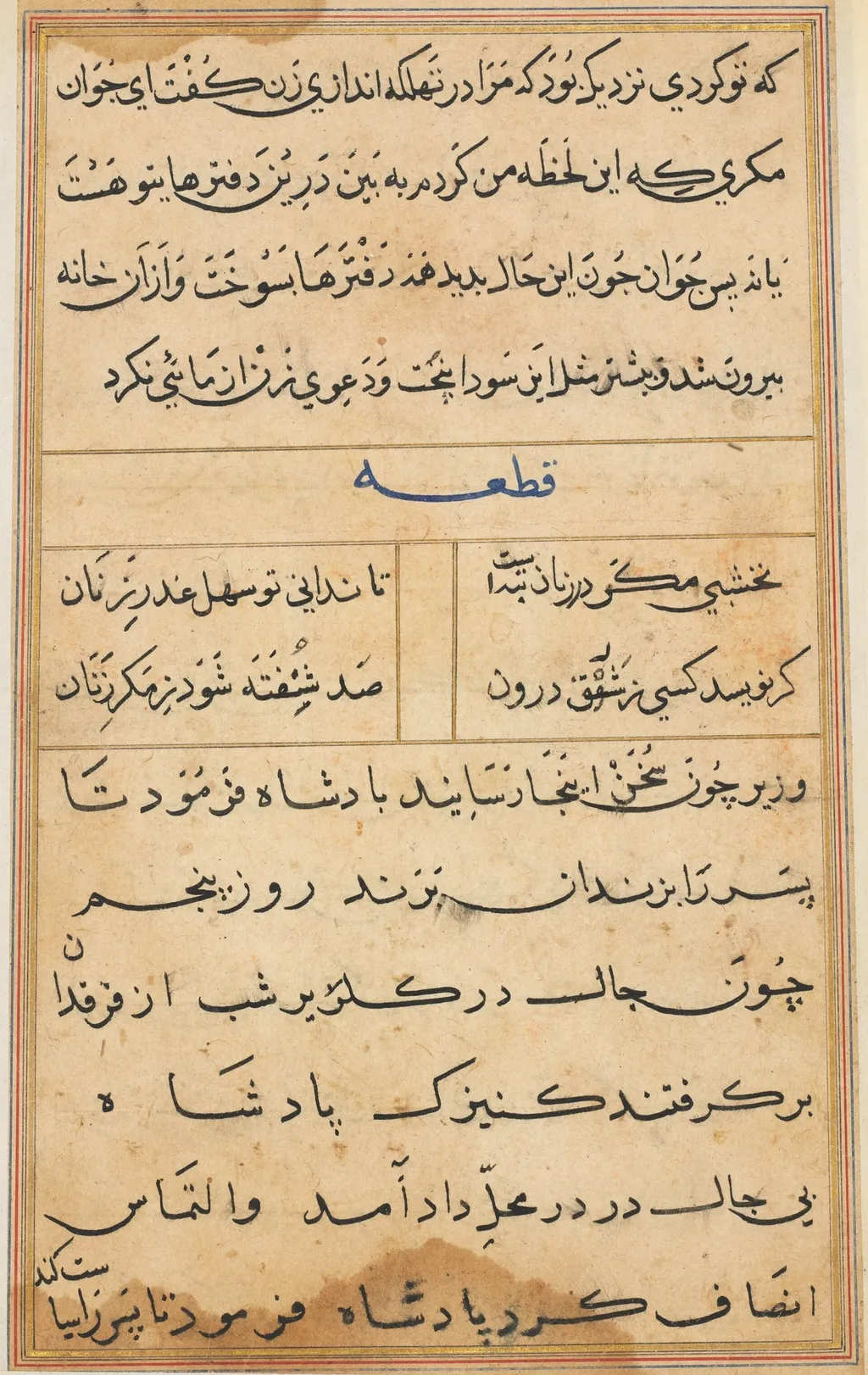
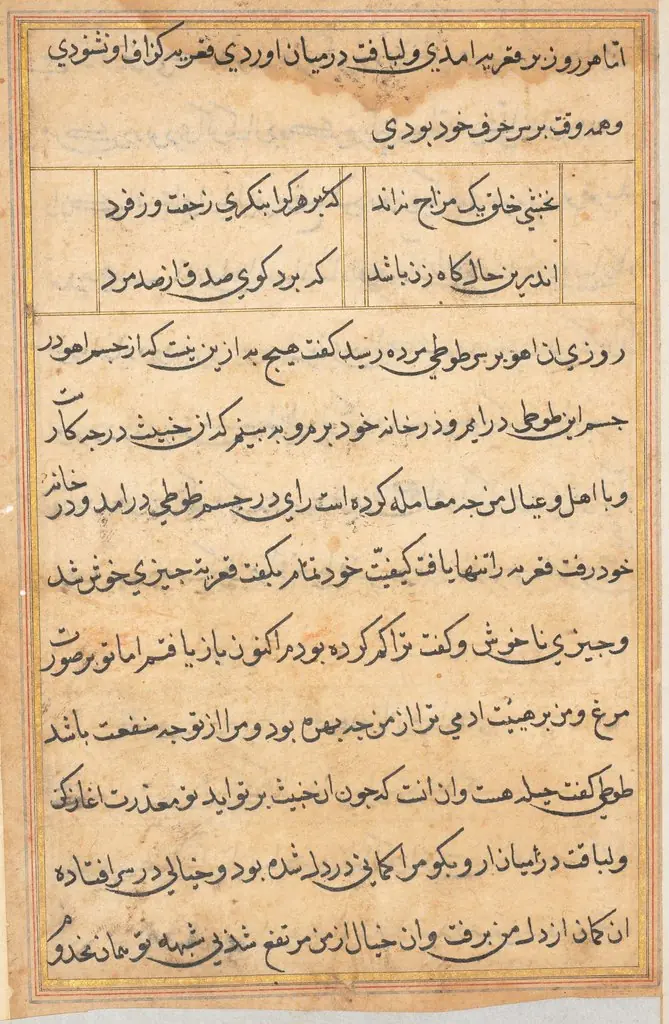
Page from Tales of a Parrot (Tuti-nama): text page is an unspecified painting. It dates from 1560 and is held in the collection of the Cleveland Museum of Art. The object is a single leaf from the medieval manuscript known as *Tuti‑nama* (Tales of a Parrot).
About this work
Overview
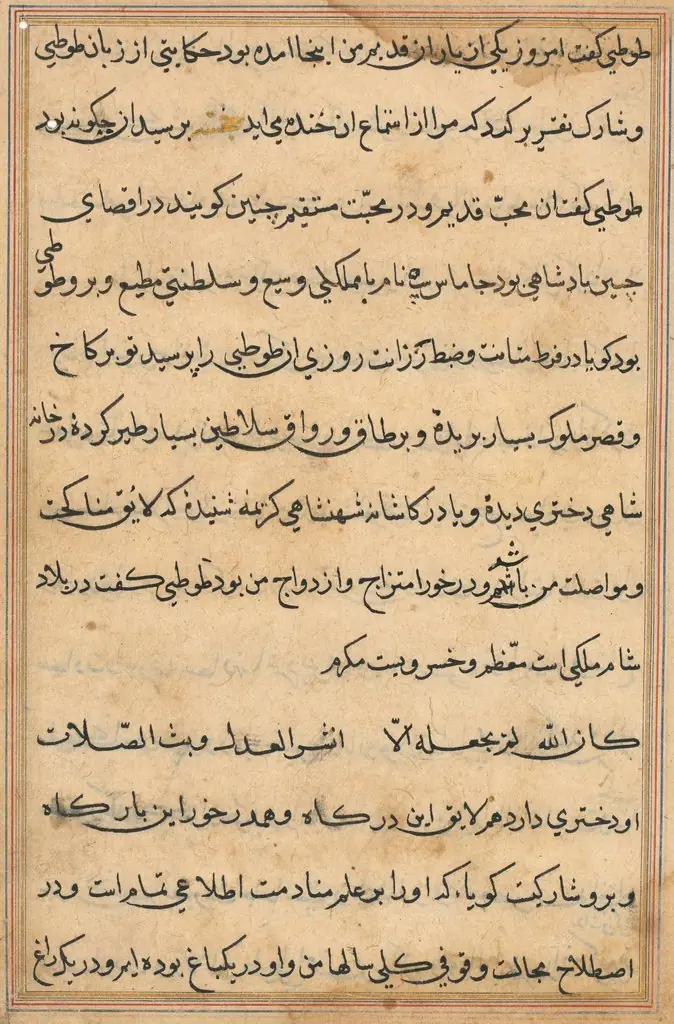
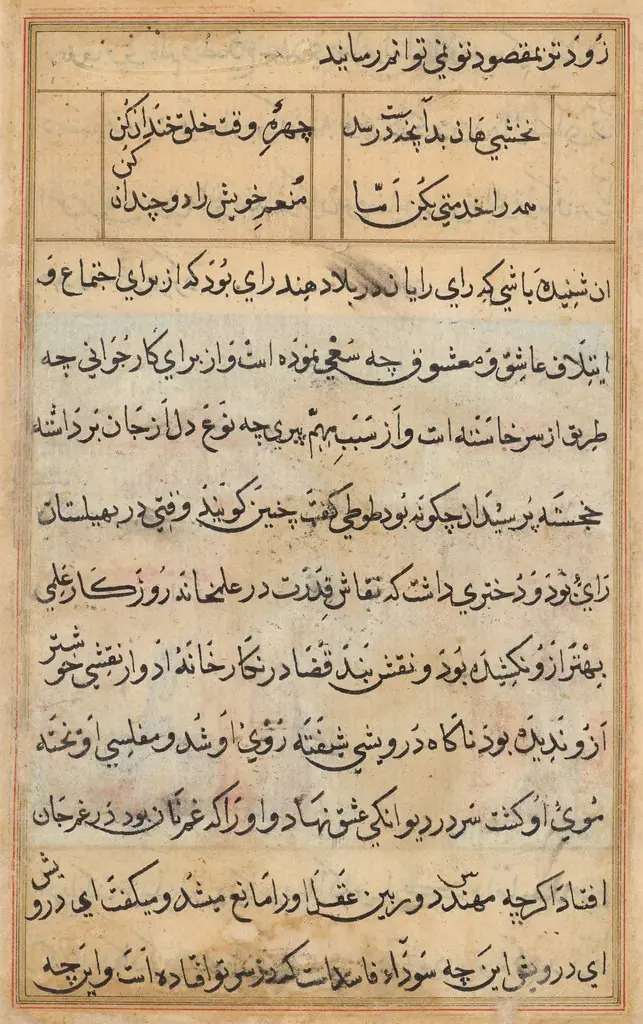
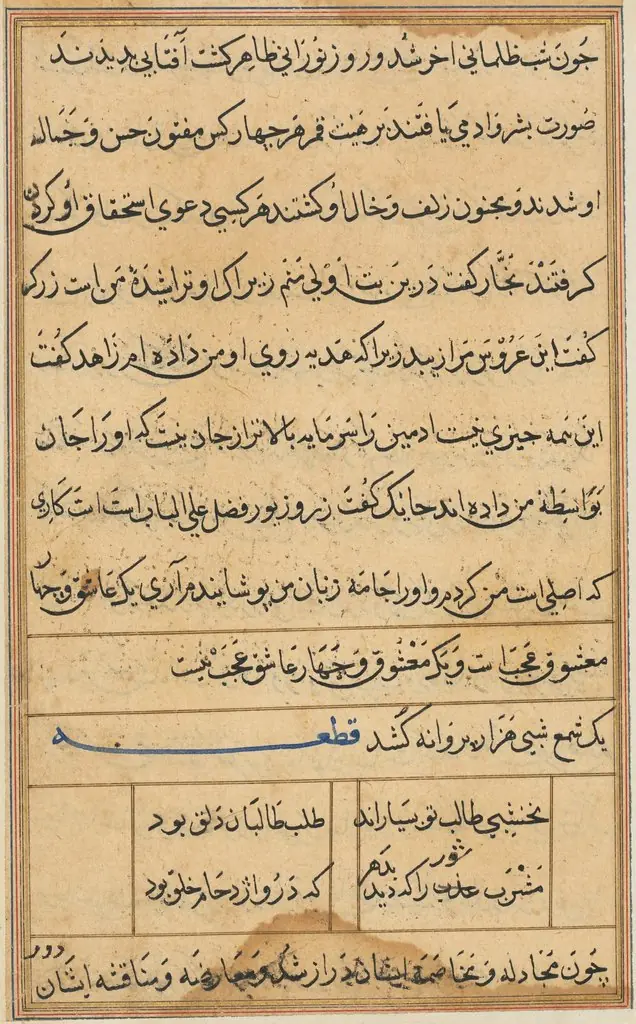
The object is a single leaf from the medieval manuscript known as *Tuti‑nama* (Tales of a Parrot). The page consists of handwritten text rendered in black ink on a yellowed, slightly damaged paper support. Decorative borders in red and blue frame the text, while occasional words are highlighted in blue, creating a subtle visual hierarchy within the composition.
Subject & Meaning
The manuscript presents a collection of moral and didactic stories, traditionally attributed to a parrot that conveys wisdom to a ruler. This particular leaf contains a segment of one such tale, though the specific narrative is not identifiable without transliteration. The highlighted passages likely indicate key moral points or verses intended for emphasis during recitation.
Technique & Style
The calligraphy is executed in an elegant, cursive script characteristic of Persian or Arabic literary works of the period, featuring elongated strokes and ornamental flourishes. The use of contrasting inks—black for the main body, blue for emphasis, and red and blue for marginal bands—demonstrates a practiced approach to visual organization within manuscript culture.
History & Provenance
*Tuti‑nama* was compiled in the Persianate world between the 13th and 15th centuries, circulating among courts and scholarly circles. The surviving page likely originates from a later copy made for a patron, as suggested by the paper’s age and the quality of the calligraphy. Its exact ownership history before entering a museum collection remains undocumented.
Context
Manuscript production in the medieval Islamic world combined literary content with artistic decoration, serving both educational and aesthetic purposes. The inclusion of colored borders and selective ink highlights reflects a broader trend of enhancing readability and visual appeal in texts intended for elite audiences.
Legacy
Pages such as this exemplify the intersection of literary tradition and visual art in Persian manuscript culture. They inform contemporary scholarship about historical writing practices, material conditions of book production, and the transmission of moral narratives across centuries.
Artist & collection

 Page from Tales of a Parrot (Tuti-nama): text page
 Page from Tales of a Parrot (Tuti-nama): text page
 Page from Tales of a Parrot (Tuti-nama): text page
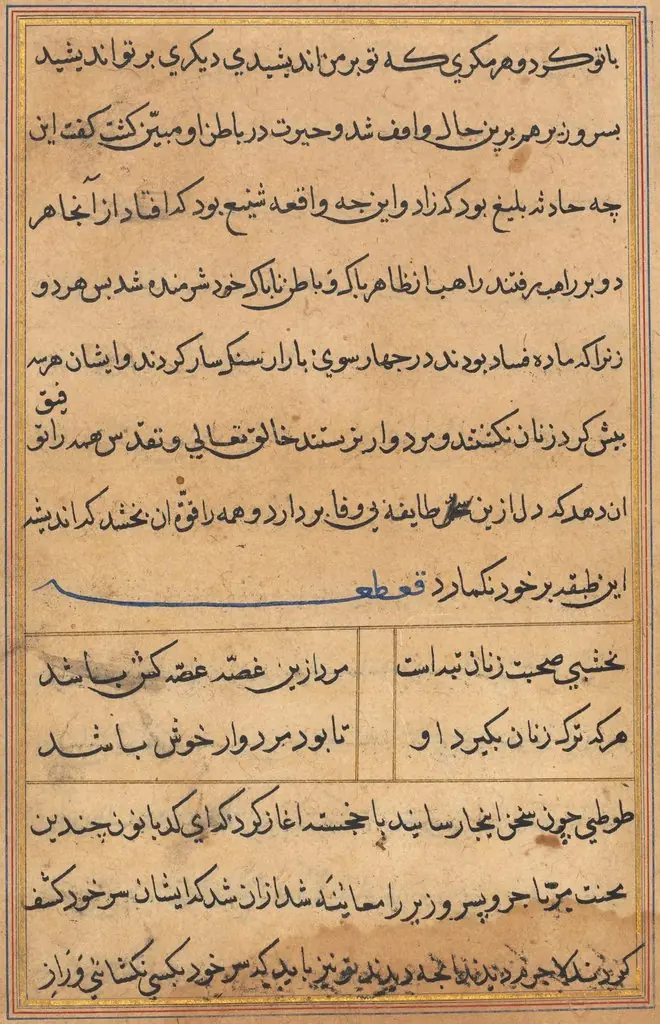 Page from Tales of a Parrot (Tuti-nama): text page
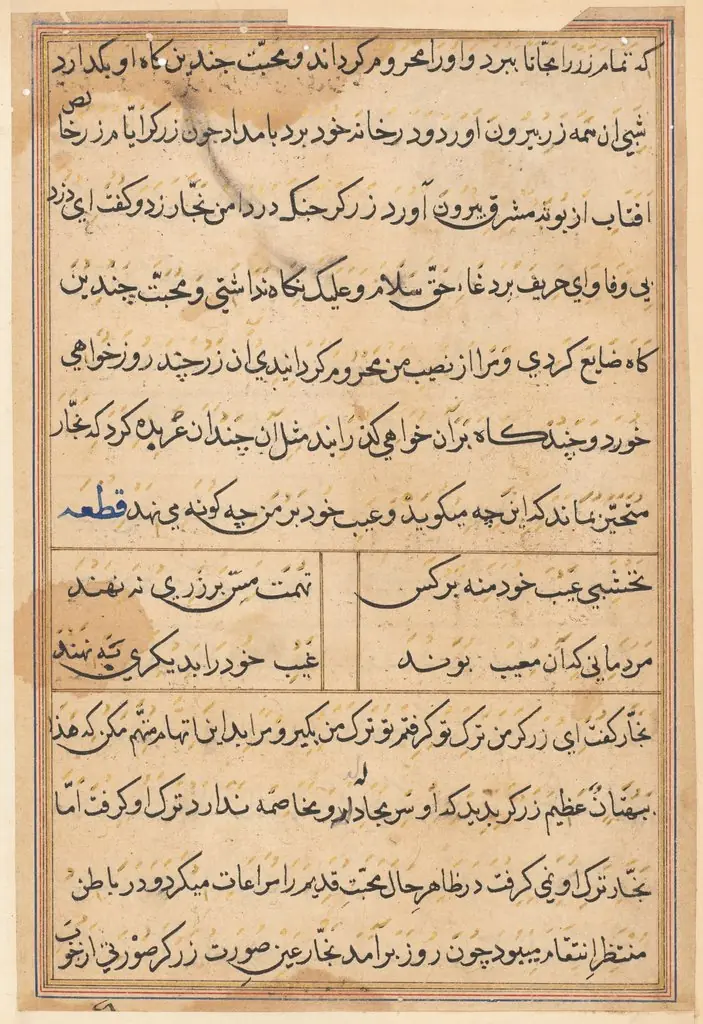 Page from Tales of a Parrot (Tuti-nama): text page
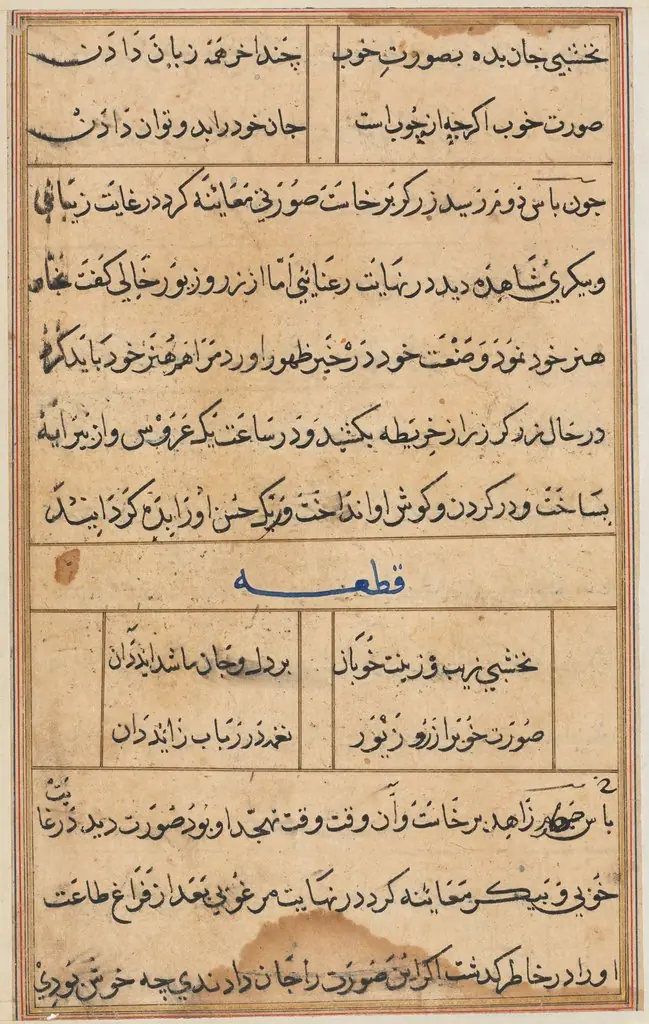 Page from Tales of a Parrot (Tuti-nama): text page
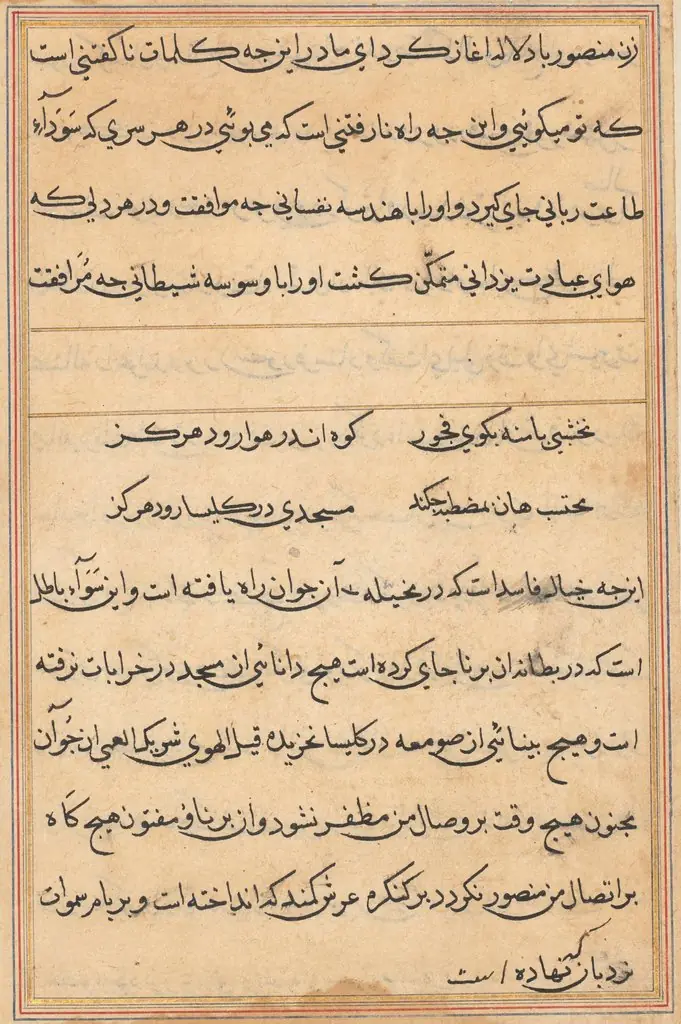 Page from Tales of a Parrot (Tuti-nama): text page
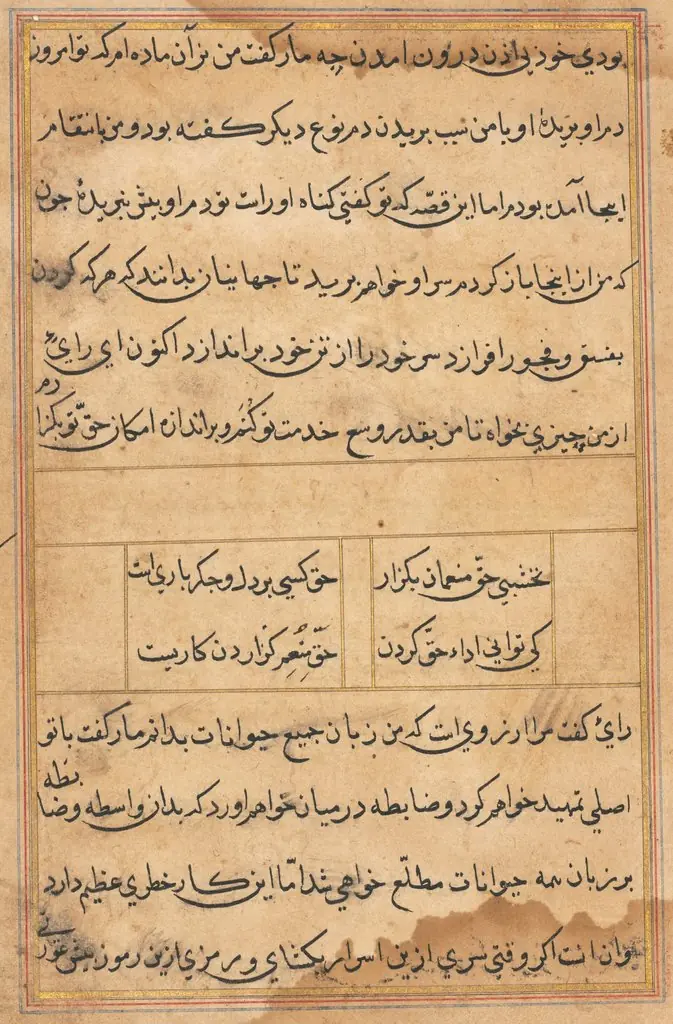 Page from Tales of a Parrot (Tuti-nama): text page
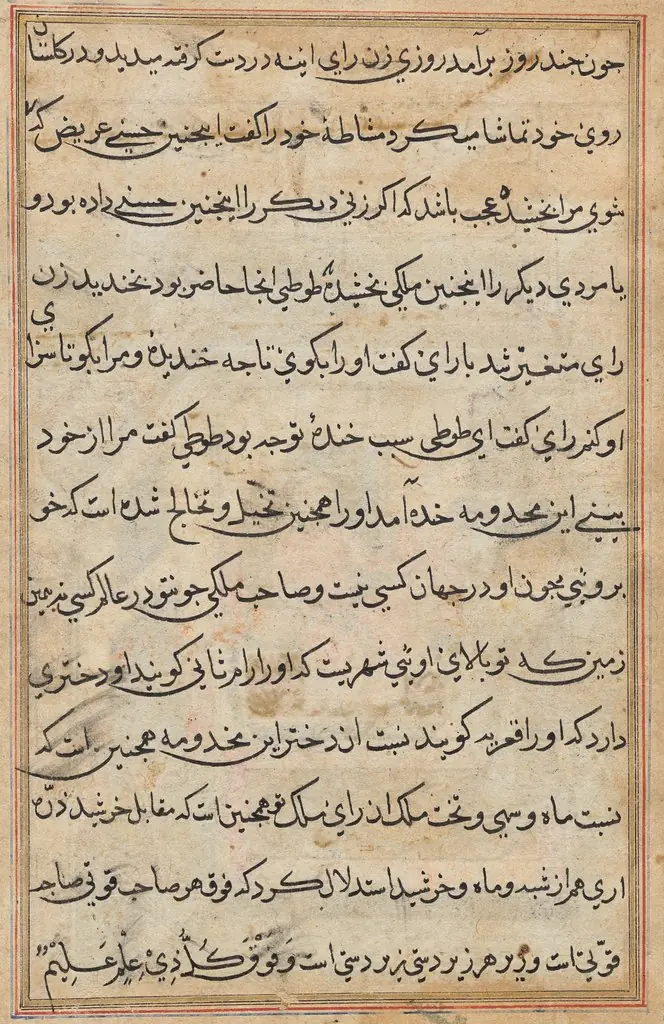 Page from Tales of a Parrot (Tuti-nama): text page
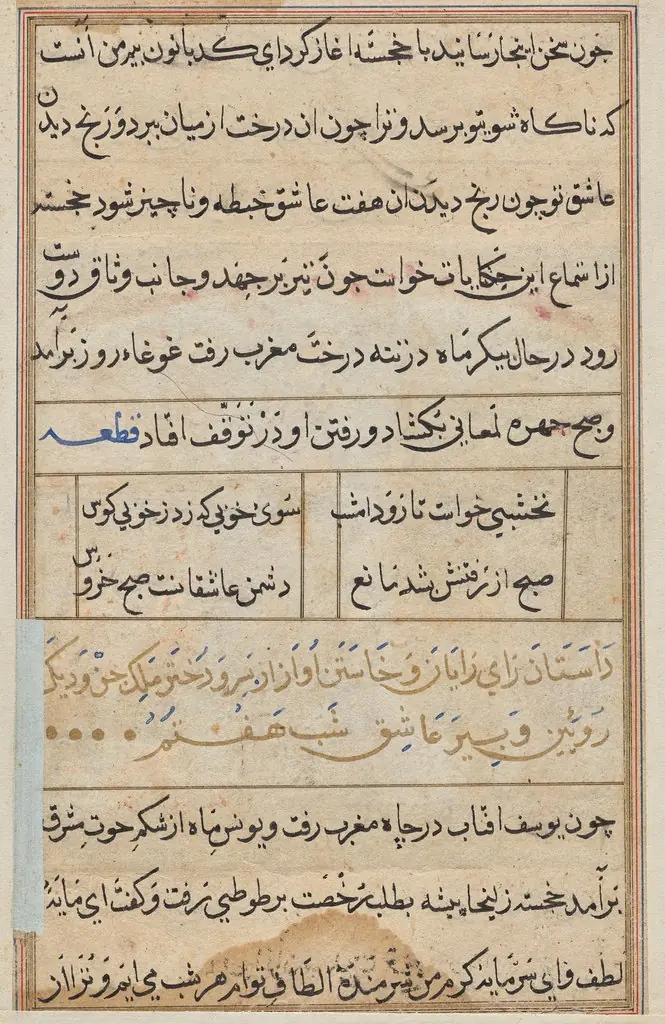 Page from Tales of a Parrot (Tuti-nama): text page
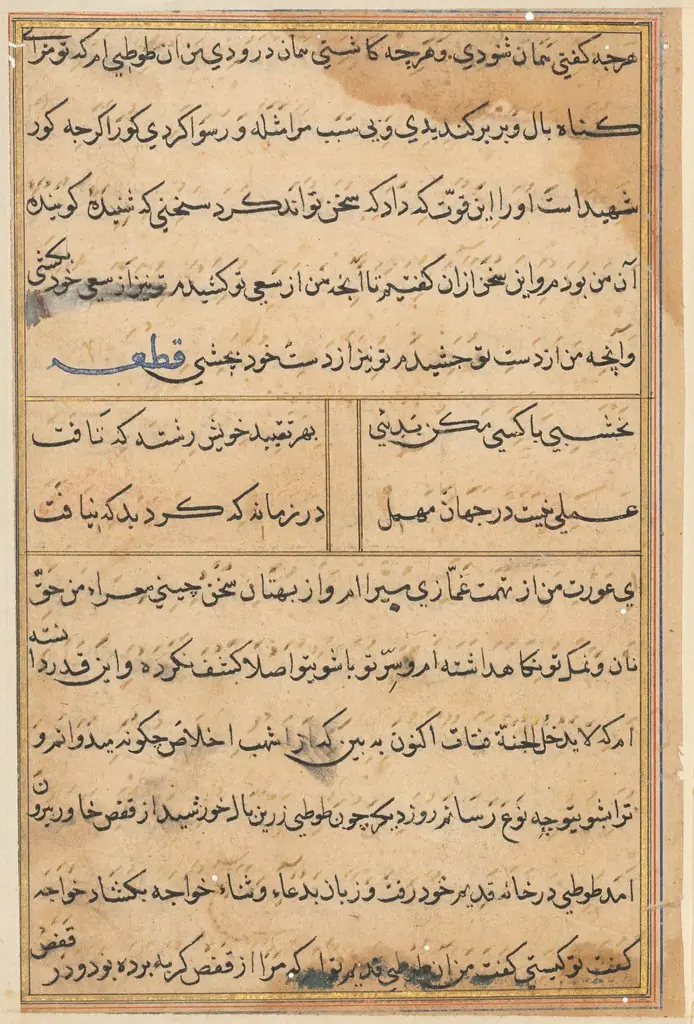 Page from Tales of a Parrot (Tuti-nama): text page
 Page from Tales of a Parrot (Tuti-nama): text page