Artwork
Page from Tales of a Parrot (Tuti-nama): text page
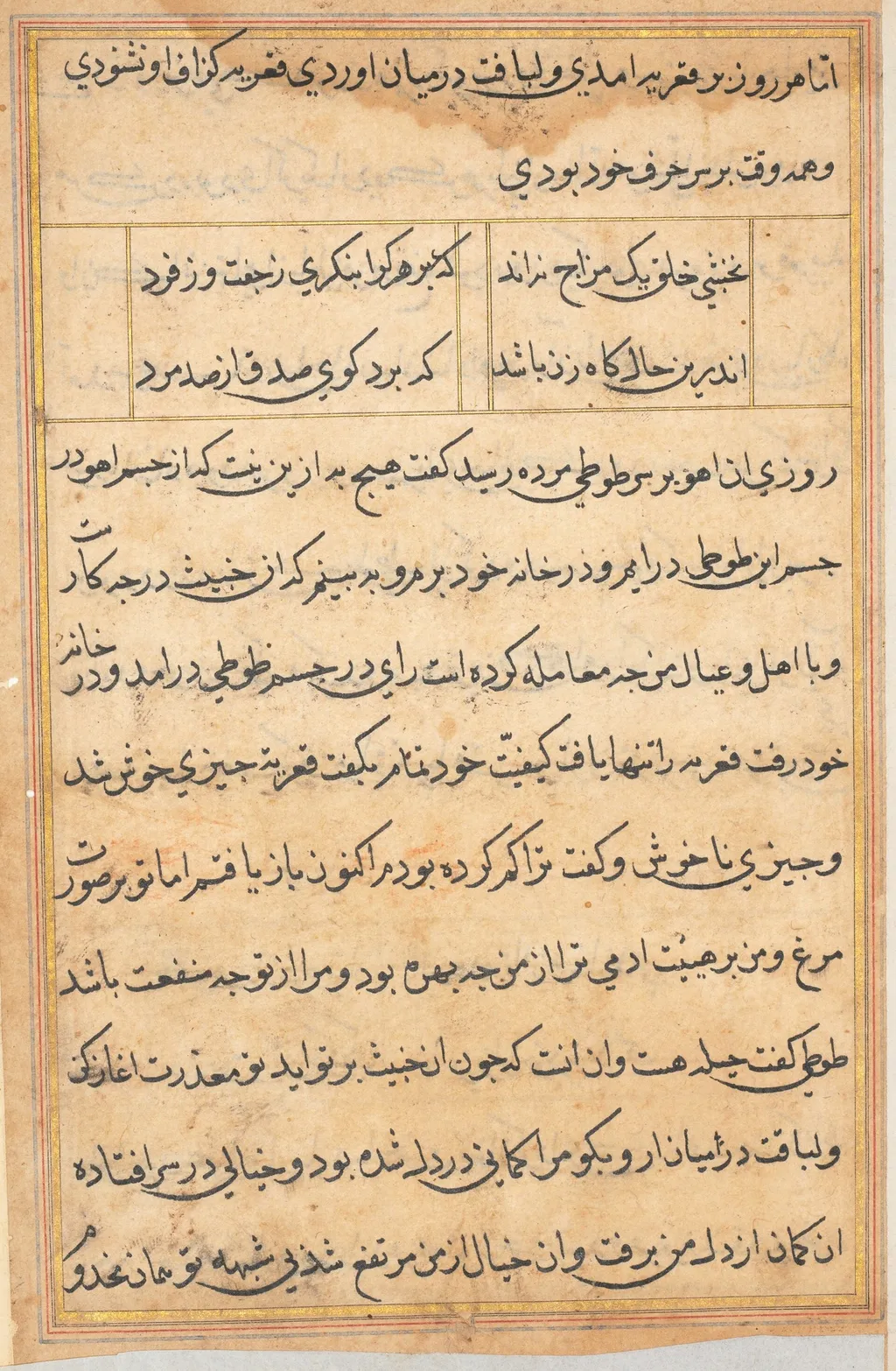
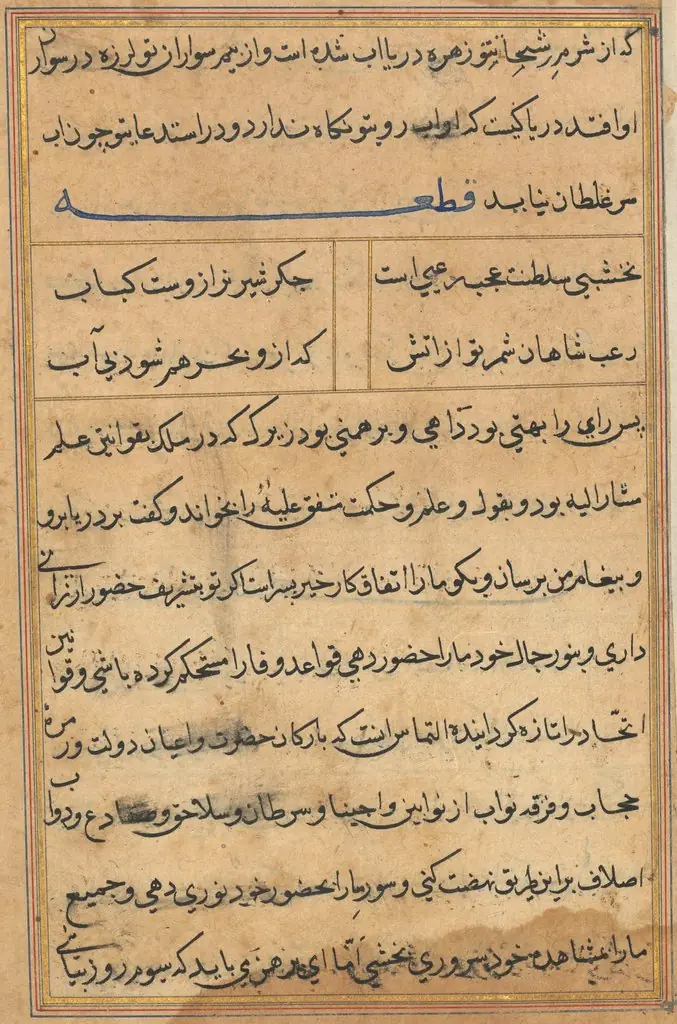
Page from Tales of a Parrot (Tuti-nama): text page is an unspecified painting. It dates from 1560 and is held in the collection of the Cleveland Museum of Art. The object is a single leaf from the 16th‑century Persian manuscript known as the *Tuti‑nama* or *Tales of a Parrot*.
About this work
The page has a worn, aged look, with some discoloration and staining that suggests it has been handled and preserved over time.
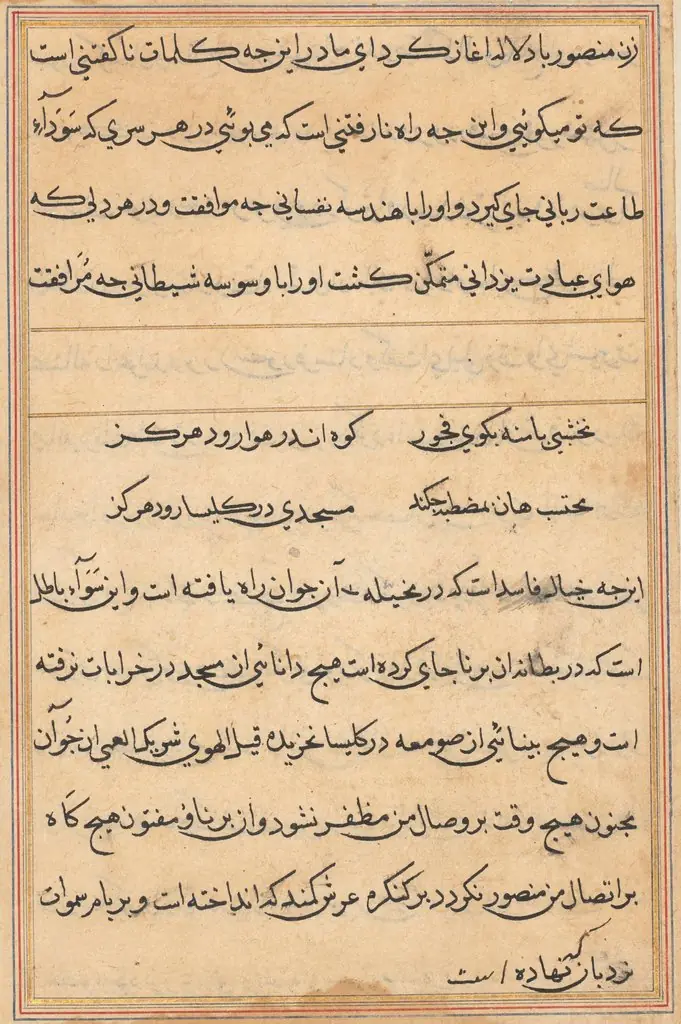
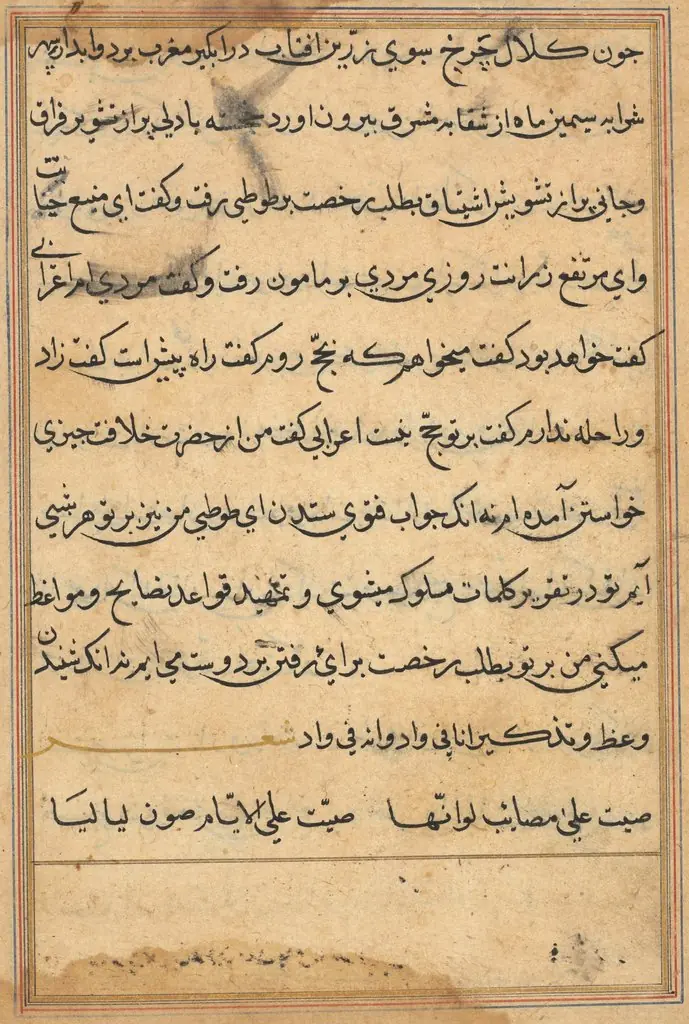
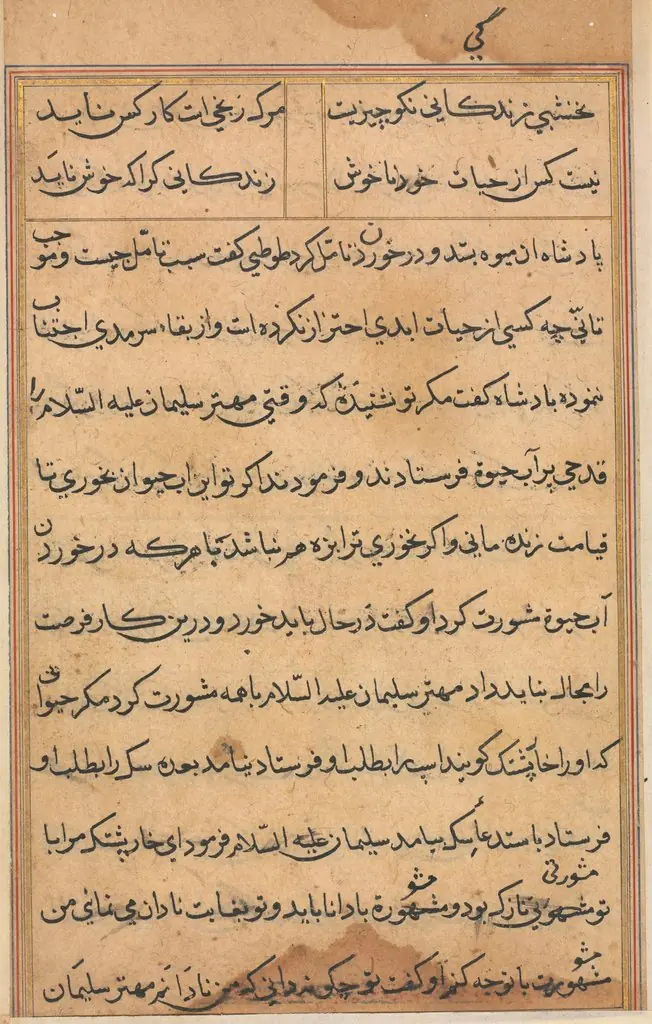
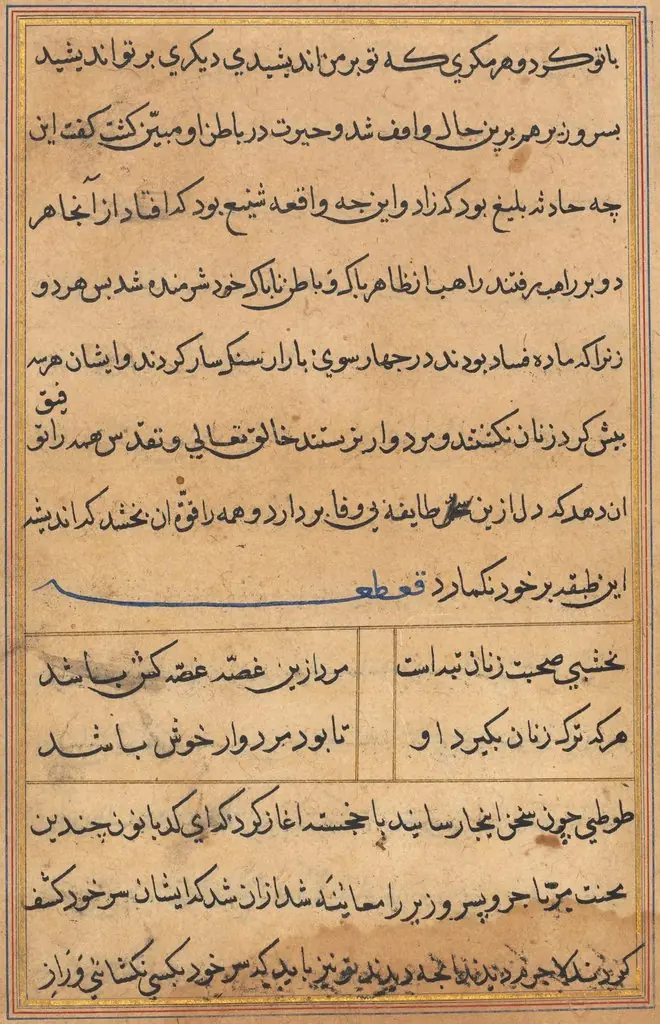
This painting is a page from the "Tales of a Parrot" (Tuti-nama), dated 1560. The page is dominated by text, written in a flowing script that fills most of the space. The text is in black ink, with some decorative elements and borders that add visual interest to the page. The text itself appears to be a story or poem, with each line carefully written in a consistent style. The page has a worn, aged look, with some discoloration and staining that suggests it has been handled and preserved over time. The page is a beautiful example of calligraphy and book art from the 16th century.
Overview
The object is a single leaf from the 16th‑century Persian manuscript known as the *Tuti‑nama* or *Tales of a Parrot*. Dated to around 1560, the page consists primarily of continuous black‑ink calligraphy, framed by modest ornamental borders. Its surface shows signs of age—discoloration, staining, and wear—that attest to centuries of handling and preservation.
Subject & Meaning
The inscribed text appears to be a narrative or poetic composition, typical of the *Tuti‑nama* tradition, which employed a parrot as a storytelling device to convey moral or didactic themes. While the specific story on this leaf is not transcribed here, such passages generally blend allegory with courtly entertainment, reflecting the literary tastes of Safavid Iran.
Technique & Style
The script is rendered in a fluid, cursive hand characteristic of Persian nastaʿlīq calligraphy, executed with a reed pen and black ink. Decorative elements—geometric bands and vegetal motifs—frame the margins, providing visual balance without overwhelming the text. The uniform stroke weight and consistent spacing demonstrate the scribe’s mastery of proportion and rhythm.
History & Provenance
Created circa 1560, the page likely originated in a workshop serving the Safavid court or a wealthy patron. Its subsequent ownership trail is undocumented, but the material condition suggests it remained in private collections before entering a museum or institutional setting, where it has been conserved for public display.
Context
During the mid‑16th century, Persian manuscript production flourished under Shah Tahmasp I, who encouraged the arts and the refinement of calligraphic scripts. The *Tuti‑nama* genre, blending prose and poetry with illustrative borders, exemplifies the period’s synthesis of literary and visual culture, catering to an elite audience versed in Persian literary traditions.
Artist & collection

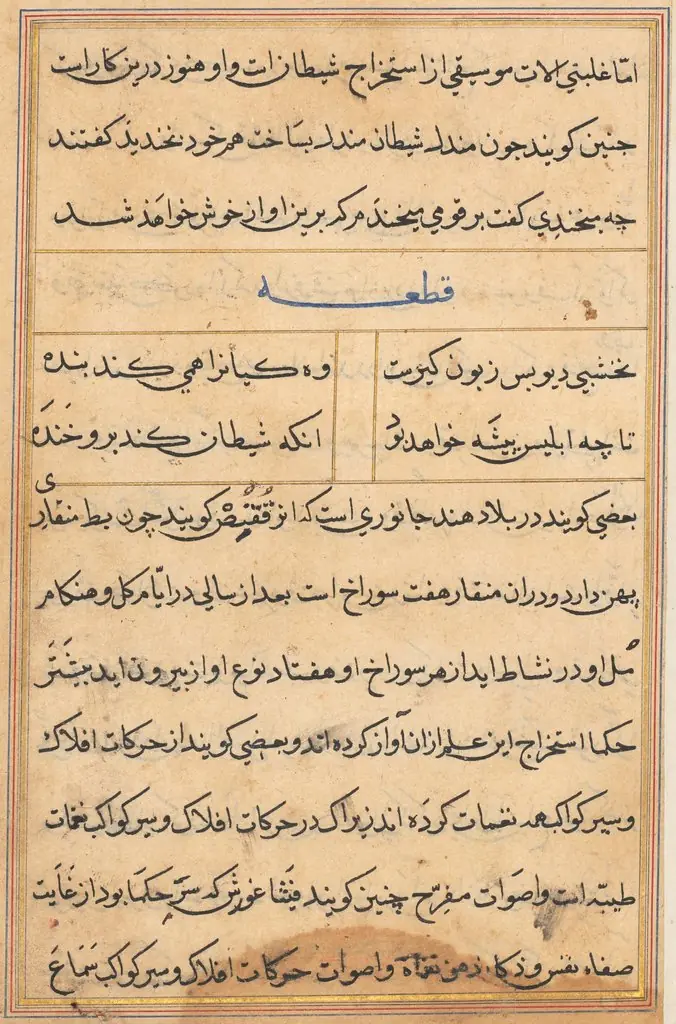 Page from Tales of a Parrot (Tuti-nama): text page
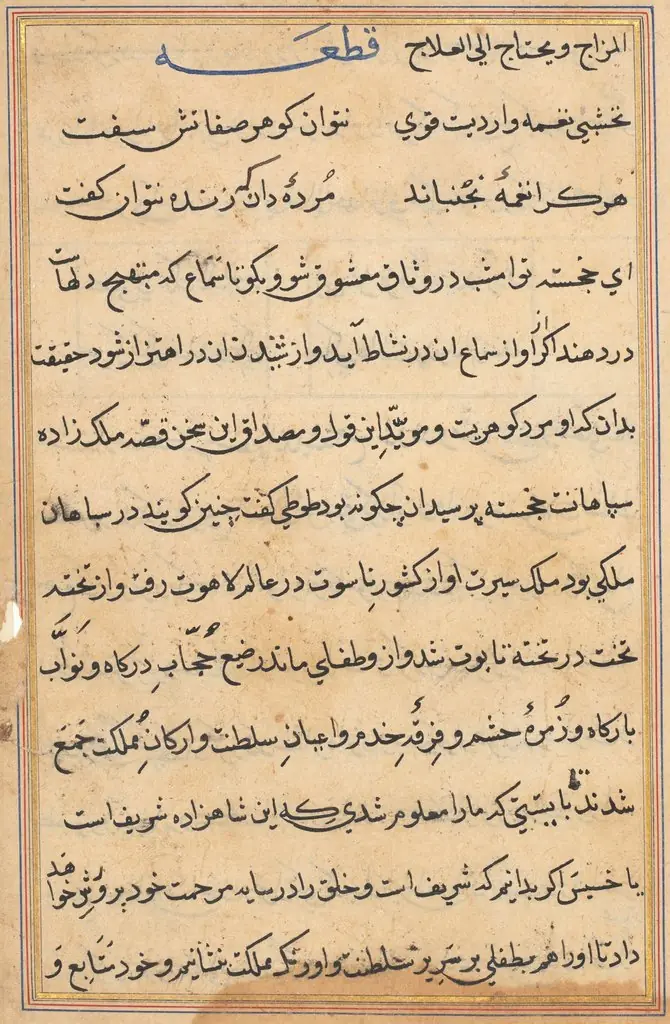 Page from Tales of a Parrot (Tuti-nama): text page
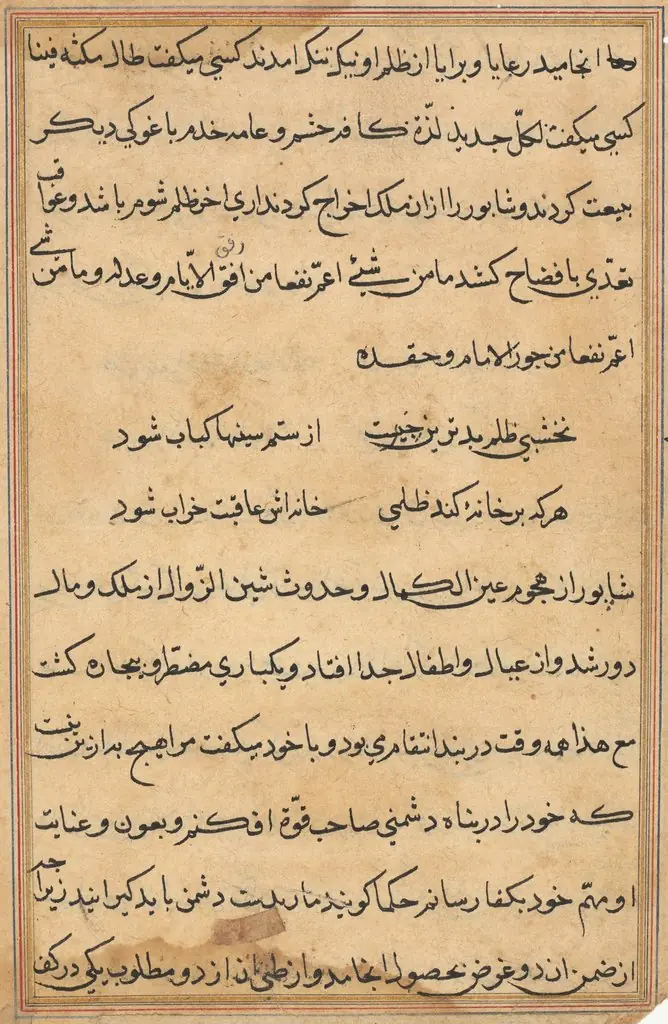 Page from Tales of a Parrot (Tuti-nama): text page
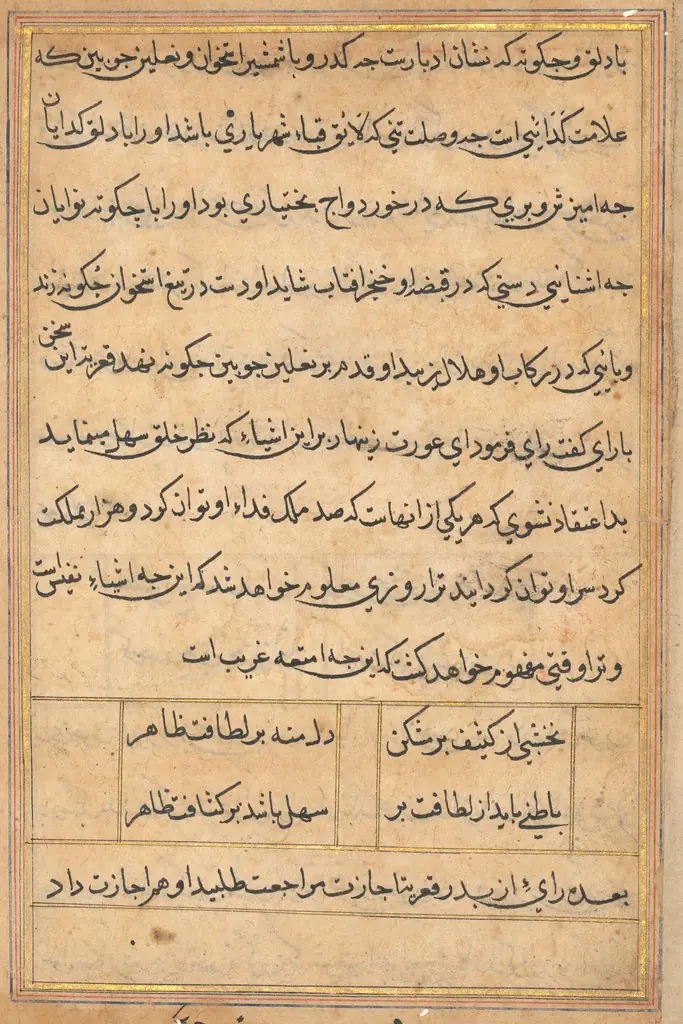 Page from Tales of a Parrot (Tuti-nama): text page
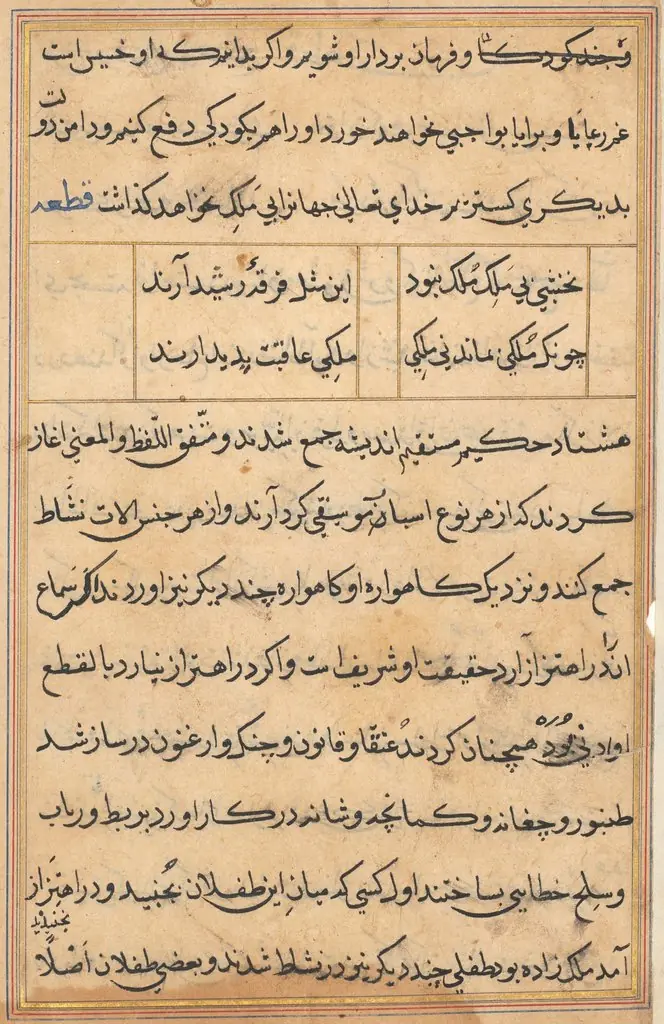 Page from Tales of a Parrot (Tuti-nama): text page
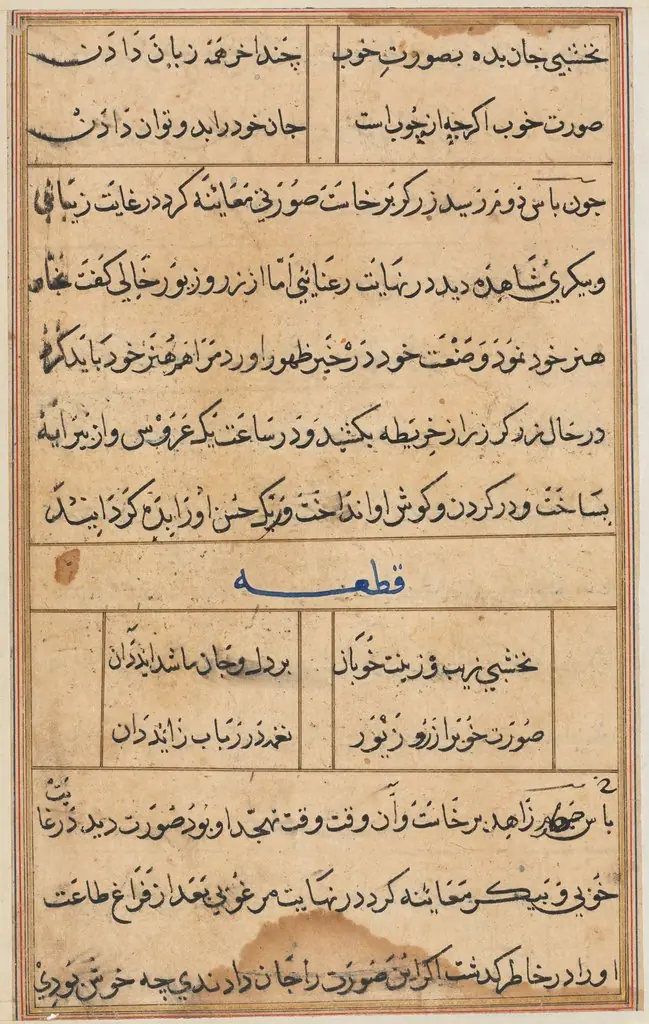 Page from Tales of a Parrot (Tuti-nama): text page
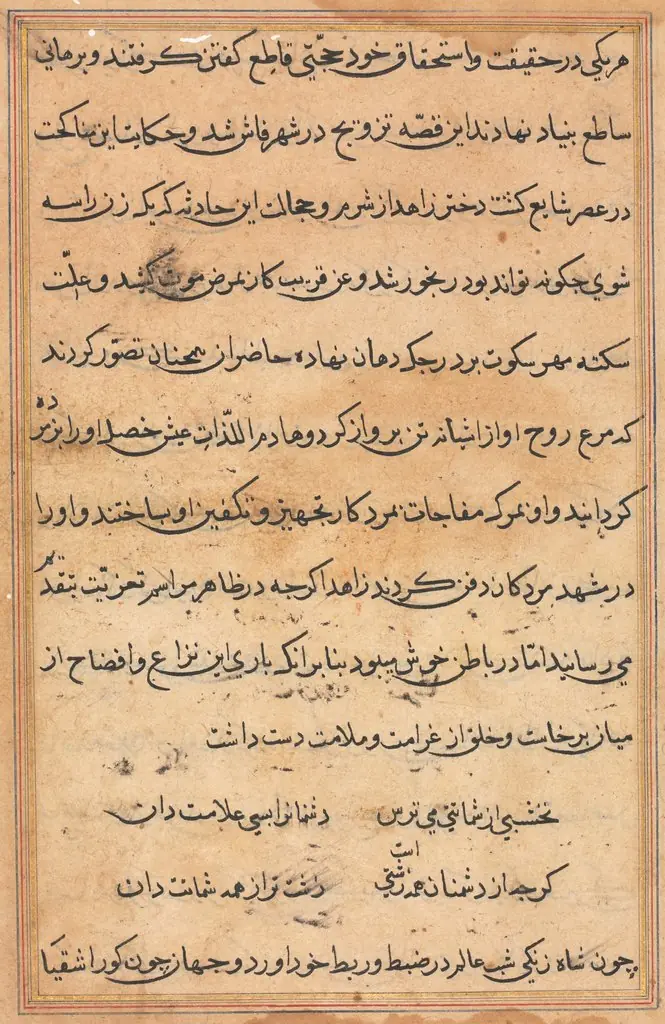 Page from Tales of a Parrot (Tuti-nama): text page
 Page from Tales of a Parrot (Tuti-nama): text page
 Page from Tales of a Parrot (Tuti-nama): text page
 Page from Tales of a Parrot (Tuti-nama): text page
 Page from Tales of a Parrot (Tuti-nama): text page
 Page from Tales of a Parrot (Tuti-nama): text page