Artwork
Page from Tales of a Parrot (Tuti-nama): text page
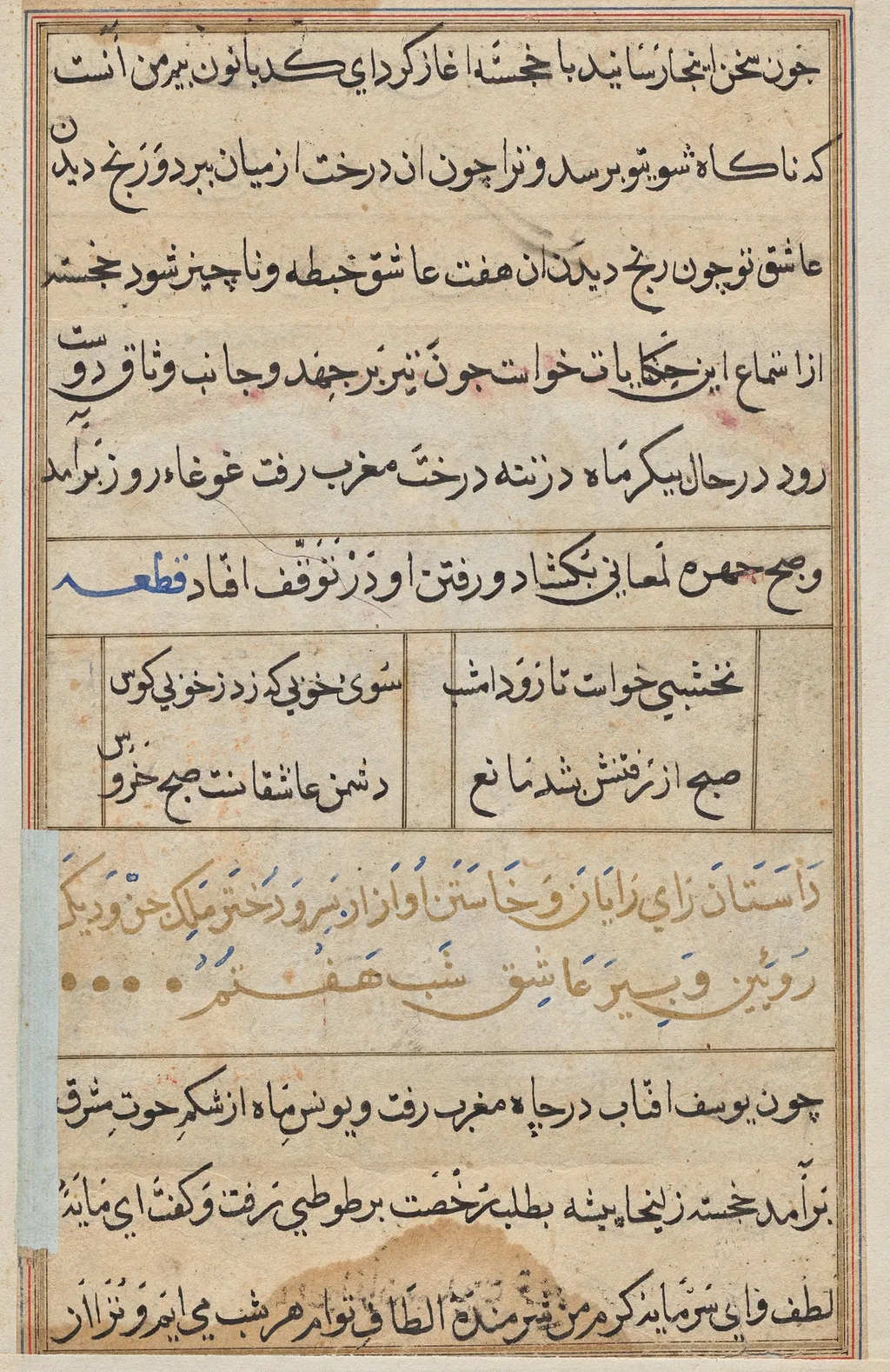
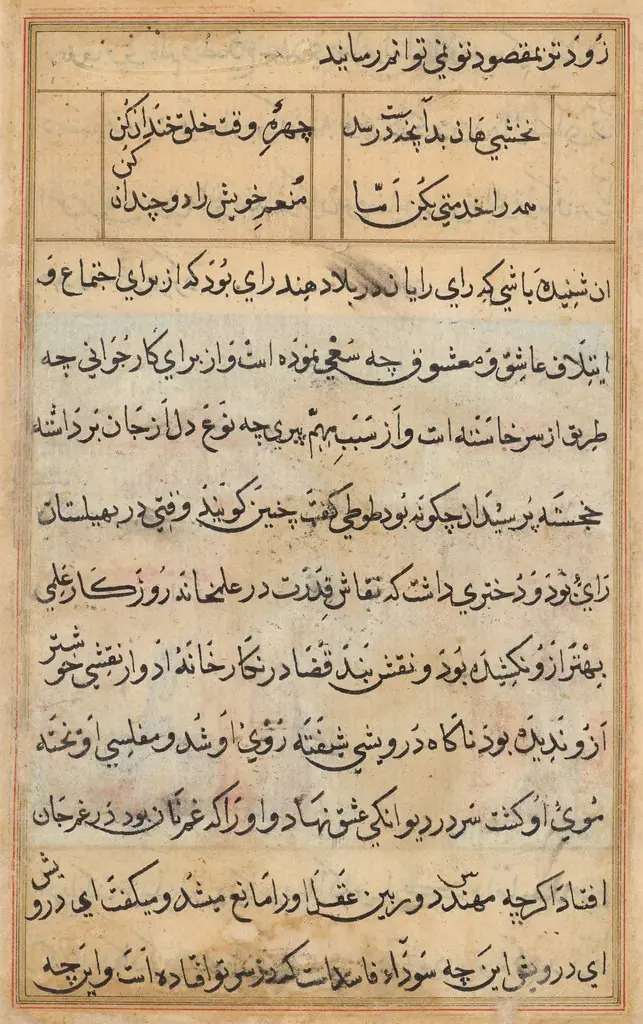
Page from Tales of a Parrot (Tuti-nama): text page is an unspecified painting. It dates from 1560 and is held in the collection of the Cleveland Museum of Art. The object is a single leaf from an illustrated manuscript titled *Tales of a Parrot* (also known as *Tuti-nama*).
About this work
Overview
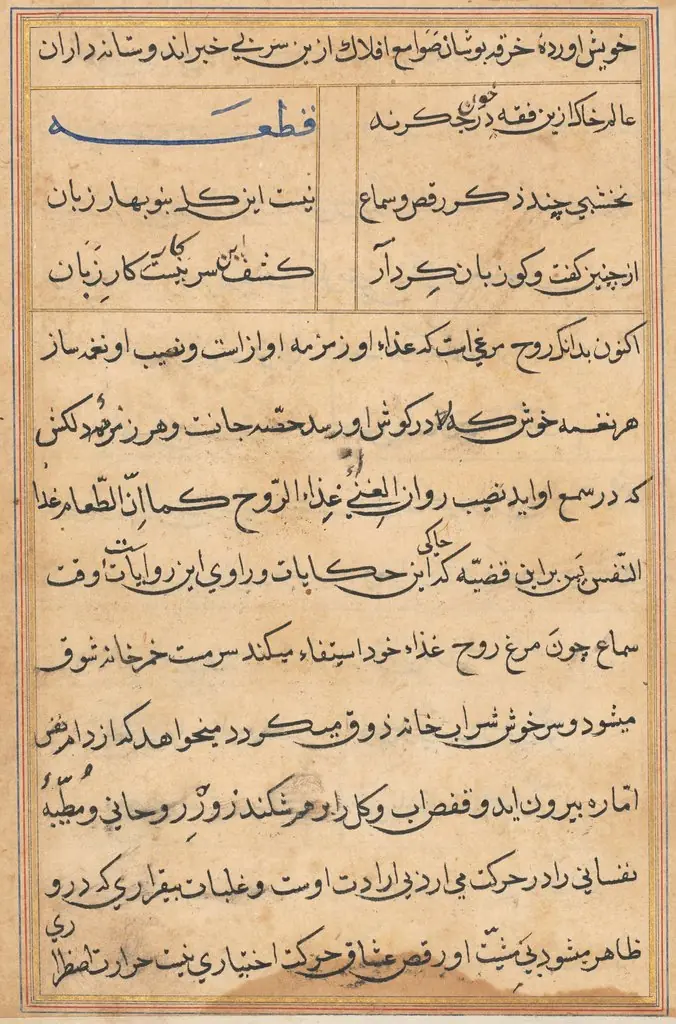
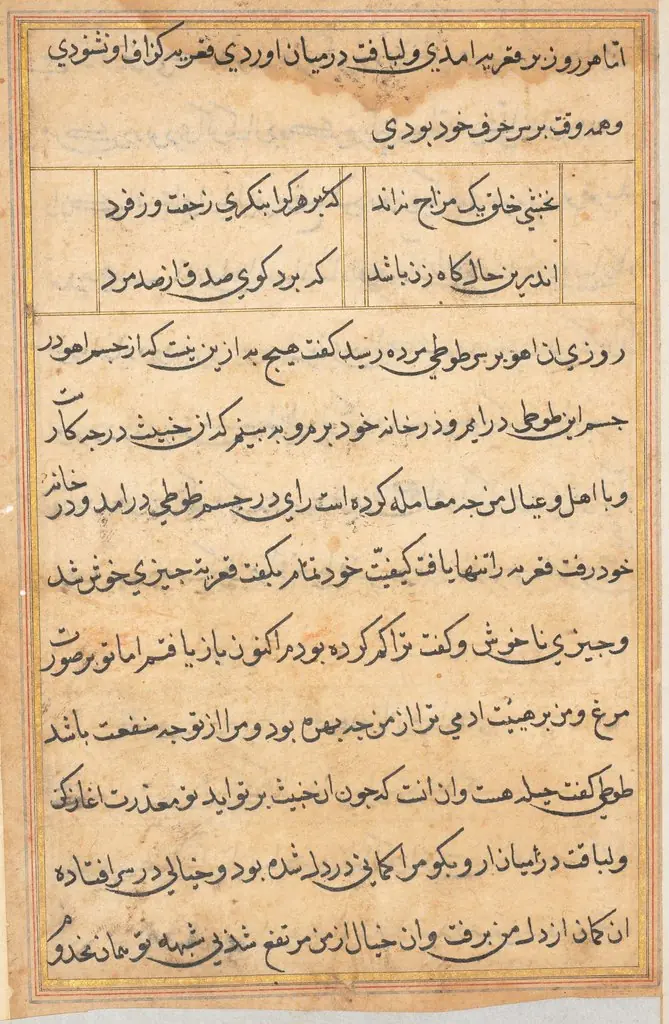
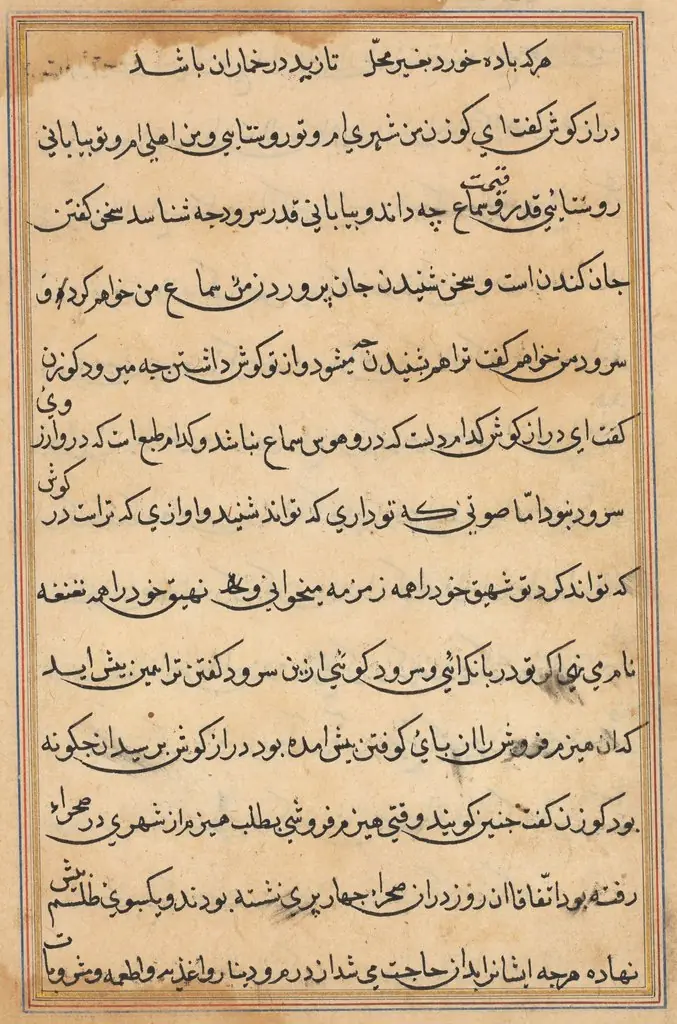
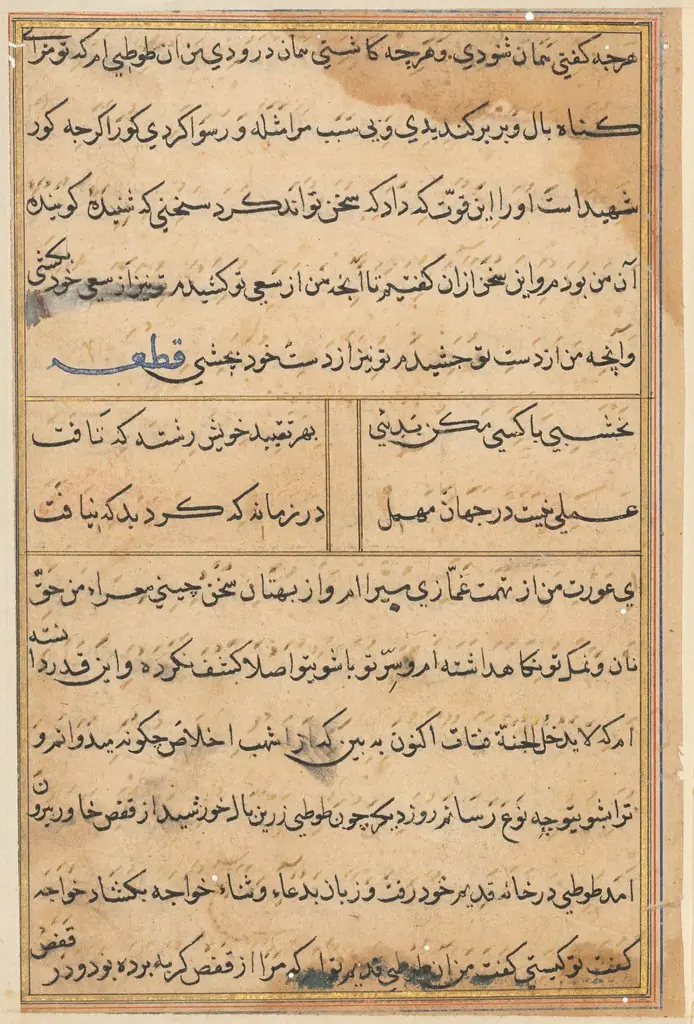
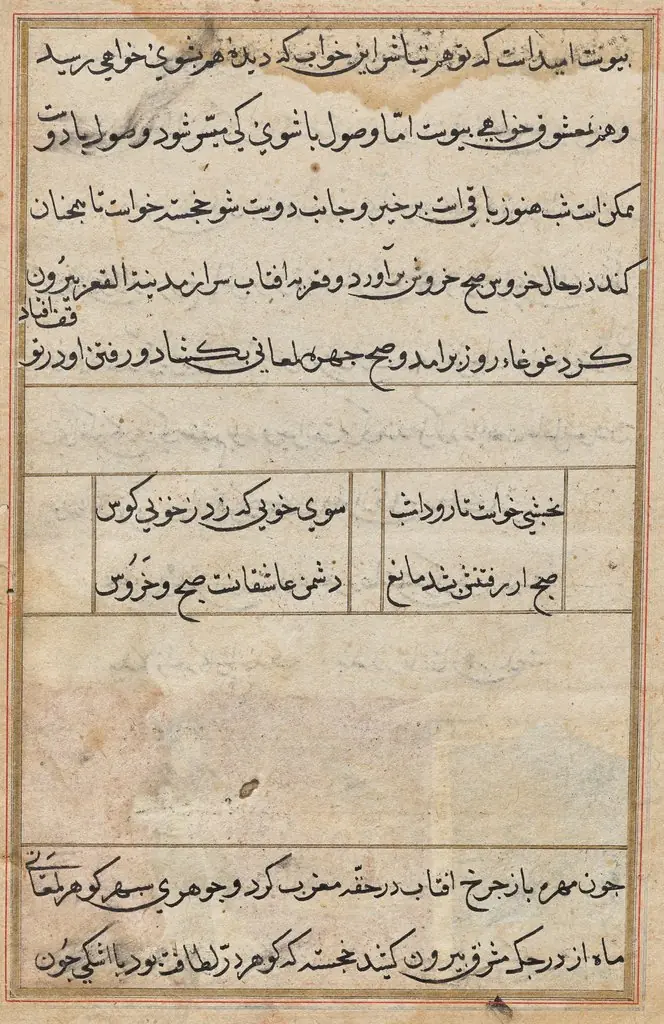
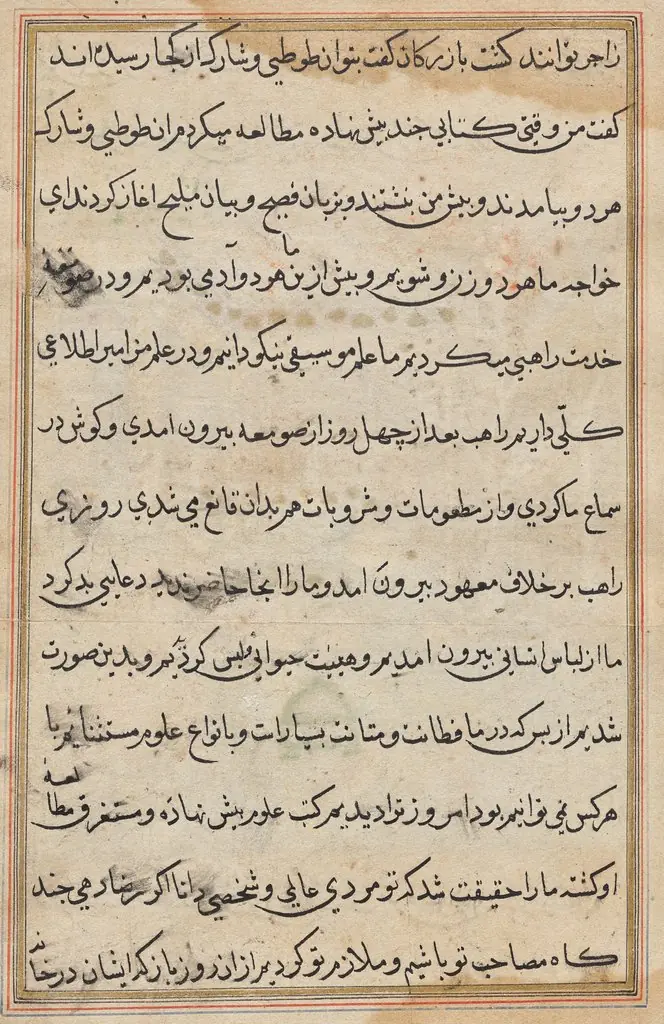
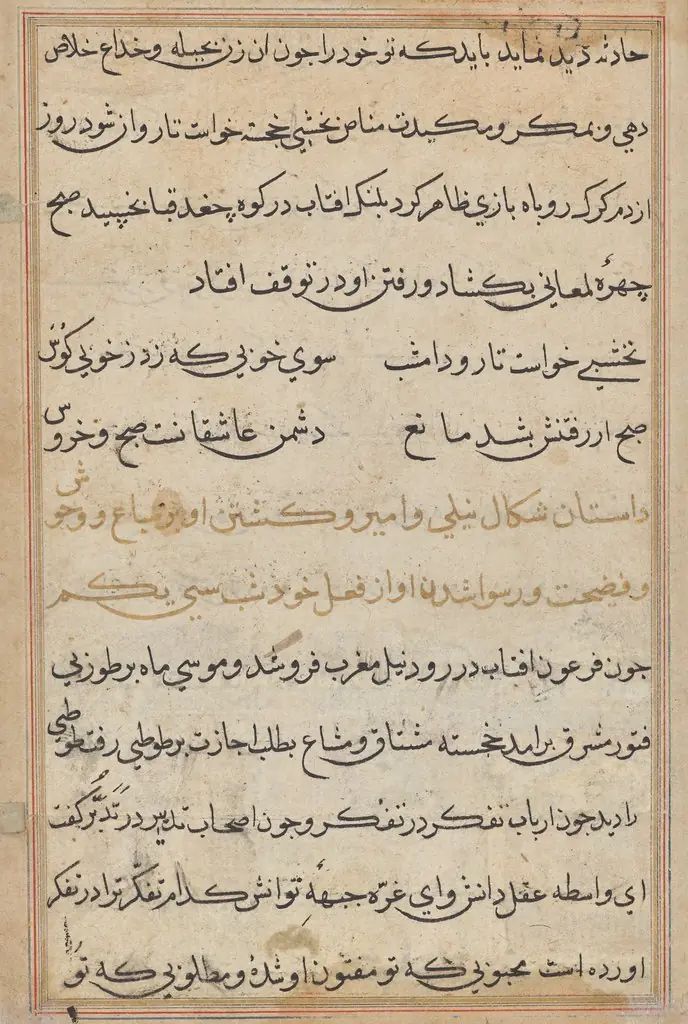
The object is a single leaf from an illustrated manuscript titled *Tales of a Parrot* (also known as *Tuti-nama*). Rendered on paper, the page bears black ink text interspersed with occasional words highlighted in blue or red. The surface shows signs of age, including stains and tears, indicating extensive use and handling over time.
Subject & Meaning
The manuscript contains narrative prose, organized into continuous paragraphs that suggest a storytelling function. The highlighted words may serve to emphasize key terms or names within the tale, while decorative motifs surrounding certain letters add visual emphasis, hinting at the cultural practice of integrating illustration with literary content.
Technique & Style
Ink was applied with a fine brush or pen, producing a clear, linear script. Select passages are accented with pigment—blue and red—applied in a manner reminiscent of early manuscript illumination. Simple ornamental borders frame the emphasized words, reflecting a modest decorative approach rather than elaborate illumination.
History & Provenance
The page originates from a historic book whose precise date and origin are not specified in the available data. Its current condition, marked by wear and damage, suggests it has been preserved in a collection that values manuscript fragments, though the exact institutional or private ownership remains undocumented.
Context
*Tales of a Parrot* belongs to a tradition of narrative literature that often employed illustrated pages to aid oral or private reading. Such works were commonly produced in regions where Persian or related languages were used, and the use of colored ink for emphasis aligns with broader manuscript practices in the Islamic world.
Artist & collection

 Page from Tales of a Parrot (Tuti-nama): text page
 Page from Tales of a Parrot (Tuti-nama): text page
 Page from Tales of a Parrot (Tuti-nama): text page
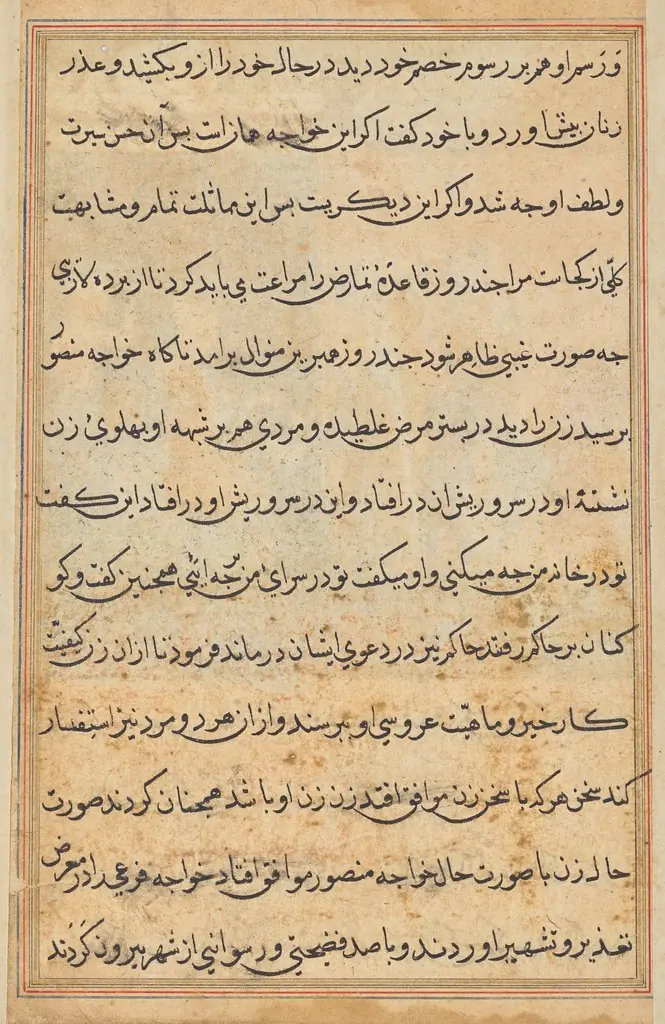 Page from Tales of a Parrot (Tuti-nama): text page
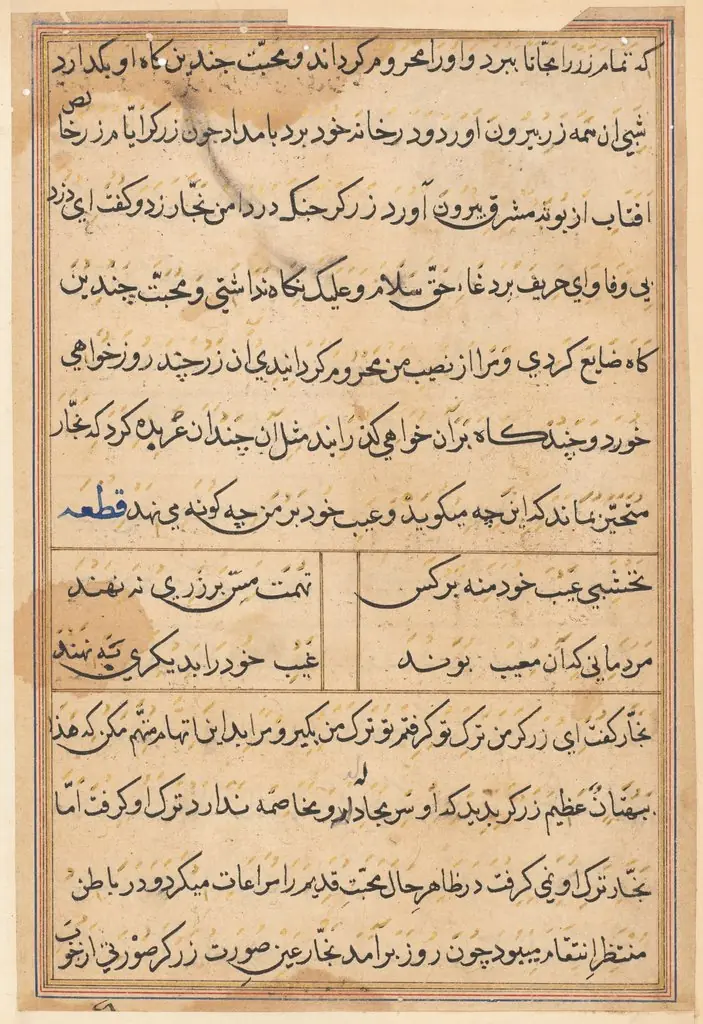 Page from Tales of a Parrot (Tuti-nama): text page
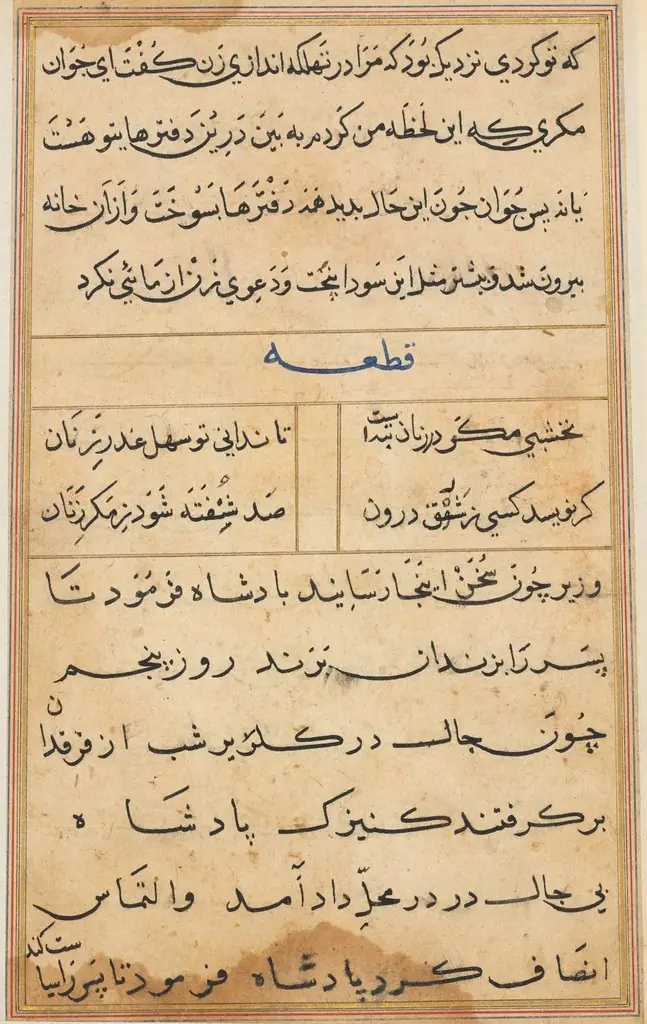 Page from Tales of a Parrot (Tuti-nama): text page
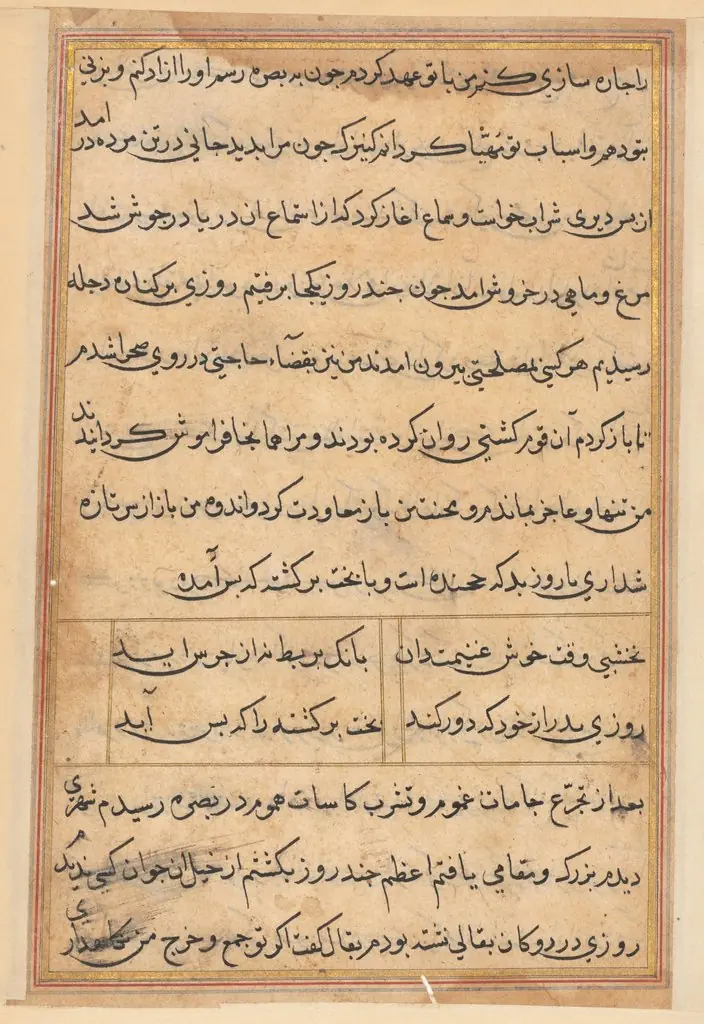 Page from Tales of a Parrot (Tuti-nama): text page
 Page from Tales of a Parrot (Tuti-nama): text page
 Page from Tales of a Parrot (Tuti-nama): text page
 Page from Tales of a Parrot (Tuti-nama): text page
 Page from Tales of a Parrot (Tuti-nama): text page
 Page from Tales of a Parrot (Tuti-nama): text page