Artwork
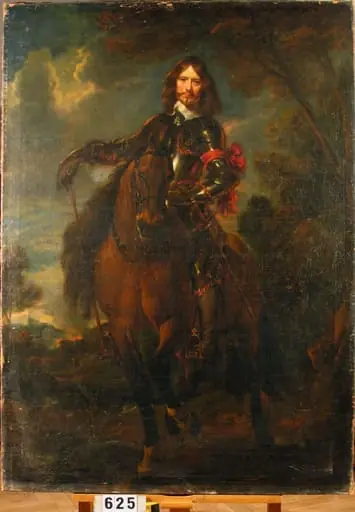
Louis XIII on Horseback
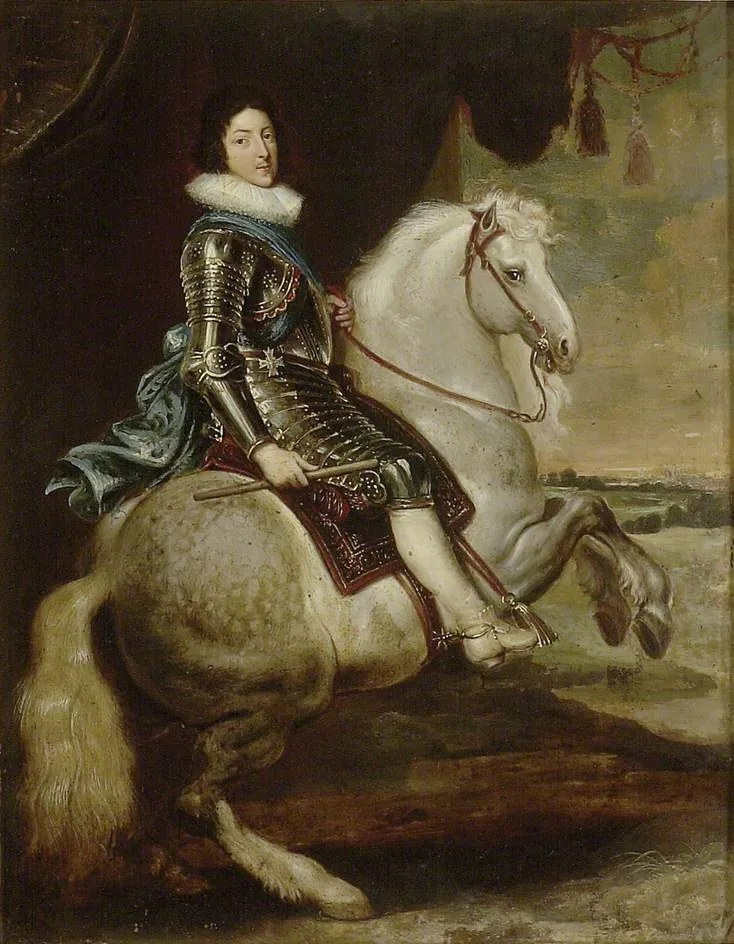
Louis XIII on Horseback is an oil painting by the French Classical Baroque artist Unknown. It dates from 1622 and is held in the collection of the Ashmolean Museum. The work portrays a regal figure in elaborate armor astride a white horse, rendered on a copper support.
About this work
Overview
The work portrays a regal figure in elaborate armor astride a white horse, rendered on a copper support. A blue cape billows behind the rider, who grips a sword in his right hand, set against a dark backdrop with a faint landscape beyond the horse. The composition emphasizes authority and presence through its dramatic lighting and focused central figure.
Subject & Meaning
The central figure is identified as a monarch, likely Louis XIII, presented in full martial regalia to convey sovereign power and military command. The inclusion of the sword and the rider’s poised stance underscore themes of leadership and readiness, while the sumptuous armor and cape signal royal prestige and the divine right to rule.
Technique & Style
Executed on copper, the painting employs a strong chiaroscuro that models the figure and horse with deep shadows and bright highlights, creating a three‑dimensional effect. The dark background recedes, allowing the illuminated rider to dominate the visual field. The fine detail in the armor and the crisp rendering of the horse’s form reflect a meticulous, baroque approach to portraiture.
History & Provenance
The work is catalogued as a copper painting, though specific details regarding its creation date, original commission, or subsequent ownership are not documented in the available sources. Its attribution to Louis XIII suggests it may have been produced in the early 17th century, aligning with the monarch’s reign from 1610 to 1643.
Context
During the early modern period, equestrian portraits served as political propaganda, reinforcing the ruler’s martial virtues and legitimacy. This piece fits within that tradition, echoing similar depictions of European sovereigns who employed the motif of the mounted monarch to symbolize control over both the battlefield and the realm.
Artist & collection

 Domestic Scene
 Giacomo and Cardinal Marco, investing Andrea, Abbot of San Zeno, with his Benefice
 The Nymph of Fontainebleau
 Portrait of a Woman
 Madonna and Child with Saints in the Enclosed Garden
 Venus and Minerva
 Family Group of Four on Sofa
 Wall painting from Room H of the Villa of P. Fannius Synistor at Boscoreale
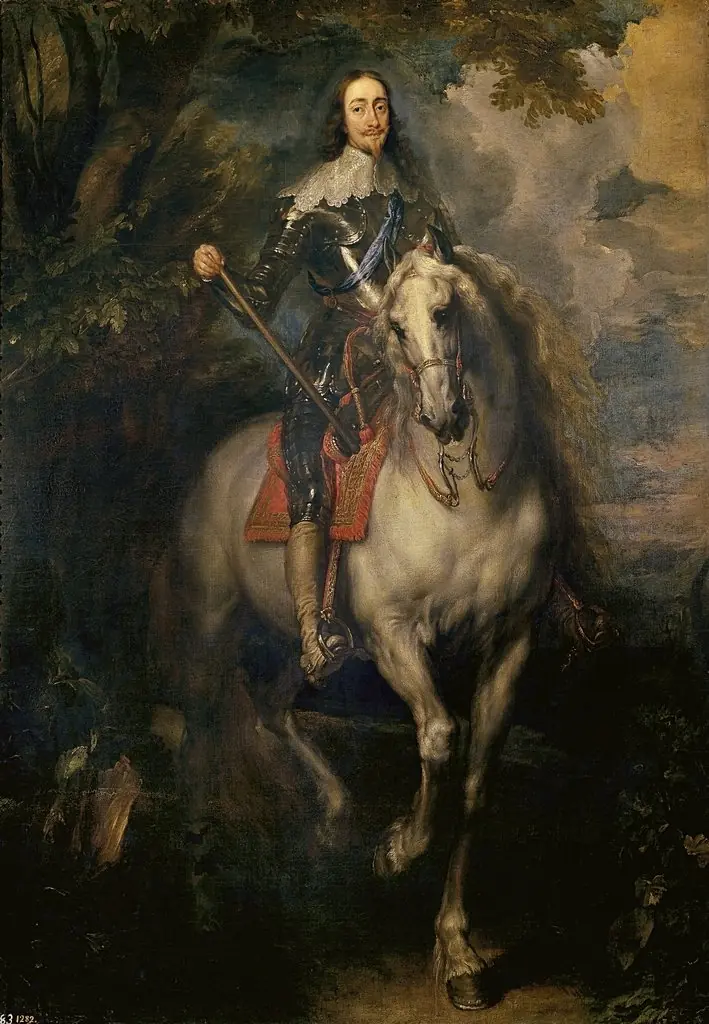 Equestrian portrait of Charles I of England
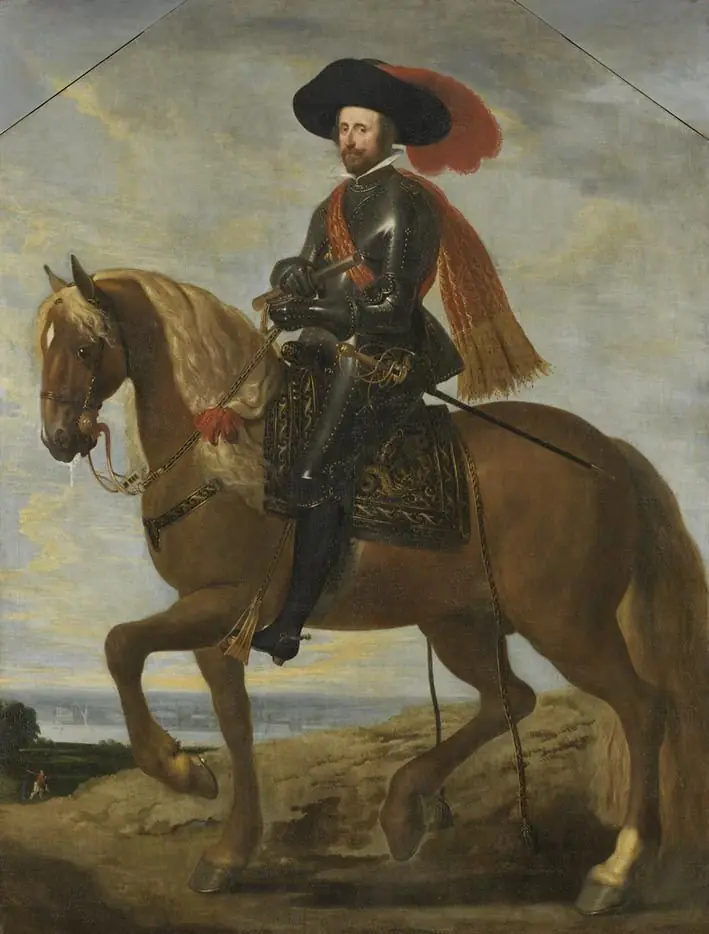 Equestrian portrait of Wolfgang Wilhelm von Pfalz-Neuburg
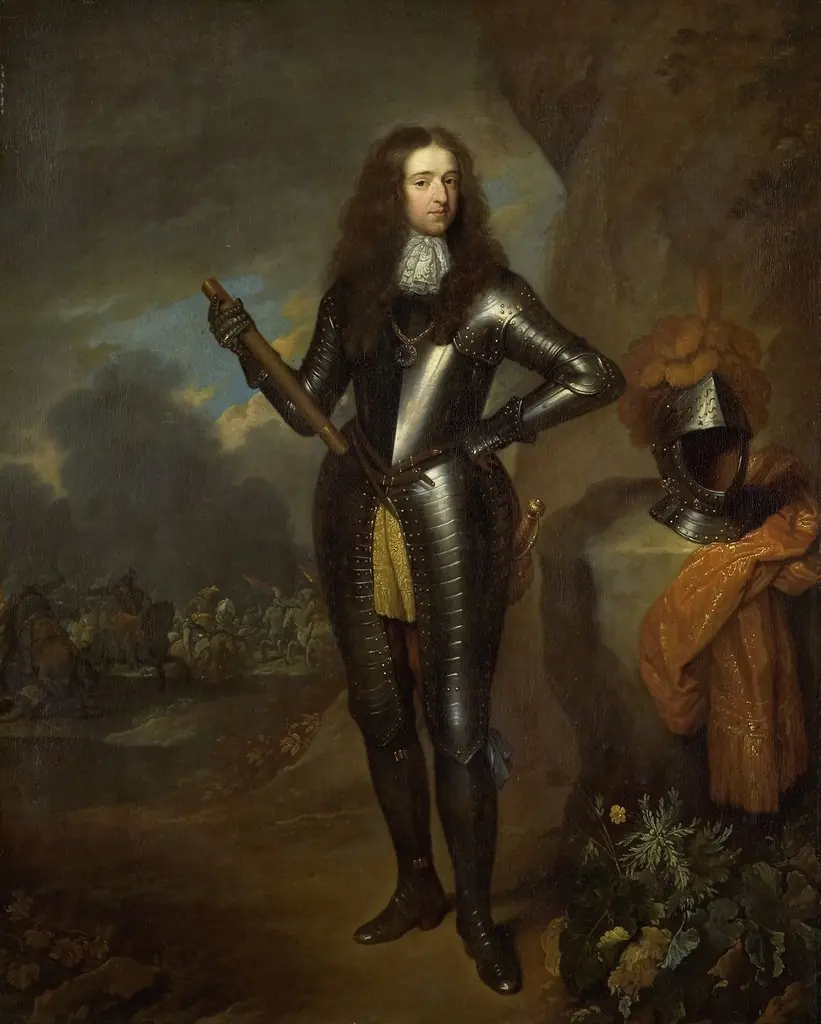 William III (1650-1702), Prince of Orange and since 1689, King of England
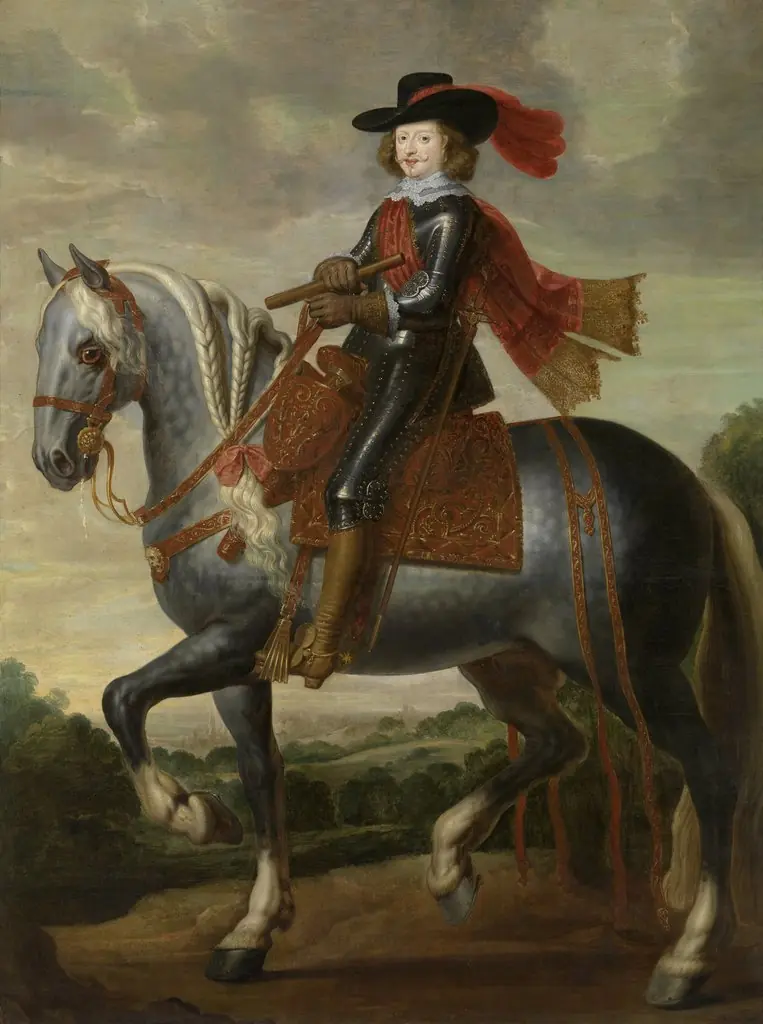 Equestrian portrait of Cardinal-Infante Ferdinand of Austria
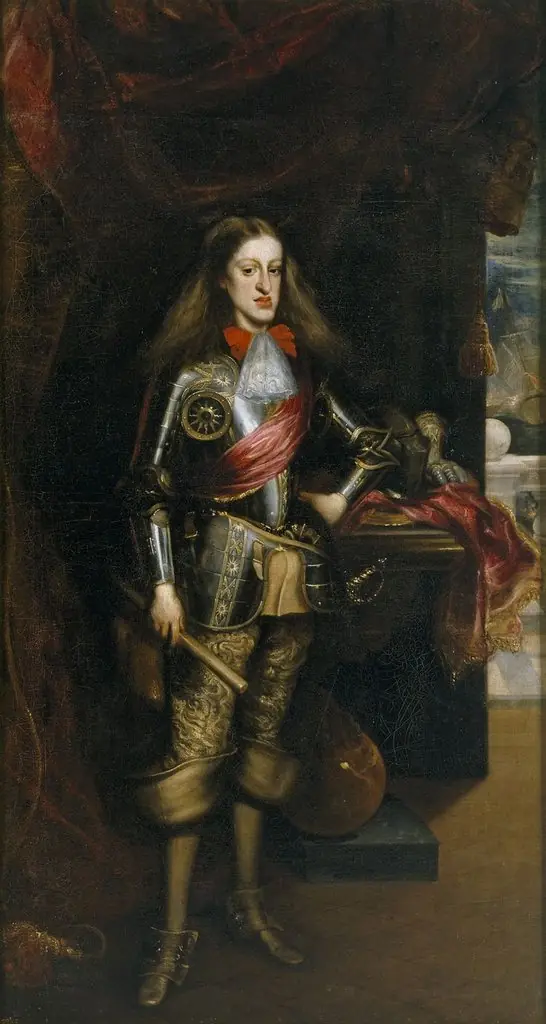 Charles II in armour
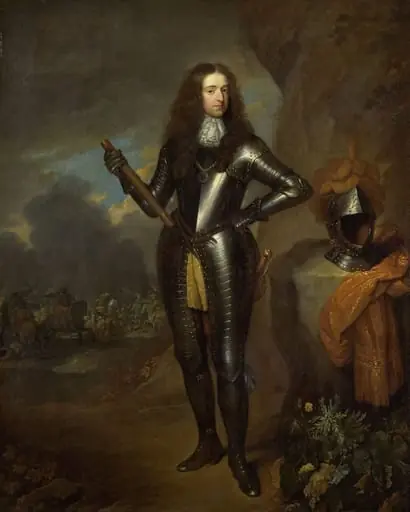 William III (1650-1702), Prince of Orange and since 1689, King of England
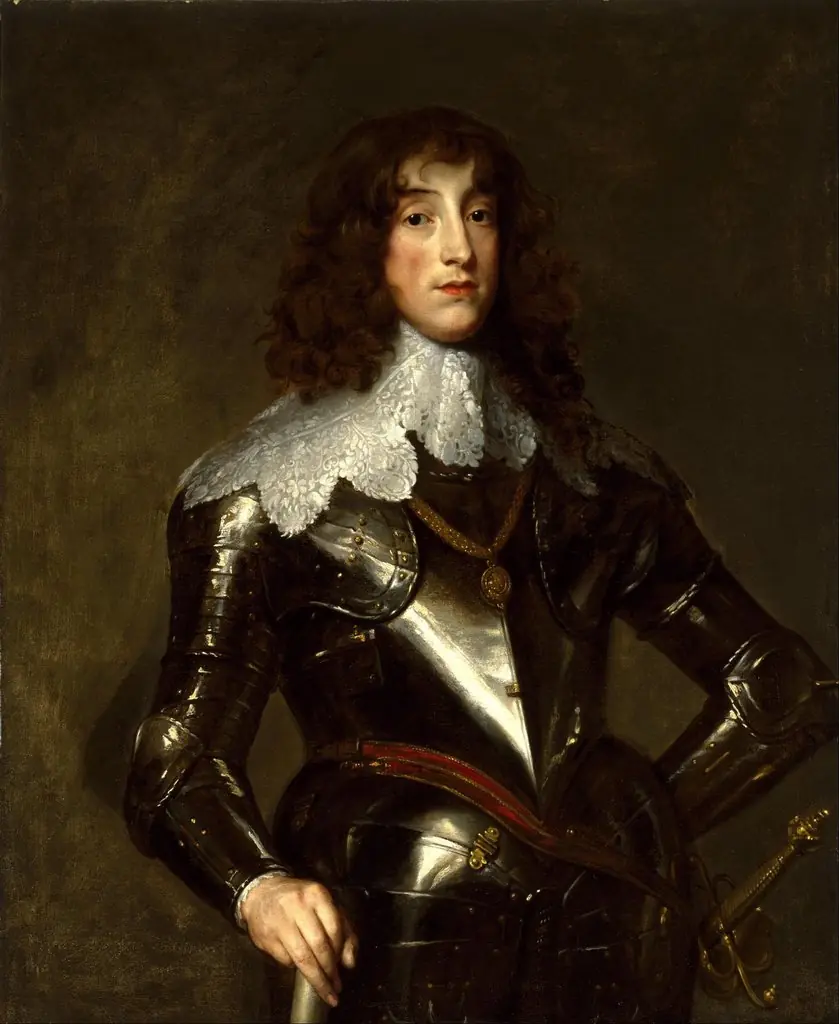 Charles Louis, Elector Palatine
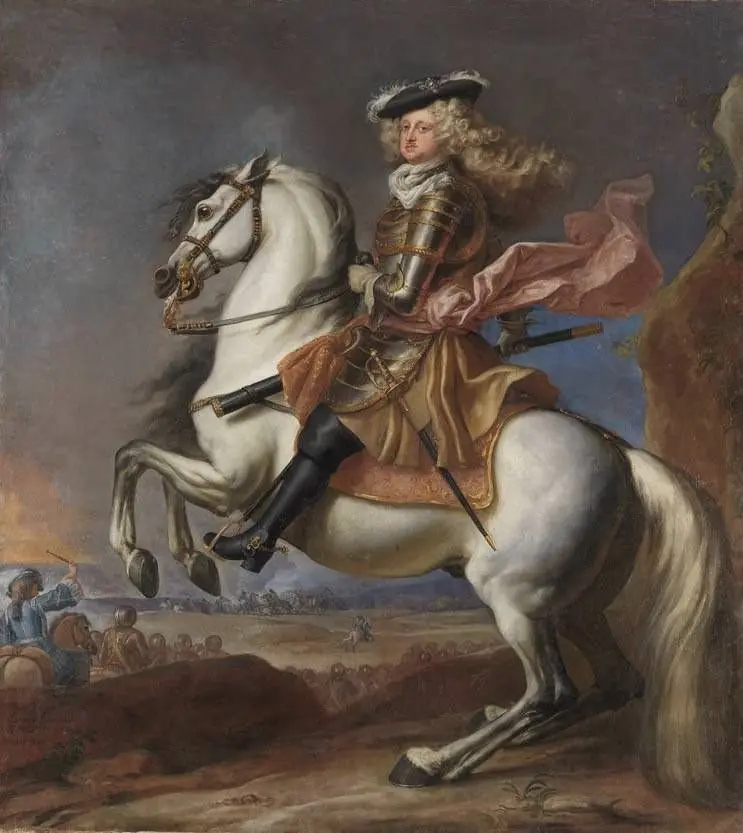 Kurfürst Johann Wilhelm zu Pferde
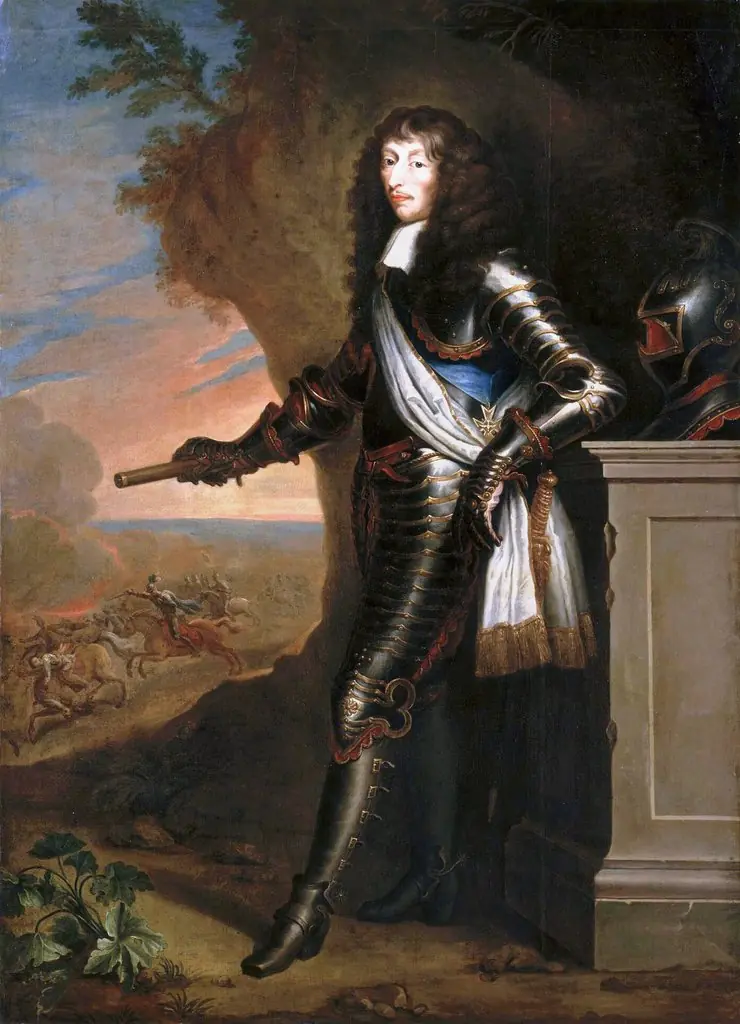 Portrait of Louis de Bourbon, Prince of Condé (1621-1686)
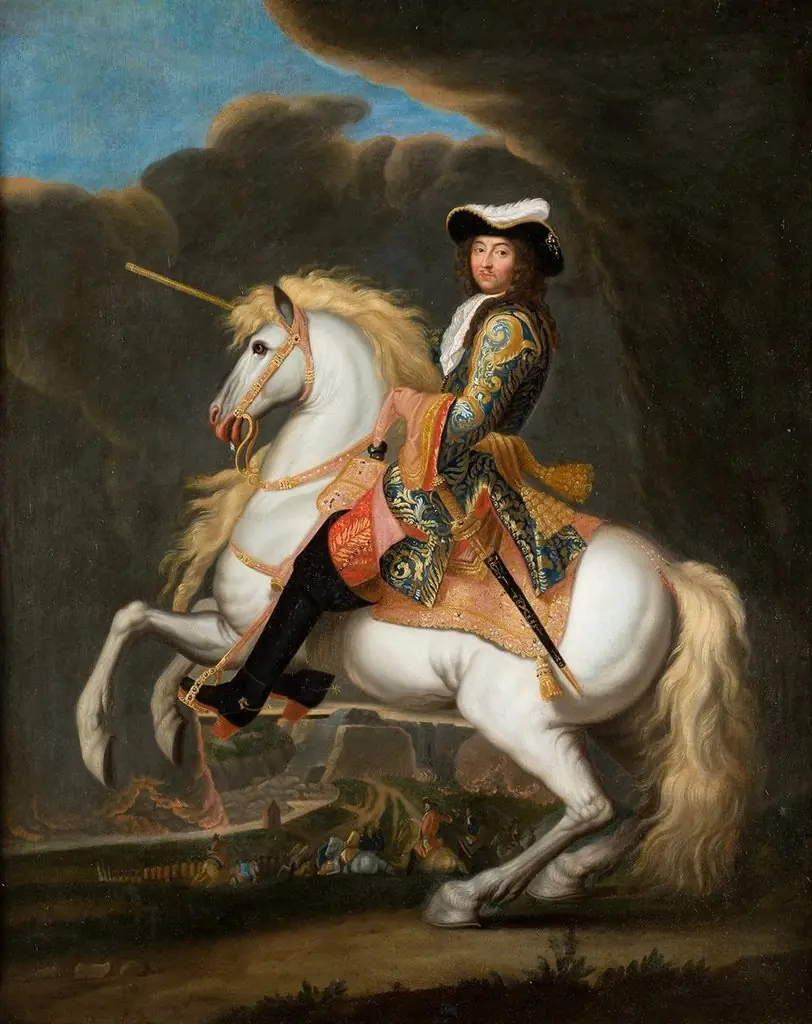 Retrato equestre de Luís XIV
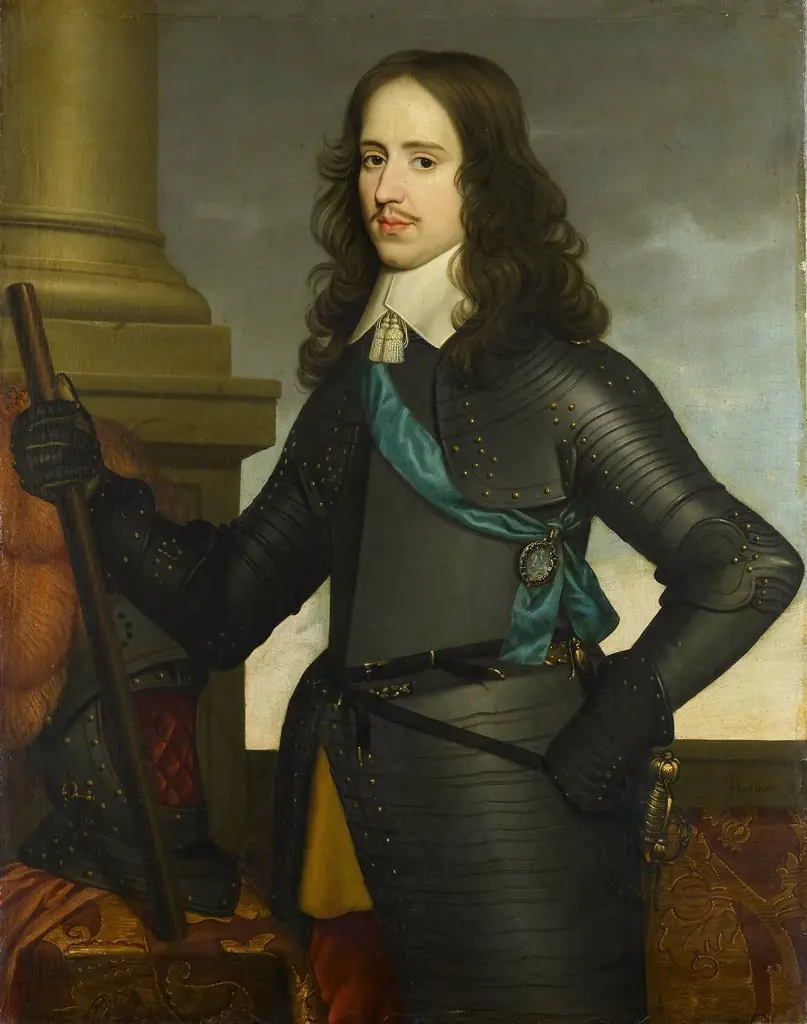 Portrait of Willem II (1626-50), Prince of Orange
 Ducele Bernhard von Sachsen-Weimar