Artwork
宋代帝半身像册-宋朝理宗皇帝像
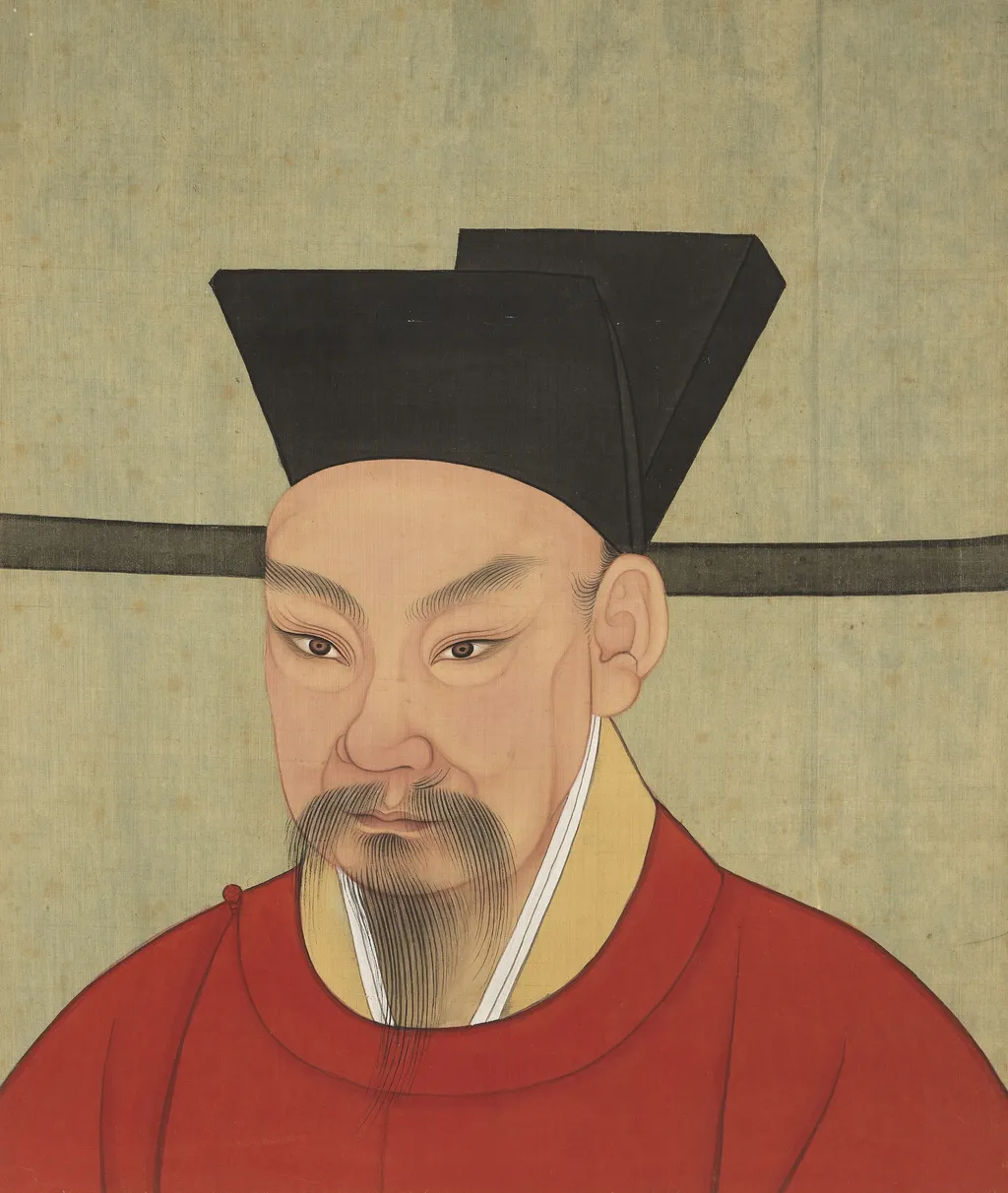
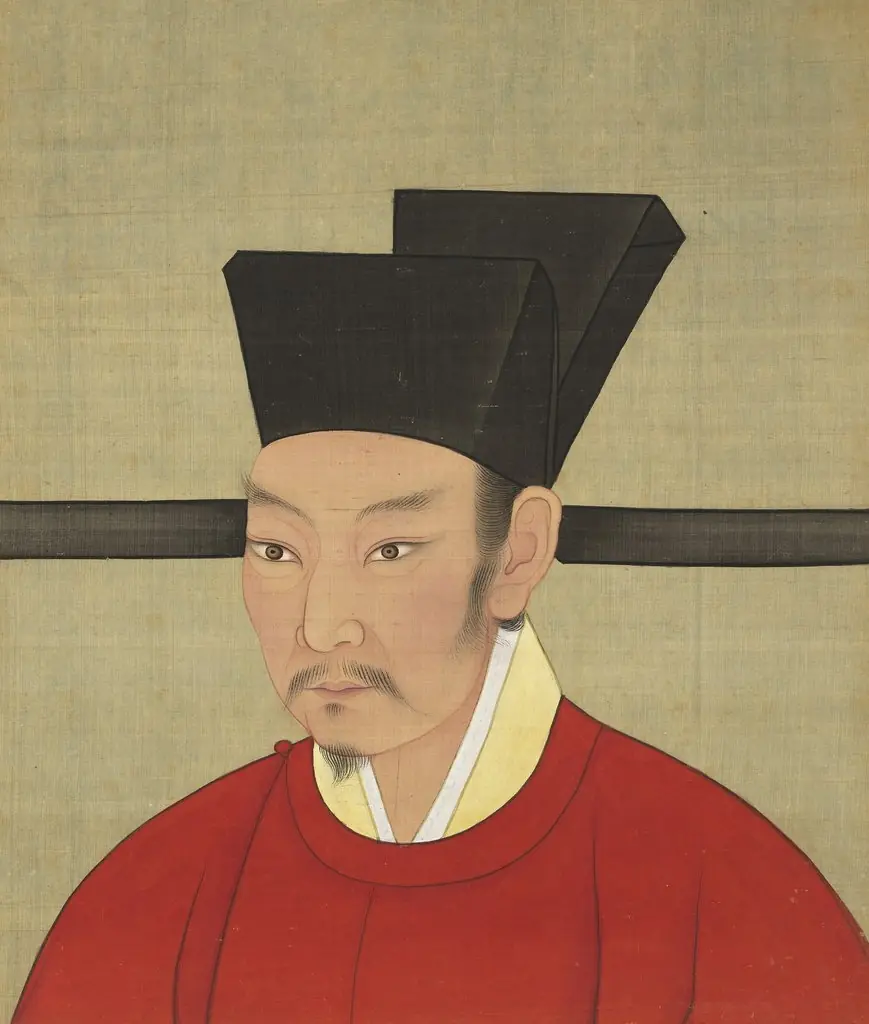
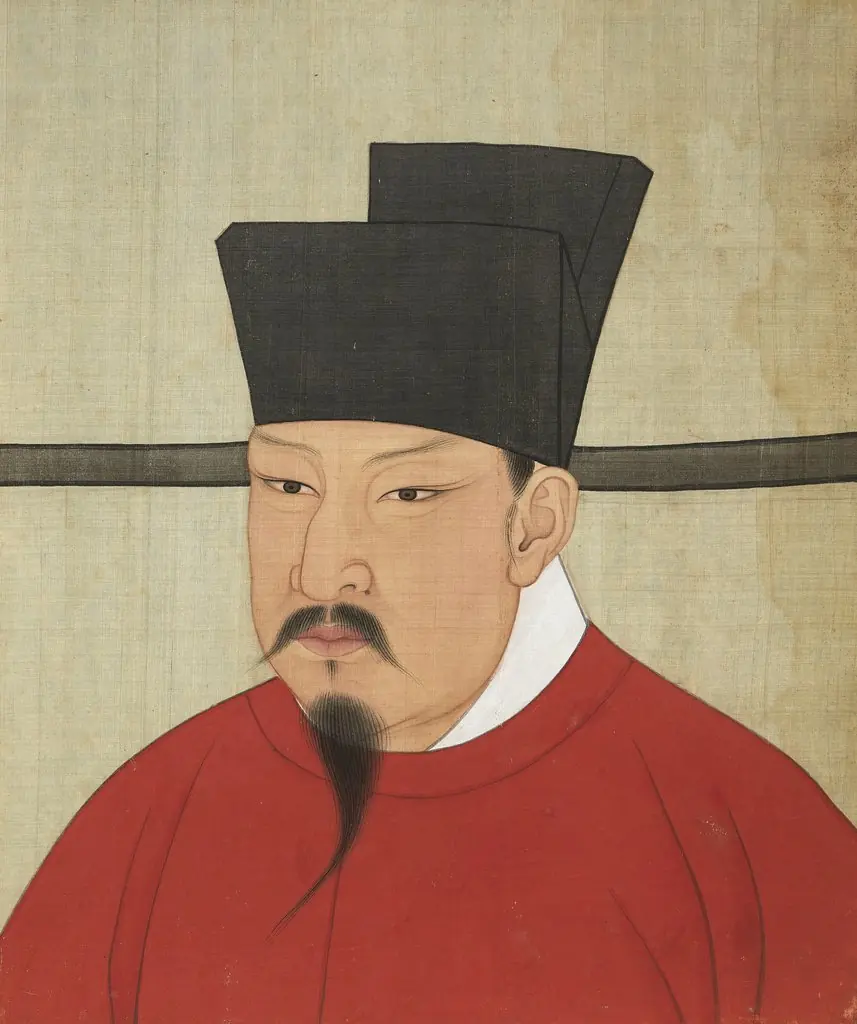
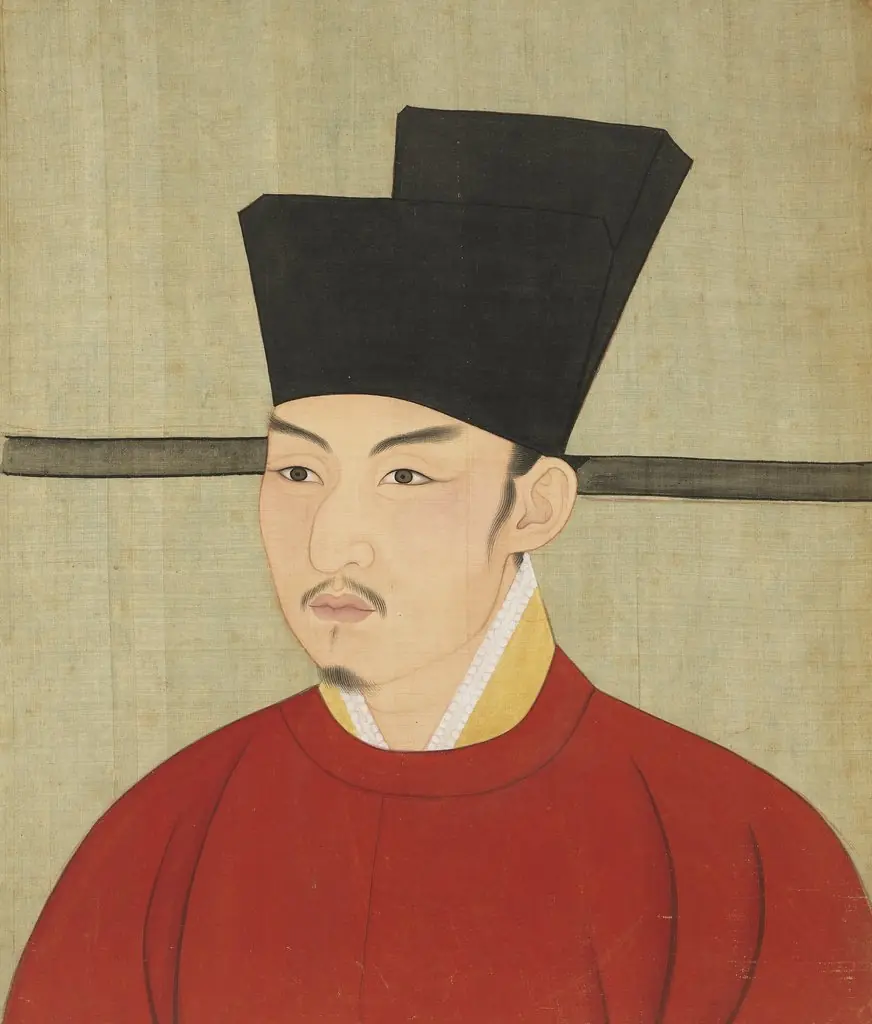
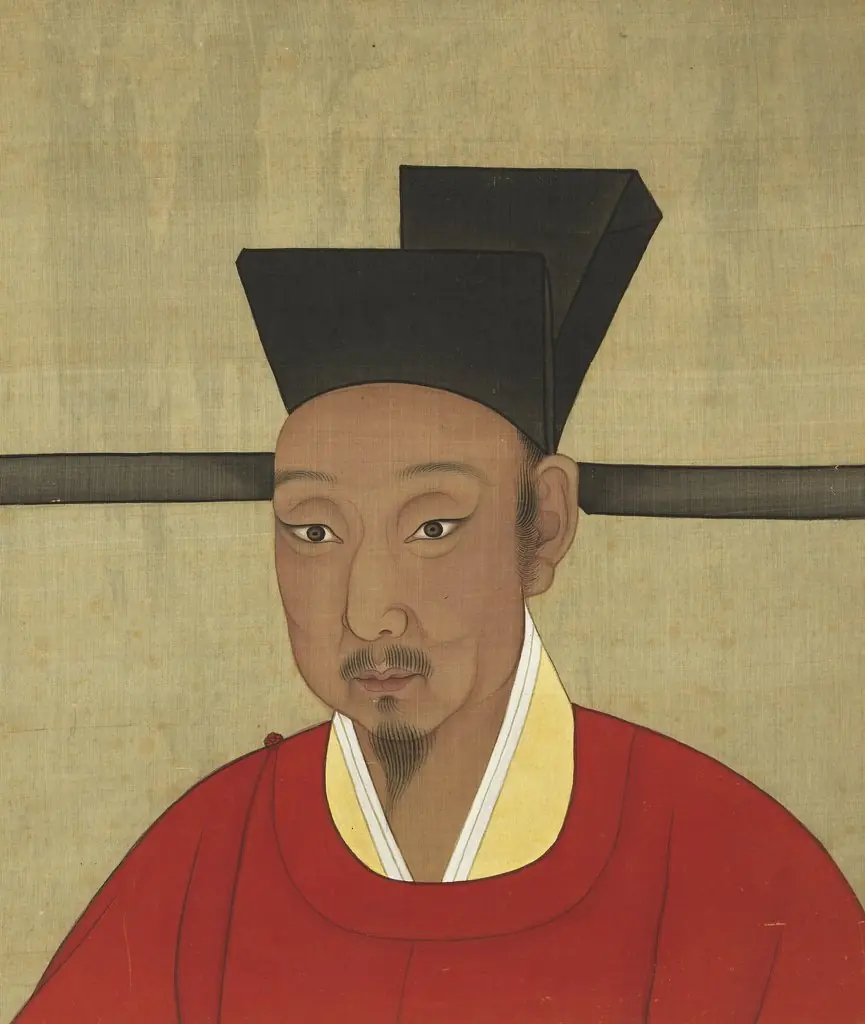
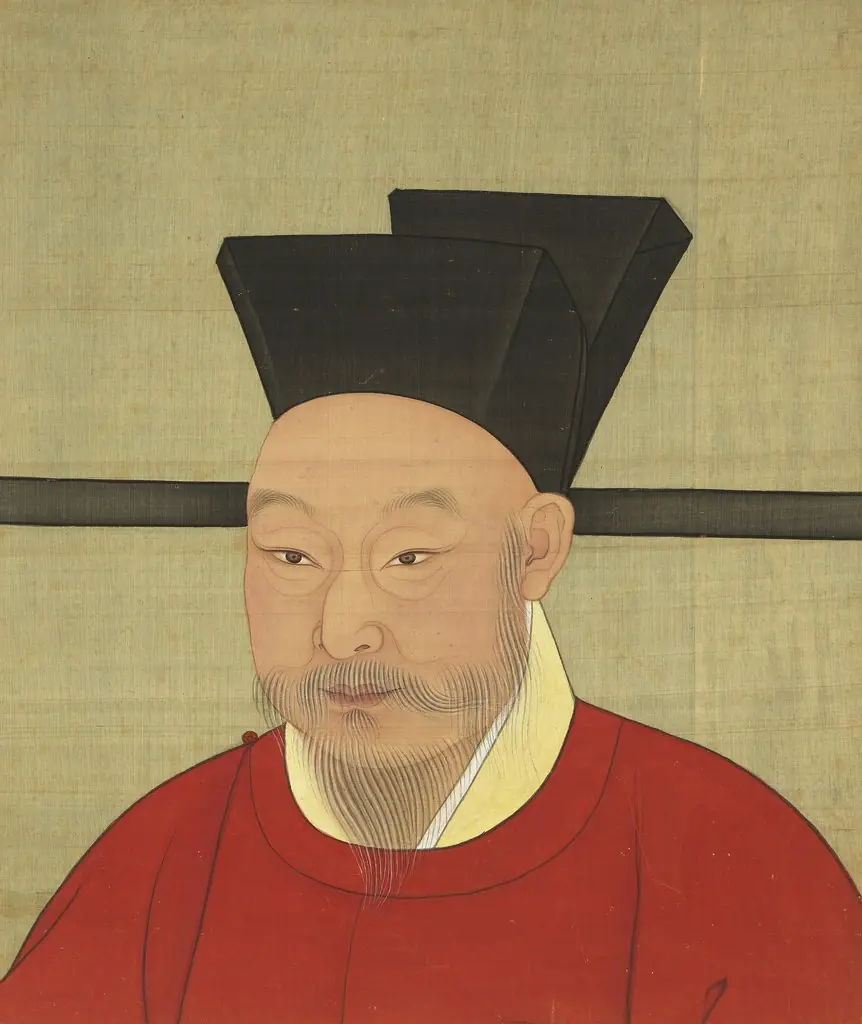
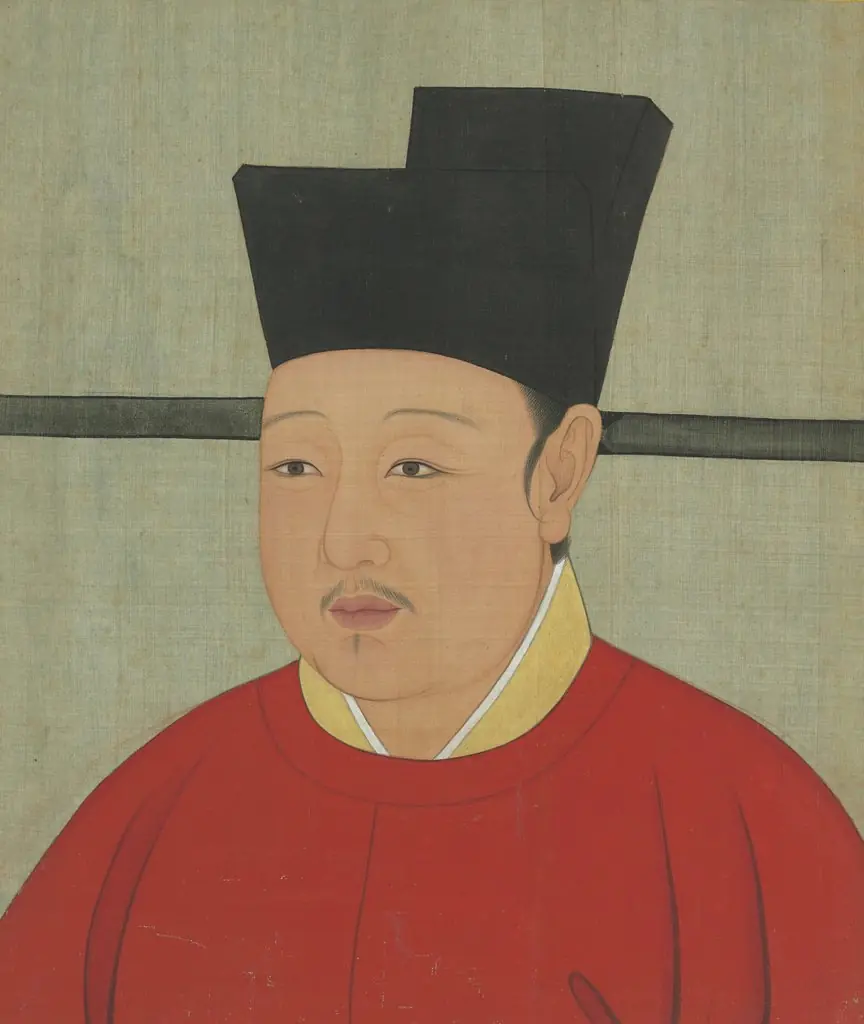
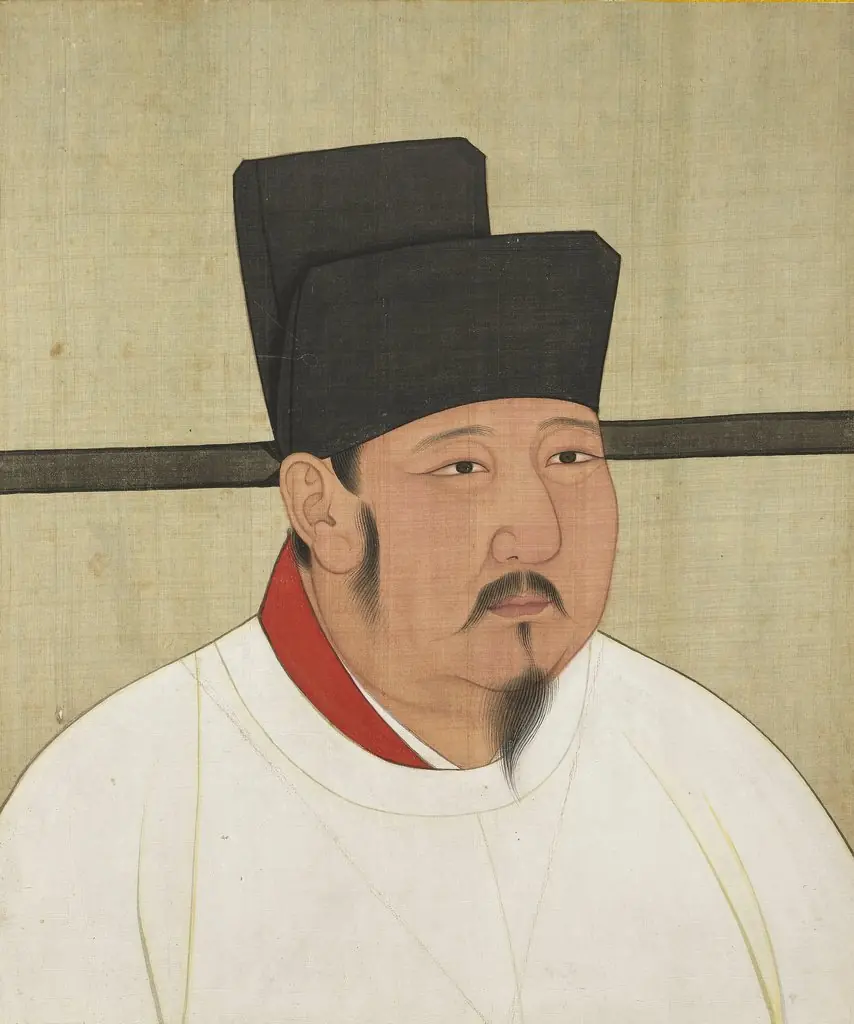
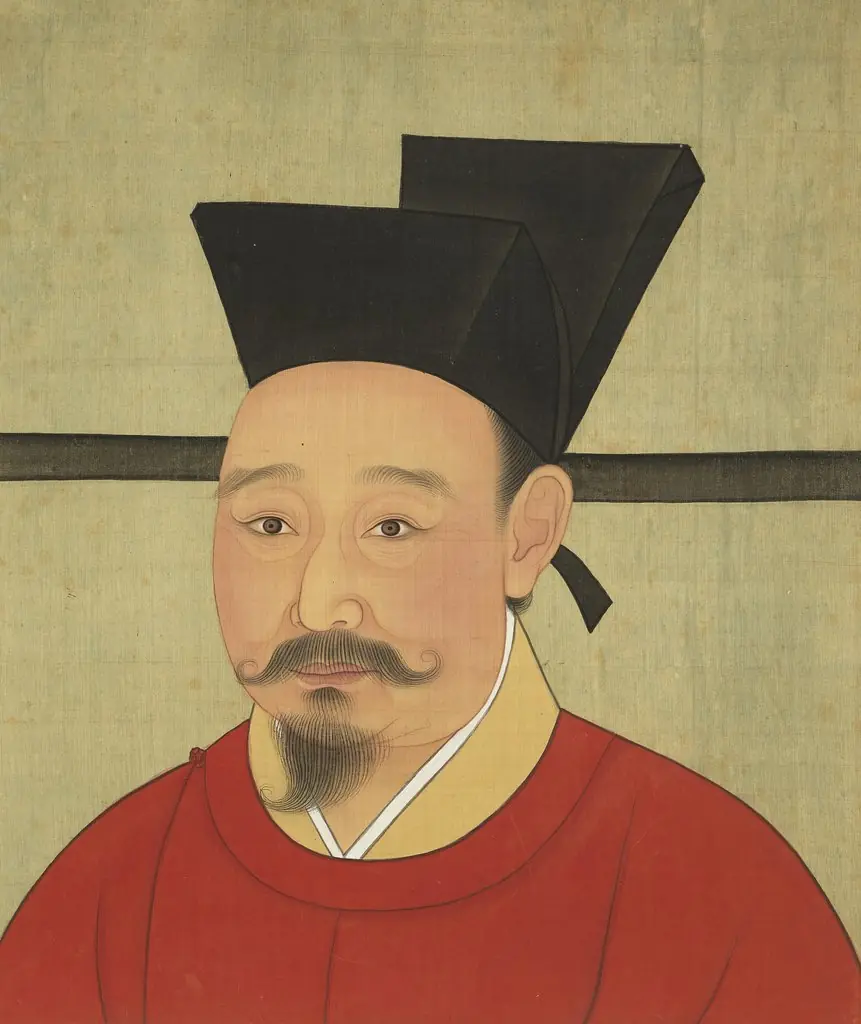
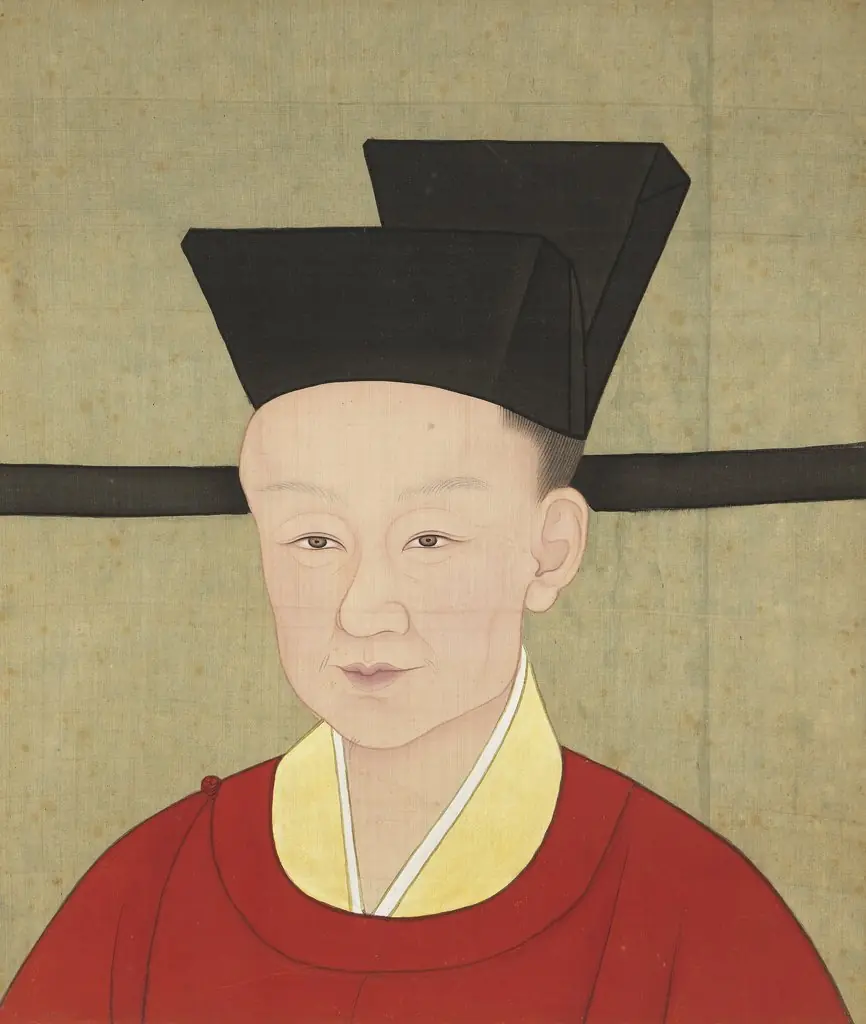
宋代帝半身像册-宋朝理宗皇帝像 is an unspecified painting by Unknown. It is held in the collection of the National Palace Museum. The work is a silk painting from the Song dynasty portraying a seated male figure from the chest upward.
About this work
Overview
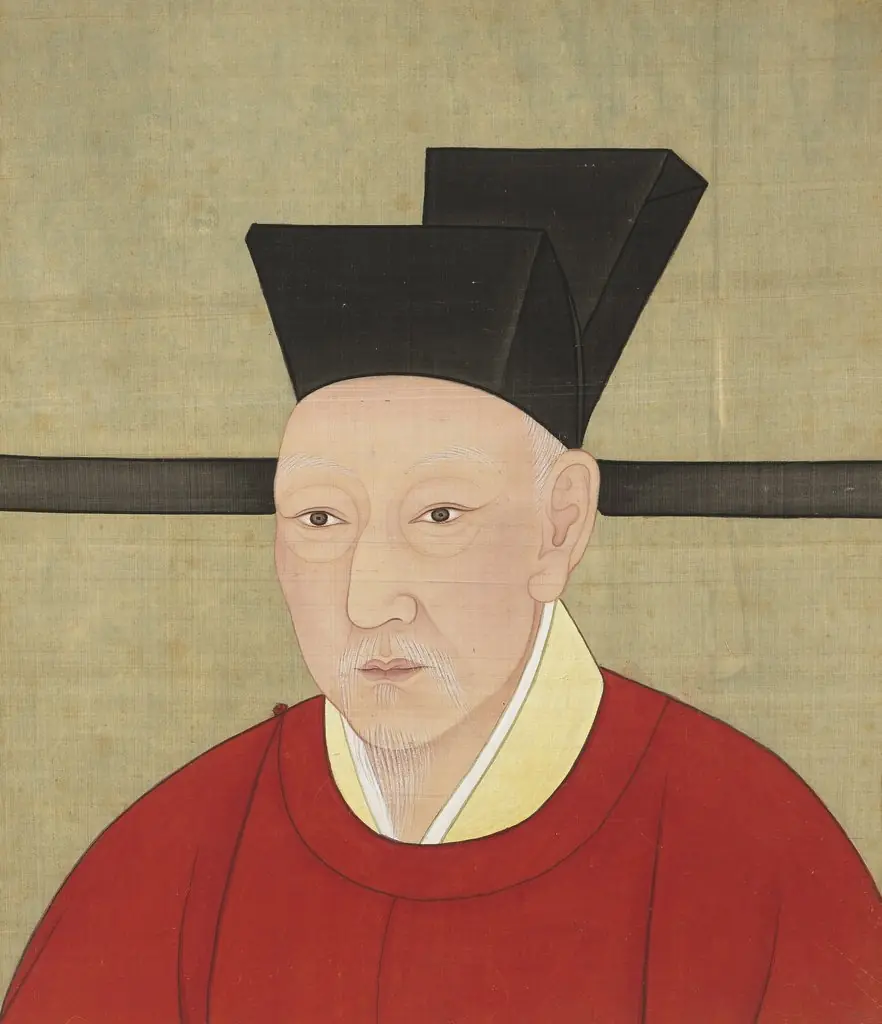
The work is a silk painting from the Song dynasty portraying a seated male figure from the chest upward. He is shown wearing a black hat, a red robe trimmed with a yellow collar, and a long beard. The background consists of a muted beige field intersected by a darker horizontal band, lending a restrained compositional balance.
Subject & Meaning
The portrait represents an imperial figure, most likely Emperor Lizong of the Southern Song, as indicated by the formal attire and dignified bearing. The neutral expression and direct gaze convey a sense of measured authority and composure, qualities traditionally associated with sovereign representation in Chinese court art.
Technique & Style
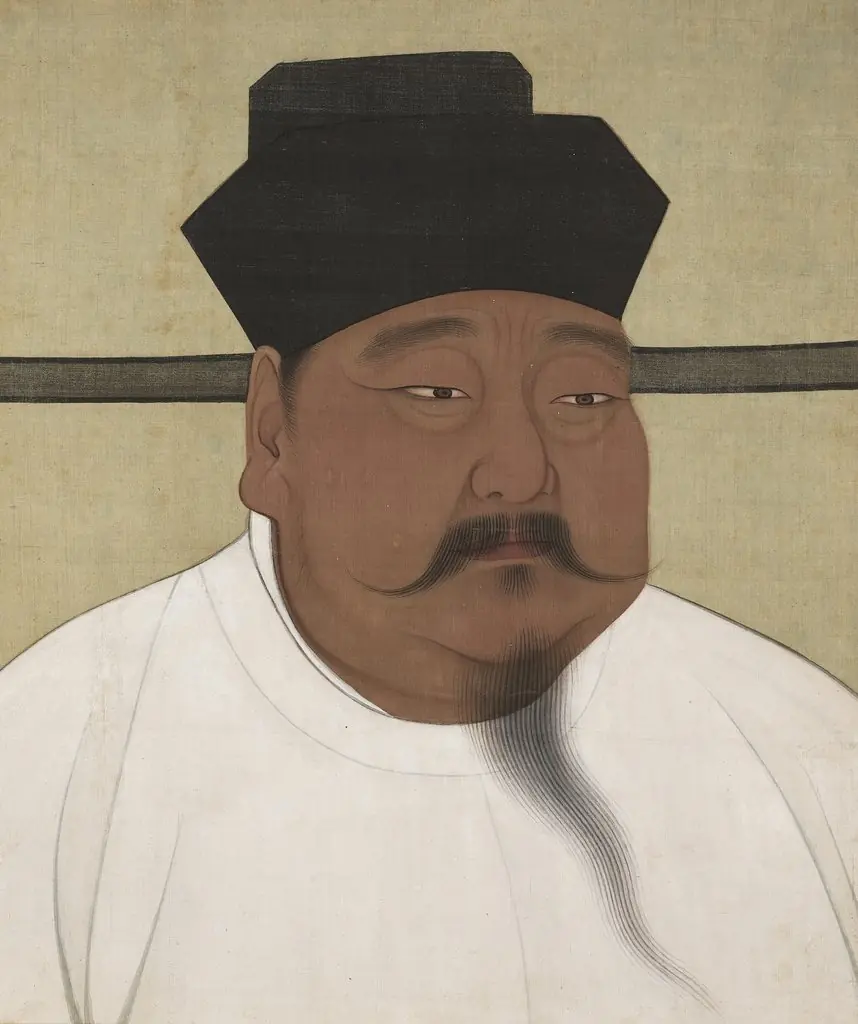
Executed on silk, the painting employs delicate brushwork to render the textures of fabric and facial features. The limited palette—predominantly reds, yellows, blacks, and earth tones—reflects the restrained aesthetic of Song court portraiture, while the horizontal line in the background serves to flatten space and focus attention on the sitter.
History & Provenance
Created during the reign of Emperor Lizong (r. 1224–1264), the piece would have been part of an official series of imperial portraits circulated among the court. It later entered private collections before being acquired by a museum, where it is now displayed as a representative example of Song dynastic portraiture.
Context
Song dynasty portraiture emphasized realism and moral virtue, aligning the ruler’s image with Confucian ideals of benevolent governance. This portrait’s calm demeanor and formal dress reflect the period’s political climate, wherein the emperor’s legitimacy was reinforced through visual representations that highlighted stability and continuity.
Legacy
The painting contributes to the corpus of surviving Song imperial portraits, offering scholars insight into court attire, artistic conventions, and the visual language of authority in 13th‑century China. Its preservation on silk provides valuable material evidence of the techniques employed by court painters of the era.
Artist & collection

 Domestic Scene
 Giacomo and Cardinal Marco, investing Andrea, Abbot of San Zeno, with his Benefice
 The Nymph of Fontainebleau
 Portrait of a Woman
 Madonna and Child with Saints in the Enclosed Garden
 Venus and Minerva
 Family Group of Four on Sofa
 Wall painting from Room H of the Villa of P. Fannius Synistor at Boscoreale