Artwork
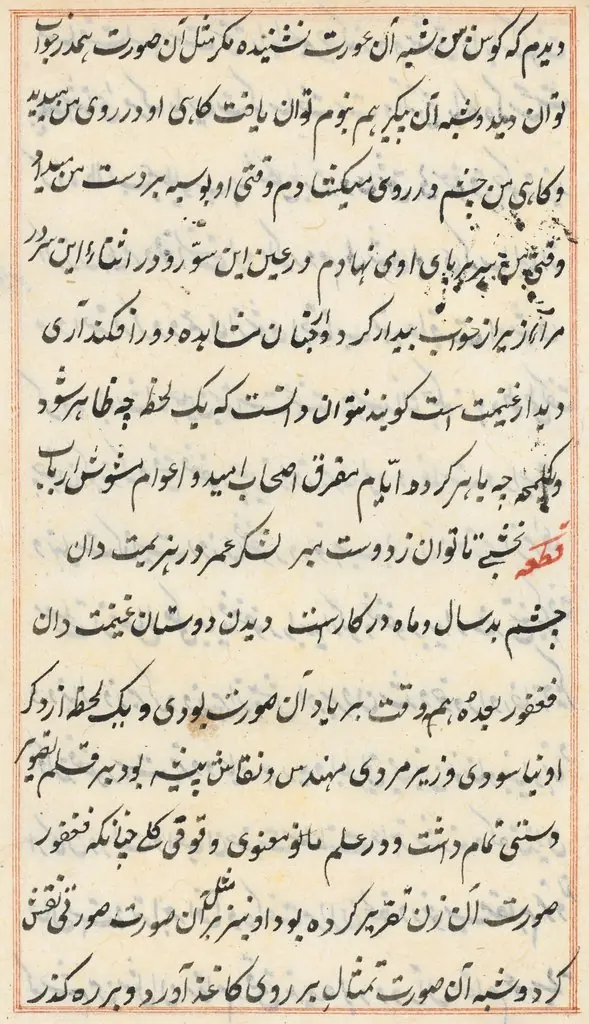
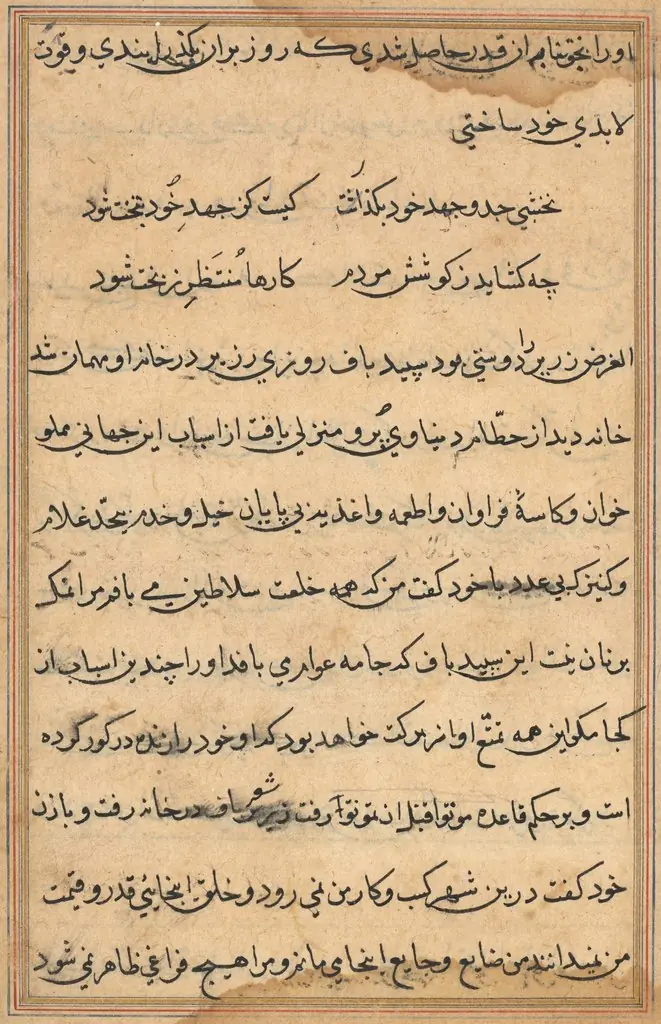
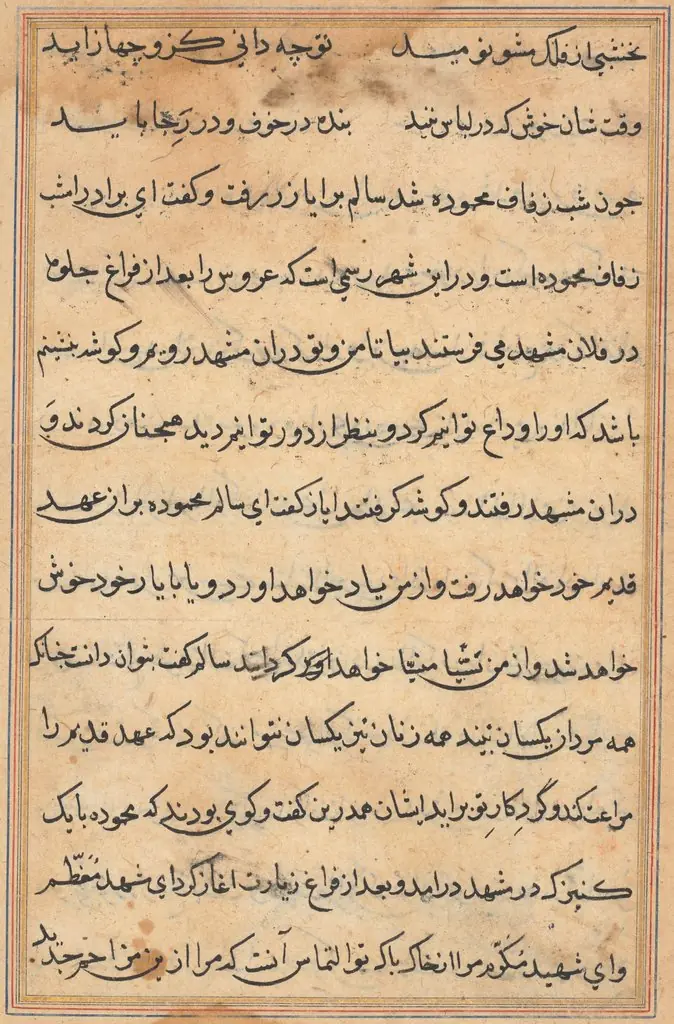
Page from Tales of a Parrot (Tuti-nama): text page
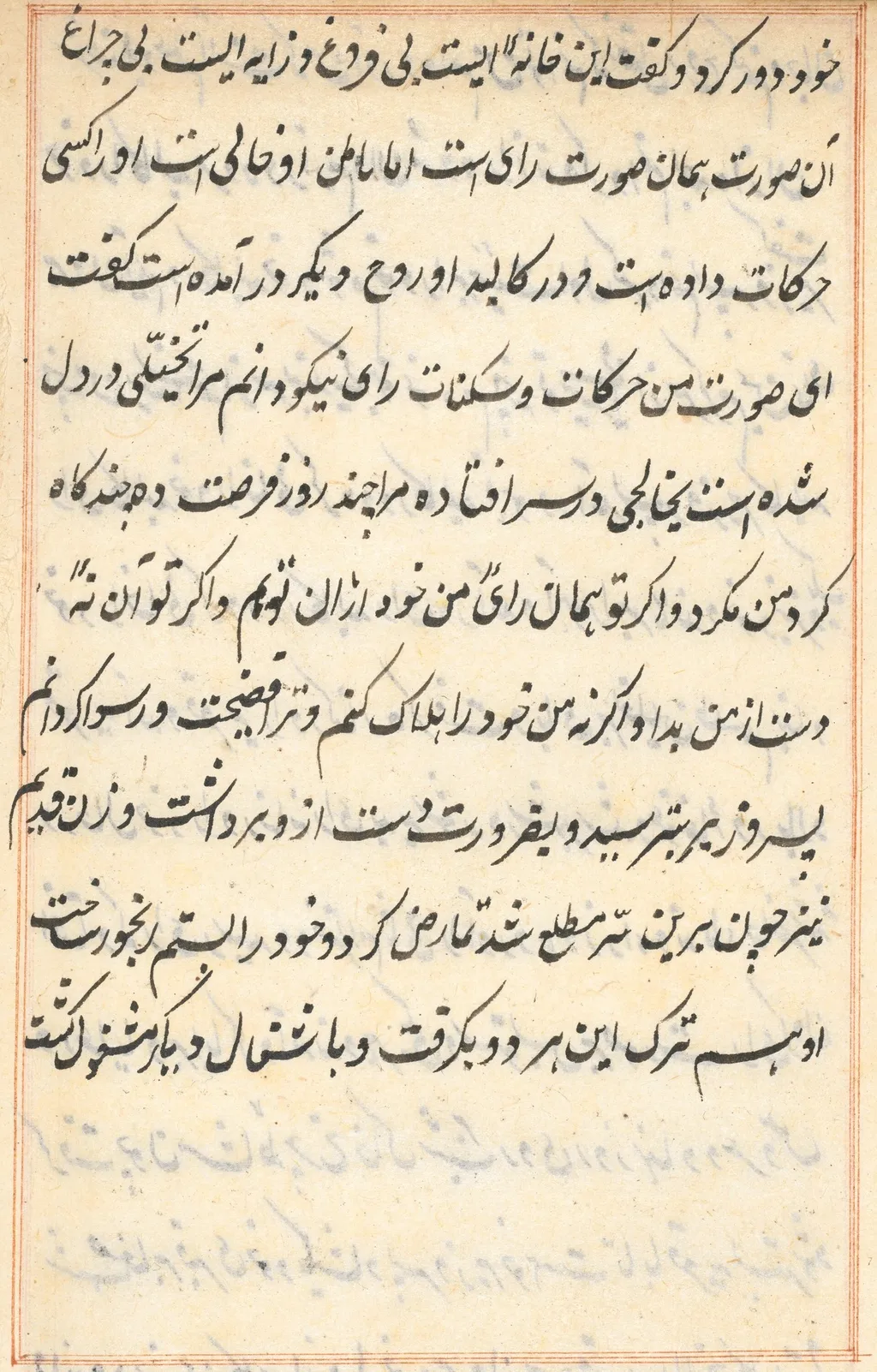
Page from Tales of a Parrot (Tuti-nama): text page is an unspecified painting. It dates from 1560 and is held in the collection of the Cleveland Museum of Art. This object is a painted page from the Persian manuscript *Tales of a Parrot* (Tuti‑nama).
About this work
Overview
This object is a painted page from the Persian manuscript *Tales of a Parrot* (Tuti‑nama). Executed with black ink on a pale ground, the surface is entirely covered by flowing calligraphic lines that occupy the whole field without obvious margins. The page is part of a narrative work that dates to the medieval period.
Subject & Meaning
The text inscribed on the page tells a story from the *Tales of a Parrot*, a collection of moral and romantic anecdotes popular in Persian literary tradition. The script itself, with its rhythmic curves and loops, functions as a visual embodiment of the tale’s lyrical quality, suggesting a close relationship between word and form.
Technique & Style
The artist employed a single‑brush technique, laying down black ink in continuous, undulating strokes that interlock like a dance. Small decorative elements—minute dots and faint blue specks—are scattered across the surface, evoking a night‑sky motif that punctuates the textual flow.
History & Provenance
The page originates from a manuscript produced in the Islamic world, likely between the 13th and 15th centuries, when illustrated literary codices were common. It entered the collection of the Cleveland Museum of Art through donation, where it is now displayed as part of the museum’s Islamic art holdings.
Context
*Tales of a Parrot* belongs to a genre of Persian storytelling that blends poetry, prose, and moral instruction. Manuscripts of this type were often lavishly illustrated, and the calligraphic treatment of the text reflects the high value placed on literacy and artistic expression in courtly culture.
Legacy
Pages such as this illustrate the integration of literary and visual arts in medieval Persia, influencing later manuscript production across the Islamic world. Their aesthetic principles continue to inform contemporary calligraphic practice and the study of Persian narrative art.
Artist & collection

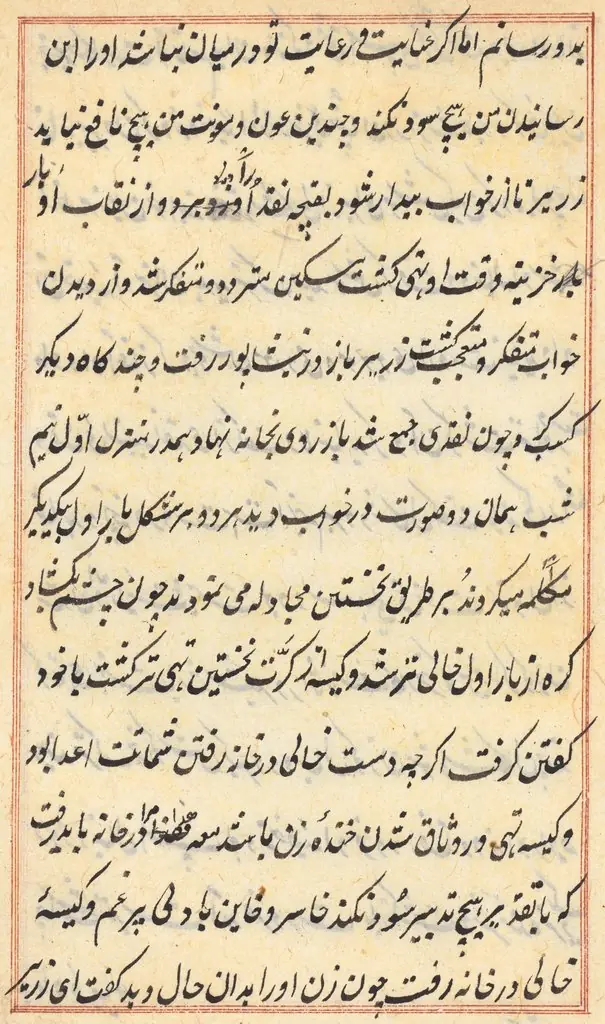 Page from Tales of a Parrot (Tuti-nama): text page
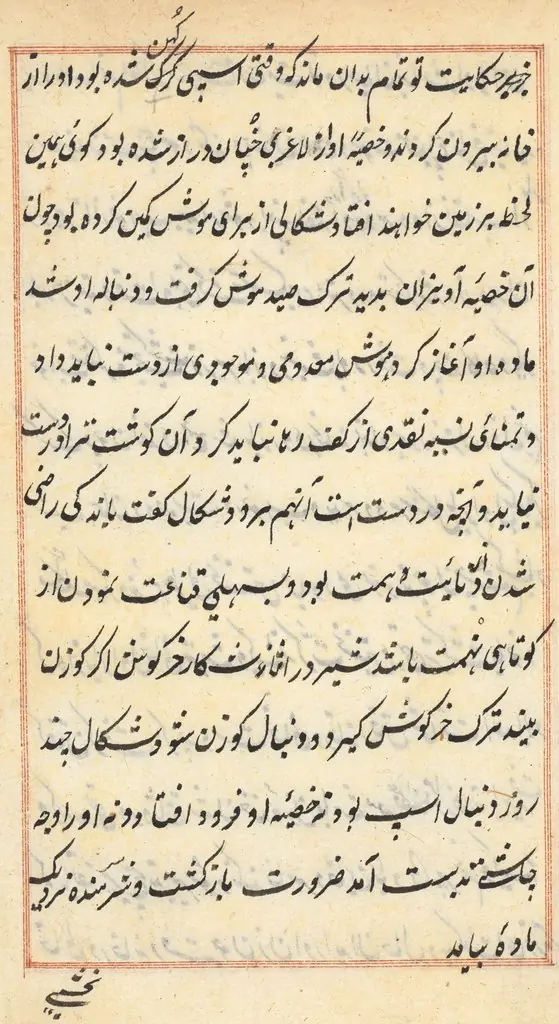 Page from Tales of a Parrot (Tuti-nama): text page
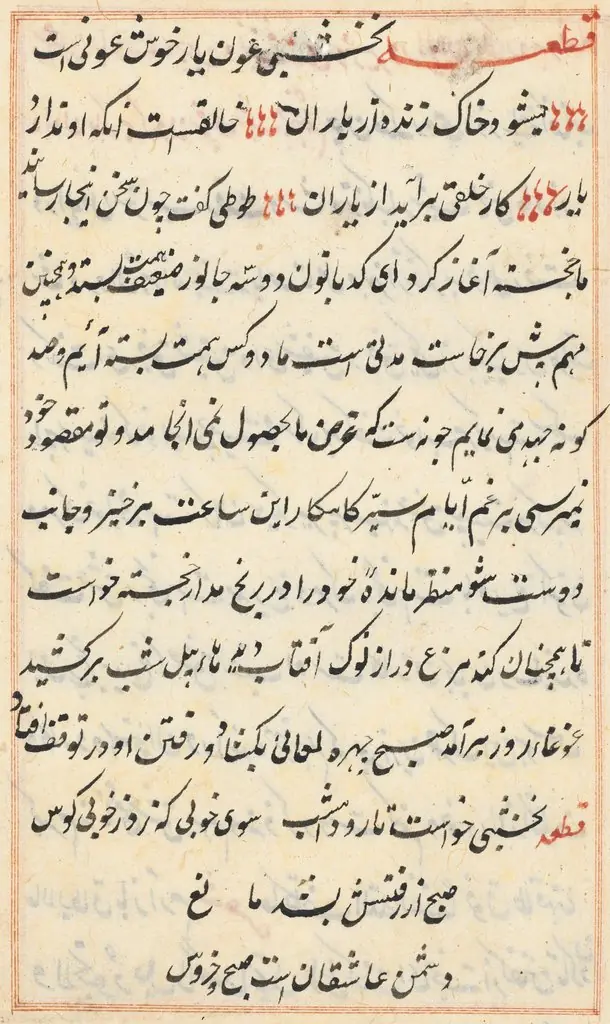 Page from Tales of a Parrot (Tuti-nama): text page
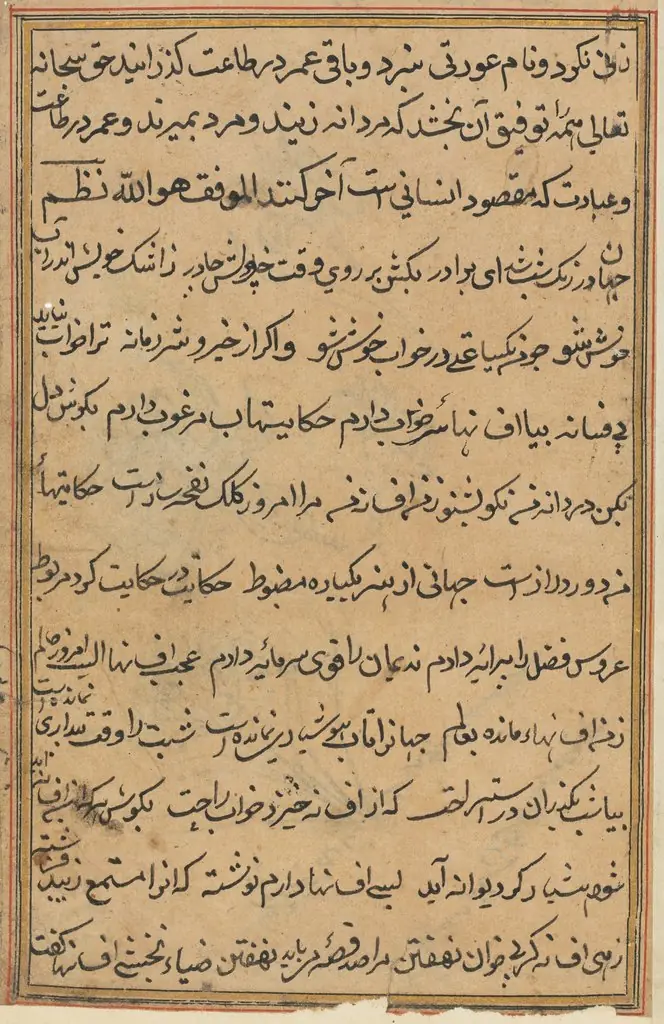 Page from Tales of a Parrot (Tuti-nama): text page
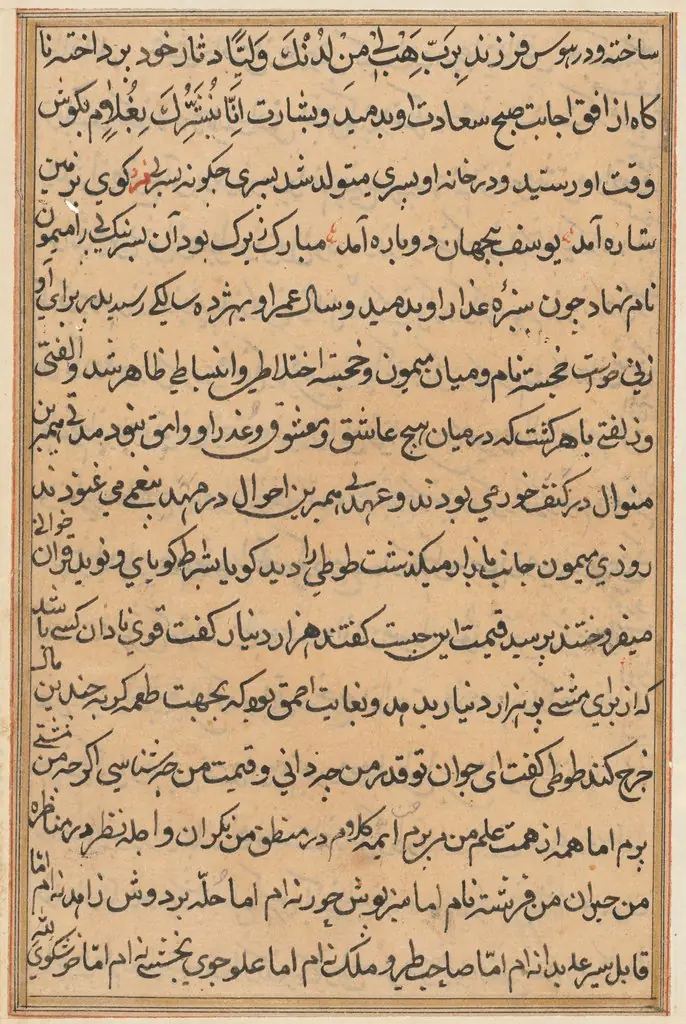 Page from Tales of a Parrot (Tuti-nama): text page
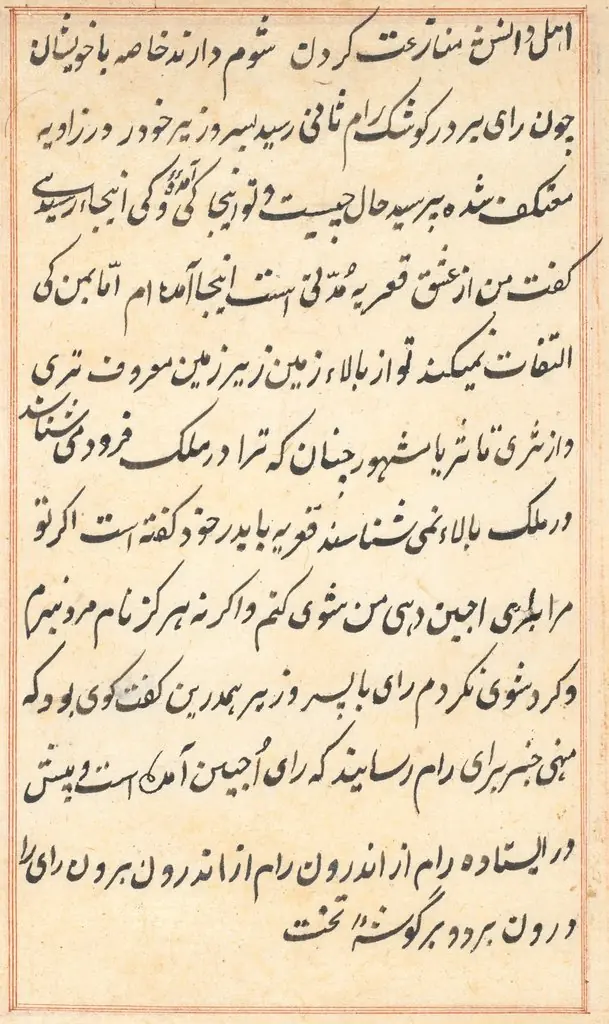 Page from Tales of a Parrot (Tuti-nama): text page
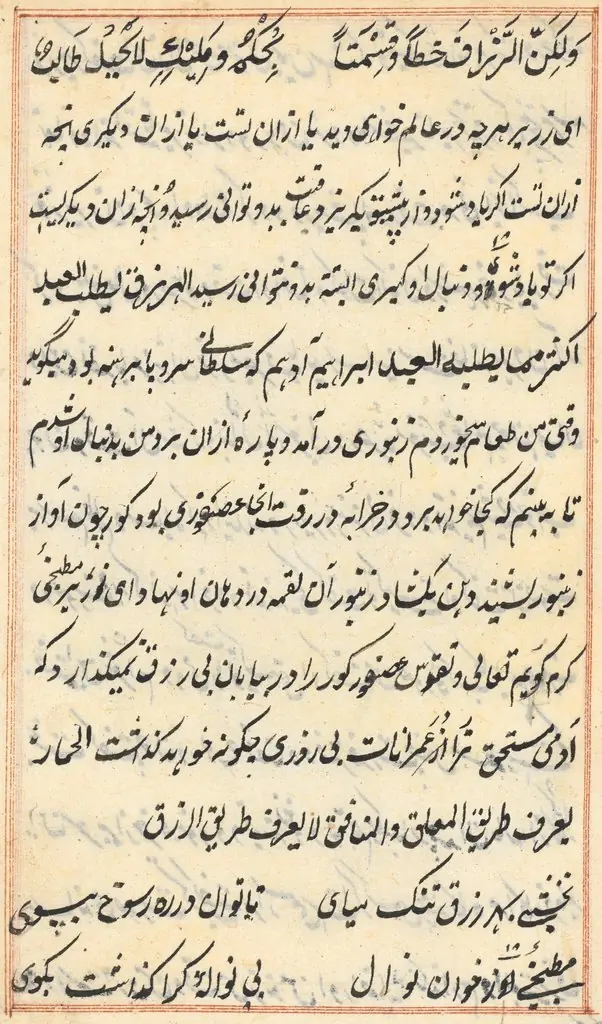 Page from Tales of a Parrot (Tuti-nama): text page
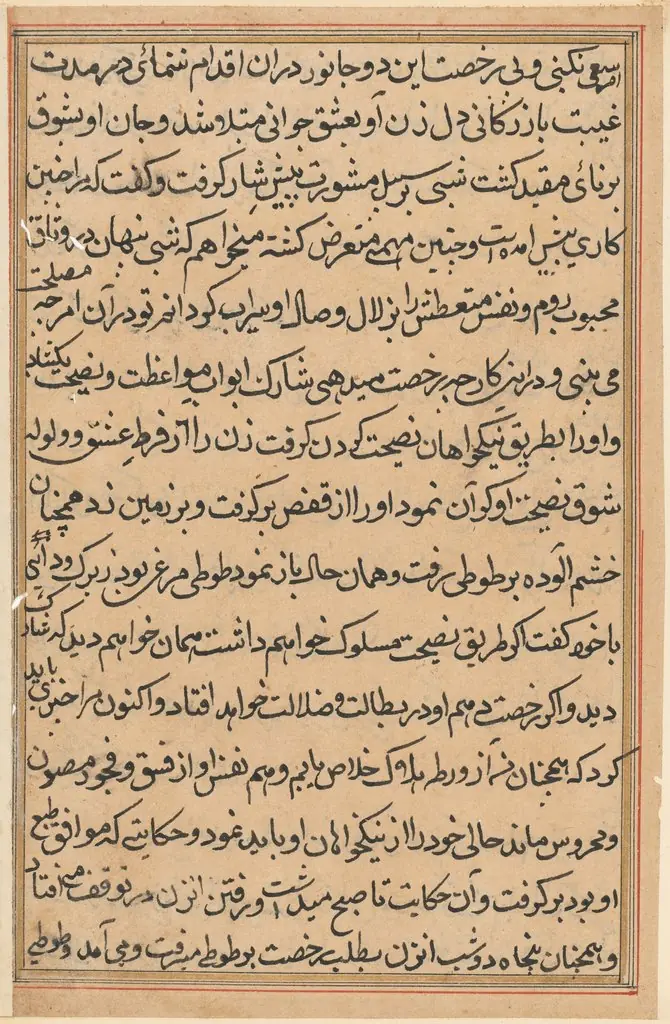 Page from Tales of a Parrot (Tuti-nama): text page