Artwork
Page from Tales of a Parrot (Tuti-nama): text page
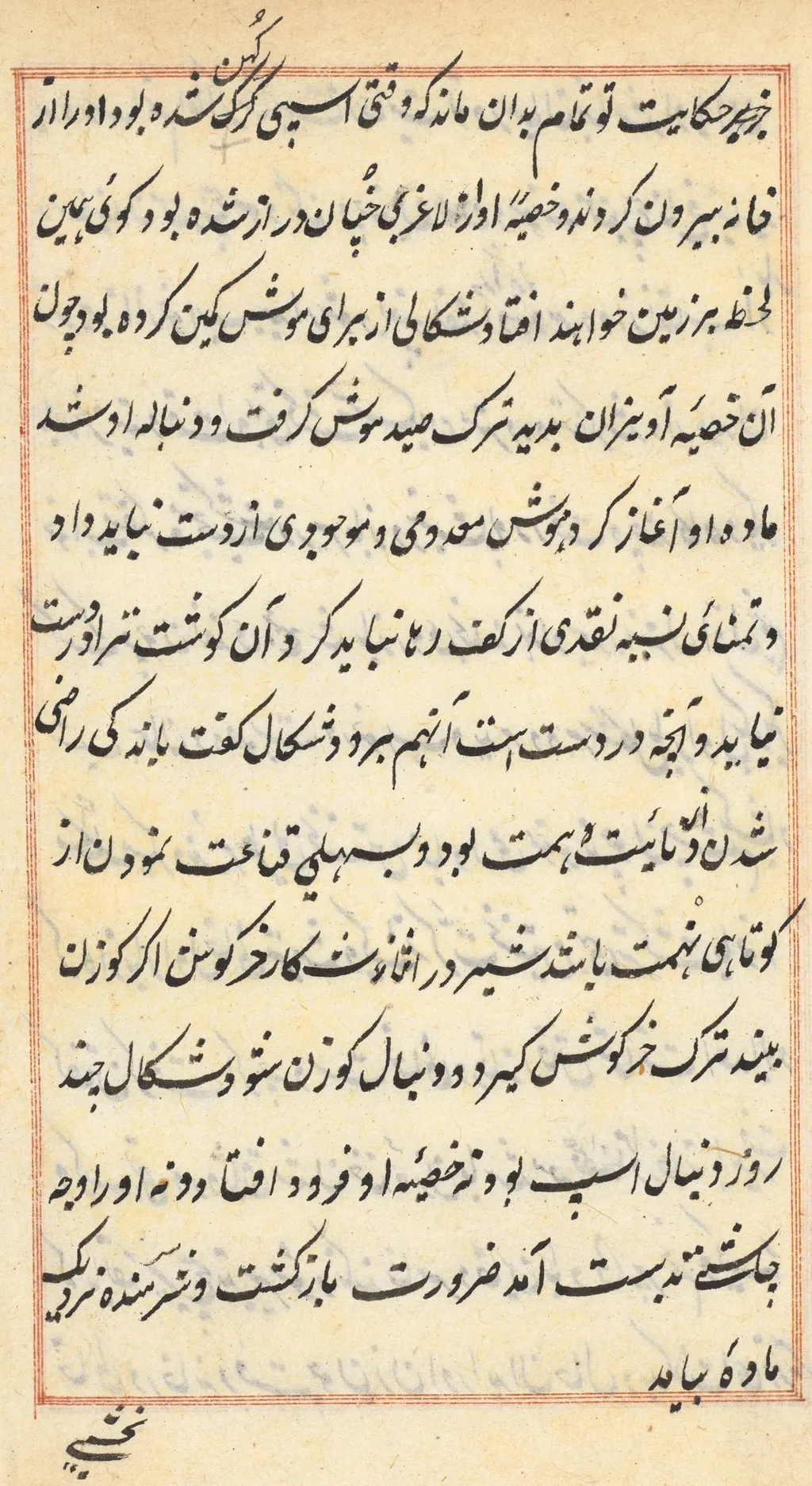
Page from Tales of a Parrot (Tuti-nama): text page is an unspecified painting. It dates from 1560 and is held in the collection of the Cleveland Museum of Art. The object is a single leaf from the illustrated manuscript known as *Tuti‑nama* or *Tales of a Parrot*.
About this work
Overview
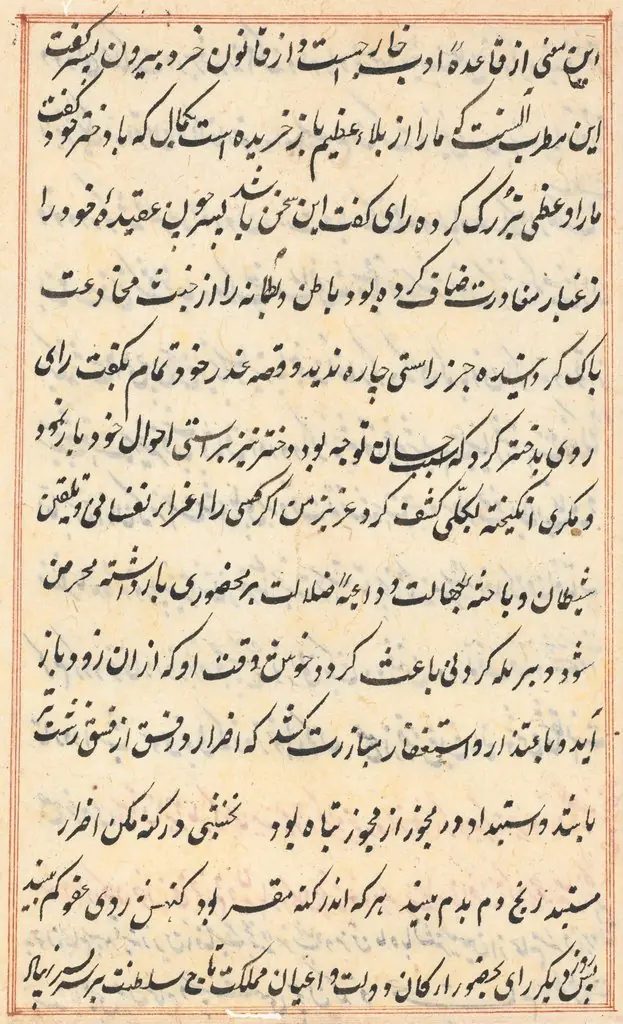
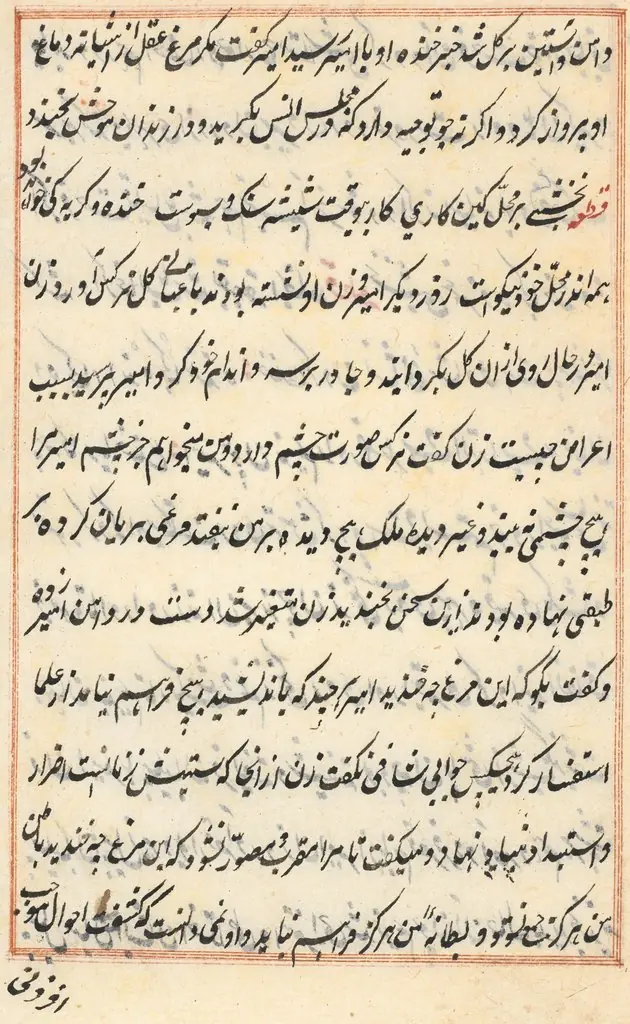
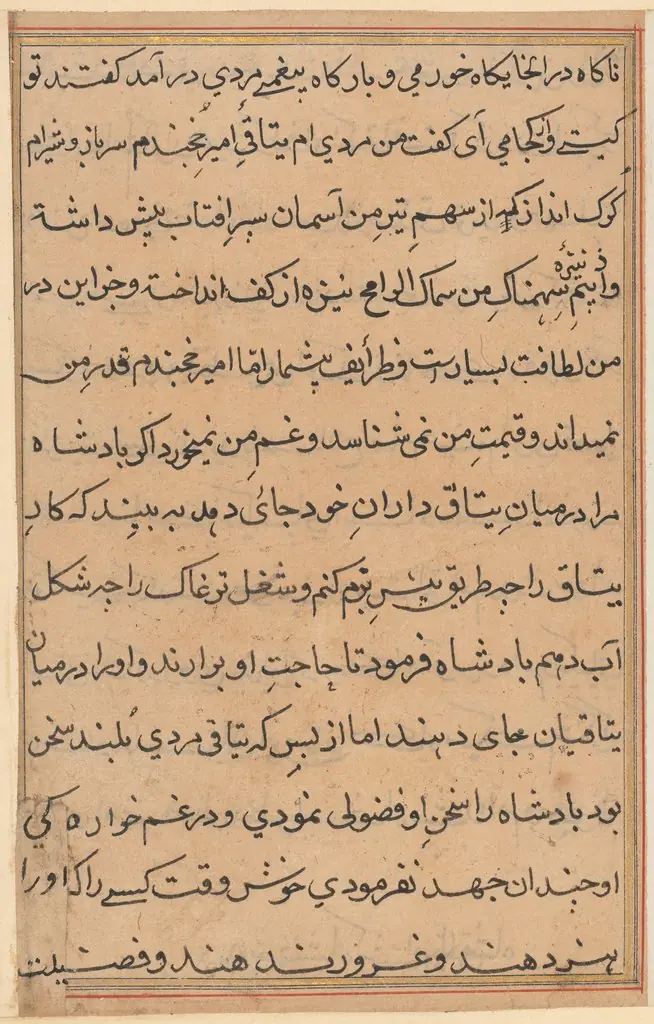
The object is a single leaf from the illustrated manuscript known as *Tuti‑nama* or *Tales of a Parrot*. It consists of a sheet of paper bearing dense black calligraphic script arranged in tight rows, framed by a subtle red border. The paper exhibits a warm, aged tone with fine speckling, indicating considerable age and use.
Subject & Meaning
The page contains narrative text, likely a segment of the parrot’s storytelling tradition that gives the work its title. The prose combines precise diction with ornamental flourishes, suggesting a literary piece intended both for instruction and aesthetic appreciation within its original cultural setting.
Technique & Style
Ink is applied in a flowing hand, with slight variations in line thickness that give certain characters a darker, bolder appearance. The calligraphy demonstrates controlled curvature and deliberate connections between strokes, reflecting a high level of skill in manuscript writing. The faint red border, painted around the margins, adds a decorative element without detracting from the text.
History & Provenance
The leaf originates from a manuscript produced in the Persianate world, where *Tuti‑nama* was a popular literary genre. The paper’s patina and speckled surface indicate it has survived several centuries. The object entered the collection of the Cleveland Museum of Art, where it is displayed alongside other pages from the same codex.
Context
*Tuti‑nama* texts were often compiled for elite patrons, merging moral tales with poetic storytelling. The manuscript’s elaborate calligraphy and marginal red framing align with the aesthetic conventions of courtly literature in the late medieval to early modern Islamic cultural sphere, where visual elegance complemented narrative content.
Artist & collection

 Page from Tales of a Parrot (Tuti-nama): text page
 Page from Tales of a Parrot (Tuti-nama): text page
 Page from Tales of a Parrot (Tuti-nama): text page
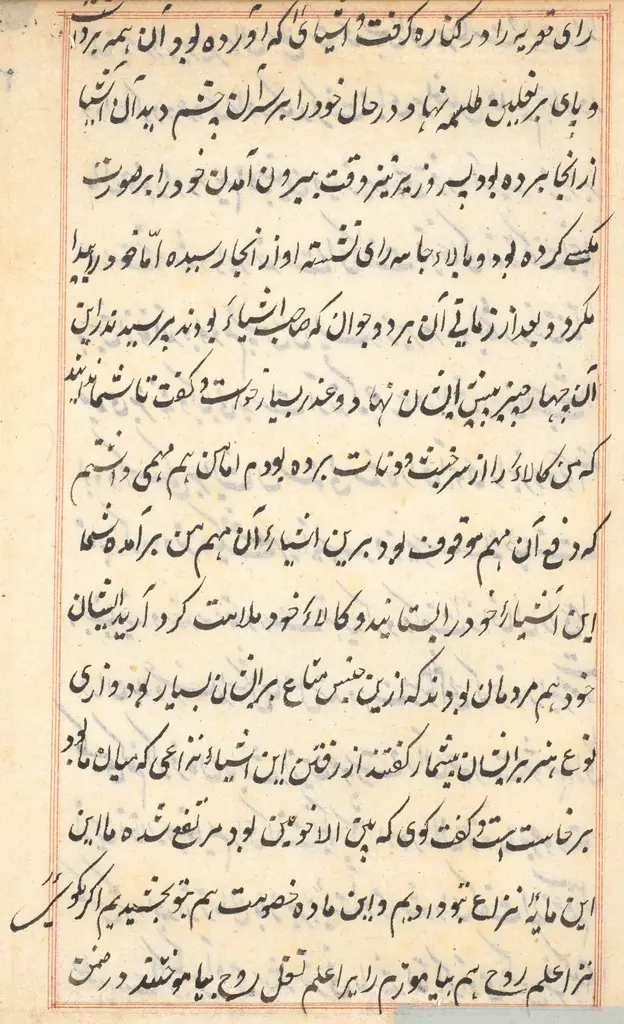 Page from Tales of a Parrot (Tuti-nama): text page
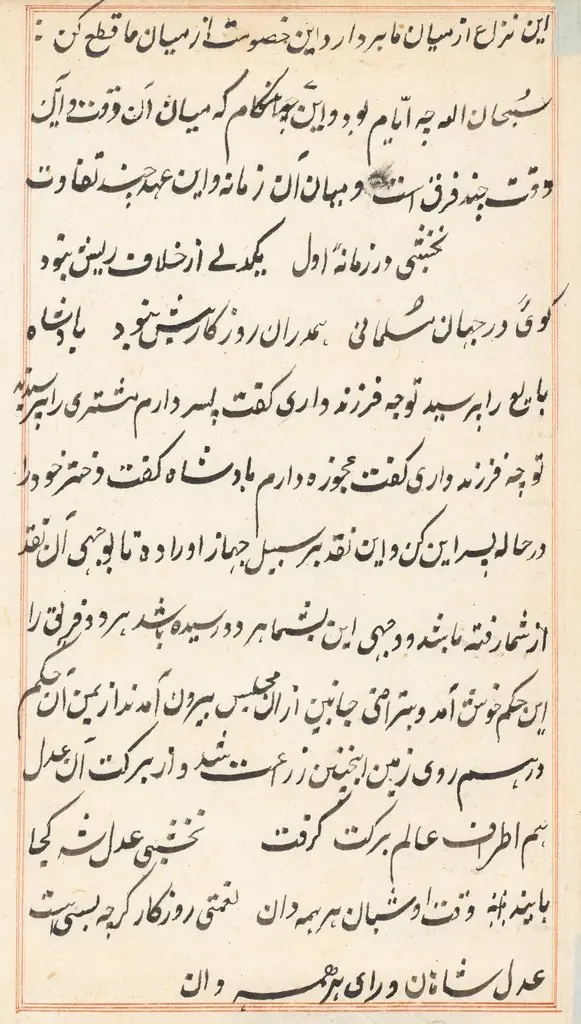 Page from Tales of a Parrot (Tuti-nama): text page
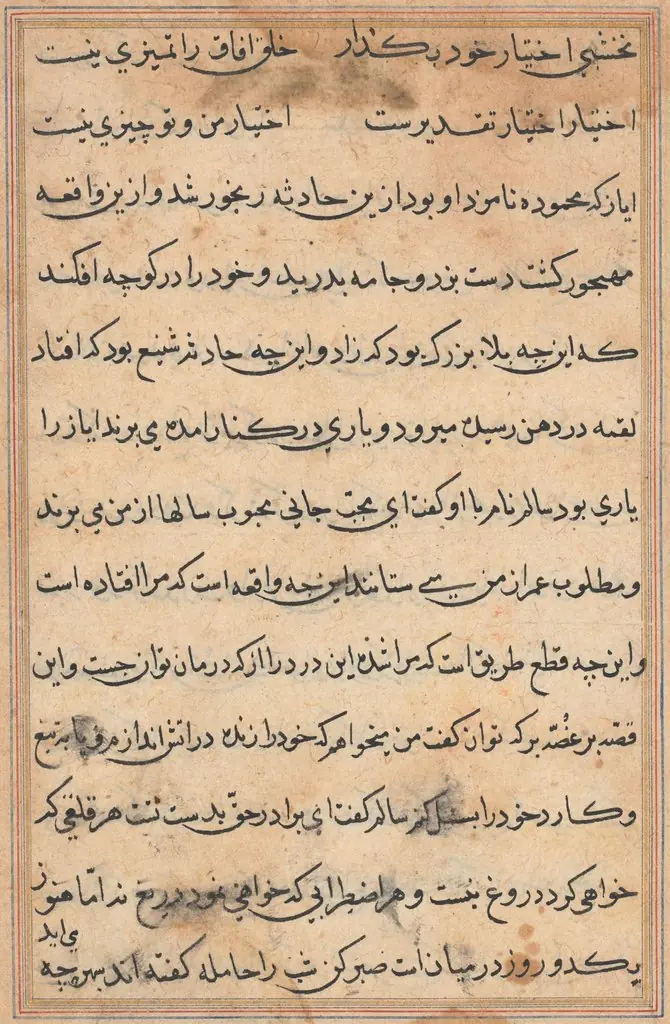 Page from Tales of a Parrot (Tuti-nama): text page
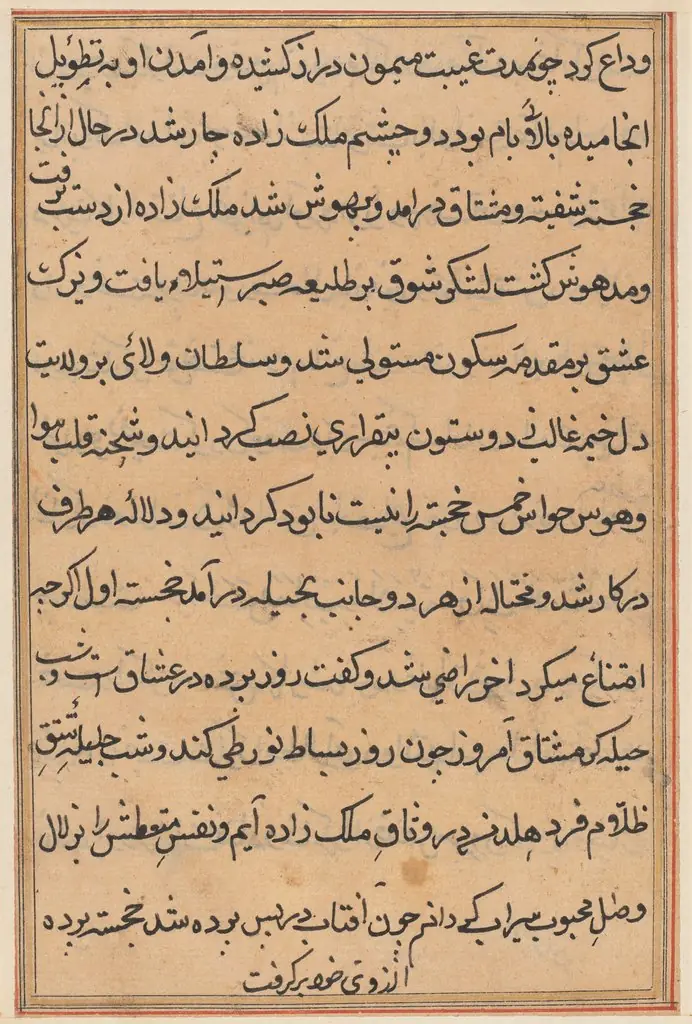 Page from Tales of a Parrot (Tuti-nama): text page
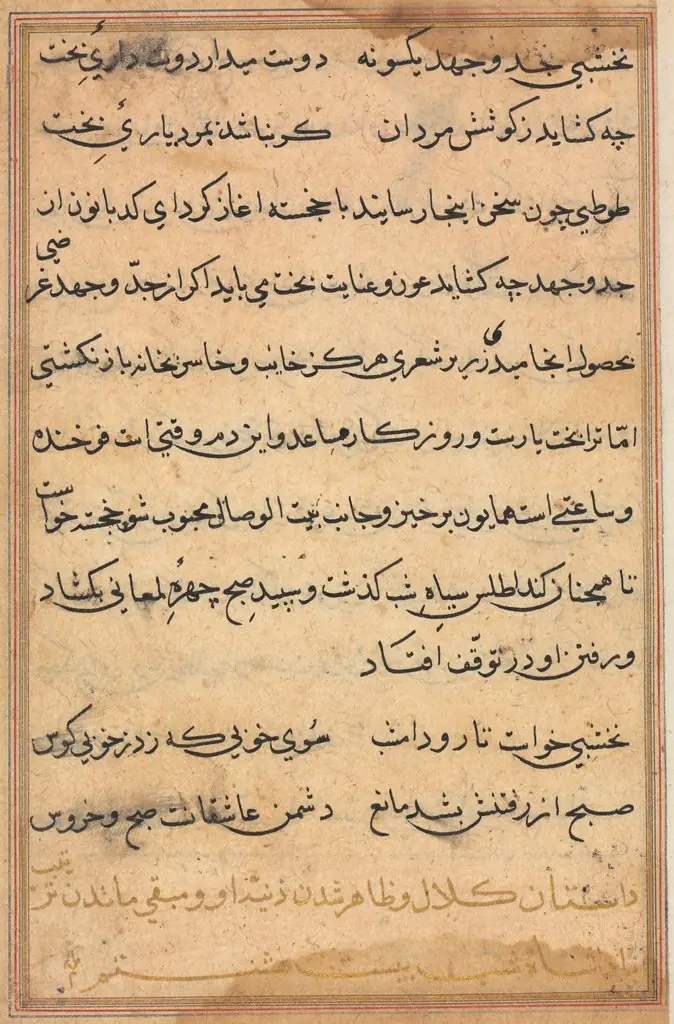 Page from Tales of a Parrot (Tuti-nama): text page
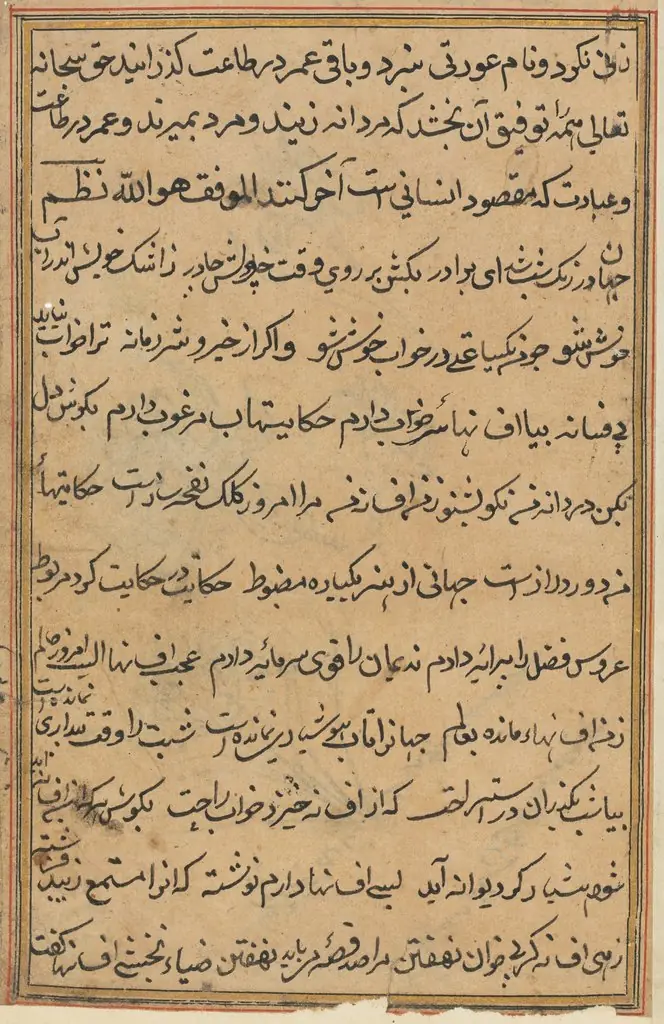 Page from Tales of a Parrot (Tuti-nama): text page
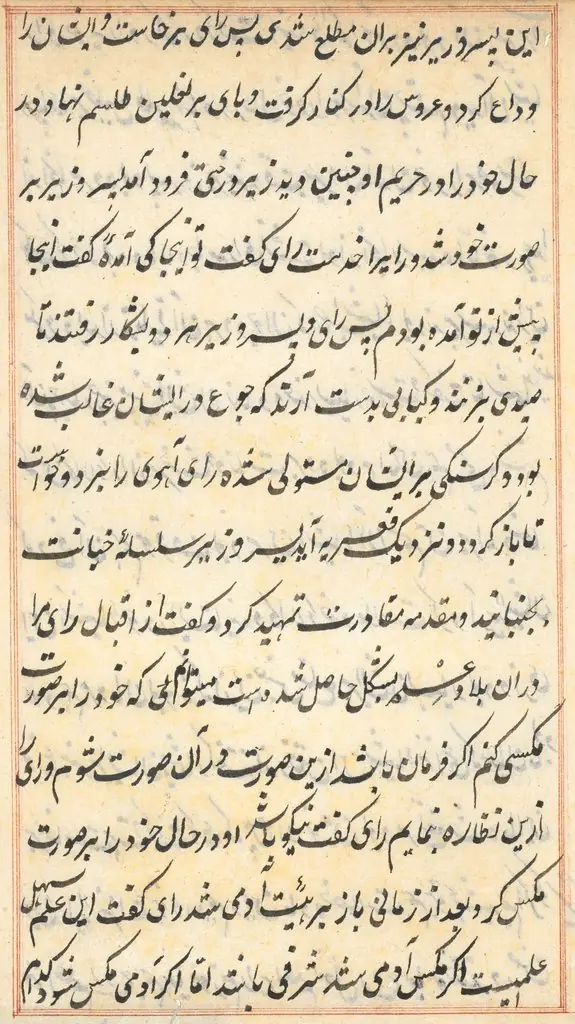 Page from Tales of a Parrot (Tuti-nama): text page
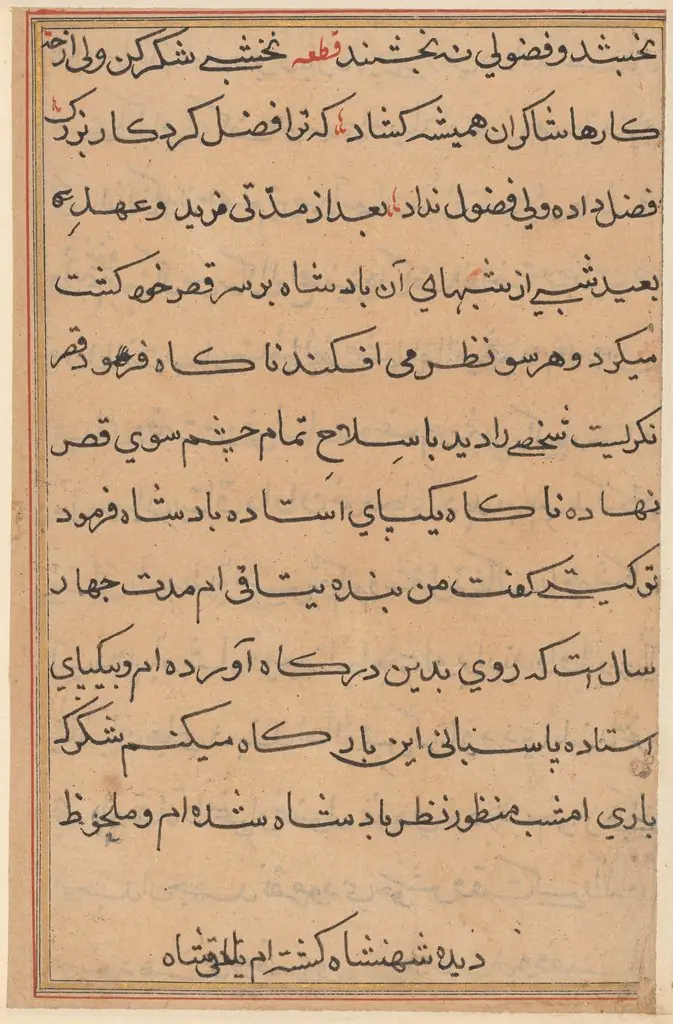 Page from Tales of a Parrot (Tuti-nama): text page